
by editor | Sep 20, 2025 | Data Collection, Environmental Literacy, Experiential Learning, Forest Education, Inquiry, Integrating EE in the Curriculum, Learning Theory, Marine/Aquatic Education, Questioning strategies
Building a Community: The Value of a Diack Teacher Workshop
Teachers are being asked to do more than ever before. We are inundated with meetings, grading, analyzing data and curriculum development. The idea of taking kids outside to do field-based research can be daunting and filled with bureaucratic hurdles. Given all this, why should we take our precious time to implement this new type of learning?
by Tina Allahverdian
 It is a warm summer day at Silver Falls State Park and a group of teachers are conducting a macroinvertebrate study on the abundance and richness of species around the swimming hole. The air is filled with sounds of laughter from children playing, parents conversing on the bank, and the gentle babble of the stream below the dam. The teachers, armed with Dnets, clipboards, and other sampling equipment, move purposefully through the water collecting aquatic species. Being a leader at this unique workshop, I am there to support the teacher’s inquiry project and also help brainstorm ways to bring this type of work back to their classrooms.
The buckets on the bank soon host a variety of species like water beetles, caddisflies, and stonefly nymphs, offering a snapshot of the rich biodiversity in the stream. We teachers sit on the bank, peering into the tubs, magnifying lenses and field guides in hand. We fill out data collection forms and discuss our findings. On this particular summer day, several young children at the park gather to see what we are doing. Their curiosity is piqued by the idea of discovering the hidden inhabitants of the aquatic ecosystem they are swimming in. The teachers and I patiently explain the project to the children and their parents. While some of the crowd goes back to swimming, two little girls stay for over an hour to help identify species. Later, while we pack up a mother stops to thank us for including her daughter in the scientific process. She shares that discovering the magic of the stream with us is her daughter’s idea of a perfect day. This moment is a testament to the power of experiential learning and the unexpected magic that can happen when we take learning into the field.
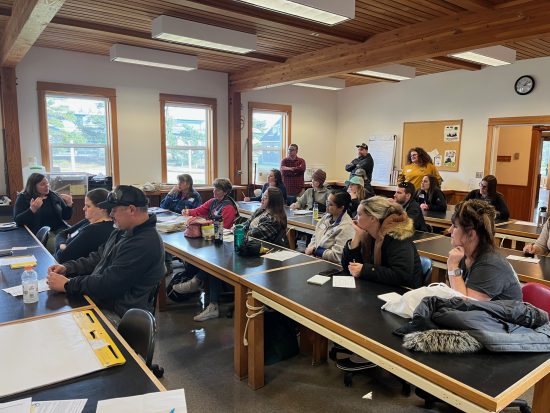
After the field work is completed, we all gather back at the lodge to create posters and present our results to the rest of the workshop participants. Based on individual interests and grade levels, teachers work in small groups to analyze their data and share their conclusions and questions. There are various topics that groups are curious about — from lichen or moss, to bird behavior and effects of a recent fire on the tree species. Teachers take on the work of scientists so they can get a feel for the experience their students will have in the future.
 Teachers often want to backwards plan, knowing the end product their students will experience and learn. But this type of scientific inquiry requires us to let go of control so that students can ask authentic, meaningful questions that are not yet answered. Teachers come to learn that teaching the process of science is often more valuable than teaching the content. They are engaging in the work of true scientists and learning how to be curious, lifelong learners along the way. Being a part of inspiring projects and trips such as these is an experience that teachers, students, and even parent volunteers will remember for years to come. As an upper elementary teacher myself, I often hear about the power of our work when families come back to visit and reminisce about their time in my classroom. I know that this work will impact future generations and their enthusiasm for science learning. Not only that, we are teaching students to do, read and understand the work of a scientist so they can make informed choices in their adult lives.
Every time I help lead this workshop, I witness a transformation among the participants over the course of the three days. On the last day we give a feedback form which is always filled with so much enthusiasm for taking the learning back to the classroom and to colleagues; I often hear this is the best professional development they have experienced in a long time because it is so practical and hands-on. One of my favorite parts about the Diack field science workshops is witnessing the teacher’s excitement for learning about nature that I know will be passed on to students back in the classroom. Twice a year we meet at a beautiful location in Oregon where teachers from many different districts have the opportunity to carry out the mini-inquiry project and plan curriculum that promotes student-driven, field based science inquiry for K-12 students.
Perhaps one of the most significant outcomes of the Diack Ecology Workshop is the formation of a community of educators passionate about outdoor learning. Teachers exchange ideas, share success stories, and collaborate on developing resources for implementing field-based inquiry projects. They share ideas across grade levels to get a sense of where their students are going and have come from. This sense of community not only strengthens the impact of the program but also creates a support network for educators venturing into the world of environmental education. I always leave the workshop inspired by the creativity, collaboration, and joy from teachers. It is one of my favorite parts of the summer and I would encourage anyone who works with students to come join us and experience the magic.
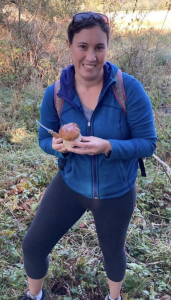 Tina Allahverdian is passionate about connecting students with science in the natural world. When not teaching fifth graders, she can be found reading in a hammock, kayaking through Pacific Northwest waters, or hiking in the mountains. She currently teaches in West Linn, Oregon, and resides in SE Portland with her husband, twin boys, and their dog, Nalu.

by editor | Sep 18, 2025 | Adventure Learning, Conservation & Sustainability, Critical Thinking, Data Collection, Environmental Literacy, Experiential Learning, Forest Education, Inquiry, Student research, Sustainability, Teaching Science
Expeditionary Learning: Exploring Healthy Forests
By Val McKern and Greg Goodnight
What is a healthy forest? That is the question that Kettle Falls Elementary School fourth graders have been grappling with all winter. In order to examine this question, fourth grade teachers Sally James, Sydney Potestio and Judy Galli have designed an expedition with carefully scaffolded projects for their students. Through these in-depth, service-learning projects, students have been engaged in reading, writing, math, science, social studies and technology. In Kettle Falls we firmly believe that it takes a village to educate a child and we count on a cross curricular approach of teachers and many experts to make any expedition a success for our students. Our priority is creating engaging expeditions that have rigorous learning for ALL students.
Kettle Falls Elementary: an expeditionary learning school
An expedition is the format Kettle Falls Elementary uses to combine adventure and service with learning state standards. Each expedition has standards strategically embedded in fieldwork. The healthy forest expedition will combine many “I can” learning targets based on state standards, with snowshoeing, animal tracking, trail cameras and forestry. In the end, students will deliver PowerPoint presentations to the North East Washington Forestry Coalition (NEWFC) as an authentic audience for their service learning work product. The expedition will provide an exciting and adventurous outlet for student learning and assessments on rigorous state standards. As an Expeditionary Learning School, Kettle Falls Elementary believes that expeditions are the primary way of organizing curriculum.
The subject matter of a learning expedition is a compelling topic derived from content standards. Expeditions feature linked projects that require students to construct deep understandings and skill and to create products for real audiences. Learning Expeditions support critical literacy, character development, create a sense of adventure, spark curiosity and foster an ethic of service. They allow for and encourage the authentic integration of disciplines. (Expeditionary Learning Schools Core Practice Benchmarks p.8.)
 This learning expedition began as all expeditions begin at Kettle Falls Elementary. The staff went through a careful study of the new Washington State standards and determined the “priority standards” at each grade level. The standards are then written as long-term learning targets. Once these standards were determined, teams researched case studies that could become the focus of the learning expeditions. The life science standards addressed focused on life cycles, animal structures and behaviors, food webs, ecosystems and human impacts as the center of the expedition.
Literacy is embedded with in the expedition. Priority learning targets are written based on the standards of reading and writing. Reading comprehension strategies and the traits of writing are the focus of these targets. A content map is designed that assigns long term learning targets to each of three expeditions through out the school year. Each expedition runs for eight to twelve weeks.
Learning targets are at the heart of our work. There is clear criteria for posting and referencing learning targets school-wide. Long- term targets, project targets, and scaffolding steps are organized so that students can track their achievement during the daily debrief. We emphasize “learning together, but assessing independently.” Anchor charts that hold the thinking of the class are posted near the targets. The anchor charts will collect information that makes the learning target clear, whether it is knowledge or meta-cognitive thinking. All students are independently assessed on all learning targets.
Kettle Falls Elementary as a 21st Century School
Expeditionary Learning Schools set an expectation for service and authentic work. Kettle Falls Elementary teachers create expeditions that foster service in authentic ways.
Benchmark 3: B. Authentic Audiences
1. Products often meet an authentic need and have an audience and purpose beyond families or the classroom teacher.
2. Some of the products are particularly motivating because in themselves they are acts of service.
(Expeditionary Learning Schools Core Practice Benchmarks p.13.)
We are a Learn and Serve Grant recipient, which has helped us focus on the service aspect of our expeditions. This grant gave teachers release time to write rigorous expeditions and make the community contacts necessary for authentic service. It also supported the expedition through fieldwork and materials for a new expedition.
We knew that this expedition was an outstanding opportunity to educate our students in sustainable education. It meets many of Jaimie P. Cloud’s EfS Frameworks:
Responsible Local/Global Citizenship — The rights, responsibilities, and actions associated with leadership and participation toward healthy and sustainable communities. Students will know and understand these rights and responsibilities and assume their roles of leadership and participation.
Healthy Commons — That upon which we all depend and for which we are all responsible. Students will be able to recognize and value the vital importance of the Commons in our lives, their communities, and the places in which they live.
Multiple Perspectives — The perspectives, life experiences, and cultures of others, as well as our own. Student will know, understand, value and draw from multiple perspectives to co-create with divers stakeholders shared and evolving visions and actions in the service of a healthy and sustainable future locally and globally.
A Sense of Place — The strong connection to the place in which one lives. Students will recognize and value the interrelation- ships between the social, ecological and architectural history of that place and contribute to its continuous health. (Cloud, p. 172-173.)
The North East Washington Forestry Coalition (NEWFC) agreed to partner with Kettle Falls Elementary School. This expedition reaches each of these components of Cloud’s framework. It is the basis of an expedition with an authentic purpose, service, purposeful fieldwork, multiple perspectives and rigorous content.
 Kettle Falls Elementary Bangs monitoring project
Three KFE classes will be engaged in a hands- on learning experience that includes in-class preparation and learning and fieldwork designed to teach them about the life cycles of natural systems, sustainable resource management, and community collaboration. The project will include wildlife, tree, and plant monitoring within the Bangs Mountain Wildland Urban Interface project on the Colville National Forest, as well as presentations and instruction from school and community experts in the field and in the classroom, including members of the Northeast Washington Forestry Coalition. The students will work with the Coalition to complete a final report in the form of a PowerPoint presentation, documenting their monitoring work and educational experience with photos and written reporting. The final report may be posted on the Coalition’s web site, and a final press release may be prepared for local newspapers to share the outcome of the project with the broader community. Derrick Knowles, Education Outreach, NEWFC.
NEWFC is a local organization that believes in demonstrating the full potential of restoration forestry to enhance healthy forests, public safety, and community economic vitality. Because Kettle Falls is community that relies on the timber industry to survive, we wanted to create an expedition that would have many viewpoints. We felt that NEWFC would have the multiple perspectives within the organization that would make our study to compelling to students and community members, since NEWFC is comprised of members who come from the timber industry to those in Conservation Northwest. Our students are seeing that there is not one “right” answer to their question of “What makes a healthy forest?”
Kettle Falls Elementary fourth grade expedition: the stories tracks tell
Case Study One: Indicator Species of Bangs Mountain
Our Learn and Serve Grant gave a team of six staff members the opportunity to participate in a SEA (Service, Education and Adventure) training this fall. This adventure included learning to track with Tom Murphy of Edmonds Community College and the LEAF (Learn-n-serve Environmental Anthropology Field) school. This so engaged the teachers that we were determined to give our students the same opportunity. Murphy was able to create an alterna- tive winter course that brought 12 college students to Kettle Falls for a week. During that time, the LEAF school taught the students how to recognize tracks and gaits of our local animals. The focus was on five animals: whitetail deer, turkey, snowshoe hare, lynx and coyote. These animals were chosen with help from the Forest Service because of their status as indicator species for the Bang’s Mountain area. Students spent time in the forest that week, learning to track, photograph tracks, and measure tracks. They also learned to set trail cameras along trails in order to capture photos of the elusive animals.
Students from Kettle Falls High School Wildlife class with teacher Jono Esvelt participated in each of these activities sup porting the fourth graders throughout this expedition. They also took on the task of writing “field guides” for the fourth graders to use in their work.
This project focused on the learning targets of
- I can independently sort animals by the structures and behaviors that help them survive in their environment.
- I can independently list 4 parts of an animal and describe how the parts help the animal meet its basic needs.
- I can independently generalize from multiple forms of text to learn about forest animals.
- I can independently elaborate using details and/or examples about one forest animal.
- I can edit for capitals against the class capitalization chart.
Students learned about each animal through predicting structures and behaviors by analyzing a collage of photos and You Tube videos. Predictions were recorded before reading field guides and predictions were confirmed or not. Once the recording sheets were completed, the students wrote expository papers on the survival structures and behaviors of each animal. These were combined to create PowerPoint slides that will be included in their final product, some with actual photos of the tracks or animals that were photographed at the Bangs Mountain site. The good news was that some animals were captured by the trail cams, but some remained elusive!
Case Study Two: Food Webs of Bangs Mountain
This project really focused on the interdependences within the forest ecosystem. Learning targets in this investigation focused on giving students the knowledge to be able to complete the narrative prompt:
You are a wildlife biologist researching animals on Bangs Mountain. One of your jobs is to report to the community of Kettle Falls the stories the animal tracks of an indicator species told you while doing your fieldwork. To do this you will need to describe where the tracks were found and your inferences of what the tracks are telling you about that animal’s daily life:
- I can describe the interdependences in a forest ecosystem.
- I can explain how a forest ecosystem impacts animal population.
- I can independently generalize from multiple forms of text to learn about forest ecosystems.
- I can write a narrative with a clear beginning, two events and a clear ending.
In order to make this narrative realistic students needed to understand the actual role of a wildlife biologist. Learning about careers while in engaging expeditions opens our students’ eyes to the world of possibilities. Students continued their fieldwork, checking their trail cams, snag counts (their first monitoring experience), searching for tracks and other sign of life in their plots and were prepared for snowshoeing (though there simply wasn’t enough snow for them this year). Using the reading skill of “generalizing to understand” helped student comprehend the interdependence of the forest and was built through reading, photography, experts, media, data and many simulation games. After each activity students recorded “new learning” on anchor charts that build the content schema. They also recorded their use of the skill “generalizing” on anchor charts to show their ability to be meta-cognitive about comprehending new material. Students were able to use the information gathered from the multiple sources to write their narrative.
Case Study Three: Bangs Mountain as a Changing Ecosystem
Now that the students have developed a level of knowledge about the interdependence of forests they are ready to move on to the changing ecosystem. This is when they really become experts and begin to look at the many stakeholders of the forest. Their fieldwork becomes very data based. Through skill building in P.E. they learn about pacing. Each child is responsible for pacing off 104 feet, using a compass to keep their lines straight, they determine a half acre plot for their team. They use a tape to measure their accuracy after pacing and the corners are marked on the GPS so that their plot can be found on Google Earth. Students are now collecting data on the canopy by measuring open and covered areas. They have learned to use transect lines during their monitoring. This data is part of the baseline that will be used in the study. They identified three plants in the understory and did a plant count of their plot. Their study of the animals in their plot also continued, with data from tracks and trail cam photos. The most common track and photo taken was squirrels, though they are not one of the indicator species. Students found little evidence of the lynx at their plot. Animal population changes will be one indicator of increased health of the forest over time.
During this project students learned about many changes that can happen to forests over time. The learning targets for this project are:
- I can independently describe how onepopulation may affect other plants and/or animals in the forest ecosystem.
- I can independently evaluate one population in different forests, determine which will thrive and give clear reasons.
- I can independently describe three ways that humans can improve the health of the forest ecosystem.
- I can independently assess the author’s effectiveness for a chosen audience.
- I can independently organize my writing.
This means:
- I will write an introduction, supporting details using examples, and conclusion in an expository writing.
Each day of this project focuses on a change in the forest ecosystem. Some are changes that have taken place at the Bangs Mountain Project and some are changes that could eventually happen. All students receive the same reading each day, but they read the articles for a different purpose: natural or man-made changes, population changes, or gradual or rapid changes. Each student becomes an “expert” on their article. The students then “jigsaw” their articles once they have recorded the important information. The student experts then share out in small groups, creating a real need for students to comprehend and analyze their text. Special Education and Title I students are pre-loaded with vocabulary and content before the article increasing their ability to fully participate while in class. Once the information has been analyzed students come together to complete anchor charts where they record the changes and determine if human impact was positive or negative. They also determine the author’s purpose and if the author was successful in delivering their message.
By the end of this case study they have a thorough understanding of thinning, prescription fires, recreation management, forest flu and other healthy management issues.
We believe that reading is only one vehicle to understanding new ideas. Fieldwork, media and experts are also key components to creating powerful learning tools. Experts from the timber industry, Forest Service, Conservation NorthWest, and Department of Fish and Wildlife have all volunteered to work with our students, ensuring that students are learning realworld applications of the knowledge. Each of these experts will not only share their expertise on managing forests and their per- sonal perspectives of what makes a healthy forest, but also about their careers.
The students will complete this project with a simulation from Project Learning Tree, “The 400 Acre Wood.” Students will determine the actions taken to manage a forest much like their plots on the Bangs Mountain Project. This project has a balance of Vibrant Economy, Healthy Environment, and Equitable Society, as recommended by The Sustainable Design Project Teacher Manual. (Wheeler, Bergsman, Thumlert 2008.)
 The Final Presentation of “What is a Healthy Forest?”
The final project is a culmination of all of the data that the students have collected while completing this project. Data is compiled in a variety of ways. The ani- mal monitoring is a graph of the sightings caught on the trail cams, the plant monitor- ing is a graph as well, both done on Excel. The canopy is drafted on graph paper, indicating the cover and open space. There is also the map from Google Earth, indicating each plot for future reference and to gauge changes over time. This work is gathered in a Power Point to be presented to NEWFC at a future meeting.
Kettle Falls Elementary: expeditionary learning and 21st century intertwined
Our students had the opportunity to become engaged in their local forest, gathering a respect for the land, observing the interdependence and understanding the decisions made by others that use our forests. Students were able to meet rigorous learning targets and assessed independently on each target. They collaborated to create authentic projects that reach beyond their school walls.
The expedition included many different modes of learning during this project that are key to Heidi Hayes Jacobs’ Tenets for Purposeful Debate leading to Content Upgrades:
- • A personal and local perspective is developed and presented in the content area, where natural and viable.
- • The whole child’s academic, emotional, physical and mental development is thoughtfully considered in content choices.
- • The possibilities for future career and work options are developed with an eye to creative an imaginative directions.
- • The disciplines are viewed dynamically and rigorously as growing and integrat- ing in real-world practice.
- • Technology and media are used to expand possible sources of content so that active as well as static materials are included. (Jacobs p 31).
Through compelling expeditions students at KFES achieve many 21st century outcomes. Students build strong habits of work, through both performance (traits that enable students to perform to their potential) and personal relationships (traits that enable students to be good people and community members). They are motivated to learn. Students believe that they have the ability to meet their targets, have clear targets that they can self-assess their progress against, and are connected to their school through the work they do. We believe that academic achievement is increased when students are engaged in learning. Through authentic expeditions like “The Stories Tracks Tell” students build life and career skills. Real world problems increase students’ critical thinking and problem solving skills. The use of technology opens the classroom to wider world, with meaningful examples of the work our students are doing. Our students increase their understanding of 21st century themes such as environmental literacy. (Hulleman, Hartl & Ciani 2009). Through compelling expeditions our students are engaged, supported and held accountable to high standards.
References
Hulleman, C., Hartl, S., & Ciani, K. (2009). Character, Motivation, and Engagement in Expeditionary Learning Schools, Review of the Relevant Literature and Available Measurement Instruments. Nellie May Education Foundation. Expeditionary Learning Core Practice Benchmarks (2003). Garrison, NY: Expeditionary Learning Outward Bound.
Jacobs, H. H. (2010). Curriculum 21: Essential Education for a Changing World. Alexandria, VA: ASCD.
Wheeler, G., Bergsman, K., and Thumlert, C. (2008). Sustainable Design Project Teacher Manual. Olympia, WA: Office of the Superintendent of Public Instruction.
Greg Goodnight is superintendent at Kettle Falls School District.
Valerie McKern is principal at Kettle Falls Elementary.
by editor | Sep 15, 2025 | Adventure Learning, Conservation & Sustainability, Critical Thinking, Data Collection, Environmental Literacy, Experiential Learning, Forest Education, Homeschool, Inquiry, Outdoor education and Outdoor School, Place-based Education, Questioning strategies, STEM, Teaching Science
A Natural Fit: Homeschooling and the Establishment of a Research Forest
by Jess Lambright
For those open to an alternative educational path, a classroom with no walls or desks but instead trees, meadows, and streams, offers abundant opportunities for scientific exploration. My journey in outdoor education started by home-educating my own children, but soon expanded to include other students and families. Although making everyday a field day comes with certain challenges—such as very wet, cold winter days—it has also shown me how adaptable young people are, and how many spontaneous and fascinating learning opportunities present themselves when you commit to regular immersion in the natural world.
I have come to appreciate the vast range of possibilities in which students can acquire knowledge. While some homeschooling families follow packaged curriculum closely and monitor carefully to make sure their children meet state standards each year, others chose a less structured approach called unschooling, rooted in a deep trust for kids’ natural tendency and ability to learn. This philosophy can free a motivated young person to dive deeply into an ocean of learning powered by autonomy, inspiration, and infinite possibilities.
Connecting to place and stewardship of land
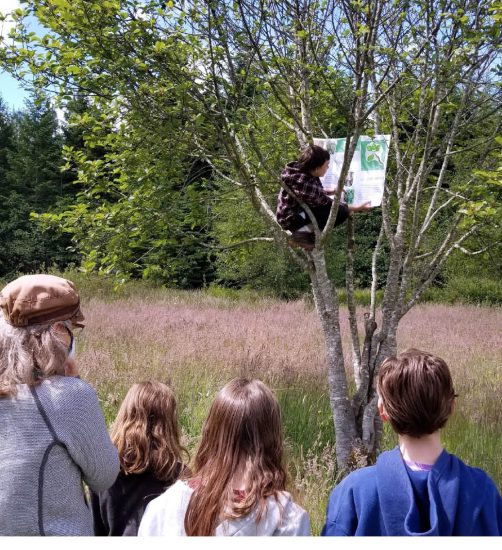
A multi-disciplinary unit study called My Tree and Me, where each student was connected with a specific tree which they measured (diameter, height, age) conducted secondary research about the species, wrote poetry, and created art with materials from the tree. One student decided to give his final poster presentation from the branches of the Cascara tree he had spent so many hours with.
The first outdoor program I hosted involved an established group of kids spending an entire day outdoors, once per week, for over four years. Week after week and year after year we returned to the same 40-acre woods from the first days of fall through the start of summer. It was common for our group to wander through the forest, without a destination or agenda, letting our innate curiosity lead the way. Wandering freely, with open eyes, allowed us to get in touch with what excited us and created opportunities for true discovery (Young et al., 2010, 56).
It filled me with satisfaction to watch the deep connection to place that developed over time in each of us. Monuments and landmarks, like a circle of giant old moss-covered stumps towards the southwest corner of the forest, acquired names and memories and provided comfort and familiarity when they were encountered. We would experience the wet meadow as a place that requires rubber boots to traverse in the wet months, a beautiful explosion of white flowers and soft grasses that dance in the wind in the summer, and a sea of delicate purple camas flowers in the spring. One year we returned to the same sit spots week after week, recording changes in our journals as spring brought all the growing things to life.
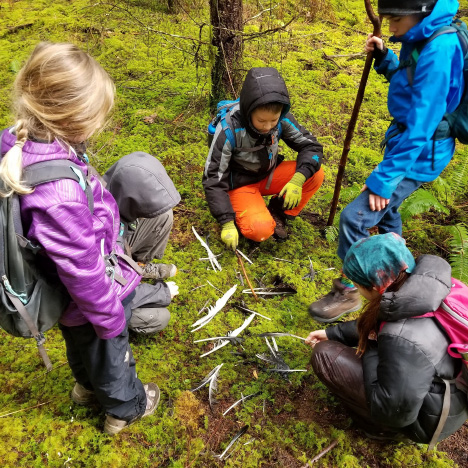
Students pause to examine a pile of feathers they discovered while exploring the woods on a rainy day. The group came up with a series of questions about what happened and brainstormed ideas about how they could investigate further to potentially find answers.
Spending time on a particular piece of land, through the seasons and years, inevitably leads to a sense of kinship and creates an urge to protect and enhance the natural environment. It’s been rewarding to teach students about which plants are non-native and potentially harmful to the local ecosystem, then see them step up as guardians of the land. When we wander through the woods, sometimes they spot a pocket of invasives and if we’re lucky enough to be carrying long-handled loppers, the team of weed warriors can quickly level a patch of Himalayan blackberry. In addition to studying and exploring, offering students an opportunity to actively participate in land management elevates their sense of purpose and deepens their connection to the natural world.
Full Family Learning
Homeschooling naturally leads to multiple ages and families all learning together. In the early days of our homeschool outdoor program the adults often observed activities and supported logistics. But over time it became clear that we truly were a mixed-age group of learners and explorers. Treating everyone as learners equally can have the effect of empowering young people. Sometimes kids master skills quickly. teaching what they’ve learned to adults. And sometimes the best exchange comes not from experts, who have a deep and longstanding understanding of a concept- but those who have recently experienced the gift of insight.
Mixed age learning is a mutually beneficial relationship fostering growth in multiple ways. Adults sometimes shelter in the security of topics they already understand and avoid venturing into areas less familiar. Conducting scientific inquiry in nature is ideal for having a high ceiling and a low floor: everyone knows something, and no one knows everything! Cultivating a growth mindset, by creating an atmosphere where mistakes are celebrated as learning opportunities, and where having a question is as valuable as having an answer (Boaler, 2015, 11), pairs beautifully with immersive study in nature.
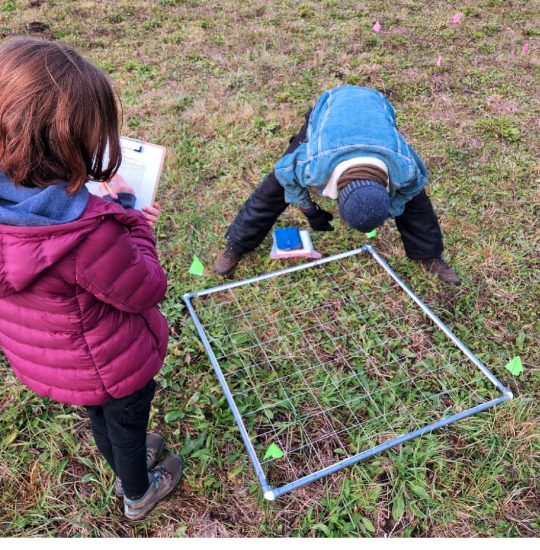
A team of researchers determine the percent meadow knapweed present in a one-meter plot square by examining each of 100 smaller squares for the plant of interest.
Authentic Curriculum
Each day that I meet a group of students in the natural world, I come prepared with a plan for that day. Sometimes my plans are elaborate and detailed, and sometimes they are less specific and open to input from my fellow adventurers. But without exception I am mentally prepared and openly delighted to be upstaged by the unexpected. Whether it is locating a dead porcupine after noticing an unusual smell, being suddenly pelted by large hail, being startled by the arrival of the cacophonous noise of a murder of crows, or being circled by two deer so distracted in their mating dance that they fail to notice us; being fully present for nature’s dramas is my top priority.
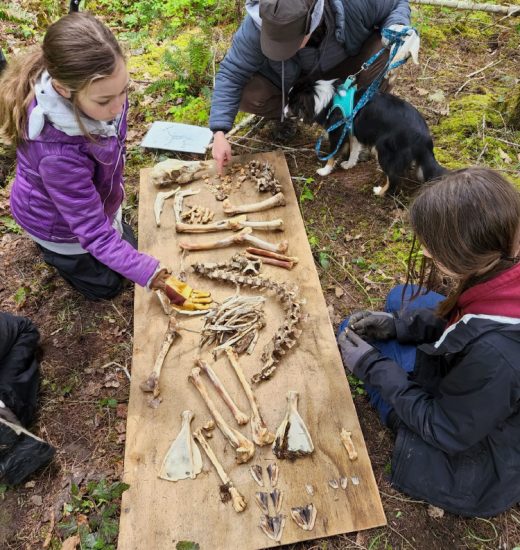
After waiting over a year for the soft tissue to decompose, students collect and sort bones from a deer that died of natural causes near the Bear Creek Wilderness.
One day, just as the families were arriving at the Bear Creek Wilderness, a truck with two wildlife professionals pulled up to examine a deer laying in the horse pasture adjacent to our meadow. Curious, we gathered to ask questions about what might have happened. When they offered to let us keep the recently deceased animal, we gladly accepted- and spent the day dragging it across the meadow into the woods, securing it with paracord, and setting up our two trail cameras to watch what would happen.
Each week we checked on the deer, and everyone brave enough to venture near got to experience first-hand what decomposition looks and smells like. The camera footage revealed a series of fascinating dramas involving a bobcat, opossums, neighborhood dogs, and finally turkey vultures. A year and half later we carefully collected the bones and spent hours sorting and reconstructing a full deer skeleton. Finally, we tried our hands at making bone tools. In my experience, the best learning opportunities are not planned or expected. But when we build regular rhythms and practices, it is possible to “lay the groundwork for the outbreak of authentic curriculum” (Sobel, 2008, 81).
Cultivating scientific inquiry

Students work to match specific leaves to nature journal pages. Each student found a leaf while wandering through the woods, then recorded details of that leaf in their nature journals using words, pictures and numbers. The leaves were collected, then each student selected a new leaf and found the corresponding journal page.
Getting to know a place, including its seasonal changes, provides a useful perspective when it comes to asking research questions. An invaluable tool to record and remember discoveries, questions and observations is the field notebook, or nature journal. Developing the habit of collecting data with pencil and paper while exploring the natural world takes ongoing dedication, is deeply personal, and will certainly evolve through the years if one continues the practice (Canfield, 2011, 187-200). Nature journaling techniques that involve close examination of specimens in order to draw them, often reveal details that would have been overlooked with a quick glace or photograph. Indeed, to truly get to know a specific plant species it is hard to imagine an activity more educational than carefully drawing each of its parts.
Foundational to scientific inquiry is the research question, or asking questions within the realm of science. There are plenty of valid and interesting questions that one might ask while pondering the wonders of nature, and it’s important not to shut down inquiry when a question like, “Does it make this tree happy when I climb it?” arise. If limited to knowledge bound by science, one may miss rich worlds of philosophy, spirituality, intuition, and other ways of knowing. Still, once we are ready plot our scientific course it’s useful to remind students that questions should be measurable (Laws & Lygren, 2020, 90-93).

At the start of a student-led wildlife study, one researcher, who had taken time to carefully read the manual and test out the equipment, teaches the other students how to label their memory cards and set up their trail cameras. This project was made possible by a generous grant from the Diack Ecology Education Program.
Research Methods
When guiding young people into the world of field research it is helpful to start with basic techniques and big picture, cross-cutting concepts. Keeping track of important details in a field notebook and not forgetting to record obvious but key information like the date and location takes practice before it becomes routine. Collecting data can be time consuming, but sometimes trying to interpret sloppily recorded field notes can lead to tedious and frustrating hours at home. Finding a doable and interesting research question, taking into account confounding factors, and dealing with the disappointment if all the hard work to apply different treatments on an invasive plant all result in similar outcomes, requires a certain level of maturity and commitment.
Digging into a full-fledged research project requires determination, perseverance, and time, but it is possible to introduce students to the exciting and fun parts without getting bogged down by details. I recently taught a research methods class to elementary and middle school students with the goal of having hands-on experience with sophisticated research equipment without requiring data analysis or report writing.
We practiced collecting samples, and at first, we recorded in our field notebooks all the important metadata. Inspired by collection and observation, but limited in time, we then simplified the process to maintain interest and focus. For the rest of our forest walk we collected whatever samples caught our eyes- and mentioned what we would record if we were doing a research project- but kept it fun and quick so we still had time to investigate them at the end with magnification. Keeping data collection fun and exciting for younger students makes for a useful introduction to scientific inquiry and sets them up for conducting their own research in the future.
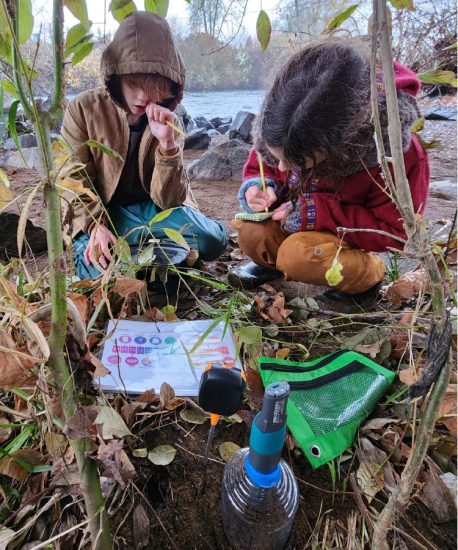
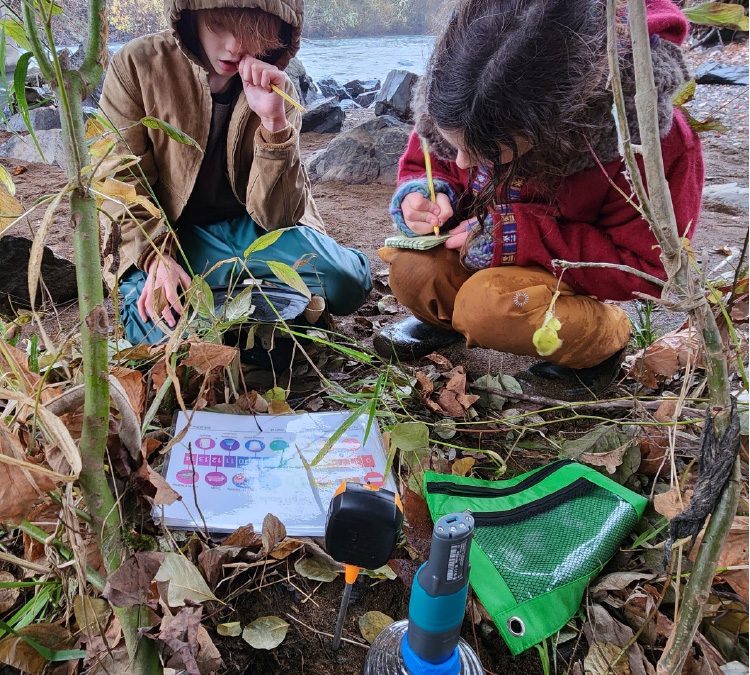
Students collect carbon dioxide and pH data from a patch of earth using equipment funded by the Diack Ecology Education Program during a research methods class with Wild Alive Outside.
Student-Led Research
In my experience, homeschoolers have a low tolerance for contrived activities, busywork and doing things for a grade. Any activity, assignment or project needs to be authentically meaningful. While it may be hard to force them to fill out a worksheet recording what we just discussed, they often thrive with open-ended activities and projects they can direct. It’s important to provide the appropriate scaffolding, and offer examples, but I have been impressed by how quickly and enthusiastically students construct their own research projects. As a mentor, I sometimes struggle with finding balance between requiring them to do something ‘right’ and encouraging critical thinking along with a safe place to fail, each of which are valuable learning experiences. Allowing students to take ownership in the learning process enhances the development of scientific thinking.
Once, a student created an elaborate plan to attract birds for his trail camera research project involving dead trees, peanut butter, and bird seed. There was tangible disappointment when the resulting images revealed many more rodents than birds, but it led to a new series of questions as well as an understanding about wildlife activity in that area. Field science is almost always iterative in nature, with new questions emerging from initial data and, ideally, the opportunity to inquire further and collect more data. With guidance and partnership students integrate information while maintaining natural curiosity.
Expanded Educational Support
Last year our outdoor program, Wild Alive Outside, received its first infusion of grant-funded scientific equipment. The Diack Ecology Education Program financed a set a trail cameras for our students to study wildlife activity at the Bear Creek Wilderness. Access to high-quality equipment has been a game changer for our little research group. Students felt empowered to design their own experiments by having full control over one of the trail cameras and two high-capacity memory cards. In addition to learning what wildlife passed through the area of the forest or meadow they selected, they gained experience with organizing and analyzing digital data. For some, it was their first exposure to spreadsheets, and others had to push their edges to patiently examine each of hundreds of photos. After months of data collection and conducting secondary research on one of the many wildlife species they discovered, they created posters to present their findings.
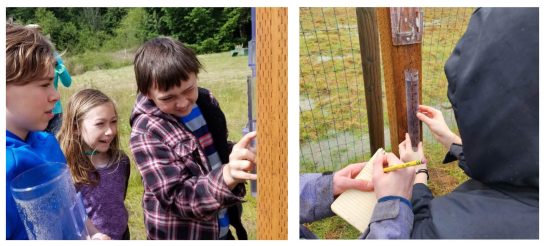
Students carefully measure the water in the rain gauge to determine rainfall over the previous week. Data is later reported to the CoCoRaHS website as part of a nationwide citizen science initiative.
For several years now, each day on the land begins with checking the rain gauge. Because we only visit once per week, we often have several inches of rain to carefully measure and record in the notebook. This simple ritual wakes up scientific thinking: “remember to look straight on before taking a reading,” connects us to what’s been happening while we were away: “no wonder there’s standing water in the meadow,” and gives us access to site-specific long-term data. At the end of the water year, shortly after the start of autumn, we can look back at the data we’ve collected, compare it to previous years, and make predictions for when the rains might come that fall. Additionally, we report our data through a sophisticated citizen science program called CoCoRaHS – Community Collaborative Rain, Hail & Snow Network with thousands of other citizen scientists across the country. I have found students take data collection quite seriously when they know they are part of a larger community of scientists, all doing their best to produce accurate results.
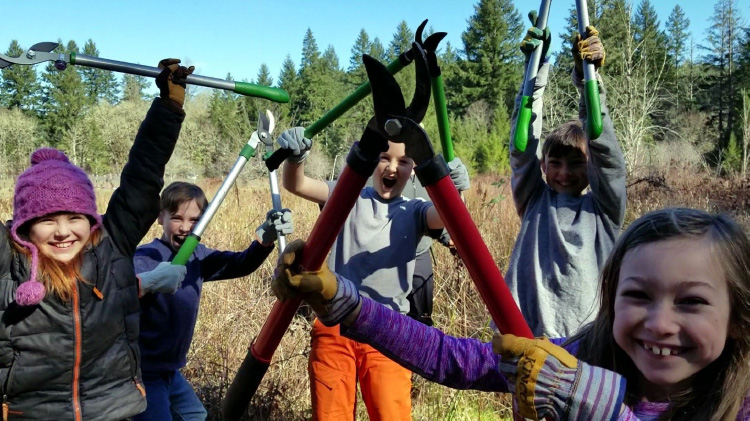
After tackling a large patch of invasive blackberry bushes, the Weed Warriors celebrate their contribution to protecting the wet meadow in the Bear Creek Wilderness.
The Bear Creek Wilderness and Student Research Forest
My program design is to plant the seeds for creating a student research forest where young people will have ongoing opportunities to learn scientific methods of field research and contribute to an ever-increasing body of knowledge through their own efforts. Just as the H.J. Andrews Experimental Forest welcomes graduate students and long-term ecological researchers and has amassed a wealth of knowledge and data about that site, we aim to support young emerging scientists with open minds and creative ideas to connect with place, nature, and make meaningful contributions to science within a community of knowledge seekers. Participants gain foundational skills together as they engage with the land, utilize scientific tools, grow as learners, and share knowledge with each other.
References
Boaler, J. (2015). Mathematical Mindsets: Unleashing Students’ Potential Through Creative Math, Inspiring Messages and Innovative Teaching. Wiley.
Canfield, M. R. (Ed.). (2011). Field Notes on Science and Nature. Harvard University Press.
CoCoRaHS – Community Collaborative Rain, Hail & Snow Network. Retrieved January 18, 2024, from https://www.cocorahs.org/
Diack Ecology Retrieved January 26, 2024, from https://www.diackecology.org/
H.J. Andrews Experimental Forest. Retrieved January 26, 2024, from https://andrewsforest.oregonstate.edu/
Laws, J. M., & Lygren, E. (2020). How to Teach Nature Journaling: Curiosity, Wonder, Attention. Heyday.
Sobel, D. (2008). Childhood and Nature: Design Principles for Educators. Stenhouse Publishers.

In 2019, Jess Lambright started a nature school for homeschool families where once per week kids and parents spend all day outside learning wilderness skills, exploring, developing naturalist knowledge, conducting field studies, and connecting with nature, themselves, and each other. She founded Wild Alive Outside in the summer of 2023 with the goal of getting more youth outdoors to discover wonder and inspiration in the natural world through science, outdoor skills, and wilderness connection.

by editor | Jan 29, 2020 | Forest Education, IslandWood, Learning Theory
 he thought of talking trees conjures up images of the fantastical. Tolkien’s ents patrol the forest, Baum’s forest of fighting trees throws apples at Dorothy, and Marvel’s Groot guards the galaxy. Or, perhaps, we think of those who speak for the trees that cannot speak for themselves: Dr. Seuss’s Lorax, or the dryads of ancient mythology. But I would argue that all trees have a lot to say, if we are willing to listen.
Like all great storytellers, trees have an impressive hook. Each species, a different author, has different tales to tell. Throughout time, some people have listened to those stories, and translated them to a language we can understand. And trees also give us the stories the trees may not even know they are telling, the way a worn and coffee-stained paperback can tell of a voracious and messy reader. Students, lovers of stories oral, written, and visual, can learn from these giants of the forest.
IslandWood, a residential environmental education school on Bainbridge Island, Washington, markets itself to students as “a school in the woods.” On its surface, this imparts expectations of students while on campus. It is not camp, but a school, with all the implications of learning. But what about the second part? The woods as a term indicate the outdoor status of some classrooms, but also plants the idea very early on of the ubiquity of trees. Wood comes from trees, and woods come from trees. This school is where we learn among the trees. Students should be aware of that upfront.
These trees have a long story to tell our students, and the students are ready to listen. When the glaciers retreated from the Puget Sound area 10,000-12,000 years ago, in moved trees from present-day California. The seeds following the glacier’s retreat met an incredibly moist environment that was perfect for the establishment of gargantuan specimens. Even students with individuals of these giants near their school are unlikely to see them in such abundance, or in such a relatively untamed state, covered in moss and lichen.
Students’ chatter while clambering from buses onto IslandWood property is a good clue in to what familiarity they may have with the woods. Students will disembark the bus and are unable to tear their eyes away from the treetops. Audible oohs and ahhs promise for a week of wonder and exploration. Recently, a student walked through the arrival shelter and turned to a friend to say, “so I guess this is what the woods are.” The trees are our ambassadors to these students, and the story they tell is one of upwards growth.
At IslandWood, we teach of the “Big Five:” western red cedar, red alder, western hemlock, bigleaf maple, and Douglas-fir.
The western red cedar is a favorite of many students. On species reference cards, some of the cultural uses are listed: canoe building and basket weaving feature prominently. This already provides a unique connection to place; on their website, the Suquamish tribe introduce themselves as “expert fisherman, canoe builders and basket weavers” (Suquamish Tribe, 2015). This is the identity they first relay to visitors, and one that many students have already been introduced to. To say “this is what the Suquamish used to make canoes and baskets” taps immediately into their understanding of native traditions.
The idea that people tended this land for livelihood before European settlers arrived is abstract for many students. While they may be taught the names of local tribes and heard some of the stories, touching a tree that contributed so heavily to their way of life provides a new experience. I taught a student that the Suquamish use the cedar bark for making clothing, and then heard them explain to a classmate that you can tell the bark is good for weaving because of the way it is stringy and long. The instructor provides one piece of information, and the student is able to gain a deeper understanding from interactions with the tree. The tree is telling the story of its cultural history by making itself so accessible to our young explorers.
A trend that students visiting IslandWood are quick to notice is that many of the red cedars are turning brown and losing leaves. This does not match well with what they have been taught about the definition of evergreen, and they struggle to reconcile reality and the trees. An investigation into why some red cedars are dying and others aren’t will lead students to the reality of climate change. The trees, so long-lived, cannot adapt the same way that other species can. When confronted with this reality, student groups come up with creative solutions, many offering to water the trees with their own drinking water. The trees, for those who listen, are sending out a plea and tell the story of human excess.
The red cedar also introduces students to the concept of sustainability and giving. Just as a dining hall might teach students to not waste food, the trees can show that wasting other resources is avoidable too. The roots, outer bark, inner bark, needles, and branches of trees all serve varied purposes, ensuring that none is discarded. The characteristic swooping lower branches of the tree, which resemble arms outstretched, relate to tradition. One Coast Salish tradition tells of the appearance of cedar tree at the spot when an incredibly selfless man died. IslandWood’s Great Hall has a cedar statue of Upper Skagit woman Vi Hilbert. The arms of the statue are similarly outstretched in welcome to those who enter the space for learning. The tree that gives its whole self to the people who need it sits with its branches outstretched as a welcome for more users.
When students learn the red cedar and later point it out on the trail, the swooping branches are most often cited as their point of identification. When asked what those branches remind them of, the first answer might be “the letter J,” but given some time, students arms will go out in an open gesture to mimic the tree. “It’s the tree of life,” they say, feeling connected to the history of that species.
The Douglas-fir tree, a mainstay of this ecosystem, is another favorite of students. While learning about the tree, students inevitably discover a cone on the ground, and pick it up, many questions having sprung forth in their minds. As trees that can grow over 300 feet tall with few lower branches, the opportunity to have a proxy for what goes on above our heads is incredible. The cones are unique to this tree, and tell a great story.
The cones have a two-tone property, as the seeds protrude beyond the scales of the cone. Tradition would tell that those lighter colored pieces are from a great fire that ravaged the land millennia ago. As the fire raged, animals fled, and the mouse ran to seek shelter. Unfortunately for the mouse, every tree it asked for help was worried for its own survival, unable to help the forest friend. When the mouse came upon the Douglas-fir, it opened up its cones and instructed entry; its lower branches would be above the heat of the fire, and its thick bark would protect it from the heat. The mouse and tree survived the fire, and the cones show a vestige of that encounter, as there appear to be little legs and a tail sticking out from every cone.
After hearing this story, students become experts on Douglas-fir identification. If their eyes are cast downwards, looking for signs of life on the trail, they see the cones and are reminded of the story they learned. If they are up, facing ahead and all around, they will see the thick bark that protected the tree. The stories reflect the nature again, and tree identification by means other than leaf recognition starts to be a possibility for students.
 IslandWood property, once seized from the Suquamish, was the site of a major logging operation. Students see many trees and marvel at their size and age, but a hike to the harbor tells a different story of these trees. The trees that they have become familiar with are members of species that may live over one thousand years, but this space in particular is a reflection of its past. Blakely Harbor is the former site of what was “the largest, highest-producing sawmill in the world” (Bainbridge Historical Museum, n.d.).
The site at the harbor is unmistakably the vestiges of a former factory of some sort. Some students come in aware of the logging history of the area, and they are reminded of that history by the remnant logs that stick upright out of the harbor, former supports for the mill infrastructure. Some students surmise that the wood, decaying, waterlogged, and now home to aquatic plants, are a forest that has been cut down. When presented with the uniformity of the timber, especially as compared to the forests at main campus, they are eventually reminded of some man-made structures, and then the history of the logging operation can be explored.
To many of these students, IslandWood is the pinnacle of wild. Yet this adventure shows the proclivity of some humans to extract natural resources past their sustainable harvest. The trees that remind the students to be sustainable and giving are the same species that were extracted, sent into the mill and out to be shipped to other parts of the country and the world for human consumption. The Douglas-firs that protected the mice from the fire were cut down and extracted, providing little habitat for any animals.
The average age of street trees in Seattle is 3 years (Brinkley, 2018). Students may understand trees can live to be hundreds of years old, but learning that Douglas-firs can live to be over one thousand years old makes their eyes light up with wonder. Even the relatively young trees on campus have been present for decades, watching the landscape change with the inhabitants. Coming to an outdoor learning facility where the trees reach hundreds of feet in the sky can instill a feeling no book or photo could. Let the trees greet our students with arms and branches wide open.
Marlie Belle Somers is a graduate student in the Education for Environment and Community program at IslandWood, partnered with the University of Washington.
Remnants of the lumber mill docks at Blakely Harbor. Students use this as a clue while investigating what came before our campus stood on these grounds. Photo by Marlie Belle Somers.
Bainbridge Island Historical Museum. (n.d.). Port Blakely: Portrait of a Mill Town. Retrieved from http://bainbridgehistory.org/port-blakely-portrait-of-a-mill-town/
Brinkley, W. (2018, November 2). Urban Ecology. Lecture presented in Antioch University, Seattle.
Suquamish Tribe. (2015). History & Culture. Retrieved from https://suquamish.nsn.us/home/about-us/history-culture/

by editor | Feb 21, 2018 | Forest Education, Outstanding Programs in EE
When Water Speaks: The Power of the Forest School Movement
by Amanda Crawford
issouri is a treasure trove of outdoor places and wild spaces dedicated to adventurers of all kinds. The natural brilliance of the Missouri landscape is no secret. And yet, unbeknownst to many, tucked away in the heart of West County, a forest awaits discovery. But not for long…
The muffled sound of little feet treading on crunchy leaves can be heard as a small group of preschoolers make their way through the woods.
“Is the forest alive, do you think?” Molly, age three, wondered aloud.
“Of course it is! Because flowers are growing.” Nora exclaimed. She’s three, too.
“The water is talking to us,” four year old Arian stated observing the creek.
“What’s it saying?” Molly inquired.
“I’m not really sure yet.” Arian replied.
“I want to go down to the creek to listen,” said Danny, four.
And down they went, taking care to check on the friend behind them. The forest echoed with splashing water and playful laughter until the chill of early spring sent them back to dry land.
The slope was slick as wet rain boots met the muddy ground. One after another, the children climbed up the narrow path their boots had made on the way down. Grabbing onto protruding roots, low hanging branches and rocks within arm’s reach, the crew used all the resources the forest had to offer as they worked to pull themselves up. One friend, however, struggled at the base of the hill.
“Try to grab onto this stick,” Nora suggested as she extended a branch to Danny.
“No, it’s too small. We need a bigger stick. ….. How can I get up?” Danny stammered, looking up to his friends for ideas.
“Well you can climb up the way I climbed up. I had to pull on roots and it took a long time but I still got up!” Arthur, also four, explained.
Danny’s face suddenly lit up. “We can connect some sticks together! Nora can connect hers to Arthur’s and Arthur can connect his to Austin’s! Then it will be long enough!”
“But how can we stick them together? Tape?” asked Arthur.
“No, the tape is at school.” Nora reminded him.
“Mud! It’s sticky! If we leave it, it will dry and we can use it.” Arthur exclaimed.
“Look, he’s climbing! See, I knew you could do it, Danny!” Nora beamed. “And sometimes you slip and it’s okay. It just means you have to grab on really tight.”
“I can’t climb up but I have to!” Danny said resolutely.
Arian’s right. Wild places are talking to us. The forest has a lot to say to children; they are problem solvers and critical thinkers, they are compassionate and confident and filled with grit.
All of these skills came into play as the children rallied together to help their friend. Children want their communities to know something about the forest – that children have the right to play in them.
Forest school is an educational movement sweeping its way across the nation as research continues to assert the importance of time spent outdoors. Interacting with nature is as vital to one’s education as time spent in a classroom, if not more so.
Raintree is Missouri’s first Reggio Emilia inspired Forest School where children bask in the beauty of winding deer trails, wild flowers and a babbling creek every day.
Amanda Crawford is a teacher and forest school practitioner at Raintree School in St. Louis, Missouri.

by editor | Oct 26, 2015 | Forest Education
Seeking Environmental Maturity at Starker Forests
Helping students climb the ladder to responsible citizenship
by Richard Powell
 tarker Forests is a family-owned tree farming business of about 80,000 acres, mostly within an hour’s drive in the Coast Range west of Corvallis, OR. For many years, we’ve taken people on trips to the woods. These might be field trips for school children, university students, visiting foresters/scientists from around the world, or the general public. We’ve hosted a number of workshops for teachers.
As our society becomes increasingly urbanized, we see people becoming increasingly unaware of the origins of the things they use in their daily lives. We’ve had high schools students identify their electric hair dryers and modeling clay as not coming from natural resources. A senior remarked that he didn’t know Oregon had rock quarries (apparently the concrete floor we were standing on just magically appeared)! A group of high school students weren’t even sure what natural resources were but thought a dairy cow might be related to natural resources – although, they weren’t sure. As an example of something not related to natural resources, middle school students often point to their classroom’s television.
To become a wise user of natural resources, it is imperative that people understand where things come from. Our intent is to help them re-connect with the natural world and, more specifically, get a better understanding of the forest and the origins of all the wood products they use.
 At the same time, we find people have little sense of the history of a landscape. Students are taught the science of the environment but they do not connect that science with the landscape’s history. We want people to understand that biology and history have worked in tandem to shape what they see; the landscape is a function of both biology and history.
Of the school groups we take on field trips, most come from elementary schools; a few come from middle schools; only rarely, do they come from high school. Being so close to Oregon State University, we do get some university students and we get a lot of people from the general public. We get a number of foreign visitors – foresters, scientists, landowners, etc.
Even though we take many school classes to the woods, we get very little feedback from the teachers. [The best feedback is that most teachers come back year after year.] The absolute best feedback we get is when we see a child a year or two later. It takes very little time for us to realize we’d seen them before and that they remember quite a bit from their earlier field trip.
With adult groups, we commonly hear someone remark how a forester has to know about and care for so much more than just the trees. Sometimes, we’ll hear someone say they have to re-think what they know about forests and forestry. Now and then, they’ll remark how they still don’t like some of the things we do in forestry but they begin to understand there is a reason for what we do and it is based on science – it is not just about the money.
Though we take around 2000 people a year to the woods, we are foresters; we are not trained in pedagogy. For years, we’ve had a nagging question: is what we’re doing working? Do people “get” what we are trying to teach? Does any of this stick with them for the long term? Or, are we wasting our time and money?
This past summer, I attended the World Forestry Center’s International Educator’s Institute (IEI). As an environmental educator without any formal pedagogical or interpretive training, I found this week-long workshop enlightening and very worthwhile.
The part of IEI that I found most useful was called the “Pedagogic Steps in Environmental Maturity”. It validated what we’re doing.
 In essence, the “Steps” is a ladder and, to get to the top rung (i.e., “Environmental Maturity”), one has to climb up from the rung below. For example, it would be futile to talk to someone in Swahili if they had not first learned and become fluent in that language. Without that prior knowledge, we’d quickly see a bunch of glazed-over stares and we’d find we’re pretty much wasting everyone’s time.
Step #1 — Learn to enjoy the outdoors.
Just get people outdoors. Adults enjoy a nice drive or hike in the woods. Take the kids hiking or camping or go canoeing on the neighborhood pond or river. Let them have fun. We’ve always felt people had a good time, but, did they learn anything from their field trip and did any of that learning stay with them?
Step #2 — Experience and observe nature.
Smell the flowers, feel the sun’s warmth, or get soaked on a cold, rainy day. Explore around a beaver pond and see where the beavers had burrowed into the bank to build their dens; look for a tree’s stump or a branch the beavers had chewed. Have people simply stop, close their eyes, and listen; it is incredible what they’ll hear for the very first time. In a few minutes time, people will never become an expert at identifying a tree but we can get them to see that the leaders, buds, needles, color, feel, bark, flowers, smell, taste, pollen, etc. vary greatly between tree species (no, they do not all have pine cones nor do they all have pine needles).
Step #3 — Understand the ecological web.
Now that we have them outdoors, they are having fun, and beginning to experience and see things, they can begin to understand what they see. Pick up and look at and feel a handful of dirt. As they see and feel the litter layer, moss, worm holes, roots, bugs, fungi, moisture, texture, etc. they begin to understand it is not dirt at all – it is soil! (Dirt is what we wash off our hands before lunch; soil is the good stuff.) Likewise, they can sample the water’s pH, dissolved oxygen, and temperature and see how those might affect the macro-invertebrates in the water. They can see a tree’s cross-section and associate the narrow growth rings with a dense forest canopy or maybe see that the wider rings are due to a more open canopy.
Once they’ve seen the differing buds, leaders, bark, leaves, etc., they can begin to see how some tree species are similar while others are different. They can begin to group similar trees into a genus, name those groups and the individual species, and begin to understand a tree.
Step #4 — Understand the interplay of man and nature.
Yes, we play in nature and we like to see and experience nature. But, more than that, nature is the source of life’s very existence! Nature provides the air, nutrients, energy, and moisture required by all life forms on the planet. Take away any one of these and life ceases to exist; alter any one and life is changed. This is the food chain. Or, put another way, life is totally dependent on the extraction and use of natural resources for its very existence.
In addition to the food chain, nature is the source of everything people use. Iron, sulfur, wood, cotton, plastic, gasoline, concrete, clothing, electricity, coal, food – in some way, all of our wants and needs are extracted from the environment.
Looking back at those tree rings, maybe they can see how those narrow rings became wider. This was likely due to opening up the canopy by either a natural means (a tree died or blew over in a storm) or the forest had been thinned.
Step #5 — Make decisions on environmental issues.
This step is one we really wrestle with. We know there are a lot of controversial issues over the use of natural resources so we strive to just stick with the science and the history of the land – on these, there should be little controversy. [Unless asked, we endeavor to keep our biases or personal philosophies/opinions to ourselves.] As Project Learning Tree says, we’d rather “teach how to think, not what to think”. We’d prefer to let people take what they saw and learned and make their own decisions.
Step #6 — Be responsible for the future.
We’d hope, after going out and experiencing the woods, our visitors are better able to make more informed and better choices. With choices comes responsibility and this would be the perfect time for a community service project.
As a practical matter, we see most people for just a brief time and it is hard for us to do steps 5 and 6 with them. With students, we hope to plant some seeds that, during the course of the school year, the teacher can help germinate and grow. With that, the students may make some decisions and then take responsibility.
That said, we’ve sponsored Tree Planting Day annually for more than twenty years. We take a harvested unit, make sure it is safe, there is a reasonable traffic flow, etc. and then invite youth and their parents to come out and plant a few trees. We’ve had as many as 400 youngsters and 200 parents on a Saturday morning though 140 youngsters and 90 parents is more the norm. They have fun (step #1); we do this rain or shine and, usually, in the mud (step #2); they plant little seedlings that, hopefully, will grow into large trees (step #3); it’s on a unit that was harvested for all the products made from wood (step #4). Further, they’ve chosen to spend a Saturday morning in the cold, rain, and mud (step #5) and help ensure that that harvested unit is reforested (step #6).
 A few months ago, we took a pre-school class to the woods; these were three and four-year olds. Other than having a good time (step #1), what could these little guys possibly get from a mile-long hike in the woods; could they even get above that first step?
A few days after their field trip, I had a wonderful surprise delivered to my desk. There was a nice poster with a picture of me kneeling down and surrounded by the kids; I was showing them a stick some beavers had chewed on. Concentric, brown circles drawn around this picture gave this poster the appearance of a tree’s cross-section.
The good part was on the backside of the poster. The teachers evidently sat down with the kids to debrief and find out/reinforce what the kids had learned.
“We made duck, cougar, bear, beaver, and a raccoon print”. [Some years ago, we made some “sand boxes” across the road so kids could make animal tracks with some rubber prints.] — Step #1
“The bear foot print was the biggest; we heard birds; we learned a fir cone; we saw lots of trees”. — Step #2
“We count the rings of the tree to find out the age of the tree; trees need water; if trees don’t have water, they will not grow; trees need sun, water, air, just like us”. — Step #3
“We saw the letter ‘S’ on trees. ‘S’ trees were dead”. — [This particular plantation was on ground that had been burned around 1850 and, post-settlement, it was a pasture. We’d planted this pasture and, since it had not previously been a forest and there were no large trees, snags, downed logs, stumps, etc. for wildlife habitat, we created some snags when we thinned this forest. To help people see these snags, we’d painted an ‘S’ on several snags.] — Step #4
We were truly amazed how much these three and four-year olds took home from their mile-long hike. We were especially pleased their teachers had followed up with their students. Their comments in step #3 were especially gratifying.
About a month and a half later, a parent/teacher sent me a note. Her son was one of those pre-school students and he was still talking about this field trip!
It would have been nice if they had gotten to steps 5 and 6 but that would be quite a lot to ask of a three or four-year old.
Richard Powell is the Public Outreach Forester for Starker Forests, Inc., in Philomath, Oregon.

 It is a warm summer day at Silver Falls State Park and a group of teachers are conducting a macroinvertebrate study on the abundance and richness of species around the swimming hole. The air is filled with sounds of laughter from children playing, parents conversing on the bank, and the gentle babble of the stream below the dam. The teachers, armed with Dnets, clipboards, and other sampling equipment, move purposefully through the water collecting aquatic species. Being a leader at this unique workshop, I am there to support the teacher’s inquiry project and also help brainstorm ways to bring this type of work back to their classrooms.
 Teachers often want to backwards plan, knowing the end product their students will experience and learn. But this type of scientific inquiry requires us to let go of control so that students can ask authentic, meaningful questions that are not yet answered. Teachers come to learn that teaching the process of science is often more valuable than teaching the content. They are engaging in the work of true scientists and learning how to be curious, lifelong learners along the way. Being a part of inspiring projects and trips such as these is an experience that teachers, students, and even parent volunteers will remember for years to come. As an upper elementary teacher myself, I often hear about the power of our work when families come back to visit and reminisce about their time in my classroom. I know that this work will impact future generations and their enthusiasm for science learning. Not only that, we are teaching students to do, read and understand the work of a scientist so they can make informed choices in their adult lives.


