by editor | Mar 16, 2024 | Environmental Literacy, Place-based Education
by Lucy Clothier
 eing a new teacher in this contemporary era of education can feel like the weight of the world is on your shoulders. The demands placed upon teachers are extensive, often lacking clear pathways to achieving these substantial goals. Within the classroom, educators bear the responsibility of nurturing a grade-appropriate understanding of numeracy and literacy in all students, attending to each student’s emotional well-being, fostering open lines of communication with guardians, and so much more. Moreover, amid the hastening climate crisis and transformative technological strides reshaping society, the very structure of education is also changing. Education is moving away from the industrial model of rote memorization and increasingly molding into a 21st century structure concerned with cultivating socially conscious citizens who are able to navigate our rapidly changing world.
 To advance these objectives, educators are increasingly turning to the implementation of place-based education (PBE). In essence, this comprehensive pedagogical approach seeks to immerse both students and educators in the richness of their surroundings for learning — seeing education unfold not only in the conventional classroom but from the local community, nature, history, and beyond. This philosophy disrupts the industrialized educational framework and flips it on its head. It suggests that learning is hands on, is reflective of real life, takes place anywhere, and centres the student experience. PBE supports teachers in confronting those classroom concerns while also actively participating in the shifting world. The positive impacts of this pedagogical approach is undeniable. Students feel empowered in their learning and have a heightened affinity for their immediate community. These sentiments, in turn, fosters improvement in academic performance and nurtures adaptive and responsible members of society.
How can a novice educator incorporate place-based education into their teaching practice while managing the myriad of other responsibilities inherent to the role? As a new teacher myself, I embarked on this journey with unwavering enthusiasm, envisioning myself as a proficient place-based educator, guiding my students to become intimately connected with nature and stewards of their community all within my first practicum. However, reality quickly humbled me as the challenges of this profession became more clear. In this article, I aim to dissect the strategies new teachers can employ to integrate PBE into their teaching. I also draw on my own experiences from teaching in a grade 3/4 combined class in the North Vancouver School District for specific ways to utilize these strategies. I hope this helps those interested in PBE to engage with place and see the beautiful rewards from this pedagogical approach.
When you begin your teaching journey, the initial focus often revolves around refining classroom management skills, mastering assessment techniques, and crafting personalized lesson planning approaches. Imposing undue pressure upon oneself to attain instant expertise in PBE is unrealistic. Start small. Begin by weaving locality into your lessons — any effort constitutes commendable progress. For instance, in a language arts poetry lesson, explore the works of community poets who write about the beauty of their neighbourhood. Similarly, in a science class regarding biomes, delve deep into the environment in which your school resides on. This practice enables you to explore diverse ways of merging academic content with local context allowing the effectiveness of this pedagogical approach to unfurl naturally.

Map of haida gwaii
My personal journey with PBE began with modest steps within a third-grade math class. The topic was kilometres, and to explain the concept with real-world relevance, we took a virtual road trip around British Columbia. The classroom came alive with the map of the province, and we collectively measured distances between cities along the major highways. Among our destinations was Haida Gwaii — an archipelago known for its breathtaking natural scenery and historic totem poles crafted by the Haida Nation. At this stop on the map, an unexpected spark ignited. A student’s hand shot up with excitement. When called upon, she began to proudly share about her ancestral ties to the Haida Nation. This students excited monologue prompted a profound lesson on Haida culture. What had initially been a lesson on kilometres transformed into a beautiful testament to the interconnection of place and identity, underscoring the transformative potential of PBE.
2. Restructure the Classroom
As previously explored, PBE represents a departure from traditional educational norms, urging educators to expand their horizons on what education can look like. The physical classroom is not constrained to the four walls of a school. The teacher isn’t the only voice that should be heard within the learning community. Instead, the classroom comes from emergent education that can take place anywhere and students are empowered to speak their minds and help shape their learning community. It’s not only the structure of the classroom but how we build community together.
In order to effectively practice PBE one does not need to completely throw out the traditional organization of the classroom, just be mindful in how you can make little changes. I maintained many elements of a conventional classroom structure, one being organized rows of desks facing the front of the class — this order of desks greatly increased the productivity of the chatty students that I taught. One of the ways I took a PBE perspective in the structure of the classroom was by introducing dynamic changes in seating and special arrangements for specific activities. I orchestrated group work stations, held circle based discussions, and diversified my teaching positions within the room. Beyond the classroom walls I contemplated alternative learning environments by venturing outside for different lessons. A science lesson on energy unfolded on the playground as we discussed kinetic and potential energy in a real-world context. In a geometry lesson, we embarked on a neighbourhood stroll, spotting geometric shapes within our everyday surroundings. Even without curriculum-aligned outdoor sessions, occasional silent reading sessions outdoors offers a refreshing change of scenery. There are countless ways to slightly modify the structure of the classroom to integrate PBE.
Empowering students’ voices stands is a cornerstone of PBE. This tenet prompted me to reflect on the balance between my own voice and the voices of my students within our classroom. An integral facet of cultivating classroom community through a PBE lens involves co-constructing expectations with students. Commencing lessons, I would encourage students to articulate their envisioned expectations. This small act extends beyond expectation setting; it empowers students to become active members of their learning community where their voices are heard and respected. I recognize the value of harmonizing my guidance with their perspectives, nurturing an environment where collaboration and mutual respect thrive.
3. Make Time in Your Schedule
Place-based education is often conceptualized as being integrated across various subjects and curricula. However, the idealized image of a teacher orchestrating flawless synchronized cross-curricular activities that seamlessly connect students’ experience with local knowledge remains somewhat elusive, particularly for beginning teachers. For many students and teachers, PBE remains a novel approach to engagement with education. Infusing this model of learning into conventional subjects can initially feel awkward and disjointed. Allocating dedicated time within the class schedule for PBE offers educators an opportunity to experiment with this pedagogical approach and cultivate a deeper familiarity.
When I began my teaching journey, there were countless PBE activities that I wanted to share with my class, yet I grappled with integrating them into my existing subject areas. It was with this frustration that I opted for a paradigm shift, reserving a portion of each week for PBE specific lessons. My intention was to make space within our schedule for our classroom community to immerse ourselves in place and explore our interconnectedness with the world around us. Within this dedicated time slot, we were able to engage in a PBE unit I had co-created and look more closely at community dynamics, local nature, and historical narratives. Through this focused work our classroom community was able to engage in lessons entered on place that might not have organically found their way into other subject areas.
4. Connecting with Different Aspects of Place
Learning from “place” can be a lofty and abstract notion. The essence of “place” itself is multifaceted and demands a nuanced perspective. The definition of “place” often converges at an intersection of various socio-spatial dimensions. Embracing place in regards to PBE encapsulates geography, history, culture, environment, and lived experience. Given the expansive and intricate nature of place, it proves to be advantageous to deconstruct the specific facets you intent to explore within your classroom. This deliberate segmentation offers a clearer way to navigate the educational potential within your unique community.
For my classroom, I chose to explore place through three distinct facets: community, nature, and local history. Within the dedicated PBE unit that I made time for in our class schedule, we engaged in a range of lessons and activities that corresponded to these three aspects of place. By exploring these segmented ideas of place, I witnessed students make connections of place to other subject areas and aspects of their lives.
To initiate our exploration of community, we began by thinking about the essence of this foundational concept. Through interactive class discussions, students thought about the components that constitute a community. These dialogues nudged students to reflect on their own neighbourhood, fostering a deeper awareness of its elements. As an extension of this lesson, I had students sketch a map of their community to help them reflect on the most important elements of their immediate surroundings. This activity could evolve by having students periodically add to their maps, incorporate envisioned changes to their neighbourhood, or invite students to make out other communities they feel a bond with, such as their places of origin.
In learning about local history, I aimed to take a holistic approach when diving into the history of North Vancouver. Oftentimes we are taught about our nation’s history within school, but rarely are we given a chance to learn about the events that took place within the very place we grew up. With this in mind, we began by learning about the Indigenous land upon which our school resides — the ancestral territory of the Squamish Nation. Acknowledging my role as a non-indigenous educator, I consulted local educational resources to ensure a culturally sensitive approach when teaching about the Squamish Nation. Keeping within these respected guidelines we practiced land acknowledgments, learned greetings and local plant names in the Squamish language, and read stories that relied information about Squamish culture. Our historical lessons continued by tracing the evolution of North Vancouver, particularly explore the role of roads in shaping our present-day city. Learning about local history underscored the integral role of preceding generations in sculpting the very space we inhabit today.
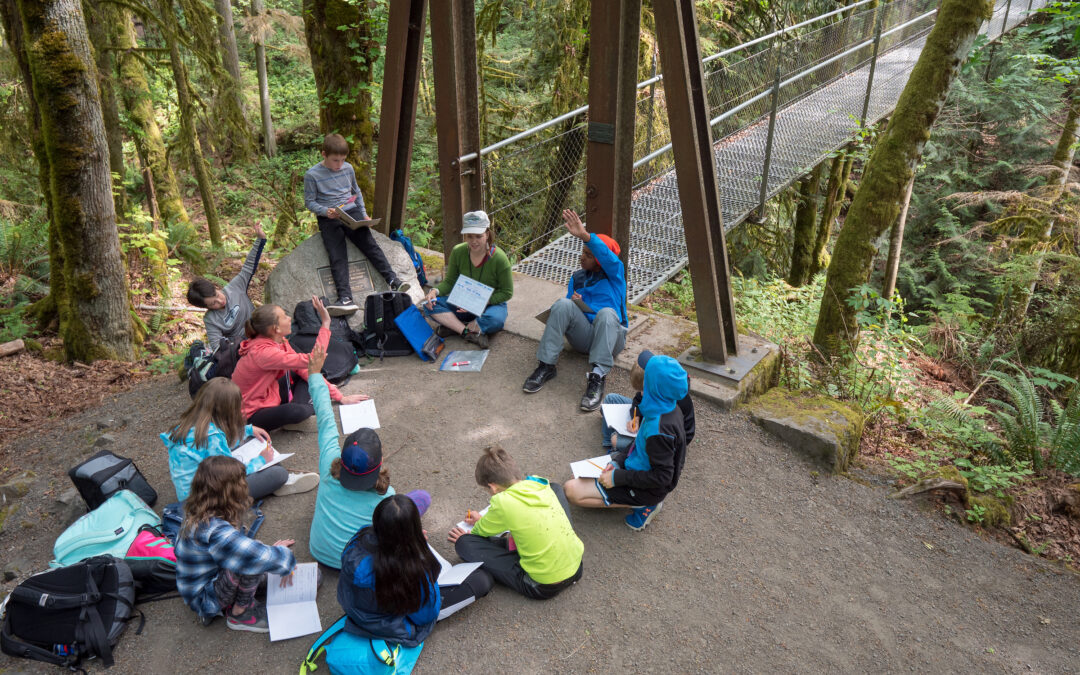
The school where I taught had an incredible forest located in the back of the school grounds. Majestic cedars, nurturing nuts logs, and a tapestry of flora made this space a beautiful area for PBE. Prior to integrating PBE into our schedule, outdoor time primarily served as an outlet for expending energy. Reconfiguring students’ perception of nature from merely a recreational space to a place of profound learning took much time and patience. We began by introducing ourselves to our natural neighbours by learning about local flora and fauna. Land acknowledgments and learning Squamish language for local plants further enriched these lessons. We also embraced the practice of “sit spots,” wherein students immersed themselves within specific areas of the forest — an embodiment of a quintessential PBE approach.
5. Teaching as a Student
PBE embodies the idea that you, the educator, are a fellow learner alongside your students. Embrace the notion that you are continually evolving and gaining insights beside your students. Be attuned to the lessons that unfold through community interactions and remain receptive to the wisdom your students impart within your shared learning space. Embrace humility by acknowledging that you do not know everything and that your knowledge may be limited. This opens is fundamental, for your journey as an educator mirrors the lifelong pursuit of learning you seek to cultivate in your students.
Stepping into the role of a new teacher in this ever evolving educational landscape can feel overwhelming. The path is marked by missteps, pedagogical uncertainties, and self-doubt. Yet, these challenges are juxtaposed by moments of fulfillment by witnessing your students’ responses to your dedication to transformative education. My journey with PBE has encompassed all of those complicated feelings. As I continue on this teaching journey I promise to continue to explore, reflect, and experiment. I promise to teach as though I am a student and embrace the idea that the world itself is my classroom.
References:
The following articles are some of my most treasured Place-Based Education resources that help guide my understanding and practice.
Smith, G. (2002). Place-Based Education: learning to be where we are. Phi Delta Kappan.
Sobel, D. (2004). Place-Based Education: Connecting Classrooms and Communities (2nd ed.). Vermont: Orion Society.
Sobel, D. (1999). Beyond Ecophobia (Vol. 1). : Nature Literary Series.
What is Place-Based Education and Why Does it Matter? Getting Smart.
 Lucy Clothier is a newly certified teacher who has just spent the past year sailing the coast of California and teaching online. She is looking forward to starting a new chapter of teaching at the Sea to Sky School District in British Columbia this fall.
by editor | Mar 2, 2024 | Environmental Literacy, Place-based Education, Schoolyard Classroom, Teaching Science
by Erin Banks Rusby. Reprinted from the Idaho Press
 n the summer of 2023, a group of high school students and adults converged over their shared interest in science and dragonflies.
Known as the Finding Dragons program, the effort aimed to provide hands-on, publishable research experience to high school students and adults, while answering some key questions about the health and history of dragonfly species — offering clues into how they have weathered stress in the past, and how they might be affected by climate change.
Their findings so far have been published in the International Journal of Odontology, with the students listed as co-authors, and a second currently under review for publication.
Jisong Ryu, a junior at Timberline High School, is interested in working in the environmental science and public policy field. Participating in the dragonfly research offered an opportunity to practice some of those research skills, and in the process, build friendships and fortitude in the face of challenging times.
“I think those efforts of understanding the problem more gives me hope and less worry about how things will be,” Ryu said.
 The Charisma of Dragonflies
Insects are one of the first animals kids notice, drawn in by their seemingly alien features, said Dick Jordan, a retired science teacher who taught for 40 years at Timberline High School.
Jordan is also the founder of Life Outdoors, a nonprofit whose programs focus on connection with the outdoors and learning about conservation.
In 2021, a former student of Jordan’s, Ethan Tolman, reached out about helping Jordan survey dragonfly species in the Boise River watershed. Tolman, now a Ph.D. student at the City University of New York, wanted to look at the abundance of different dragonfly species along the Boise River.
Kristin Gnojewski, Boise Parks and Recreation’s community volunteer specialist, had trained community volunteers on dragonfly identification for a community monitoring program, and a volunteer read about the Finding Dragons program in the newspaper, asking if their group could participate. Soon, both students and community science volunteers were banding together to participate in the Finding Dragons program.
Tolman, Jordan, and Gnojewski said dragonflies make a great study subject for understanding the urban environment because they are easily recognizable and charismatic. They are not difficult to find in the Treasure Valley’s green spaces, Gnojewski said. Their aerial agility and iridescent colors make them fascinating to watch, Tolman said, noting that they appear in pop culture, like the flying machines, or ornithopters, in the Dune movies.
Dragonflies are also some of the most efficient predators, Tolman said. Known for intercepting prey rather than just chasing it, studies indicate they have a 90% success rate for snagging their target, he said.
The aquatic nymphs are eaten by fish species and other animals, while also doing their own hunting, Jordan said.
“They really are wonderful bioindicators of the health of a river,” Jordan said.

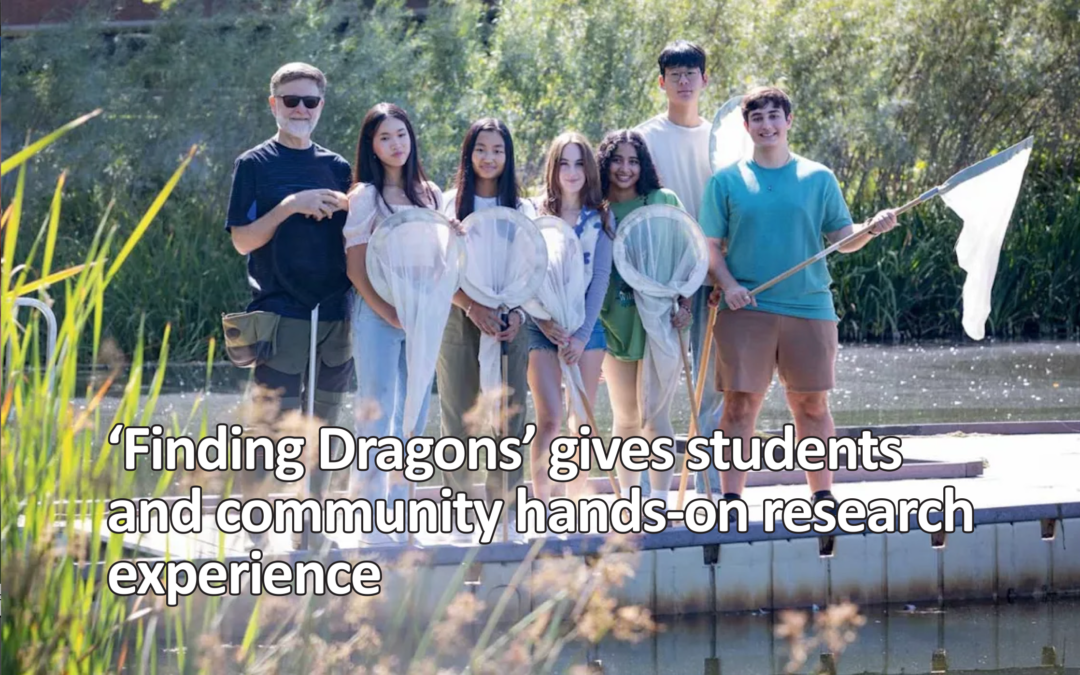
Dick Jordan, left, holds a blue dasher dragonfly as student volunteers look on. Student and adult volunteers collected blue dashers near the Parkcenter Pond in Boise in August for genome sequencing. Photo courtesy of Jisong Ryu
Time Traveling with Biological Clocks
When the DNA of a species is sequenced, it can be read as a sort of code to understand the evolutionary changes the species has undergone over time.
When Tolman approached Jordan about studying DNA sequences of dragonfly species, he likened it to a kind of time travel — a way to peer into the species’ history, Jordan said.
“When he mentioned time travel, it was just like the light came on,” Jordan said. “What an exciting way to get these kids to go back in time and think about how these species — which have been around a lot longer than us — dealt with climate change.”
In 2023, they investigated two lines of inquiry: analyzing the genomes of dragonflies that had already been sequenced, and sequencing the genome of a local species, the blue dasher (Pachydiplax longipennis).
To accomplish the latter, students and volunteers from Gnojewski’s program went to the Parkcenter Pond to catch blue dashers. The day lives on as a highlight of the program so far, with the students and city volunteers coming together to do fieldwork.
For Ella Driever, now a senior at Timberline High School, it was her first time doing field work, an exciting step for the aspiring wildlife biologist. The experience ‘sealed the deal’ on her interest in wildlife biology, she said. That day, she was also the first person to catch a blue dasher, a feat given their nimble flying capabilities.
“That was the first time I actually got to have a real creature that I was studying in my hands,” Driever said. “That was just magical.”
The specimens collected from near the pond were sent to Brigham Young University for sequencing, Jordan said.
Bringing it All Together
In August 2023, the Finding Dragons group hosted a two-day, intensive biodiversity workshop that invited everyone who participated in the project to hear presentations from Tolman and Jordan, as well as scientists from around the country about conservation research efforts.
Though the initial intent was to analyze and write the scientific manuscript about the blue dasher’s genome during the second day of the workshop, the sequencing was not yet completed. Instead, the group pivoted to analyzing the genomes of three species whose genome sequences were already available to the scientific community, seeing how they had responded to past climate change as a practice round for doing the same for the blue dasher, Tolman explained.
The group looked at the genomes of two damselflies, one from Europe and one from the western U.S., and a dragonfly from Europe. The students had the chance to do some of the computational analysis, Tolman said.
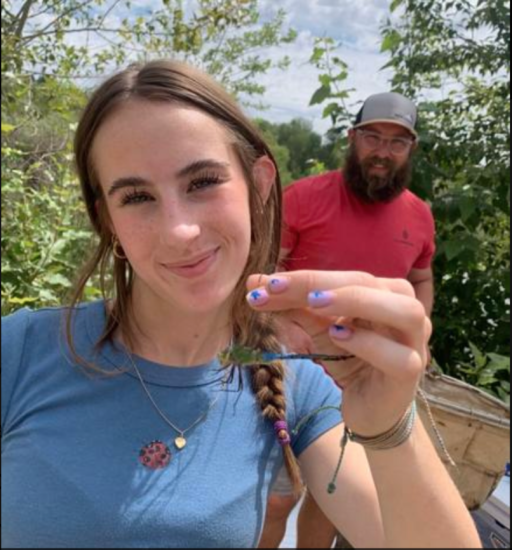
Ella Driever holds up a blue dasher dragonfly that she caught near the Parkcenter Pond as Augie Gabrielli looks on. Student and adult volunteers with the Finding Dragons project collected blue dashers near the Parkcenter Pond in Boise in August for genome sequencing. Photo courtesy of Ella Driever
The analysis revealed that none of those species appear susceptible to climate change. That is still a valuable finding as it helps scientists prioritize policy for species that are the most vulnerable, said Or Bruchim, a senior at Timberline High School that helped with the computational analysis.
“We have limited resources to alleviate the impacts of climate change,” Bruchim said. “The species that we need to protect, we should definitely allocate more resources according to how much they’re impacted. So we shouldn’t waste our resources on a species that’s not going to be too impacted by the effects of climate change.”
By the end of the day, through dividing up the different sections of manuscript, the group had a draft of about 80% of the research paper. The results were published in the International of Odonatology, with the students and city volunteers listed as co-authors.
When the blue dasher genome information came back, the students were tasked with assembling that as well, Tolman said. With the help of some additional analysis from Tolman and other scientists, they were able to write a manuscript looking at broader changes in the dragonfly order Odonata.
The manuscript is currently being reviewed by the journal Gigascience, with the students listed as authors.
Future Blue Dasher Inquiries, Future Connections
Tolman and Jordan anticipate that the information contained in the blue dasher genome can be used for an additional five or more years of scientific inquiries for students, and anyone who makes use of the publicly available data.
For example, how closely related is the Boise blue dasher to blue dashers that live elsewhere, and do they have traits that make them able to survive in cities?
Jordan says he also hopes to apply the research model to study mayflies in the McCall area, connecting with the fishing community there, he said.
The leaders and participants also highlighted the wide-ranging mental health benefits that come with scientific research efforts.
Driever said that she keeps a busy schedule with activities like playing varsity volleyball and working a part-time job.
“When I get to go do these fieldwork things, and I meet these people, I allow that nature that I’m protecting to ground me and keep myself from being burnt out,” she said.
Bruchim said his involvement shows him that others care about the same issues and are taking action toward solutions.
“It’s a really enlightening experience, and you’re able to make connections with people that share the same values and are passionate about the same things you are,” he said, “so it’s a big mental weight off, and it makes you feel more in control of the situation.”
Erin Banks Rusby covers Caldwell and Canyon County. She reports on local government, agriculture, the environment, and more. She can be reached at erusby@idahopress.com
by editor | Oct 17, 2023 | Critical Thinking, IslandWood, Learning Theory, Outdoor education and Outdoor School, Place-based Education, Questioning strategies
Key Considerations for Asking Questions as a
Field-Based Science Instruction
By Amos Pomp
Introduction
We do not ask [questions] in a vacuum; what we ask, how, and when are all related.
– Bang et al., 2018
How can field-based science instructors be intentional with the questions we ask students?
As a graduate student and field-based environmental science instructor for 4th-6th graders in Washington State, I ask students questions all the time. Asking questions is an integral part of learning and doing science and is one of the Next Generation Science Standards science and engineering practices. I believe that the questions I pose as an instructor have the power to either disengage or engage student groups in their learning processes. Thus, considering which questions I ask, and when, is a significant and nuanced part of my teaching practice.
Instructor-posed questions are an important, multifaceted part of effective pedagogy. Instructors should ask their students various types of questions and celebrate various types of answers. Instructors may ask questions to elicit students’ prior knowledge, check their understanding, help them figure out where there are gaps in their ideas, and help uncover ideas that would otherwise go unnoticed (Reiser et al., 2017). Instructors may also ask questions to “help students figure out and refine their own questions” (ibid.).
The way in which instructors ask questions and elicit answers is also important. If I only encourage spoken answers to my questions, I may send an implicit message that I only value verbal and vocal participation in my learning environments. If I only praise the ways in which one student’s artwork connects to my prompt, I’m implying that I prioritize some sensemaking over others’. If I only accept scientific names of plants as correct, I’m indicating what kinds of knowledge I deem acceptable.
Reflecting on this non-exhaustive list of reasons for asking questions, as well as the potential implications of how I solicit answers, has led me to be more intentional with the questions I do ask and how I ask them. I don’t just think about what I am asking my students; I also think about why I am asking it—for what purpose. I think about whom I am asking it to or for and what kind of responses I am expecting from my group. How can I engage them in their own sensemaking and synthesis, creative thinking, and science and engineering processes? To help plan for each new group of students I teach, I’ve developed a framework for how I consider the pedagogical purpose of my questions.
Reflecting on My Own Experience
At the beginning of the school year, my grad cohort and I had many discussions about what teaching and learning look like. From our conversations, we agreed on two key points. The first is that to us, successful field-based science instruction looks like guiding students in their own thinking, observing, and investigating. Rather than responding to students’ questions with an easy answer of my own, one of the routines I adapted early on was asking them, “What do you think?” Even when posed informally, asking students what they think and encouraging a genuine answer is a pedagogical move to redistribute power and agency by encouraging them to gather evidence and explain their own reasoning and learning.
 The second point we agreed on is that masterful instructors learn from and alongside their students in processes of collaborative sensemaking. At first, I found this process came naturally. Being new to field-based science education in the Pacific Northwest, it was easy for me to respond to a student’s pointing at something and asking what it was or what was happening without giving them an easy answer. “I’m not sure, have you seen something like it before?” I would say, or “tell me what you notice about it and what it’s doing. Can we come up with three possible answers to your question?” Asking these questions positioned my students as experts on their own experiences and encouraged us to work together to learn about our environment.
As the school year has progressed and I’ve became more knowledgeable about the ecosystem I’m teaching in, I’ve noticed two things happening. In moments where I am doing new activities or teaching lessons in new ways, my questions have remained open-ended and genuine, like the above examples.
In other cases, however, I have found myself struggling to maintain nuanced intentionality in my question asking. Sometimes I notice myself asking students answer-seeking, or “known-answer,” questions—questions to which I already know the answer I’m looking for—because I want the group to reach a specific understanding about a topic based on my own knowledge or some third-party definition (Bransford et al., 2000). Other times, I’ll ask the group a question about an activity we just did and receive mostly blank stares in response. In these instances, I am probably asking the wrong questions and discouraging the divergent thinking, diverse forms of engagement, and collaborative sensemaking and synthesis I’m looking for.
Upon reflection, I decided to create a tool to help me make sure I ask students pedagogical questions with the intention they deserve.
Instructor-Posed Questions: A Framework
When thinking about how to intentionally ask a question to a group of students, here are some key considerations I take into account.
Assessing the state of the group
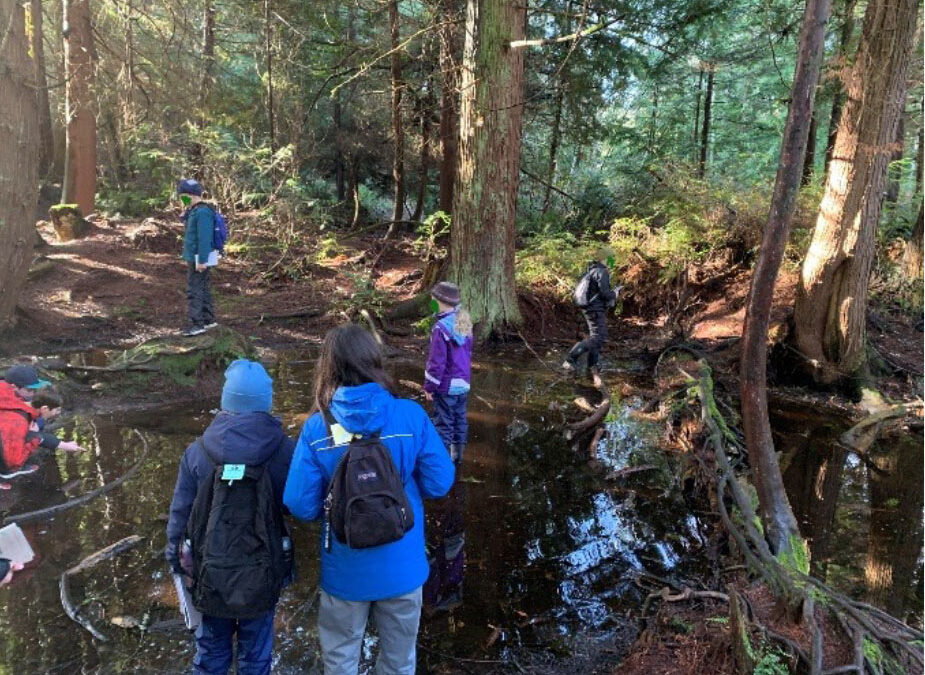
Before asking my students a pedagogical question, I assess the state of the group. This assessment can happen during planning or in the moment. I think about where the students are or will be physically, as well as what is or will be going on, when I plan to ask the question. Perhaps they would still be riled up after an activity, or they might need a snack. Perhaps a group discussion would not add any value to what’s already happened or could possibly even detract from the experience. Perhaps the group needs to hear the question then move to another location before answering to have time to think and discuss casually on the way. If I want the group to engage in some sort of collaborative sense-making, I do my best to ensure that the group is in a place where most of the students will be able to engage in the process in some way.
Allowing for different forms of student engagement
When I plan to ask a group of students a question, I then think about how I want them to answer. I can ask them to answer in written/drawn form, whole-group share-out, in small groups or a partner, just in their own heads, or some other way. I make this decision based on patterns of what I’ve seen work best for similar groups in similar situations in the past.
Once I’ve decided how I want students to answer my question, I find it’s best to give instructions before asking the question. For example, I might say, “You’re going to answer this question in your journal, and you can write, draw, write a poem or song, or even create a dance or found-material sculpture.” Then I ask the question and repeat the ways that students can answer.
Clarifying the goal or purpose of my question
For this section I’ll use an example wherein my goal is for students to think and learn about the role of photosynthesis in a plant’s life and the role plants play in ecosystems.
With my goal in mind, I could ask, “What does photosynthesis mean?” However, I would likely hear one student’s regurgitating a definition from a textbook, which does not necessarily indicate true learning or understanding. Also, if I ask such didactic questions multiple times to the same group, I often end up calling on the same students repeatedly—missing out on quieter voices—because they are the ones comfortable with sharing in such a way.
I would also refrain from asking, “Who can tell me what photosynthesis means?” This wording implies that it’s time for someone to win favor by being the one who can. It’s a challenge to see who can show off their knowledge, and it doesn’t help a group of students explain how photosynthesis works or why it matters.
Additionally, I don’t want to ask my question if I’m looking for a specific answer. I have to be open to students’ explaining photosynthesis in new ways or talking about other ways that plants get energy and contribute to ecosystems.
Asking a question
Instead of the examples above, I could ask my students, “How do plants get energy?” or “How can we describe a plant’s relationship to the sun?” These explanatory questions engage students in more diverse scientific practices than just naming and defining a chemical reaction (Reiser et al., 2017). If I’m having trouble getting students to move toward photosynthesis, I could ask, “What do you think of when you hear the word photosynthesis?” which I still find to elicit more open-ended responses than the original example.
Something else to consider is that if, for example, I’m teaching a group of students who have never been to a harbor like the one I bring them to for a lesson, any questions I ask the group about what role plants might have in the harbor ecosystem will not carry as much meaning for them if they do not first have a shared, relational experience with plants at the harbor (Reiser et al., 2017). If I can first facilitate a time for them to explore and observe plants at the harbor, then asking them about their own thoughts and questions about plants at the harbor will have much more success. I can also ask questions in ways that allow students to bring in past experiences with other beaches or plants in other ecosystems.
I am also aware while teaching that common lines of questioning in schools are rooted in the discursive patterns of white, middle-class, European Americans. One way that I can expand my question-asking practice is encouraging learners to investigate the “likeness between things” to draw in students who engage in more metaphorical learning by exploring analogies with the question, “What is photosynthesis like?” (Bransford et al., 2000). Robin Wall Kimmerer agrees: “asking questions about relations illuminates answers that true-false questions may not” (Bang et al., 2018).
Finally, I could also ask questions that help students evaluate their own learning or the learning process, like “how did you contribute to the group in the photosynthesis investigation?” or “how did that activity go for you?” rather than ones that assess what they learned (Rogoff et al., 2018). I would ask these latter questions to prioritize my goal of exciting students about science learning over ensuring that they learn any specific “facts” or “knowledge.”
Deciding not to ask a question
Sometimes, I move through my framework and decide I don’t need to ask the group a question. Instead, I’ll tell the group some of my own thoughts on the matter, or I might just transition to something else entirely. An example of the latter is that if I’m more interested in having my students explore something other than how photosynthesis works, rather than asking them what they know about photosynthesis, I could simply say, “Photosynthesis, which, for those who might not remember, is how plants create their own energy from sunlight, carbon dioxide, and water.”
Conclusion
Asking questions in field-based science education is a nuanced practice. The way instructors ask questions reveals to students both explicitly and implicitly what forms of participation they value, whose knowledge they prioritize, and what kinds of learning they deem acceptable. With a bit of intentionality, however, instructor-posed questions are the key to engaging students in collaborative sensemaking and synthesis, divergent thinking, and science and engineering processes of their own.
References:
My mentors, Renée Comesotti and Dr. Priya Pugh
Bang, M., Marin, A., & Medin, D. (2018). If Indigenous peoples stand with the sciences, will scientists stand with us? Daedalus, 147(2), 148-159.
Bransford, J. D., Brown, A. L., & Cocking, R. R. (2000). How people learn (Vol. 11). Washington, DC: National academy press.
Reiser, B. J., Brody, L., Novak, M., Tipton, K., & Adams, L. (2017). Asking questions. Helping students make sense of the world using next generation science and engineering practices (pp. 87-108). NSTA Press, National Science Teachers Association.
Rogoff, B., Callanan, M., Gutiérrez, K. D., & Erickson, F. (2016). The organization of informal learning. Review of Research in Education, 40(1), 356-401.
by editor | Feb 5, 2022 | Equity and Inclusion, Indigenous Peoples & Traditional Ecological Knowledge, Place-based Education, Tribes & Traditional Ecological Knowledge
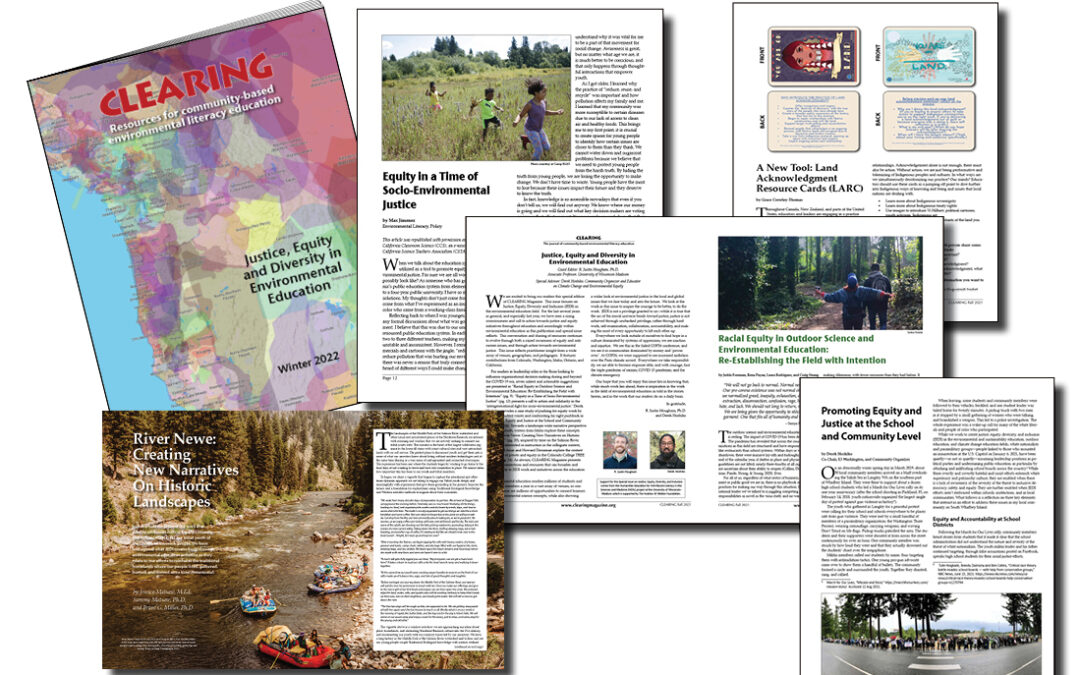
CLEARING Special Focus Issue:
Justice, Equity and Diversity in Environmental Education
Guest Editor: R. Justin Hougham, Ph.D.
Associate Professor, University of Wisconsin-Madison
Special Advisor: Derek Hoshiko, Community Organizer and Educator on Climate Change and Environmental Equity
We are excited to bring our readers this special edition of CLEARING Magazine. This issue focuses on Justice, Equity, Diversity and Inclusion (JEDI) in the environmental education field. For the last several years in general, and especially last year, we have seen a rising consciousness and call to action towards justice and equity initiatives throughout education and accordingly within environmental education as this publication and special issue reflects. This conversation and sharing of resources continues to evolve through both a raised awareness of equity and anti-racism issues, and through action towards environmental justice. This issue reflects practitioner insight from a wide array of venues, geographies, and pedagogies. It features contributions from Colorado, Washington, Idaho, Ontario, and California.
For readers in leadership roles or for those looking to influence organizational decision making during and beyond the COVID-19 era, seven salient and actionable suggestions are presented in “Racial Equity in Outdoor Science and Environmental Education: Re-Establishing the Field with Intention” (pg. 9). “Equity in a Time of Socio-Environmental Justice” (pg. 12) presents a call to action and solidarity in the ‘intergenerational fight for socio-environmental justice.’ Derek Hoshiko provides a case study of pushing for equity work by centering student voices and confronting far right pushback in “Promoting Equity and Justice at the School and Community Level” (pg. 16). Towards a landscape-wide narrative perspective with tribal youth, writers from Idaho explore these concepts through “River Newe: Creating New Narratives on Historic Landscapes” (pg. 20), inspired by time on the Salmon River. For readers interested in instruction in the collegiate context, Juan Miguel Arias and Howard Drossman explore the context and themes of power and equity in the Colorado College TREE semester (pg. 24). As always, CLEARING Magazine presents additional connections and resources that can broaden and directly apply to JEDI work and initiatives across the education community.
Environmental education reaches millions of students and community members a year in a vast array of venues, so consider that these are millions of opportunities to connect learners to core environmental science concepts, while also showing a wider look at environmental justice in the local and global issues that we face today and into the future. We look at the work in this issue to inspire the courage to be better, to do the work. JEDI is not a privilege granted to us—while it is true that the arc of the moral universe bends toward justice, justice is not achieved through unchecked privilege, rather through hard work, self-examination, collaboration, accountability, and making the most of every opportunity to lift each other up.
Everywhere we look outside of ourselves to find hope in a culture dominated by systems of oppression, we see inaction and injustice. We see this in the failed COP26 conference, and we see it in communities dominated by money and ‘power over.’ At COP26, we were supposed to see increased ambition over the Paris climate accord. Everywhere we take responsibility, we are able to become response-able, and with courage, face the triple pandemic of racism, COVID-19 pandemic, and the climate emergency.
Our hope that you will enjoy this issue lies in knowing that, while much work lies ahead, there is inspiration in the work in the field of environmental education as told in the stories herein, and in the work that our readers do on a daily basis.
In gratitude,
R. Justin Hougham, Ph.D.
and Derek Hoshiko
 To see the entire issue in FLIP PAGE format, click here.
(Note: This link takes you out of the CLEARING website.)
Table of Contents
Racial Equity in Outdoor Science and Environmental Education: Re-Establishing the Field with Intention (.PDF)
by Jedda Foreman, Rena Payan,
Laura Rodriguez, and Craig Strang
Equity in a Time of Socio-Environmental Justice (.PDF)
by Max Jimenez, University of California
Promoting Equity and Justice at the
School and Community Level (.PDF)
by Derek Hoshiko
with Anti-Racism Resources for Outdoor Families
& Environmental Educators (sidebar)
A New Tool: Land Acknowledgment Resource Cards (.PDF)
by Grace Crowley-Thomas, IslandWood
(see full article here)
River Newe: Creating New Narratives On Historic Landscapes (.PDF)
by Sammy Matsaw, Ph.D, Jessica Matsaw, M.Ed, and
Brant G. Miller, Ph.D, University of Idaho
Power and equity in undergraduate environmental education: “Loving Critique” at the Colorado College TREE Semester
by Juan Miguel Arias & Howard Drossman
Colorado College Education Department
Reclaiming the Promise of Place: An Interview with
David Greenwood by Roberta Altman
from Bankstreet Occasional Papers

by editor | Jul 19, 2021 | Environmental Literacy, Outdoor education and Outdoor School, Place-based Education, Schoolyard Classroom
by Jane Tesner Kleiner, RLA
Imagine walking out the back door of your school, surrounded by the songs of spring time birds, the soft scents of flowers in bloom, the wind billowing through nearby trees, and (if you are lucky) the croaking of Pacific tree frogs. Sounds great? But… it doesn’t sound like your school? What if?
It may sound daunting, the idea of transforming your school grounds into a green, lush learning environment. However, there are great resources out there, to help put your school on-track to having learning and play environments that include lots of nature. It’s not only the kids who love and benefit from being in natural spaces; so do the school staff and the neighboring community, too.
So many schools have little more than grassy fields, paved surfaces and fenced areas. They may have a few trees and landscape beds, and hopefully an awesome playground, but most are static and sterile environments. There can be benefits to these school grounds: they are relatively safe, and it’s easy to monitor the kids during outside time. They are also seem easy to maintain (although mowing costs are a big pull on a maintenance budget). Yet, they don’t provide opportunity for imagination, let alone the creative activity that sparks imagination.
Over the last 30 years, a growing body of research strongly asserts that children experience myriad benefits from daily access to nature. Richard Louv, of the Children and Nature Network, states in an online article that,
“…including schoolyards with natural play spaces and gardens can help improve physical and mental health, cognitive skills, creativity, and social cohesion. New longitudinal studies also suggest that nature-rich schools can help raise standardized test scores. And children in low-income communities appear to benefit proportionally more from access to green space than those in higher-income communities.”[1]
Research also suggests that providing close-to-home, regular, access to nature will help kids overcome fears of the unknown. Adventuring further, they build self-confidence and interest in the broader world.
In a normal M-F week, children spend 41% of their waking hours at school[2]. With that in mind, school grounds are uniquely positioned to provide access to nature for kids. I certainly see benefits in the students that I work with, not to mention my own kids. I have seen students become self-assured, skilled and proud owners of their schools’ outdoor spaces.
There is also the matter of agency, of capitalizing on kids’ buy-in by involving them in the planning stages. Promoting student voice throughout the planning, design, fundraising, installation and maintenance of school greenspaces gives them hands-on experiences that they may not get elsewhere. And the ownership? People don’t destroy what they built themselves.
To begin, start by listening. Here are some things that I’ve heard, from schools I work with in the Vancouver area:
- When asked what changes kids would want to see to their school campus, they said two things: more fun play equipment and have the school grounds be their own backyard fieldtrip.
- When staff were asked where they want their school facility to be in 5 years, they want to be able to teach outdoors; this includes garden spaces and a diverse setting of natural elements.
- Teachers want to be able to teach using the whole school campus, making use of all features.
- The process for considering “how” to change the campus, let alone fundraise and maintain the new nature features is daunting.
Where do you start? Luckily, there are professionals who can help every school maximize the opportunity to add more nature to your campus.
It starts with lots of conversations, centered around a few key principles.
In essence, the design will:
- meet multiple goals, including direct ties to curriculum.
- allow for exploration, observation, discovery and fun.
- expand and broaden structured AND self-guided learning and play.
- foster a child’s sense of wonder and curiosity.
- build upon what kids love to do: jump & hop; climb & balance; build & take apart; make art; allow for passive quiet time; use all senses. Create! Imagine! Explore!
 Now that you’re excited to get going and transform your school grounds, here is a short recipe for a successful campus plan:
- Culture. Form a team to build your natural schoolyard. The team will brainstorm, plan, design, build and maintain the spaces. Don’t rely on one person, or else it won’t be sustainable in years to come. Bring on partners and ask for help! PTO/A’s, local businesses, community groups. Local businesses may be a source of funding, but business people have an inherent stake in the health of their nearby schools. Give them a chance to offer their ideas, skills and, yes, money.
- Individuality. Each school is unique. Build upon its existing features and add elements that easily complement the site. If you make it too complicated, it will be hard to maintain in years to come.
- Diversity. Each user group will have different goals for the enhancements, and sometimes they will conflict. By discussing the goals and objectives first, with children’s well-being the focus of the conversation, the best solution can be refined to meet everyone’s needs. Provide something for everyone.
- Community. Every child, every family has something to gain. Tap into your school community. You have a ready-made pool of hundreds of concerned, hard working adults. Learn who has skills, talents, and materials to contribute to the project. This will help build ownership in the project over time.
- Inclusiveness. Make sure all the right people have had a chance to weigh in with their ideas and approvals: district staff (facilities, curriculum leads, risk, etc.), teachers, school staff, maintenance, grounds, and most importantly the students.
- Problem Based Learning. Engage the students in every step, and empower them to meaningfully contribute, create and build a successful set of spaces for the next generation of students. This is learning! Kids will learn important, lasting lessons at every step.
- Partnership. Find local and national organizations to support your project. Possibilities include:
- certifying for wildlife habitat
- becoming a state certified Green School
- supporting the national pollinator project.
(Certification goals are great motivators, rallying stakeholders to, “keep on track and get the plaque!”)
- Consultation. Work with a local professional (e.g. landscape architect, school garden coordinator, etc.) to facilitate the discussions. They can capture all of the ideas and put it into one overall master plan for the site and create a report that can be used for approvals, fundraising and keeping the project on track over the years.
In the end, here is the winning equation:
program needs + site opportunities + available resources + curriculum goals = action plan
What goes into the plan?
Consider what type of features to add to your schoolyard.
The physical space.
- Wildlife habitat. Native trees, shrubs, and flowers to attract butterflies, birds and mammals (provide food/water/shelter/place to raise young).
- Outdoor classrooms. For classes and small groups to gather to work, listen and learn.
- Nature play. Use natural materials for kids to actively engage in unstructured and imagination play.
- Working spaces to actively plan, plant, grow and manage plants such as vegetables, fruits and flowers.
- Messy areas. Creative spaces to make art, containing moveable elements to build and change.
- Quiet spaces. Beautiful, peaceful settings with small group seating, to listen, slow down, de-stress and regroup.
- Exploration spaces. Unique spaces that support a variety of curricula; might include elements for tactile learning, such as water tables, sand play, learning lab stations, and more.
- Experiment stations. Areas that support the testing of theories, experimentation and active learning. Could include built-in features such as solar equipment, rain harvesting station, or space to create.
- Green infrastructure. Your school district may want to upgrade features to meet sustainability goals, such as stormwater management, energy efficiency, reducing heat island effects, etc. Meet their needs while creating active learning spaces. Welcome these ideas, as they are often tied to grant money.

Photo from the Intertwine
Using it
Creating the space is one thing, using it is another. Look for the tools that will help your school use the campus successfully:
- When talking to potential partners, emphasize the 4C’s of 21st Century learning:
- collaboration
- creativity
- communication
- critical thinking
Successfully redesigned schoolyards encourage all of them.
- Provide training to your staff. Help them find the resources and lessons that tie to their curriculum goals. Most school districts will have a specialist available to help.
- Identify agencies that offer programs for outdoor learning, and invite them (repeatedly) to your campus. Look for watershed and conservation groups, environmental education centers, local environmental professionals, and sportsmens organizations.
- Encourage your district to hire a garden or outdoor teacher or coordinator, to works with your teaching staff to coordinate the activities and lessons that are taught outdoors. The lessons can cover all curriculum areas, as well as activities to build social skills, independent learning and team building.
- Meet maintenance goals by creating jobs for students, classes or small groups to accomplish throughout the year. Create a shared calendar to outline the needs and then divvy up the tasks. Don’t leave it to one dedicated or passionate person….they will eventually have to move on.
- Make it the culture of the school to embrace, use, respect and care for your whole campus. The school community spends so much time together on campus, use the entire space to your advantage and care for it as a resource.
- Remember, your space will be used after school (programs and neighborhood use) and during the summer. Embrace the fact that a variety of users will use the space. Finding ways to welcome them will encourage others to care for it and keep an eye on things when school is not in session.
If you need ideas on how to use your campus for outdoor learning, there are lots of great guides and curriculum resources that provide engaging activities for all grade levels (early childhood, pre-K, K-12). A few examples include:
- The BioBlitz. No, this isn’t a game or app (check out the National Parks website). In this activity, students look for all living species on your campus. Have them document what they find and identify the species (plants, insects, mammals, birds, etc.). You can make it as simple or complex as you need to, based on the age and curriculum. Include writing, art, science and math.
- Scavenger hunt. Have kids look for a different theme, such as all things that collect and move the rainwater (What happens to rain drops when they land on the various surfaces?); have the kids find different shapes in the natural elements on campus; etc.
- Nature journal. Document the changing seasons on your campus. What are the colors for each season? Temperature changes? Weather patterns? Different animals?
- Art projects. Have kids pick a couple natural elements and sketch them, using a variety of media. Compare and contrast what is different and same about each element.
- Plant flower bulbs. Seek donations for flower bulbs and have the kids plant them in a landscape bed. Learn about the different bulbs, the depths they need to be planted, what are the types and shapes of bulbs. Have the kids develop plant markers for each type. In the spring, monitor the progress of growth for each type, have them sketch the flowers, investigate the flower shape and talk about the parts of the plant, notice if pollinators visit the plants, create a cut flower vase and share with a classroom or community group that would benefit from fresh flowers (senior living facility).
As your school starts its journey toward a more natural schoolyard, know that these projects can take years. That’s fine! The program will benefit from starting small and building upon small successes as the project grows and changes over time. Think of a protracted timeline as an opportunity to involve more kids and their families.
Lastly, stay true to your goal. Keep the vision in mind and you will be amazed at the sustaining support you will receive to keep moving forward. Every step you take is for the health and well-being of the kids. You’ll get there.
Here are just a few resources that you can check out online.
Children and Nature Network Green Schoolyards for Healthy Communities – Building a National Movement for Green Schoolyards in Every Community. http://www.childrenandnature.org/wp-content/uploads/2015/03/CNN_GSY_Report2016_Final.pdf
Green Schoolyards America. Sharon Danks. http://www.greenschoolyards.org/home.html
Boston Schoolyard Initiative. http://www.schoolyards.org/projects.overview.html Active since 1995. Schoolyard and outdoor design guides, as well as planning, maintenance and stewardship resources.
Evergreen Green School Grounds. https://www.evergreen.ca/our-impact/children/greening-school-grounds/
National Wildlife Federation. Schoolyard Habitat program. http://www.nwf.org/Garden-For-Wildlife/Create/Schoolyards.aspx Attract and support local wildlife.
#. #. #. #
 Jane Tesner Kleiner is a registered landscape architect, ecologist and environmental educator with work in Michigan and Washington. She has spent the past 25 years working with schools, parks and ecological restoration organizations to create habitat, trails and play areas. She passionately advocates for outdoor spaces that inspire kids’ curiosity. She wears a few hats in the Vancouver, Washington area, and continues encouraging kids of all ages to get outside and explore. Her goal is to make sure every kid has a stick to play with.
_______________
FOOTNOTES:
[1] Louv, R., & Lamar, M. (2016, July 07). GROUNDS FOR CHANGE: Green Schoolyards for all Children. Retrieved March 25, 2017, from http://www.childrenandnature.org/2016/07/07/grounds-for-change-green-schoolyards-for-all-children/
[2] Given a full week of school and, we hope, 8 hours of sleep.
by editor | Jun 18, 2021 | Features on Outstanding Programs, Marine/Aquatic Education, Outstanding Programs in EE, Place-based Education, STEM
A Year in the Watershed
There is no doubt that if you want to get students truly excited about what they are learning, ask them to tackle a real-world question or problem — ask them to solve something that is relevant to their lives.
by Jean M. Wallace

It is no surprise that children learn best by doing. And, when they seamlessly integrate across subjects and spend ample time working to find solutions to real problems that will improve lives, fulfill needs, and make our world a better place, their learning reaches a much deeper level. During my 20 years in a leadership role in experiential education, establishing partnerships and supporting hundreds of teachers and thousands of students in authentic learning, I witnessed this success first hand. There is also no doubt that if you want to get students truly excited about what they are learning, ask them to tackle a real-world question or problem — ask them to solve something that is relevant to their lives. In using this approach, students come to realize that what they are doing in school really does have meaning.
Whether describing this learning process with terminology such as STEM, STEAM, Project-Based Learning, Problem-Based Learning, or EIC (Environment as an Integrating Context — the process used by my former team as outlined below), it is the alignment of the content (the “what”) and the process (the “how”) that drives these successful learning models. Integration is critical, as it is the bonding of content and process that strengthens the structure of learning for students. Rather than teach in isolation, teachers and schools should model the 21st century skills we want our students to acquire by collaborating, cooperating, and communicating across disciplines to make learning more meaningful in all subjects. The effectiveness of using the environment as the foundation for interdisciplinary learning is not new to education and is supported by research.
Founded in 1995, the State Environment and Education Roundtable (SEER) worked with 16 state departments of education to develop Environment-Based Education (EBE) as a standards-based instructional strategy to engage students in “real-world” learning experiences. Over 40 schools took part in this national study, which resulted in the 1998 publication of Closing the Achievement Gap: Using the Environment as an Integrating Context for Learning (Lieberman & Hoody, 1998). As was the case with the national EIC research study, our own EIC program was extremely successful and proven to close the achievement gap.
 Environment = Authentic Learning
Moving from teaching in isolation to teaching across disciplines can be challenging, but my firm belief was (and still is) that a powerful and deep understanding of content coupled with a meaningful and authentic process of student engagement results in deeper learning for children.
Therefore, when building an curriculum focused on authentic learning, it made perfect sense to use Pennsylvania Environment & Ecology (E&E) Standards as a foundation on which to build an integrated and student-centered curriculum: one that would shape the framework for active, authentic, community-based science teaching and learning. Along with cross-curricular, real-world, rigorous content, an E&E-based program offers students the opportunity to engage in service learning and civic action, creating responsible and caring global citizens. This is evidenced in the introduction to the E&E standards, which reads as follows:
“Environment and Ecology is grounded in the complexity of the world we live in and our impact on its sustainability. The human interactions with the ecosystem and the results of human decisions are the main components of this academic area. Environment and Ecology examines the world with respect to the economic, cultural, political, and social structure as well as natural processes and systems. This integration across systems is what sets this academic area apart from all others.” (Pennsylvania Department of Education, 2001)
Starting in Kindergarten, content outlined in the E&E standards also became the foundation for literacy acquisition and was used to generate enthusiasm in our youngest readers. As they were learning how to read, they were connecting what they were reading to the real world around them. The content outlined in these standards formulated a rich vocabulary upon which students could build as they progressed through the curriculum. One example that comes to mind is the topic of Agriculture, which was introduced in Kindergarten and then reinforced in 3rd grade in a multi-disciplinary, multi-week unit of study. Classroom libraries were stocked with vocabulary-rich books, and learning was enriched by field studies to area farms, nature centers, streams, rivers, and museums.
The June 2014 Progress of Education Reform Report issued by the Education Commission of the States, reaffirms the success of applying this early science literacy approach in an authentic learning environment: “Science interactions support vocabulary development by exposing children to new words in meaningful context. Exposure to rich vocabulary words predicts vocabulary development, which predicts reading achievement.” The importance of early science literacy acquisition is summed up nicely in this same publication: “Education leaders should turn a critical eye on the science teaching and learning expected for early education in their school, district or state, then determine whether there is any evidence that children and their teachers are receiving the instructional opportunities they need and deserve.”
 Creating the EIC Curriculum
But how and where do you begin when creating an integrated curriculum? For our team, utilizing the E&E standards for content; the interdisciplinary, student-centered process of the EIC Model; a strong emphasis on 21st century skills; and backwards mapping became the perfect collective starting point. Our guide was Dr. Patricia Vathis of the Pennsylvania Department of Education, who is an expert in standards, interdisciplinary learning, and Understanding by Design. As a K–8 team, we began the curriculum-building process by going through each E&E standard statement and unpacking and understanding its content. After completing this, we moved on to Science and Technology, and then to Social Studies, which included History, Geography, and Civics and Government. We identified the content that “anchored” each standard statement and how each grade would be responsible for either introducing that content (I), reinforcing it (R), or bringing the content to proficiency (P).
As we were completing each matrix and assigning a color code to each grade, we were also looking for opportunities to connect content across disciplines to create big ideas for comprehensive, interdisciplinary units of study. Once our team completed a matrix for each of the content area standards, time was allocated for teachers to meet and plan with their grade level partners and teachers from different grade levels and disciplines. Everyone worked from the matrices they, themselves, created. Schedules were designed so that team-teaching could occur several times each week, allowing teachers to see and hear how each overarching topic was being presented through the lens of another discipline.
 EIC in Middle School
In some ways, the 5–8 team had a more difficult challenge than the K–4 team, since our middle school students in 5–8 rotated through different teachers and subjects. The teachers effectively met this challenge by working together to design units of study that spanned several months, with each content area well represented. For example, one unit was titled “Disease and its Impact on Philadelphia,” and was taught over a three-month period. In Science class, students investigated how vector species transmit diseases, while in Language Arts the students were reading the book Fever by Laurie Halse Anderson (2000), a historical fiction novel documenting the 1793 yellow fever epidemic that plagued Philadelphia. In Social Studies, the students were mapping out historic Philadelphia and reading and writing about a time in local history when this epidemic took many lives. In Technology, students created their own newspaper and documented the impact of the disease outbreak by writing obituaries and providing information to their imaginary community. Finally, in Art, students designed a 2-D protist from which they created a 3-D model. As students were learning across disciplines, teachers were actively teaching across disciplines. Amazing!
 EIC in Elementary School
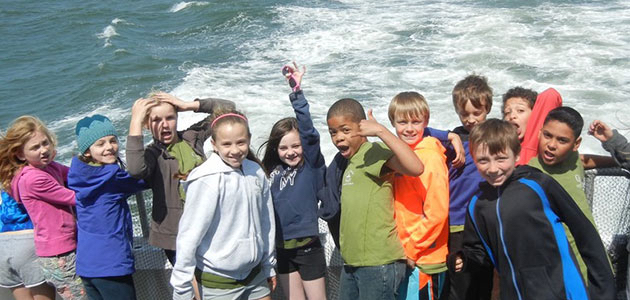
Just one example of authentic, interdisciplinary learning that was so successful during my years in school leadership was “A Watershed Year,” when each year our 4th grade students were immersed in a year-long, interdisciplinary study of the Delaware River Watershed. Students were challenged to answer the overarching question: Where does your drinking water come from and where does your wastewater go? They began by investigating the history, geography, geology, science, chemistry, and ecology of our local freshwater streams and the surrounding watershed. During their downstream journey, students interacted with experts in local history, drafted a “Water Bill of Rights,” debated ecology versus economy, conducted field studies with the Philadelphia Water Department, mapped out their local watershed, and learned from the Army Corp of Engineers how to effectively engineer a dam.
Students also documented their journey and presented their findings to various audiences. Utilizing digital technology, they even created an interactive, informational walking tour for visitors along the trails at the local historical society. The students’ Watershed Year ended with an exploration of the Delaware Estuary and Atlantic Ocean ecosystems where they discovered the ecological diversity of aquatic life in these brackish and saltwater environments. Their final real-life adventure in learning was a three-hour voyage aboard a trawling vessel out of Cape May, New Jersey where they cast nets into the ocean and hauled in their catch, while working side-by-side with a team of marine ecologists.
 Ongoing Improvements and Growth
Professional development for teachers was meaningful, focused, and ongoing. In-service days during the school year were dedicated to curriculum development, and each summer our teachers would attend the Pennsylvania Governor’s Institute for Environment and Ecology. This Institute offered a week-long, residential learning experience that took place both indoors and outdoors. Enhancing the knowledge and skills of teachers through deep-rooted learning experiences inspired our teachers to become even better at creating and implementing authentic learning experiences for their students.
While standards dictated “what” would be taught, the process of learning was designed and reinforced by our teachers. They used content — E&E standards-based content — and the EIC practices to drive instruction. These experiences not only resulted in strong academic achievement, but they ensured outcomes of global citizenship through student empowerment and environmental civic action. Our K–8 EIC framework became the solid academic foundation on which we grew our program from 150 students to over 700 allowing us the financial and community support to build a 20 million dollar school and campus designed for outdoor learning. An amazing accomplishment that many said could never be done!
Positive Impacts
In the end, our state standardized test scores reflected the success of our EIC Model and its interdisciplinary framework. More importantly, these scores represented how immersing students in deep-dive, long-term, interdisciplinary research projects can be a successful approach for all students. As just one example, 90%–96% of our 4th Grade students achieved, on average, the highest level in the Pennsylvania System of School Assessment (PSSA) Science test. Our special education students and historically underperforming students thrived in this atmosphere of real-world, interdisciplinary learning. Our school was rated as a top performing school locally and state-wide, and ranked internationally with schools in Finland.
Throughout my years working with an incredible team, our EIC curriculum continued to evolve and was revised by our teachers. Success was contagious! Teachers were motivated and students were energized as we immersed ourselves in the study of the environment. We came to realize that doing meaningful work in an authentic environment to conserve our basic needs — the water we drink, the air we breathe, and the food we eat — was a bond that we shared and something that is relevant to us all.
___________________________
 Jean Wallace was the CEO of the award-winning Green Woods Charter School, a K–8 public charter school in Philadelphia, PA. During her tenure as CEO, Green Woods was recognized locally, regionally, nationally, and internationally for its innovative approach to learning as well as its academic achievement. She is now consulting for schools and organizations who want to take learning outside.
Prior to her work at Green Woods, Jean served as the regional Director of Education for Earth Force, Inc. (www.earthforce.org). As the Director of Education for Earth Force, Jean supported hundreds of teachers and thousands of students in service learning and civic action projects focusing on local and regional environmental issues.
Education is a second career for Jean. As a parent, Jean was an active volunteer in her daughter’s private school setting and came to recognize the vast differences between some public and private school learning environments. She sought out a second career in education to offer public school students authentic, real-world learning opportunities similar to those her own daughter experienced.
This article is dedicated with gratitude to Dr. Patricia Vathis, retired Environment and Ecology Coordinator for the PA Department of Education, and the incredible teachers and staff who made the impossible, possible.
References
Anderson, Laurie Halse. (2000). Fever, 1793. New York, NY: Simon & Schuster Books for Young Readers.
Education Commission of the States (June, 2014). Progress Report for Education 18 (2). Denver, CO: ECS.
Lieberman, G., & Hoody, L. (1998). Closing the achievement gap. State Education and Environment Roundtable Report. Poway, CA: Science Wizards.
Pennsylvania Department of Education (2001). Introduction to the Pennsylvania academic Standards for environment and ecology. Retrieval from URL www.education.pa.gov
