
by editor | Sep 4, 2025 | Conservation & Sustainability, Environmental Literacy, Equity and Inclusion, Gardening, Farming, Food, & Permaculture, Indigenous Peoples & Traditional Ecological Knowledge, Place-based Education, STEM, Sustainability, Tribes & Traditional Ecological Knowledge
A Teaching Toolkit Connecting Students with Plants, Places, and Cultural Traditions
By Kim Gaffi, Mariana Harvey (Yakama) and Elise Krohn
 Educating younger generations on the gifts of the land has always been a cornerstone of Indigenous teachings to strengthen mind, body, and spirit. As Skokomish Elder Bruce Miller said, “The Forest was once our Walmart.” The Pacific Northwest is teeming with wild edible berries, greens, roots, and seeds that are nutritionally superior to store-bought foods. Wild plants also provide medicine and materials for traditional technologies. Many common and accessible “weeds” are useful and can be found in our own backyards.
 Tend, Gather and Grow (Tend) is a K-12 place-based curriculum dedicated to educating people about plants, local landscapes, and the rich cultural traditions that surround them. Tend focuses on native and naturalized plants of the Pacific Northwest region and includes Northwest Native knowledge, stories, and plant traditions. The curriculum toolkit consists of a teacher guide, six modules, videos, Coast Salish stories, plant identification cards, posters, games, recipes, and a garden guide. The 60+ lessons align with Science, Technology, Engineering, Art, Mathematics (STEAM) education principles and Next Generation Science Standards. Here’s a glimpse at the main curriculum modules:
- Plant Guide – This module covers 20 northwest plants and includes 38 hands-on lessons. Teachers can choose lessons based on what plants are available, in season, and most relevant to students. Each plant overview contains information on identification, seasonality, where the plant grows, human uses, and ecological relationships. A K-12 lesson called Dandelion: The Useful Weed introduces students to the lifecycle of dandelion, how it improves soil quality, and how it benefits insects, grazing herbivores, and people. Two lessons for 6th to 12th graders dive deeper into making food and medicine from dandelions. Plants that are at risk for overharvest have not been included in the curriculum unless there is a specific emphasis on restoration
- Cultural Ecosystems Field Guide – This module is about reframing the settler/dominant narrative about Northwest Coast Native People. Typically, Native Communities in the Northwest have been characterized as hunter-gatherers. This is not an accurate representation, and erases the deep-time relationships and land cultivation practices of Native People. This module includes an overview lesson on cultural ecosystems and a field guide to camas prairies, saltwater beaches, food forests, wetlands, and urban landscapes. Students learn about reciprocity and explore how they might both receive the gifts of the land and give back to the land.
- The Herbal Apothecary – This module includes techniques for harvesting, processing, and preparing medicinal plants. Topics include herbal teas, infused vinegars, honeys, poultices, infused oils and salves, herbal baths, and aromatherapy.
Plant Technologies – This module investigates how plant qualities have been used for millennia to create human technologies. Students explore ways to gather, process, and make useful items including cordage, baskets, mats, tools, and dyes from plant materials. Lessons are rooted in STEAM concepts.
- Tree Communities – This module introduces common Northwest trees and how they are valued for food, medicine, and traditional technologies. Themes include tree identification, ecological relationships, and life skills that we can learn from trees including generosity, building community, willingness, adaptability, and resilience.
- Wild Food Traditions – This module engages students with native and wild foods from a Coast Salish perspective. Seasonal lessons include spring wild greens, summer berries, healthy snacks in fall, and traditional beverages in winter. Native American stories, cultivation practices, ethical harvest techniques, and recipes are woven throughout lessons.
 Our Tend, Gather and Grow development team (photo left) includes twelve people sharing a common passion for connecting people with plants, the land, and cultural traditions. Several of our team members have worked together in tribal health and natural resources programs and half are Indigenous. Over the years we have heard consistent requests for educational resources designed for youth. The Tend curriculum is our effort to meet that need. Collectively, we have knowledge and skills in teaching, environmental education, Northwest Native culture and storytelling, ethnobotany, herbal medicine, traditional technologies, art, media, social justice, and youth advocacy. Our team met monthly for several years to study plants in the seasons and co-design lessons and activities. Co-developing the curriculum has been an opportunity for our team to be in community with each other, share our love of plants, deepen our knowledge, and support each other along the way. We also worked with Native Elders, cultural specialists, and other regional experts in developing lessons—especially regarding storytelling and plant technologies. The curriculum includes quotes and instructions from these individuals.
Tensions
 There are inherent tensions in non-native people using this curriculum, including concerns of cultural appropriation and misuse of plants and cultural landscapes. The curriculum exists, as we all do, within a painful and persistent history of colonialism, white supremacy, and systematic oppression. Historic and ongoing colonial settler practices negatively impact Native People and their traditional lands. Plant communities have changed drastically and many important cultural foods and ecosystems are diminished and difficult to access. Cultural appropriation and a misuse of knowledge among settler communities has undermined tribal sovereignty in several ways, including researchers claiming copyright authority over Indigenous knowledge and the overharvest of plant communities. For instance, as the health benefits of mountain huckleberry are more broadly learned, huckleberry stands cultivated by Native Peoples for thousands of years have been damaged and overharvested by non-native foragers and commercial harvesters.
To address these tensions, the Tend team has collaborated with tribal Elders and cultural knowledge keepers to ensure that information in the curriculum is appropriate to share broadly. Some plants and plant knowledge have been purposefully left out. All stories and plant teachings are included with permission from the storyteller or plant knowledge keeper. We have also created a video called Honoring Plants, Places, and Cultural Traditions that features Indigenous educators offering tools and advice to teachers wanting to use the curriculum. The Tend, Gather and Grow Teacher Guide and trainings support educators in adopting the curriculum responsibly. The toolkit also encourages educators and young people to be advocates and allies for Northwest Native peoples, tribal sovereignty, and cultural ecosystems. Lastly, we are encouraging schools to integrate featured plants from the curriculum in schoolyards and have created an Ecosystem Garden Guide that includes plant lists and basic garden installation directions.
Ways People are Using the Curriculum
T end is adaptable to multiple learning environments, cultures, languages, participant ages, and abilities. We encourage educators and students to explore and add specificity around local language, culture, stories, and places as appropriate. We believe that cultural diversity is part of our richness as people. Educators can create opportunities for immigrant students to share their knowledge and traditions as well, and plant uses from around the world are included in the curriculum to encourage this.
The Tend curriculum is being implemented in a variety of settings including tribal schools, non-tribal schools, health and wellness programs, behavioral health programs, youth camps, and informal educational settings. Educators are also using Tend in various ways that meet their learning goals, fit their environment, and follow their students’ interests. Some schools focus on a plant each month (Wild Rose in September, Cattail in October, Doug Fir in November, etc). Some teachers are integrating Tend lessons into other courses like agriculture, nutrition, biology, ecology, social studies and the Since Time Immemorial Tribal Sovereignty curriculum. Teachers can also choose lessons and modules to accompany existing nearby landscapes like camas prairies or saltwater beaches and/or gardens or to accompany the creation of an ethnobotanical garden. Tend can also be the centerpiece of a full year-long course and we’ve designed a 180-hour Career Technical Education framework called Tend, Gather and Grow – Ethnobotany & Natural Resources Management to support this.
Tend Tribal Educator Cohorts
 The Tend team has facilitated year-long tribal community educator cohorts where 16–20 educators from Washington tribes gather monthly for full-day workshops. Our first two internships focused on serving Western Washington tribes and this year we are honored to work with tribes from the Plateau region.
The Plateau internship includes seventeen tribal food gatherers, teachers, community educators, birth justice advocates, Indigenous language teachers, Elders, and youth who represent Yakama Nation, Colville Confederated Tribes, Kalispel, Nez Perce, Spokane, and Coeur d’Alene Tribe. This internship is led by GRuB’s Wild Foods and Medicines Tribal Relations Lead, Mariana Harvey (Yakama) and Traditional Plants Educator and Tend development team member, Elizabeth Campbell (Spokane/Kalispel).
This internship meets regularly over the year to integrate the Tend curriculum into various communities, schools, and programs. Participants also build teaching and group facilitation skills, learn about how to identify, harvest, and prepare many local plants, attune to the seasons, deepen a connection to the land, practice storytelling skills, and more.
Often the most enriching outcome for these tribal internships is the community and relationship building among the participants. Our participants are leaders within the tribal food sovereignty movement and it is a lot of work to carry. We hear that our gatherings feel like a ‘retreat’ where people can learn together, share ideas, and deepen bonds to each other and the earth. Gatherings take place in each participating tribal community, allowing us all to gain a deeper understanding of each other’s tribal history, culture, and of course foods and medicines! While we were in Spokane, a common highlight among participants was hearing a traditional story about the tamarack tree. When we were in Yakima, many remarked that it had been a very long time since they had eaten many of the roots that were served that day, and others were eating them for the first time. There is joy that radiates from our participants after our gatherings and the beauty is they bring that joy and spark of knowledge back home to their communities. ❀
Learning about and from plants has been a wonderful foundation to connect with my students and colleagues, since it’s something everyone can relate to on some level. I have been especially moved hearing stories that have been shared by experts in the field, native teachers/elders, as well as unique family stories that have emerged from my students, colleagues, and friends.
–Charlie Sittingbull, North Thurstaon High School Science Teacher
Photos by Elise Krohn

by editor | May 27, 2022 | Equity and Inclusion, Indigenous Peoples & Traditional Ecological Knowledge, Tribes & Traditional Ecological Knowledge
River Newe: Creating
New Narratives On Historic Landscapes
In this article we present our work that directly addresses Justice, Equity, Diversity, and Inclusion (JEDI) for our tribal youth of the Shoshone-Bannock people. We have reimagined what JEDI means for us through environmental education activities as they relate to our efforts to reinhabit the traditional homelands where our people lived, gathered, hunted, and thrived since time immemorial.
by Jessica Matsaw, M.Ed,
Sammy Matsaw, Ph.D,
and Brant G. Miller, Ph.D
The landscapes of the Middle Fork of the Salmon River watershed and other usual and accustomed places of the Shoshone-Bannock are imbued with meaning and wisdom that we are actively seeking to connect our tribal youth with. The corridor is the heart of the largest wilderness segment in the lower 48 states with intact cultural sites and vast untouched lands with no cell service. The perfect place to disconnect youth and get them into a sense of what our ancestors knew about living without modern technologies and at the same time sharing in a true sense of unfragmented and connected riverscapes. The experience has been one where the students begin by wanting to go home to the final days of not wanting to leave and have real connection to place. We cannot stress how important this has been to our youth and tribal members.
To begin, we share a vignette that begins to capture the intentional and oftentimes dynamic approach we are taking to engage our Tribal youth deeply and meaningfully with experiences that give them grounding in the present, hope for the future, and a foundation for explorations using Traditional Ecological Knowledge and Western scientific methods to inquire about their curiosities.

Shoshone-Bannock young ladies, Abrianna (7) and River (15), gathering wild berries, and enjoying one another’s company in the homelands of their ancestors. Photo by Popp Photography 2021.
“We wake from many stressful days of preparation to get here. We arrived at Dagger Falls campground the evening before. Yesterday was so much work finalizing all the things, loading ice, food, and organizing the coolers and dry boxes by meals, days, and how to access them the best. The trailer is mostly organized to get out things we need for a short breakfast and some coffee. Not sure what we forgot but at this point we will just make do. Coming from the Rez, our lives are mostly about making do, so we’re good at it. No worries, as we enjoy coffee and visiting with new and old friends and family. The kids and some of the adults are checking out the falls, picking raspberries, journaling, taking in the scenes of a river carved valley. Taking down the tents, stuffing sleeping bags, some hair braiding, and another cup of coffee. It’s starting to feel like we should move over to the boat launch – ‘Alright, let’s load up and head on over!’
“After mounting the frames, we begin rigging the rafts with heavy coolers, dry boxes, groover and tanks, camp chairs, tables, and dry bags filled with our hygiene kits, tents, sleeping bags, and dry clothes. We leave space for future dreams and incoming memories made with new faces and ones we haven’t seen in a bit.
“As each raft gets fully rigged you can hear, ‘Hey everyone, can we get a hand over here?’ It takes a team to load our rafts onto the boat launch ramp and walking it down together.
“At the same time our youth were creating prayer bundles to mount on the front of our rafts made up of tobacco ties, sage, and lots of good thoughts and laughter.
“Before we begin our journey down the Middle Fork of the Salmon River, our women will ask the river for permission to travel with her. Once we make our offerings and give to the river a gift of our first foods and prayer, we can then open the circle. We acknowledge the land, water, rafts, and guides who will be working tirelessly to keep their hands on their oars, ears to their neighbors, and reading the water. She will tell us how to get down the river.
“The first two days will be rough as they are supposed to be. We are getting reacquainted with her again and she has lessons to teach us all. Mostly what is on our minds is the running of rapids like Sulfur Slide, and the big one for the day is Velvet Falls. We will arrive at our usual camp and enjoy a soak for the weary, just to relax, and some play for the young and old alike.”
The vignette above is a window into how we are approaching our ideas about place, homelands, and resituating Shoshone-Bannock culture into the 21st century, and reconnecting our youth with our memory traces left by our ancestors. We have a long history in the Middle Fork of the Salmon River watershed and to hear and see our young people couple Traditional Ecological knowledge with science, technology, engineering and mathematics through their own research, journaling, and artistic ways of capturing not only what they’re learning in mind, but also in heart and spirit, is to begin to see the future, and what is possible in this new, envisioned future. Each season and our planned activities can be thought of in this manner: traditional teachings, customs and protocols, tools, places across spatiotemporal distributions by elevation, weather, and climate, etc.
 Intergenerational traumas such as the boarding school era interact with living in desperate times of survival between two entirely different cultures through the onslaught of threats to our literal and cultural existence. In a contemporary setting we are still orally in our collective thought about how our knowledge already knew the recent findings in Western science, that we have unwritten theoretical frameworks. Indigenous storytelling is a rich metaphor for the bold and creative space of curious Indigenous minds, hearts, and souls for the betterment of our Sogope Bia (Mother Earth) and to support our nation-building. Our connection in thought, verb-based languages, and action is complex and adheres to the so-called messiness of ecology, and the nature of science. The broader issue affecting our communities’ reflexive abilities are daily conflicts from a racialized society upholding asymmetrical forms of reasoning and assumptions about human entitlement to, and extractions from, the natural world, that continues to separate humans from nature (i.e., the nature-culture divide, Bang & Marin, 2015). A more localized related problem begins at K-12 schools where we are losing our children to the norms of the education system, that continues into college and in the workplace where our voices are dead before arrival (Matsaw et al. 2020). As professionals, the expectation is exceptional fluency in scientific comprehension and writing, coding, statistical analysis, and Western scientific theory, principles, methodology, and methods. The social and environmental justice of our times is to rise above racist microaggressions to on-the-fly cultural competency affording cultural relevancy so that we can broker space, and time for sustainable pedagogies and methodologies to the benefit of our Indigenous Knowledge. Sadly, we are outnumbered, and our children are being left behind, the gap in between is continually ever widening, so our loss deepens and the attainability for our youth to replace us in the workforce is further out of reach.

Prayer ties created by our youth in respect of elements, directions, sky and earth, and medicines we use to keep us safe and healthy for attaching to our rafts. Photo by Popp Photography 2021.
To combat these issues, we are using traditional ecological-thinking through a Shoshone-Bannock seasonal round in our homelands doing STEM learning activities. Activities through protocols of consent asking our land and waterways permission to test the ideas of our frameworks with tools of Western science such as river trips down the Middle Fork Salmon River; hunting/gathering of our wild foods; interacting with places of the stories/knowledge/theories of our ancestors. Along the way we will collect data, observation, journaling, using tools from our digging sticks to iPads, spear poles to DNA and otolith (ear bone) collections from salmon. These activities will be used to evaluate pedagogies and methodologies rooted in Shoshone-Bannock Traditional Knowledge by building theories, study plans, experimental designs, methods, and technologies as a way of creating new/old pedagogies. Our old pedagogies have been interrupted by colonialism and now we are adapting using state standards to quantify our learning and transfer of knowledge in the form of new pedagogies so that our knowledge persists. Concurrently, working to vacate racist structures in our tribal institutions, situating our own tribal organization and leadership to support making effective and meaningful changes in policy and reframing thoughts of becoming teachers and STEM professionals that cross with traumas associated with boarding schools and objects of research.
The doorway we are intentionally and mindfully creating is one for our youth to begin to envision a renewed path through an ecosystem of opportunities that will lead to their own success. In many ways we are just beginning to reimagine how to rebuild our presence of the Shoshone-Bannock people back into the cultural riverscapes of our ancestors and how we still see the land, as our Sogope Bia. Our river trips along ancestral homelands are to facilitate observations of where we once lived, how the landscape once appeared, and how our people interacted, honored, and were sustainable co-inhabitants with our more-than human relatives.
Back to the river…we stop at cultural sites where there are pit house depressions, and/or pictographs. We exercise our imaginations of what we know today with how it must have been then. For instance, looking at the villages and how they are arranged and imagining the proximity of families amongst the larger community. We can imagine this because our community back home on the reservation still reflects a similar state, preserved by our natural, innate need to arrange as we always have. Families in family areas closer to relatives of similar clans, bands and where we were when we came to the reservation life. Each site is not a far-off imaginary. To open the imagination of our youth is to then see the STEM, the Indigenous Ecosystem builders we always have been and still are today.
We are also wanting to be respectful of those who inherited the wrongful displacement of our Tukadeka relatives over a century ago. We believe they are there in the most loving way they can be, and we want to reciprocate the relationship they have with our home. In that we are wanting to share with them how this place is not only special, but also largely intact from the way our ancestors left it when they were forcibly removed. For the most part what we have gathered is that the guides on the river are happy to see us back.
 Jessica Matsaw, M. Ed., is the Art, Civics & Tribal Government Teacher at the Shoshone-Bannock Jr/Sr High School. She combats educational systems of exclusion and cultural erasures by focusing culturally centered, equitable learning spaces of engagement to celebrate Indigenous ingenuity, intellect and inquiry.
Sammy Matsaw, Ph.D., is a grandfather, father, husband & extended family member amongst the Shoshone-Bannock and Oglala Lakota with a PhD in Water Resources. As co-founders, he and his wife are creating an intercultural STEAM pedagogy more agreeable with Indigenous peoples through a non-profit called River Newe.
Brant G. Miller, Ph.D., is an Associate Professor of Science Education at the University of Idaho. His research interests include Adventure Learning, culturally responsive approaches to STEM education, science teacher education, and technology integration within educational contexts.
For more information, check out https://rivernewe.org/
See more articles like this at https://clearingmagazine.org/fall-2021
by editor | Jun 18, 2021 | Equity and Inclusion, Indigenous Peoples & Traditional Ecological Knowledge, IslandWood, Tribes & Traditional Ecological Knowledge


 A New Tool: Land
  Acknowledgment Resource Cards (LARC)
by Grace Crowley-Thomas


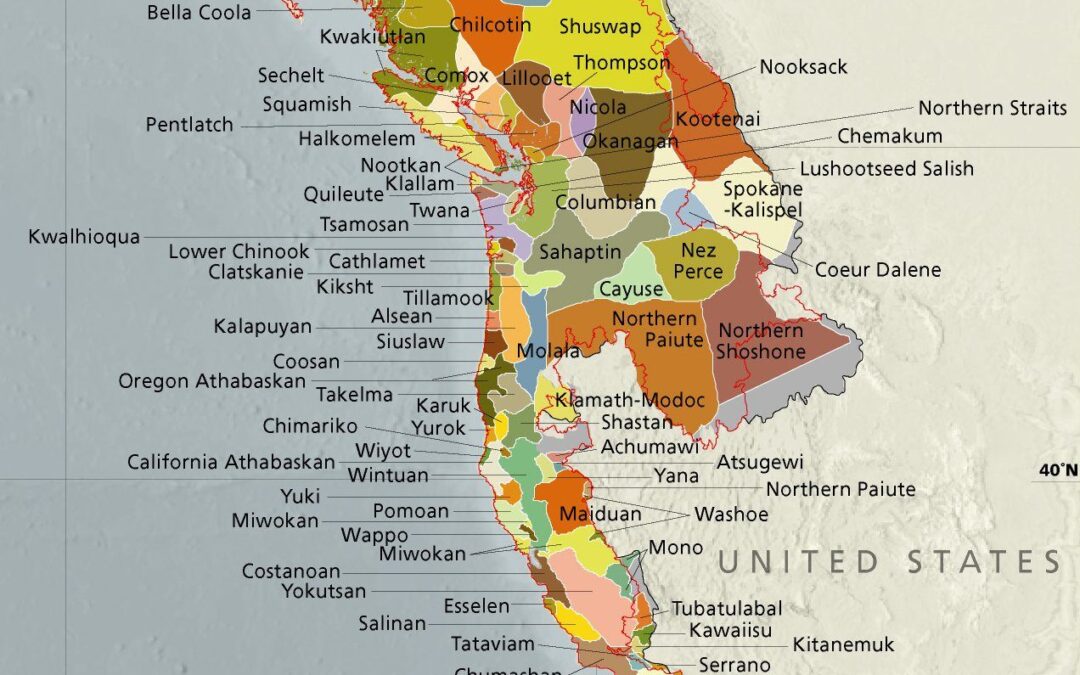
Throughout Canada, New Zealand, and parts of the United States, educators and leaders are engaging in a practice called “land acknowledgment.” Generally, this is a practice that is meant to recognize and pay respects to the Indigenous people first who inhabited and stewarded the currently occupied land. As we know, Indigenous people have lived, and continue to live, in just about every part of the world. The goal of these cards is to help educators introduce and grow an understanding around land acknowledgments.
It is vital that educators recognize this as a starting point and that to pay true respect, action needs to accompany acknowledgement. These “each-one-teach-one” style cards can be used in a variety of ways and this article provides a few suggestions around how an educator might engage with them with learners. These cards are not necessarily intended to be used all together, rather as a resource for the educator to pick and choose what cards are most appropriate for their group. Some of the cards are more appropriate for certain maturity levels than others. While these cards are a resource, it is the responsibility of the educator to learn about the issues of the local tribe and build relationships. Acknowledgement alone is not enough, there must also be action. Without action, we are just being performative and tokenizing of Indigenous peoples and cultures. In what ways are we simultaneously decolonizing our practice? Our minds? Educators should use these cards as a jumping off point to dive further into Indigenous ways of knowing and being and issues that local nations are dealing with.
Possibilities for use:
- Learn more about Indigenous sovereignty
- Learn more about Indigenous treaty rights
- Use images to introduce Vi Hilbert, political cartoons, youth activism, Indigenous art
- Write the name of the original inhabitants of the land you are on
- Open discussion
Opportunities for Use
- Pass them out to students and have each person share something from their card. Prompts may include:
- Why are land acknowledgments important?
- What is something new you learned?
- Can you create your own land acknowledgment?
- If we were to create our own land acknowledgment, what would be important for us to consider?
- Choose specific cards that center the information you want to teach and present them to the group
- Pictures of Vi Hilbert
- Could be used in conjunction with a Suquamish basket lesson
- Discussion of Lushootseed language and dictionary. How does language live and die?
- Political cartoons
- Discuss what the artist is conveying
- Ask learners to make their own political cartoon
- Environmental issues
- Justice Issues
- Youth Issues
- Treaties and sovereignty
- Land acknowledgment examples
- What is a land acknowledgement?
- What are common components?
- What are some differences?
- Why is it important?
- Use the cards as each one teach one cards
- Create your own land acknowledgement with students
- Have students look at the artwork and form a discussion around them
- What patterns do you see?
- What shapes do you see?
- What do you think the artist is trying to tell us?
- Use the artwork and native land maps to have your students investigate and write the name of the ancestral lands you are on. Refer to this daily.
- Write the name of the tribes whose land you are on on the provided artwork
- Why would the artists make this work?
- Youth made this artwork
- ask about artwork that has a purpose
- Ask learners if they have ever made art with a message
- What was that message?
- Did they show anyone?
- How was it received?
- Share stories of youth activists of color
- Meet the young activists of color who are leading the charge against climate disaster (words and profiles below are directly from Burton, N. (2019, October 11). Meet the young activists of color who are leading the charge against climate disaster. Vox. https://www.vox.com/identities/2019/10/11/20904791/young-climate-activists-of-color.)
- Jamie Margolin, 17, is a first-generation daughter of a Colombian immigrant and the co-founder of the climate action organization Zero Hour. As a queer, Jewish, Latina climate activist, Margolin is committed to advocating for the most vulnerable communities. When you uplift Latinx voices in the climate movement, she says, you must also fight for Indigenous rights, including the biodiversity that those communities protect.
- Amariyanna “Mari” Copeny, 12, became an activist on behalf of her hometown of Flint, Michigan, when she wrote then-President Barack Obama in 2016, asking him to do something about the water crisis. In Flint, mismanagement led to high levels of lead in the water. State officials estimate that almost 9,000 children in Flint under the age of 6 were exposed to high levels of lead. These children, including Copeny, are at risk of developing serious, long-term developmental and health problems as a result. “Flint is not unique,” Copeny tells Vox. “There are dozens of Flints across the country. Cases of environmental racism are on the rise and disproportionately affect communities of people of color and indigenous communities.” Flint is nearly 54 percent Black, with more than 41 percent of its residents living below the poverty level,
- Xiye Bastida, 17, was born and raised in San Pedro Tultepec, a town outside of Mexico City, where heavy rainfall and flooding were the norm. It gave her insight into how Indigenous communities are impacted by rising temperatures and environmental degradation. Bastida, who’s Otomi-Toltec from Mexico and now based in New York, says she brings “Indigenous knowledge and cosmology” to the conversation in the climate movement. “We don’t call water a resource; we call it a sacred element,” she says. “The relationship we have with everything that Earth offers, it’s about reciprocity. That’s the only way we are going to learn how to shift our culture from an extraction culture to a balanced and harmonious culture with the land.” Bastida skips school every Friday to protest at the United Nations as part of the Fridays for Future initiative founded by Thunberg. Bastida says it’s vitally necessary to keep Indigenous people at the forefront of the climate conversation.
- Ilsa Hirsi, 16, The daughter of a Somali-American refugee, Hirsi feels strongly about making room for more Muslim and Black youth to be leaders in the climate movement. “Creating more space for those with marginalized identities in the climate space is necessary for inclusive solutions,” she tells Vox. “Everyone should be able to see themselves in a movement like this, and if you don’t, then that’s reason to make this space more inclusive.” Hirsi also recently told Essence that the climate movement can’t afford to ignore the impact capitalism, white supremacy, and colonialism have had on the climate. “The climate crisis is such a massive issue that everything is impacted by it … everything is intertwined in some way,” Hirsi said. She points to Indigenous-led protests against the Minnesota oil pipeline, Line 3, where the struggle against colonialism and the denigration of Native people can’t be separated from the pressing environmental issues.
Sources
#HonorNativeLand. U.S. Department of Arts and Culture. (2018). https://usdac.us/nativeland.
Burton, N. (2019, October 11). Meet the young activists of color who are leading the charge against climate disaster. Vox. https://www.vox.com/identities/2019/10/11/20904791/young-climate-activists-of-color
Friedler, D. (2018, February 9). If You’re Not Indigenous, You Live on Stolen Land. Teen Vogue. https://www.teenvogue.com/story/indigenous-land-acknowledgement-explained.
Land Acknowledgement. Duwamish Tribe. (2018). https://www.duwamishtribe.org/land-acknowledgement.
Grace is a current Master of Education candidate at University of Washington’s partnership with IslandWood’s Education for Environment and Community Certification Program on Bainbridge Island, Washington.


 Tend, Gather and Grow (Tend) is a K-12 place-based curriculum dedicated to educating people about plants, local landscapes, and the rich cultural traditions that surround them. Tend focuses on native and naturalized plants of the Pacific Northwest region and includes Northwest Native knowledge, stories, and plant traditions. The curriculum toolkit consists of a teacher guide, six modules, videos, Coast Salish stories, plant identification cards, posters, games, recipes, and a garden guide. The 60+ lessons align with Science, Technology, Engineering, Art, Mathematics (STEAM) education principles and Next Generation Science Standards. Here’s a glimpse at the main curriculum modules:
 Our Tend, Gather and Grow development team (photo left) includes twelve people sharing a common passion for connecting people with plants, the land, and cultural traditions. Several of our team members have worked together in tribal health and natural resources programs and half are Indigenous. Over the years we have heard consistent requests for educational resources designed for youth. The Tend curriculum is our effort to meet that need. Collectively, we have knowledge and skills in teaching, environmental education, Northwest Native culture and storytelling, ethnobotany, herbal medicine, traditional technologies, art, media, social justice, and youth advocacy. Our team met monthly for several years to study plants in the seasons and co-design lessons and activities. Co-developing the curriculum has been an opportunity for our team to be in community with each other, share our love of plants, deepen our knowledge, and support each other along the way. We also worked with Native Elders, cultural specialists, and other regional experts in developing lessons—especially regarding storytelling and plant technologies. The curriculum includes quotes and instructions from these individuals.
 There are inherent tensions in non-native people using this curriculum, including concerns of cultural appropriation and misuse of plants and cultural landscapes. The curriculum exists, as we all do, within a painful and persistent history of colonialism, white supremacy, and systematic oppression. Historic and ongoing colonial settler practices negatively impact Native People and their traditional lands. Plant communities have changed drastically and many important cultural foods and ecosystems are diminished and difficult to access. Cultural appropriation and a misuse of knowledge among settler communities has undermined tribal sovereignty in several ways, including researchers claiming copyright authority over Indigenous knowledge and the overharvest of plant communities. For instance, as the health benefits of mountain huckleberry are more broadly learned, huckleberry stands cultivated by Native Peoples for thousands of years have been damaged and overharvested by non-native foragers and commercial harvesters.
 end is adaptable to multiple learning environments, cultures, languages, participant ages, and abilities. We encourage educators and students to explore and add specificity around local language, culture, stories, and places as appropriate. We believe that cultural diversity is part of our richness as people. Educators can create opportunities for immigrant students to share their knowledge and traditions as well, and plant uses from around the world are included in the curriculum to encourage this.
 The Tend team has facilitated year-long tribal community educator cohorts where 16–20 educators from Washington tribes gather monthly for full-day workshops. Our first two internships focused on serving Western Washington tribes and this year we are honored to work with tribes from the Plateau region.
 To see the entire issue in FLIP PAGE format, click