
by editor | Jan 22, 2019 | Indigenous Peoples & Traditional Ecological Knowledge
Native Voices: Reclaiming a Culture through the Traditional Canoe
Nathan Piengkham is a member of the Kalispel Tribe and the Executive Director of The River Warrior Society. Members of the fourth-grade crew interviewed him about his involvement in the resurgence of the traditional canoe. This is the interview transcript.

Can you tell us your name, where you are from, and a little bit about yourself?
My full name is Nathan Samsavath (pronounced Sahm-suh-vat) Piengkham (Pronounced Pink’em). I am from the Kalispell Reservation in Washington State. I was born on the coast near Seattle, in Redmond Washington.
I went to Cusick School, which is a tiny school. There were about 20 kids in my class. I played soccer and baseball. I also did martial arts a lot when I was a kid. My dad is not Native American. My mom is half Native American and half European. My dad is from Laos, near Thailand. So I am half Lao. One of the things Laos is known for is kickboxing and my dad taught me that when I was younger. My uncles taught me Kung Fu and Karate when I was younger. My Uncle Dave was a national Judo champion when he was younger.
I grew up in the mountains so my cousins and I were out in the forest a lot when we were younger. It was really fun. I got see frogs, bugs and turtles.
Many tribes throughout the region have not made a canoe in many years and they are starting to build canoes again. Why and can you tell us what is happening now?
Well, that is kind of a long story. I didn’t know anything about canoes. I actually bought a 12-foot long fiberglass canoe from the store. I never got to paddle it because my uncle had finished building that dugout canoe. So I didn’t even know a lot about the stuff that was going on. A lot of the dams were put in so we didn’t really have a use for our canoes anymore, so no one ever built canoes. We were told not to speak our language, so no one really spoke our language either. We only just started to get a lot of that stuff back. So we are starting to learn our language again. If I were to greet you guys I would say Hest Shulook (xest schulux) or Hest Salhalt (Xest Sxlxalt). That means good day. Then I would say Nathan Piengkham or thlue ease quest (ᴌu i skwest), which means “Nathan Piengkham I am called” if you translate it directly. We just started learning our language so it’s hard to get it all back. It is strange growing up without knowing my language. I knew some of my language growing up, but not a lot of it. So it is cool now to see everybody learning the language. We have a school about the size of your school (Palouse Prairie Charter School, about 180 kids) and the kids learn it from a really young age, so they know it better than I do. So what happened is that one of the tribes on the coast gave the tribes in my area giant cedar logs, maybe 3,000 – 4,000 pound logs. Those logs were sitting there for about two years and no one was doing anything with them. They sit that long because they were actually drying out. When the plants are first cut down, they are still wet, so it takes about two years for logs to dry out. After those two years my uncle and my brother, and a few other people started carving a log. And in 2016 all of the tribes decided that we would paddle together. There were two people named Dan Nanamken and BenAlex Dupri who organized some paddles, but they did not get all of the canoes together. Later they both told me that I was the one who has to take over to organize all of the canoes and the canoe journeys. And I said, “Okay!” And that’s how I am involved in all of this.
When you were a kid, what types of canoes did the tribes that you were most exposed to build and use for transportation?
When I was a kid we didn’t have canoes at all. The canoes that they had before I was young, people aren’t sure about. People thought we had sturgeon nose canoes made out of birchbark, and people thought that was all we had. But we did our own research and we found out that we had birchbark canoes, white pine bark canoes, and another canoe called the tamarack bark canoe. I just found out that we used to have these canoes too. And those are the different bark canoes, but we also had dugout canoes, which is the kind that you guys might have seen us bring out to the Snake River. It’s the kind that starts with a giant log and you carve it out. There are also different types of dugout canoes. There are all different shapes and sizes. We used to have all of those types of canoes.
What happened to the canoes that your ancestors made?
When our ancestors made canoes, it was their canoe. So when they died, they buried them with it. That is why no one every sees canoes anymore is because we would sink them out in the lakes or rivers and they would get buried. There is one dugout canoe in the very bottom of Pend Oreille Lake. It could be part of a burial, so that is why we don’t bother it. So we can’t really see what it looks like.
Why did your tribe stop building canoes?
We stopped building canoes for a long time because people didn’t like to be Native American when I was younger. I am Kalispel, but people didn’t like to be Kalispel. They were ashamed of it because we were really poor. We were put on a reservation where farming wasn’t good, so people couldn’t make any money. So no one wanted to be us because we didn’t have any money and we didn’t have a good place to live. So people didn’t like us to speak our language. Our own parents and grandparents didn’t like us to speak our language. They didn’t like us to do things that our people used to do. Many people were focused on drugs and alcohol and getting into trouble because, out in the mountains there’s not a lot of stuff to do. Normally we would be making canoes because canoes and canoeing out on the water or fishing or picking strawberries and huckleberries was what we always did. We would be doing a lot of fun stuff, but we didn’t have all of that anymore, so people just turned to doing things that they didn’t understand very well, like drugs and alcohol, which is sad.
When was the last canoe made by your tribe?
We don’t know actually. That is not in our history. Right now we have two canoes. One dugout canoe and one white pine bark canoe. And those are the only ones that the Kalispell tribe has that anyone knows about. We used to have more, but nobody knows about them. The thing is we didn’t have a lot of written history, so there are people alive right now who might remember that last canoe, but they can’t remember it unless they are out there canoeing with us. If they are stuck at home, they won’t be able to remember. So maybe hopefully when you guys get to go paddle out on this canoe maybe we can bring some older people and they might remember stuff like that.
Did transport become difficult when you stopped building canoes?
Transport did get a little bit harder. Instead of canoeing down to our family members, we would walk. It wasn’t that big of a deal since we have a tiny reservation and people were starting to buy cars for transportation. Like I said, our tribe was really poor, so all the families would all use one car. They would all pack into one car and drive up and down the reservation Our reservation is not very big. The Kalispell tribe is a small tribe, about 500 of us total. About 150 live on the coast, 150 live in Spokane, and about 150 of us live on the reservation. So there are only about 100 of us who know anything about our history and our ancestors. There are not very many of us left. In 1950 there were less than 150 of us left total. There are not many Kalispels alive anymore, at least that’s what we were always told.
What is the importance of the traditional canoe for you and your tribe?
It’s about learning our history and learning what we should be doing. Instead of turning to drugs and alcohol or other boring stuff, or instead of leaving the tribe and going somewhere else, now people can stay home and work with the canoes. Or they can learn our Salish Language of the Kalispell Tribe, or they can learn how to get the natural foods from our mountains. With the canoes we would fish all the time for fish that were in our area. And we would eat plants that were along the edge of the river, like garlic, onions, or chives. There is a lot of good food on the river. We used to eat oysters or mussels. We would trade with other tribes to get salmon or other types of plants, like water potatoes. A lot of the kids go out in October to get water potatoes, and some of us will take out canoes to get them because water potatoes are in shallow water. But the water is cold so you have to be really tough.
Why after so long did you decide to bring the traditional canoe back?
I didn’t decide, but others were Dan Nanamkin was the first one that was trying to bring it back. He started the River Warrior Facebook page and that’s how everyone originally communicated about canoes. Then BenAlex Dupri, he is a videographer and he makes documentaries. When we left Standing Rock, North Dakota and visited with the tribe up there, he stayed there because of the pipeline protest, which became very well-known throughout the world. Ben Alex made it his mission to stay there and make a documentary there, which just came out not too long ago. Our canoes are in that film for sure. Our canoe families went out there and helped a lot to make sure that the people were taken care of. When he left for Standing Rock, I was left as the only one to take care of the canoe families. I see it bringing a lot of our community together. The Bureau of Indian Affairs (BIA) originally for the Kalispell Tribe, the BIA office was on the Nez Perce Reservation. Even though our office was far away from us, it worked really well and we didn’t have any issues. The problem was that when they switched our office to the Spokane agency, suddenly we didn’t get any services anymore and we couldn’t contact the BIA anymore. We don’t know why, but we needed to have a relationship with the Nez Perce Tribe that was far away. Now because of the canoes, we are talking to the Nez Perce Tribe again and visiting people down here in Moscow. The canoes are bringing our communities together. So that is why I chose to stick with the canoe stuff. It is really important for all of our people, our family and our friends.
Was it hard to bring the canoe back, and why or why not?
Yes, it was very difficult to bring the canoes back. Like I mentioned, there were a couple of people trying to help me, but they ended up doing other things and they kind of left me with it. For two years we paddled without any formal support. A lot of people have a school or cultural or language program to help them organize, but at the time I was still in my late 20s and I was really new to organizing and being a leader. I used to be a tutor and I would help people graduate from high school. I would help some of my family members graduate. I also took kids out for activities, like to play basketball, go skateboarding, or go swimming. One time I took a bunch of kids to Yellowstone National Park and we went swimming, but there was a big sign that said “Beware, Vicious Otters May Attack.” And I was like, “What?” There were no vicious otters, but there were leeches, and that was creepy. There were a lot of buffalo wandering around the streets. So it was difficult, but I had a lot of training to learn how to organize people. I went to college for Tribal Administration and Tribal Government. I double majored in Psychology and Philosophy. I took a lot of business, accounting and math classes, but my focus was always psychology and philosophy.
It has been difficult to bring back the canoe. We are still organizing our canoe family. I just started a nonprofit, the River Warrior Society, to help us so that we have an organization to facilitate everything that we’re doing. Some people might think that “Warrior” is aggressive for a name, but “Warrior” could mean a lot of different thing. It’s people who are fighting for a cause, not fighting people. It’s people who are fighting for people’s rights. Your teacher could be an Education Warrior because they are fighting every day to make sure that you get the best education you can get. So as River Warrior, we are fighting to maintain our culture. We are fighting to keep it. And so that we can educate our future generations so everyone can learn about the canoes, not just certain people. If you think about it, it doesn’t matter where your ancestors were from. Wherever they lived in the world, they all lived by a lake or a river or an ocean and they probably had a canoe. So learning this canoe stuff is learning all of our history.
Did the tradition and steps of how to build a canoe fade from your mind as so many years have gone by?
No, the thoughts and processes don’t fade because every time we look at the canoes, we remember what happened. Like my uncle chipped a piece out of the canoe, and every time I see that chip I remember him carving that out too hard and too big. So every time I see it, I remember the techniques and procedures of building the canoe. Every time we go out to paddle, we remember another piece.
Do you build new paddles every time you build a canoe?
We usually try to because the pieces you shave off of the canoe, you can use to make paddles. I have a paddle that is made from the same wood of my canoe. So they are both connected in that way. The cedar log we had was over 800 years old, so that paddle that I have is over 800 years old.
What is the importance of carving paddles?
There is a lot of thought that gets put into making a paddle. Every time you make a carve into it, you remember that. So having your own paddle means that every time you look at it and every time you paddle you remember how to carve. So it is like a teacher. That is one important reason, but also our ancestors did that same thing a long time ago, so at the same time you are learning how to carve a paddle, you are also learning your history. And people make paddles out of different types of wood, and every type of wood you carve differently. If the paddle is super light, you’d have to make it thicker so it doesn’t break. If the wood is super heavy, you can make the paddle really thin because it is really strong so it is not going to break. There is a lot of knowledge about making paddles. What the tribes on the coast would do is that they would make everyone on their team make a paddle, and then they would sell them to raise money to go on a paddle trip. That was how they would raise their money to go on paddles.
To learn more about Nathan and the River Warrior Society, visit https://riverwarriorsociety.org.

by editor | Dec 17, 2018 | Indigenous Peoples & Traditional Ecological Knowledge
Native Voices: Reclaiming a Culture through the Traditional Canoe
Gary Dorr is a member of the Nez Perce Tribe and Chairman of The River Warrior Society. Members of the fourth-grade crew interviewed him about his involvement in the resurgence of the traditional canoe. This is the interview transcript.

What is your full name and where are you from?
My English name is Gary Dorr. My real name is Standing Red Bear. I live in Craigmont, Idaho on the Nez Perce Indian Reservation.
Many Tribes throughout the region have not made a canoe in many years and they are starting to build canoes again. Why is this happening now?
The reason why we are building canoes again, or why we are going back to it, is to reclaim part of our culture. It comes at a time when the culture and the environment are under attack from global warming threats, from pollution. So it makes sense for us to reclaim our authority over the water. And the best way to do that is in the traditional way because our treaties are traditional, traditional words for our ancestors. So we are going back to those words in a good way, the way we would have done it back then with a traditional canoe. Whether it is Kootenai, Coeur d’Alene, Shoshone-Bannock, Paiute, Standing Rock, Rose Bud, or all the coastal tribes, including the Nez Perce, we are all reasserting our authority on the water in a traditional way. So that is why it is coming back.
What types of canoes has your tribe built in the past and what were they used for?
In the past we have done dugout canoes and sometimes we used to burn them out instead of carve them out. I like to tell people that they were our grocery cart, our family car, our post office, and our hunting rigs. We would take them on the river and we would go across the river. Sometimes we’d go just right across the river to go to the other side to gather roots. Sometimes we would take them fishing, even at night time using lanterns with fire, and we would spear fish from it. The other thing we would do is to take them out to lay nets in the water. And we would go all the way to the ocean to gather different shells, to get to where the other fisherman are, and to meet with our other relatives on the coast. We would bring messages back, so that is why the canoe was our post office. And our grocery cart because we would go over and get berries or other roots. It was our hunting rig because before we had trucks we would go hunting in the canoes and gather things.
What happened to the canoes your ancestors made?
Well a lot of different theories on that. Some people say that some people burned them and others say that they buried them in the mud because when the missionaries came here they wanted to get rid of all that culture. So to save it we either burned it ourselves or we buried it in the mud and lakes. We do have four canoes that were made by some Nez Perce elders back in 1913, or somewhere around there. They are in our museum, not on display, but in a separate warehouse. So those are the oldest canoes and the models that we are working off of to make our canoes today.
Do you know why your tribe stopped building canoes?
Again, there are a couple of different theories about why we stopped building canoes and that was probably the missionary influence because when they made the Indian Reservations they wanted us to become farmers. And we used to go from Oregon all the way to Montana, and to Washington, all over the place. We would go with the seasons to different camps. We didn’t stay in on place like a farm house to farm. So in order to keep us doing that they took our horses, they burned down our wickiups and our tipis, and took our boats. They made those things bad to use so we would stay in one spot and become farmers.
Why after so long did you decide to bring the traditional canoe back?
Well we have been trying to bring our language back for years and years and years, and there are quite a few people who are taking our language classes. The other part of that is actually using the language. When we go to ceremonies we use the language. When we go root digging some of the women have songs that they sing when they are digging the roots. So this is just another way for us to expand our culture. A new use for our language is to build this canoe. And we wanted our children to experience this again because people have tried it in the past. I guess abut 1990 someone tried, but they didn’t finish the canoe. So we are going further than they have. It is mainly for our children, so that they can regain that skill.
What is the importance of the traditional canoe for you and your tribe?
It is a symbol. It is a symbol of living with the land. There is nothing man made in the dugout canoe. The paddles are from trees. The canoe is from trees. There is no plastic, no glass, none of that. It takes people to build that. So the importance is gaining our culture and passing it on to our children, also because the children helping us build our canoe have never been in a dugout canoe. So they are going to be the first Nez Perce children in over 113 years to sit in a dugout canoe. It is a big part of our culture because we are surrounded by rivers – the Clearwater, The Salmon, The Snake, The Columbia, The Palouse, all these different rivers and yet we don’t have any canoes left. We want our children to have that back. This is basically our gift to our children and that is why it is important to us.
Is it hard to bring back the canoe, and if so, why?
It is a little bit hard because we don’t have all day to do it. We meet once a week for about three hours so it has taken us a long time. Part of having that canoe sitting exposed for so long is that it’s curing. And as it curing, it is drying out, and it is starting to crack. Because we haven’t sealed it up, because we haven’t finished carving it. So I went through and I sealed what was left on the outside and that helped to stop the cracking. We put some butterfly braces in there along the cracks to keep it from separating more. It is hard with everybody’s work schedule. We are dealing with a traditional craft that was built in three or four days and we are only there for a couple of hours a week, so it has taken us almost a year to get this done. And that is because we are taking a traditional craft and we are combining it with today’s modern work environment and work schedule.
Why did you name your canoe New Medicine?
It is named New Medicine because to us we’ve lost this way. Let me explain what medicine is. Medicine can be words. Medicine can be actual roots, plants, or food. Water is medicine. Prayers are medicine. Giving someone a hug is medicine. You have a good effect and a bad effect and medicine is that effect. So when we built this canoe it is a new medicine to us because none of us have built a canoe in 113 years. To us it is new, but it is actually an old medicine that we are bringing forward. It has always been there for thousands of years, but for us, for me, it is new. So that is why we called it New Medicine.
 What is the importance in your tribe to have kids help make canoes or paddles?
It is very important because we are making mistakes on our canoe, but our children are there so next time we are going to teach them a better way of making a canoe. What has happened is we have families now that are coming to the canoe. We have two families that are coming there with their children. My dream is for those people to get a tree in their yard and start building their own family canoe. When they do that, for the children it just becomes natural. Just like every day you brush your teeth, it is a natural thing when you get up in the morning. For children when they want to go camping and go up in the mountains. If they want to come back the easy way, they will find a tree, chop it down and make a canoe. That is how simple the knowledge should be.
How special is it that the kids are helping you?
I think it is really special because children are more pure than we are. When you are born, you are the most pure you are ever going to be. When you are older, you are exposed to things, you have anger, jealousy and all these things that can come the older you get. When you are young, you don’t have all of that. You are just happy. So that brings a good energy to the site where we are building the canoe. They have prayed with the canoe, so I think that is the most important thing. This canoe is a ceremony. Even before we started building it we went into our sweat lodge and prayed for their canoe to come to us. On that day we started the ceremony, and our children are part of that ceremony.
Did the tradition of building a canoe, and the knowledge of how to build it, fade from your mind as the years passed that you didn’t build the traditional canoe?
Yeah it did. For example, when we were here in 1805, when Lewis and Clark first got here. When we sent them down the river, in ten days we built five canoes for them. Ten days. So that’s two days per canoe. That is just as natural as getting up and brushing your teeth. But for us it has taken a year to build. We are getting better at it, but it is something we have to learn. You are not going to learn it until you actually do it. That is why we started to do it, because there is no other way to learn it. You can read it in a book, but until you swing and axe and start carving, until the wood starts to split, you don’t know how to handle that. That is why we are doing it.
What is the importance of carving paddles?
The importance of carving paddles as it was explained to me is that because we worked on these canoes very quickly in three or four days there was a lot of carving going on. So to keep the children from getting hurt while we were swinging axes, we let them carve the paddles. That gave them the hand skills to use a knife, carving tools, whatever we used to carve the canoe to carve the paddle. It kept the children busy while we were doing the heavy work with the log.
What do paddles mean to you in your tribe?
The paddles for us mean the children’s independence. Once we had these small canoes, the children wouldn’t be able to do it unless they had paddles. In order to use the canoe you had to have your own paddles. That makes you independent. And it was the same thing for the people. Sometimes the women had smaller canoes to go across the river. If there canoes were small enough they could use their hands, but if not, they had to have a paddle. So you can have the nicest canoe in the world, but if you don’t have a paddle you aren’t going to be able to go anywhere. So it was about independence.
Historically how long did it take to make a paddle?
Well usually we could make a paddle in maybe a day. For us, the Nimi´ipuu, the Nez Perce, our canoes and our paddles were not fancy. They didn’t look like a piece of art. They were clunky. As long as they worked that was all we cared about. We didn’t put drawings on them. Today we do just because it’s something special for us. But in the past, way back in the day, we built canoes in two days.
What are the steps to making a paddle in your tribe?
First you have to draw it out. The thing with paddles is that normally the children built them because we did a lot of heavy work with the logs. So to keep the children safe while we were working on the canoe the children would be the ones working on the paddles. So we’d trace it out and just let them carve away with knives or sharp points.
With your tribe, traditionally what kinds of shapes and uses did your paddles have?
Normally the first person in the canoe has a pointed paddle that is maybe a little bit skinnier. The reason is that when we pull into shore the first person digs that addle into the dirt, into the shore, and holds the canoe while everyone else gets out. So everyone else should have a rounded paddle. The person in the very back is the one steering the canoe. They might have a little bit longer and thicker paddle because they are pushing and pulling and directing that canoe on a straight line.
Why do you make paddles?
I actually haven’t made a paddle yet. I had someone give me a paddle so I didn’t have to build mine. The reason why we make paddles is when you’re in a canoe, it’s really neat, and you will see this once you are in your canoe, you lay your paddles across the canoe and you can go like a drum beat and sing songs. When you are all going at the same time, that expresses unity. Thump, thump, thump, thump, thump, thump. You can all start on different beats, but if you do it long enough you will find that everybody gets the same beat. It’s a natural thing and we know that. That’s why we do it, to get everybody right in the same mind and get everybody unfied.
Do you build new paddles every time you build a canoe?
I don’t know about every time because this is our first canoe that we have built. We are building a bunch of paddles though. Generally, if you carve your own paddle that goes home with you. We always place the paddle part in the water, but when we lean it up against the wall, we always place that end up and the handle is what touches the floor. And that is just one thing we have learned from our elders. We might have to build paddles again because some of them might break. I think that some people have built their paddle a little bit too thin and when we get on the shore the first paddle on the front of the canoe is always pointed. And the reason for that is when we pull into shore that person digs that paddle into the sand and the dirt and holds the canoe. So that paddle probably will break, because we are down there on the river with e bunch of rocks. So we build them whenever we need them.
 Is there anything else that you want us to know about paddles?
The only other thing I want you to know about paddles is to make sure that you guys practice with them on the land first, so that you are all stroking with them at the same time. Because you’re not all on the right side, you’re not all on the left side. So one person will be on the right side, the next person up on the left side, the next person up on the right side, the next person up on the left side. So when you stand in two lines what happens is that the first person in the front of the canoe, when they raise their paddle, everybody on that side behind them raises their paddle, and that way they stroke at the same time. So the person in the front is the one who controls the speed at which you guys are paddling. If you are on the left side you watch the person in front of you, and that person watches the person in front of them, all the way to the front of the canoe. So the person in the front, as soon as they start stroking, everybody on the left side should be stroking at the same time. Same thing on the right side. You watch the person in front of you, they watch the person in front of them, and so on all the way to the front. So you are not clunking paddles, and you’re all going at the same time. That is something you can practice today. Even though your paddles aren’t done, you can practice getting up in two lines, one on the right side and one on the left side, and watch the person in front of you, all the way to the front. That’s so you have more power and so you’re not clunking paddles or mashing anyone’s fingers.
Is there anything about paddles and your tribe specifically that you want the world to know?
We started making our dugout 13 months ago. We started in a ceremony in a sweat lodge and we prayed for this to come in a good way and for everybody to be safe. Building the canoe is part of our ceremony, so our ceremony has been going for 13 months now. When we put the canoe and paddles into the water, it is also a ceremony because we want the Snake River dams to be breached. We have some goals to get those dams out. So we are taking these canoes as a form of prayer. For the paddlers, every stroke, every time they put their paddle in, they are making a prayer. So we say “every pull a prayer.” We are going to break that down. We are going to protect the water. We are going to restore the salmon. Please help us. So that’s probably the difference between just going out recreational boating and a traditional canoe that we’re doing.
To learn more about Gary and the River Warrior Society, visit https://riverwarriorsociety.org.

by editor | Feb 27, 2018 | Indigenous Peoples & Traditional Ecological Knowledge

Tribal teachers set out to help design an integrated curriculum around the canoes of Pacific Northwest Native American tribes.
Article by Suzie Boss
Click here to view article in PDF format: Canoe Curriculum PDF
by editor | Nov 16, 2017 | Indigenous Peoples & Traditional Ecological Knowledge
Traditional Ecological Knowledge
 The Suquamish Basket Marsh: Creating a Living Library
An Outdoor Environmental Learning Classroom for the students of Suquamish Elementary School
By Melinda West
T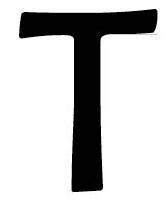 here is a Salish legend passed down by the First Peoples of the Pacific Northwest that explains the origin of the cedar tree and why it has been referred to as: “Long-Life Maker”. For over four-thousand years this slow-growing, shade-and- water-loving evergreen has resided amongst the fir, yew and hemlock trees, in forests along the edges of Puget Sound. The legend explains that the cedar trees were once generous people who looked to the welfare of others in their community and responded to their needs. I’d like to tell you a story that makes me believe the spirit of this legend is alive and flourishing today.
My relationship with Suquamish Elementary school was rekindled in the spring of 2000. This was the public school my own two, now adult sons had attended. For over a decade, I had spent many hours volunteering in each of their classrooms. On this occasion I was invited as a consultant because of my work as a natural fiber weaving specialist. This visit was to hear about an innovative idea for a project that would combine science, social studies and art education. The proposed project would involve converting a barren, fenced-off drainage catchment area on school grounds into a pond and native plant garden.
Pulling into the auxiliary parking lot, I glanced straight ahead at this desolate space, off limits to students, yet taking away up to one third of the play area. These depressions in the landscape surrounded by locked chain-link fences are commonly seen throughout the Kitsap Peninsula, in Washington State, where I’ve resided for over a quarter century. They are required for surface water purification. I tend to look away from these sites and search for alternative focuses which hold some beauty — the chirping sounds of children at play, verdant leaves unfurling, even the bright yellow of dandelion weeds.
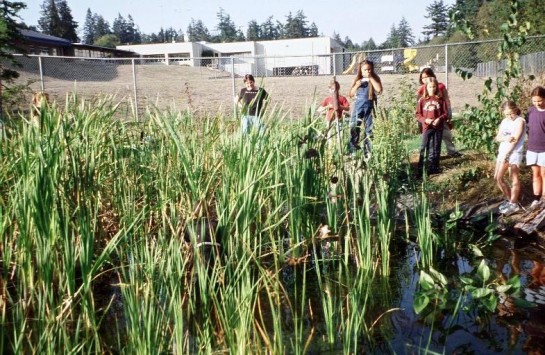
Six years later, as I drive into that same parking lot at Suquamish Elementary, my eyes are drawn to cattail leaves dancing over a shimmering pond. I see delicate, green stalks of the Northwest sweetgrass sedge growing in the bog. Both plants have been used for centuries as weaving materials by the First People of this place. There is a boardwalk and gravel trail that follows the perimeter of the pond. A rain shelter built of yellow cedar is reminiscent of the long houses that once stood nearby. A small cedar tool shed, and wooden benches are nestled in between adolescent hazelnut, vine maple, and western red cedar trees. Shrubs, ferns and ground covers mingle below the wild roses, red currants, and willows.
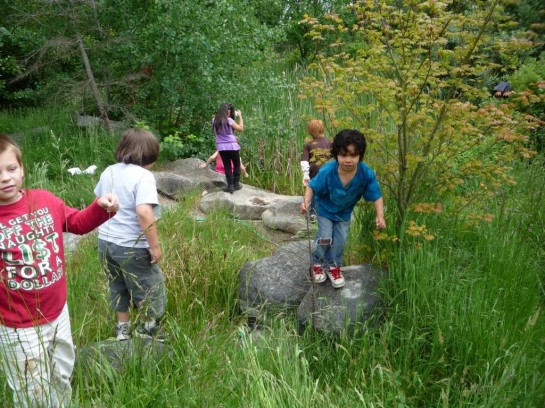
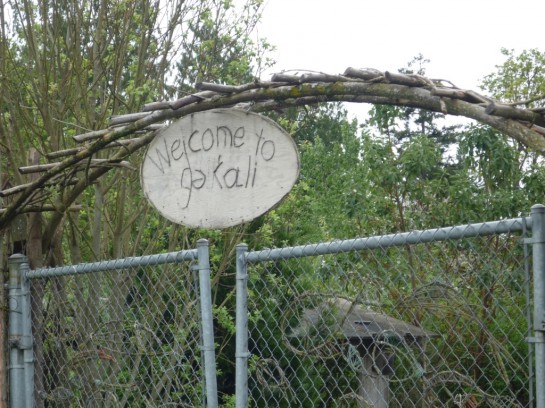
There is a class of third graders using this space when I arrive. Little faces peak out from behind a bird blind woven with grapevines from a local vineyard. Other students are sitting on boulders perched near the pond, glacial remnants generously donated by a local landscape company. At this moment the students are quietly engaged, making observations and entries in their pond journals. They are smelling and touching plants, writing, measuring, and sketching. In a little while, I will be accompanying a class of fourth graders the fifty odd yards away from the building, through the woven arbor gate and under the twig sign that says: “Welcome”.
 “In traditional Native American cultures, art was not a separate pursuit. Beauty and utility came together in objects of everyday use to reflect a way of life and an aesthetic that respected the relationship people had with their environment.”…Shaun Peterson, Salish Artist, 2004 SAM exhibit” Song, Story, Speech”.
As a plant fiber artist, teachers invite me to present ethnobotanical knowledge about Pacific Northwest plants to their students. This provides content for social studies and science requirements, while the techniques for using the plant fibers provide physical activity, math and art skills. The Basket Marsh and outdoor classrooms of its kind are living libraries and laboratories. They contain unlimited resources for teaching every subject students need to learn.
What I have to offer as a teaching artist is most effective in an environment where students can see, touch, smell, hear, and sometimes even taste, the subject-matter. Again and again, I have witnessed that this first-hand experiential learning of natural science and culture gives lasting memory and meaning to students. The virtues of the western red cedar can easily be appreciated by children, when they are given pieces of the leather-like inner bark to experiment with as they sit next to young growing cedar trees. Non-conventional learning environments like the Suquamish Basket Marsh give opportunities for students and classroom teachers to meet and interact directly with artists and other specialists from the community.
Today I will model my craft, and students will get to experience weaving with cattails that they have helped to grow and harvest from their Basket Marsh. We will share stories, sing a weaving song, and then weave a mat or make some rope in order to experience first hand the ingenious ways that cattails and other native plants have been used by the First People of this place.
Connecting the Project to the Place
 “Every part of this country is sacred to my people. Every hillside, every valley, every plain and grove has been hallowed by some fond memory or sad experience of my tribe.”…..Chief Seattle, speech at the Pt. Elliot Treaty signing, paraphrased by Dr Henry Smith, 1854.
Twelve thousand years ago, a thick layer of ice covered the Pacific Northwest. As the ice melted, glaciers formed and slowly carved out deep channels that the water filled. Forests grew, and the land that was left became covered with plants. In some origin stories, native North American storytellers have told that the First People were once plants and animals who later took human form. Those people began to live in villages along the shorelines, and since then their descendants have been living here too. Long before contact with explorers, trappers, and settlers, the place near the present day town of Suquamish was highly populated. Everything needed to sustain a rich community and cultural life was present in the forests, meadows, rivers, at the water’s edge, and in the sea.
“Children learned from an early age not to pluck too much or ruthlessly destroy the valuables of the earth. They learned responsible, caring behavior both through stories, metaphors and focused instruction at opportune moments and through observation, emulation and experience.”…Nancy Turner, from THE EARTH’S BLANKET, 2005.
Prehistoric survival was dependant upon the knowledge of place accumulated over time: geography, seasons, cycles, weather patterns, plants, and animals. In recent times, this knowledge, reflected in the First Peoples’ relationship with the flora and fauna, is being referred to as Sacred Ecology or Traditional Ecological Knowledge. This body of information has been passed down through the oral tradition from one generation to the next, through stories, songs, ceremonies, and through the practice of traditional technologies, skills, and arts derived from the environment.
In Lushootseed, a language spoken by many of the First People of the Puget Sound area, the word for Suquamish is d’suq’wub which means “place of clear salt water”. The city of Seattle was named in honor of Chief Seattle, the Duwamish and Suquamish leader, who in the mid 1800’s protected his community from the raiding parties of other tribes. Later, in hopes of further protecting his people from the influx of settlers and a new government hungry for land and resources, he signed a treaty with the United States government which resulted in the city of Seattle being built upon traditional Duwamish Tribal land. Chief Seattle’s burial site is only a few blocks away from Suquamish Elementary school. Every August, the Suquamish Tribe sponsors a huge gathering of Intertribal-Nation festivities and canoe races known as Chief Seattle Days, honoring this important leader.
Nearly one quarter of the students at Suquamish Elementary school, are descendants of First Peoples indigenous to North America. After many years of misunderstanding by impinging dominant cultures, the perspectives and approaches to education espoused by some of the traditional First Peoples’ teachings are starting to be better understood and valued. The holistic ways of thinking about the Earth, organizing information, and connecting knowledge to daily life are as important today as ever.
“In our culture all things are living….everything has life.”…Dr. Martina Whelshula, Colville Tribes, Benchmarks Panel, WAEYC Conference, 10-27-06.
Traditional teachings are imbued with lessons for sustainable living and are intrinsically linked to place. Relationships — with people, plants, animals, and all the elements, are emphatically important. Now the Suquamish Basket Marsh is providing opportunities everyday for these types of lessons to touch children of all cultural backgrounds within the school and community. The Lushooteed name for this outdoor classroom is: gelk’ali. It means “place of weaving”.
 “Weaving has always been part of the community in the First People’s traditional culture here in this place. Now it is part of the healing for our people. We are stitching and mending the culture back together.”….Darlene Peters,PHD, counselor, teacher, Suquamish and Port Gamble S’Klallam, gelk’ali dedication speech, May 2002.
Planting the Seed
The idea for the gelk’ali came from Ron Hirschi, a fisheries biologist who worked for many years with the Port Gamble S’Klallam Tribe. He is author of over fifty books for children, many that combine real life pictures of animals with accurate scientific information. While appearing as a guest for the school’s May 2000 Young Authors Day, Mr. Hirschi shared with students, projects from other schools including the restoration of a wetland at Pickerington Elementary in Ohio. He suggested creating a pond out of the storm water retention area at Suquamish Elementary. His idea was that by planting it with native plants traditionally used by the local First People, especially plants used for traditional basket weaving, there would be an opportunity for tribal families to become more involved at the school. Tribal members living in the community could be invited into classrooms to share cultural experiences and knowledge with all the students. Mr. Hirschi also shared how students, at nearby Seabeck Elementary, formed an after school group called the “Salmon Team”. He helped this team partner with parents, the S’Klallam Tribe, and Trust for Public Lands, to acquire an entire estuary after research by the Salmon Team showed the presence of endangered salmon in its waters.
Recognizing a Problem
“As teachers we should be striving to give kids moments of greatness. How can we help students have these moments?”…Jan Jackson, personal interview, 9-13-06
After 18 years of teaching, Jan Jackson, a librarian at Suquamish Elementary school, was considering retirement. She felt she was losing an important connection with her students. Like many classroom teachers today, Ms. Jackson recognized the challenge of engaging students with a broad spectrum of learning styles from various cultural and economic backgrounds. She noticed that many students were spending more and more time in front of video and television screens. She also saw the pressures put upon teachers to spend more time teaching to a system of standardized tests, leaving less time to develop relationships with students for building life and learning skills. At the same time, children were having fewer opportunities to be outside, fewer chances to be observing nature, less time to be exploring and responding to the natural environment through the arts and sciences.
 “Direct exposure to nature is essential for healthy childhood development – physical, emotional, and spiritual….it is a potent therapy for depression, obesity, and ADD…it improves standardized test scores…it develops skills in problem solving, critical thinking, decision making…and creativity”… Richard Louv, The Last Child in the Woods, 2005.
When a need is recognized and a community cares, a good idea can be set into motion as long as there is someone like Ms. Jackson to see it through. She first approached Principal Joe Davalos with the concept of the outdoor classroom. “It helps to have a principal that lets people follow their heart,” she says of Davalos. Other teachers became interested, and a committee was formed which met through the summer to plan a Basket Marsh curriculum. Relating the curriculum to career education helped the school apply for funds from their school district’s vocational department to get them started.
Gathering a Team
“Never doubt that a small group of thoughtful, committed citizens can change the world. In fact, it’s the only thing that ever has.” Margaret Mead, anthropologist 1901-1978
With the principal, teachers, students, parents, and the Suquamish Tribe on board, it was time to see if there was community support for the Basket Marsh. For the next two years Ms. Jackson spent many hours in outreach, bringing students with her to attend school board and other community meetings. Individuals, families, corporate and business sponsors, all stepped forward to provide funds, services, equipment, materials, and the invaluable hours of labor and expertise required. Approval from the school board, consulting with the water district, permits from the county, all needed to be researched and secured.
The Suquamish Tribe partnered with the school, providing ongoing funding for programs and projects at the gelk’ali. They helped develop the plan for the marsh, provided soil testing, water flow analysis, ground surveys, plant recommendations, and consultations by hydrology and fisheries professionals. The county departments of Waste Water Management and Solid Waste, as well as the local public utility district’s Education Department, have given continual support.
Institutions of higher learning have been important resources for the gelk’ali. Each year, many students from Suquamish Elementary spend four days at IslandWood’s School Overnight Program, receiving an intensive environmental education experience. An ongoing partnership has formed with this nationally acclaimed environmental learning center, and inspiration for many of the class service projects have come from this relationship. Members of IslandWood’s staff and some of their graduate students have helped with improvements at the gelk’ali, and have been involved in follow-up teaching. The National Wildlife Foundation and Cornell University’s department of Ornithology’s “Classroom Feeder Watch Program” have also enhanced environmental education and science curriculum.
As director of the pond project, Ms. Jackson credits the whole community with building the gelk’ali. Students, teachers and staff, PTA, school district personnel, county employees, the Suquamish Tribe, biologists, carpenters, scientists, authors, specialists, garden clubs, the local Rotary, civil engineers, architects, landscapers, artists, area businesses, parents and volunteers — all saw the need and understood the benefits.
Involving the Students
“I want kids to get their hands dirty, and not be afraid to make a mess.” …Jan Jackson 9-15-06
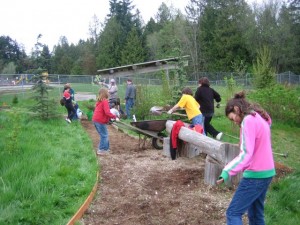
Known as the “Pond kids”, these 4th-6th graders fill out applications at the beginning of each year in hopes of gaining a position on the Student Advisory Board. This extracurricular group of 25-30 students meets weekly with Ms. Jackson and the volunteer docents. The Pond Kids have been involved in all aspects of the development of the gelk’ali, from research, to fund-raising, to planning and coordinating Earth Day assemblies. Early on, the students helped design and plan the pond. After meeting with a parent who showed them how to take topographical measurements of the site, they built a 3-dimensional scale model to help with their presentations to the School Board, sponsors, and to other community groups. They cleared out the blackberries and Scotch broom, and helped rake, dig and plant. Now the Pond Kids continue the ongoing physical labor at the gelk’ali, restoring habitat and maintaining the plants.
“Before the pond was built the grass was brown and now it’s green. I enjoy knowing I’m making a difference in the school.” …Winona, 5th grader, 2002
All the students at Suquamish Elementary utilize the gelk’ali for learning. Each student has a pond journal they use for documenting their observations at the gelk’ali throughout the year. Along with each class, every year a new group of Pond Kids implement one or more service projects that connect the gelk’ali with the whole school. One project inspired after a visit to IslandWood has been recycling lunchroom waste. The Pond Kids researched vermaculture, and agreed upon the size needed for the worm boxes based upon their measurements of daily school lunch food waste. The boxes were built by a parent volunteer. The students made instructional posters, gave presentations to classes, and volunteered to stay in from recess to help collect the food waste. Now the school saves district money since there is less trash. At the same time, the worms decompose all that food waste into useful compost for the plants at the gelk’ali.
As well as learning important aspects of being responsible stewards of the land, the Pond Kids are encouraged to be active citizens and communicators. They have written letters to sponsors, articles for school newsletters, and corresponded with foundations and public officials. In the course of these activities they have won local, regional and national recognition for their environmental leadership. Each week the Pond Kids report back to their classrooms what they are leaning at the gelk’ali. To help build relationships between grade levels they also report weekly to their “buddy classrooms” in the primary grades. Each year all the students at Suquamish Elementary are learning about environmental stewardship first hand.
“The marsh is like a puzzle that fits into the big picture. The plants protect the pond from harm. The trees grow, give shade, and hold together the pond with their strong immense roots. The dirt absorbs nutrients and, sometimes, the pollution. The animals in the pond make it a happier place for us.” …Tyler, 4th grader, 2002
Imagining the Future
Teachings of the Tree People: The Work of Bruce Miller from NWIN on Vimeo.
“An intimate participation leaves a memory as long as you are on the earth.”…Bruce Miller, the late Skokomish Spiritual Leader and Cultural Teacher, from Teachings of the Tree People, 2005 video produced by Katie Jennings and IslandWood
How can teachers find the support they need to step outside of the metaphoric boundaries of classrooms today? In conjunction with standardized learning and testing, is it within the realm of possibility that community-born projects for learning could be used by more teachers and children, on a daily basis?
Imagine every elementary school in the United States being able to tell a story like this. Not identical, of course, but a story of how their schools, students, parents, and communities could find authentic ways to meet the educational needs of their children. The native plant garden and outdoor classroom is just one possibility for providing an atmosphere for student-driven, inquiry-based learning. At the gelk’ali, as teachers become more comfortable embracing this resource, the natural history of Suquamish can come to life for their students. Differing cultural perspectives can be explored giving all students the opportunity to examine their own cultural roots and traditions. The scientific and artist processes can be taught –honing observation skills, exploring and asking questions, experimenting, designing solutions, researching, making measurements, learning techniques and skills, documenting results, reflecting upon them, and finding new questions!
Throughout the development of the gelk’ali, the school, tribe, and community have proven to be devoted advocates for promoting diverse cultural perspectives and approaches to education. They have diligently created a place of learning that enhances the educational opportunities for students with various learning strengths, and engages them through methods that mainstream classrooms cannot offer.
 “Working with the Suquamish Tribe…planting the grasses the indigenous peoples worked with for their basket making, takes teaching to the highest level: Every time we educate our children on the rich diversity that exists in this country, we educate ourselves.” …Jay Inslee, US House of Representatives, Washington State Congressional District # 1, Letter for the Dedication of the Galk’ali 4-02
Outdoor classrooms, such as the Suquamish Basket Marsh, broaden educational opportunities for a diverse group of students. They give non-conventional teaching specialists the opportunity to use their respective art forms as vehicles for teaching science, math, social studies, language, history, and the arts. Concepts difficult to learn from books alone or while sitting inside at desks, become illuminated, when students are given opportunities to relate them to natural living systems on a daily basis.
Many caring individuals have built this special place of learning. Around the pond, the cedar trees are growing taller. As in the ancient legend of the cedar tree, each sword fern, camas bulb, huckleberry and Oregon grape plant – reflect a piece of a story of someone’s generosity. When people care about their children’s education, even a small puddle on the school grounds can become a lesson about the transformative power of a community working together.
Additional Information:
History/Stages of Pond Development
Stage I – 2000 – Planning
Stage II – 2001 – Construction
Stage III – 2002 – Maintenance, Improvements, Service Projects
Stage IV – 2003 to Present – Maintenance, Ongoing Service Projects
Partnerships
Suquamish PTA
Suquamish Garden Club
Kitsap County Solid Waste Department
Kitsap County Storm Water Management Department
Public Utilities Education Department
IslandWood
Cornell University
National Wildlife Federation
Awards
President’s Environmental Youth Award, 2003
Kitsap County Commissioners’ Earth Day Award, 2002, 2006
Grand Prize, Ivy Sculpture Contest, Bainbridge Gardens, 2004
Grants
Suquamish Tribe Appendix X, 2000-present
Lowe’s Toolbox For Education Grant, 2006
Gifts from many assorted local business and individuals
Artists
Traditional Native American Tribal Weavers
Botanical Illustrator
Natural Fiber Weaver
Cedar Weaver
Cartoonist
Soft-metal sculpturist
Book illustrator
Visual artist
Authors
Ceramic artist
Mosaic artist
List of Service Projects by Classes and Pond Kids
Science Fair Projects
Water testing
Building a copper water gauge for measuring water level at pond related to rainfall
Stepping Stones
Weaving a branch and vine bird blind
Earth Day Celebration assemblies
Native plant tiles with imprint and scientific, common and Lushootseed names
Native plant studies, drawings over the seasons
Cattail weaving projects
Ivy animal sculptures
Classroom Bird Feeder Watch, Cornell University
Participate in making film, Teachings of the Tree People, sponsored by IslandWood
Recycled material baskets
Contribute drawings for IslandWood field Guide: ALL MY RELATIONS.
Cedar gathering bark with Suquamish Tribal Elder
Cedar basket weaving
Cordage making
Dream catchers
Mason Bee house
Bird feeders and houses
Bat houses
Programs with Tribal Elders
Worm bins
Field testing a weaving project for a book by Bruce Miller and Nan McNutt
Participation in a Nature Conservancy Education Video
Bird Observation Garden
For More Information Contact:
Ron Hirschi www.ronhirschi.com
Watch for the new book: We all Live Downstream. These are the words of Holly Cocoili, Environmental Biologist for the S’Klallam Tribe. Her words and the concept inspired a new book by that title written by Ron Hirschi, and including the Suquamish Basket Marsh, Pickerington Pond in Ohio, and Seabeck Salmon Team projects on Hood Canal, WA.
Suquamish Environmental Education Boosters, (501(c)(3) www.seeboosters.org
Jan Jackson, librarian, Gelk’ali Director : jjackson@nksd.wednet.edu
Melinda West, fiber artist, article author : melwest@centurytel.net
IslandWood Environmental Learning Center www.islandwood.org
Author’s Note:
Much of the credit for this article comes from the inspiration I’ve received from reading the works of Distinguished Professor Nancy J. Turner, author of the recent books: THE EARTH’S BLANKET – TRADITIONAL TEACHINGS FOR SUSTAINABLE LIVING, and KEEP IT LIVING – TRADITIONS OF PLANT USE AND CULTIVATION ON THE NORTHWEST COAST OF NORTH AMERICA; along with Richard Louv’s book: THE LAST CHILD IN THE WOODS – SAVING OUR CHILDREN FROM NATURE-DEFICIT DISORDER.
Author’s Bio:
Melinda West, of Indianola Washington has been practicing the art of natural fiber weaving since 1985. She has studied with many native and non-native weavers and artists, the foremost being Ed Carriere of the Suquamish Tribe. Melinda enjoys sharing her love of natural history, environmental stewardship, and indigenous cultures through the teachings and the practices of traditional fiber arts.

by editor | Jan 26, 2017 | Marine/Aquatic Education
Eelgrass as Teacher
Integrating Tradition, Science, and Learning on the British Columbia Coast
by Nikki Wright
 ith a respectful hush, students squat on the sand or sit on logs on the warm beach, listening intently to Trish speaking about the way her indigenous Coast Salish community harvested herring roe in Deep Bay, B.C., Canada when she was ten. You can hear a fir needle drop in the forest behind her as she recollects her memories of watching the shoreward migrating herring , so thick, she says, they were “like little bits of shining glass in the Bay.” The families would collect the roe from cedar boughs placed in the bay and store it in long storage bins, where she would race past and swipe some to eat before Grandmother would find her out.
These high school students were in a very special site, a Gulf Island on the British Columbia coast, learning first hand the traditional stories of Native peoples harvesting and storing the riches of the sea. During their time on this beach, they would explore eelgrass beds, which are also used for herring spawn sites, in the interface between ocean and land. They found myriad critters crawling and scurrying between the blades. This exploration of the mysteries of sea life so close to the shore would lead them further down the road of revelation and possibly to a lifetime of marine discoveries.
Shortly after I had listened to Trish on that extraordinary beach, I accompanied a grade four class on a beach within the boundaries of Victoria on Vancouver Island. With small class groups alongside me, I walked gingerly in gumboots in an eelgrass community at low tide. Once again, I had a glimpse into these wondrous undersea gardens, watching the small kelp crabs and juvenile seastars creep along the emerald green blades, and witnessed small flounder gliding under the sand. A whole world opened up before us. This is the magic of eelgrass in quiet bays and coves and estuaries.
SeaChange Marine Conservation Society, a community conservation group on Vancouver Island in British Columbia presents these kinds of opportunities in the spring, summer and fall each year to schools at all levels. Many times, eelgrass (Zostera marina –one of the two native species of eelgrass on the BC coast) is a gateway of learning during our time on the shore and in the estuary. This is the story of my experience with eelgrass as a teacher. The following are suggestions for exploring a seagrass community for Grades 1-6.
When I first started marine naturalist work in Victoria, Canada, I was a SCUBA diver diving for sea creatures and demonstrating their behaviour to elementary and middle students. Most of these young people were more familiar with facts about coral reefs and sharks across the world than with the sea cucumbers, Great Blue Herons and pipefish of their local marine world. This introduction to local sea animals was a first step, but unsatisfying to me as a marine educator. I wanted to teach ecology. I needed to find ways for young people to fall in love with the intricacies of an easily accessible natural system (Capra, 2005). I believed, and do so even more strongly today, that children learn best from the natural world when they are actively engaged in it (Krapfel, 1999). Eelgrass has afforded those opportunities through classroom, field and community activities. Students will observe ecological connections. The underwater blades offer viewing windows into complex food webs close to shore (Phillips, 1994). Students can extend their understanding of ecological relationships by investigating land use activities affecting these food webs. Teachers can help students understand the importance of citizen science in protecting shores with maps of the boundaries of eelgrass meadows made by their students.
 The Biological Diversity within Eelgrass Meadows
Eelgrass is a simple enough looking plant, but it has great importance to living systems, both human and non-human. It evolved from fresh water and migrated to the ocean in relatively recent geological time. Eelgrass shoots act like crab grass or strawberry plants in that they grow most successfully by rhizomes, or underground roots. One plant in a large meadow can be the parent of thousands of shoots, as they clone in muddy sandy substrates in shallow protected bays and estuaries in most temperate marine areas of the world. The intricate weaving of the underwater blades afford shelter for salmon from the hungry foraging of Bald Eagles, and the minute algae on the blades feed the small crustaceans called copepods that swim near the muddy bottom which in turn feed the outcoming salmon fry from freshwater streams. The plants are so popular with salmon that eelgrass meadows have been compared to salmon highways in the Pacific Northwest.
The high biological diversity available in eelgrass systems provides food for a diversity of organisms in several ways. In the Trent River delta on Vancouver Island, for example, 124 species of birds have been identified and includes over 38,000 individuals. Forty eight per cent were observed using the intertidal eelgrass (Z. japonica) of the delta for feeding, foraging or preening at some time during the year (Harrison and Dunn, 2004).
For younger grade levels, it is fun to explore eelgrass meadows for juvenile creatures – small crabs, seastars, and flounder for example. Because the weaving of the eelgrass blades provides good hiding places from predators, the beds are resplendent with new life.
The matted rhizomes help capture sediment and decreases erosion (Phillips, 1984) which is important for shoreline homeowners. All these benefits of this underwater vegetation can be demonstrated to school children in their classroom and outside on their local beach or estuary. It takes little or lots of time, depending on how far and deeply you as an educator would like to extend the lessons. This article assumes that you have the opportunity to visit your local eelgrass more than once over the school year.
I thought in 1993 I had found a simple way to teach ecological systems to children. Thirteen years later, after all the SCUBA dives, seining, kayaking, tide pooling, and mapping and restoring of eelgrass, I am still entranced with this nearshore plant that makes up underwater emerald forests.
 Classroom Activities
A network of eelgrass conservationists along the entire coast of British Columbia maps eelgrass beds and locates potential restoration sites. Many of these individuals come into their local schools to help teachers with exploring the mysteries of eelgrass. They bring resource books with plenty of photographs, maps, stories, colouring books, overhead drawings and graphs of food webs found in eelgrass habitats, and eelgrass plants found along the beach. You can provide library books, web sites, stray eelgrass plants and help students explore ideas on how they would like to investigate their local eelgrass beds.
In preparation for the first field trip, students can formulate questions they wish to answer during their field trip, and discuss their hypotheses in small groups. For example, one group of fifth graders might formulate the following: “If young crabs use eelgrass for shelter, then they will be found in areas hidden from their predators.” They then could create a data sheet with spaces to record how many and what kinds, sizes and locations of crabs they observe.
Students should be reminded that they are visiting the living rooms (or habitats, depending upon the age group) of intertidal animals and plants that are already stressed from exposure to the sun. Examples of good beach manners are:
 • Turn rocks back gently after lifting them
• Fill in any holes when digging
• Wash hands in the tub of saltwater next to the touch tanks before touching animals and plants
• Handle animals and plants gently.
• Avoid walking on plants and animals
• Do not remove attached animals or plants.
• Leave the plants and animals in their natural homes (habitats).
It is important that students be comfortable and safe and be respectful for the life they will encounter on their field trip. Sunscreen, extra socks, drinking water, towels and gumboots or shoes that can get wet or muddy. They can add their own beach etiquette rules.
Field Trip Activities
Students can become familiar with eelgrass ecology during a preliminary field trip lasting usually an hour and a half. Prior to the actual field trip, the class can be divided into three groups. We usually have three groups of ten students each.
The first beach station is the ”Habitat Aquaria.” We use two glass 33 gallon aquaria placed within a wooden frame and supported by two wooden supports. We fill the first aquarium with sand and “living rocks,” drift eelgrass and crab and chitons, sea cucumbers, small seastars, sand dollars, clams and the like collected by SCUBA divers. We place rockier substrate in the second aquarium with drift kelp and other seaweeds, urchins, living rocks with tunicates and coral algae living on them, limpets, turban snails, and crabs to demonstrate what lives beyond the shallow eelgrass meadows. Simple rubber tubs can be substituted for glass aquaria. Laminated field guides are distributed so that the students can identify and observe animals on their own before they are told what is in the aquaria. Buckets and tubs surround the aquaria are filled with seaweed and kelp to shade the animals that can be touched by the students under supervision. A hand washing tub full of saltwater ensures that sunscreen on the students’ hands will not harm the animals in the touch tubs.
The second station can be a “Detective Game.” Using the field guides students are asked to find and observe, without collecting, animals that have hard shells, or live in a community, or plants that have knobs growing on their blades. They convene after 15 minutes or so to share their findings. Detective questions could be ones such as:
Find:
• Two different kinds of edges on seaweeds.
• Evidence of an animal having eaten something.
• Three seaweed leaves with different textures (smooth, prickly, etc.)
• Four different odors/smells.
• Five different sizes of barnacle.
• Six different kinds of birds on the shore or near-by
• Seven human activities on or near the shore.
• Remember eight different sounds and repeat them to the group
• Name nine different ways people are using the shore or waters near-by.
The third station can be a “Making Art” display. On a large tarp, students at all grade levels enjoy as a group making a giant sea animal or an eelgrass or kelp underwater forest.
Beach seining in a protected bay or estuary is another way to acquaint students to the eelgrass community but it is crucial this be done in a very sensitive manner, as juvenile marine animals such as salmon fry and young flounders cannot tolerate exposure out of water or touch. When done under the careful supervision of an experienced leader, however, students are thrilled with the diversity of the collection from seining after they have helped haul the net shoreward. The specimens can be collected carefully and kept in cool seawater tubs for a short duration for observation by all.
Beach specimen presses can be done easily with moist heavy paper and cardboard between the paper. Students collect drift (unattached) eelgrass, seaweeds and flat pieces of kelp and design patterns onto the heavy moist water. The sheets are then placed between two wooden boards and tied together with a belt. The collection should be placed in an area that is well ventilated in the classroom. In just a few days, the students can open the press and discover their dried creations. Cards, posters and other art work can then be taken home or displayed.
 Extension of Field Activities
A second field trip can be designed for mapping a local eelgrass bed during the springtime on a very low tide (less than 2 metres in B.C.). The methodology for mapping can be practiced in the classroom. Before that however, it is essential that students know why this particular habitat is important to map. After they have become familiar with its ecology during their preliminary field trip, students can interview community members, including fishermen, First Nations members and old time residents on what they remember of eelgrass in the local waters. This information can then be brought back to collate into maps.
On southeast Vancouver Island, one of the eelgrass mapping coordinators consulted with First Nation Elders and old time fishermen to find out where the eelgrass “used to be” in a large estuary. She brought that information to a classroom of 5-6th graders, and asked them to map the areas on nine baseline maps. The class then combined the maps to compare where the meadows were historically sited and where they grow presently. They discovered that a large area was impacted by log storage activities, but they also discovered that local community restoration efforts were underway to bring back the meadows where the log leases were no longer used.
Mapping can be as simple as following the upper boundary of an eelgrass bed and noting on a cadastral map where the bed begins and ends. Or students may want to map the upper boundary using a GPS unit and then measure the density of the bed using a transect line and quadrats. The scientific protocol that has been accepted in British Columbia for mapping eelgrass can be found on the Seagrass Conservation Working Group web site (Seagrass Conservation Working Group web site, 2002).
To show students how to measure eelgrass shoots within a meadow, you might try using a demonstration eelgrass grid, which takes little time to make. I suggest you find mesh material (we use the plastic mesh used to protect SCUBA tanks) with small (approximately 1⁄4 inch) spaces to thread green ribbon in dense patterns. Provide a quadrat (see below) and a ruler so that students can practice measuring the width and length of the blades. Thicker ribbon can be used to represent reproductive flowering plants.
It is important that they know before they map on the beach that reproductive shoots are ephemeral. If flowering shoots are not noted while mapping, the class might return the following year and observe that the bed they measured is less dense, and conclude that it has been damaged. Zostera marina is a perennial plant (Z. japonica is most often annual), but densities can vary from year to year because of the timing of reproduction and the fact that they shed their leaves up to seven times in one year (Durance, 2002). If the class decides to monitor one bed over several growing seasons, these are important factors for accounting for different shoot densities over time.
Considering the worldwide extent of seagrasses is estimated at 44 million acres, but that much of the extent has not been mapped, (Green & Short, 2003) there is a lot of mapping of eelgrass to be done everywhere! It is not difficult for students at all levels to inventory local seagrass beds whether they be Zostera marina or Z. japonica or another species of seagrass in your area of the world.
On many shores of southern British Columbia, both eelgrass species grow close to each other. We are having fun creating useful and easily memorized limericks to help us decipher the difference between the two species, as on some shores they look remarkably similar. One example of a “limerick in process” is:
Marina, like green onions,
it’s sheaths they do tear,
While japonica, like celery,
it’s sheaths pry open, to bare. (Sanford, 2006)
Students can make up their own rhymes and songs to identify species of eelgrass that they then can pass on to the next class for the following year.
Eelgrass meadows are naturally highly dynamic systems, often changing from year to year or from season to season, reflecting changes in the environment (Den Hartog, 1971) At one school, fourth graders are monitoring both species (Z. marina and Z. japonica) growing adjacent to each other over several years, to note competition or changes between the two. They pass on the monitoring data onto the next class before the next mapping expedition during the following spring.
 What is needed
One quarter metre and one metre square quadrats can be easily made from aluminum or plastic pipe. These frames are set upon a 60 m transect line (polypropylene rope is easiest to use) at metre points randomly selected. The transect rope can have tape tied securely at one metre marks with the designated metre number marked on each tape. On the way to the site, students can call out numbers from 1-30, a recorder can write them on a data sheet (see illustration). Other equipment needed is GPS units or compass (for triangulation for site location), data sheets and pencils attached to clipboards, field trip supplies (sun screen, drinking water, first aid kit, snacks and hats), and binoculars. Make sure students are wearing gumboots or shoes or sandals that can withstand some saltwater.
Methodology
To ensure success, visit the site yourself before the field trip so that you have a clear idea how to direct the students. Since eelgrass shoots tend to grow at different lengths and widths according to where they are located in the intertidal zone, it is important to place the 60 m transect line parallel to shore well within the range of the zone you may want to select beforehand.
For example, this could be a description of the bed before you:
Zone 1 is a narrow band 8 metres wide, located in the low intertidal and shallow subtidal. The zone is characterized by a sparse population of short eelgrass (length 25 cm, density 32 shoots/m2). Zone 1 blends into Zone 2, at a slightly lower elevation. The bed in Zone 2 is 50 metres in width. The majority of the bed is located in Zone 2.
During your preliminary visit, you may have decided to have the students map only one zone with their 60 m transect. By the end of the exercise, they might feel more confident to map more of an area at a later date. The pressure of the incoming tide dictates how much time is available to map one zone. It is best to arrive with your class at the site about an hour before the tide begins to recede. During this time, the students could identify the zones of eelgrass on the beach. You may have already visited the site at low tide, so you can help direct the discussion.
For a class of 30, you may want to organize students into groups of three: In each group, one student is the recorder, one the counter of shoots, and one measures one shoot in the right hand corner of the quadrat for width and length. Each group will have one third of the 30 numbers they randomly selected before they arrived on the beach. The recorder in each group makes sure the numbers are located accurately so there are 30 sets of measurements by the end of the mapping exercise. When the tide has returned, the data sheets are collected and returned to the classroom. Over time students will notice changes in the density and width of the eelgrass bed they mapped and will have lively discussions as to why that is.
Synthesizing Classroom Studies with Field Experiences
The classroom activities and field trips can be integrated across curricula. Students can photograph their art displays on the beach tarp and combine them with the pressed plant specimens to include on a wall mural in the classroom. They can write stories about the eelgrass animals they observed on the beach and combine facts about the creatures’ biology with fiction about their lives in the meadow. They can use math to calculate Leaf Area Index (mean eelgrass leaf length and width determined from sampling one eelgrass shoot in each of 30 quadrats) for determining the productivity of an eelgrass bed, and research the history and geography while they find local stories about the locations and uses of this seagrass, including Indigenous traditions.
The table below illustrates how lessons can focus on science processes (Gough & Griffiths, 1994).

Students at all grade levels can participate in restoration of eelgrass as part of a community effort to restore damaged fish habitat. Since 2000, in Tod Inlet on southeastern Vancouver Island, community members of all ages have completed five eelgrass transplants under the guidance of a local conservation group, a scientific advisor in partnership with provincial and federal agencies. Over the past four years, community conservation groups in 22 communities on the 27,000 km coast have involved students and families on mapping and restoration projects. This level of involvement can start simply with one person committed to a plant in one place, with equipment such as gumboots, an inexpensive tub showing students eelgrass critters, rope and a square of aluminum and pencil and paper.
Maps as Community Connectors
It has been estimated that as much as 80% of the pollution load in the ocean originates from land based activities (NPA, 2007). After researching its history and constructing maps, students might conclude that their local eelgrass meadows are not as dense or as extensive as they were, even as recently as 10-20 years ago. The maps they have created can be used to influence decisions affecting the shoreline, such as the construction of cement seawalls or the creation of riparian set backs to offset the erosion effects of seasonal storm events. Students’ maps can be displayed at a local council meeting, at festivals, in brochures and in presentations to other schools or community associations.
On the BC coast, we are making eelgrass a household term, because these maps created by people of all ages have heightened awareness of the importance of this crucial underwater plant community and have been included in regional atlases, official community plans and shellfish aquaculture plans and First Nations treaty negotiations. Knowing that their data collection has far reaching influence, even fourth graders will take special care for accuracy.
Eelgrass Restoration
It has been estimated that approximately 222,000 acres of seagrasses worldwide have been lost in the last decade (1990-2000) (Green & Short, 2003) because of development, forestry and agricultural practices, dredging and hardening of shorelines (construction of cement seawalls), to name a few.
Further Explorations
As students become more familiar with their local eelgrass meadows, teachers might want to facilitate discussions with their students about why eelgrass habitats are so important on the global scale. Students could establish research teams around such issues as the role of seagrasses in global respiration (amount of carbon and oxygen released and absorbed into the atmosphere), the impact of eelgrass habitat losses with decreasing world fisheries resources, the role of seagrasses and mangroves in conserving shores during extreme weather events, and the connections between land use activities and nearshore environments and about their own responsibility in caring for eelgrass habitats.. They might conduct their research through interviews with scientists within the community as well as by using the Internet. As their understanding increases from the local to the global, they can take their information to other classes within their school, and demonstrate their findings through a multi-media event or by taking another class to the beach at low tide to demonstrate their knowledge. The beach then becomes a laboratory to learn about biology, zoology, ecological patterns and ultimately about the responsibility of humanely living in the global biotic community. We as educators can help our students face environmental challenges by encouraging them to take the time to observe, reflect, ask questions and find answers within their community. Eelgrass meadows offer one way into that window of inquiry.
References
Capra, F. (2005). Speaking nature’s language: principles for sustainability. In Stone, M.K. & Barlow, Z. (Eds.), Ecological Literacy: Educating our children for a sustainable world (pp.19-29). San Francisco: Sierra Club Books.
Den Hartog, C. (1971). The dynamic aspect in the ecology of seagrass communities. In Thallassia Jugoslavica, 7 (1), 101-112.
Durance, C. (2002). Methods for mapping and monitoring eelgrass habitat in British Columbia. Vancouver: Environment Canada.
Gough, R.L., & Griffiths, A.K. (1994). Science for Life, Toronto, Harcourt Brace & Company.
Green, E.P. & Short, F. (2003). World atlas of seagrasses. Berkeley: University of California Press.
Harrison, P.G. & Dunn, M. (2004). The Fraser Delta Seagrass Ecosystems: Importance to Migratory Birds and Changes in Distribution. Chapter 15: (pp. 3-4) In B.J. Groulx, D.C. Mosher, J.L. Lutemauer & D.E. Bilderback (Eds), Fraser River Delta, British Columbia: Issues of an Urban Estuary, Geological Survey of Canada Bulletin 567.
Krapfel, P. (1999). Deepening children’s participation through local ecological investigations. In G.A. Smith & D.R. Williams (Eds.), Ecological education in action: On weaving education, culture, and the environment (pp. 51-53). Albany, New York: State University of New York Press.
Phillips, R.C. (1984). Chapter 4: Components of the eelgrass community-structure and function. In The ecology of eelgrass meadows in the Pacific Northwest: A community profile (pp. 34-56). Seattle, Washington: Seattle Pacific University.
Phillips, Ronald. C. (1984). The ecology of eelgrass meadows in the Pacific Northwest: a community profile. U.S. Fish & Wildlife Service FWS/OBS-84/24. 85 pp.
Sanford, D. (2006). Personal communication.
The web site for more information on the educational, conservation and restoration activities of the author’s organization is: www.seachangelife.net
This article was originally written for the Asia-Pacific Network for Global Change Research, Konan University, Kyoto, Japan. It is reprinted here with permission.


