
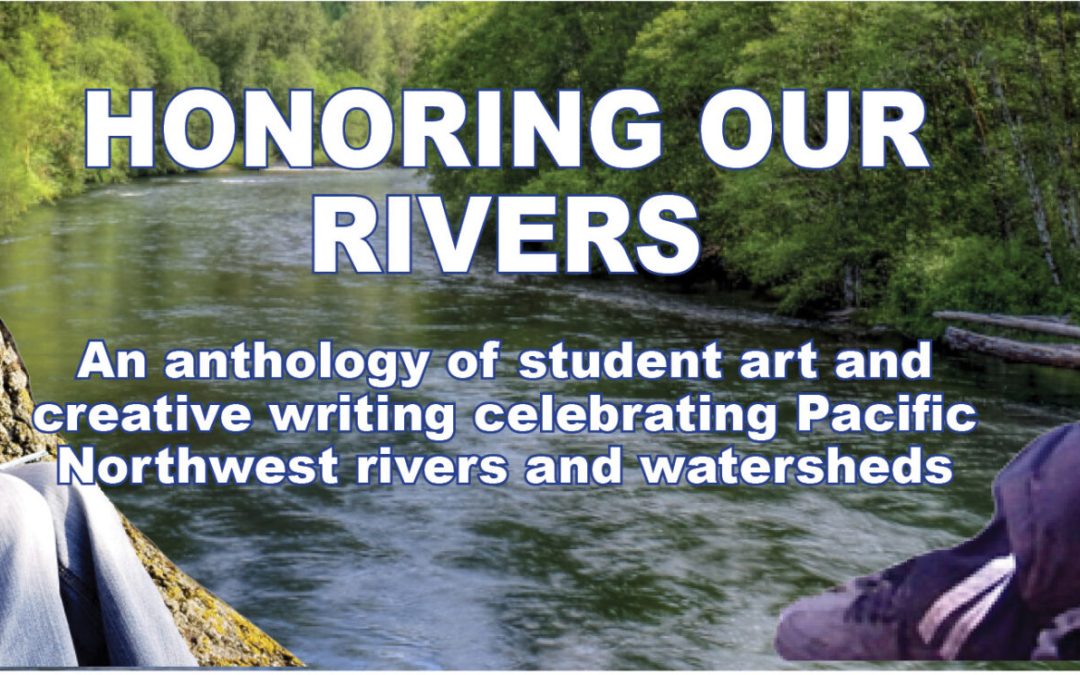
HOR Guidelines
Guidelines How to Submit Resources for Educators Participating Schools TEACHERS: We hope you will encourage your students to submit their creative work. Students can either submit directly to us, or you can help them and send us their...
Honoring Our Rivers Anthology
Guidelines 2026 Themes and Prompts How to Submit Resources for Educators Participating Schools Everything You Need to Know About the 2026 Honoring Our Rivers Anthology This year we are breaking new ground by suggesting TWO themes...
Board Member Position Description
CLEARING Board Member Position Description
Creative Educational Networks/Environmental Education Project (dba CLEARING Magazine) is a 501c3 non-profit organization (Federal Tax ID No. 93-0752542) that is seeking to expand its Board of Directors to increase its diversity of perspectives and to strengthen the organization’s ability to serve the education community.
Organizational Mission
CLEARING supports and promotes education for environmental literacy through web-based and print publications.
Who we are
CLEARING is a small organization with a huge mission: connecting teachers and educators throughout the Pacific Northwest and helping them share ideas, success stories, and resources for building environmentally literacy. Through its website and printed magazine, CLEARING reaches thousands of educators every year. CLEARING works in partnership with many non-profit organizations, agencies, universities and individuals to provide a resource that informs, inspires, and connects those who are engaged in this essential work.
In 2016, CLEARING is poised for significant growth in visibility and impact throughout the region. We have established new organizational partners that promise to greatly expand the role that the publication plays in the EE community. We are on the verge of some exciting new initiatives to build the publication and establish a stronger and more sustainable organization.
Board Structure
The CLEARING Board of Directors is comprised of a minimum of 5 and no more than 9 members, including 4 executive positions (Chair, Vice-Chair, Treasurer and Secretary).
In addition to the board, a non-governing Regional Advisory Council provides content advice to CLEARING from a variety of stakeholder groups from around the Pacific Northwest.
Primary Responsibilities of Board Members
All Board members have an obligation to support the mission, vision and values of CLEARING. They are responsible for fiscal and managerial oversight, fundraising, and assuring that decisions are carried out in accordance with the by-laws.
Terms of Service
Board members serve in 2 year terms, with a maximum of 4 consecutive terms.
Essential Qualifications:
- Interest in and willingness to support CLEARING’s goals and objectives in environmental literacy education.
- Willingness to actively participate in and contribute to activities that promote the success and long-term sustainability of the organization.
Additional Responsibilities of Board Members
- Help communicate and promote CLEARING mission and programs to the community.
- Become familiar with CLEARING finances, budget, and financial/resource needs and participate in ongoing review of financial status.
- Ability to easily use email, Google groups and documents, and other relevant technology.
- Be alert to community concerns that can be addressed by CLEARING mission, objectives, and programs.
- Ability to work collaboratively with other board members, consultants, and volunteers.
- Participate in the preparation and approval of necessary organizational policies (e.g., strategic plan).
- Share the overall Board workload as appropriate to ensure completion of tasks and fulfillment of duties of the Board.
- Adhere to Oregon’s legal requirements of nonprofit board member service.
Meetings and Time Commitment
The Board of Directors meets a minimum of 4 times per year with more frequent meetings if and when necessary. Meetings are held in Portland, Oregon at locations TBD prior to each meeting.
Board members are expected to:
- Attend and participate in meetings on a regular basis, and special events as able.
- Participate on a standing committee (e.g., fundraising, publications, governance) of the board, and serve on ad-hoc committees as necessary.
- Be able to respond to weekly emails in a timely manner.
- Communicate with staff as needed to stay current with events and activities of organization.
- Commit a minimum of 6-10 hours per month.
Desired Qualifications:
NOTE: These are desired, but not essential if you are dedicated and willing to be of service.
- Previous experience as a Board member for a non-profit organization.
- Bring existing network of contacts throughout EE and business community.
- Represent an under-represented ethnic community.
- Provide professional expertise such as fundraising, finance, marketing, education, non-profit leadership, program management, etc.
How to Apply
Please direct all inquiries to the Project Director, Larry Beutler (larry@CLEARINGmagazine.org).
Applicants are encouraged to take the time to review the CLEARING Magazine website at www.clearingmagazine.org and to schedule an appointment with the Chair and Executive Director to learn more about opportunities to serve CLEARING Magazine.

Lessons for teaching in the environment and community – 3
Photo by Jim Martin
“Lessons for Teaching in the Environment and Community” is a regular series that explores how teachers can gain the confidence to go into the world outside of their classrooms for a substantial piece of their curricula.
Part 3: Emergent phenomena
by Jim Martin, CLEARING guest writer
If you go to a place in the world outside your classroom – your school yard, a trail nearby, a stream bank – and think about it, you’ll find it is a prism which, oriented effectively, holds the power to involve and invest your students in their educations, and empower them as persons. Simple miracle; takes work to discover.
You’ve found a place for your project, large or small, and thought of a partner or partners. Quite possibly, you might have noticed a piece of embedded curriculum. And maybe even thought of what students would do. These are the sort of things that emerge from the places in the real world when you go to them with your teacherly knowledge, skills, and understandings. The part of you that is Teacher is the prism from which the potential that resides in your community and environment emerge in observable form, paint their elements, disclose the human mind.
We named two projects last week. Let’s take a closer look at them and see what emerges.
A Small Project
Your class visits a nursing home every spring, and your students would like to grow flowering plants, pot them, and take them when they make their visit. You discuss this, and decide to plant seeds in the soil just under your classroom’s windows. When they’re growing well, students will transplant them to pots, which you have in your room.
What are the partnerships that will help you do this work? To do the project, you must get students out of the room and back, procure seeds and tools, touch bases with the custodian and principal, do the potting and manage kids on station. Plus, you have to deliver the fractions and biology lessons that you discovered in the schoolyard near your window. You have some resources, like the manager of a small local pharmacy, who has a limited budget for public services expenditures. Also, the nursing home and the school, which has gardening tools.
You need seeds, so ask the manager of the pharmacy outlet for a donation of one packet each of eight kinds of annual flowers. She agrees, and you get your seeds. So, children plant, seeds grow, students pot and then take their flowers to the nursing home. During the work, they learned about fractions and studied a biology unit on seeds. A resource you used is doing fractions and studying biology on site, so that you don’t do the project in addition to your already heavy teaching load.
Let’s call the people, institutions and organizations you worked with your “Partners,” and think of the project as one done with partnerships. Your Partnerships assist you with the logistical load involved in doing projects.
So, one tool you use is Partnerships, however small, to share the load. Sharing the load is an important part of doing projects. We live in communities, and ought to use them. It’s important to understand partnerships. Even though your partners are sponsoring part of the project, you are doing something for them and they are doing something for you. That’s why people engage in partnerships, because all parties bring something useful to the table.
A Larger Project
This project is a streambank restoration sponsored by a regional bird sanctuary and the local Friends of Trees organization. They provide tools, supplies, plants, and training for you and your students,. They also schedule three Americorps Volunteers for field trips and one classroom visit. You provide workers (your students), student-made site maps, site habitat assessments, and a summative Power Pointtm presentation.
The project entails a site visit to orient yourselves and begin site mapping, one to clear vegetation and continue mapping, another to survey, one to plant, and another to monitor the planting. In this sort of project, your partnerships are crucial to beginning and finishing the project. The bird sanctuary has some equipment and materials available to you for making the observations you’ll need to make the site map, and guidelines for performing the habitat assessments. They also have a person who will mentor you as you go through the stages of a streambank restoration project. This will give you the large picture within which your students’ work will fit. It also has, embedded within it, lots of useable curricula. Friends of Trees will help to plan and do vegetation clearing and using GIS techniques to map plants your students will put into the ground.
This means that you now must manage transportation, substitutes, and curriculum on your own. These present their own learning curves. The prism which organizes this confusing chatter of pieces, parts, jobs, and so forth, into recognizable and useful bands, bands which clarify community and environment based education into an inspiring and inviting rainbow is your capacity for doing self-directed science inquiry. In my experience, that seems to be the key empowering piece of the education puzzle. Most of us have never done a science inquiry from noticing something interesting, to asking a clear question about it, designing an investigation, collecting data, analyzing and interpreting it, communicating our findings, and identifying interesting follow-up questions. Somehow, engaging this from start to finish leaves teachers with a fresh perspective on what they are teaching, and how. And empowers them to thoroughly involve and invest their students in their educations and their lives. If you’ve ever seen the face and eyes of an empowered child, you’ll know what I mean.
Part of this change in perspective comes from releasing yourself from dependence upon directions in the publishers’ materials and teachers’ editions, and discovering that your students will find better, more effective ways to use them. Especially those in your bottom 25th percentile. (You can get an idea of what this might look like by going to Mike Weddle’s article here. He gives the most complete picture of what community and environment based education looks like that I’ve read. Written from the pen of a teacher. Jude Curtain, also on the website here, gives the best one-page description of science inquiry that I’ve read. They both know, and clearly express student-directed science inquiry.)
So, let’s walk through an inquiry, one blog at a time. The site can be your school, a natural area, a parking lot. They all work. Here’s what to do. If you can, spend some time in a place you’d like to do an inquiry. It doesn’t have to be one you’d take your students to. Browse around; find things that either interest you or raise questions in your mind. Just immerse yourself in the place. Here’s how one started for Dryas, my wife, and Carol Lindsay, our African Drum teacher, on a summer afternoon several years ago. We were by a side channel of a local stream, and they saw what they thought was a dragonfly with eight wings. They wondered what it really was, and set out to find out. This happens when you let something catch your eye. Go out this week and let it.
 This is the third installment of “Teaching in the Environment,” a new, regular feature by CLEARING “master teacher” Jim Martin that will explore how environmental educators can help classroom teachers get away from the pressure to teach to the standardized tests, and how teachers can gain the confidence to go into the world outside of their classrooms for a substantial piece of their curricula. See the other installments here.