by editor | Oct 13, 2011 | Indigenous Peoples & Traditional Ecological Knowledge, Marine/Aquatic Education
 by Sarah E. Smith
from A Newsletter of the Salish Coastal Gathering
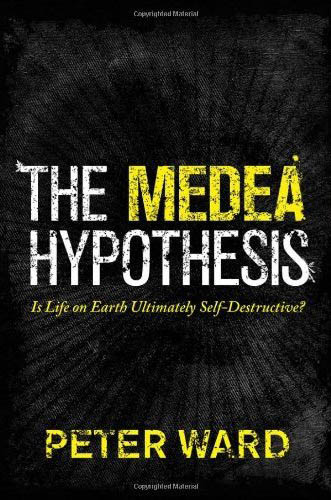
An innovative education program is introducing Squamish First Nation kids and their non-Native classmates to the richness of plant and animal life along the waterways of their lush corner of Coast Salish territory in British Columbia.
Last school year, 500 children in 24 classes from kindergarten to seventh grade learned about the life adventures of salmon, the magic of traditional medicinal plants and the duties of humans as stewards of the land and water.
The Squamish Rivers and Estuary Education program, a partnership between local schools, an environmental nonprofit and Squamish First Nation, provides a curriculum that incorporates the ancient aboriginal culture of the area. The program began in 2006 with eight classes from three schools participating. (more…)
by editor | Apr 7, 2011 | Environmental Literacy, Marine/Aquatic Education, Place-based Education
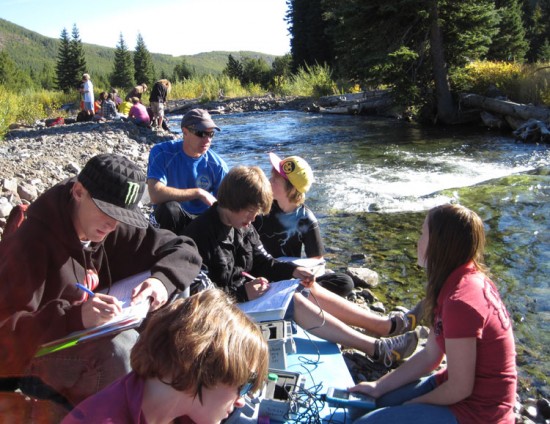
 Rather than viewing technology as an enemy of environmental literacy, technology-based learning can help cultivate an environmental sensibility by serving as a “bridge” to the outdoors.
By Ryan Johnson
When I was ten years old, I was absolutely obsessed with the original Nintendo Entertainment System. My cousins had one, my best friend had one, it seemed like everyone I knew had a Nintendo. I would have done just about anything to have one as well, but my parents refused, despite my continuous complaints and numerous solicitations.
I thought I was the most neglected ten-year-old child in the world, while my parents, patiently suffering my pleas, would remind me that the Beartooth, Big Horn, and Pryor Mountains, the McCullough Peaks, and Shoshone River were just beyond my doorstep. These natural features were, in fact, truly magnificent and unavoidable constituents of the landscape, dominating every view with snow-capped peaks, granite cliff faces, rainbow-colored bluffs, and crystal clear riffles, containing everything from wild horses to Grizzly Bears to rattlesnakes. Now, perhaps needless to say, I prize every single second I am able to gaze upon the mountains and deserts of northern Wyoming, and I cherish every memory of running through alpine forests and mountain biking through tumbling sage brush. But a conscious acknowledgement of my privilege of being born into such natural wonder eluded me, and as a result I still found modern, escapist forms of entertainment media seductive. Even in a place completely dominated by mountains, peaks, rivers, valleys, prairie, and high desert, I still found a way to explore MTV far more often than Heart Mountain. (more…)
by editor | Feb 22, 2011 | Marine/Aquatic Education
by Richard Strickland, University of Washington School of Oceanography and Timothy Stetter, University of Washington Professional and Continuing Education
 This fall, as flocks of new freshmen swarm to college campuses, many of them are bringing along college credits that they earned while they were still in high school. Some of them earned the credits by taking Advanced Placement exams, and others took detours from their home schools to attend classes on college campuses.
Some students, however, earned college credits by taking classes from their own teachers in their own high schools. The University of Washington (UW) offers a program in which leading teachers, guided by UW faculty mentors, teach at a college level and students can earn UW credit. (more…)

by editor | Nov 30, 2010 | K-12 Classroom Resources, Marine/Aquatic Education, Place-based Education

Exploring Place-based Education Programs in the Pacific Northwest
by Becs Boyd
On the southwest coast of Oregon a small town called Charleston is tucked against a busy dockside lined with fishing and tourist boats. The Oregon Institute of Marine Biology has its base here, in a campus of attractive traditional buildings covered in sun-bleached wooden shakes. I’m here to see OIMB’s amazing track record for bringing the local marine environment to life for local children.
For the past six years a National Science Foundation grant has meant that nine OIMB graduate students a year have been teaching marine biology two days a week in twelve local schools to Grades K-6 (ages 6 to 12), reaching around 3500 students. The result? – a generation of schools and teachers with an excellent knowledge of the sea life at their doorstep, what it looks like, how it works, and the issues and challenges it faces. On the way they learn to think like scientists and are familiar with microscopes, hypotheses, moon phases and zoea. The curriculum framework is cleverly arranged by habitat, with Grade 1 studying rocky shores, Grade 2 sandy shores, Grade 3 estuaries, Grade 4 kelp forests, Grade 5 the open ocean and Grade 6 drawing all they have learned together with the study of islands. (more…)
by editor | Jul 31, 2010 | K-12 Classroom Resources, Marine/Aquatic Education
 Authors: Peter Ward
Publisher: Princeton Press
Reviewed by Orlay Johnson
This book might be more appropriately titled, “Mothers who Murder their Children.” It explores how Mother Earth periodically cleans house of the majority its biota. Sadly, the reference to Medea in the actual title is probably lost on most of us, unless you know more Greek mythology than I did. For the rest of us, Medea was the wife of Jason the Argonaut, who took revenge on her cheating husband by murdering her own children. Suddenly the book sounds more interesting, huh? (more…)

by editor | Jul 30, 2010 | Marine/Aquatic Education
 The West Coast Governors’ Agreement on Ocean Health
The ocean plays a critical role in maintaining ecosystems and is essential to our health and wellbeing. Its diversity of resources belong to all of us. Yet, only 1 in 10 Americans understand ocean systems or the threats these systems are facing. It is critical to educate and promote stewardship among our students and the public- at-large in order to restore a healthy, productive and resilient ocean. (more…)