by editor | Jul 18, 2012 | K-12 Classroom Resources
1. Biomes and Ecosystems
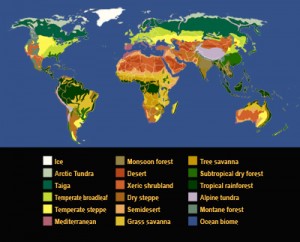
The National Earth Science Teachers Association’s Windows to the Universe biomes and ecosystems, offers an interactive map to explore various biomes and learn about the natural history and current conditions in the dry steppes, alpine tundra, and other biomes. Each section contains photographs and a narrative essay that describes key features of each biome. http://www.windows2universe.org/earth/ecosystems.html

2. Climate Change Education eBook
Climate Change Education: A Primer for Zoos and Aquariums, explores the links between climate change science, electronic media, psychology, learning sciences, communication, and interpretation, and provides insights to zoos and aquariums and other cultural institutions. The book may be downloaded from the website for free. http://clizen.org/e-book.html
3. Education on Energy and the Environment
The Newton Marasco Foundation offers the downloadable kit, Education on Energy and the Environment with quiz-show format games that focus on the environment and stewardship.

The materials include instructions, tips, and evaluation forms for ecoSense and ecoLogic games; PowerPoint game with notes (includes the questions and answers with additional information, discussion questions, and references); a scorecard; and a spreadsheet with a list and links to additional environmental education resources. Materials are available for different grade levels. http://www.newtonmarascofoundation.org/teach/classroom-games-toolkit/

4. Endangered Species Interactive Map
The U. S. Fish and Wildlife Service Endangered Species Program has launched a web-based interactive map with information about endangered species success in every state: stories of species making strides towards recovery, audio interviews and podcasts with biologists about on-the-ground endangered species conservation, and more. Check out the audio interviews; they offer more depth than a simple sound bite. http://www.fws.gov/endangered/map/index.html
5. Rise and Shine: A Practical Guide for the Beginning Science Teacher
Rise and Shine provides a friendly support system that new science teachers can turn to. The book offers techniques for managing the classroom, maintaining discipline, and dealing with parents. It also covers topics unique to science teaching, such as setting up a laboratory, keeping the classroom safe, and initiating inquiry from the first day. The website offers additional useful resources that relate to the chapters including a shopping list, report card comments, and more. http://www.nsta.org/publications/press/extras/riseandshine10.aspx

by editor | Jun 27, 2012 | K-12 Classroom Resources
 by Katrina Landau
 o what exactly is social marketing, and how does it work to change peoples’ behaviors? While traditional marketing works by raising public awareness, social marketing works to identify barriers to behaviors and create long-lasting change. Instead of taking a to-down approach to simply convey information, many environmental educators are now striving to learn about the target audience, and build their programs from there. In this way we work to benefit the general society by influencing social behaviors, rather than to make money or fulfill a “bottom line.” (more…)

by editor | Jun 22, 2012 | K-12 Classroom Resources

1. Schools That Change Communities
Schools That Change Communities, a new one hour documentary from award winning producer Bob Gliner (Lessons From The Real World, Democracy Left Behind) focuses on a diverse range of K-12 public schools in five states – Massachusetts, Maryland, South Dakota, Oregon, and California – that have the potential to refocus the national debate around the direction educational reform should take. A DVD of the documentary is available through Bob’s website: http://docmakeronline.com/schoolsthatchangecommunities.html. A three minute trailer of the documentary can also be viewed on the website.
2. SESI 2012: Sustainability Education Summer Institute
 The 3-day Institute, held on the beautiful and sustainably-built IslandWood campus on Bainbridge Island, is the perfect setting for collaborative and reflective learning. Participants have the opportunity to experience practical strategies, and design curriculum and programs that integrate sustainability into classes, schools, and districts. Session strands include: Introduction to Sustainability Education; Current Trends and Topics in Sustainability; and Research, Practices, and Policies in Sustainability Education. Registration fees include accommodation and meals. For more information, contact Cathy Sanford at cathys@islandwood.org.
3. Mazda Foundation Grants
The Mazda Foundation awards grants to programs promoting education and literacy, environmental conservation, cross-cultural understanding, social welfare, and scientific research. The deadline for application is July 1, 2012.
http://www.mazdafoundation.org/Grant_Guidelines.html
4. Outstanding Young Educator Award
The Association for Supervision and Curriculum Development offers a yearly Outstanding Young Educator Award, recognizing a teacher under the age of 40 who demonstrates excellence in his or her profession. Criteria include a positive impact on students, creativity in the classroom, and leadership in his or her school or district. The deadline for nomination is August 1, 2012.
http://www.ascd.org/programs/Outstanding_Young_Educator_Award/Outstanding_Young_Educator_Award_Program.aspx
5. Creating a Schoolyard Habitat/Outdoor Classroom
A Schoolyard Habitat/Outdoor Classroom Program is a coordinated effort between schools, Fish & Wildlife Service (FWS) offices, and other conservation and community organizations to establish ecologically sound restoration projects that are sustainable outdoor learning areas on school sites. OUT8164: Creating a Schoolyard Habitat/Outdoor Classroom, September 10-14, 2012 in Denali Park, Alaska, develops technical consultants that can assist schools at the local level in areas such as project design, curriculum connections, student instruction, and more. The deadline for registration is July 2, 2012; call for availability after this date.
Contact Michelle Dolan at Michelle_Dolan@fws.gov
www.doi.gov/doilearn/index.cfm

by editor | Jun 22, 2012 | K-12 Classroom Resources, Place-based Education
I Am Clark’s Creek – Puyallup School District

 ometimes it takes the imagination and inspiration of youth to push a project towards success. When the Puyallup River Watershed Council in Washington State became concerned about Clark’s Creek, it was the student project I am Clark’s Creek that sparked the community activism necessary to improve local stewardship and conservation. In an effort to encourage local stewardship and reduce contamination, the Puyallup River Watershed Council set out on a public awareness campaign. Instead of the typical public service announcements, a unique and artistic approach was taken, working with three local elementary schools to generate awareness of the creek in the community. The Puyallup River Watershed Council, NPS RTCA, and artists partnered with resource experts and the Puyallup School District science and art teachers to organize a field trip to Clark’s Creek to learn about the resources and ecology of the creek and surrounding watershed. The students then participated in various art projects to generate pictures, stories, and poems that reflected what they felt were the most important lessons learned on the field trip.
The student projects were assembled into a booklet titled I am Clark’s Creek and the Washington State Department of Ecology provided grant funds to print the booklets. Check out this creative, artistic booklet (135MB). A copy of the booklet was provided to every household served by the schools that participated in the project.” The leaders of the Puyallup River Watershed Council attribute the I am Clark’s Creek booklet to helping spur some key landowners into action. These landowners formed the Friends of Clark’s Creek and started kayaking up and down the creek, talking to their neighbors, building relationships, and working on projects. Through their efforts a local business changed its practices to reduce pollution into the creek, county officials got a mobile home court to stop illegal sewer discharges, and an upstream fish hatchery modified their practices to improve the water quality of their discharge. In addition, Washington State Department of Ecology has funded additional watershed work and the City of Puyallup is playing a significant role in the work of the friends group. Sometimes the work of youth can spark significant change in a community and, likewise, it can spark change in youth. Many of the participants walked away understanding more about the natural world and artistic expression, and about the value of getting youth involved. The project was able to really celebrate and acknowledge the contributions of the students. This also helps to have a lasting impact on the youth and with this project, they were able to witness how their involvement really did change Clark’s Creek.

by editor | Jun 3, 2012 | K-12 Classroom Resources

1. Estuaries 101 Middle School Curriculum
The National Estuarine Research Reserves has released the Estuaries 101 Middle School Curriculum, a multi-media online science curriculum offering students virtual field trips to estuaries around the country. The curriculum provides interactive learning tools that teach fundamental concepts in science and develop scientific thinking skills, while helping students discover and virtually explore our nation’s biologically rich estuaries. The curriculum offers videos, access to user friendly real-time water quality and weather data, teacher activity downloads, and interactive maps to help students better visualize the inner workings of an estuary.
Topics include Human Impact, Natural Resources, Research & Monitoring, Abundance of Life, and Dynamic Ecosystems. Many of the activities also have climate extensions. Teachers can download a Curriculum Overview to get started. Check this out, and while on the website, be sure to check out the many other resources available for estuary education.
http://estuaries.noaa.gov/Teachers/Home.aspx
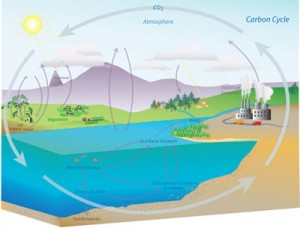 2. Carbon Cycle Collection
NOAA’s Education Resources website offers an updated section on climate with a Carbon Cycle Collection. The website offers multimedia, lessons and activities, real world data, background information, and more.
http://www.education.noaa.gov/Climate/Carbon_Cycle.html
3. Conservation Education Toolkit
The Conservation Education Toolkit from the Association of Fish and Wildlife Agencies offers links to publications that help K-12 teachers connect conservation education programs to science and social studies standards. Resources include Benchmarks for Conservation Literacy, Outdoor Skills Education Handbook, and much more.
http://jjcdev.com/~fishwild/?section=conservation_education_toolkit
4. EarthCache Educator’s Guide
EarthCache combines global positioning system technology with outdoor field experiences. Teachers can learn how to create an EarthCache, direct students to create one, or use existing EarthCaches in the classroom. The website offers lesson plans and links to additional EarthCache sites for teachers.
http://rock.geosociety.org/Earthcache_Lessons/
5. Kids to Conservation
The National Park Service, together with partners at University of Nevada, Las Vegas’ Public Lands Institute, supports this website as a toolkit that uses recreation as the basis for engaging kids, and gets youth involved in the planning process so that they can make a meaningful difference in their communities. Kids to Conservation identifies six learning objectives — education, leadership development, service, exposure to conservation careers, recreation, and recognition — as the foundations for engagement. The website also provides information for adults about finding youth to involve in a project, finding the right age youth to work with, funding opportunities, appropriate activities for each age, and case studies (see Puyallup School District).
http://www.kidstoconservation.org/
6. OBIS Outdoor Biology Instructional Strategies
Outdoor Biology Instructional Strategies (OBIS) from the Lawrence Hall of Science is an outdoor program that offers young people opportunities to investigate ecological relationships in their local environment. The activities, which can be used together or individually, take youngsters outdoors to investigate biology in order to increase their environmental awareness. Examples of the activities are categorized by Experiments, Biodiversity, and Schoolyard, and can be accessed from the website.
http://www.outdoorbiology.com/#
by editor | May 24, 2012 | K-12 Classroom Resources
1. Fukushima Daiichi Accident
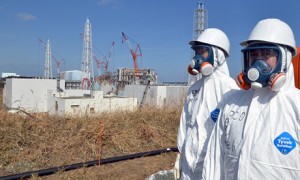
EarthEcho’s Water Planet Challenge provides information and materials to help middle and high school students take action to protect and restore our planet’s natural resources while teaching to key standards. The Hot Topics presents monthly interviews, information, and lesson plans covering critical news stories. The current topic is In the Wake of the Fukushima Daiichi Accident – One Year Later. Check out the educator resources, action guides, and more.
http://www.waterplanetchallenge.org/wpc/index.cfm/featured-resources/hot-topics/

2. Green Living Project Student Film Project
Green Living Project’s Student Film Project is a filmmaking competition that encourages students, from middle school through college, to produce a film, 5 minutes or less, telling a compelling story about a local or global sustainability-related project. The deadline for submission is May 25, 2012.
http://www.greenlivingproject.com/studentfilmproject/

3. Marine Science Camps for Youth and Families
Oregon Sea Grant is hosting summer day camps for different age groups (including families) in Newport, Oregon in July and August. Camps involve field trips, interaction with scientists, and various activities.
http://hmsc.oregonstate.edu/visitor/education-programs/day-camp
4. Ocean Science Summer Institute
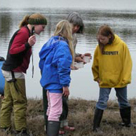
Join the educators at Port Townsend Marine Science Center for this summer institute, June 25-28, 2012 from Port Townsend, Washington, and explore inquiry-based curriculum for grades 4-6.
http://www.ptmsc.org/teacher.html>

5. U.S. Forest Service Climate Change Resources
The U.S. Forest Service offers the Natural Inquirer for middle school and the Investigator for upper elementary school students. Recent issues deal with climate change and can be downloaded from the website. Classroom sets can also be ordered so that each student has their own copy.
http://www.scienceinvestigator.org/Pacific-Northwest-Research-Station-Climate-Change-Edition-i-3.html
http://www.naturalinquirer.org/
.
6. Global Schoolyard Bioblitz
Project Noah is teaming up with the National Environmental Education Foundation and National Geographic Education for the Global Schoolyard Bioblitz campaign. Teachers and students document the wildlife encountered in and around their school sites. The National Geographic website offers tools for any bioblitz, and students can upload their data to the Project Noah website.
http://education.nationalgeographic.com/education/program/bioblitz/?ar_a=1&force_AR=True

7. Deepwater Horizon Teaching Resources
The Online Clearinghouse for Education And Networking: Oil Interdisciplinary Learning (OCEAN-OIL) is a free, peer-reviewed electronic education resource about the Deepwater Horizon disaster. Resources include hyper-linked articles about the spill, teaching resources including games and teacher guides, links to additional sites, and much more.
http://www.eoearth.org/oceanoil
