by editor | Jul 22, 2011 | Outdoor education and Outdoor School
 By Joshua Klaus, Director of Academic Programs, Ecology Project International (EPI)
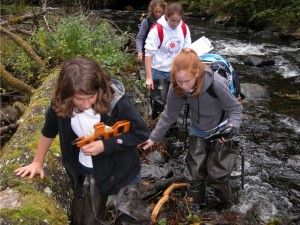
Taking students into the field can provide an endless array of occasions to learn new skills, see theoretical concepts enacted, make connections, and learn about the world around us. Given the endless places that offer valuable learning opportunities, it must just be a matter of heading out the door for students to have impactful educational experience, right?
Though it would be nice if it were that easy, there are a few key strategies that will allow any educator (novice or veteran) to make the most of their time – before, during, and after their field experience. (more…)

by editor | Jul 18, 2011 | Outdoor education and Outdoor School
 by David Strich
North Cascades Institute
Mountain School has ended for me, but this recent spring session changed my life as an educator. I have become more convinced that I am pursuing the right career and that my teaching techniques have had meaningful impacts in my students’ lives. It is embarrassing for me to speak so candidly and arrogantly, but the parent chaperones have told me I am doing good work. I know this is true because in two successive weeks I choked up at home while journaling. Though I write this article more than two months later, I still feel the emotions welling inside me as I recall specific moments that impacted me earlier in the season.
I blame one student who eloquently spoke about how he feels empowered to change the world. I fault another whose sheer smile in her own accomplishments makes me tear up every time I am reminded of her voice. (more…)

by editor | Jul 5, 2011 | Outdoor education and Outdoor School, Place-based Education
 By Joseph Cornell
Profound moments with nature foster a true and vital understanding of our place in the world. I remember an experience I had as a five-year-old boy that awakened in me a life-long fascination for marshes, birds, and for a life lived wild and free.
I was playing outside on a cold, foggy morning when I suddenly heard a startling chorus of “whouks” coming toward me through the air. I peered intently at the thick fog, hoping for at least a glimpse of the geese. Seconds passed; the tempo of their cries increased. They were going to fly directly overhead! I could hear their wings slapping just yards above me. All of a sudden, bursting through a gap in the fog, came a large flock of pearl-white snow geese. It seemed as if the sky had given birth to them. For five or six wonderful seconds their sleek and graceful forms were visible, then they merged once again into the fog. Seeing the snow geese thrilled me deeply, and ever since then I have wanted to immerse myself in nature. (more…)

by editor | Jun 7, 2011 | Outdoor education and Outdoor School
The Social Studies of Spirituality
By Kasey Christian
IslandWood
(photo from silouanthompson.net)
Where are the boundaries between Social Studies, Science, and Spiritual beliefs? Where do these distinct practices intersect? How does a teacher model equal respect for each?
As professional educators, how do we teach about intrinsically interdisciplinary (and sensitive) topics such as the basic foundations of life and death? Both alternative and popular cultures have explored the intimate intersection between natural sciences and spirituality since the earliest discoveries of humankind. Through exploration of cultural customs and beliefs, a similarly fascinating intersection can be found between social studies and spirituality . As an outdoor educator in a formal, non-traditional setting, much of the curriculum I teach is based on the cultural history of the land. As I respectfully acknowledge both the facts and beliefs of particular cultures, I am repeatedly challenged to articulate the similarities and differences between social studies, science, and spiritual beliefs. In my desire to regard each subject area with equal respect and value, I am currently grappling with this dynamic, mysterious and sometimes perplexing crossroads between disciplines.
(more…)

by editor | May 31, 2011 | Outdoor education and Outdoor School, Questioning strategies
For the questioning mind, learning never concludes because it is an endless journey with an infinite number of destinations…
by Chris Helander
Head Instructor
Coyote’s Path Wilderness School
(reprinted from The Best of CLEARING)
There are many people who say our current model for learning is ineffectual. Parents and educators are asking “how do you reach young people who seem apathetic and unmotivated to learn?” In old cultures before schools, books, and grades, people learned by being mentored. Using stories, ceremony, games, and survival skills everyone and everything was a teacher. In the modern model of education, learning is force fed, sitting in chairs, listening to an adult spouting out information to be memorized. Modern children learning this way are trained to get their knowledge by memorization of someone else’s knowledge. They do not learn how to develop the questioning mind or follow their hearts to learn from their own experiences.
Read the rest of this article…

 By Joshua Klaus, Director of Academic Programs, Ecology Project International (EPI)