Global Issues – Global Opportunities: Population, Poverty, Consumption, Conflict, and the Environment
Global Issues – Global Opportunities: Population, Poverty, Consumption, Conflict, and the Environment
by Gilda Wheeler
Abstract: This article discusses the important role of educators in helping students understand, connect to, and act on critical global issues facing us today and in the future. Global issues impact social, environmental, economic, health, and security concerns. Global issues are interconnected and hold the potential for far-reaching impacts on large numbers of people. What is important to remember as we explore global issues is that while they may be daunting, because of their interconnectedness they can provide us with opportunities to help create a sustainable world. By approaching global issues from a systems perspective we can help students create a world that represents their highest aspirations. It is up to each of us individually and as a community to make the choices and take the actions to create a future we want for ourselves and for future generations.
Introduction
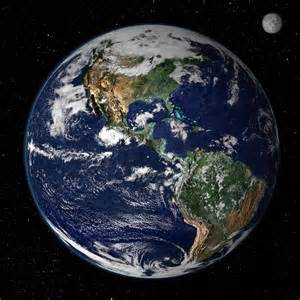
The idea of issues that are truly global in scale is new to us. It emerged late in the 20th century, perhaps when humans first saw images of the Earth from space – a small blue-green planet devoid of boundaries and arbitrary political divisions. Regardless of their novelty, global issues are so important that they may literally determine the future of the human species. Global issues impact virtually all social, environmental, economic, health, and security concerns. And those concerns are, in themselves, global issues. Perhaps one of the most important roles that educators have today is helping our students understand global issues, see the connections to their own lives, and empower them to create a sustainable world.
Defining Global Issues
Since the study of global issues is relatively new there is not agreement as to how one defines a global issue. For the purpose of this presentation we will define global issues as follows. Global issues are those that have, or hold the potential for, far-reaching impacts on large numbers of people. Global issues are trans-national, or trans-boundary, in that they are beyond the capability of any one nation to resolve. Global issues are persistent or long acting in that they may take years, decades, or even generations to be fully felt, and may require similar time frames to be resolved. Finally, global issues are interconnected, which means that a change in one – whether for better or worse – exerts pressure for change in others.
Population
World population exceeded six billion in 1999 – doubling from three billion in 1960 – and is currently increasing by 80 to 85 million people each year. Depending upon the choices we make over the next few decades, demographers at the United Nations project world population in 2050 could be anywhere 7.3 billion to 10.7 billion. A number of factors drive this growth. At the most basic level, it is because far more people are born each year than die. Advances in nutrition and health care have increased survival rates and longevity for much of the world, and shifted the balance between births and deaths. Another is population “momentum”. Even though fertility rates have come down worldwide, there are many more people of childbearing age today than ever before. Roughly half the world’s population is under age 25, so as those three billion people start families over the next few decades, world population will likely increase by several billion. Another reason for continued high levels of population growth is that fertility rates remain relatively high in some populous regions like Africa and South Central Asia. Decisions about family size are often based on economic factors, and in poorer societies, having numerous children may be an important asset. They provide support and security in parents’ old age, help raise food, haul water, care for younger siblings, and gather fuel wood. Children may also work for wages outside the home, be indentured, or even sold to help support the family.
Consumption & Environment
One approach scientists are increasingly using to explore the issue of the Earth’s carrying capacity (the number of people the Earth can support over time) is through the concept of “ecological footprint” pioneered by Mathis Wackernagel and William Reese. The footprint model calculates the area of the Earth’s productive surface (land and sea) necessary to support a particular lifestyle or level of consumption. Through the ecological footprint lens we see that a person’s lifestyle has as much (or even more) of an impact on the planet than the mere numbers of people on the planet. By mapping the items of everyday items such as food, clothing and transportation, through Facing the Future’s activity Watch Where You Step, students begin to see what makes up their ecological footprint, and more importantly what they can do personally and what we can do collectively to reduce the total human footprint on the Earth.
Poverty, Scarcity, Impacts, and Sustainability
As we enter the 21st century, the gap between the world’s rich and poor is widening, both within and among countries. The United Nations identifies 2.8 billion people surviving on less than two dollars a day. Overall, the richest 20 percent of the world’s people control 86 percent of global income, while the poorest 20 percent control barely one percent.
The impacts of poverty, over consumption, and resource scarcity are varied. They include environmental destruction – richer nations and individuals can afford to over-consume resources, while poorer nations and individuals are often forced to over-exploit the environment just to survive. They include migration – people are forced to move in search of adequate resources. And they include conflict – wealthier nations and individuals fight to keep what they have, while those suffering a lack of resources fight to obtain them.
The solution this cycle of resource scarcity and poverty is to develop sustainable practices. We can help students understand the complexity and interconnectedness of scarcity and poverty through Facing the Future’s classroom simulation activity Fishing for the Future” in which students “fish” over several seasons. This activity also helps students understand the concept of sustainability as they over-fish their oceans and realize that they can “survive” and the resource base can be maintained by establishing sustainable fishing practices.
Linking Global Issues to Action
The good news is that we have the knowledge and tools today to help create a sustainable world. There are both personal and structural solutions that we can help our students identify and act on. On the personal level these include among many other things reducing our consumption, recycling, supporting sustainably developed products and food, considering our own family size, and engaging in the political process. On the structural level, as a nation we can help provide reproductive and community health care so people can make choices about their family size and be assured that they and their children will survive and be productive members of society. We can help alleviate poverty so people can support their families and aren’t forced to make decisions of “rational desperation” that may not be good for the environment. And finally we can develop new ways of measuring progress that take into account environmental and social impacts along with more traditional economic indicators.
We can help our students identify these solutions and begin the process of changing the way we think and act by using the lens of a system thinking process that recognizes the interconnectedness of all people and of all global problems. This perspective offers us a starting point; the only principle we can then follow is one of sustainability. The only “answer” is one that doesn’t create new problems but rather searches for underlying causes and their links across the spectrum of issues and finally rests on common ground.
We have the tools at our disposal to create a world that represents our highest aspirations. It’s up to each of us individually and as a community to make the choices and take the actions to create a future we want for ourselves and for future generations. To learn more about actions that educators and their students can do to make a positive impact in local communities and in the world, visit Facing the Future’s websites at www.facingthefuture.org.
References:
Facing the Future: People and the Planet. Curriculum Guide: Classroom Activities for Teaching about Global Issues and Solutions 2002
Facing the Future: People and the Planet. Facing the Future: Population, Poverty, Consumption and the Environment 2001
Population Reference Bureau website www.prb.org
Redefining Progress website, www.rprogress.org
United Nations Development Program website, www.undp.org
United Nations Food and Agriculture Organization website www.fao.org
Gilda Wheeler is currently the Program Supervisor for Environmental and Sustainability Education at the Washington State Office of the Superintendent of Public instruction (OSPI). She is responsible for supporting districts, schools, teachers, and students in implementing legislatively mandated environmental and sustainability education in Washington state. This includes the development of integrated standards and assessment and professional development for classroom teachers and non-formal educators. Gilda also serves on a number of state and national boards and committees including co-chair of the E3 Washington K12/Teacher Education Sector steering committee, national K-12 Sector of the U.S. Partnership for Education for Sustainable Development and the Council of Chief State School Officers EdSteps Global Competency work group.