
Explore the archives
Humane Education for a Humane World
Humane education examines the challenges facing our planet, from human oppression and animal exploitation to materialism and ecological degradation. It explores how we might live with compassion and respect for everyone. by Zoe Weil In 1987, I offered several courses...

Resource: Ocean Currents
What causes ocean currents? What impact do they have on Earth’s environment? How have they influenced human history? This teaching guide for grades 5-8 provides 7 activities for students to explore the causes and impacts of ocean tides and gain an understanding of the...
Approaches to Environmental Education by Indigenous Cultures in North America
-From EETAP Resource Library, prepared by Joe E. Heimlich, Ph.D and Sabiha S. Daudi, GRA. April 1996 One of the major goals of environmental education is to prepare a citizenry capable of making informed choices and able to address its environmental concerns through...

Review: Winter is for the Birds, Literally
Reviews by Patricia Richwine, Ph.D. As we, optimistically, raked the last leaves from our yard and started to prepare for winter, we brought the wrought iron plant hanger, which had until just recently held a flowering basket, closer to the house where we could hang...
Top Five Ways to Use EE to Achieve Your Education Goals
By Judy Braus You’re a new teacher with a head full of ideas. You want to be innovative and effective — on the cutting edge of reform. You want your kids to be excited about learning. And you think the environment is an important, cross-cutting theme that will engage...

The Window into Green
by Mike Weilbacher With the new wave of interest in the environment, will we finally give students the tools they need to become environmentally literate citizens? In just a few weeks, high school seniors all around the United States will walk proudly across...

Raising Awareness Through Service Learning:
Citizens for a Healthy Bay’s Junior Bay Ranger Program By Katrina Landau In 2003, the Washington State Legislature passed ESHB 1466 that established the Natural Science, Wildlife and Environmental Education Partnership Grant program under the Washington State Office...
Restoration Planting: What’s the Rush?
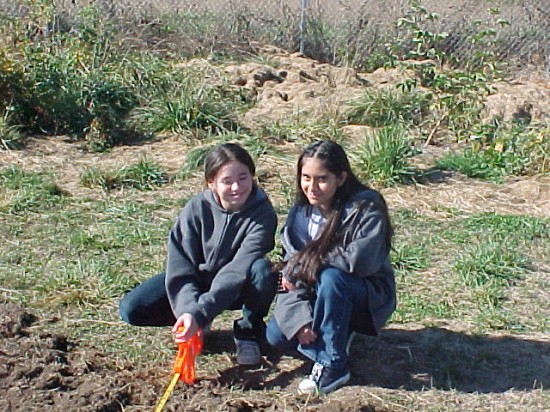
Couple some basic curriculum organizers with focused questioning strategies to make your restoration projects coherent and effective environmental education experiences. by Jim Martin Environmental education should be a journey, one which captures our interest and...
Lasting Change: Teacher Driven Place-based Education on the Colorado Plateau
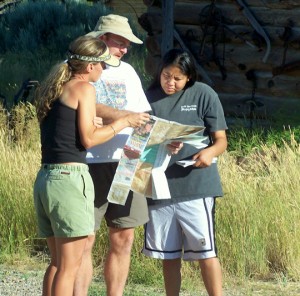
by Deanna Erickson Learning from the Land Anyone who has traveled through the Four Corners region of the Southwestern United States will remember it distinctly as a place like no other. Towns are scarce, rivers are legendary and rocks seem to bend and twist toward a...

The Green Tsunami: Environmental Education in the 21 st Century
By Mike Weilbacher The following paper was presented as the keynote address at the 2005 conference of the Association of Nature Center Administrators (ANCA) at the Chippewa Nature Center in Midland, Michigan, August 2005. Mike is a former PAEE president, newsletter...
Why Care About Pollinators?
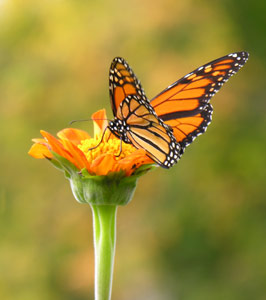
Many people think only of allergies when they hear the word pollen. But pollination — the transfer of pollen grains to fertilize the seed-producing ovaries of flowers — is an essential part of a healthy ecosystem. Pollinators play a significant role in the production...
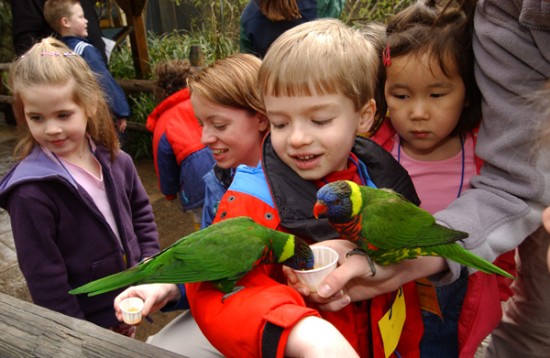
A Zoo is a Great Educational Tool
by Rex Ettlin Education Program Coordinator Oregon Zoo First I have to tip my hat in apology to aquariums, wildlife parks and educational farms. Since I work in a zoo that’s what I can talk about. But the idea of a zoo as an effective educational tool applies equally...
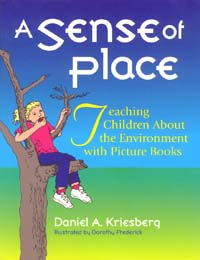
Review: A Sense of Place
Teaching Children about the Environment with Picture Books By Daniel A. Kriesberg Illustrated by Dorothy Frederick Reviewed by Dr. Suzanne Spradling A Sense of Place is a valuable classroom resource and curricular supplement. This book is designed to help integrate...

You are Brilliant and the Earth is hiring
By Paul Hawken From a commencement speech given at the University of Portland, May 3, 2009. When I was invited to give this speech, I was asked if I could give a simple short talk that was “direct, naked, taut, honest, passionate, lean, shivering, startling, and...
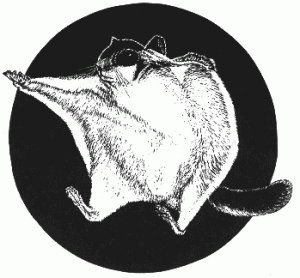
Exploring Forest Ecology: The Northern Flying Squirrel Project
by Victoria Lewis Spawned out chinook salmon, brown , spotted and beak-nosed lie dead in the shallow water near the banks of the Salmon River in the Wildwood Recreation Area at the foot of Mount Hood. The smell of rotting fish is sharp and pervasive, but Jill...
Knowing One Big Thing: The Role of the Nature Center in the Next Millennium
Knowing One Big Thing: The Role of the Nature Center in the Next Millennium By Mike Weilbacher From The Best of Clearing, Volume V It’s a very rainy day in the middle of Aesop’s fables, and Hedgehog is stuck outside without a dry place to hide. He finds a den, but Fox...
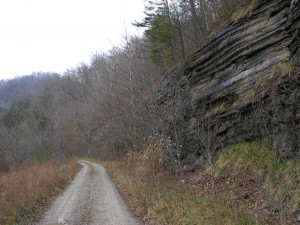
Place-based Education: Building Sustainable Communities
By Kristina K. Sullivan “Knowledge of the nearest things should be acquired first, then that of those farther and farther off.” — Comenius, 17th C. educator (Dubel and Sobel, 2008) On the day of my twenty first birthday, I arrived in the small Appalachian town of...

Graffiti, Homelessness and Asthma: Facilitating Student-Powered Urban Environmental Education
By Shamu Fenyvesi Sadeh Portland State University, Center for Learning and Teaching West (NSF) If students were asked to define “environment” and “community” what would they come up with? What would it look like if students designed their own methods for investigating...
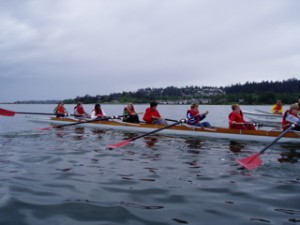
Rowing and the art of environmental education
Engaging students in the marine sciences by Susie Vanderburg enny Ross, a N.A.M.E. teacher at Strawberry Vale Elementary in Victoria, BC, shared with us a creative and challenging way to engage students in the marine sciences. When Lenny was a middle school teacher,...
Corporate Curriculum: Teaching the ‘Science of Death’
by John F. Borowski For more than a decade, writing for numerous newspapers, magazines and websites, I have attempted to cast a light on "industrial strength" science curriculum: "that curriculum of the corporation, by the corporation and for a corporation's...
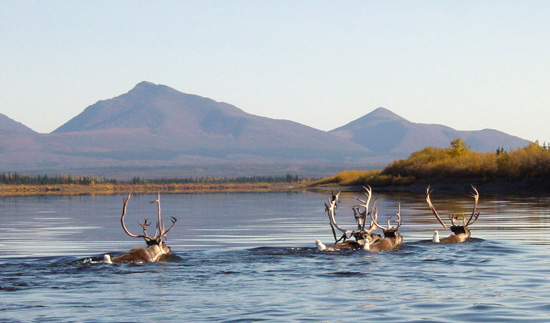
Connecting Kids and Caribou
Connecting Kids and Caribou by Sue Steinacher, Alaska Dept. of Fish and Game Teenagers can be a tough audience to impress. The students from northwestern Alaska let it be known they'd seen plenty of caribou, and had been riding in boats and camping all their lives. So...

Review: Eco-Inquiry: A Guide to Ecological Learning Experiences for Upper Elementary/Middle Grades
ISBN: 0-8403-9584-1 Copyright: 1994 Number of Pages: 400 Binding: Soft Cover Author: Kathleen Hogan Publisher: Kendal/Hunt Publishing Co. Reviewed by Fletcher Brown Over the last two decades the educational reform movement has been pitching a variety of methodologies...
Challenges Facing K-12 Environmental Education
by Louis A. Iozzi, Professor/Director Center for Science and Environmental Education Cook College, Rutgers University As I look at the world of K-12 education, I see far too many challenges to cover in this short presentation. Some have been with us for a very long...

The Birds Are Out There
by Lyanda Haupt Seattle Audubon Society Birds are everywhere. Their lives hold myriad ecological lessons, some obvious, some subtle. No matter where we live, or where we teach, there are birds to be found. They may not be wondrous, rare, or exotic. They may be an...
Global Issues – Global Opportunities: Population, Poverty, Consumption, Conflict, and the Environment
Global Issues – Global Opportunities: Population, Poverty, Consumption, Conflict, and the Environment by Gilda Wheeler Abstract: This article discusses the important role of educators in helping students understand, connect to, and act on critical global issues facing...

Review: Eco-Inquiry
A Guide to Ecological Learning Experiences for Upper Elementary/Middle Grades Reviewed by Fletcher Brown Author Kathleen Hogan Publisher: Kendal/Hunt Publishing Company Pgs: 392 Over the last two decades the educational reform movement has been pitching a variety of...
Grades K-2: Sustainability
“The frog does not drink up the pond in which it lives” - Indian Proverb Science - How do Plants Help Soil? Take two large baking pans (about 12 x 6 in.). Place bare soil in one pan and line the other with grass sod. Place the pans at a 20 - 25 degree slant in...
What were we thinking? (Putting on a watershed festival)
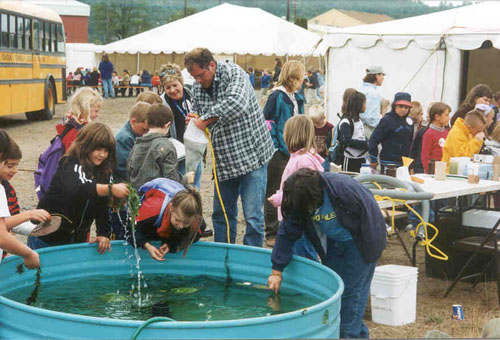
by Sharon Morse It doesn’t look like much. A big dirt parking lot filled with boat trailers. Then the magic starts. This is the tenth year for Tsalila (sa-Lee-la), the celebration of salmon and the Umpqua River in southern Oregon. Over 60,000 people have participated...

Review: Ecological Literacy
Edited by Michael K. Stone and Zenobia Barlow (2005; Sierra Club Books) Review by Jaimie P. Cloud This spectacular collection of essays by Fritjof Capra, Wendell Berry, Alice Waters, David Orr and Donella Meadows, to name just a few, is woven together with stories of...

How livable is your neighborhood?
Students Use Real World Data to Make ‘Green Maps’ of their Community by Todd Burley Homewaters Project, Seattle “Green Mapping connected Cleveland's students to their community by opening up their eyes to the environmental benefits and detriments around them. It gave...
A Forest by the Children, for the Children
By Kristen Cook This year I learned that EarthCorps don’t only make the forest a better place, they teach other people how to take care of the forest and some of those people are us. — Joseph, 5th grader As the youth outreach coordinator for Earth Corps, a...
Place-Based Education: Learning to Be Where We Are
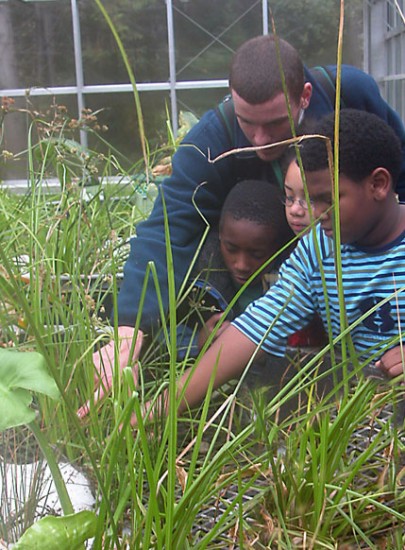
Gregory A. Smith ONE OF THE PRIMARY STRENGTHS of place-based education is that it can adapt to the unique characteristics of particular places, and in this way it can help overcome the disjuncture between school and children's lives that is found in too many...
Grades K-8: Watersheds
Crumple Your Own Watershed by Erica Ritter Make your own three-dimensional map, and use it to explore how flowing water defines the areas of land we call "watersheds." This activity provides opportunities for creativity and for meaningful discussion, a great...
Review: Getting to Know Tarantulas
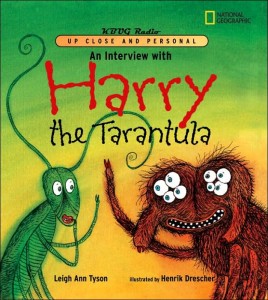
Clearing’s Children’s Literature Consultant looks at three books that help students learn more about and understand these often misunderstood creatures.

Review: The Wonder of Wetlands
Review by Sam Lyman (and Kris Eacker) WOW!: The Wonders Of Wetlands: An Educator’s Guide By Environmental Concern Inc. and The Watercourse, Bozeman, MT Published by Environmental Concern Inc., St. Michaels, MD, 2003, 348 p. ISBN: 1-883226-07-4 POW!: The Planning of...
Browse by Theme or Topic
Gardening, Farming & Permaculture
Stay Up to Date with the Latest Ideas and Resources
Join Our Newsletter
Stay up to date on environmental education in the Pacific Northwest. We’ll deliver ideas you can use to your inbox once a month.