
by editor | Jul 19, 2021 | Environmental Literacy, Outdoor education and Outdoor School, Place-based Education, Schoolyard Classroom
by Jane Tesner Kleiner, RLA
Imagine walking out the back door of your school, surrounded by the songs of spring time birds, the soft scents of flowers in bloom, the wind billowing through nearby trees, and (if you are lucky) the croaking of Pacific tree frogs. Sounds great? But… it doesn’t sound like your school? What if?
It may sound daunting, the idea of transforming your school grounds into a green, lush learning environment. However, there are great resources out there, to help put your school on-track to having learning and play environments that include lots of nature. It’s not only the kids who love and benefit from being in natural spaces; so do the school staff and the neighboring community, too.
So many schools have little more than grassy fields, paved surfaces and fenced areas. They may have a few trees and landscape beds, and hopefully an awesome playground, but most are static and sterile environments. There can be benefits to these school grounds: they are relatively safe, and it’s easy to monitor the kids during outside time. They are also seem easy to maintain (although mowing costs are a big pull on a maintenance budget). Yet, they don’t provide opportunity for imagination, let alone the creative activity that sparks imagination.
Over the last 30 years, a growing body of research strongly asserts that children experience myriad benefits from daily access to nature. Richard Louv, of the Children and Nature Network, states in an online article that,
“…including schoolyards with natural play spaces and gardens can help improve physical and mental health, cognitive skills, creativity, and social cohesion. New longitudinal studies also suggest that nature-rich schools can help raise standardized test scores. And children in low-income communities appear to benefit proportionally more from access to green space than those in higher-income communities.”[1]
Research also suggests that providing close-to-home, regular, access to nature will help kids overcome fears of the unknown. Adventuring further, they build self-confidence and interest in the broader world.
In a normal M-F week, children spend 41% of their waking hours at school[2]. With that in mind, school grounds are uniquely positioned to provide access to nature for kids. I certainly see benefits in the students that I work with, not to mention my own kids. I have seen students become self-assured, skilled and proud owners of their schools’ outdoor spaces.
There is also the matter of agency, of capitalizing on kids’ buy-in by involving them in the planning stages. Promoting student voice throughout the planning, design, fundraising, installation and maintenance of school greenspaces gives them hands-on experiences that they may not get elsewhere. And the ownership? People don’t destroy what they built themselves.
To begin, start by listening. Here are some things that I’ve heard, from schools I work with in the Vancouver area:
- When asked what changes kids would want to see to their school campus, they said two things: more fun play equipment and have the school grounds be their own backyard fieldtrip.
- When staff were asked where they want their school facility to be in 5 years, they want to be able to teach outdoors; this includes garden spaces and a diverse setting of natural elements.
- Teachers want to be able to teach using the whole school campus, making use of all features.
- The process for considering “how” to change the campus, let alone fundraise and maintain the new nature features is daunting.
Where do you start? Luckily, there are professionals who can help every school maximize the opportunity to add more nature to your campus.
It starts with lots of conversations, centered around a few key principles.
In essence, the design will:
- meet multiple goals, including direct ties to curriculum.
- allow for exploration, observation, discovery and fun.
- expand and broaden structured AND self-guided learning and play.
- foster a child’s sense of wonder and curiosity.
- build upon what kids love to do: jump & hop; climb & balance; build & take apart; make art; allow for passive quiet time; use all senses. Create! Imagine! Explore!
 Now that you’re excited to get going and transform your school grounds, here is a short recipe for a successful campus plan:
- Culture. Form a team to build your natural schoolyard. The team will brainstorm, plan, design, build and maintain the spaces. Don’t rely on one person, or else it won’t be sustainable in years to come. Bring on partners and ask for help! PTO/A’s, local businesses, community groups. Local businesses may be a source of funding, but business people have an inherent stake in the health of their nearby schools. Give them a chance to offer their ideas, skills and, yes, money.
- Individuality. Each school is unique. Build upon its existing features and add elements that easily complement the site. If you make it too complicated, it will be hard to maintain in years to come.
- Diversity. Each user group will have different goals for the enhancements, and sometimes they will conflict. By discussing the goals and objectives first, with children’s well-being the focus of the conversation, the best solution can be refined to meet everyone’s needs. Provide something for everyone.
- Community. Every child, every family has something to gain. Tap into your school community. You have a ready-made pool of hundreds of concerned, hard working adults. Learn who has skills, talents, and materials to contribute to the project. This will help build ownership in the project over time.
- Inclusiveness. Make sure all the right people have had a chance to weigh in with their ideas and approvals: district staff (facilities, curriculum leads, risk, etc.), teachers, school staff, maintenance, grounds, and most importantly the students.
- Problem Based Learning. Engage the students in every step, and empower them to meaningfully contribute, create and build a successful set of spaces for the next generation of students. This is learning! Kids will learn important, lasting lessons at every step.
- Partnership. Find local and national organizations to support your project. Possibilities include:
- certifying for wildlife habitat
- becoming a state certified Green School
- supporting the national pollinator project.
(Certification goals are great motivators, rallying stakeholders to, “keep on track and get the plaque!”)
- Consultation. Work with a local professional (e.g. landscape architect, school garden coordinator, etc.) to facilitate the discussions. They can capture all of the ideas and put it into one overall master plan for the site and create a report that can be used for approvals, fundraising and keeping the project on track over the years.
In the end, here is the winning equation:
program needs + site opportunities + available resources + curriculum goals = action plan
What goes into the plan?
Consider what type of features to add to your schoolyard.
The physical space.
- Wildlife habitat. Native trees, shrubs, and flowers to attract butterflies, birds and mammals (provide food/water/shelter/place to raise young).
- Outdoor classrooms. For classes and small groups to gather to work, listen and learn.
- Nature play. Use natural materials for kids to actively engage in unstructured and imagination play.
- Working spaces to actively plan, plant, grow and manage plants such as vegetables, fruits and flowers.
- Messy areas. Creative spaces to make art, containing moveable elements to build and change.
- Quiet spaces. Beautiful, peaceful settings with small group seating, to listen, slow down, de-stress and regroup.
- Exploration spaces. Unique spaces that support a variety of curricula; might include elements for tactile learning, such as water tables, sand play, learning lab stations, and more.
- Experiment stations. Areas that support the testing of theories, experimentation and active learning. Could include built-in features such as solar equipment, rain harvesting station, or space to create.
- Green infrastructure. Your school district may want to upgrade features to meet sustainability goals, such as stormwater management, energy efficiency, reducing heat island effects, etc. Meet their needs while creating active learning spaces. Welcome these ideas, as they are often tied to grant money.

Photo from the Intertwine
Using it
Creating the space is one thing, using it is another. Look for the tools that will help your school use the campus successfully:
- When talking to potential partners, emphasize the 4C’s of 21st Century learning:
- collaboration
- creativity
- communication
- critical thinking
Successfully redesigned schoolyards encourage all of them.
- Provide training to your staff. Help them find the resources and lessons that tie to their curriculum goals. Most school districts will have a specialist available to help.
- Identify agencies that offer programs for outdoor learning, and invite them (repeatedly) to your campus. Look for watershed and conservation groups, environmental education centers, local environmental professionals, and sportsmens organizations.
- Encourage your district to hire a garden or outdoor teacher or coordinator, to works with your teaching staff to coordinate the activities and lessons that are taught outdoors. The lessons can cover all curriculum areas, as well as activities to build social skills, independent learning and team building.
- Meet maintenance goals by creating jobs for students, classes or small groups to accomplish throughout the year. Create a shared calendar to outline the needs and then divvy up the tasks. Don’t leave it to one dedicated or passionate person….they will eventually have to move on.
- Make it the culture of the school to embrace, use, respect and care for your whole campus. The school community spends so much time together on campus, use the entire space to your advantage and care for it as a resource.
- Remember, your space will be used after school (programs and neighborhood use) and during the summer. Embrace the fact that a variety of users will use the space. Finding ways to welcome them will encourage others to care for it and keep an eye on things when school is not in session.
If you need ideas on how to use your campus for outdoor learning, there are lots of great guides and curriculum resources that provide engaging activities for all grade levels (early childhood, pre-K, K-12). A few examples include:
- The BioBlitz. No, this isn’t a game or app (check out the National Parks website). In this activity, students look for all living species on your campus. Have them document what they find and identify the species (plants, insects, mammals, birds, etc.). You can make it as simple or complex as you need to, based on the age and curriculum. Include writing, art, science and math.
- Scavenger hunt. Have kids look for a different theme, such as all things that collect and move the rainwater (What happens to rain drops when they land on the various surfaces?); have the kids find different shapes in the natural elements on campus; etc.
- Nature journal. Document the changing seasons on your campus. What are the colors for each season? Temperature changes? Weather patterns? Different animals?
- Art projects. Have kids pick a couple natural elements and sketch them, using a variety of media. Compare and contrast what is different and same about each element.
- Plant flower bulbs. Seek donations for flower bulbs and have the kids plant them in a landscape bed. Learn about the different bulbs, the depths they need to be planted, what are the types and shapes of bulbs. Have the kids develop plant markers for each type. In the spring, monitor the progress of growth for each type, have them sketch the flowers, investigate the flower shape and talk about the parts of the plant, notice if pollinators visit the plants, create a cut flower vase and share with a classroom or community group that would benefit from fresh flowers (senior living facility).
As your school starts its journey toward a more natural schoolyard, know that these projects can take years. That’s fine! The program will benefit from starting small and building upon small successes as the project grows and changes over time. Think of a protracted timeline as an opportunity to involve more kids and their families.
Lastly, stay true to your goal. Keep the vision in mind and you will be amazed at the sustaining support you will receive to keep moving forward. Every step you take is for the health and well-being of the kids. You’ll get there.
Here are just a few resources that you can check out online.
Children and Nature Network Green Schoolyards for Healthy Communities – Building a National Movement for Green Schoolyards in Every Community. http://www.childrenandnature.org/wp-content/uploads/2015/03/CNN_GSY_Report2016_Final.pdf
Green Schoolyards America. Sharon Danks. http://www.greenschoolyards.org/home.html
Boston Schoolyard Initiative. http://www.schoolyards.org/projects.overview.html Active since 1995. Schoolyard and outdoor design guides, as well as planning, maintenance and stewardship resources.
Evergreen Green School Grounds. https://www.evergreen.ca/our-impact/children/greening-school-grounds/
National Wildlife Federation. Schoolyard Habitat program. http://www.nwf.org/Garden-For-Wildlife/Create/Schoolyards.aspx Attract and support local wildlife.
#. #. #. #
 Jane Tesner Kleiner is a registered landscape architect, ecologist and environmental educator with work in Michigan and Washington. She has spent the past 25 years working with schools, parks and ecological restoration organizations to create habitat, trails and play areas. She passionately advocates for outdoor spaces that inspire kids’ curiosity. She wears a few hats in the Vancouver, Washington area, and continues encouraging kids of all ages to get outside and explore. Her goal is to make sure every kid has a stick to play with.
_______________
FOOTNOTES:
[1] Louv, R., & Lamar, M. (2016, July 07). GROUNDS FOR CHANGE: Green Schoolyards for all Children. Retrieved March 25, 2017, from http://www.childrenandnature.org/2016/07/07/grounds-for-change-green-schoolyards-for-all-children/
[2] Given a full week of school and, we hope, 8 hours of sleep.
by editor | Jun 18, 2021 | Features on Outstanding Programs, Marine/Aquatic Education, Outstanding Programs in EE, Place-based Education, STEM
A Year in the Watershed
There is no doubt that if you want to get students truly excited about what they are learning, ask them to tackle a real-world question or problem — ask them to solve something that is relevant to their lives.
by Jean M. Wallace

It is no surprise that children learn best by doing. And, when they seamlessly integrate across subjects and spend ample time working to find solutions to real problems that will improve lives, fulfill needs, and make our world a better place, their learning reaches a much deeper level. During my 20 years in a leadership role in experiential education, establishing partnerships and supporting hundreds of teachers and thousands of students in authentic learning, I witnessed this success first hand. There is also no doubt that if you want to get students truly excited about what they are learning, ask them to tackle a real-world question or problem — ask them to solve something that is relevant to their lives. In using this approach, students come to realize that what they are doing in school really does have meaning.
Whether describing this learning process with terminology such as STEM, STEAM, Project-Based Learning, Problem-Based Learning, or EIC (Environment as an Integrating Context — the process used by my former team as outlined below), it is the alignment of the content (the “what”) and the process (the “how”) that drives these successful learning models. Integration is critical, as it is the bonding of content and process that strengthens the structure of learning for students. Rather than teach in isolation, teachers and schools should model the 21st century skills we want our students to acquire by collaborating, cooperating, and communicating across disciplines to make learning more meaningful in all subjects. The effectiveness of using the environment as the foundation for interdisciplinary learning is not new to education and is supported by research.
Founded in 1995, the State Environment and Education Roundtable (SEER) worked with 16 state departments of education to develop Environment-Based Education (EBE) as a standards-based instructional strategy to engage students in “real-world” learning experiences. Over 40 schools took part in this national study, which resulted in the 1998 publication of Closing the Achievement Gap: Using the Environment as an Integrating Context for Learning (Lieberman & Hoody, 1998). As was the case with the national EIC research study, our own EIC program was extremely successful and proven to close the achievement gap.
 Environment = Authentic Learning
Moving from teaching in isolation to teaching across disciplines can be challenging, but my firm belief was (and still is) that a powerful and deep understanding of content coupled with a meaningful and authentic process of student engagement results in deeper learning for children.
Therefore, when building an curriculum focused on authentic learning, it made perfect sense to use Pennsylvania Environment & Ecology (E&E) Standards as a foundation on which to build an integrated and student-centered curriculum: one that would shape the framework for active, authentic, community-based science teaching and learning. Along with cross-curricular, real-world, rigorous content, an E&E-based program offers students the opportunity to engage in service learning and civic action, creating responsible and caring global citizens. This is evidenced in the introduction to the E&E standards, which reads as follows:
“Environment and Ecology is grounded in the complexity of the world we live in and our impact on its sustainability. The human interactions with the ecosystem and the results of human decisions are the main components of this academic area. Environment and Ecology examines the world with respect to the economic, cultural, political, and social structure as well as natural processes and systems. This integration across systems is what sets this academic area apart from all others.” (Pennsylvania Department of Education, 2001)
Starting in Kindergarten, content outlined in the E&E standards also became the foundation for literacy acquisition and was used to generate enthusiasm in our youngest readers. As they were learning how to read, they were connecting what they were reading to the real world around them. The content outlined in these standards formulated a rich vocabulary upon which students could build as they progressed through the curriculum. One example that comes to mind is the topic of Agriculture, which was introduced in Kindergarten and then reinforced in 3rd grade in a multi-disciplinary, multi-week unit of study. Classroom libraries were stocked with vocabulary-rich books, and learning was enriched by field studies to area farms, nature centers, streams, rivers, and museums.
The June 2014 Progress of Education Reform Report issued by the Education Commission of the States, reaffirms the success of applying this early science literacy approach in an authentic learning environment: “Science interactions support vocabulary development by exposing children to new words in meaningful context. Exposure to rich vocabulary words predicts vocabulary development, which predicts reading achievement.” The importance of early science literacy acquisition is summed up nicely in this same publication: “Education leaders should turn a critical eye on the science teaching and learning expected for early education in their school, district or state, then determine whether there is any evidence that children and their teachers are receiving the instructional opportunities they need and deserve.”
 Creating the EIC Curriculum
But how and where do you begin when creating an integrated curriculum? For our team, utilizing the E&E standards for content; the interdisciplinary, student-centered process of the EIC Model; a strong emphasis on 21st century skills; and backwards mapping became the perfect collective starting point. Our guide was Dr. Patricia Vathis of the Pennsylvania Department of Education, who is an expert in standards, interdisciplinary learning, and Understanding by Design. As a K–8 team, we began the curriculum-building process by going through each E&E standard statement and unpacking and understanding its content. After completing this, we moved on to Science and Technology, and then to Social Studies, which included History, Geography, and Civics and Government. We identified the content that “anchored” each standard statement and how each grade would be responsible for either introducing that content (I), reinforcing it (R), or bringing the content to proficiency (P).
As we were completing each matrix and assigning a color code to each grade, we were also looking for opportunities to connect content across disciplines to create big ideas for comprehensive, interdisciplinary units of study. Once our team completed a matrix for each of the content area standards, time was allocated for teachers to meet and plan with their grade level partners and teachers from different grade levels and disciplines. Everyone worked from the matrices they, themselves, created. Schedules were designed so that team-teaching could occur several times each week, allowing teachers to see and hear how each overarching topic was being presented through the lens of another discipline.
 EIC in Middle School
In some ways, the 5–8 team had a more difficult challenge than the K–4 team, since our middle school students in 5–8 rotated through different teachers and subjects. The teachers effectively met this challenge by working together to design units of study that spanned several months, with each content area well represented. For example, one unit was titled “Disease and its Impact on Philadelphia,” and was taught over a three-month period. In Science class, students investigated how vector species transmit diseases, while in Language Arts the students were reading the book Fever by Laurie Halse Anderson (2000), a historical fiction novel documenting the 1793 yellow fever epidemic that plagued Philadelphia. In Social Studies, the students were mapping out historic Philadelphia and reading and writing about a time in local history when this epidemic took many lives. In Technology, students created their own newspaper and documented the impact of the disease outbreak by writing obituaries and providing information to their imaginary community. Finally, in Art, students designed a 2-D protist from which they created a 3-D model. As students were learning across disciplines, teachers were actively teaching across disciplines. Amazing!
 EIC in Elementary School
Just one example of authentic, interdisciplinary learning that was so successful during my years in school leadership was “A Watershed Year,” when each year our 4th grade students were immersed in a year-long, interdisciplinary study of the Delaware River Watershed. Students were challenged to answer the overarching question: Where does your drinking water come from and where does your wastewater go? They began by investigating the history, geography, geology, science, chemistry, and ecology of our local freshwater streams and the surrounding watershed. During their downstream journey, students interacted with experts in local history, drafted a “Water Bill of Rights,” debated ecology versus economy, conducted field studies with the Philadelphia Water Department, mapped out their local watershed, and learned from the Army Corp of Engineers how to effectively engineer a dam.
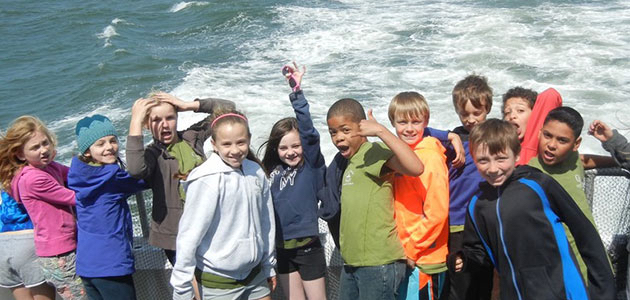
Students also documented their journey and presented their findings to various audiences. Utilizing digital technology, they even created an interactive, informational walking tour for visitors along the trails at the local historical society. The students’ Watershed Year ended with an exploration of the Delaware Estuary and Atlantic Ocean ecosystems where they discovered the ecological diversity of aquatic life in these brackish and saltwater environments. Their final real-life adventure in learning was a three-hour voyage aboard a trawling vessel out of Cape May, New Jersey where they cast nets into the ocean and hauled in their catch, while working side-by-side with a team of marine ecologists.
 Ongoing Improvements and Growth
Professional development for teachers was meaningful, focused, and ongoing. In-service days during the school year were dedicated to curriculum development, and each summer our teachers would attend the Pennsylvania Governor’s Institute for Environment and Ecology. This Institute offered a week-long, residential learning experience that took place both indoors and outdoors. Enhancing the knowledge and skills of teachers through deep-rooted learning experiences inspired our teachers to become even better at creating and implementing authentic learning experiences for their students.
While standards dictated “what” would be taught, the process of learning was designed and reinforced by our teachers. They used content — E&E standards-based content — and the EIC practices to drive instruction. These experiences not only resulted in strong academic achievement, but they ensured outcomes of global citizenship through student empowerment and environmental civic action. Our K–8 EIC framework became the solid academic foundation on which we grew our program from 150 students to over 700 allowing us the financial and community support to build a 20 million dollar school and campus designed for outdoor learning. An amazing accomplishment that many said could never be done!
Positive Impacts
In the end, our state standardized test scores reflected the success of our EIC Model and its interdisciplinary framework. More importantly, these scores represented how immersing students in deep-dive, long-term, interdisciplinary research projects can be a successful approach for all students. As just one example, 90%–96% of our 4th Grade students achieved, on average, the highest level in the Pennsylvania System of School Assessment (PSSA) Science test. Our special education students and historically underperforming students thrived in this atmosphere of real-world, interdisciplinary learning. Our school was rated as a top performing school locally and state-wide, and ranked internationally with schools in Finland.
Throughout my years working with an incredible team, our EIC curriculum continued to evolve and was revised by our teachers. Success was contagious! Teachers were motivated and students were energized as we immersed ourselves in the study of the environment. We came to realize that doing meaningful work in an authentic environment to conserve our basic needs — the water we drink, the air we breathe, and the food we eat — was a bond that we shared and something that is relevant to us all.
___________________________
 Jean Wallace was the CEO of the award-winning Green Woods Charter School, a K–8 public charter school in Philadelphia, PA. During her tenure as CEO, Green Woods was recognized locally, regionally, nationally, and internationally for its innovative approach to learning as well as its academic achievement. She is now consulting for schools and organizations who want to take learning outside.
Prior to her work at Green Woods, Jean served as the regional Director of Education for Earth Force, Inc. (www.earthforce.org). As the Director of Education for Earth Force, Jean supported hundreds of teachers and thousands of students in service learning and civic action projects focusing on local and regional environmental issues.
Education is a second career for Jean. As a parent, Jean was an active volunteer in her daughter’s private school setting and came to recognize the vast differences between some public and private school learning environments. She sought out a second career in education to offer public school students authentic, real-world learning opportunities similar to those her own daughter experienced.
This article is dedicated with gratitude to Dr. Patricia Vathis, retired Environment and Ecology Coordinator for the PA Department of Education, and the incredible teachers and staff who made the impossible, possible.
References
Anderson, Laurie Halse. (2000). Fever, 1793. New York, NY: Simon & Schuster Books for Young Readers.
Education Commission of the States (June, 2014). Progress Report for Education 18 (2). Denver, CO: ECS.
Lieberman, G., & Hoody, L. (1998). Closing the achievement gap. State Education and Environment Roundtable Report. Poway, CA: Science Wizards.
Pennsylvania Department of Education (2001). Introduction to the Pennsylvania academic Standards for environment and ecology. Retrieval from URL www.education.pa.gov

by editor | Jun 18, 2021 | Equity and Inclusion, K-12 Activities, Outdoor education and Outdoor School
Effective Practices
For Night Hike
By: Grace Werner
The mainstream outdoor industry, as it exists today, is a blanket of whiteness that ignores sacred stories, crucial histories, and traditional knowledge of black and brown people (Brown, 2019). This truth is something I was only partially aware of in my time as an Instructor at Widjiwagan. If there is anything my graduate studies in the field of education have taught me, it is clarity around the many mistakes I have made as an educator. Still, reflection, correction, and reparation is the only way I know to move forward, and thus I’m so excited to analyze the mistakes I made as an instructor and as an employee of an outdoor education organization.
The focus of my “Effective Practices” analysis is on a lack of awareness regarding emotional safety of all students, and particularly black and brown students, on a night hike. In this blog post, I will identify elements of the night hike lesson that could be changed for a more emotionally safe experience for students. Specifically, I will look at the timing of the lesson positioned early in the week/unit, the set-up of community standards/emotional-safety- agreements, and the (lack of) awareness or acknowledgement the instructor is able to bring into their teaching and work community. By analyzing what a night hike looked like as I taught it 3 years ago, I am hoping I can clarify specific changes that may make the overall experience more beneficial for all students.
Positionality:
I believe that when educators are aware of their positionality, greater safety is maintained. As a white, cis-gender, non-disabled, middle class woman who speaks English as her first language; my positionality holds immense privilege. Specifically as a white outdoor educator, if I do not acknowledge and actively combat the harmful practices ingrained in environmental education, I am not only a part of a history of erasure but also a participant in the perpetuation of racism and injustice. My critical analysis of the night hike is a limited understanding of the industry’s shortcomings, due to my privileged positionality and inherent biases. It is my intention to use this reflection to process my own learning and recognize the changes I hope YMCA Camp Widjiwagan, as well as many organizations like Widji, must make.
Widji’s administration, board of advisors, staff, and summer-participants are predominately white, upper-middle class, non-disabled, and speak English as their first language. From my perspective and collective experiences in the participant, guide, and instructor roles; there is not nearly enough organizational effort given to interrupt or change this cycle of creating a white-centric space. This is extremely important to recognize because of the following participant caveat- Widji’s fall/winter/spring program serves a population of youth who’s demographics much more accurately represent the demographics of MN and much more proportionally include (but are not limited to)- African American, Mexican, Native American, Somali, Ethiopian, Hmong, Salvadoran, Indian, Korean, Chinese, Filipino, and Vietnamese, students. This detail is important to acknowledge moving forward in my analysis of the “Night Hike” lesson. Schools (both public & private) from across the state of MN, bring entire classes of students to outdoor school at Widji for a week-long sleep away experience. But how is Widji (or the many outdoor ed schools like Widji) able to create a space that mitigates the undertones of colonization, nationalism, and white supremacy culture imbedded and maintained through the industry, organization, and a predominately white as well as affluent staff (Brown, 2019).
Lesson Analysis & Effective Practices:
One of the more important elements to know about Night Hike at Widjiwagan is that it happens on the first night students arrive at camp. Generally, after a long day of travel, busses arrive in Ely, MN around 3-4pm. Students tour camp, unpack quickly in their cabins, eat dinner, and meet their study-groups as well as their instructor. These groups will stay the same for the entire week. Day 1, for students and instructors alike, is exhausting and overwhelming. It is a day filled with nervousness, discomfort, excitement, and newness. This is the night students are asked to bundle up, dig deep for some energy, and place an unreasonable amount of trust in their instructors and peers to brave the dark, cold for a hike in the woods.
Most commonly students will be presented with pre-hike curriculum. As an instructor, I often outlined the anatomy of the human-eye and how it interacts with light. I would draw a diagram on the white board and have students label the cornea, pupil, iris, rods, cones, and a chemical called rhodopsin. We would experiment with our own vision-quality by turning off the lights in the classroom and waiting for our eyes to adjust. I would then ask students to extinguish all phones, flashlights, or head-lamps for the entire walk, as a way to test our own night vision. Looking back, this measure feels entirely unnecessary and insensitive. The point (I think) was to encourage students to step briefly outside their comfort zone in order to practice their recently acquired knowledge of night vision. The night hike generally proceeded into discussions on stars, light-pollution, nocturnal animals, and sometimes even active-listening activities. There is so much incredible science-related and non-science-related content that is relevant to a night hike, and yet I can’t let go of the fact that it is placing students in what could be an incredibly scary, triggering, and uncomfortable situation on their first night at camp. Finally, if students are deeply uncomfortable, they will not be in a mental space that allows learning to take place.
Moving the night hike to the final evening at Widji is a practice that I think could significantly improve student-emotional-safety. When someone feels emotionally safe, I believe they feel comfortable enough to be vulnerable and voice their needs. This requires trust and respect in relationships. A closing night hike would allow students the necessary time to build trust and supportive relationships with potentially unfamiliar peers and a new instructor. It would also allow time for establishing, as well as practicing, community safety standards, communication skills, and group agreements. Added time to learn about students- their individual needs and passions as well as group needs and interests- is crucial to a successful week at outdoor camp. Assuming youth will or should be stoked on being outside is rooted in many characteristics of white supremacy. Individuals have varying and sometimes emotionally-loaded feelings of spending time outside. It can bring up memories of vulnerability, insecurity, fear, or even pain. The outdoors is not a safe place for everyone. More specifically, the outdoors has been historically dominated by white men and their exclusive ideas of recreation and stewardship. In my opinion, acknowledgment of the night hike or any other camp experience as potentially scary is a great place to start in naming a dynamic for students. This acknowledgment lets students know that feelings or desires in regards to participation may vary from student to student, and that is ok. I firmly believe that students should not be forced to venture into the darkness without a light, or even to hike at all in the dark if they do not feel safe. Ideally, if presented as an option at the beginning of the week, and slowly worked towards as a team, students may genuinely not want to miss the experience.
The second important teaching practice I believe relevant to night hike is the knowledge that a student’s comfort level is often rooted in their family’s history or upbringing. In “What Does Culture Have To Do With Teaching Science”, Madden (2013) writes, “For educators to engage families, becoming aware of student prior knowledge and beliefs is essential in making science culturally responsive” (p.67). It is the job of instructors to learn about the communities where they work and implement the many incredible narratives and ways of learning present there. Specifically, as a white outdoor educator, making space for adults whose positionality not only differs from my own, but also may better represent student identity, is crucial. In my time instructing at Widji’s fall/winter/spring program, I largely relied on the standard curriculum presented to me in staff training. Still, there was a lot of flexibility given to instructors at Widji, and I wish I would have used that freedom to make space for BIPOC (Black Indigenous People of Color) voices. Madden (2013) discusses gathering stories from parents, community specialists, or even the library as an excellent option for instructors to include a variety of voices, perspectives, and cultural beliefs that may be held by students. For night hike specifically, this could include family or traditional knowledge on any of the topics typically covered such as stars, nocturnal adaptations, light pollution, etc. Another option Madden (2013) presents , if the resources are available, is to invite parents, teachers, or community members into the curriculum building as another way to stray from content reflecting a single story. This could happen through electronic data collection, zoom sharing, or in-person visits.
In outdoor education, the space my body takes up is welcomed and approved by white supremacy, so I must use that privilege to dismantle a system that is centered around whiteness. Night hike at Widjiwagan displays the extensive redesign outdoor curriculum and educational systems must incorporate, rather than relying on assumptions, stereotypes, typical curriculum, and more.
Work Cited:
Brown, S., & *, N. (n.d.). Advice for white environmentalists and nature educators. Retrieved March 09, 2021, from https://clearingmagazine.org/archives/15272
Brown, S., & *, N. (n.d.). Reclaiming spaces. Retrieved March 09, 2021, from https://clearingmagazine.org/archives/15269
Madden, L., & Joshi, A. (2013). What does culture have to do with teaching science? Science and Children, 051(01). doi:10.2505/4/sc13_051_01_66
by editor | Jun 18, 2021 | Equity and Inclusion, Indigenous Peoples & Traditional Ecological Knowledge, IslandWood, Tribes & Traditional Ecological Knowledge


 A New Tool: Land
  Acknowledgment Resource Cards (LARC)
by Grace Crowley-Thomas


Throughout Canada, New Zealand, and parts of the United States, educators and leaders are engaging in a practice called “land acknowledgment.” Generally, this is a practice that is meant to recognize and pay respects to the Indigenous people first who inhabited and stewarded the currently occupied land. As we know, Indigenous people have lived, and continue to live, in just about every part of the world. The goal of these cards is to help educators introduce and grow an understanding around land acknowledgments.
It is vital that educators recognize this as a starting point and that to pay true respect, action needs to accompany acknowledgement. These “each-one-teach-one” style cards can be used in a variety of ways and this article provides a few suggestions around how an educator might engage with them with learners. These cards are not necessarily intended to be used all together, rather as a resource for the educator to pick and choose what cards are most appropriate for their group. Some of the cards are more appropriate for certain maturity levels than others. While these cards are a resource, it is the responsibility of the educator to learn about the issues of the local tribe and build relationships. Acknowledgement alone is not enough, there must also be action. Without action, we are just being performative and tokenizing of Indigenous peoples and cultures. In what ways are we simultaneously decolonizing our practice? Our minds? Educators should use these cards as a jumping off point to dive further into Indigenous ways of knowing and being and issues that local nations are dealing with.
Possibilities for use:
- Learn more about Indigenous sovereignty
- Learn more about Indigenous treaty rights
- Use images to introduce Vi Hilbert, political cartoons, youth activism, Indigenous art
- Write the name of the original inhabitants of the land you are on
- Open discussion
Opportunities for Use
- Pass them out to students and have each person share something from their card. Prompts may include:
- Why are land acknowledgments important?
- What is something new you learned?
- Can you create your own land acknowledgment?
- If we were to create our own land acknowledgment, what would be important for us to consider?
- Choose specific cards that center the information you want to teach and present them to the group
- Pictures of Vi Hilbert
- Could be used in conjunction with a Suquamish basket lesson
- Discussion of Lushootseed language and dictionary. How does language live and die?
- Political cartoons
- Discuss what the artist is conveying
- Ask learners to make their own political cartoon
- Environmental issues
- Justice Issues
- Youth Issues
- Treaties and sovereignty
- Land acknowledgment examples
- What is a land acknowledgement?
- What are common components?
- What are some differences?
- Why is it important?
- Use the cards as each one teach one cards
- Create your own land acknowledgement with students
- Have students look at the artwork and form a discussion around them
- What patterns do you see?
- What shapes do you see?
- What do you think the artist is trying to tell us?
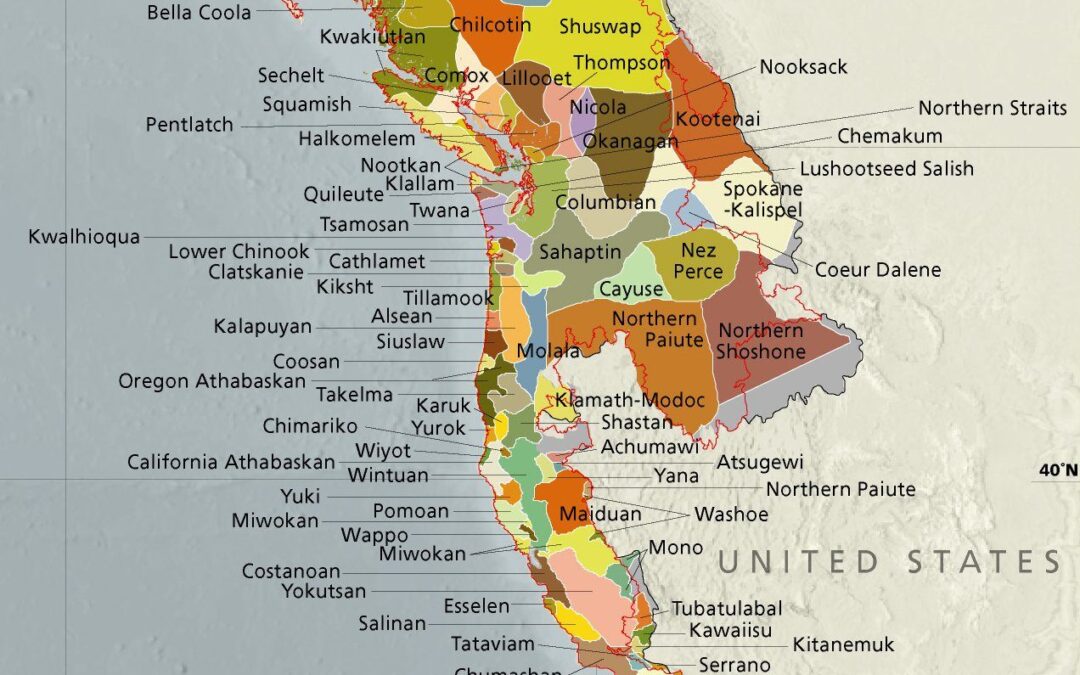
- Use the artwork and native land maps to have your students investigate and write the name of the ancestral lands you are on. Refer to this daily.
- Write the name of the tribes whose land you are on on the provided artwork
- Why would the artists make this work?
- Youth made this artwork
- ask about artwork that has a purpose
- Ask learners if they have ever made art with a message
- What was that message?
- Did they show anyone?
- How was it received?
- Share stories of youth activists of color
- Meet the young activists of color who are leading the charge against climate disaster (words and profiles below are directly from Burton, N. (2019, October 11). Meet the young activists of color who are leading the charge against climate disaster. Vox. https://www.vox.com/identities/2019/10/11/20904791/young-climate-activists-of-color.)
- Jamie Margolin, 17, is a first-generation daughter of a Colombian immigrant and the co-founder of the climate action organization Zero Hour. As a queer, Jewish, Latina climate activist, Margolin is committed to advocating for the most vulnerable communities. When you uplift Latinx voices in the climate movement, she says, you must also fight for Indigenous rights, including the biodiversity that those communities protect.
- Amariyanna “Mari” Copeny, 12, became an activist on behalf of her hometown of Flint, Michigan, when she wrote then-President Barack Obama in 2016, asking him to do something about the water crisis. In Flint, mismanagement led to high levels of lead in the water. State officials estimate that almost 9,000 children in Flint under the age of 6 were exposed to high levels of lead. These children, including Copeny, are at risk of developing serious, long-term developmental and health problems as a result. “Flint is not unique,” Copeny tells Vox. “There are dozens of Flints across the country. Cases of environmental racism are on the rise and disproportionately affect communities of people of color and indigenous communities.” Flint is nearly 54 percent Black, with more than 41 percent of its residents living below the poverty level,
- Xiye Bastida, 17, was born and raised in San Pedro Tultepec, a town outside of Mexico City, where heavy rainfall and flooding were the norm. It gave her insight into how Indigenous communities are impacted by rising temperatures and environmental degradation. Bastida, who’s Otomi-Toltec from Mexico and now based in New York, says she brings “Indigenous knowledge and cosmology” to the conversation in the climate movement. “We don’t call water a resource; we call it a sacred element,” she says. “The relationship we have with everything that Earth offers, it’s about reciprocity. That’s the only way we are going to learn how to shift our culture from an extraction culture to a balanced and harmonious culture with the land.” Bastida skips school every Friday to protest at the United Nations as part of the Fridays for Future initiative founded by Thunberg. Bastida says it’s vitally necessary to keep Indigenous people at the forefront of the climate conversation.
- Ilsa Hirsi, 16, The daughter of a Somali-American refugee, Hirsi feels strongly about making room for more Muslim and Black youth to be leaders in the climate movement. “Creating more space for those with marginalized identities in the climate space is necessary for inclusive solutions,” she tells Vox. “Everyone should be able to see themselves in a movement like this, and if you don’t, then that’s reason to make this space more inclusive.” Hirsi also recently told Essence that the climate movement can’t afford to ignore the impact capitalism, white supremacy, and colonialism have had on the climate. “The climate crisis is such a massive issue that everything is impacted by it … everything is intertwined in some way,” Hirsi said. She points to Indigenous-led protests against the Minnesota oil pipeline, Line 3, where the struggle against colonialism and the denigration of Native people can’t be separated from the pressing environmental issues.
Sources
#HonorNativeLand. U.S. Department of Arts and Culture. (2018). https://usdac.us/nativeland.
Burton, N. (2019, October 11). Meet the young activists of color who are leading the charge against climate disaster. Vox. https://www.vox.com/identities/2019/10/11/20904791/young-climate-activists-of-color
Friedler, D. (2018, February 9). If You’re Not Indigenous, You Live on Stolen Land. Teen Vogue. https://www.teenvogue.com/story/indigenous-land-acknowledgement-explained.
Land Acknowledgement. Duwamish Tribe. (2018). https://www.duwamishtribe.org/land-acknowledgement.
Grace is a current Master of Education candidate at University of Washington’s partnership with IslandWood’s Education for Environment and Community Certification Program on Bainbridge Island, Washington.
by editor | May 12, 2021 | Interviews with Educators & Leaders, Schoolyard Classroom
Jane Tesner Kleiner is a Registered Landscape Architect (RLA), ecologist and environmental educator with over 25 years of experience in design, project management and program coordination. She loves working with schools and communitiy partners to create spaces and programs to get kids outside, connecting with nature.
Tell us a little about yourself. How did you get started in this field?
I found of a love of working with school kids as a volunteer naturalist for the Ann Arbor Public School’s Environmental Education program. We took kids out on fields trips for all 1st – 5th graders. We were so lucky to have lots of natural areas, including Metro Parks, wetlands, streams and gravel pits. Then I met the amazing Rick Plecha (elementary science teacher) at Field Elementary School in Canton, MI and we started designing green schoolyards in his district. My work in Michigan focused on watershed improvements. When I moved to Washington in 2006, I started volunteering at my son’s school when they wanted to build a garden. The district, knowing my professional background, asked for a master plan to make sure they had a guiding tool for the garden improvements. Over 9 years, we have built 7 phases of projects at that school, including sensory, butterfly, accessible play, nature play, imagination play and outdoor classrooms.
Do you recall anything from your childhood that may have played a role in your becoming an environmental educator? What was your earliest connection to nature?
I was so lucky as a kid to grow up in a huge subdivision that had creeks and forests. My brother and I would roam the forests and floodplains all the time, especially winter in Michigan with snow and ice. We also had a huge hill in the backyard for sledding. We didn’t take many vacations as a kid, but I spent most of my childhood roaming Bell Creek, the forests and floodplains.
What has been a particularly memorable moment in your career?
By combining my landscape architecture skills with my love for ecology, I have been very fortunate to have worked on some great projects! Most of my work has been urban/suburban so there has always be a “people” connection that allowed for interpretive signage, places to explore and sit and observe the wildlife. While the bigger projects, like the Rouge River Oxbox restoration at The Henry Ford museum and the visitor improvements at Salmon-Morgan Creeks nature area are great, it is working with schools on their small gardens, habitats and projects where the kids take ownership and pride that make such a huge difference.
What challenges (professionally) have you had to overcome?
Great question…..as every job has its challenges. I have worked for large and small design firms, as well as local governmental agencies. One of the challenges is educating the budget folks that adding public amenities to some projects make a huge difference for folks visiting the areas. Also, finding a balance with the wonderful grounds and maintenance crews who have a lot on their plate with limited resources, while we add more gardens and natural areas. One great outcome of COVID is that people are really understanding the need and value for nature. Before COVID, green schoolyards could be seen as “Oh, that is nice and all but not mandatory.” We now know that having all types of gardens really make a difference well beyond academics.
What have been your greatest rewards?
Introducing kids to nature! So many kids I have worked with have lots of fears about nature and don’t have a lot of understanding about plants, animals, habitats, etc. My greatest rewards are when they get to see the result of their hard work, flowers blooming, vegetables are ripe enough to harvest, seed collecting, etc. When kids know that I can trust them with tools and then they can go get the job down, they are so excited. When they bring their families on the weekends because they are so excited, that is the added bonus.
What are some of the best resources you’ve found for the work you do?
We are lucky in southwest Washington to have lots of great partners working with schools. We have formed a coalition called the Clark County Nature Network where we meet to understand what the organizations or agencies are doing and how we can partner to make a difference with schools. Some organizations are great for plantings, trees and stewardship so kids get lots of hands on project based learning. Then they get to watch their projects grow. Other partners help with the planning and design of Green Schoolyards and can help get projects in the ground. A local arborist can help salvage trees to be repurposed for nature playgrounds. Our urban forestry can help add shade trees to playgrounds which are usually lacking any nature. We are starting to look at project opportunities to connect high school CTE partners to get gardens in at elementary schools, as they have the green houses and wood shops.
 What project(s) are you currently working on?
It has been exciting for our two largest local school districts, Evergreen and Vancouver,which passed capital bonds several years ago. Those funds have provided for lots of improvements at existing schools and over a dozen new and/or replacement schools. I have been incredibly fortunate to work either as the owner’s representative on the projects or lead landscape architect on a few. This has allowed me to bring my knowledge of Green Schoolyards to the table and work with all of the staff and design teams to rethink school campus design. Most of the new schools have working gardens, increased native habitat for lots of species, including birds and butterflies, outdoor classrooms, accessible pathways, nature play areas, rock cycle gardens, meadows and interpretive signage. The projects include lots of natural colors, textures, plant types and features that haven’t been done at local schools. And the response has been great! If teachers want to teach about parts of the plant, they now have lots of different kinds to choose from on campus. There is now a diversity of colors and patterns to study art or writing. And lots of paths to go for walks to support social-emotional learning through the natural areas.
I am also the lead coordinator for the Clark County Nature Network working with local partners to connect our community to nature. Our partnership with the US Fish and Wildlife Refuge has stepped up to provide funding to expand our service to the community to reach more families and partners.
How has COVID-19 impacted your work?
As we know, there have been lots of pros and cons to COVID impacts. As a mom with two school age kids, my time has been more limited for work during the day as I help with school. While I have loved all of the time with my kids, there are also been other opportunities. I have been on some great Zoom calls with partners from around the world, like the BioBlitz program that covers ALL schools in England….so cool. There have been so many great collaborations with Green Schoolyard partnerships. I supported the Green Schoolyard America COVID 19 response to create on-line resources [https://www.greenschoolyards.org/covid-learn-outside]. Many of the resources are now available to schools who want to create and use outdoor classrooms as part of their solutions to getting kids safely back into school.
What inspires you now? What people have inspired you?
The research is so abundant now on the benefits of nature for our overall health, it isn’t hard to make the case to add nature back into our communities. I am inspired by the teachers who can’t wait to add more features, the kids who can’t wait to show you the caterpillar they discovered and the families that spend more time outside now that they know where to go and what to do with their kids. My colleagues are definitely my current inspirations as they have retooled how they deliver their work, due to COVID, to still reach kids with on-line learning and inspire kids to explore their own yards, schools and neighborhoods.
Who are your environmental heroes?
I have always been inspired by Rachel Kaplan, professor from the University of Michigan, who helped guide my graduate school work with schoolyards and her book Design with People in Mind. The writings of Rachel Carson, walking the shores of the Atlantic Ocean, and Mardy Murie about her time in Alaska, are my go to readings. I was also inspired by Richard Louv’s Last Child in the Woods. And then there are the biggies, like David Attenborough and Jane Goodall……what can I say….they are amazing.
What books are currently on your nightstand?
I am currently reading David Attenborough’s A Life on Our Planet and Robin Wall Kimmerer’s Braiding Sweetgrass. It feels so imperative to get kids to know their local landscapes, to understand what birds, insects and plants are here and why they are important. As a parent, I want my kids to know and understand what we see everyday.
Do you have favorite places to go when you need to connect with nature?
Oh yes! I am a big fan of those little known places, like the back trails along the Salmon Creek, the long trails at Vancouver Lake and Lacamas Lake here in Vancouver. My ideal adventures are to the Mt. Adams and Mt. Rainier trails, especially up in the alpine meadows. They take your breath away…..I could just sit up there for days!
Are you hopeful about the future?
Oh yes! There are so many talented people working on the Greening of Schoolyard front, that I know we are making a difference and this work matters! So many partners are rethinking their approach for diversity, equity and inclusion, I have faith in their ability to connect with even more families. And our local schools have put their efforts behind sustainable landscapes that are more natural. Growing up in nature, I had the joy of wandering the woods for hours and sitting in meadows in the fall opening milkweed seed pods, just to watch the seeds float away. Robert Michael Pyle said at the UERC conference last March, that kids are facing the extinction of experience. This really stuck with me. My job is to help recreate spaces to allow kids the experiences that I had everyday. At one local school, we were able to create a 1-acre meadow…..a first for the district. I can’t wait for students to have the opportunity to just sit in the middle and listen to the wind blowing through the grasses and the endless parade of cirtters calling that space home.
