
by editor | Jul 29, 2013 | K-12 Classroom Resources

If you’re a teacher, CLEARING would love to hear from you!
We are compiling anecdotal examples of fun, engaging and successful environmental education activities from teachers around the Pacific Northwest.
We are especially interested in teachable moments that sprang from creativity, inspiration, and special circumstances. If you have ever created, implemented, or participated in an especially wonderful or memorable EE learning activity, we hope you will share your experience through CLEARING.
Example:
It was a damp, sunny day, and my grade three class was called to the front lawn of the school for a school-wide portrait. Classes from kindergarten to grade five trooped out and jostled for places on the lawn. My third graders, however, were distracted. They were peering into the long grass at the gigantic earthworms that were wriggling at their feet. Seeing other students shy away and shriek at the worms, my class sprang into action, the bravest of them picking up the worms and moving them to the edge of the grass, away from the stampede of feet. Eventually, we were chastised for holding up the photo, and my worm wranglers were themselves wrangled into place.
With the photo shoot completed, the students looked around frantically for the worms. The questions came fast and furious – why would the worms come out when they’re going to get stepped on? One child suggested that worms come out when they feel the ground shake. We decided to test it and find out. We spread out on the lawn and stomped up and down, and up popped a worm. Jubilant, the students danced more vigorously, laughing. The office staff was laughing pretty hard, too. Every student danced a worm up out of the ground that morning. We observed them, and let them go, and finally headed back inside
—Laurelei Primeau
Coquitlam, BC
Please take a moment and write a couple of paragraphs describing what you did, how it happened or how you did it, and what made it special.
Ultimately we’d like to compile examples from across the K-12 spectrum, in formal classrooms as well as non-formal, of those teaching ideas that really came together and created a special learning moment for everyone involved.
Use the reply box below to add your example, along with your name and school/affiliation. We will compile what we receive into our searchable database of the best resources for environmental education.
by editor | Jul 2, 2013 | K-12 Classroom Resources
1. National Geographic Education: Collections
The National Geographic Education website has a number of collections dedicated to different areas within the natural sciences. Topics include ocean education, ecosystems, natural disasters, endangered species, and much more. Resources can be selected by grade, subject, type, and more.
http://education.nationalgeographic.com/education/collections-topics/?ar_a=1
2. Melinda Gray Ardia Environmental Foundation Grants
K-12 teachers are invited to apply for grants to develop or implement environmental curricula that integrate hands-on ecology exercises into the classroom. To facilitate learning and student empowerment, environmental curricula should be holistic and strive to synthesize multiple levels of learning (facts, concepts, and principles), often including experiential integrated learning and problem solving. The deadline for pre-proposals is September 13, 2013.
http://www.mgaef.org/application.htm

3. Aquatic Food Webs
This NOAA Education Resources website offers an exploration of aquatic food webs. The website offers videos, lesson plans, and data sets. Check out the Real World Data investigations, Who’s Eating Whom, and more.
http://www.education.noaa.gov/Marine_Life/Aquatic_Food_Webs.html
4. Spark 101
Spark 101 features free interactive videos made by industry professionals on science, technology, engineering, and mathematics (STEM) topics. Teachers can use these brief videos to engage students in solving real-world problems. The content is directly connected to national curriculum from the College Board’s Advanced Placement, the National Academy Foundation, and Project Lead the Way. The videos have a three-segment format, with pauses for student dialogue.
http://www.spark101.org/
5. DeepSea America
The Deepsea Challenger is James Cameron’s single-pilot submersible that he took to the bottom of the Mariana Trench. Follow the archives through daily logs, photos, and more as the sub and expedition team traveled on a nation-wide educational tour to highlight the importance of ocean research and green STEAM (science, technology, engineering, arts, and mathematics) education from California to Massachusetts, where the sub has been donated to the Woods Hole Oceanographic Institution.
http://www.deepseaamerica.com/

6. Nature Bridge
NatureBridge provides hands-on environmental field science education for children and teens through National Park-based overnight field science programs. Parks include Channel Islands, Olympic, and others. NatureBridge provide scholarships to more than 35% of their participating schools in order to reach more students from underserved communities. Sign up for email updates, download lesson plans, and more.
http://www.naturebridge.org/

7. Citizen Science – Precipitation Measurements
The Community Collaborative Rain, Hail and Snow Network is a non-profit, community-based network of volunteers measuring and mapping precipitation (rain, hail and snow). By using low-cost measurement tools, stressing training and education, and utilizing an interactive website, the aim is to provide high-quality data for natural resource, education, and research applications.
http://www.cocorahs.org/

8. Outdoor Nation
Outdoor Nation is dedicated to reconnecting youth with the outdoors. They host summits around the country, offer grants, lead outdoor outings, and more in an effort to mobilize a movement to get people back outside. Summits in Chicago, Illinois and Seattle, Washington will be held July 2013.
http://outdoornation.org/
by editor | Jun 29, 2013 | Learning Theory
Details, details, details…
The degree to which you can elaborate detail determines the level of confidence you’ll have in teaching curricula which begins in the real world
 by Jim Martin
CLEARING Associate Editor
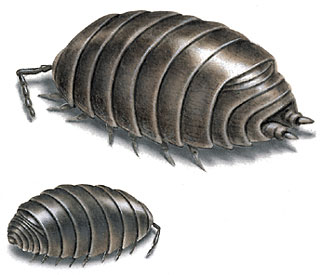
 ust as the degree with which they elaborate the ecological details of the compost communities students study delineates the levels at which they are working, the degree to which you can elaborate detail determines the level of confidence you’ll have in teaching curricula which begins in the real world. A metaphor to illustrate this: Let’s say you live in a neighborhood like mine, in which every block has some homes with large trees in their yard or in the planting strip next to the street. A strong wind comes through and knocks a large tree limb onto a neighbor’s roof, damaging it. The neighbor immediately has the tree cut down, and every home owner in the neighborhood feels some degree of panic or anxiety about the trees near their own homes. What will they do? (more…)

by editor | Jun 7, 2013 | Place-based Education, Schoolyard Classroom
Stepping into the Real World – What happens when you open the door
by Jim Martin,
CLEARING Associate Editor
Let’s explore what science and environmental education could look like if we were to use the real world as if it were an authentic source of curriculum, and a place to start our work. The place we’ll explore is a suburban school yard. There is a small creek at the edge of the school property. Its west side has a tall fence at its edge; beyond is an apartment complex. On the school side, the bank faces a playing field. There are trees and shrubs along both sides of the bank. Closer inspection reveals that the stream has two riffles along its length, a glide or run above the first riffle, between the two riffles, and beyond a pool at the end of the second riffle. Riffles are places in a stream where the water splashes and turns white. Glides or runs are places where the water moves quickly, but doesn’t splash. Pools are places where the water moves slowly, and has a relatively smooth surface. (more…)
by editor | Jun 6, 2013 | K-12 Classroom Resources
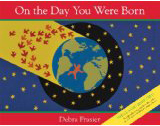
 On the Day You Were Born
Author: Debra Frasier
ISBN-13: 9780152579951
Reviewed by Seth Webb
 any of the stories that we tell our students and the cultural lessons that we share are our part of our collective oral tradition – they belong to all of us. They are of the Earth and we are of the Earth. These stories resonate with us because we have lived them, experienced them first-hand as fellow passengers on this planet.
Like stories once passed down for generations and now seldom retold, the sense of intimacy present in these tales can be lost when not repeatedly shared with children. It is essential that we regularly return to this connection, to remind and refresh us all of where we came from and how we are all related – to each other, to the Earth, and the universe.
The atoms that fuel the energy of the Sun, that form the water in our seas, that build the cells that scaffold the tallest trees, and allow for our brains to make sense of what we perceive all can be traced back to stardust. They and we are one.
In On the Day You Were Born by Debra Frasier, one’s scientific way of knowing merges with the spiritual. Through gorgeously rendered paper collages and poetic text, the story tells the tale of each human’s journey from within the womb to the world outside – all the while speaking of the patterns and rhythms of nature that have always been. It is an intimate story that connects us again and again to the greater cosmos.
On each page there are volumes being said – the words speak like pictures and the illustrations root you to the world. Each conveys just enough to allow for the mind to wonder and make connections.
Following the story, there are additional pages that explore and illuminate the science behind each illustration. Each description dovetails nicely with the lessons we share in a Montessori environment: the Universe Story, the Work of Water, the Work of Air, Botany, Zoology, The Coming of People, etc. Children delight and find great comfort in the discovery that the stories we tell and the impressionistic lessons we share are part of the wider collection of knowledge held by others – outside the classroom.
On the Day You Were Born balances our inherent desire to highlight the gifts of each individual child, with the strength found in community. Despite the fabulous uniqueness of each one of us, we need to be sure to celebrate each child’s individuality while underscoring the connections that tie us all together. To only do the former, leaving the latter as an afterthought, teaches children just that: that our connections to others and the universe are to be secondary to the “mighty me”.
Developmentally this can be a challenge. Children can, at times, struggle with balancing their growing sense of self and independence with meaningful relationships with others. This makes sense for young children, as they are hard at work understanding how to get their needs met first and foremost. Those around them can be seen as either helping that process or hindering it.
No matter one’s age, however, in sharing stories like Frasier’s we subtly remind us all that there is more to our lives than meeting our own personal needs and desires. We have a collective history that has relied upon, and a future that now yearns for, our collaboration.
 — Seth D. Webb is the Instructional Leader for the Upper Elementary Department at Free Horizon Montessori, a charter public school in Golden, Colorado. Prior to working in the classroom, Seth taught outdoor experiential education in Colorado, Utah, Arizona and Wyoming with many institutions, including: Earlham College’s Wilderness Program, Grand Canyon Field Institute, and the National Outdoor Leadership School. Read more at his blog, Finding Our Center – Reaching Out.
