
by editor | Aug 24, 2013 | K-12 Classroom Resources
by Kevin Beals & Craig Strang
 magine a residential outdoor science program where instructors—all of them—routinely combine their passion for the natural world with a deep understanding of research-based teaching approaches that are based on all we know about how people learn. BEETLES (Better Environmental Education, Teaching, Learning, Expertise & Sharing), funded by the S.D. Bechtel, Jr. Foundation, is a new project at Lawrence Hall of Science, University of California, Berkeley that designs professional development experiences for program leaders to use with their teaching staffs.
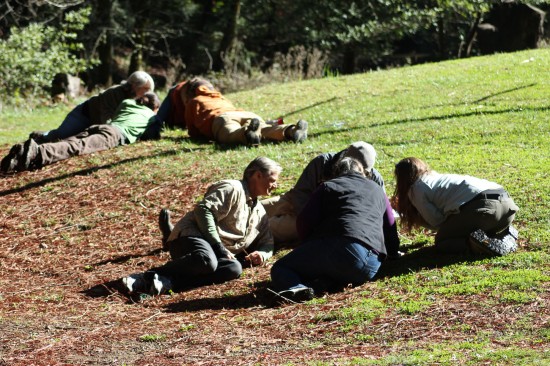
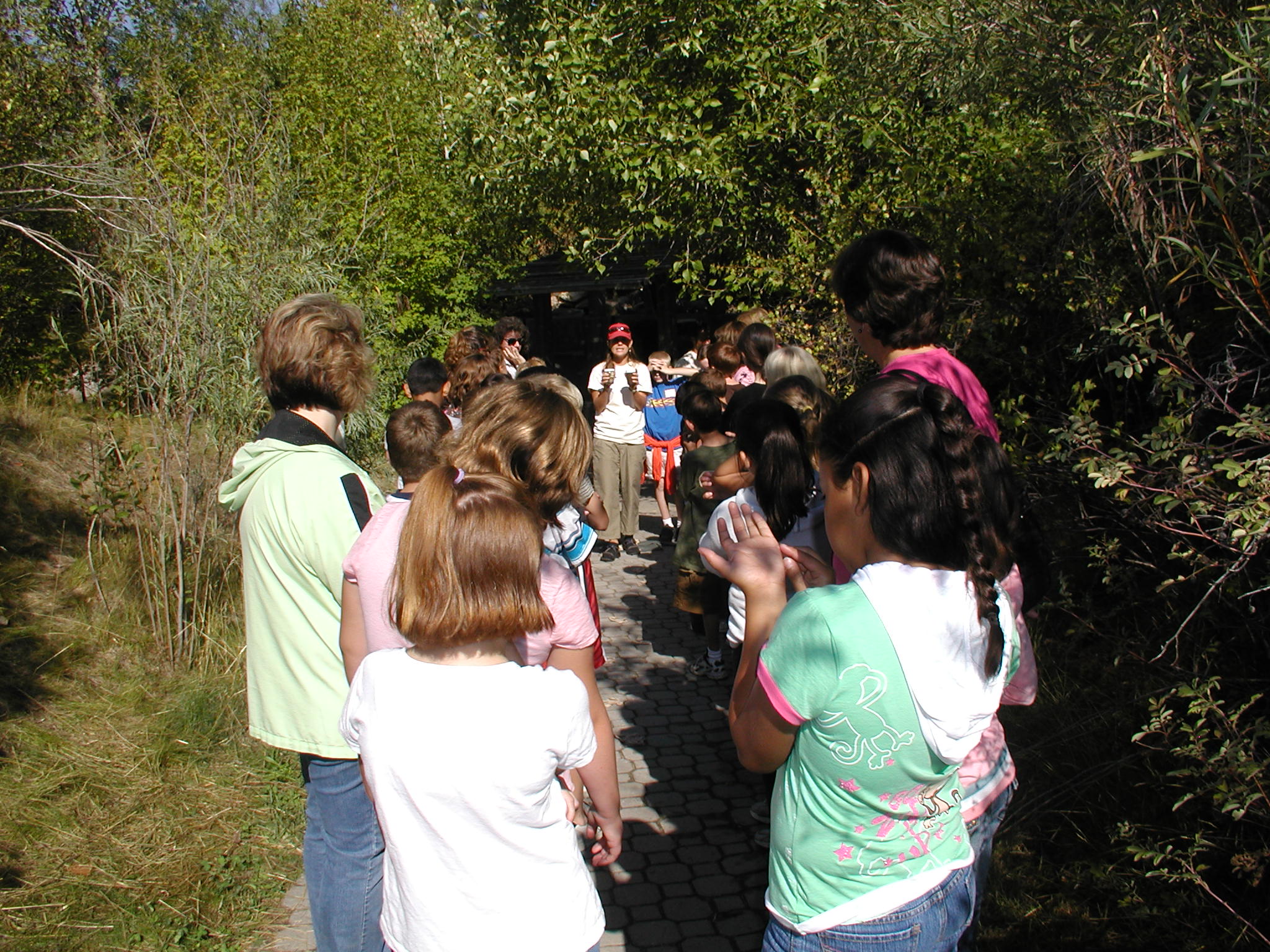
A group of 15 sixth grade students and their classroom teacher are on a hike led by a field instructor at a residential outdoor program. They come across a bracket fungus on the ground. The instructor, who has participated in BEETLES, calls out, “NSI,” a routine the students now recognize as Nature Scene Investigators. Quickly half the group kneels around the fungus in a tight circle. The other half stands in a circle around the inner circle.

(note: the discussions in this article are actual transcripts taken from trail hikes)
Instructor: OK, let’s hear some observations from the inner circle.
Student: It’s light.
Student: it looks charred.
Student: It looks like it’s broken off something.
Student: It looks like wood.
Student: It looks like it’s from a tree.
Instructor: Now let’s hear some questions from the outer circle.
Student: What does it feel like?
Instructor: OK, someone from the inner circle, can you say what it feels like?
Student: It’s rough here but smooth here.
Student: It feels smooth on the outside and rough on the inside.
Instructor: So, Kendra and Amir, would you agree that it’s smooth on the outside and rough on the inside?
They both examine it closely.
Student: Yep.
Student: I agree.
The students share more observations and questions, and continue to do so after the two circles have switched places and roles.
Instructor: OK, now I want you all to come up with explanations about it. Don’t forget to use evidence in your explanations.
Student: I think it was on a tree that got burned and it fell off and my evidence is because it’s black.
Instructor: Hey, did you all notice that Jared said, “I think…?” In science discussions, it’s good to use language of uncertainty, like “I think…” or “I wonder if…” because in science, you always need to be open-minded to other explanations and ideas if you find new evidence.
The students come up with several other explanations.
Instructor: Now does anyone have something to share about this that they’ve heard or read about somewhere else? But be sure to tell us your source of information.
Student: I think it’s a fungus, because we learned about fungi with our gardening teacher at school, and it looks like some of the fungi we studied.
Student: I’ve heard that they’re decomposers, and they turn dead things into dirt. I heard that from my teacher.
Instructor: This is a fungus. I’ve read that these are a type of fungus that grows on trees called bracket fungus or shelf fungus. I’ve also read that they are just the “fruit” of the fungus, and that most of the fungus looks like white threads and is spread out inside the wood. My source is a book written by a fungus expert. The book is called Mushrooms Demystified. We’re going to be checking out mysteries like this all day. We’ll be finding cool stuff, making observations, asking questions and trying to explain what we find.
Classroom Teacher: I just want to say, the more stuff you all pointed out the more I looked. You got me to look at it differently.
Instructor: Yeah that’s a great point and that’s one reason scientists often work in teams.
Student: Hey look, there’s one of those things on this tree.
Students excitedly swarm around a nearby tall stump with a few small bracket fungi on it.
Instructor: So what do you guys think now that you have this new evidence?
Student: It does grow on trees! It’s not burned because this tree isn’t burned and it’s still black.
Instructor: Is this tree alive or dead?
Student: Alive. No, wait. It’s just a big stump.
Instructor: As we hike, let’s keep our eyes out for more of these fungi and see what we find. Let’s see if we find any on living trees, or if they’re just on dead trees, like this one.
Classroom Teacher: (aside to instructor) I had no idea when I got on this hike it was going to be like this, because other hikes I’ve been on have been more about just delivering information. I want to learn as much from you as I can today about how I can do this with my students back at school.
What’s significant about this actual account, compared to many other outdoor science activities? Is any learning taking place? Why were so many student questions left unanswered?
We like NSI precisely because so much learning (and engagement) is going on. It sets a tone of inquiry, exploration, figuring things out and discussion of ideas. We want students’ minds to be at least as active as their feet. We want the students, not the instructor, to be making discoveries, asking questions, and trying to explain what they find. The instructor guides, but most of what happens is student-driven. This may look like the instructor isn’t doing much, but it is actually far more nuanced than blurting out three facts and a chant about bracket fungi.

Student (shown in photo): I feel like a scientist today.
Student: I know, I’ve never done this before.
Student: Yeah, I’ve been to the woods before, but not discovering and stuff like this.
Student: I didn’t even know I could do this.
Student: I’m gonna do this at the park near my house!
Activities like NSI taught by instructors who know how to look for evidence in the minds of learners as well as for evidence on the trail, engage students in the scientific practices called for in the soon to be published Next Generation Science Standards (National Research Council 2012) that are certain to be adopted by nearly every state in the US: asking questions, carrying out investigations, constructing explanations, engaging in argument from evidence, and obtaining, evaluating, and communicating information. Those are tricky things to teach in a classroom, but in a rich outdoor setting, students are surrounded by opportunities to explore and investigate with these practices. Instructors have opportunities, if they know how to take advantage of them, to help students make careful observations, work together, communicate their ideas, disagree politely, remember to base their explanations on evidence, use language of appropriate uncertainty, and cite their sources of information. These thinking skills lead directly to meaning making—a very different outcome compared to memorizing the names of trees or the three different types of decomposers. And there is an added benefit. When students are talking, instructors get to hear and understand their ideas about science topics. Effective instructors build their teaching on student’s ideas, but they can only find out what those ideas are by letting students express them!
Outdoor science schools are perfectly situated to help indoor schools by focusing their teaching on scientific practices. In a rich outdoor environment with long days, myriad inquiry opportunities and a skilled instructor, students can accomplish more in a few days than they might be able to in months in a classroom.
BEETLES is designing professional development experiences that help instructors to become expert users of approaches and tools like NSI that:
• are more student-centered, less instructor-centered.
• are less about an instructor telling students information, and more about instructors giving students chances to explore, investigate and figure things out themselves.
• are less about convincing students their instructor is ”awesome,” and more about making students feel smart and capable, moved more by what nature has revealed to them than by what their instructor has revealed to them..
• empower students with skills to use when they no longer have a field instructor leading them.
• facilitate student meaning-making.
• increase students’ wonder and curiosity about the natural world.
• are less about games or activities that can be done on a playground, and more about engaging students with investigating the natural world.
Historically, investments have not been made in the development of research-based professional development and curriculum for outdoor science programs. Unlike in K-12 schools, field instructors often rely on word-of-mouth “traditions,” and tattered copies of activity outlines passed around in bruised binders. BEETLES is designing, field testing, documenting and evaluating a series of professional development sessions, each of which presents instructors with a lens through which to view and improve outdoor science instruction.
BEETLES is also creating content sessions to help field instructors grapple with their own understanding of foundational concepts basic to many outdoor science schools: cycling of matter, flow of energy, adaptation and evolution. Finally, BEETLES is designing and collecting activities, like NSI, that reflect research-based approaches and accurate science, for use in the field with children. All these materials will be available, free, via a website.
BEETLES is hosting a 5-day California Leadership Institute during Summer 2013. Pairs of leaders will be invited from 12 different outdoor science schools throughout the state. The leaders will experience the professional development sessions, activities and hikes, share their own expertise, and plan out staff training for their own staffs. We hope to empower program leaders with new materials and perspectives, but also to benefit ourselves by capturing improvements and adaptations made by the leaders.
In 2014 & 2015, BEETLES will offer a National Leadership Institute, open to program leaders around the country. Eventually the BEETLES web site will offer supporting videos that show how the activities and professional development sessions are actually led with students and staffs.
The following is from an email sent to us by a field instructor a week after she participated in a 3-day BEETLES professional development workshop:
I wanted to relay a small snippet of some kid feedback I got this week on trail. The teachers had the kids write us all notes thanking us for their week, and it was interesting the things that popped up, besides the usual “You’re the coolest everrrrrrr” messages. One note included the following: “…We learned a lot from you, because, unlike other teachers, you go in-depth on everything we learn instead of going like ‘Here’s this’ and ‘This is that.’” I know I’ve been a “Here’s this” naturalist in the past, and throughout this week was really conscious of letting kids discover and asking them broad questions, and what a cool thing to hear back the first week testing it out! Several kids mentioned NSI in their notes, and as someone who has been a naturalist for 5+ years, it was a wonderful experience this week having a new lens to look through and launch the year with. It is wonderful to continue the learning process myself, and have new tools, and test them out, and watch some of them be wildly successful. Those kids were on the edge of their seats by the end of the week after we’d noticed, wondered, and built new frames of reference and pieced together evidence for what it reminded us of for days as to what the green lacy stuff on twigs really was. Never have I had children so excited about lichen and figuring out what it was! I just wanted to share with you, because I am excited to continue experimenting with what we learned, and pass the results on.
# # #
BEETLES invites outdoor science school instructors and leaders to participate in the development of our materials and program, and to participate in our leadership institutes. Kevin Beals (kbeals@berkeley.edu) & Craig Strang (cstrang@berkeley.edu) are the founders of BEETLES. Please visit www.lawrencehallofscience.org/beetles.
by editor | Aug 24, 2013 | Schoolyard Classroom
by Jim Martin
CLEARING Associate Editor
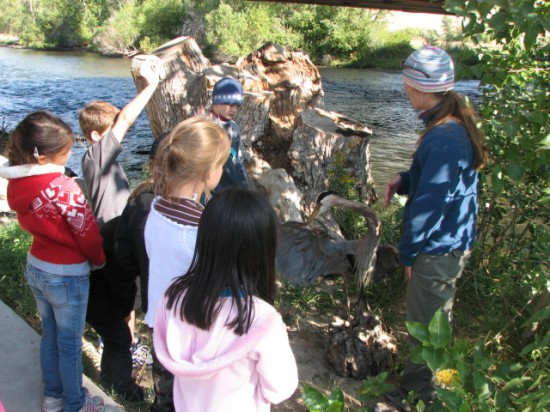
 teacher has made a commitment to design and execute a unit which explores the curriculum embedded in a small creek at the edge of her schoolyard. She didn’t just decide, then go; instead, she visited the creek, became familiar with its parts, then drew on some information she had gleaned at a teachers’ conference to construct a basic plan for how the unit would work. The plan included elements like: Place students in work groups assigned a particular task, Identify and exploit the curricula embedded in the creek and its banks, and Use group reporting to bring all of the learnings to all students in the class.
Before moving on, let’s compare what she’s done so far with what the National Board for Professional Teaching Standards teacher certification program is looking for in teachers. Their vision of effective professional teaching is based upon five propositions:
1. Teachers are committed to students and their learning;
2. Teachers know the subjects they teach and how to teach those subjects to students;
3. Teachers are responsible for managing and monitoring student learning;
4. Teachers think systematically about their practice and learn from experience; and,
5. Teachers are members of learning communities.
Let’s look at each of these propositions from the standpoint of the work of this teacher, and that of another who teaches from the book, and is committed to teaching a particular publishers’ curricula. This other teacher knows that, at the least, her students will have covered what is on the standards tests, and how well they do on that is up to them. These two teachers’ approaches to teaching are interesting to me in that they embody a dichotomy of approaches to many aspects of being human, that I, and others, identify as hierarchical:individualistic vs. egalitarian:communitarian and teachers identify as didactic vs. constructivist. This dichotomy in the way we approach life’s problems and decisions is directly related to the parts of the brain engaged. There’s a direct tie to the quality of conceptual learning in that dichotomy, both in the pedagogies employed and in the way the brain works in each case. In teaching, we’d call the two basic approaches teacher-centered and didcactic vs. student-centered and constructivist. I’ve been exploring this topic from time to time in this blog, and we’ll explore it some more.
I diverge. Back to the National Board’s Propositions. Proposition #1: Allowing groups to learn their particular part of the work, and then teach it to the rest of the class, with feedback from the teacher, tells me that she understands how students learn, how the brain learns, understands her students, and uses these understandings to develop an approach or delivery to a new set of learnings that is tailored to this class. And that she trusts that her students are ready to engage in learning. Because she intends to work with them as they negotiate and construct meaning, she knows who they are and how they learn, and has tested this enough times to have confidence in it. The other teacher presents a common base of information to her class, and helps students learn it. She uses the information in the teachers’ manual, in the prepared materials, what she has learned on her own, and would probably engage a guest speaker if she knew one. Student learnings are limited to what they read, hear, and see, and are not influenced by elements in the real world that they are learning about.
These two approaches meet the first proposition, Teachers are committed to students and their learning, to varying degrees. The first teacher is planning with what she knows about the subject, what she knows about her students, and what she believes her students can do. By moving beyond the so-called tried and true (which doesn’t actually develop into good test scores), she evidences her commitment to her students’ capacity to use their own brains to learn. The other teacher appears to be committed to the publishers’ curricula she uses, and is willing to allow an outside person to speak to the class. The fact that she conscientiously applies this curriculum indicates that she has confidence in it and is committed to her students’ learning, but places bounds on how much learning she believes they can be responsible for themselves.
Proposition #2: The teacher who uses the creek visits it to decide what to teach, and what she needs to learn. As she moves through the area, she amplifies what she knows about the subjects she uses the creek to deliver; she learns more as she teaches. Locating the curricular pieces embedded in the creek and its banks enables her to understand them better, and increases the methods she can pull off the shelf to teach them. She decides to teach more than the science of the creek, and, I assume, knows those additional subjects. I say that because she looks for them embedded in the place. (You can practice this by looking for examples of fractions and alliteration in a natural area nearby. You’ll note that you have to know the subject in order to find it.)
Here are some hurdles she must overcome in organizing and delivering her curriculum via that which is embedded in the creek and its banks: Food Webs – she has to learn about them. Mathematics – where are percents, exponents, pre-algebra, coordinates on the site. Physical Science – water quality chemistry, velocity – how to measure them in a creek rather than at a lab table. Geology – water quality and velocity = erosion, riparian geology, soils, mapping, stream morphology – how much does she know and understand about them. Social Studies – maps, vegetation communities, animal communities, transport – does the community which inhabits the creek and its banks use communities and transport systems.
The other teacher may have a background in the creek and its inhabitants, either from actual experience, or from learning about them. She may use this background to add to the curricular material the class studies. However, their learnings are mainly acquired by listening, reading, and memorizing, and not from direct personal experience. And, they are less likely to be able to teach the other groups in their class via group reporting. What is contained in the teachers’ manual and prepared materials are their main sources of insight. Both of these teachers know the subjects they teach and how to teach those subjects to students again, to varying degrees.
Proposition #3: The first teacher allows students to correct misconceptions, and amplify their learnings and thoughts, as they work and report. This teacher’s strategy of having student groups report during the project is an effective method for monitoring student learning and making mid-course adjustments. Because their teacher invests in her responsibility for managing and monitoring student learning, they are allowed to monitor and adjust their own learning activities, with the concomitant result that they also manage the flow of their work. Due to the way she delivered her curriculum, she learned more about pertinent subjects as she taught. While sharing those learnings through the activities she engaged her students in, this teacher developed methods of managing and monitoring student learning such as organizing the class into work groups, and using group reporting as learning and monitoring vehicles.
The other teacher uses standard classroom management techniques to organize her students, and publishers’ handouts to manage student learning. She knows the subject as it is expressed in the publishers’ curricula, and uses prepared handouts, assignments, quizzes, and summative tests to monitor student learning. She expands her understandings as the publishers she uses expand content particulars. She probably supplements these learnings from presentations at conferences. This is standard practice, but does not induce involvement and investment in the learning, nor does it empower her students. Again, the two teachers are responsible for managing and monitoring student learning to varying degrees.
Proposition #4: Exploring new curriculum deliveries by deciding to use the creek, visiting it, looking for embedded curricula, organizing space, and employing group reporting, compared with relying on what others have developed in curriculum deliveries, forces the first teacher to pull what she understands about teaching into working memory, and use careful critical thinking to find and engage the pedagogical components and processes that will facilitate the work. (That’s a long sentence! I’ll try to tone them down.) Locating and placing embedded curricula within its thematic place in the larger curriculum of each discipline addressed is a systematic process as is group reporting as a pedagogical strategy. Using group reporting as a teaching and assessment strategy, using what emerges from them to monitor and adjust her delivery, infers that she is considering all of the components of her curricular delivery as a system. This teacher also learns from experience and incorporates these learnings into her practice as she goes. The other teacher uses publishers’ materials conscientiously, learning the way their curricula and directions are structured, and using this structure to organize her delivery and has, at some time, learned about the effectiveness of guest speakers. As before, the two teachers think systematically about their practice and learn from experience to varying degrees.
Proposition #5: There are two learning communities associated with the first teacher. First is her classroom community, a true community of learners, The teacher allows herself to learn with her students, developing concepts together, organizing the class into work groups, and consolidating learnings via group reporting. Learning about the creek with her students generates a learning community in which all members benefit and grow. This kind of community, classroom as learning community, mirrors the dynamics of learning communities of educators in which, as proposed by the National Board for Professional Teaching Standards, “. . . teachers contribute to the effectiveness of the school by working collaboratively with other professionals on instructional policy, curriculum development and staff development.” Because the first teacher intimately involves her students in the process of learning, her class seems to be based upon the concept of a community engaged in mutual learnings; a community which shares learnings, discoveries, and methods in order to achieve a community goal.
Teachers are also members of their own professional learning communities. For this teacher, that would include the teacher who presented at the conference which started her on this journey, and the other teachers in her school. It also includes the school administration and resource personnel, and their interactions like curriculum development, staff development, and so forth. We haven’t met most of this community, so can’t say much about what they do, or assess how she works with other professionals in her school and district. Working together, this community has the potential to evaluate school progress and the allocation of school resources in light of their understanding of state and local educational objectives. The other teacher may be active in her professional learning community, but we don’t have any information with which to assess that. The two teachers developed different classroom learning communities. The first is based upon a community engaged in mutual learnings; a community which shares learnings, discoveries, and methods in order to achieve a community goal. The other community is less egalitarian, with students learning from the teacher, who is learning from the publishers and other external authorities. Most meaning in this classroom is learned, rather than being negotiated. Again, these two teachers are members of learning communities, classroom and professional, to varying degrees.
In sum, both teachers taught their students about creeks and creek communities. Only one teacher taught in a way that involved and invested her students in their work and learnings, and empowered them as persons. This was the teacher who started her students in the real world, developed incipient conceptual learnings, then used her subject knowledge and her knowledge of her students, to create an environment in which the students went to the publishers’ curricula as their efforts generated needs to know information, or to seek confirmation of what they believed they were beginning to understand. They were assuming ownership of their learning. This is what we need to teach for.
 This is a regular feature by CLEARING “master teacher” Jim Martin that explores how environmental educators can help classroom teachers get away from the pressure to teach to the standardized tests,and how teachers can gain the confidence to go into the world outside of their classrooms for a substantial piece of their curricula. See the other installments here, or search Categories for “Jim Martin.”
by editor | Aug 23, 2013 | K-12 Classroom Resources
Dr. Peter McInerney et al. review the literature related to the theoretical foundations of place-based education (PBE). They propose that the main task of PBE in schools is “creating opportunities for young people to learn about and care for the ecological and social wellbeing of the community they inhabit and the need to connect schools with communities as part of a concerted effort to improve student engagement and participation.” Further, they argue that a critical perspective in PBE “encourages young people to connect local issues to global environmental, financial and social concerns, such as climate change, water scarcity, poverty and trade. At the end of the article the authors propose several approaches to facilitate critically engaged forms of learning:
Give students a say in what and how they learn;
Encourage young people to engage with the big question confronting the global community;
Build relational trust within schools and communities;
Develop a sense of student ownership, identity and belongingness;
Create space for dialogue, reflection and political action;
Establish an ethical commitment to justice.
McInerney, P., Smyth, J., & Down, B. (2011). Coming to a place near you? The politics and possibilities of a critical pedagogy of place-based education. Asia-Pacific journal of teacher education, 39(1), 3-16. http://dx.doi.org/10.1080/1359866X.2010.540894
From NAAEE website Posted By Alex Kudryavtsev

by editor | Aug 21, 2013 | K-12 Classroom Resources
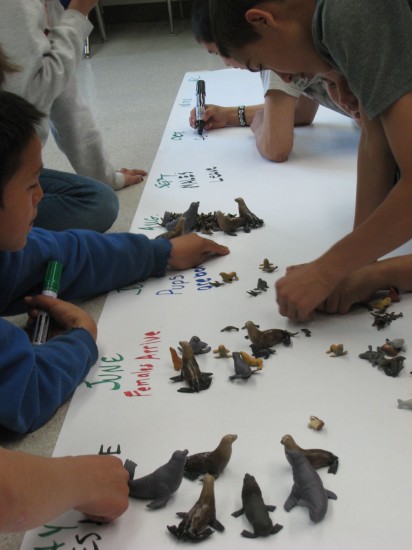
Middle school students from St. Paul School, Alaska, discuss a timeline of the northern fur seal’s annual cycle, moving plastic animals to show how the fur seal rookery structure changes over the year.
by Lisa Hiruki-Raring
AFSC Education Coordinator
Alaska Fisheries Science Center
National Marine Fisheries Service, NOAA
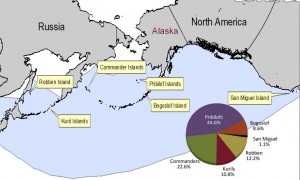
 n a small group of islands in the middle of Alaska’s Bering Sea, half of the world’s population of northern fur seals gathers each summer to breed on crowded rookeries, alive with the calls of mother fur seals, their pups, and adult males defending territories. The Pribilof Islands, legendary to the Russians of the 1700s for their wealth of seal pelts, were the central location of the commercial harvest of fur seals from the mid-1700s until 1984. The northern fur seal has always been an integral part of the history, culture and ecosystem of the Unangam (Aleut)
community in the Pribilof Islands. Although the Unangan knew of the Pribilof Islands, there were no settlements there until Russian fur hunters moved the Unangan from the Aleutian Islands to the Pribilof Islands to harvest fur seals for them in the mid-1700s.
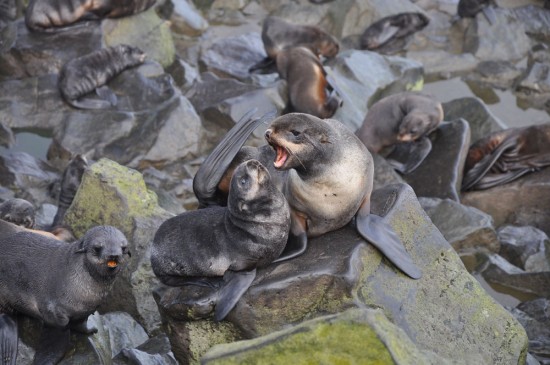
A female northern fur seal calls to her pup on the rookery.
Because of the northern fur seal’s significance to the people of the Pribilofs, the Aleut Community of St. Paul Island-Tribal Government (TGSPI) and the Pribilof School District wanted to develop a comprehensive northern fur seal curriculum to address northern fur seal natural history, the cultural importance of northern fur seals to the Unangan, the history of the fur seal commercial and subsistence harvest, and research, conservation, and sustainability of the northern fur seal population.
A Collaborative Effort
Educators from the National Oceanic and Atmospheric Administration’s Alaska Fisheries Science Center (NOAA/AFSC) in Seattle, WA worked closely with the Pribilof School District and TGSPI to develop “Laaqudax, the Northern Fur Seal,” a curriculum integrating science, math, language arts, culture, history and art into an engaging course on northern fur seals. With funding to develop the curriculum provided by NOAA and the Central Bering Sea Fishermen’s Association (CBSFA) of St. Paul Island, the curriculum was truly a community effort.
Local Relevance
AFSC educators are in a unique position to create this curriculum. Federal government scientists have been studying fur seals on St. Paul and St. George Islands in the Pribilof Islands for over 100 years, with data extending back to government counts of fur seals in the 1920s, and commercial harvest records extending back to 1867. AFSC educators worked directly with NOAA Fisheries researchers and TGSPI staff to incorporate current research and traditional ecological knowledge into the Pribilof School District science curriculum while encouraging stewardship of the natural environment.
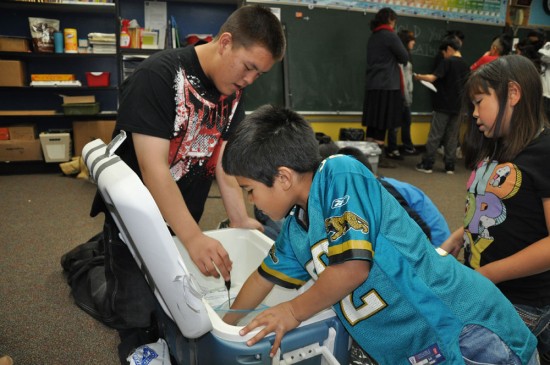
7th grade students help 4th grade students investigate adaptations to diving.
A challenge in creating the curriculum was that rural schools in Alaska often have high educator turnover, and most new teachers from outside Alaska are unfamiliar with local ecosystems and Alaska history. Additionally, even teachers who have worked in rural Alaska for many years may not have any basic knowledge about the animals closest to their schools. To address this need, the northern fur seal curriculum provides information and activities that can be taught by teachers without background knowledge of the Bering Sea ecosystem and Unangam culture. The curriculum also incorporates traditional ecological knowledge and cultural perspectives and provides activities across several subjects so that teachers can meet educational standards in a variety of areas while focusing on northern fur seals. For example, Lesson 1 (“What is a fur seal?”) includes activities on taxonomy and classification (science and math), graphing (science, math), a Venn diagram (science, math, language arts), a diagram of seals labeled in Unangan (science, culture), a writing exercise to describe a seal (science, language arts), and a physical activity about how seals and sea lions walk and swim (science, physical education).

8th grade students count seals…
A Curriculum with a Multi-grade Structure
The curriculum was developed as a spiraling curriculum, a curriculum that uses the same subject area for all grades but goes into deeper levels for older students. For example, kindergarteners learn that fur seals eat fish,
while middle schoolers use reference keys to identify fish bones from fur seal diet samples, and high schoolers analyze actual data to compare what fish are eaten at different fur seal rookeries on the Pribilof Islands. The curriculum is structured so that the first three lessons introduce students

…and a 6th grade student records observations at the rookery.
to fur seals, the Unangam people and culture, and fur seal rookeries. Subsequent lessons tackle what fur seals eat, adaptations to diving, and winter migrations. Middle and high school students have more complex and data-driven exercises, including lessons on the commercial harvest of fur seals, population management, and the Marine Mammal Protection Act. All lessons and activities have been aligned to Alaska State Educational Standards and Ocean Literacy Principles, and will be aligned to the new Common Core Standards and the upcoming 2013 Next Generation Science Standards.
Testing the Curriculum
In September of 2011 and 2012, AFSC educators worked with students and teachers from St. Paul School to test activities from the northern fur seal curriculum. Whenever possible, teachers are encouraged to collaborate and teach across subject areas, to promote interactions between students from different grades. In 2012, high school students studying Russian read Rudyard Kipling’s story “The White Seal,” talked about the origins of the names of the characters in the story, wrote the names in Cyrillic script, and discussed whether events depicted in the story were accurate or fictional. Language arts students in 10th -12th grades compared a timeline of events (1700s to the present) from a St. Paul Island community perspective to a more general historical timeline, then joined the 9th grade math class, who had graphed fur seal commercial and subsistence harvest numbers from 1860-2010. Together, the students looked at how the historical events coincided with fluctuations in commercial fur seal harvest numbers and discussed subsistence harvest from the 1980s-2010.
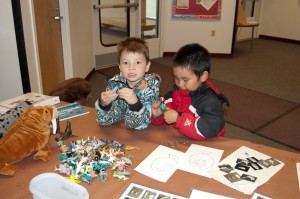
Students and parents investigated fur seal activities during the parent-teacher conference day.
Highlights of the curriculum testing included:
• middle school students helping younger students learn about adaptations of fur seals for diving
• high school students creating rubber stamps of fur seals and helping first, second and third grade students make murals of a fur seal rookery with the stamps
• field trips for seven classes (K-12) to visit the observation blind at a fur seal rookery near the school, where students observed fur seal behavior and discussed the difficulties scientists have to accurately count seals at the rookery
• community outreach during parent-teacher conference day, where fur seal activities were set up in the school lobby to engage parents
• presenting an overview of the curriculum to all teachers from St. Paul and St. George schools during a school inservice day
• teaching students from St. George School (10 students, 1st-10th grade) by videoconference
• an impromptu lesson by students on how to use an Aleut yoyo (a fur seal rib bone, twirled around the index finger)
Students and educators learned a great deal from one another: educators learned about the process for stretching and drying the fur seal throats (esophagus) to make traditional Unangam clothing, and high schoolers engaged in a spirited discussion of the subsistence harvest and the role it still plays in their lives. Through the 2 ½ years of development of this curriculum, NOAA fur seal scientists have also taken part in educational and summer camp events with the school and community on St. Paul Island, using fur seal activities for informal education. The success of this project is due to the collaboration of its partners, each of whom brought different skills and perspectives to the development of the curriculum.
Access and availability
Once the curriculum is complete, it will be available free of charge on the AFSC education website (http://www.afsc.noaa.gov/education/), in two grade bands (K-6 and 7-12). The elementary curriculum will be available in early 2013; the middle/high school curriculum’s estimated date of completion is fall 2013.
_____________________
SIDEBAR: Evaluation and Assessment
Because the curriculum is in the final stages of development, a formal evaluation and assessment framework has not been completed. Short-term evaluation of material is conducted by individual teachers (e.g., writing assignments and quizzes), and most activities have some aspect of assessment in the form of worksheets and maps. The AFSC educators have been evaluating the effectiveness of specific activities through focal group discussions with teachers and individual feedback from students and teachers. The structure of each class is unique every year in small rural schools, depending on the number of students in each grade. For example, at St. Paul School (K-12 population 88 students), the elementary classes in 2011 were K-1, 2-3-4, 5-6, while in 2012 the elementary classes were K, 1-2-3, 4-5, 6. In small schools with multi-grade classes, it is more flexible to have teachers conduct short-term evaluation of results rather than to have a program-developed assessment. AFSC educators will work closely with Pribilof School District educators to develop a long-term evaluation plan to track knowledge retention of students from one year to the next.
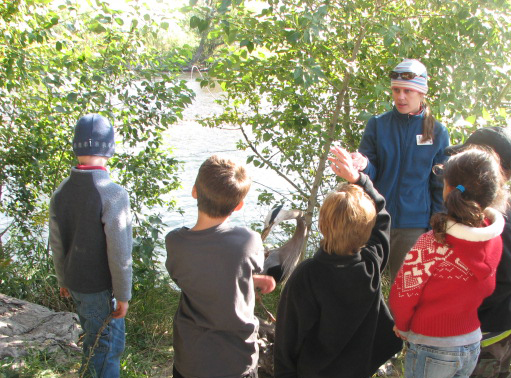
by editor | Jul 31, 2013 | K-12 Classroom Resources
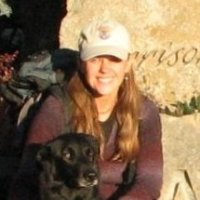 What is your current job title?
I am a Conservation Educator at MK Nature Center for Idaho Department of Fish and Game. That means I teach classes at the Nature Center for about 10,000 students annually. Most of our crowd is prek-3rd graders. I do that ¾ time. My other job title for 1/4th of my time, is the Idaho Master Naturalist Program Coordinator. The IMNP is a state wide program that I coordinate. It is an adult education and volunteer program.
How did you get into this field?
Well, I probably was born to do this. My parents were both elementary school teachers and I kind of fought that path a little, though my talents are kind of a fit for that. I have also always loved camping and wildlife and plants and being outside….so I went into Recreation Management in college and ended up focusing on Interpretation. I had some jobs that I loved after college and before I went to graduate school that were related. I was a Wilderness Ranger and Firefighter and Interpreter. Then I attended the Teton Science Schools’ Professional Residency in Environmental Education for a year and finished my Master’s degree at University of Idaho in the Conservation Social Science Program. I landed the Watchable Wildlife Program Coordinator job at Idaho Department of Fish and Game and did that for three years before they offered me a job teaching. I loved the Watchable Wildlife job, but at the chance to do more teaching….I jumped in!
What are you working on right now?
Right now I am welcoming two new graduate students from Boise State University to their year as teachers at MK Nature Center. They come to us through the GK-12 program funded by the National Science Foundation. The program puts scientists into the classroom and in our case, the scientists are put into our nature center. This is our third year of the program and it has been fun to coach these young, energetic, biology and hydrology students to teach preschool students about cactus or crayfish or the water cycle. It takes me out of the classroom a little, but it sure helps me think about teaching from another perspective! Just like when I have to learn about salmon and teach it…I have to think about teaching and then teach IT.
 What is your favorite part of your job?
I love taking a topic and making it into a program. I suppose you might call that curriculum design or lesson planning. I love thinking about who my audience and figuring out what they already know….so I can create something new and stick it to what they know. I get to do a lot of that with my job, so that is great! I love it because I get to research something and learn it myself first. So for example today when I was teaching our FUN WITH FUNGUS class. The kids were not sure if fungus was an animal or plant or neither. We got into quite a fun discussion about Spongebob Squarepants!
If you could change anything about your work, what would it be?
It sounds kind of idealistic, but I have a lot of ideas that I feel cannot come to fruition because of barriers that are beyond my control. Policy or money or staff levels. I am pretty creative and can work through some of those barriers, but sometimes it is not realistic to take the time to make something happen. Thankfully, my ideas still keep coming, so I am not letting these barriers stop me from dreaming big.
Do you have any advice for someone starting out in this field?
I always advise new environmental educators to get a lot of broad experiences. If they can volunteer here and there, that is the best way to get to know people and get experience. Also, I encourage folks to learn about graphic design and fundraising. These are two skills I dabble in, but for which I have no formal training. I really could be more effective in my job if I were better at these things. I always find myself telling new teachers here at the Nature Center that enthusiasm is the most important aspect of a program. You don’t have to know all the answers. You don’t have to be funny and have perfect teaching skills all the time….but enthusiasm is a must. Kids will love what they do here if they see you loving what you do!
Where do you find inspiration for the work you do?
Oh, I have no lack of inspiration! I am inspired by the kids who come to the Nature Center. They are so curious and energetic and enthusiastic. In fact, today I was feeling kind of lethargic and I did not really feel I had the energy to teach, but I did and those kids really turned my mood around. In no time I was totally into the program that I have taught probably 600 times. My co-workers really inspire me. We are all a bunch of nature lovers and it is so fun to come to work and talk about it all day long. I am completely inspired by nature…that sounds awfully cliché, but it is true. As an example, we got this new book at our gift shop and I was just thumbing through it and learned that snakes eat eggs (which I knew), and then they spit out the shells (which I did not know). I love what I know, but I really love what I don’t know and what I find out. It seems like every day, something blows me away! It could be the rose wasp that makes these crazy Dr. Seuss-looking puffy galls or the kid who asks how long it takes a mushroom spore to die!
What is your favorite resource or tool for teaching about nature?
Well, the environment, of course! The spider who spins his web between two branches next to the bridge so I can throw an ant in his web and we can watch it wrap it up for lunch. The ants who wreck our pavers and prefer goldfish crackers over licorice (I know this because of our ant experiments). The fawns who get scared when we walk down the path and run to their mom to nurse right in front of a clan of 1st graders. Or that teeny tiny jumping spider who had a mayfly in its mouth! I did not know they carried them around in their mouths like that.
Where do you go when you want to recharge your batteries?
That is really a funny question because I occasionally complain to my husband that I miss nature and he says, “but you work at a NATURE CENTER!” It is kind of ironic! But I am a former Wilderness Ranger and need that backcountry experience with solitude! I don’t get that much anymore, since I have little kids, but heck, car camping along a Forest Service road (no campgrounds please) does the trick. We go camping a lot.
What is your favorite place to visit in the Pacific Northwest?
I love the Sawtooth Mountains. I lived there and worked there for many years and it feels so much like home. Besides that area, I also love the Cascades and wish I could visit there more often. I worked at Mount St. Helens for a summer and just love the plants and geology and all those elk!
Who do you consider your environmental hero?
I have quite a few people who have influenced me along the way, but my grandmother always stands out as someone who has influenced me the most. My grandmother spent her adult life during the depression. Her lifestyle was more associated with her economic situation than an environmental decision. Nonetheless, she was an avid gardener, sewer, and homemaker. They did not waste anything! I remember vividly a time when I was sitting at her kitchen table. In the middle of the table, on top of the lace tablecloth, was a tray with toothpicks, room temperature butter, home-made jam, and napkins. On this particular day, there was a small strip of dark green fabric on the tray. I picked it up and asked my grandmother what it was. She told me she had been sewing grandpa’s pants….taking them in and that was a belt loop that came off his pants. I asked her why it was on the table and she said because she might use it for something. She totally would have used it too! She made everything and wasted nothing. I really long for a lifestyle where I could be more like her!
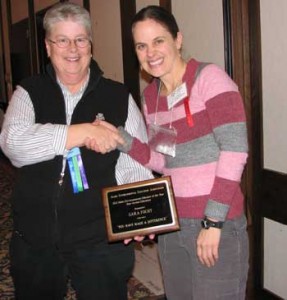
Sara Focht receiving the IdEEA Non-Formal Environmental Educator of the Year award at the 2012 IdEEA Conference.
Are you optimistic about the future?
I am! I know that I live and work in a nature bubble. My friends and co-workers are all pretty environmentally conscious. We ride our bikes and recycle and buy local food. We get our kids outside and spend our careers working toward a more sustainable future. So, because of this bubble, I think I am able to keep pretty positive about the future. Every once in a while I step outside the bubble and realize the way I think and live is not what everyone is doing. I do get discouraged sometimes. No matter what I am feeling, I still feel motivated and know that what I am doing does make a difference on some scale. For our community, the MK Nature Center is a pretty special place! We teach a lot of people and we provide an opportunity for people to see wildlife in the city. I am happy to be a part of it.


