
by editor | Jul 31, 2012 | K-12 Classroom Resources
 Review by Michael Barton
 received this book to review earlier this year, and while wanting to post about it as soon as possible, I have restrained from mentioning it here until I was completely done reading it. Companions in Wonder: Children and Adults Exploring Nature Together, edited by Julie Dunlap and Stephen R. Kellert (Cambridge, MA: MIT Press, 2012), is a wonderful collection of essays from various authors about exploring nature, as children, as adults, as families. These are not mere descriptions of the act of exploring in nature, although you will find this in the book. These are thoughtful and engaging reminisces and hopeful thoughts about what it means to spend time outside, away from technology, with someone you love or admire.
Read the full review here.
by editor | Jul 18, 2012 | K-12 Classroom Resources
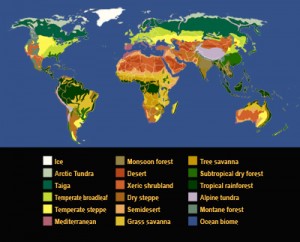
1. Biomes and Ecosystems
The National Earth Science Teachers Association’s Windows to the Universe biomes and ecosystems, offers an interactive map to explore various biomes and learn about the natural history and current conditions in the dry steppes, alpine tundra, and other biomes. Each section contains photographs and a narrative essay that describes key features of each biome. http://www.windows2universe.org/earth/ecosystems.html

2. Climate Change Education eBook
Climate Change Education: A Primer for Zoos and Aquariums, explores the links between climate change science, electronic media, psychology, learning sciences, communication, and interpretation, and provides insights to zoos and aquariums and other cultural institutions. The book may be downloaded from the website for free. http://clizen.org/e-book.html
3. Education on Energy and the Environment
The Newton Marasco Foundation offers the downloadable kit, Education on Energy and the Environment with quiz-show format games that focus on the environment and stewardship.

The materials include instructions, tips, and evaluation forms for ecoSense and ecoLogic games; PowerPoint game with notes (includes the questions and answers with additional information, discussion questions, and references); a scorecard; and a spreadsheet with a list and links to additional environmental education resources. Materials are available for different grade levels. http://www.newtonmarascofoundation.org/teach/classroom-games-toolkit/

4. Endangered Species Interactive Map
The U. S. Fish and Wildlife Service Endangered Species Program has launched a web-based interactive map with information about endangered species success in every state: stories of species making strides towards recovery, audio interviews and podcasts with biologists about on-the-ground endangered species conservation, and more. Check out the audio interviews; they offer more depth than a simple sound bite. http://www.fws.gov/endangered/map/index.html
5. Rise and Shine: A Practical Guide for the Beginning Science Teacher
Rise and Shine provides a friendly support system that new science teachers can turn to. The book offers techniques for managing the classroom, maintaining discipline, and dealing with parents. It also covers topics unique to science teaching, such as setting up a laboratory, keeping the classroom safe, and initiating inquiry from the first day. The website offers additional useful resources that relate to the chapters including a shopping list, report card comments, and more. http://www.nsta.org/publications/press/extras/riseandshine10.aspx

by editor | Jul 9, 2012 | Learning Theory
“Lessons for Teaching in the Environment and Community” is a regular series that explores how teachers can gain the confidence to go into the world outside of their classrooms for a substantial piece of their curricula.
Part 23: Notice is a Powerful Verb:
Noticing something in your environment entrains your creative powers
by Jim Martin, CLEARING guest writer
 You’ve decided to have your class study two water bodies near your school, one a vernal pond which is dry during part of the year, and the other a permanent pond which has water all year round. During the three years you’ve taught at this school, you’ve noticed the ponds, and wondered what lived in them. You feel committed to this school, and have been thinking of using the ponds as a source of some of your language arts, art, science, and mathematics curricula in your seventh-grade, mostly self-contained classroom.
So, you visit the ponds during spring break to see what’s actually living there. One thing you notice is a healthy frog population in the permanent pond. After wandering through the area, you recognize that the ponds and their environs present lots of possibilities for language arts and art, as well as for science and mathematics; you decide to do it.
You feel a need for a partner, at least to act as a sounding board, so tell your incipient plan to a colleague, who teaches the other seventh-grade classroom, about what you want to do. She is interested in the idea, but is uncomfortable about taking her students out of the classroom. You both agree she will act as a sounding board for you. (more…)

by editor | Jun 27, 2012 | K-12 Classroom Resources
 by Katrina Landau
 o what exactly is social marketing, and how does it work to change peoples’ behaviors? While traditional marketing works by raising public awareness, social marketing works to identify barriers to behaviors and create long-lasting change. Instead of taking a to-down approach to simply convey information, many environmental educators are now striving to learn about the target audience, and build their programs from there. In this way we work to benefit the general society by influencing social behaviors, rather than to make money or fulfill a “bottom line.” (more…)
by editor | Jun 25, 2012 | Questioning strategies
“Lessons for Teaching in the Environment and Community” is a regular series that explores how teachers can gain the confidence to go into the world outside of their classrooms for a substantial piece of their curricula.
Part 22: Use It All
Why settle for simple recall of facts?
by Jim Martin, CLEARING guest writer
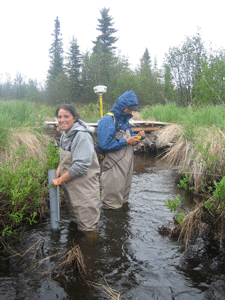
 We were observing a young woman sampling the temperature of the water in a stream. As she did her work, she would see the stream and its bank and look into the stream itself, see the plants, the animals, other students, the sampling equipment they used, and she would build an integrated perception of the entirety of this situation. She also talked with her partner, negotiated places to sample, told her observations, wrote them down, tabulated readings, interpreted her observations, etc. As she was doing these things, she would be using her temporal lobes for the language and some of the memory parts, the parietal lobes for the orientation and sensory parts, and occipital lobes for direct vision. (more…)
