by editor | Oct 11, 2012 | K-12 Classroom Resources
1. Green Living Project Sustainability Film Contest
GLP is proud to announce its fall 2012 Student Film Project contest! Students are encouraged to document and submit their own stories of sustainability. The contest is open to 6th grade through college level students. Short films (5 minutes or less) are preferred, documenting any sustainability-related stories. Download the flier for your classroom here: http://www.greenlivingproject.com/wp-content/uploads/2011/04/SFP-Fall-2012-flier-for-print.jpg
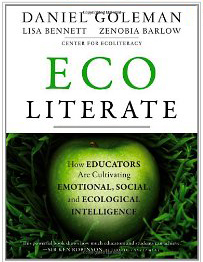 2. Ecoliterate: How Educators Are Cultivating Emotional, Social, and Ecological Intelligence
Ecoliterate offers an exciting new model of education that advances academic achievement; protects the natural world upon which we depend; and fosters strength, hope, and resiliency. It tells stories of activists, educators, and young people who are creatively addressing issues related to oil, coal, food, and water in places ranging from the Arctic to Appalachia and New Mexico to New Orleans. The secret to their success? Bringing some emotional intelligence to their ecological goals. Ecoliterate is the result of an innovative collaboration between Daniel Goleman (author of Emotional Intelligence) and Lisa Bennett and Zenobia Barlow of the Center for Ecoliteracy.
http://www.amazon.com/Ecoliterate-Educators-Cultiv…
 3. Marine Biology Coloring Book
The Marine Biology Coloring Book (Harper Collins) can serve as a useful resource and guide through hand-drawn illustrations and updated text. The process of coloring can focus attention and leave a visual imprint on memory. The latest edition includes ocean currents and global weather, the deep-sea realm, and more. Those interested can preview pages from the book before purchase.
http://www.harpercollins.com/browseinside/index.aspx?isbn13=9780062737182
 4. President’s Environmental Youth Award
Sponsored by the EPA, the President’s Environmental Youth Awards program recognizes young people for projects which demonstrate their commitment to the environment. The program is available to K-12 individuals, classes, and youth groups. Awards are presented in each of the EPA regions, and one project from each region is presented with a national award. The regional deadline for application is December 31, 2012.
http://www.epa.gov/enviroed/peya/index.html
 5. Nature’s Patchwork Quilt: Understanding Habitat
(For ages 4-10) This new title from Dawn Publications is a visual delight — filled with simple, but realistic illustrations of many of the inhabitants that make up nature’s patchwork quilt. At the same time, author Mary Miché provides solid science principles such as adaptation and biodiversity in an easy-to-understand, age-appropriate way. If you’re a visual learner like me, you and your children will love the colorful panoply of plants, animals, and people that make up our world.
http://www.dawnpub.com/Email-Images/DawnBuzz/BuzzOct12/BuzzOct12.htm

by editor | Oct 5, 2012 | Schoolyard Classroom
 by Bobbie Snead
Straub Environmental Learning Center
 he male osprey swoops down to join his mate on the enormous stick nest in Minto Brown Park. Sixty yards away, the third graders from a local elementary school gasp and clap in delight. I’ve taught them about ospreys in their classroom and now they’re getting to see the real thing. They are more excited than if they’d been on an African safari. This moment is my passion. (more…)

by editor | Sep 25, 2012 | K-12 Classroom Resources
 Posted By Alex Kudryavtsev from http://eelinked.naaee.net/n/eeresearch
Dr. Peter McInerney et al. review the literature related to the theoretical foundations of place-based education (PBE). They propose that the main task of PBE in schools is “creating opportunities for young people to learn about and care for the ecological and social wellbeing of the community they inhabit and the need to connect schools with communities as part of a concerted effort to improve student engagement and participation.” (more…)
by editor | Sep 24, 2012 | K-12 Classroom Resources
Science Inquiry in the Real World
by Jim Martin
Retired Science Educator
CLEARING Special Contributor
 f you’ve never done a self-directed inquiry, or don’t see a connection between inquiry in the real world, and the science you teach in the classroom, here are three inquiry sets that you can try. They are roughly organized to fit difficulty levels from elementary to high school. Each is organized to do the real world work in the schoolyard, and the classroom work in the classroom. You can choose both activities from the same set, or you can mix and match.
The idea is for you to experience how self-directed science inquiry looks when you’re actually doing it. I can’t emphasize the ‘actually doing it’ piece enough. It’s much different from reading the instructions you get in the publishers’ materials and following them. The only way to recognize this is to try. (more…)
by editor | Sep 12, 2012 | K-12 Classroom Resources
 by Jay Roberts
Originally published in the Association of Outdoor Recreation and Education (AORE) newsletter.
Introduction
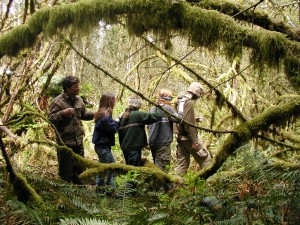
Teaching in the Outdoors Teaching in general can be a scary thing. We are put in a position of authority and knowledge whether or not we feel like an expert in the particular area. We can feel pressure to know “everything” and be able to answer all questions. We want our students to have confidence in our ability to lead them through new experiences. This is all compounded by the fact that we don’t teach in a nice, organized classroom environment. Instead, we teach outside—with all the good and bad that can come with that. Sometimes we are given “teachable moments” that make it easy to educate. Other times, despite our best lesson plans, our students are too bored, too hungry, too scared, or just plain too distracted to pay attention. Teaching outdoors is definitely a challenge and there is no one way to do it right. But there are a few things that might help you along the way… (more…)

