
by editor | Feb 21, 2018 | Conservation & Sustainability
 Reframing Sustainability
Peter Denton, Ph.D.
Keynote Address – EECOM Conference 2016, International Peace Gardens
 peaking here today is kind of like preaching to the choir. It is great to have a friendly crowd who does not think a polar icecap is the name of some new cold drink at Tim Horton’s or need to be convinced that these icecaps are melting.
As environmentalists, we are unfortunately used to a rather more hostile or puzzled reception. But while it is energizing to be with like-minded people, we all have to head back out into that social and cultural wilderness when a conference like this one is over. It is what we do – who we are. That local environmental choir to which we each belong has to become a global chorus to make changes that need to be made for all of us to have a sustainable future.
But it’s not just enough to sing, is it? I imagine some of you are old enough to remember the Coca Cola jingle, “I want to teach the world to sing, in perfect harmony.” That hasn’t worked out too well since it was first aired in 1971 and then turned into a hit song, minus the Coke.
As a society, we seem to oscillate between two poles, between denial and despair — and as environmentalists, it can be even worse for us, because we know both poles are melting faster by the year.
So this afternoon I am going to try and do the impossible. I am not going to preach to the choir and tell you things you already know.
Instead, I am going to try and make you think about the sustainability nexus in a different light, to reframe it in ways that are both hopeful and practical.
At the risk of giving away my punch line at the start, as environmentalists, we are not providers of information. Nor are we harbingers of doom. We are messengers of hope. I’m going spend the rest of our time together unpacking what this means and why it is the punch line, but I want first to go back to that idea of a global chorus.
A couple of years ago, Rocky Mountain Books published a book called Global Chorus: 365 Voices on the Future of the Planet. It was edited by a young musician from Prince Edward Island, Todd MacLean, who just had a thought one day in the shower about how neat it would be to put together something that spoke about the hope people had for the future.
He had never done anything of the sort before, never written a book or edited anything, but he tried, anyway.
He asked people all over the world, from many walks of life, these questions: “Do you think humanity can find a way past the current global and environmental crises? Will we be able to create conditions necessary for our own survival, as well as that of other species on the planet? What would these conditions look like? In summary, then and in the plainest of terms, do we have hope, and can we do it?”
He got amazing responses from people whom you might think never look at random emails out of the blue, and compiled the book. I was asked to fill in a hole at the end, and so wrote for February 9th – a good day for a Manitoban to write up something about hope, on what is usually one of the coldest days of any winter.
My entry began like this:
“Hope is a creative act. It is creative because it generates something new out of the daily chaos of our lives. It is an act because through hope the possibility of a different future is created. We can work and dream toward what is possible but only if hope leads the way.”
While I think we need to work on our public image, environmentalists are the most hopeful people I know. They not only hope for a better future, they spend their lives working toward it, often without much in the way of the tangible rewards that other
people get for their efforts.
 Perhaps the only profession just as hopeful as environmentalists would be teachers!
Anyway, to start, I need to set out three guiding principles that underpin what I want to say today about reframing the sustainability nexus.
First, sustainability is primarily a social and cultural problem, not a scientific or technological one. We know what needs to be done and have the tools we need to do it – we just don’t.
Second, all ecology is social ecology. Environmental sustainability is inextricably interwoven with social sustainability – we cannot separate environmental sustainability from sustainable development. Ecological justice embraces all of us, everywhere.
Third, a sustainable future will be the result of the choices we all make, together, every day. On a round planet, there is no place to hide. We can’t escape the consequences of what people have done, but we can make better choices today than we did yesterday,
right where we live.
I’ve written three books in Rocky Mountain Books’ Manifesto series to outline these themes: Gift Ecology: Reimagining a Sustainable World (2012); Technology and Sustainability (2014); and Live Close to Home (released in October 2016), so here I am just going to flag them and move on.
This trilogy is not intended to provide information, but to nurture hope, but we can’t skip straight to hope this afternoon without talking about information.
As environmental educators, we all know the importance of information, of just how little too many people seem to understand about natural systems or about their interrelationships with the way people live.
Recently I cringed when I heard a local municipal councilor, who led an unsuccessful mission to torpedo a city-wide organic composting initiative, admit he did not realize that rotting organics produced a greenhouse gas.
He had the rare courage to admit his ignorance and I hope he learned something from the encounter, but it is still frightening that people who are responsible for decisions that affect all of us know so little about what is actually going on.
While I am sure we all know more about greenhouse gases than that councilor did, we still have a tendency to inhabit environmental siloes. Calling them “cylinders of excellence” does not diminish the problem.
We all have information that someone else needs, but rarely share it. Too often we spend much time and energy reinventing the wheel, and so diminish and fracture our efforts toward a better future as a result.
For example, how many people here know what UNEP stands for? (The United Nations Environment Programme.)
How many people here know that after Rio+20 in June 2012 UNEP was given responsibility over all of the environmental efforts of the United Nations?
Or that the Second World Parliament of the Environment, UNEA 2, was just held in May 2016 in Nairobi at UNEP’s global headquarters?
In part, I have to take some of the blame for this result: I am currently one of the two civil society representatives for North America to UNEP, elected at meetings in Washington in 2013.
Despite all our advantages, even our region lacks any significant reporting structure or means of engaging people doing environmental work in some collective fashion.
This also likely means you have not heard about GEO 6 – Global Environmental Outlook 6 – UNEP’s flagship product, which was just released at UNEA 2. The global version will not be out for a couple of years, but the regional assessments for the six global regions are complete.
This is the most comprehensive effort to date to provide a snapshot of the planet’s health, and while it is based on the most recent data, that is still several years old. The intention is to tie it to an interactive, real time data stream, through a site called UNEP Live.
These are both amazing resources that must be used for environmental education and for policy development, but they have an Achilles heel. We desperately need more and better information if we are going to base policy decisions on good evidence.
I was privileged to be part of the writing team for the North American Regional Assessment. It was unnerving how little we actually know about what is going on around us, even here at home.
For example, the most recent national statistics on municipal wastes and waste diversion in Canada consist of a one page summary note in 2010 from Statistics Canada. There is no national data collection, and most provinces don’t have good numbers themselves.
This is just laziness. We have to do better.
One of the interesting features of GEO 6 was the intentional effort to promote and include citizen science, along with so-called “grey literature” and indigenous local knowledge, or ILK. When it comes to measuring climate conditions, school children can be enlisted to upload data, just as the rest of us could do it ourselves with cell phones. Around the world, indigenous peoples are finally starting to be treated with respect for what they know about the places where they live.
There are other ways to figure out what is going on and to pool that information, by thinking creatively and working, literally, from the ground up, listening to the elders or just to ordinary people. We just have to do it.
While information is necessary, however, the need for more information cannot delay the decisions that we must make. I have witnessed a kind of informational paralysis, or datalock, when scientists and policy makers get together.
There is either too much information, or not enough of the right kind, or people can’t agree on what it means, so decisions are deferred until some future time. Too much information can swamp common sense.
So while both formal and informal kinds of public education are crucial, we know that providing information is not enough.
Sustainability is a problem not because people don’t know the facts, but because they refuse to admit the obvious. Nor will they easily accept responsibility for the choices that have created the situations they try so hard not to see.
There is a world of difference between information and knowledge, after all. Knowledge is information in context, interpreted, framed, explained and owned. Our responsibility as environmental educators is not just to provide information, but to provide context, to transform what can be gleaned from any Google search into knowledge that people understand, including policy makers.
Much of what we are exchanging here are the lessons we have learned about how to take information and transform it into knowledge that our audience, of whatever age or ability, can understand.
This is incredibly important. Information-dependent policy development will simply take too long, if it ever gets started at all.
We need evidence-based policies, but that information needs to be framed in a way that it becomes useful knowledge, knowledge that can be directed to a purpose.
It needs to be interpolated, not simply collated. A quantitative system can only be predicted if all the parameters of the system are understood. It’s kind of like predicting the weather – ever notice that even on the prairies our weather specialists can barely manage to predict what the weather will be six hours out?
So specific predictions about climatic events are never going to be accurate, no matter how much information we gather. Instead, we have to make qualitative assessments, finding new ways to understand all of the human and ecological systems within which we live. We have to adapt to the changing conditions of dynamic systems.
Knowledge is information in context – but what kinds of contexts are possible? And what can we do to change those things that are blocking our way forward into a sustainable future?
It’s all about changing our perspective. Let me demonstrate. You are all arranged in a
particular way in this room. I can’t change any of you or where you are. All I can change is my own perspective on this room and everything in it. Let me demonstrate by walking around the room and showing how new perspectives emerge when we change position in some situation that otherwise seems gridlocked.
Consider how this works for issues in sustainability, which as you recall, I described as a social and cultural problem. People feel trapped because they think there is nothing they can do to change the arrangement of the forces in the world that threaten their future.
They slide into denial or despair because there seems no other option. They feel powerless and so they are.
Take the information they have and change the context, change their perspective, and it is amazing how new possibilities emerge. Hope emerges out of those possibilities, if we allow it to – then and transform it into action.
Todd realized this with Global Chorus. He said: “I guess I am now a guy who has learned, in my own little way, what can be done when you choose not to follow what you think and instead follow what you believe.”
In part, this is the result of living in this wired world of ours. We all can do more than we think.
I have had this same experience. In late January 2012, fueled by the frustration of teaching the same round of things over and over, I started writing a blog. Two weeks and 25,000 words later, I emailed a publisher out of the blue and said I wanted to turn it into a book for the fall. Two weeks after that, he agreed – but wanted the manuscript for Gift Ecology in six weeks to fill a hole in their fall lineup.
One year to the day after I got that email, I was having a private meeting in Nairobi with the president of UNEP, who that year was the Environment Minister from Sudan, talking to him about my book, the role of civil society in changing the world, and Muslim- Christian relations. That was only the beginning. It would be a long conversation to tell you the rest of the story and I still have no idea what is coming next.
For example, in April, I went to Tehran for the Earth Day weekend with a couple of dozen people from around the world for the Second International Seminar on Environment, Religion and Culture. In June, after UNEA 2, I drove across the Great Rift Valley en route to the Loita Hills and the Maasai community with whom I have been working since that first trip in 2013.
This is a long way from home for a kid from St. Andrews, Manitoba, whose previous exposure to anything exotic was walking through the zoo in Winnipeg!
I haven’t changed who I am or what I believe – I just found a bigger audience, full of possibilities that I couldn’t see from where I stood before, an audience who also saw more possibilities in what I could do than when I stayed in my classroom, thinking that
was all I could do to change the world.
From the moment we wake up, we are bombarded with the message that we are just one person, that society is run by elites and by masses, not by people like you and me. You might roll out of bed determined to change the world, but by the second cup of coffee, you are back in the rut, frustrated and powerless.
But that, too, is a choice. It’s not the way things have to be – nor is it the way things have always been.
No event for good or ill in the history of humanity was ever the result of the actions of a group. It always began with one person, making a choice. Others saw that choice and made their own choices in support, so we lose sight of that original decision.
One person can change the world. In fact, that is the only way it ever changes. That change starts with our own choices as individuals. We make choices, every day, each one of us, all the time.
I would begin my ethics and sustainability classes by asking this question: “How many of you have made an ethical choice so far today?” Most of the time I just got puzzled looks and silence in response.
But we all make hundreds of ethical choices in a day – we just don’t stop and think about what they are. For a sustainable future, we need to make better choices today than we did yesterday – not great ones, just better ones.
This is where the power of one choice by one person gets multiplied. The planet is in the shape it is in because of the poor choices people have made, one at a time, right where they live.
Our only hope for a better future than the one that will surely arrive is to do the same in reverse, to make better choices right where we live, and watch the tide grow.
As Todd wrote at the beginning of Global Chorus, “So please, embrace this notion: if you do have any idea that can help your household, your workplace, your community, your city, your region, your country to be more environmentally sustainable and/or socially harmonious, do not hesitate. Do it.
“Because the reality is that these kind of helpful ideas come to us for a reason: to help us evolve. But a helpful idea is wasted if it is not borne by action into this help-hungry world.”
This afternoon, I want to take us one step further, in closing. If there is a world of difference between information and knowledge, there is even more between knowledge and wisdom. Wisdom lies in understanding our choices, what to do with what we know.
We began our day discussing aboriginal attitudes toward the environment, unfolding what it means to consider all our relations, and I want to suggest that indigenous traditions world-wide offer a glimpse into the wisdom humans have always embedded in their choices, day-to-day.
We have just lost sight of that wisdom, those choices, in the development and global extension of the western industrial society which we have inherited and which, without significant changes to the choices we make, we will perpetuate, with disastrous consequences for our children and for the future of the Earth.
We have both the power and the responsibility to choose – but where and how? How do we express our hope in tangible and practical ways?
The three books I wrote are all independent, though the themes are woven together. The third one, Live Close to Home, focuses on where we need to make those better choices.
We live in an unsustainable global culture because we focus our primary attention on other places than where we actually live. We need to live close to home, to realize what we mean by home in all its dimensions.
We need to realize we live in a universe of relations, not an environment of connections, and embrace the story of all those relations, a story in which we are both authors of our own parts, and characters in the lives of other people.
As North Americans, we have an additional burden to carry, however. We not only have to mind our own homes – we need to support and encourage people in other countries to do the same.
With more time, I wanted to discuss the 2030 Development Agenda, the Sustainable Development Goals, to which the UN has committed – goals that acknowledge the planetary interrelationships between society and ecology, toward social and ecological justice. Please look them up – and find ways to embed them in what you do at home and for other people.
Finally, educate yourselves about what environmentalists elsewhere face in their daily struggles to make a difference where they live. It is an increasingly dangerous profession for our colleagues in other places, who are constantly under threat – with someone murdered or assassinated every other week.
One day at lunch in Nairobi during UNEA, a gentleman joined me at my table in a crowded cafeteria just as a colleague left. I spent most of the next hour having a very interesting conversation with the Environment Minister from Somalia, Buri Hamza, who turned out to be a Somali-Canadian who had returned to his home country after many years away, leaving his family behind in Toronto.
We talked a lot about technology and the environment, so I gave him a copy of Technology and Sustainability and we promised to continue our conversation, as he pondered ways to bring me to Mogadishu to give some lectures. At the session in the afternoon, he was a speaker…but in a seat with the label “Special Guest” instead of his name – the only time I had ever seen this done at UNEA. I thought it odd, but wondered if there might be security reasons for it.
Three weeks after our lunch together, he was killed when the terrorist group al-Shabaab sent a suicide bomber and others to attack the hotel back home where he was living. He was crushed by the debris when his part of the hotel was demolished, the only real target there that day.
Somewhere in the rubble of his room would have been that copy of my book.
Hope is not cheap. Those creative acts that hope inspires come at a cost. Hope is powerful enough, however, to change the world, because it emerges from the same Earth story in which we all live out the roles we have been given or which we claim for ourselves.
To close with what I wrote at the end of my Global Chorus entry:
“Hope is just as resilient in the human heart as the impulse to survive is resilient in living systems. That resilience does not excuse us from doing things that deny hope any more than it excuses us from actions that destroy life. When the spirit that is in us aligns with the spirit found deep within the Earth, green will no longer be just a colour.”
One Earth. All we have. All there is.
Thank you. Miigwich.
Peter Denton is an activist, writer, speaker and educator. He blogs at http://peterdenton.ca and tweets @green_ethics.

by editor | Feb 21, 2018 | Conservation & Sustainability, Outstanding Programs in EE

The Board of Ecology in Classrooms and Outdoors (ECO) created Handprints during a retreat. Top Row (left to right): Bethany Thomas, Co-founder; Adam Hixon, Board Member; Michelle (Matejka) Leifwalker, Board Member. Bottom Row (left to right): Sarah Bercume, Co-founder; Erin Rowland, Board Member.
Environmental Educators Create Handprints
by Jon Biemer
 he Handprint is a paradigm whose time has come. The Handprint motivates by focusing on the positive ways to think about sustainability and follow through with appropriate action.
Over the past decade, the Handprint emerged independently in several places. India’s Center for Environmental Education (CEE) adopted a ten-year-old girl’s handprint – her name is Srija – to represent “action towards sustainability.” Gregory Norris, who teaches at Harvard University, shows how an individual or a business can be “Net Positive,” meaning our Handprint can, with intention and effort, be larger than our Footprint. Rocky Rohwedder, Professor Emeritus at California’s Sonoma State University, published an e-book, Ecological Handprints, which highlights inventions and practices that foster human needs as well as reducing environmental impacts, especially in the developing world. I also published, blogged and presented my sense that we need to go beyond the admonition to reduce our Ecological Footprint.
Whatever your emphasis, the world needs more Handprints.
A Handprint has the potential to do good long after the initiator moves on. Consider planting a tree. Choose a tree that will thrive. Plant it with care. From that point on it holds soil in place, provides perches for birds, and removes carbon from the atmosphere.
Environmental educators naturally create Handprints by planting ideas and feelings in the minds and hearts of future generations. According to systems analyst Donella Meadows, influencing how people think is one of the most effective ways to change a system.
Adults can create Handprints with young people in lots of ways.
- Garden to cultivate a long-term relationship with the soil and the cycles of life.
- Plant trees. Observe a tree as it grows to increase a sense of kinship.
- Practice stewardship of our commons. Participate in stream clean-ups and invasive plant removal. Join a beach clean-up sponsored by SOLV.
- Ride the bus, even when it is not necessary, to foster a planet-friendly lifestyle.
- Visit an aquarium, zoo or wildlife sanctuary. Explain how they protect endangered species.
- Talk about environmental heroes like John Muir and Rachel Carson. Invite young people to see themselves as advocates of a healthy world.
- Tell old Indian stories. They convey a depth of wisdom that can be recalled for a lifetime.
I am especially interested in aligning our Personal Handprints to create Collective Handprints. With initiative and persistence, individual Handprints multiply over time. Many steps were required to pass the landmark Oregon Outdoor School ballot measure in 2016, a Collective Handprint. These included demonstrating the concept (as Portland educators did), initiative signature-gathering, and educating the electorate. Any park requires visionaries and champions to create awareness, planners and politicians to figure out the details, and plenty of visitors and citizens to care.
Anyone can support Collective Handprints – if he or she is aware, prepared and motivated. Therein lies a calling for environmental educators.
A Handprint Workshop
Here is how I help people embrace the Handprint after a conversation about the environment.
On a sheet of 11” by 17” paper, draw the outlines of both hands. Use colored markers if possible. The left hand represents past effort. For each finger, write down something you have already done for the environment. Modest things are okay, like recycling or signing a petition. We usually do not start from scratch.
For each finger on the right hand, write an intention relating to the environment. Start with something simple like reading The Man Who Planted Trees to a child. Can you set up an environmentally-friendly practice, like composting? Perhaps a trip on the bus to the zoo is in order. Adults might think about attending an environmental conference or testifying at a siting hearing.
Share the Handprints in small groups. (If time is limited, just focus on intensions.)
Writing down and voicing our accomplishments and intentions improve the likelihood that we will follow through. Others may not remember what I write. But I do!
Jon Biemer is writing a book titled, Healing Our Planet: How Handprints Create Sustainability. Doing business as Creating Sustainability, he provides Organizational Development consulting. For 23 years, he coordinated energy efficiency research and managed conservation programs with Bonneville Power Administration. He also gathered signatures for the successful 2016 Oregon Outdoor School ballot measure. Jon lives, with his wife Willow, in an eco-retrofit home without owning a car. The author’s website is: www.JonBiemer.com

by editor | Jan 20, 2016 | Conservation & Sustainability, Environmental Literacy, Outstanding Programs in EE
By being on the land and walking in the shoes of their host families, students begin to understand more deeply how and why Oregonians manage the land the way they do.
By Maureen Hosty
With contributions from Gary Delaney, Deb Schreiber, John Williams, Jed Smith and Shana Withee

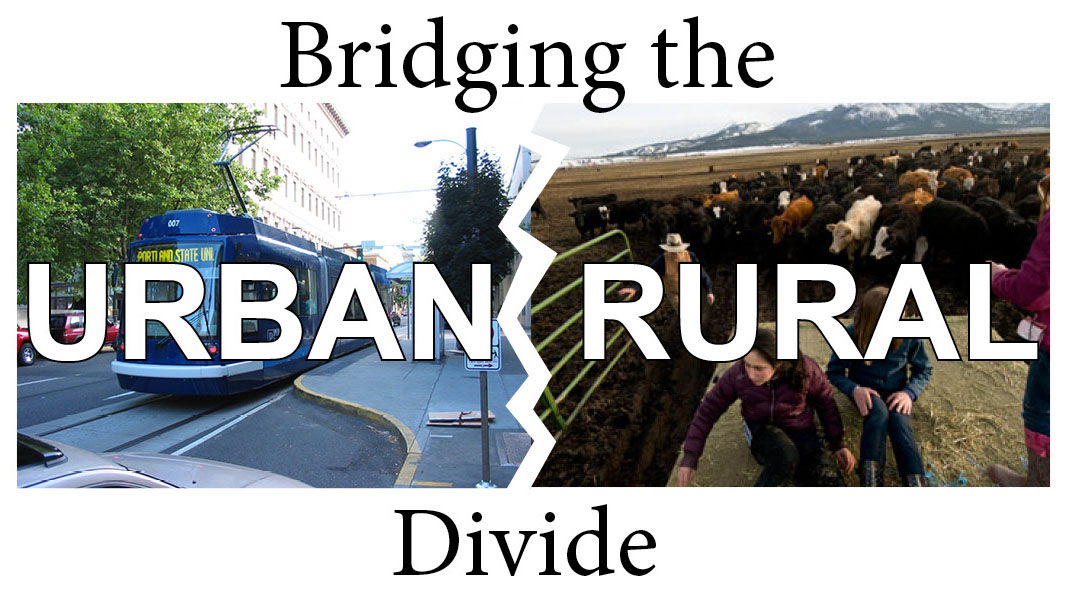
 regon is a state of great socioeconomic and geographic diversity. While this diversity brings strength, it also challenges Oregonians to meet the needs of all communities. This divide is mostly deeply felt around natural resource management issues. Oregon cities are now so culturally isolated from the country that clashes between urban and rural Oregon occur frequently when it comes to grazing, logging, wilderness and wildlife. That was the world Portland urban youth walked into when they took a stand in defense of wolves in 2005 at a public Fish and Wildlife hearing. Ranchers howled in protest. Yet, just as it seemed Oregon’s urban-rural divide had grown into an unbridgeable chasm this conflict ended when 4-H stepped in. 4-H staff from urban and rural Oregon along with a handful of ranchers from rural Grant County did the unexpected. They invited kids from urban Portland middle school to live and work along side them and see a rancher or farmers side of life.
Today the 4-H Urban-Rural Exchange involves youth as a catalyst for change for a sustainable Oregon future by providing a venue for rural and urban youth and families to share their stories, their lifestyles, their beliefs and their practices for managing the land for the next generation. Through this program, urban youth and their adult chaperons travel to rural Eastern Oregon to live and work alongside 4-H ranch and farm host families for 6 days. Likewise, rural youth travel to Portland with adult chaperons to live and work alongside their 4-H urban host family.
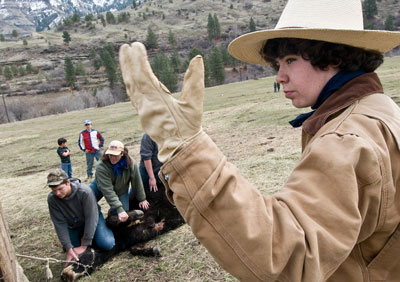 The program provides youth who are too often exposed to viewpoints on one side of an issue, a first hand experience on the land. It is this experience of being on the land and walking in the shoes of their host family that youth can begin to understand more deeply how and why Oregonians manage the land the way they do.
Through the process of developing this program 4-H Faculty quickly learned that a key to helping youth understand the the natural resource issues as well as the sustainability and resiliency of their host community, youth first need some knowledge about the dynamics of the influential social, environmental, and economic systems that underlie them. Thus, while the program began as a response to the issue of the reintroduction of wolves in Oregon, in the end the program is designed to help youth understand the broader social, cultural and economic issues within rural and urban Oregon and the interdependence between both sides of the state.
During their stay with their host family youth participate in daily chores in caring for the land with their host family. More importantly though, youth are involved in all aspects of community life of their host family. The attend school for a day, participate in community events, shop at the local store, attend a local sports game, meet local neighbors and sometimes attend church to name a few of the activities.
Program Design
Participant Selection Process
Approximately 40-50 youth are selected to participate in this exchange each year. Youth selected to participate in this program must submit a 4-H program application and get approval from their school administrator and principal. Teachers and 4-H staff screen youth applications. Youth are selected for their commitment and openness to learn and their potential for serving as an ambassador for their community. Participating youth must also commit to giving a presentation back home about what they learned during their 6-day exchange. Once they are selected youth are paired with another student of the same gender and then matched with a host family. All youth are expected to write a letter of introduction to their host family.
Likewise, 8-10 adult chaperons are also selected to participate in this program. All adult chaperons must complete the OSU Extension 4-H Leader screening process and undergo a criminal background clearance. Chaperons are recruited and selected from teachers, parents and community partners.
Host families for this program are recruited from current 4-H and OSU Extension families. All adults in the host family must complete a background information application and participate in a host family site visit by the 4-H Extension faculty. Host families are selected for their ability to provide a meaningful experience for their visiting youth or adult chaperons.
Pre-Education
Prior to loading in the vans and heading across the mountains to their host family, all youth and adult participants in the program must first complete a series of 4-H educational programs designed to prepare them for their experience. A 30-minute introductory program is provided at the beginning for the school year to introduce all potential students to the program and explain the application process. A series of 2-3 follow up educational sessions are held over the next several months. These educational sessions focus on the social, cultural and environmental issues of their host communities; cross-cultural communication and understanding; and sustainable urban and rural agriculture.
A mandatory one-hour orientation is held for all participating chaperons, youth and their parents. Participating chaperons also participate in additional training related to the roles and responsibilities of being a chaperon.
During the Exchange
 Four six-day exchanges from urban to rural Oregon take place the same week in April. Urban 4H youth travel to multiple communities in Harney County, Grant County, Wallowa County and Klamath County. A few weeks later, youth from rural Oregon travel to urban Portland for a 5-day exchange.
Traveling to their host community takes several hours and generally includes brief stops at historical and/or natural landmarks within the state. A lunch stop is held at a local 4-H Extension office along the route.
Once youth and their chaperons arrive at their host county 4-H office, the program begins with a potluck dinner with all the host families and visiting youth and chaperons. The potluck is designed to give youth and chaperons the opportunity to meet their host families, participate in icebreaker activities, and learn about the guidelines and expectations for the week.
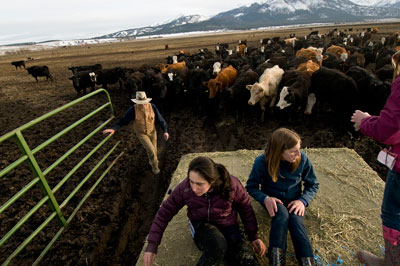
During their stay with their rural host family Portland youth work alongside ranchers and farmers from rural eastern Oregon to learn the joys and challenges that comes with real rural life. Some activities include: caring and feeding livestock, vaccinating animals, branding cattle, chopping wood, and cleaning barns. Urban youth learn that ranching and farming is a 24-hour around the clock profession and caring for their livestock involves even checking on their livestock at 2 am. Urban youth also attend a school for the day in their rural community host school. In some cases urban youth who are use to attending school with 500+ students in three grades are surprised to find some rural schools with less than 100 students in 12 grades.
 Likewise, rural middle school youth visit Portland to learn about the joys and challenges of urban life. Rural youth live and work alongside urban families and explore issues relevant to Portland such as transportation, greenspaces preservation, urban agriculture and water management. Rural youth learn how to use public transportation, visit a farmers market and/or community gardens, tour a waste treatment plant , or visit a recycling center. They also attend school for a day. Unlike back home in their community, rural youth visiting urban Portland walk to school or ride their bike. In some cases rural youth learn that urban students get to school by public transportation.
On the sixth and final day of the exchange, visiting youth and chaperons and their host families return to the local 4-H Extension office to participate in a debriefing activity and to say final goodbyes.
Post Program
Once youth return from their experience living with a host family across the urban-rural divide, the program does not stop. Participating youth are divided into teams of 3-4 youth. Each team is expected to prepare and deliver a 15-20 minute presentation to the rest of their school about what they learned during the exchange.
More important, however, many youth continue their education beyond the 4-H program. Over 1/3 of the youth who have particpated in this program reported that they went back to visit their host family in the summer and took their own family with them. Several families in one Portland community also began a beef cooperative with their 4-H host ranch family.
 Program Impacts
Outcome evaluations indicated significant changes in attitude, knowledge and understanding of socioeconomic and environmental issues from both sides of the divide. A four year evaluation found changes in knowledge and attitudes among both urban and rural participants. 119 urban participants and 43 rural host family members participated in the study.
Urban participants reported significant changes in attitudes in:
1) Knowing about the lifestyles, beliefs and ways of living of rural Oregonians; 2) Understanding the beliefs and practices for managing the land by rural Oregonians; 3) Understanding how the actions of urban Oregonians impact rural Oregon natural resource management; 4) Their awareness of rural Oregon stereotypes; 5) Knowing the commonalities urban and rural Oregonians have in managing their land; 6) Their belief that ranchers have a respect and understanding of how to best manage their land.
Rural participants reported significant changes as well in:
1) Knowing about the lifestyles, beliefs and ways of urban youth; 2) Their belief that most urban Oregonians are open to hearing all sides of natural resource issues; 3) Their awareness of urban Oregon stereotypes; 4) Their belief that urban Oregonians have a respect and understanding of how to best manage urban natural resources.
 Today, over 600 youth and family members have participated in this program since it began in 2006. Many of these 600 Oregonians will likely spend the rest of their lives living and working in their same respective part of the state. They might never step foot on the other side of divide. But from this day forward, they will have a different idea about the kind of people they share the state with and how they are managing their natural resources. And when that time comes when another issue around the managementt of our natural resources divides this state, these 4H youth, 4-H leaders and 4-H host families will have someone they know and trust that they can reach out to and get their input and insights on the issue.
To learn more about this program, the program sponsors and partners, or how to become involved, please contact us:
Maureen Hosty, 4-H Youth Development, Metro 4-H
Phone: 971-361-9628
E-mail: Maureen.hosty@oregonstate.edu
Website: www.4hwildlifestewards.org
Follow-up
Since the program began in 2006, there have been a total of 34 Exchanges between urban and rural Oregon. Three hundred and eight urban youth youth and 74 urban adult chaperons have traveled across Oregon to live and work alongside 130 rural families (a total of 434 Rural Oregonians). The program has since expanded from 4 counties to 8 counties: Multnomah, Grant, Klamath, Wallawa, Harney, Wheeler, Gilliam and Morrow. 4-H Faculty and staff are busy preparing for the 2016 Exchanges which will take place March 31-April 5th. Participants in the exchange will be recruited from 4-H Youth and Adults from 4-H Clubs and 4-H Partner Schools. For more information about this program please contact: Maureen Hosty OSU Extension Faculty Portland Metro Area 4-H 3880 SE 8th Ave #170 Portland, OR 97202 PH 971-361-9628 | cell 503-360-6060 | fax -971-361-9628 maureen.hosty@oregonstate.edu
All Photos: Lynn Ketchum

by editor | Sep 17, 2015 | Conservation & Sustainability
Environmental Education: The Science of Learning and Doing
by Cecelia Bosma
Trinity Lutheran School
Litchfield, Arizona
 e live on a planet with limited resources that are often consumed without caution. Finding ways to engage students in pro-environmental behaviors that conserve these limited resources rather than take them for granted is a priority for environmental educators. The human population also needs to work on understanding the benefits and risks we take with our daily behavior. Conserving the use of paper towels at home and in public is one easy pro-environmental behavior that will have a positive impact on the environment. Paper towels do not just use up trees, they also require large amount of water for production and they end up in landfills which generates pollution as they slowly decompose. However there are numerous alternatives to using paper towels at home and at school. These alternatives are efficient effective and financially thrifty. Often times conservation practices are rejected because they are time consuming and or costly. Alternatives to paper towels are neither. The financial benefit is an incentive for people that don’t relate to the environmental impact of using paper towels.
 Last fall, I designed a project to engage my eighth grade science class in a meaningful scientific inquiry project that assisted in deepening students’ understanding of the importance of conservation action through environmental education. The project action focused on eliminating paper towels in school bathrooms. There are many environmental benefits to reducing the amount of paper towels manufactured. One benefit is the reduction of trash in landfills because generally bathroom paper towels cannot be recycled. Another benefit is the reduction of chemicals leaching back into our soil from decomposing paper towels. This in turn saves trees from being processed into paper towels. Environmental benefits are also found in the amount of water consumed in the manufacturing of paper towels, and the reduced amount of fuel burned transporting paper towels.
Getting started on an inquiry project that is focused on building environmental knowledge through conservation action on the school campus can be a challenge. I have been working middle school students on various inquiry projects to build environmental knowledge for several years. Each time I start a project I am learning right along with my students. This project was no exception. Sharing ideas about inquiry and lessons that motivate students to learn and build knowledge is how we as teachers can help each other build stronger lesson plans that benefit our students and communities.
Project Inspiration
Educating adolescents about the impact they have on their environment is necessary for nurturing lifelong environmental stewardship (Nancy & Kristi, 2006). In the last twenty years, environmental education has been gaining a stronger foothold in classrooms across America (Stevenson, Peterson, Bondell, Mertig, & Moore, 2013). The purpose of environmental education is to teach students how to make responsible decisions, using critical thinking in order to take action to maintain or improve our environment (Short, 2010). Educators should encourage even small steps toward environmental conservation, as they are building blocks to lifetime environmental conservation action (Short, 2010). Accordingly, the primary goal of environmental education is to instill knowledge that leads to pro-environmental actions and behaviors for individuals, groups and society (Heimlich, 2010). I have found that engaging the learners in hands on actionable learning has a positive effect on the outcome of environmental education.
The burgeoning population of planet Earth has brought about observable changes in the environment both in populated and unpopulated regions of the world (Short, 2010). Scientists have observed these drastic changes in the form of melting ice caps, ozone depletion, deforestation and global warming, all of which can be attributed to human actions (Tidball & Krasny, 2010). Therefore, it is society’s responsibility to take action to improve the current environmental status that threatens the very existence of humans (Stevenson et al., 2013).
Additionally, it is important to incorporate positive actions into environmental education (Tidball & Krasny, 2010). Instead of focusing on what is wrong with our environment. Students are motivated by positive changes that help our environment such as recycling. Inquiry style learning is one way to incorporate positive action. Increasing environmental knowledge is a crucial part of environmental education (Grodzińska-Jurczak, Bartosiewicz, Twardowska, & Ballantyne, 2003). This project incorporated the inquiry process into the environmental education program. The students construct their learning by observing, asking questions and problem solving (Crawford, 2000). The inquiry process is a way for students to do science like a real scientist. Educating school children about environmental concerns now will promote action in the future (Evans et al., 1996).
The Project
A class of twelve eighth grade students took part in the paper towel conservation inquiry project. The project began with students watching the video that inspired me “How to use a paper towel” (Smith, 2012). Upon completion of the video, students were asked what they thought of the video and if they thought there were other ways that we could conserve paper towels in the bathrooms on our campus. Following the video students took a trip to the boys’ and girls’ bathrooms nearest to our classroom. Science class is at the end of the day, and students observed the piles of used paper towels in the garbage and on the ground.
They were challenged to develop a plan for measuring the volume of paper towels that were used daily for a week. Students worked in pairs to identify a plan which was presented the next day in class. Students then voted on the plan they thought would work the best and took steps to put it into action. One students brought in a scale from home and others created a data sheet for recording the measurements taken daily of the weight of paper towels used in each bathroom.
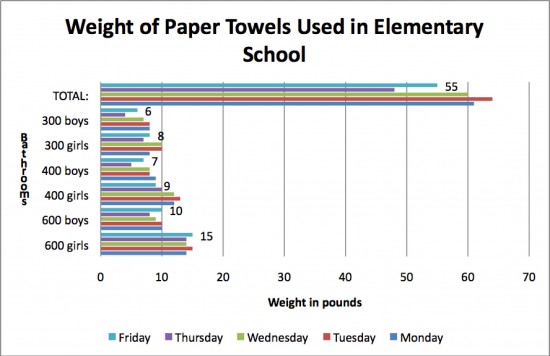
Table 1 Paper towel weight chart created by students
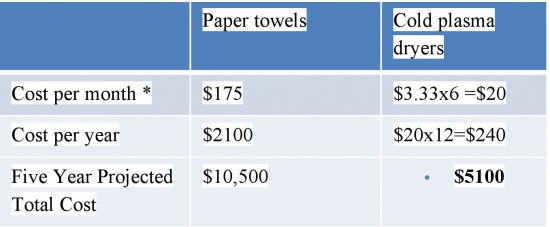
Table 2 Financial comparison of paper towels versus hand dryers created by students
The students tracked the amount, in pounds, of paper towels used in the 3 sets of boys’ and girls’ bathrooms for 5 days. This data was calculated and graphed to demonstrate the amount of paper towels that our school is disposing into the landfill each day. A total of 288 pounds of paper towels are thrown in the trash each week from the collective school bathrooms (figure 1). Students contacted the person on staff who handles the ordering of paper towels to determine that the school spends about $350.00 on paper towels each month. This information was tabulated into the final graph that compared the expense of paper towels versus the expense hand dryers (figure 2). The graph shown in figure 1 and 2 were developed by students; while it could be perfected it is meant to demonstrate the capabilities of middle school students. Upon completing the charts students noticed that the older students used considerably more paper towels than younger students did.
Students brainstormed alternative ideas to using paper towels. They researched hand dryers, cotton towel dispensers and looked at the practicality of using personal towels. After researching each option, they used the data they collected on alternatives to paper towels to create a presentation to share with fellow students, parents and the church board who has a strong influence on decision making changes. The conclusion of the study resulted in the student recommending the installation of new efficient hand dryers that dry hands in 12 seconds or less. As the students pointed out in their presentation the machines are also designed to kill germs in the air and on the skin (Gagnon, 2007).
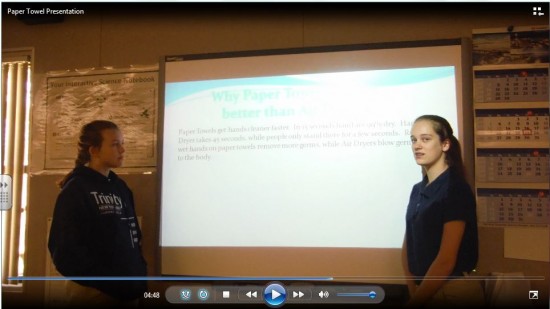 The presentation was videotaped and posted on the school website. Posting the video required getting permission from all of the parents. This was worthwhile effort because the students were then able to share what they had learned accomplished and produced with their own community of friends and neighbors. This made it possible to spread the idea of replacing paper towels with hand dryers to the larger community outside of our school.
The final piece of this project was to present a written proposal to the Board of Directors for consideration. Students were given the task and some guidelines and they had to collaborate and compromise to develop a well written proposal that included their research and data results. The objective of the assignment was to persuade the board to approve the installation of hand dryers in the bathroom. The proposal was completed and presented, and is now being considered for implementation.
Action and Reflection
The benefit of inquiry learning is that it provides a method for gaining deeper knowledge about a subject, in this case environmental education, and it also builds students skills in problem solving and analysis. This project provided students the opportunity to conduct science like a scientist. They observed and questioned. Then they looked for alternatives, conducted research, devised an action plan and carried out an investigation. The final part of the project included compiling their findings and presenting to decision makers. Encouraging and guiding students to learn about their environment and then to take action is taken to authentic level when it involves real and actionable projects. It is my hope that the board finds merit in the study and takes the necessary steps to change to electric hand dryers. This action will mitigate the burden, the use of paper towels, puts on our environment.
I know that this project was beneficial in bolstering students’ knowledge of environmental issues. Throughout the project students took ownership of each step and worked diligently to complete the work. The following are several comments from students at the end of the project.
“I liked being able to go outside for science.”
“I hope that hand dryers are installed in the bathrooms”
“I worked really hard on this project because it might be good for our school”
This paper towel action-centered conservation project works to build students conservation and knowledge that works to promote continued conservation action (Stevenson et al., 2013). Schools are looking for ways to keep the material fresh and relevant for the students incorporating inquiry science works towards that goal. We have a planet with limited resources, and an economic system that often ignores that fact. As time goes by the need for action is even more crucial for the survival of all of us. Paper towel reduction is one idea that students can be engaged in environmental education. We have to find ways for students to not only learn about importance of caring for our environment but that knowledge must lead to continued environmental action for the objective to be met.
As a teacher, focusing on improving techniques to guide inquiry learning, leads to discovering ways to make projects authentic and real. Utilizing inquiry in environmental education provides students an enriching learning environment. This is my story of a journey to use inquiry as a catalyst for environmental change. Embrace your story.
Bibliography
Crawford, B. A. (2000). Embracing the essence of inquiry: new roles for science teachers. Journal of Research in Science Teaching, 37(9), 916-937. doi: 10.1002/1098-2736(200011)37:93.0.CO;2-2
Evans, S. M., Gill, M. E., & Marchant, J. (1996). Schoolchildren as educators: The indirect influence of environmental education in schools on parents’ attitudes towards the environment. Journal of Biological Education, 30(4), 243-248. doi:10.1080/00219266.1996.9655512
Gagnon, D. (2007). Paper Trail. American School & University, 80(1), 30.
Grodzińska-Jurczak, M., Bartosiewicz, A., Twardowska, A., & Ballantyne, R. (2003). Evaluating the impact of a school waste education programme upon students’ parents’ and teachers’ environmental knowledge, attitudes and behaviour. International Research in Geographical and Environmental Education, 12(2), 106-122. doi:10.1080/10382040308667521
Heimlich, J. E. (2010). Environmental education evaluation: reinterpreting education as a strategy for meeting mission. Evaluation and Program Planning, 33, 180-185. doi: 10.1016/j.evalprogplan.2009.07.009
Short, P. C. (2010). Responsible environmental action: its role and status in environmental education and environmental quality. Journal of Environmental Education, 41(1), 7-21. doi: 10.1080/00958960903206781
Smith, J. (2012, March). How to use a paper towel. Retrieved from: https://www.ted.com/talks/joe_smith_how_to_use_a_paper_towel
Stevenson, K. T., Peterson, M. N., Bondell, H. D., Mertig, A. G., & Moore, S. E. (2013). Environmental, institutional, and demographic predictors of environmental literacy among middle school children. PLoS ONE, 8(3), 1-11. doi: 10.1371/journal.pone.0059519
Tidball, K. G., & Krasny, M. E. (2010). Urban environmental education from a social-ecological perspective: conceptual framework for civic ecology education. Cities and the Environment(1). Retrieved From: http://digitalcommons.lmu.edu/cate/vol3/iss1/11/
Wells, N. M., & Lekies, K. S. (2006). Nature and the life course: Pathways from childhood nature experiences to adult environmentalism. Children Youth and Environments, 16(1), 1-24.

by editor | Apr 21, 2015 | Conservation & Sustainability, Environmental Literacy, Learning Theory
Although this article was written in 1996, and contains references to events and people from that era, much of Weilbacher’s critique remains relevant today. -Ed.
 Every Day is NOT Earth Day
Reflections on the True Meaning of Earth Day
by Mike Weilbacher
 ‘ll admit it up front: I’m a sucker for Earth Day. I’m a child of the first Earth Day in 1970, for its tidal wave of publicity captivated my teenage attention and launched my career. My wife and I met planning Philadelphia’s Earth Day ’90 extravaganza – her parade met my outdoor stage, and the rest was history. Today, my workplace’s largest education program has become Philly’s longest running Earth Day event.
So few things annoy me more than the standard environmental knee-jerk position on Earth Day. You know it well, and have probably recited it like some Zen mantra: every day is Earth Day; make every day Earth Day.
As usual, we got it all wrong.
Because the environmental movement began as a countercultural phenomenon, we simply can’t stand our own successes, and continually sabotage our greatest gains. Like Earth Day.
Just think of what’s happened. Millions of kids across the planet are gearing up for some celebration of the day, perhaps a tree planting, a litter clean-up, a bad assembly featuring some whining folksinger (“Please save the rainforest, boys and girls, and when you’re done, please save every large endangered mammal”), or a recycled art contest, where eminently recyclable objects like cans and egg cartons are irrevocably glued to each other and turned into wholly non-recyclable monstrosities that are trashed after the event is over (and we’re teaching what here?).
OK, bad examples, but what it means is so startlingly simple it has flown way over our still-shaggy heads. Earth Day has arrived; it has planted a taproot in the mainstream of American pop culture, and like it or not, there it will stay, and grow, and blossom…
…Into a new intemational holiday that will one day rival Christmas in its scope. I’m dead serious. Signs of this were first revealed during the extraordinary event that was Earth Day’90. While the first Earth Day was an exclusively American college-oriented teach-in, Earth Day ’90 graduated into a global festival of more than 100 million people in more than 100 countries gathering to, in some cases, perform quite meaningful work: restore rivers, save species, reclaim battered landscapes. Earth Day ’90 was, barring world wars or Michael Jackson concerts, the largest mass event in world history.
Today, the sound of the holiday embedding itself in our cultural psyche can be heard everywhere. In schools: Earth Day has become a part of many school curricula; kids are growing up knowing that Earth Day is April 22nd, and doing something relevant on or near that day. In politics: every April 22nd, President Clinton – with Vice President Green, I mean, Gore, at his side – hosts a press conference to announce another underwhelming eco-initiative. On TV: every April, there’s a round of cheesy Earth Day specials featuring forgettable stars like Bob Saget performing amazing feats like installing toilet dams in their home bathrooms (that really happened a few years back.) On radio: Rush Limbaugh will likely repeat his tired tirade that the day reflects the true deep green plot against society, for April 22nd is also Lenin’s birthday – proof that environmentalism is a Communist plot! (Memo to Rush: April 22nd was chosen because it was the only spring Saturday Senator Gaylord Nelson had free in 1970, and no environmentalist I’ve ever met in 27 years of Earth Days ever knew when Lenin was born.
You’ll hear it in newspaper editorials and worldwide web pages; in store ads and nature center events; in zoos and museums; on T-shirts and coffee mugs.
Love it or hate it, you gotta admit it: Earth Day is here to stay.
And Earth Day will only grow in scope because environmental issues are not going to go away. Quite the contrary. With Pinatubo’s ash finally settling out, with atmospheric carbon dioxide concentrations on the rise, the global warming debate will likely warm up quite dramatically in the next few years. The biodiversity conflict is only starting to gain any intensity at all – here’s one issue guaranteed to explode as soon as a large, charismatic mammal vanishes, like the black rhino or mountain gorilla, both threatened by Africa’s political instability. And we have never properly confronted the population issue – we likely will when the next famine arrives.
On top of this, the nascent Earth Day holiday will receive a huge jolt in the year 2000. New millennium. The thirtieth anniversary. That year’s Earth Day will be a humbling event.
Sure, the “make every day Earth Day” sentiment has its place. Mostly, it serves as a reminder that the values and ethics we hold important must be cultivated daily if they will thrive. And it should remind schools of the danger of pigeonholing the ecology unit into a one-day or one-week project. Certainly, state educational mandates for ecological/environmental understandings must never be met from a one-day event, and too many schools rely on this one day to complete its environmental education requirements.
Speaking of schools, Earth Day brings out the worst in too many teacher, and too many outside educational agencies, from corporations to utilities to non-profit. There are too many lame Earth Day poster contests, where kids are asked to draw a colorful poster with an Earth Day theme. So it’s education as fascist slogan: “Don’t Pollute!” “Love the Earth!” “Reduce! Reuse! Recycle!” Relax already. We still labor under the horribly misguided notion that if we command kids’ knees to jerk in the proper direction, their heads will follow. Wrong, so wrong. Sloganeering is not educational in any sense whatsoever, teaches no information at all, and only confirms our kids’ worst fears about the state of the Earth: The Earth must be dying because the posters say so. Environmental education must be uplifting, never down- grading, and never be reduced to a bumper-sticker answer to a lapel-pin question.
Still, wading through all the flotsam and jetsam floating around Earth Day, there is a nugget of truth, a seed of change that we must hold onto tightly.
We need holidays. Better yet, we need holidays with meaning. Christmas resonates with so many people – even people who are barely Christian the rest of the year – because it speaks to a set of values we all want so desperately to believe, like the triumph of Light over Dark. The Fourth of July is centered on freedom, independence, and the meaning of America. Martin Luther King Day, I hope, will evolve to take on transcendent relevance around issues of equality, nonviolence, change and the need for multicultural connections.
Sadly, Memorial Day, Labor Day and President’s Day have lost so much of their original meaning, and exist only as three-day holidays for overworking people. Our culture may be seeking new holidays with new meanings for a new millennium, and the beauty of Earth Day is that it emerges as the only secular holiday the entire world will celebrate simultaneously. Earth Day will become just that, the “Earth’s day,” a holiday where people pause to consider what it means to be a planetary citizen, and reflect on how well we shared limited resources with so many other species.
My eldest daughter will be a graduate of the Class of 2010. I’ll wager that during her school career, she’ll have a day off from school for Earth Day. Banks will close. Governments shut down. Stores hold Earth Day sales. Greenpeace’s executive director will write an op-ed piece in the New York Times begging us to “put the ‘Earth’ back in Earth Day.”
And I’ll be on some stage somewhere hosting an Earth Day festival, living every minute of it all.
So remember: every day is NOT Earth Day. Once a year is fine. Happy Earth Day.
At the time this was written, Mike Weilbacher was executive director of the Lower Merion Conservancy, sponsor of the Children’s Earth Day Forest, an event featuring an indoor life-size recreation of a Pennsylvania forest hand-crafted by local schoolchildren.

by editor | Mar 25, 2015 | Conservation & Sustainability, Environmental Literacy
Creating the Need to Pay Attention
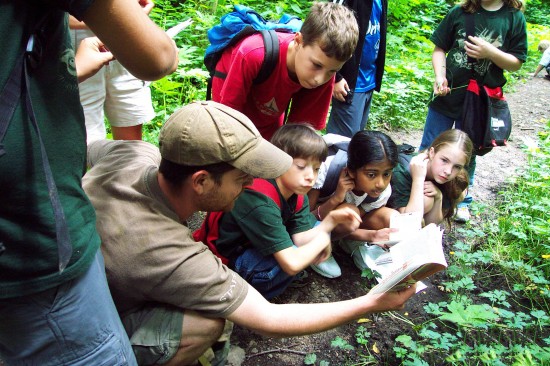
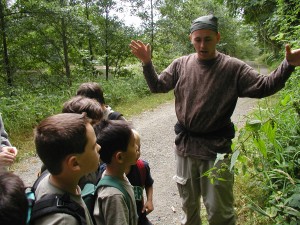
Field trips and adventures in the woods are tremendously important experiences for children, especially those students that don’t often get to spend time in a natural setting. Some of the most important, lasting results of good Environmental Education are the heartfelt connections that young people make with nature. They value the natural world because they have experienced first hand the beauty and magic of living ecological systems. To really feel this in a personal way, the kids have to go outside and experience it.
by Chris Laliberte
he excitement of exploring outside with friends and classmates can turn a well behaved class into a pretty raucous crowd, and in all the commotion, it’s very easy for students to pay more attention to each other than to the woods around them. And while they might huddle up at each interpretive spot for a brief lesson or activity, what teacher or educator could possibly be there with each student for the whole walk, helping them learn from each moment as they explore the landscape with all their senses? The trick to making the entire outing an intense learning experience is to find ways to ensure that the students are invested in paying close attention the whole time.
“Tree Tag” is the classic example of creating a need to pay attention. Kids love to play tag, and they NEED a base, some place to avoid the tagger. So when base is whatever kind of tree the teacher calls out, the kids suddenly have a very real need to be able to identify trees correctly, so they can get to base. I love to watch what happens when kids disagree about correctly identifying trees, and they have to prove to each other what kind of tree it is. Tree Tag, however, illustrates a deeper point around creating need. A game of tag is a boisterous, wild, hectic thing. But remarkably, within this game is a fantastic heightening of awareness. The danger, the risk of being tagged, or the need to tag someone, is visceral. It creates physical and chemical responses in the body that affect awareness and the learning process. Adrenalated states provide a powerful opportunity for learning. Notice that this suggests an interesting point: in Tree Tag, the key dynamic for learning is the creation of a certain amount of anxiety, or a state of discomfort. This creates a very strong need to pay attention, and then the game focuses the heightened awareness onto something very detailed and specific — in this case, the differences in bark, leaf, branching pattern and color of different trees. By paying careful attention, the student can resolve the anxiety and get to someplace “safe.”
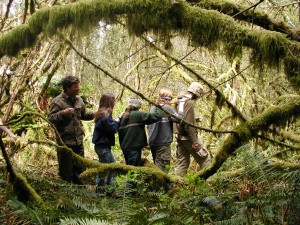 It’s a testament to the power of the adrenalated state that, more often than not, kids will leave base and venture back out into the fray on their own for another dose. Of course, some students will be reluctant to leave base, so the teacher can keep the game active by announcing that base is now a different kind of tree, and it starts again: more adrenaline, more awareness, more attention to details of different kinds of trees, more good learning about nature.
So how can this dynamic be harnessed so that it is present throughout the whole field trip? Here’s one method that has proved enormously powerful at Wilderness Awareness School. It’s called “Bird Language.”
The basic principle behind Bird Language is that birds love to gossip. They are constantly announcing to each other and the world around them just how they are feeling about their lives at that moment. It’s almost like a town crier who likes the job so much that s/he uses any excuse to make another public announcement. “The forest is calm and happy!” “The forest is still calm and happy!” But what birds love to talk about most of all is danger and peril. Anything that might possibly be a threat is immediately announced and pointed out. Jim Corbett, a famous tracker from India, once mentioned how puzzled he was that anyone could ever get eaten by a tiger. The birds and monkeys are so loud and aggressive in announcing the presence of any tiger, and even following along above it in the treetops, screaming out their warnings, that it seemed inconceivable to him that anyone could be taken unaware by a tiger in the jungle. By coming to understand Bird Language, students can learn to recognize all the movement and activity going on in the forest around them. They’ll know when raptors or other predators are moving through, or when animals like deer or raccoons are sneaking away.
Using Bird Language with your students starts with creating the need to pay attention to what the birds are saying. For some younger students, the possibility of seeing fairies or unicorns works wonders at getting them to listen for the announcements of the birds. This is especially good if students are already uncomfortable with being outside in the woods and need a little assurance. Our favorite strategy at Wilderness Awareness School is to set up the day so that students are hiking or exploring in small groups, and might at any time be ambushed by another group sneaking up on them. If you don’t have the ability to set up the ambush dynamic, or if the group is older and more callous to the woods, the classic anxiety here in the Pacific Northwest is the threat of the cougar. Wilderness Awareness School is very careful in using this particular set-up for bird language. We let students know that cougars are sneaky but cowardly hunters, who like to attack unseen and avoid a fight or struggle. To really help students feel the anxiety in a visceral way (like the threat of being tagged), you can describe the nerve endings in the canine teeth of the cougar that help it to feel just where to bite on your neck to cleanly sever the spinal column like scissors through a banana . Now, we are careful to point out that cougars don’t normally attack people. But they sometimes can’t help themselves when a really loud, obviously unaware, small, tasty looking person hurries by without paying any attention to the woods at all. But if you notice a cougar, and make yourself look tough, maybe yell at it, then the cougar won’t bother you. They’re really pretty timid once they’ve been found out.
Regardless of what strategy you use to create a need to pay attention, listening to Bird Language can provide the focus for your students’ heightened awareness, and will allow them to resolve their tension and anxiety appropriately. For if they are listening carefully to Bird Language, no cougar or group of kids will be able to sneak up on them without alarming the birds and giving itself away. Really accurate interpretation is a fine art, and requires a lot of practice sitting outside and investigating bird alarms, but mastery is not required for Bird Language to be a remarkably effective learning tool. Here are the basic details your students will need to know to be able to get started successfully:
 Bird Language: A Quick Summary
Pay closest attention to the small ground-feeding birds: Robins, Sparrows, Juncos, Wrens, Towhees, etc. They are the best sentries.
Learn to distinguish the Five Voices of the Birds. The first four Baseline Voices indicate that the forest is relatively comfortable, and therefore “in baseline.” The last voice, the alarm, indicates a threat, usually a predator, often a human.
1. The Song: Birds singing their characteristic celebration, they are often loud but the feeling is very comfortable.
2. Companion Calling: Birds in pairs or groups call back and forth to each other regularly, either with their voice or with body movements, just to let each other know that they are alright. Usually this is soft, quiet language. It can occasionally sound scolding if one bird gets out of sight from another and fails to respond quickly enough.
3. Juvenile Begging: Young hatchlings can make quite a racket demanding to be fed. This repetitive whining may sound obnoxious, but don’t mistake it for distress.
4. Territorial Aggression: Generally made by males, this is loud, aggressive language that can sound like alarms, but you’ll notice that it doesn’t bother other birds (females, or birds of other species).
5. The Alarm is dramatically different from the four baseline voices. While the baseline voices sound like someone happily whistling, the alarm sounds like someone yelling for help. Different species sound different, but they all sound terribly upset, worried and nervous, and you’ll find yourself feeling that way too, when you open yourself up to really listening receptively to birds.
Watch the body language of alarming birds:
1. Where does it go when it alarms?
Does it fly up higher into the branches, or down low to the ground? Ground-feeding birds are typically brown, so they like to be down low where they are camouflaged and hidden. The only reason they fly UP is if there’s a threat on the ground. They will fly just high enough to avoid the danger, so how high up they fly is a good indicator of how high the danger can reach. If they go down, it’s because they’ll be safer down low in the thick brush, so it’s either a raptor or a threat that can’t get into the bushes (like a human).
2. Does the bird fly up and then look back to where it came from as it alarms?
If so, it was scared out of its place by something close by on the ground. Does it fly up and look forward, or out and around? If so, it was probably startled by a sound or another bird’s alarm and it is looking for the danger. It usually looks towards the source of the alarm (remember, these birds often look sideways).
3. Does it just fly madly away alarming as it goes? If so, it has been “plowed” out of the area, quite likely by a human.
Those are the very basics of Bird Language; however, the most important aspect of all is the “Secret Lesson” that you don’t even talk about. By attending to bird alarms, students soon realize that they themselves are disturbing the “baseline” of the forest. One of the old sayings from Kenya that young kids heard constantly was “Never disturb a singing bird.” Once they notice that they are scaring all the birds away, they begin to work at not alarming birds, and the transformation that this causes is remarkable. Once oblivious, boisterous and unconnected kids turn into quiet, observant, and respectful participants in the ecological community. Listening to birds now becomes a fabulous tool to encourage heightened awareness and a phenomenal source for amazing close encounters with animals that they want to see, like elk, deer, foxes, and raccoons, because now the birds aren’t warning these animals of the approaching students five minutes before they arrive.
In Wilderness Awareness School’s experience, Bird Language works best initially as the focal point for new students who have been “set up” to pay attention by the cultivation of a state of discomfort, and quite literally gives students the awareness they need to be safe, aware and feel comfortable in the woods. Remember, it will take some time to establish this as a routine for your students. They’ll need plenty of reminders early on. The most effective one is simply “Ssshhh! What was that? Did you hear that alarm?” Above all, have fun with it! You’ll be amazed at the transformation Bird Language can work in your students if you just stick with it.
Chris Laliberte is the Program Director for Wilderness Awareness School, a national not-for-profit environmental education organization based in Duvall, WA which is “dedicated to caring for the earth and our children by fostering appreciation and understanding of nature, community and self,” on the web at http://www.WildernessAwareness.org
Resources for Bird Language Study
Audio:
The Language of the Birds and Advanced Bird Language: Reading the Concentric Rings of Nature, beginning and advanced audio series by Jon Young. Available at http://www.WildernessAwareness.org
Backyard Bird Walk and Marshland Bird Walk, and other recordings by Lang Elliott. Available at http://www.naturesound.com
Books:
Kamana One: Exploring Natural Mysteries, by Jon Young, part one of Wilderness Awareness School’s four-level independent study Kamana Naturalist Training Program. Includes bird language, tracking, wilderness living skills, traditional herbalism, and naturalist mentoring. Available at http://www.WildernessAwareness.org
Jungle Lore, by Jim Corbett. A powerful narrative from the Indian jungle which includes Bird Language lore.
Bird Tracks and Sign: A Guide to North American Species, a unique new resource for studying birds by Mark Elbroch , Eleanor Marks, and Diane C. Boreto.
A Guide to Bird Behavior, Vols. I,II, and III, by Donald and Lillian Stokes.
Peterson Field Guides: Western Birds, by Roger Tory Peterson.
Other:
A Birds World, permanent exhibit on Bird Language at the Boston Museum of Science. http://www.mos.org


