
by editor | Nov 15, 2011 | Interviews with Educators & Leaders
 Interview by Chris Gertschen
Charles Saylan is co-founder and executive director of the California-based Ocean Conservation Society. He co-authored with Daniel Blumstein, a biology professor at the University of California-Los Angeles, “The Failure of Environmental Education (And How We Can Fix It)”. (more…)

by editor | Oct 21, 2011 | Interviews with Educators & Leaders
 Interview by Chris Gertschen
Wendy Francis, Program Director, has been involved with Y2Y (Yellowstone to Yukon) since its inception. She chaired the board from 2003-2005 and was interim Executive Director in 2002-2003. Educated in law and biology, Wendy previously held positions as Director of Conservation and Science at Ontario Nature, Interim Executive Director at the Canadian Parks and Wilderness Society, and Conservation Director for CPAWS Calgary-Banff. More…
CG: What brought you to conservation?
WF: I grew up in the 1960s, when playing outside was not only the norm, it was mandatory! We were simply not allowed to play inside on a nice day. I knew all the semi-wild places in my neighborhood, and loved to climb their trees and explore their wetlands. As a family, we often camped on weekends and holidays. Later, we rented cottages in northern Ontario and experienced the great freedom of being able to wander the forests for weeks on end. My Dad, who grew up on the prairies, was an avid naturalist and hunter and often pointed out different trees and animals to us. I believe I inherited my love of nature from him. (more…)

by editor | Sep 27, 2011 | Interviews with Educators & Leaders

Interview by Chris Gertschen
Jason Wilmot is executive director of the Northern Rockies Conservation Cooperative.
Jason was raised in Montana and South Dakota. He obtained a bachelor’s degree in Geography from the University of Montana and a Master of Environmental Management from the Yale School of Forestry and Environmental Studies. Jason spent over 10 years living in the Glacier National Park area, where he worked in various capacities for the National Park Service. (more…)
by editor | Sep 7, 2011 | Interviews with Educators & Leaders
CLEARING interview by Jackie Wilson
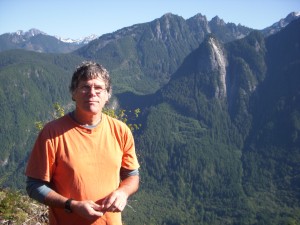
 Mike Town earned two bachelor’s degrees and a master’s degree from Huxley College of the Environment, Western Washington University and the University of Washington.
From 1985 to 2010, Mike taught numerous science courses at Redmond High School including a very successful Advanced Placement Environmental Science program, which over the course of more than 10 years has been taken by nearly half of the student body. He has also developed numerous elective courses including a Career and Technical Educational course in Environmental Engineering and Sustainable Design. In 2006, Mike developed the Cool School Challenge (CSC), a program in which has students audit and then reduce the carbon footprints of their schools. CSC now reaches internationally. (more…)
by editor | Aug 31, 2011 | Forest Education, Interviews with Educators & Leaders
 Interview by Chris Gertschen
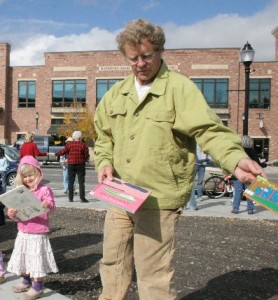
Lance Craighead is the Executive Director of the Craighead Institute, an applied science and research organization that builds conservation solutions for people and wildlife in changing landscapes. Its mission is to maintain healthy populations of native plants, wildlife, and people as part of sustainable, functioning ecosystems.
Since its founding by renowned grizzly bear researcher Dr. Frank C. Craighead in 1964, the Craighead Institute has pioneered the fields of conservation and wildlife research. Over the past four decades the Institute has conducted ecological research on grizzly bears in Yellowstone Park, genetic research on grizzly bears in Alaska, conventional and satellite radio-telemetry of wildlife, and the use of remote sensing to map vegetation and wildlife habitat. (more…)

by editor | May 14, 2010 | Interviews with Educators & Leaders
 What is your current job title?
I am a Field Science Educator for the Olympic Park Institute.
How did you get into this field?
My educational background is in Biology and Secondary Education, and when I graduated from college, I just wasn’t ready to teach in the classroom. I had an urge to be outside; to live in and experience natural places. Teaching in an outdoor setting seemed to be the best of both worlds.
What are you working on right now?
Right now I’m working on developing a bird feeding behavior/natural history curriculum that is usable for a wide range of students. I’m also at the early stages of developing a hands on, long-term river ecology program which would get students to monitor – via underwater video footage, as well as stream health monitoring – changes or consistencies in the river ecosystem we have access to near our facility.
What is your favorite part of your job?
Opening students eyes to the natural world, and giving them the tools to learn about it and enjoy it keep me coming to work every day.
If you could change anything about your work, what would it be?
I’d love to have more time to impact students. If I had the ability, I would love to see longer programming.
Where do you find inspiration for the work you do?
I find my inspiration from the beautiful places I work, and from the people teaching by my side. To see my fellow educators teaching to their passions about this place inspires me.
What is your favorite resource or tool for teaching about the environment?
My favorite tools for teaching about the environment are current issues. Here on the Olympic peninsula logging and land management are a great resource to get students thinking about land as a resource, and how it is cared for and managed. Frequent field trips to various sites around the peninsula give students great access to seeing clear cuts and other managed lands, which can lead to phenomenal discussions.
Where do you go when you want to recharge your batteries?
Moving water and big mountains recharge my batteries. By either playing or exploring in them, going for a run near them, or just taking them in, I feel myself being recharged.
What is your favorite place to visit in the Pacific Northwest?
The Northwest is way too spectacular to pick one favorite place! Unfair question! I do find myself drawn to rivers, with the Solduc being closest to my house.
What is your favorite nature/environment book?
My current favorite book is Gary Larson’s ‘There’s a hair in my Dirt’. I like that students often miss some of his adult humor, but are still able to take home his message.
Who do you consider your environmental hero?
I can’t pick one name to represent my environmental hero, but I consistently look toward my students as heros. They have the power to make informed, positive decisions, and are the sponges which soak up information and experiences and can help make a positive impact.


