by editor | Aug 12, 2018 | Learning Theory
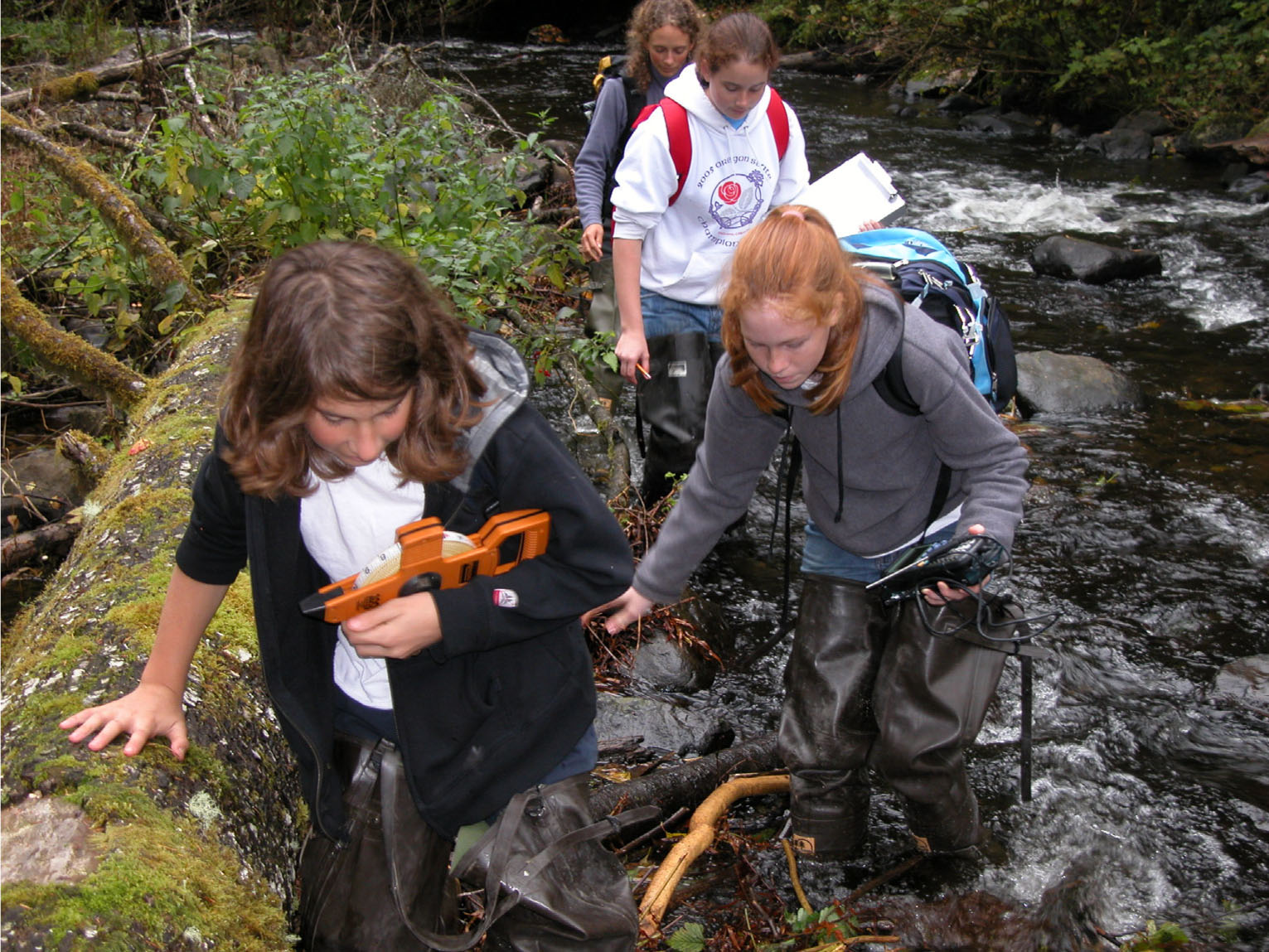
Know and Do What We Teach: How many times are we assigned to teach a subject we know little about?
by Jim Martin
CLEARING Special Contributor
 t a riparian ecology training for teachers a few years ago, I met two who epitomize a perennial problem in education in America. One of the teachers was in her third year of teaching, said she had no background in science, was never trained for teaching it, but was assigned to teach all of the 6th grade science in her middle school. The other was a teacher who had been a fisheries biologist for several years, and was now teaching high school science. Two teachers, each of whom is assumed will deliver equally effective, student-empowering curricula in their schools. Who are assumed to be teaching at the same level of experience and expertise. How do we rationalize this? How do we deal with it?
Many teachers who lack confidence in teaching the content they are assigned forces them to simply use and parrot the instructions in teachers’ editions of their assigned curricular materials. If we are simply in the schools to prepare our students for the standards tests they will take, adhering to the status quo may be able to make the attempt; although, to date, this effort has produced no nation-wide positive result. But, if we are in schools to involve and invest our students in authentic and challenging concept-based curriculum, and to deliver our curricula in a way which empowers them as persons, then we all need to comprehend the concepts we teach at a level which makes us comfortable in determining our own ways to deliver our curricula. The only way to do that is to know and do what we teach.
As long as we are able to build a learning environment which involves and invests our students in their learnings and empowers them as persons, their brains will do the work. While there are many reasons posited for the poor performance of US students compared with their global peers, assumptions about student capacity based on demographics ought not to matter, not be a reason for poor performance; the brain is an autonomous learning machine. If we allow it.
Why should I want more than a good set of published curricular materials?
All teachers of empowered students that I’ve observed have a content background strong enough to allow them to design their own curricular deliveries. And their students, regardless of demographics, respond to this in a positive, participating way. I’ve also observed teachers with little or no background in the curricular content and/or grade level they are assigned to teach become exceptional teachers when they receive competent mentoring in their classrooms while they are teaching. Just as with their students, these teachers’ brains became autonomous learning machines when they were allowed to. Our expectations re teachers’ preparation for the content they are assigned to teach is a strong indicator that many of us do not allow that. They are assigned to teach what they are assigned to teach. Beyond that, most receive precious little support in the way of developing professional competence in their assigned content area.
Would we accept a world in which only about half of automobile mechanics have training to repair the motors they work on? Where half of dentists have the training to perform a root canal on their root canal patients? How about only half of surgeons with training for the surgeries they perform? Only half of lawyers with training for the cases they proceed with in the court? Half the baristas with no training for the coffees they produce in the coffee shops where they work? We have, and assume, the right to people who have had effective training for the work they perform. Except for teachers. It’s almost as if there is an assumption that teachers can “just do it.” In fact, I’ve heard this claim. More than once.
So, why are we so complacent about having teachers in classrooms who may be only marginally trained in the content they deliver? Jaime Escalante taught calculus to students at Garfield High School in Los Angeles, where 85 percent of the students were eligible for free or reduced-fee meals, and faculty morale was low (Scientific American, Aug 2011, p. 14: Stand and Deliver). His unpopular, to some, attitude toward his students’ brains’ capacity for learning was displayed in a banner in his classroom which declared, “Calculus does not have to be made easy – It is easy already”. In spite of opposition from the school administration and some faculty to his teaching, more of his students took the AP calculus exam than at all but three other public schools in the nation. Two thirds of his students passed the exam. He possessed a background in calculus which allowed him to develop and execute a very clear demonstration that the brain is an autonomous learning machine when we allow it. And proved it.
In a recent article, Climate confusion among U.S. teachers: Teachers’ knowledge and values can hinder climate education, published in the 12 February 2016 issue of Science magazine, the authors report that fewer than 25% of teachers have the training they need to teach the basics of global warming. This, in spite of the fact that climate change may be the most important challenge that today’s students and their children will face. Why aren’t schools allowed to provide the training their teachers need to become more effective teachers of climate change in their classrooms? A large fraction of the business world does just that. Especially when there is a demonstrated authentic need for it.
What do I need in addition to good curricular materials to better prepare my students for their future?
A suggestion: I submit that we need to work together to develop an effective method to ensure that teachers have access to the training and support they need to teach inquiry-based science in their classrooms. Every day. We don’t think of students as the people who will set our nation’s place among the other nations in the world, but they are. We need more than a small fraction of K-12 students who excel in school. My experience tells me that nearly all students have the capacity to either excel, or do very well in school. Dysfunctional families can certainly hold their children back, and schools have very little influence over what happens at home. But, they ought to have influence over what happens at school. That’s where their power lies.
Schools, can, and do, produce environments in which all of their students can excel, or at the least, do very well. For instance, one school I’ve known for a long time does just that. The Jane Goodall Environmental Middle School (JGEMS), a public charter school in Salem, OR, does that consistently every year. Entering students are selected via a lottery which covers Salem’s demographic spectrum. While the faculty don’t focus on the standards, each year 100% of their students pass the standards exams, 90% or more at the two highest levels. Oddly enough, all of their teachers have strong backgrounds in the content they teach.
In many of these cases, teachers have engaged in summer workshops and institutes which deliver hands-on experience in doing science inquiries they have conceived, designed, and executed in natural environments, and using those experiences to develop in-depth content knowledge of the subject of their inquiries. This is a context in which regional environmental educators and experienced teachers can collaborate to plan and execute workshops and institutes which can provide the training and support to produce classrooms which are facilitated by teachers who are experienced in science inquiry and have deep knowledge of the content they teach. And which deliver students who are involved and invested in their educations; and empowered as persons. A strong content and process background gives teachers the confidence it takes to deliver a student-centered, active-learning based curriculum. Something we all need to learn to do. Well.
How can you help?
 This is a regular feature by CLEARING “master teacher” Jim Martin that explores how environmental educators can help classroom teachers get away from the pressure to teach to the standardized tests, and how teachers can gain the confidence to go into the world outside of their classrooms for a substantial piece of their curricula. See the other installments here, or search Categories for “Jim Martin.”

by editor | Jun 20, 2018 | Learning Theory
What is the Place of Science in Art and English Education?
by Jim Martin
CLEARING Special Contributor
School districts have, over the past four decades, reduced their arts offerings in order to meet increased demands for time devoted to science, mathematics, social studies, and English language arts. As a consequence, time devoted to the Arts has diminished to the point that people and organizations in the community have volunteered to deliver arts-centered projects and programs in the schools. I’m one of those; I have been volunteering in the Poets in the Schools program where I live in Clark County, WA. with a second grade teacher for two years.
After my first year in the poetry program, I experienced first-hand how the support teachers receive from the state hasn’t improved over the years since I left the classroom, while the demands the state places on them has increased. While I won’t be able to resolve the issue by myself, I can use what I know and understand about science, the arts, and teaching to suggest some things that might integrate the Arts in today’s schools.
What does writing poetry have to do with art in schools, and teaching science?
One project I volunteered in last year was a poetry project designed and delivered by Ms. Jenny Mowery, the Hough Elementary School librarian. Ms. Mowery’s poetry project is delivered to all K-5 classes, one period at a time, and involves teaching a poetry genre like haiku or limerick to a class, then having them use that genre to write a poem about a person or historical era they had studied in her library. When the poems are ready to deliver, students find an image of a person they read about when they researched their topic, and transfer that image to an app, Chatterpix, which can be manipulated to have the image speak the poem. When they are satisfied with their app, they all sit on a carpet in front of the screen, and individual students present their Chatterpix poems for all to see and hear. No matter how students felt about writing poetry at the beginning of the project, they would become enthusiastic as they made progress writing their poem.
What does this have to do with science and art? Well, I was very impressed with the way Ms. Mowery presented this project to kindergartners. Most weren’t ready, at the time of year they did the project, to write a poem. So, she had them decide what they would write about, then write a four-line, one word per line, poem on that. This worked very well, and I decided to think about how it could be amplified to reach more than one grade level, and even to develop into an interdisciplinary vehicle for other learnings.
I really liked this, and saw immediately that the kindergartners could draw a picture representing the concept or feeling each one-word line elicited, then put the pictures and words together in a way that made sense. What about older students? Could they do the same thing, but with more and more words, the older they were? This, I thought, had possibilities.
So, how would this look? Here’s how a simple school garden project might take shape. Let’s say we’re working with 7th graders in a middle school science class. And, we’ll have to pretend that there is a 7th grade English teacher who is interested in doing a collaboration with us. (It’s not easy for teachers in the US to do collaborative projects because they have many time demands, and very little free time. In many OECD countries, teachers are in the classroom for about half the day, and do classroom preparation, parental communication, and collaborative planning during the other part of the day.)
What is a possible place for science in Art and English?
My plan for this 7th grade science class is to develop a school garden plan from details we discover about soil presence and quality on the school grounds. After we know more about the school’s soils, we will choose an area and build a plan for our garden. Hopefully, our principal will approve our plan, and we can go to work. (Yes, the principal does already know about this!) The idea here is to provide students with an opportunity to meet a standard which expects them to engage effectively in a range of collaborative discussions (one-on-one, in groups, and teacher-led) with diverse partners on grade-level topics, texts, and issues, building on others’ ideas and expressing their own clearly. Eventually, the class locates a spot, receives approval for their garden plan (The principal gave her okay after students presented their plan), and planting begins. And so, where is the English teacher?
She might be expected to be involved in writing the proposal to the principal, but she wasn’t. From the start, she had them write notes about what they did each day. Then, every Wednesday, they spent part of the English period using their notes to develop a story about some aspect of the garden. They were encouraged to write about the part of the project that was most interesting to them. Some wrote about who lives in the garden’s soil; what they found there, dangers they had to avoid, how they helped the plants we see above the soil. Others wrote about insects they found; their adventures, their hard work pollinating so many flowers, etc. As the work, and the notes progressed, the English teacher asked the students to begin morphing their stories into tales. This writing project continued after the garden project had evolved into routine maintenance, harvest, and observations. At this time, we had done lots of good science based on the garden, and would continue that.
This is a regular feature by CLEARING “master teacher” Jim Martin that explores how environmental educators can help classroom teachers get away from the pressure to teach to the standardized tests, and how teachers can gain the confidence to go into the world outside of their classrooms for a substantial piece of their curricula. See the other installments here, or search Categories for “Jim Martin.”

by editor | Mar 19, 2018 | IslandWood, Learning Theory
The Compassionate Educator:
Empathy and Environmental Education
Tom Stonehocker
common challenge in environmental education is working with students who feel disconnected from their environment. This disconnection not only impedes a student’s ability to understand how natural systems function, it also affects how they value the natural world. This is caused not necessarily from lack of education, but the lack of focus on types of learning that build social-emotional skills in students.
Environmental work is inherently about responding to the needs of a changing planet. Environmental education must also continually focus on responding to the needs of our students so that they can grow to do the same for others. The study of nature is the study of relationships, and we would be wise to include ourselves in that definition, and perhaps even more importantly, those around us.
Author and educator Joseph Cornell shares that, “Our enjoyment and appreciation of life depends on our ability to sense feelings of other creatures, escaping our self-definitions to taste the joy of self-forgetful empathy with others” (Cornell, 1998, p.33). If young people are not well practiced in putting themselves into perspectives outside of their normal selves, how can they be expected to understand and care for the natural world?
Through my own reflections and experience as a field instructor at Islandwood, “a school in the woods”, located in Washington state, I have witnessed the value of being able to take on other perspectives. By adopting new points of view, we are better able to make informed and meaningful connections with ourselves, with others, and with our environment. As educators, the opportunites we provide our students largely do not come from the knowledge we can impart, rather our ability to engage students in experiences that speak to where they are coming from in life. To teach in this way, we must be willing to step out of our own experience from time to time and into the experiences of others in our community. Fortunately, with practice and thoughtful action, empathy can be used to increase the impact of our teaching.
Beyond Egocentrism
In Coyote’s Guide to Connecting with Nature, the authors describe a progression toward empathy that begins as students learn to recognize and express their own needs. “Over time and with your encouragement, they will go beyond asserting their needs into taking responsibility for them and being proactive about them” (Young, Haas, and McGown, 2010, p. 268). This growing sense of responsibility might be observed in simple acts, like noticing a student plan ahead by bringing warm and dry clothing. It might be a student who articulates that they are uncomfortable with a certain aspect of an activity and opens a conversation to plan an alternative.
Young, et al. go on to describe how this behavior often expands into a greater awareness of others and tending to their needs as well (2010). I have witnessed this progression in my students as I see them begin to speak up for each other. Students also feel more comfortable affirming the positive attributes that their peers bring to the group, and begin to feel a sense of comradery and pride with group identity.
“This same tending sensibility will also show itself as care for the natural world -and especially one’s own native romping grounds” (Young, et al., 2010, p. 268). In watching how self-care can grow into caring for others, it’s easy to imagine this expanding beyond just people and encompassing the environment as well. Developing a sense of place begins when a person starts to have deeper familiarity with their surroundings, and ultimately begins to feel at home where they are. Feeling a sense belonging is a true testament to the number and quality of the relationships built.
Helping Students to Cultivate Empathy
An important way to help a group of students begin to see from perspectives other than their own is by helping each individual realize the interconnectedness present within a community. One way to encourage this sense of interpersonal connection is by engaging them in team-building challenges. Of course there are millions of activities that achieve this—I’ve seen wonders happen when I challenge group of ten students to transport themselves 25 feet across an expanse of “shark-infested hot lava” using only four foam seat-pads as stepping stones. They become invested in a successful outcome for the group and along the way, they discover the role that each person plays and how they can more carefully and effectively communicate with one another.
These types of play-based collaborations have helped groups of students with intense trust and interpersonal challenges to become significantly more community-minded and thoughtful of each other’s needs. Sometimes, we must recognize that there is more work than can be achieved in our time together with students, but we must not let that stop us from trying.
One of my favorite activities to facilitate with students to dive even deeper into empathy is to engage them in storytelling from the perspective of a non-human element of the natural world. Students get to create their own narrative, which could be a short story, poem, or comic about any living or nonliving component found in our place.
One memorable story came from a student who, after having trouble coming up with ideas for his story, eventually wrote a beautiful piece about a plant he had learned about earlier in the day, the Evergreen Huckleberry:
One time there was [an] Evergreen Huckleberry. People and animals came every second to take the berry. A bird comes and make a house out of you, but the evergreen huckleberry can’t do nothing. So every time it grows [berries], people or animals take it. The tree was mad…because they were eating its berry. It [wanted] revenge and a 10-year-old kid came and said, ‘Stop, we were not hurting you, we were only [taking] berries because it taste good and we take out the seeds and grow another tree. No big deal.’”
Another student wrote from the perspective of a Salal plant that lives through the challenges of each season and ultimately feels unwanted by the other members of the forest community. She wrote,
“A small blueberry tree [looked] at me and said, ‘Salal you are great just like you are. You don’t need to be bigger and we need you. We need you, like you have very [delicious] and sweet [berries] and animals need you. Look, the [deer] needs you for your [berries].’ Salal said ‘Cool, I’m special.’”
In both of these stories, students are demonstrating their understanding of ecological relationships but also have some compelling themes of personal struggle. Both stories have moments when the main character is feeling underappreciated until another member of the community shows them they are valued. People of all ages struggle with self-confidence or feeling like an outsider. These stories illustrate how students can identify threads of connection across boundaries. This helps them develop new interpretations of environmental relationships andf also interpersonal relationships.
Another strength of perspective storytelling is that it helps students to view the natural world through a creative lens, and allows them to do so on their own terms and in their preferred medium. The perspective storytelling activity I shared with my students involved writing, but perspective storytelling can be done with singing, rapping, dancing, acting, or any other interpretation. By giving them flexibility in how they complete the activity, students will be more successful in reaching the goals of connecting with place and practicing empathy.
Showing Students We Care
Environmental and outdoor education inherently provides experiences that are new and often uncomfortable for students. Some students have spent very little time outdoors, some are away from their families for the first time, and some are working with people they don’t know very well. It is a vulnerable time for many, and often students’ interpersonal and intrapersonal challenges are placed secondary to content. The best way we can teach empathy is by practicing it ourselves.
I frequently encounter students with anxiety from being away from home. It is incredibly difficult for a student to experience the wonders of nature when they are in tears and sick to their stomach from being anxious. I approach these students by thinking about where I was at 10 years old. I remember being at outdoor school being unable to sleep, staying up at night crying, and feeling so alone in my discomfort. By stepping into the shoes of my 10-year-old self, I am better able to help students feel like they are being heard and help them persist through their challenges. I acknowledge the difficulty and pain, but remind them of the ways in which I’ve watched them succeed during our time together.
Being empathetic toward students also helps us as educators be more responsive to diverse groups of students. Something as seemingly straightforward as writing in a nature journal may cause great stress for an English Language Learner or a student with different learning abilities. It’s important for us to assess how we are connecting with our students, because it ultimately affects how they will be able to connect with the natural world
Many educators feel constrained when their curricula is focused on meeting state and national achievement standards. Some may not realize that NGSS (Next Generation Science Standards) was designed to improve the equity of science education and serve diverse populations and learners (Quinn, 2015). At its core, NGSS help students explore concepts that are applicable across many different scales and subjects.
It is precisely this adaptability to a broad range of learners that demonstrates how integral empathy is in science teaching. An important tenet of NGSS is to create an environment where students feel at home and are “welcomed as full members, and invited to share their ideas and participate fully” (Quinn, 2015, p. 16). Reaching this place of comfort will happen after learning to be appropriately responsive to the needs of the students. Getting there could be as simple as providing opportunities for movement within lessons, inviting them to incorporate personal or family stories as part of the activity, or by keeping the focus on experience rather than outcome.
Making content more relevant to student lives can help concepts feel less abstract and more tangible. Kathy Liu Sun (2017) suggests incorporating guests to share their perspective and speak from experience. Hearing from voices that students can identify with helps add personal meaning and relevance. When learning is rooted in the experiences of real people and real places, students will recognize the authenticity and be more able to make connections back to themselves, their families, and their communities.
Being There
In her 2012 novel, Wonder, R.J. Palacio writes, “It’s not enough to be friendly. You have to be a friend” (p. 312). I interpret this to mean that we can treat others with kindness, but it means little if we are not working towards creating a meaningful relationship. In environmental education, we must prioritize relationship-building if we are to truly show that we care for future generations and the planet. By being present and attentive to student needs, we can help them cultivate a rich and meaningful connection to nature. By helping create these relationships, we are helping to create a future where people are fully invested in and advocate for the wellbeing of their natural and human communities.
Tom Stonehocker is a naturalist, graduate student, and field instructor who works with 4th & 5th-grade students at Islandwood, an outdoor school on Bainbridge Island, Washington.
References:
Cornell, Joseph. (1998) Sharing Nature With Children. Nevada City, CA: DAWN Publications
Palacio, R. J. (2012). Wonder. New York: Knopf
Quinn, Helen. (2015) Science and Engineering Practices for Equity. In NGSS for All (pp.7-18). Arlington, VA: NSTA
Sun, Kathy Liu. (2017) The Importance of Cultivating Empathy in STEM Education. In Science Scope. April/May. Pp. 6-8.
Young, J., Haas, E., and McGown, E. (2010) Coyote’s Guide to Connecting with Nature. Shelton, WA: OWLink Media.

by editor | Feb 21, 2018 | Learning Theory
Photo by Jim Martin
Integrated Teaching: The Student-Directed Investigation
by Jillian Whitehill
s educators, our goal is to increase the growth of each of our students, foster their passion for learning, and best prepare our students for the real world. While there are many different pedagogies aimed at achieving these goals, I would argue that one of the most important factors is integration. In the context of this paper, integration describes four main elements. The first of which is integrated curriculum, which is a more applicable style of learning that shows students how to connect and apply concepts across various subjects to solve everyday problems (Beane, 1997). In this sense, skills and facts are only taught when they are needed to solve the problem.
The second component of integration is in relation to student ideas. It is important that the central topic or problem addressed in each lesson, is rooted in the students’ interests or issues that are relevant to their lives because it makes the lesson more engaging. It is also important that students are able to arrive at their own ideas or conclusions independently of the teacher. Thirdly, integration emphasizes experiential learning. Theorists such as Dewey, Lewin, and Piaget, have all argued that experiences are a central role of the learning process because they help students to: apply their knowledge and understandings to authentic experiences, reflect upon how their mind processes information, and engage socially, mentally, and physically in an activity.
Finally, to achieve these factors of integration teachers are best to design their lessons backwards, with the desired result at the forefront. This creates much more intentional lessons that often give students accountability for their learning. A student-directed investigation is a clear example of the elements of integration at work. Thus, I will outline three case studies to show how to facilitate a student-directed investigation and as well as how each incorporated the factors of integration.
Within a student-directed investigation, the students create the investigation question as well as the procedure. Putting this much responsibility into students’ hands can be intimidating, but by preparing scaffolding questions and allotting sufficient time, any group of students can take on the challenge. From the three examples that I will present, one can see that there are different ways to facilitate a student-directed investigation. That said, the teachers in my case studies all noted that they focused upon their end goals before planning their assessments and activities. I believe that this commonality of planning backwards helped each teacher achieve their desired results. It is also important to note that these groups of students had conducted at least one student-centered investigation prior to this, so they were all familiar with the investigation process.
To start the investigation, teacher number one outlined what makes a question investigable; in other words, something that requires students to collect data and can be tested within a specified timeframe given the tools provided. She then let her students free explore and asked them to write down every investigable question they could think of. Teacher number two followed a slightly different process by picking a central theme for the students to focus on while free exploring, in this case it was water. She gave her students 10 minutes outside to write down everything they observed about water. Teacher number three also prompted her students to hone in on their observation skills while they free explored, but differed by providing the sentence stems, “I notice…” and “I wonder…” As one can see, all three of these teachers provided some sort of structure for their students to follow while exploring outside, whether it was with a theme or sentence stems, but also allowed their students to follow their interests.
At this point all three of the instructors brought their students together to share what they had observed outside and started to form their investigation questions. Teacher number one put the students into groups of three and asked them to share amongst each other the investigable questions they wrote down while free exploring. They would them decide upon one question that they would investigate as a small group. Teacher number two brought her whole class together, outlined what made a question investigable, then gave them 10 minutes as a class to come up with as many investigable questions as possible, guided by what they had observed about water. She then asked them to decide upon one question to investigate as a class. Teacher number three brought her students together and asked them three consecutive questions in relation to their observations. “What do scientists do? What types of tools do scientists use? What can these those tools measure?” By the third question the students began to produce many investigable questions, of which the students were asked to narrow down the list to their top three choices and divide into groups of three or four to explore each question.
Each teacher elicited student ideas through scaffolding questions and prompts but allowed the students to guide the direction of the investigation questions. While all strategies required the students to work together, the students of teacher number one and even more so teacher number two, had more practice compromising given that they had to agree upon an investigation question once they were in a predetermined group, rather than being placed in group dependent upon their interests. Both cases are valuable, depending upon the objectives and goals of the lesson
Once the investigation questions were set, the teachers moved to the next step of creating the procedure. Teacher number one and three asked their students to consider the order of steps, how much time each step would take, what tools they might use and how, and what role each person would take on the team. Beyond this, they did not alter any part of the students’ procedures but instead asked their students to consider how they could improve their procedure once they had finished their investigation. This analysis component is valuable as it ties into experiential learning, asking the students to reflect and improve upon what they learned.
For the sake of time, teacher number two provided the students with a procedure to follow then divided the class into smaller groups to conduct the single investigation. Once the procedure was set, all the teachers gave their students an investigation chart to record their data and sent them off to host their investigations. During this time, all three of the teachers floated between groups to observe their progress. Each noted that they were careful to remain as bystanders throughout this process, merely acting as a safety monitor. This relates to the second element of integration in that it allows the students to arrive at their own ideas independently of the teacher.
At the end of the investigation all three teachers brought their students together to finish filling out their investigation charts and asked their students to find the average of their variables. While teacher number two had her students do this as an entire class, teacher number one and three gave an example and then asked the students to do this within their individual groups. Once this was complete, the teachers asked their students to create a conclusion statement based off their averages. They all emphasized the importance of having evidence to support claims and provided their students with the sentence stem “I believe ___ because ___.” At this point each teacher hosted a debrief, asking questions such as:
- Based on your data, what conclusion did you come to?
- Was this how you thought the investigation would turn out? What surprised you?
- What could have influenced the data?
- What new questions do you want to investigate?
- What skills did you practice during this process? How can you use these skills in other areas of your life?
In total, the student-directed investigation took each of these teachers three to four hours to host. Each teacher noted valuable components of the lesson that encompassed the factors of integration. For example, all three of the teachers felt that the student-directed investigation allowed their students to chase their curiosity, which produced much more engagement throughout the process than they had witnessed during student-centered investigations.
In addition, they noted the benefits of integrated curriculum. They felt that their students learned concepts and practiced skills from multiple subjects, such as scientific processes, mathematics, listening and communication skills, creative thinking, organizational planning, problem solving, and critical thinking. Teacher number two added that she only taught skills once they were needed, such as when her students were unable to decide upon a single question to investigate. This summoned a valuable lesson around communication norms, including collaboration, compromising, listening, and using the right tone and language with peers; which would have otherwise gone unstated. This is a key part of integrated curriculum.
Teacher number three agreed that her students practiced invaluable skills that she had not anticipated. She found that through the student-directed investigation, her students began to take responsibility for their learning. During the debrief, she had asked her students to present their findings to the group and was delighted when, unprompted by her, they followed-up each presentation with questions, proposed next steps, and a diagnosis of what may have influenced their findings. This reflective component is a primary element of experiential learning, as it cements the skills learned through hands-on activities.
Teacher also number one mentioned the value of experiential learning, but in relation to creating the procedure. One group of students was investigating the relationship between the amount of rainfall and location. In their original procedure, they planned to measure each location for 30 seconds. Once they started their investigation they realized that this timeframe was too short to gather an accurate reading, so they adjusted their procedure and restarted the investigation. The teacher was pleased to see her students reflect upon their process and apply their new ideas.
In conclusion, these three examples of student-direct investigations highlight the four elements of integration. In student-directed investigations, teachers give their students the ability to choose the topic they want to learn about, students must draw on skillsets from various subjects, and students are able to reflect upon their learning process through hands-on experiences. All of which are best achieved when teachers plan with the desired results and goals at the forefront. This style of instruction increases student engagement, information retention, and applicability of skills, better preparing our students for the real world.
References:
Kolb, David A. (1984) Experiential Learning: Experience as the Source of Learning and Development. Englewood Cliffs, NJ: Prentice Hall
Beane, James (2005). Curriculum Integration: Designing the Core of Democratic Education. New York: Teachers College Press.
Wiggins, G., McTighe, J. (2005). Understanding by Design, second edition. Alexandria, Virginia: Association for Supervision and Curriculum Development.
Credits:
Jillian Whitehill is attending the IslandWood Graduate Residency EEC Program in Bainbridge Island, Washington.

by editor | Jan 17, 2018 | Learning Theory
Is active learning an effective vehicle to train science inquiry mentors?
Walking along with you is far better than telling you “I’ll show you the way.”
 ow should we prepare mentors of teachers who wish to learn how to engage their students in authentic science inquiry, to provide what they will need for the work they will do? Should we get them together and show them what to do? Or, engage them in active learning focused on mentoring, and respond to what emerges? I know from my various experiences in being trained that listening to a speaker, then watching from a distance as the speaker demonstrates an activity, does next to nothing for me. When I arrive to do the work I was trained for, I’m not sure where to start. There, on site, bright smiling face, but a little uncertain just what to do. When my training has me actually doing the work, I arrive on site ready to go; looking forward to doing the work. So, I think I’ll describe mentor training via, mostly, active learning.
What is mentor training via active learning like?
Since classroom teachers will probably find doing a first field trip on their own a bit daunting, we’d start the teacher/environmental educator mentors-in-training doing just that. They’ll do a training, more or less on their own. First, we’d group them in pairs, then have them move through three or four stations representing those that students would move through on their first field trip. Participants’ first job at this training will be to decide how to do the work at each of the stations, say, “Streamside Vegetation.” As they go, these mentors-in-training will share what they know about the station they are visiting, and how they would assist an inexperienced teacher to become comfortable doing that station.
At each station, there would be a poster board, Post-Its, and a felt pen. The board would have the name of the station on it, and the rest of the space for questions and comments. For this training, the questions and comments would relate to the work of mentoring inexperienced teachers as they go to a natural site to do the work at this station for the first time. As they work out the way they think the station would be best done, they will make comments on the Post-Its and place them on the board. As the concept clarifies itself, they might wish to move the Post-Its around to reflect this.
After they organize the Post-Its on the boards as they wish, they will decide on outcomes for that particular station, what the students who visit it will take away from their experiences. Then, they will decide how the station will be introduced to students. Hopefully, they will have clarified the purpose of and function of the station, and they can decide on a rationale, a mission statement of sorts, for that station. A training done this way, not a talking head, telling them about it, but an active way of discovering it for themselves. All of this will go to the board on Post-Its, or, if they are sure of what they’ve done, they would use the felt pen to mark off a heading and space for the Post-Its that go under that heading.
Then, they will organize themselves to do the work of the station, and do it. While working, they would engage in an interactive dialog as they move along; clarifying, suggesting, and making recommendations which emerge from their experiences at that station. When they’re finished, they may wish to modify or add to the Post-Its on the board. After completing this station, they will rotate to the next one, where they will repeat the process. As they go, they will add Post-Its of their own, rearrange them, and add a heading if they think it should be a permanent part of the board. They continue until they’ve completed the work at all stations. (This exercise was first introduced to me by Rebecca Martin, when she used it in a Salmon Watch teacher training. I call it a concept-induction exercise. Some call it an ideation exercise. It’s very effective. I’ve even used it to focus a meeting to plan a performance center in Vancouver, WA, where I live.)
What might mentors-in-training take away from this active learning exercise?
At the end, after all groups have visited all stations, the entire group will do a walk through the stations, pointing out curricular elements embedded in the environment, listing equipment that would be needed or helpful in doing the work, noting safety measures for particular parts of each station, sharing what they’ve learned, discussing the work to understand it better and suggest modifications. As part of this, they will review each updated poster board (which remained on station), and nail down their recommendations, etc. At the end, they will suggest next steps, which might be no change needed, or some further changes.
When this has been done, the mentors should be able to have moved inexperienced teachers to a place where they can, with time, become teachers who confidently move their students, via active learning in a natural environment, toward the knowledge, skills, and understandings they will need to respond to the effects of climate change effectively. The purpose of all these words.
This is a regular feature by CLEARING “master teacher” Jim Martin that explores how environmental educators can help classroom teachers get away from the pressure to teach to the standardized tests, and how teachers can gain the confidence to go into the world outside of their classrooms for a substantial piece of their curricula. See the other installments here, or search Categories for “Jim Martin.”

by editor | May 16, 2017 | Learning Theory
 Why would a practicing teacher need a Mentor?
Is the idea of mentoring teachers an unnecessary element in our Schools?
by Jim Martin
If you were to trace your ancestry 25,000 years or further, you’d find that your forebears read no books about the natural environment. Nor did they answer multiple choice test questions about it. They lived in it, and learned in it. The environment is where they developed the capacity for critical thinking that we carry with us today.
We try very hard to continue to teach critical thinking in our classrooms, but all you have to do is look around, and you have to conclude that classrooms don’t teach critical thinking very well, if at all. However, walk into a classroom in which the curriculum is built upon experiences in the real world, and you will see critical thinking, critical writing, involvement and investment in learning, commitment to growth, and active environmental stewardship. You’ll also encounter enthusiastic, empowered people. Environmental education is demonstrably an effective vehicle for learning for understanding in all subjects, and is the crucible for the evolutionary development of our central nervous system, “the brain,” which we use every day to learn. We learn best in the real world; the learnings we acquire express themselves in personal growth, improved education, and a commitment to stewardship.
Studies on teachers who decide to take their students into the real world reflect what I’ve heard from other people who train teachers or are teachers who have taken their students outside the classroom. Even my own experiences teaching classes in fifth-grade through college, and helping teachers learn to do that too, all say, in one way or another, that it takes three to five years for a teacher to move from not having taken students outside the classroom, to being comfortable using the world outside to deliver curricular content. (That’s a long sentence; I’ll follow with a short one.) It works. Takes time and patience, but it does work.
Might mentors assist teachers to develop their capacity to use the environment for teaching and learning?
Hopefully, many of us know that our students, and their children, will have to understand ecosystems and climate change if they are to cope with the brunt of the effects of climate change. That means we have to teach these subjects in our schools. The studies I can find of how well-equipped we are to meet this real need say that fewer than half of us have the college-level background and understandings we should possess to teach the environmental science to meet this need effectively. We really must take some first steps in filling this vacuum as a professional responsibility.
In previous blogs we’ve looked at an outline of how to approach the training that teachers need to enable their students to approach global warming effectively. Another component of an effective response to the problem is a mentoring program to help more teachers through these three to five years it takes to become proficient in using active learning outside the classroom to teach ecosystem science. Mentoring is a model that business and industry use routinely, but which is relatively rare in schools. Just now, we are the only ones who can begin to build capacity for this developmental model in our schools.
Over the years, I’ve worked with teachers making their first forays with students into the world outside the classroom. For a large fraction of them, their main concern on this first trip is the head count going onto the bus, and the head count getting on the bus for the return trip. This concern of theirs about not losing a student highlights a pertinent piece of the act of moving outside the classroom to generate curriculum – how we, the teachers, feel when we step outside the familiar safety of our classroom.
What can mentors actually do for teachers?
Those feelings, anxieties, tend to carry through that first day. Another common teacher concern at the site during a first field trip is about student behaviors as they work and move through the site’s stations. When we are anxious, our brain’s response is to seek safety instead of attending to the learnings on site and developing conceptual schemata that will help us do a better job of teaching. On that first day, teachers should have the support it takes to enjoy the field trip, and be sorting through it to re-think what will follow once they are back in the classroom. Mentors can fill that need, helping teachers grow as they experience active learning in the world about. This can involve and invest them in the work, and empower them as teachers. A mentor is another human to walk the road with. Then, the work, not concern about what might happen, will carry the day.
For teachers on a first trip where their students are actively involved in learning on-site, a mentor is an ideal person to point out the content the site contains, and how to fill in areas the teacher is weak in. They also would have the knowledge, skills, and experience to recommend particular things the teacher can do to help their students discover that content embedded in the environment. At the same time, a good mentor would also be able to make suggestions about supervision and management skills that the teacher may not be aware of. It takes time, years, to become comfortable and proficient at using the real world to enhance student learnings.
The payoffs of making mentors a part of classroom and environmental education are worth the investment it takes to get them there. One powerful tool in making this happen is attracting seasoned mentors to help teachers navigate this part of the education world. Both environmental educators and teachers. We need to build this capacity into teacher training now.
There are teachers in most school districts who do take their students outside the classroom, either on the school grounds, the neighborhood, or a natural area. Many of these teachers who take their students out of the classroom for part of their curricula have, in the past, been willing to help other teachers who think they would like to try it, but are understandably unwilling to risk it alone. They constitute a component of an ideal mentor pool. Adding environmental educators, a critical component in the pool, should double its effectiveness. We’ll take this up in the next blog. Meanwhile, if you have an interest in this topic, leave a comment below.
This is a regular feature by CLEARING “master teacher” Jim Martin that explores how environmental educators can help classroom teachers get away from the pressure to teach to the standardized tests, and how teachers can gain the confidence to go into the world outside of their classrooms for a substantial piece of their curricula. See the other installments here, or search Categories for “Jim Martin.”

 This is a regular feature by CLEARING “master teacher” Jim Martin that explores how environmental educators can help classroom teachers get away from the pressure to teach to the standardized tests, and how teachers can gain the confidence to go into the world outside of their classrooms for a substantial piece of their curricula. See the other installments here, or search Categories for “Jim Martin.”