by editor | Oct 26, 2015 | Place-based Education
Combining the Strengths of Adventure Learning and Place-based Education
How re-conceptualizing the role of technology in place-based education enhances place responsive pedagogies through technology.
by R. Justin Hougham,
Karla C. Bradley Eitel and
Brant G. Miller
University of Idaho
Technology in Place-based Environmental Education
In the 21st century, students need to be able to communicate through a variety of mediums, be critical consumers of vast amounts of written and visual data, and possess skills and dispositions for addressing complex global issues with local implications, such as climate change. As practitioners of residential place-based environmental education that seeks to foster scientific literacy and connect students to place, we have traveled cautiously into the cyber-enabled landscape because of a deeply rooted feeling that technology can be a distraction to students’ deep observation in the field. That said, we are exploring the idea that technology may also provide tools that can transform our ability to connect students to place. Imagine this scenario: a field teacher uses a picture to show students a concept diagram of the water cycle; the students’ attention is on the image rather than on the place. Instead, what if cameras were used to observe water in the immediate environment, thus, cataloging water in as many phases as the students can find? Digital voice recorders could be employed to capture the haunting, ancient whale-like sounds of liquid water beneath the frozen lake; In addition, students collect and upload data about the quality or quantity of the water. This data could then be visualized within an observational database used by scientists to better understand water resources at a hyper-local scale, thereby contributing to better predictive models that inform watershed and fisheries management. In the first scenario, an age-old “technology” distracts from deep observation, but in the re-imagined scenario observation is enhanced and transformed.
It is our belief that, when used wisely, technology can enable a deeper connection to material through a multi-media approach to observing, describing places, and visualizing data collected on site. 21st century educators are increasingly being asked to integrate cyber-based tools into programs and we propose that they do so in a way that increases students’ ability to explore the socio-ecological places where they live. One way of doing this is through the AL@ approach.
 Merging Technology, Place and Change
AL@ is a re-conceptualization of the role of technology in place-based education that enhances place responsive pedagogies through technology. Adventure Learning (AL) is a hybrid online curricular approach we have explored within the context of a residential environmental education program at the McCall Outdoor Science School (MOSS). We are naming this combined theoretical frameworks of AL and PBE, Adventure Learning @ (AL@). The AL@ nomenclature is intended to express at once the online world (@) as well as the treatment offered here of AL that situates the framework in relation to the principles of PBE (as in Adventure Learning at…). Students and teachers become experts in their own experiences through studies of the places where they live, using freely available software and low cost technology. Further, we explore ways in which AL@ enhances our place-based programs by supporting connection and communication beyond the spatial and temporal boundaries of student experience. Finally, by students authoring their experience, honoring multiple world views, the hybridized approach offered through AL@ equips students and teachers to engage in experiential education that is decolonizing STEM education as well as technology in education.
Place-Based Education
Place-based education (PBE) provides an important foundation for bringing place to the forefront of student inquiries. In the book Place-Based Education, Sobel (2004) states that place-based pedagogy:
helps students develop stronger ties to the community, enhances students’ appreciation for the natural world, and creates a heightened commitment to serving as active, contributing citizens (p.7).
Sobel (2004) advocates developing curricula that are relevant, authentic and evolved from the particular context in which it is used. A central characteristic and distinguishing feature of place-based education is that it aims to break down artificial constructs and barriers like the distinction between school and community, and nature and humanity (Smith, 2002). While this pedagogy is being widely embraced, iterations of PBE lack effective strategies that connect the place experience to other venues or digitally. There is much room to explore how PBE can effectively leverage the power of experiences with the potential of technology and digital media. An enhanced AL model, found in AL@, can begin to fill this gap.
Adventure Learning @
AL is a hybrid distance education approach that provides students with opportunities to explore real-world issues through authentic adventure-based learning experiences within both face-to-face and online collaborative learning environments (Doering, 2006, 2007; Doering & Veletsianos, 2008; Veletsianos & Kleanthous, 2009). As an approach to designing learning environments, AL has been found to motivate students (Moos & Honkomp, 2011) and inspire meaningful collaborations and inquiries for students and teachers (Doering & Veletsianos, 2008; Veletsianos & Doering, 2010).
AL@ presents a powerful new approach for teaching and learning that builds upon earlier adventure learning efforts. In this reimagined model bringing to bear the intersection of PBE and AL, we envision a novel context for teaching and learning about places through technology-rich curricula. AL@ enables students to explore local places through physical experiences as well as through digital media, geospatial technologies, and online collaboration. Through the intersection of PBE and AL in AL@ we believe that each can reciprocally enhance the other. Four key distinctions in the AL@ approach include student generated knowledge, focused on local observation, smaller scale, and interconnected expeditions.
1. Students are generators and not just consumers of knowledge
The archetype model of AL positioned distant adventurers as holders and creators of knowledge. We have wondered if highlighting the experience of distant adventurers and associated content experts has undermined students’ evaluation of their own ability to generate meaningful understanding about things that matter to them. The hidden curriculum can be that students’ own experience is not as important as the experiences of scientists and adventurers that they see represented in popular media and curricular enhancements that use this “scientist /adventurer as rock star” model.
By rethinking the AL approach to position students and teachers as “experts in their own experiences,” the AL@ approach has the potential to transform the way students and teachers think of themselves with respect to being scientists, problem solvers and contributors to knowledge about their communities. The coherent narratives created around local spaces are expected to transform students’ experience of “doing science” from an abstract exercise to one in which they understand the purpose of their scientific inquiry. Thus, student inquiries are driven by their own questions and relevant to local surroundings. By defining problems of local interest, and working with experts with local knowledge who have connections to the community, students and teachers come to think of themselves as experts, scientists, and problem solvers within their own places.
2. AL@ is focused on deep observation of local places
Building reflection skills is a core tenet of PBE, and an important step in the progression towards an engaged and active citizenry. Wattchow and Brown assert (2011) that place as a conceptual frame is an important pedagogy as it “provides rich potential for outdoor educators who are already well-versed in experiential methodologies. A participant learning about the significance of a place, and how their beliefs and actions impact upon it, will be well positioned to reflect on how their community may need to adapt to the challenges ahead (p. ix).”
The richness of a grounded experience and inquiry in place lays the foundation for meaningful reflection that takes place in the digital environment. The digitized reflection is then available to a network of students locally and globally. The AL@ approach turns the narrative into a conversation rather than a story being told by someone else. By doing so, students contribute valuable perspectives to conversations about natural resources, local observations, and the nature of science.
3. Expeditions for all
Early iterations of AL have sent a team of scientists and explorers to remote places with reports back to classrooms across the world. It is our estimation that this approach is limiting. The logistical complexity and high-end equipment required can make conducting an expedition unattainable for all but the most highly resourced schools. In promoting the use of relatively inexpensive and simple to use media collection devices (e.g. digital cameras), the barriers to participation in AL@ are negligible. Considering the audience, location, and the science along the way, media products are assembled to represent each component of the system. Guidelines for teachers and students for the practical enactment of the AL@ approach includes: collecting media that can be shared easily with limited editing via the online environment, and considerations for audience, place and science.
4. Multiple interconnected expeditions are focused on thematic questions
Through a digital learning website hub, students and teachers have the opportunity to be part of a larger AL@ community. One objective of this robust media environment is to cultivate a flourishing upload and download culture between stakeholders-students, teachers, parents-and across disciplines. Archival of media products and data generated is essential, representing exciting information that will be accessible to participants for future content inquiries. Members of the education community will drive the integration of this material into the curriculum as it serves them
The combined strengths of AL and PBE create new spaces for and means of connecting to place, generating knowledge and creatively solving problems. We believe that AL@ as a pedagogy offers an approach to virtual and physical environments that can enrich local and global connections to-and between-places. Where Smith (2002) points to PBE dissolving the artificial barriers between school and community, and nature and humanity; AL@ adds the capacity to transcend the false dichotomy of global and local.
 Practical enactment of AL@MOSS
An example of applied AL@ principles is seen in the McCall Outdoor Science School (AL@MOSS). A program of the University of Idaho, the mission of the McCall Outdoor Science School (MOSS) is to facilitate place-based, collaborative science inquiry within the context of Idaho’s land, water and communities-getting people outdoors to learn about science, place and community. Located in the Payette watershed on Payette Lake in McCall, ID, the school and its partners foster scientific literacy, sense of place, active lifestyles and community skills through graduate and professional education, youth science programs, seminars, conferences, and leadership development initiatives. MOSS provides experiential learning opportunities for and among students, educators, scientists and citizens with the goal of fostering the critical thinking skills and sense of ownership necessary to address complex problems.
Students and teachers come to MOSS from across the state of Idaho for three to ten day experiences to study the natural history of the local environment, build deeper connections with their peers through team building challenges, meet scientists, participate in local service projects and engage in developing and conducting their own field-based scientific inquiries. An on-site graduate residency program engages aspiring environmental educators in coursework related to understanding the local ecological and social environment, developing leadership skills and learning about place-based pedagogies while they are serving as field instructors in residential and school-based K-12 programs. It is in this environment that the AL@ model is being explored to transform student connectivity to place and each other, no matter where they are. Numerous similar institutions exist throughout the world; this model has the potential to inform their curricula and programs as well.
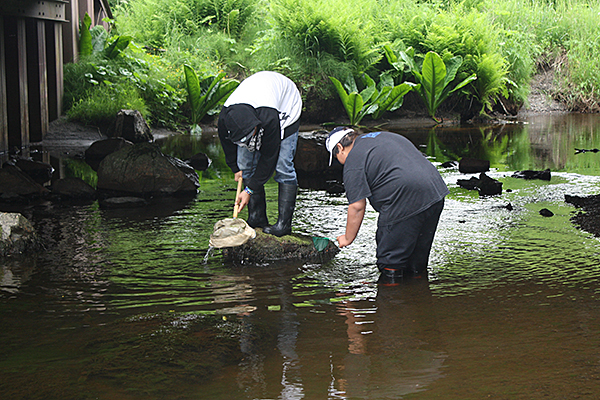
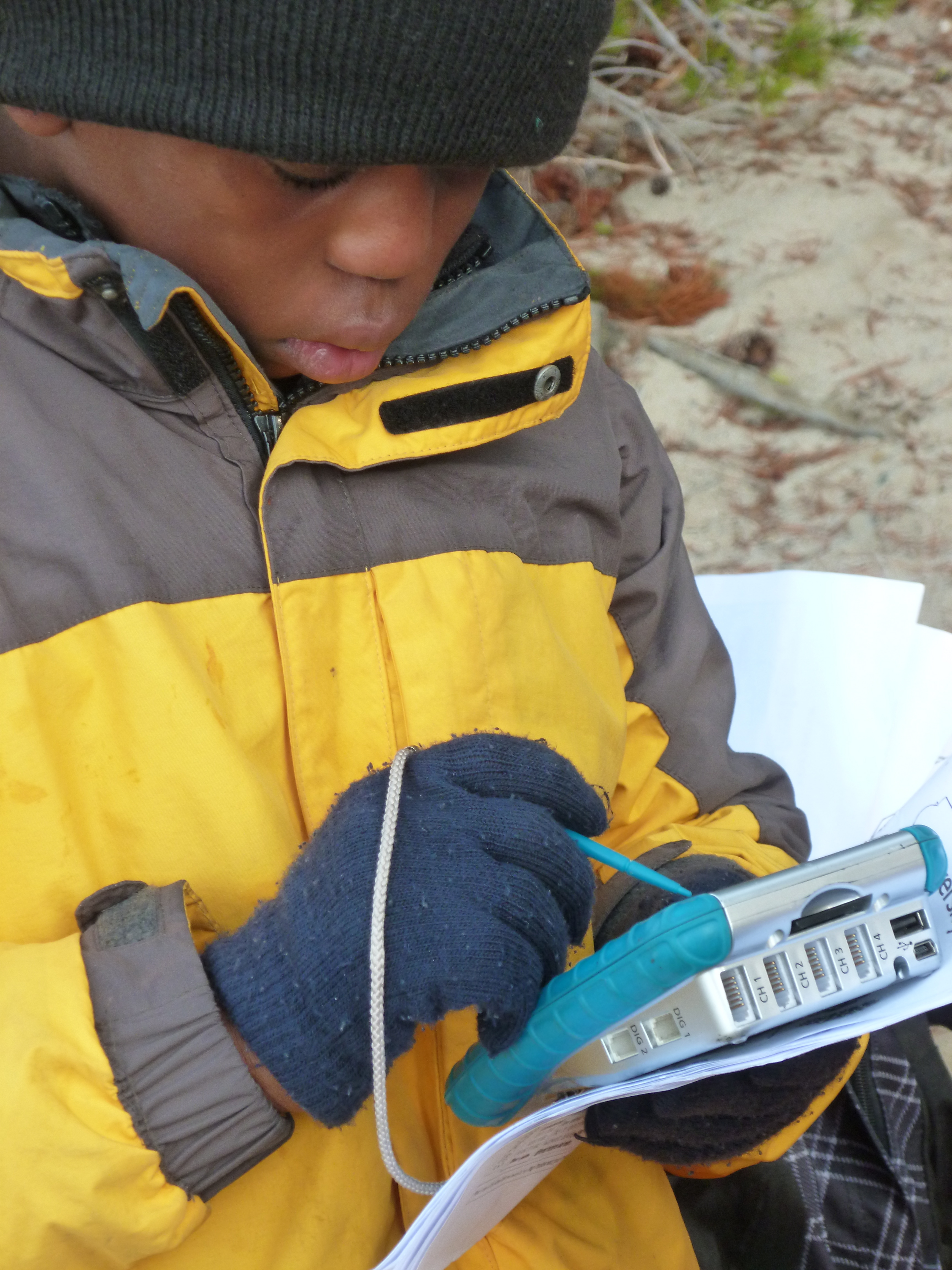
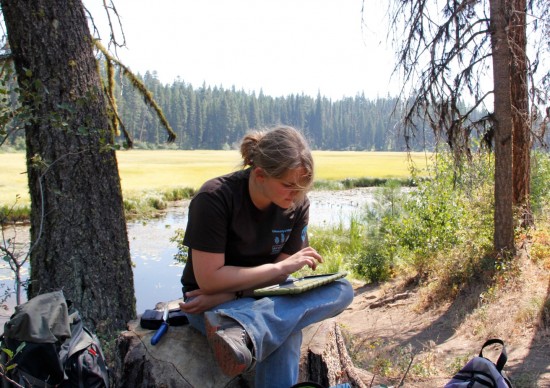
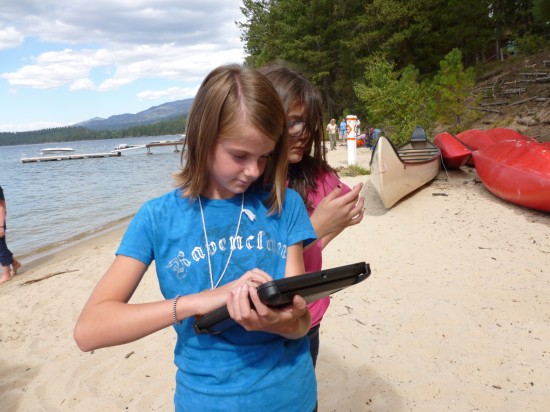
What does AL@MOSS look like? Imagine a group of middle school students studying water quality on a lake that they have known their whole lives. They start by talking about their memories of visiting this lake with their families, next they are guided to create a drawing that imagines the lake as it was 10,000 years ago, and as it will be 10,000 years in the future. They collect macro-invertebrates, measure the dissolved oxygen, pH, turbidity and nitrates. They look up at the mountains that surround the lake and envision how the snowpack becomes a reservoir from November through April, before its water begins run-off in May or June. As students conduct this place-based investigation of the watershed, they take pictures as they complete their data collection and carefully enter their data into field journals and an online database, accessed using an iPad in the field. A digital video recording captures a student’s reflections and inferences on how predicted changes in precipitation might impact the quantity of water that is available for various water users. When they return to “base camp”, these written reflections, photographs and videos are uploaded to a site where students from other communities can read and respond to their observations online. Student and teachers interested in water as a place responsive topic then have a videoconference with a local scientist who is studying changes in precipitation patterns due to climate change, a farmer who might be impacted by a change in the timing of available water, and a fisheries biologist who talks about how fish might be impacted. They finish the day by going back outside to play a game that simulates the highlights of the interconnected nature of relationships within the Earth systems.
Where will you AL@?
The promise of what AL and PBE bring to each other through AL@ is found through a democratized learning environment which becomes a digital commons. Community members, parents, learners and educators are all engaged in essential 21st century skills. By communicating digitally, participants are able to see how information of near and distant spaces is interrelated. The AL@ approach supports multiple worldviews through the invitation to engage in a process that sharpens expertise in our own experience. Equipped with AL@, educators and learners can meaningfully explore what place means through sharing their experiences. Through observation, reflection, and artifact keeping the AL@ approach supports knowledge keepers across the past, present and future narratives of places that can be connected. Highlighting relationships and breaking down spatial boundaries can serve to strengthen our understanding of the ways in which we are all connected.
Communicating Success
In the AL@MOSS approach, assessment is an important tool that we use to shape our curriculum and our delivery of programming. Content specific assessments of student learning are administered in each program session, with topics ranging from water resources and a changing climate to energy literacy and biofuels. Science identity is another research area explored in assessments in this program.
Additionally, artifacts are collected from the students experiences out in the forest, in the snow, out on the lake or on the mountain. These artifacts help us capture and communicate the success of our approach- and invite support from the network that students have in the community, including teachers, classmates, parents, and friends. These artifacts include video, pictures, and images of student work that are available in near real-time, but also archived for student portfolios that can demonstrate development in communication skills as well as progress in content areas.
R. Justin Hougham is a Post Doctoral Fellow at the University of Idaho, Department of Geography. Karla Eitel is the Director of Education at the University of Idaho McCall Outdoor Science School, College of Natural Resources. Brant G. Miller is an Assistant Professor of Science and Technology Education at the University of Idaho College of Education.
References
Doering, A. (2006). Adventure learning: Transformative hybrid online education. Distance Education, 27(2), 197-215.
Doering, A. (2007). Adventure learning: Situating learning in an authentic context. Innovate-Journal of Online Education, 3(6). Retrieved on August 30, 2008 from http://innovateonline.info/index/php?view=article&id=342.
Doering, A., & Veletsianos, G. (Fall 2008). Hybrid Online Education: Identifying Integration Models using Adventure Learning. Journal of Research on Technology in Education, 41(1), 101-119.
Hutchison, D. (1998). Growing up green: Education for ecological renewal. New York: Teachers College Press.
Orr, D. W. (2004). Earth in mind: On education, environment, and the human prospect. Washington, DC: Island Press.
Smith, G.A. (2002). Going local. Educational Leadership, 60(1), 30-33.
Smith, G. A. (2007). Place-based education: breaking through the constraining regularities of public school. Environmental Education Research, 13(2), 189-207. doi:10.1080/13504620701285180
Sobel, D. (2004). Place-based education: Connecting classrooms & communities. Great Barrington, MA: The Orion Society
The Learning Technologies Collaborative (2010). “Emerging”: A re-conceptualization of contemporary technology design and integration. In Veletsianos, G. (Ed.), Emerging Technologies in Distance Education (pp. 91-107). Edmonton, AB: Athabasca University Press.
Veetsianos, G., & Kleanthous, I. (2009). A review of adventure learning. The International Review Of Research In Open And Distance Learning, 10(6), 84-105.
Watchow and Brown (2011). A pedagogy of place: Outdoor education for a changing world (p. IX). Victoria, Australia: Monash University Publishing.
Woodhouse, J.L., and Knapp, C.E. (2000). Place-based curriculum and instruction: Outdoor and environmental education approaches. ERIC Clearinghouse on Rural Education and Small Schools.
by editor | Jun 20, 2015 | Place-based Education, Service learning
 Sowing the Seeds of Place and Community-based Learning
by Becs Boyd
 Place and Community Based approach can be transformative for students and teachers, schools and communities. Making this approach work means taking a fresh look at the school community, the wider community and the environment, and working out how they can best support each other. Change takes time, and success, naturally, relies on a healthy physical and social learning environment, with good relationships between educators, administrators and students. Many schools will already be connecting students with their local place and helping them discover how to make their own Place in the world a positive one.
Here are some pointers drawn from the experiences of real schools, students and teachers to help plant the seeds of Place in new school communities. (more…)

by editor | May 27, 2015 | Critical Thinking, Learning Theory, Place-based Education, Questioning strategies
Photo by Jim Martin
“Lessons for Teaching in the Environment and Community” is a regular series that explores how teachers can gain the confidence to go into the world outside of their classrooms for a substantial piece of their curricula.
Part 3: Emergent phenomena
by Jim Martin, CLEARING guest writer
If you go to a place in the world outside your classroom – your school yard, a trail nearby, a stream bank – and think about it, you’ll find it is a prism which, oriented effectively, holds the power to involve and invest your students in their educations, and empower them as persons. Simple miracle; takes work to discover.
You’ve found a place for your project, large or small, and thought of a partner or partners. Quite possibly, you might have noticed a piece of embedded curriculum. And maybe even thought of what students would do. These are the sort of things that emerge from the places in the real world when you go to them with your teacherly knowledge, skills, and understandings. The part of you that is Teacher is the prism from which the potential that resides in your community and environment emerge in observable form, paint their elements, disclose the human mind.
We named two projects last week. Let’s take a closer look at them and see what emerges.
A Small Project
Your class visits a nursing home every spring, and your students would like to grow flowering plants, pot them, and take them when they make their visit. You discuss this, and decide to plant seeds in the soil just under your classroom’s windows. When they’re growing well, students will transplant them to pots, which you have in your room.
What are the partnerships that will help you do this work? To do the project, you must get students out of the room and back, procure seeds and tools, touch bases with the custodian and principal, do the potting and manage kids on station. Plus, you have to deliver the fractions and biology lessons that you discovered in the schoolyard near your window. You have some resources, like the manager of a small local pharmacy, who has a limited budget for public services expenditures. Also, the nursing home and the school, which has gardening tools.
You need seeds, so ask the manager of the pharmacy outlet for a donation of one packet each of eight kinds of annual flowers. She agrees, and you get your seeds. So, children plant, seeds grow, students pot and then take their flowers to the nursing home. During the work, they learned about fractions and studied a biology unit on seeds. A resource you used is doing fractions and studying biology on site, so that you don’t do the project in addition to your already heavy teaching load.
Let’s call the people, institutions and organizations you worked with your “Partners,” and think of the project as one done with partnerships. Your Partnerships assist you with the logistical load involved in doing projects.
So, one tool you use is Partnerships, however small, to share the load. Sharing the load is an important part of doing projects. We live in communities, and ought to use them. It’s important to understand partnerships. Even though your partners are sponsoring part of the project, you are doing something for them and they are doing something for you. That’s why people engage in partnerships, because all parties bring something useful to the table.
A Larger Project
This project is a streambank restoration sponsored by a regional bird sanctuary and the local Friends of Trees organization. They provide tools, supplies, plants, and training for you and your students,. They also schedule three Americorps Volunteers for field trips and one classroom visit. You provide workers (your students), student-made site maps, site habitat assessments, and a summative Power Pointtm presentation.
The project entails a site visit to orient yourselves and begin site mapping, one to clear vegetation and continue mapping, another to survey, one to plant, and another to monitor the planting. In this sort of project, your partnerships are crucial to beginning and finishing the project. The bird sanctuary has some equipment and materials available to you for making the observations you’ll need to make the site map, and guidelines for performing the habitat assessments. They also have a person who will mentor you as you go through the stages of a streambank restoration project. This will give you the large picture within which your students’ work will fit. It also has, embedded within it, lots of useable curricula. Friends of Trees will help to plan and do vegetation clearing and using GIS techniques to map plants your students will put into the ground.
This means that you now must manage transportation, substitutes, and curriculum on your own. These present their own learning curves. The prism which organizes this confusing chatter of pieces, parts, jobs, and so forth, into recognizable and useful bands, bands which clarify community and environment based education into an inspiring and inviting rainbow is your capacity for doing self-directed science inquiry. In my experience, that seems to be the key empowering piece of the education puzzle. Most of us have never done a science inquiry from noticing something interesting, to asking a clear question about it, designing an investigation, collecting data, analyzing and interpreting it, communicating our findings, and identifying interesting follow-up questions. Somehow, engaging this from start to finish leaves teachers with a fresh perspective on what they are teaching, and how. And empowers them to thoroughly involve and invest their students in their educations and their lives. If you’ve ever seen the face and eyes of an empowered child, you’ll know what I mean.
Part of this change in perspective comes from releasing yourself from dependence upon directions in the publishers’ materials and teachers’ editions, and discovering that your students will find better, more effective ways to use them. Especially those in your bottom 25th percentile. (You can get an idea of what this might look like by going to Mike Weddle’s article here. He gives the most complete picture of what community and environment based education looks like that I’ve read. Written from the pen of a teacher. Jude Curtain, also on the website here, gives the best one-page description of science inquiry that I’ve read. They both know, and clearly express student-directed science inquiry.)
So, let’s walk through an inquiry, one blog at a time. The site can be your school, a natural area, a parking lot. They all work. Here’s what to do. If you can, spend some time in a place you’d like to do an inquiry. It doesn’t have to be one you’d take your students to. Browse around; find things that either interest you or raise questions in your mind. Just immerse yourself in the place. Here’s how one started for Dryas, my wife, and Carol Lindsay, our African Drum teacher, on a summer afternoon several years ago. We were by a side channel of a local stream, and they saw what they thought was a dragonfly with eight wings. They wondered what it really was, and set out to find out. This happens when you let something catch your eye. Go out this week and let it.
 This is the third installment of “Teaching in the Environment,” a new, regular feature by CLEARING “master teacher” Jim Martin that will explore how environmental educators can help classroom teachers get away from the pressure to teach to the standardized tests, and how teachers can gain the confidence to go into the world outside of their classrooms for a substantial piece of their curricula. See the other installments here.
by editor | May 27, 2015 | Critical Thinking, Place-based Education, Questioning strategies, Schoolyard Classroom
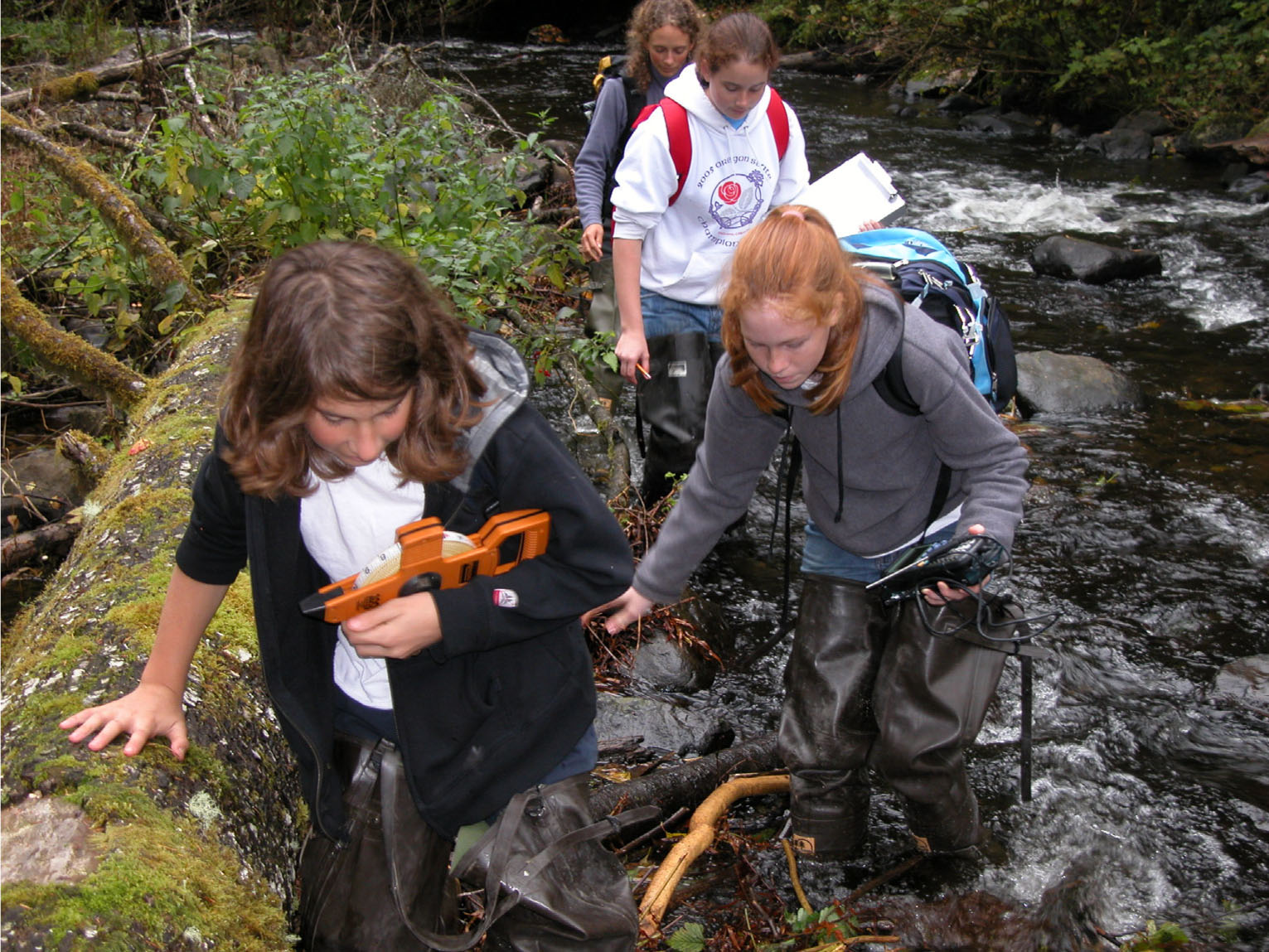
Photo courtesy of Jane Goodall Environmental Middle School
“Lessons for Teaching in the Environment and Community” is a regular series that explores how teachers can gain the confidence to go into the world outside of their classrooms for a substantial piece of their curricula.
Part 2: Developing Capacity
by Jim Martin, CLEARING guest writer
“And then the whining schoolboy, with his satchel,
And shining morning face, creeping like a snail
Unwillingly to school.”
– William Shakespeare
Why creep, unwilling, to school? Could it be that school is, itself, unwilling? Unwilling to allow its students’ brains, wonderfully autonomous learning machines, the freedom to learn, to engage their world and discover its nature, become empowered within it?
We evolved to survive in wild environments by learning them. Our brain did this learning by finding and exploiting patterns in the world it encountered. In the end, our brain has developed into an autonomous learning machine. Students have demonstrated in many schools that engaging in inquiries in the places where we evolved causes them to become involved and invested in their educations, and empowered as persons. While significantly improving their scores on the current barometer, standards exams. Use this innate capacity we humans are born with to touch, think, learn, assimilate, to structure your curricula. Those who have are successful.
Here’s one I personally know: The faculty of the Jane Goodall Environmental Middle School (JGEMS) in Salem, OR, decided to build their curricula around experiences in the world outside the classroom. Each student’s journey is developmental, culminating in groups doing self-directed inquiry in various places: a farm in the country, a coastal estuary, the Oregon Zoo, a forest in the Coast Range. The school’s focus is not on preparing students for the state standards tests. Instead, they give their students a solid and empowering education. The last time I visited JGEMS, their students racked up an impressive record: 100% passed the science standards, and the reading and math standards in the high and middle 90s. (Check their school out yourself at www.jgems.net.) Students who begin their learnings in the world in which they will live out their lives become involved and invested in their educations. The education establishment doesn’t recognize this accomplishment of classroom and environmental educators, but it is real. And doable.
There are many places you can start the journey toward effective, empowering education. One is with what I call Developing Capacity. When you have the capacity to teach science as it should be taught, you can start a science unit with words like these where you describe a spider’s web, against the morning sun, with dew glistening on its surface;
This is what life is like: The cells which make living things are composed of molecules which have been selected and put into place by little pieces of sunlight. Together, when these cells are organized into the organisms in foodwebs, they sparkle, and receive more little pieces of sunlight. As long as the sun shines, its light will add sparkle to life, and, intoxicated, life will gather more sunlight. Once entrained, this is a self-perpetuating process. Let’s study it as such an enchanting, self-directing phenomenon.
Note the difference in opening a unit on plant and animal cell physiology this way vs. saying that, in this unit, we are going to learn about the processes of photosynthesis and respiration, and the structure and functions of enzymes in cellular processes. The difference between comprehending the content you teach and knowing you can adapt your teaching to foreseeable contingencies, vs. relying on the words and suggestions in the teacher’s edition for your understanding of the content and its delivery. Altogether too many science teachers in this nation rely on publishers’ materials to prepare them to teach their curricula. This is unacceptable, and we need to do something about it now.
What follows may make you feel a little uncomfortable, like being out on a limb, sawing on the tree side. If it does, and you continue anyway, you’ll make it. In spite of the fact that you’ll never quite lose that feeling of being out there with the scratching sound of the saw in your ear. By then you’ll know there is nothing to fear, and will be on your way to taking charge of your curriculum.
Pick a project. Make it simple, but at your instructional level. Here are two to give you an example of what I mean. The first is a small flower bed your students will put into place on the school grounds. The second is planting and restoration work along a local trail. Somewhere in the continuum between these two projects, you should find something that fits your instructional level. (You don’t necessarily have to do these, but you must walk and think through the steps of the project you envision. Generating part of your curriculum in the real world wasn’t covered in most of our teacher education courses. It’s a very learnable process, you simply need to experience it and reflect on it.)
My goal here is teachers who are empowered with the capacity to build partnerships to facilitate their real world curricula. If you’ve never done a project, then you’re in the Acquisition phase of this learning curve, and simply hooking up with a local planting project done by someone else is a good place to start. Keep in mind that, while your students are there to plant, you’re there to see how the project works, who’s a good person to keep in touch with, materials you’ll need to acquire, etc. In short – develop your teacherly antennae. They’re very helpful things to have.
The first step is to check out the place where you’ll actually do the work. Look at the actual site, find where you’d have students work, envision what they would discover. Think of one piece of the curriculum you will soon teach and find it there. Get to know the place as part of your classroom.
The second, after you see a clear picture of the project, is to begin to develop helpful partnerships. These you’ll need, especially if you’ve never done a project outside your school building. For the school planting, the principal, custodian, and another teacher make great partners. For the second, you can call the parks and recreation department, a local agency, or an environmental group. You can have your students help develop a list of people to contact. This can be empowering work for them.
This is your self-directed inquiry. So, decide on a project at your instructional level, check out the place where students will work, and identify at least one or two potential partners. Next week, the blog will pick up with these examples and use them to discuss the myriad things it takes to effectively use the real world to generate curricula.
I’ll leave you with one final charge: find a teacher who already uses the environment to build curricula. If you don’t know one, your school district probably knows of at least one. Tell the teacher your thoughts and keep in touch. It’s an easy way to reduce the isolation of the classroom.
Remember; this is all doable. You just have to start.
This is the second installment of “Teaching in the Environment,” a new, regular feature by CLEARING “master teacher” Jim Martin that will explore how environmental educators can help classroom teachers get away from the pressure to teach to the standardized tests, and how teachers can gain the confidence to go into the world outside of their classrooms for a substantial piece of their curricula.

by editor | Feb 23, 2015 | Environmental Literacy, Indigenous Peoples & Traditional Ecological Knowledge, Marine/Aquatic Education, Place-based Education, STEM
It Takes a Community to Raise a Scientist:
A Case for Community-Inspired Research and Science Education in an Alaskan Native Community
By Nievita Bueno Watts and Wendy F. Smythe
The quote, “lt takes a village to raise a child,” is attributed to African tradition and carries over to Alaskan Native communities as well (Hall, 2000). Without the support of their community and outside resources, Alaska Native children have a difficult time entering the world of science. Yet increasing the awareness of science, as a tool to help a tribal community monitor and maintain the health of their environment, introduces conflicts and misconceptions in context of traditional cultural practices. Rural communities depend upon traditional food harvested from the environment such as fish, wild game, roots, and berries. In many Native Alaskan villages the health of the environment equals the health of the people (Garza, 2001) . Integrating science with culture in pre-college education is a challenge that requires sensitivity and persistence.
 The Center for Coastal Margin Observation and Prediction (CMOP) is a multi-institutional, National Science Foundation (NSF) Science and Technology Center that takes an interdisciplinary approach to studying the region where the Columbia River empties into the Pacific Ocean. Two of CMOP’s focus areas are biogeochemical changes affecting the health of the coastal margin ecosystem, and socio-economic changes that might affect the lives of people who harvest and consume fish and shellfish.
The Columbia River waters touch the lives and livelihoods of many people, among them a large number of Pacific Northwest lndian tribes. These people depend on the natural and economic resources provided by the Columbia River. Native peoples from California through Alaska also depend on resources from their local rivers, and, currently, many tribes are developing-a workforce trained with scientific skills to manage their own natural resources in a way that is consistent with their traditional way of life. The relationship between Traditional Knowledge (TK) and practices, which are informed by centuries of observation, experimentation and carefully preserved oral records, and Western Science, which is deeply rooted in the philosophies and institutions of Europe, is often an uneasy one.
National progress is being made to open pathways for individuals from Native communities to Western Science higher education programs and back to the communities, where tribal members are empowered to evaluate and monitor the health of their environment. CMOP is part of this national movement. CMOP science is developing tools and techniques to observe and predict changes in the river to ocean system. CMOP education, an essential element of CMOB supports American lndian/Alaska Native students in pursuing academic and career pathways focusing on coastal margin sciences (Creen et al., 2013). One of CMOP’s initiatives is the CMOP- School Collaboratories (CSC) program.
CMOP-SCHOOL COLLABORATORIES
The CMOP-school Collaboratories (CSC) program is based on the idea that Science, Technology, Engineering, and Mathematics (STEM) pathway development requires an intensive and sustained effort to build relationships among science educators, students, school personnel, and the tribal community. The over-arching goal is to broaden participation in STEM disciplines. CMOP educators developed the CSC model that includes integration strategies for a community, development of appropriate lessons and field experiences and student action projects that connect local and traditional knowledge with science. Educational experiences are place- based, multi-disciplinary and culturally relevant. The objective is to open students’ minds to the reality of the need for scientists with many different world views and skill sets working together to address our planet’s pressing problems in a holistic manner. CMOP seeks to encourage these students to be part of that solution using both Traditional Knowledge and STEM disciplines.
The program encourages STEM education and promotes college preparatory awareness. This CSC program has three unique characteristics: it introduces coastal margin science as a relevant and viable field of employment; it integrates STEM learning with Traditional Knowledge; and, it invites family and community members to share science experiences. The example presented in this article describes a four-year program implemented in a small village in Southeast Alaska, 200 miles from the capital city of Juneau.
Figure 1: Students, scientists, a cultural expert. and a teacher with scientific equipment used to collect data from the river.
ALASKA NATIVE VILLAGE CASE STUDY
 Wendy Smythe, a CMOP doctoral candidate and principal investigator for an NSF Enhancing Diversity in the Geosciences (OEDC) award, is an Alaska Native Haida. As she advanced in her own education, she wanted to share what she had learned with the youth of her tribal community, striving to do so with the blessing of the tribal Elders, and in a way that respected the Traditional Knowledge of the Elders. Dr Bueno Watts is a mentor and expert on broadening participation. She acts in an advisory capacity on this project.
The village school consists of l5 staff members and 50 K-l2 students, with the school experiencing high administration turnover rates. ln the first two years of the program we recruited non-native graduate students to participate in the CSC program. This effort provided them experience working in Native communities. ln the last two years we recruited Native American undergraduate interns to teach lessons, assist with field activities and provide students with the opportunity to become familiar with Native scientists [Figure 1]. lnterns formed part of the science team.
STEPS TO GAIN ENTREE TO A VILLAGE
The community must support the concept to integrate science education with traditional practices. Even for this Alaska Native (Smythe), the process of building consensus from the tribe and gaining approval from the Elders and school district for the program was a lengthy one. The first step required letters of support from school district and tribal leaders. The difference in geographical locations proved difficult until Smythe was able to secure an advocate in the tribe who spoke for her at tribal meetings. Face-to-face communications were more successful than distance communications. Persistence proved to be the key to achieving success at getting the consensus of community leaders and school officials’ support. This was the top lesson of l0 learned from this project (Table l).
Traveling to the school to set up the program is no small feat and requires extensive coordination of transportation and supplies. A typical trip requires a day-long plane ride, overnight stay in a nearby town to prepare and gather supplies, a three-hour ferry ride, acquisition of a rental truck and a one-hour drive. Accommodations must be made to board with community members.
The development of appropriate lessons for the curriculum engaged discussions with tribal Elders and community Ieaders on an individual basis. Elders agreed to provide videoed interviews and were given honoraria as a thank you for their participation. Smythe asked the Elders what scientists could do to help the community, what stories can be used, where students and educators could work in the community to avoid intruding on sacred sites, and what information should not be made public. Once Elders agreed to provide interviews and share stories, other community members began to speak about their lives and concerns. This included influence of boarding schools, Iife as it was in the past, and changes they would like to see within the community. This was a significant breakthrough.
Table l . Lessons Learned: ten things to consider when developing a science program with Native communities
1. Persistence is key.
2. Face to-face communication is vital and Lakes time.
3. A community advocate with influence and respect in the community is critical.
4. Consult with the Elders first. They have their finger on the pulse of the community and are the center “of the communication network. Nothing happens without their approval. Find out what it is okay to talk about and where your boundaries are and abide by them. lnclude funds for honorariums in your proposal. Elders’ time and knowledge is valuable and they should be compensated as experts.
5. Partner with individuals or groups, such as the Department of Natural Resources.
6. Find a relevant topic. Be flexible with your curriculum choice. It must reflect the needs and interests of the community and the abilities of the teacher you are working with.
7 . Be prepared, bring supplies with you. Ship items in advance if going to a remote location
8. Have the ability to provide individual instruction for students who need it to prepare projects and practice giving presentations.
9. lnvolve the community. Hold events in a community center to encourage everyone to attend.
10. View your involvement as a long-term investment in a committed community relationship.
 ln addition to the Elders, support was needed from a natural resources representative who functioned as a liaison between our group and the community members. This person’s role is found in most villages and could be the head of the Department of Natural Resources or a similar tribal agency that oversees fish, wildlife, and natural resources. This person provides a critical link between the natural environment and the community. The next step is to go in the field with the natural resources representative, science teachers, EIders, and interested students to identify a meaningful focus for the community. lnitially we focused the project with a scientist’s view of teaching microbiology and geology of mineral deposition in a river ecosystem. However, the team found community interest low and no enthusiasm for this project.
Upon our return to the village, the team and CMOP educators found the focus, almost by accident. We were intrigued by “boil water” notices posted both at the home in which we were staying and on the drinking fountains at the school: The students were all talking about water, as were the Elders. It was clear that the community cared about their water quality. The resulting community-inspired research educational plan was based on using aquatic invertebrate bioindicators as predictors of water quality (Adams, Vaughan & Hoffman Black, 2003). This student project combined science with community needs (Bueno Watts, 2011).
CURRICULUM LESSONS
The first classroom lessons addressed water cycle and watershed concepts (Wolftree, 2OO4), which were followed by a field lesson on aquatic invertebrates. Students sampled different locations in an effort to determine biodiversity and quantity of macroinvertebrates. While students were sitting at the river’s edge, the site was described in the students’ Alaska Native tongue by a cultural expert, and then an English translation was provided. This introduced the combination of culture and language into the science lesson.
 Figure 2: Students use data loggers to collect data on temperature, pH, and location.
The village water supply comes from a river that runs through the heart of the community. Thus, this river was our primary field site from which students collected water for chemical sampling and aquatic invertebrates using D-loop nets. Physical and chemical parameters of the river were collected using Vernier LabQuest hand-held data loggers. Students recorded data on turbidity, flow rate, temperature, pH, and pinpointed locations using CPS coordinates (Figure 2].
 Aquatic invertebrate samples were sorted, classified, counted, recorded, and examined through stereoscopes back in the classroom. Water chemistry was determined by kits that measured concentrations of alkalinity, dissolved oxygen, iron, nitrate/nitrite, dissolved carbon dioxide, and phosphate.
Microbiology assessments were conducted in an effort to detect fecal coliform (using m_FC Agar plates). Students tested water from an estuary, river, drinking fountain, and toilet. Results from estuarine waters showed a high number of fecal coliform, indicating that a more thorough investigation was warranted While fecal coliform are non-disease causing microorganisms, they originate in the intestinal tract, the same place as disease causing bacteria, and so their presence is a bioindicator of the presence of human or animal wastes (Figure 3).
 Students learned that the “dirty water” they observed in the river was actually the result of a natural process of acidic muskeg fluids dissolving iron minerals in the bedrock, no health danger. The real health threat was in the estuarine shellfish waters. Students shared all of their results with their families, after which community members began to approach the CMOP science team with questions about the quality of their drinking water. The community was relieved to find that the combined results of aquatic invertebrate counts and water chemistry indicated that the water flowing through their town was healthy. However they were concerned about the potential contamination as indicated by fecal coliform counts in the local estuary where shellfish were traditionally harvested.
ln the second year, a curriculum on oceanography developed by another STC, the Center for Microbial Oceanography: Research and Education (C-MORE) was introduced (Bruno, Wiener, Kimura & Kimura, 2011). Oceanography lessons focused on water density as a function of salinity and temperature, ocean currents, phytoplankton, and ocean acidification, all areas of research at CMOP. Additional lessons used local shipworms, a burrowing mollusk known to the community, as a marine bioindicator (CMOP Education, 2013). Students continued to conduct bioassessments of local rivers and coastal marine waters.
 Figure 3: Students sort and count aquatic invertebrates as a bioindicator of river health.
Students used teleconferencing technology to participate in scanning electron microscope (SEM) session with a scientist in Oregon who had their samples of aquatic invertebrates. Students showcased their experiments during parent day. Five students (l0%) had parents and/or siblings who attended the event.
SHARING KNOWLEDGE
As a reward for participation in the science program, two students were chosen to attend the American lndian Science and Engineering Society (AISES) 2009 conference in Oregon. Travel expenses were shared between the school, CSC program, and the tribe. ln the following three years an additional ten students attended the AISES conference and presented seven science research posters in New Mexico. Minnesota and Alaska. ln 2012, one student won 3rd place for her shipworm poster presentation (Figure 5). These conference presentations enabled some students to take their first trip out of Alaska.
ln May 20ll the first Science Symposium for grades K-12 allowed students to share their science projects with parents, Elders, and tribal community members. Both students and teachers were prepared on how to do a science fair project. Work with students had to be accomplished on a one-on-one basis, and members of the team were paired with students to assist with completing projects and polishing presentations. Students were not accustomed to speaking publicly, so this practice was a critical step.
The event was held at the local community center, which encouraged Elders and other community members to attend.
Elders requested a public education opportunity to teach the community about watersheds and the effects of logging. Our team incorporated this request into the science symposium. Students led this project by constructing a 5D model of the watershed for display. People could simulate rainfall, see how land use affects runoff and make runoff to river estuary connections. Scientists conducted hands-on demonstrations related to shipworms, local geology, ocean acidification and deepsea research. Language and culture booths were also included. During the symposium, a video of one of the interviews we had conducted with an Elder was shown as a memorial to his passing. The symposium was considered a huge success and was attended by 35 students and 50 community members.
 COMMUNITY RESPONSE
The CSC program garnered results that could not have been predicted at the outset. For example, the tribe requested our input when deciding which students should attend a tribal leadership conference and summer camp. Three student interns participated in a collaborative project with the tribe to conduct bio-assessment studies of local rivers and a key sockeye breeding lake. lnterns operated a remotely operated underwater vehicle (ROV) for data collection, resulting in video documentation of the salmon habitat. ln addition to the bio-assessment, the interns conducted interviews with Elders about the rivers in the monitoring project. The results of this study were used to stop logging around sockeye spawning habitat and to ban the harvest of shellfish from contaminated parts of the estuary. Now the tribe is monitoring rivers on its own. ln the near future CMOP plans to install a sensor that can be monitored remotely, and to train people to read and interpret the data.
CONCLUSION
Community-inspired research often produces a ripple effect of unforeseen results. ln this case, inclusion of Elders in the design and implementation of the project produced large scale buy-in from community members at all age levels. Consequently, in a village where traditionally students did not think about education beyond high school, we have had two students attend college, two students attend trade school, five students receive scholarships, and eight Native interns conducting science or science education in the community. And, given the low numbers of Alaska Natives pursuing careers in science, we find those numbers to be remarkable.
REFERENCES
Adams, J., Vaughan, M., & Hoffman Black, S. (200i). Stream Bugs as Biomonitors: A Guide to Pacific Northwest Macroinvertebrate Monitoring and Identification. The Xerces Society. Available from: http://www.xerces.org/identification-guides/#
Bruno, B. C., Wiener, C., Kimura, A., & Kimura, R. (2011). Ocean FEST: Families exploring science together. Journal of Geoscience Education, 59, 132.1.
Bueno Watts, N. (20,1 1). Broadening the participation of Native Americans in Earth Science. (Doctoral dissertation).
Retrieved from Pro-Quest. UMI Number: 3466860. URL http ://repository.asu.edu/items / 9 438
Center for Coastal Margin Observation & Prediction. QO13). Shipworm lesson URL http://www.stccmop”org/ education/k1 2/geoscience/shipworms
Carza, D. (200.l). Alaska Natives assessing the health of their environment. lnt J Circumpolar Health. 6O@):a79-g6.
Creen, V., Bueno Watts, N., Wegner, K., Thompson, M., Johnson, A., Peterson, T., & Baptista, A. (201i). Coastal Margin Science and Education in the Era of Collaboratories. Current: The Journal of Marine Education. 28(3).
Hall, M. (2000). Facilitating a Natural Way: The Native American Approach to Education. Creating o Community of Learners: Using the Teacher os Facilitator Model. National Dropout Prevention Center. URL http://www. n iylp.org/articles/Facilitating-a-Natural-Way.pdf
Wolftree, lnc. (200a). Ecology Field Cuide: A Cuide to Wolftree’s Watershed Science Education Program, 5th Edition. Beavercreek, OR: Wolftree, lnc. URL http://www. beoutside.org/PUBLICATIONS/EFCEnglish.pdf
ADDITIONAL RESOURCES
The educational resources of CMOP are available on their website : U R L http ://www. stccm o p. o rg / education / kl 2
ACKNOWLEDGMENTS
CMOP is funded by NSF through cooperative agreement OCE- 0424602. Smythe was also supported by NSF grant CEO-I034611. We would like to thank Dr. Margo Haygood, Carolyn Sheehan, and Meghan Betcher for their assistance and guidance with the shipworm project. We would like to thank the Elders and HCA for their guidance, advice and encouragement throughout this program
Nievita Bueno Watts, Pn.D. is a geologist, science educator, and Director of Academic programs at the NSF Science and Technology Center for Coastal Margin Observation & Prediction (CMOP). She conducts research on broadening the participation of underrepresented minorities in the sciences and serves on the Board of Directors of the Geoscience Alliance, a national organization dedicated to building pathways for Native American participation in the Earth Sciences.
Wendy F. Smythe is an Alaska Native from the Haida tribe and a Ph.D. candidate at the NSF Science and Technology Center for Coastal Margin Observation & Prediction. She runs a geoscience education program within her tribal community in Southeast Alaska focused on the incorporation of Traditional Knowledge into STEM disciplines.

by editor | Feb 19, 2015 | Place-based Education
15 Ways to Know You’re Connected to a Place
What Does “Connecting to a Place” Really Mean?
By Cliff Knapp
Environmental and place-based educators frequently refer to a goal they set for their students — connecting or reconnecting them to a place. What does this really mean? How will I know when my students are connected to that place? What kinds of behaviors should I look for to determine if my students have reached that goal? The following observable outcomes will serve to indicate that my students have connected or reconnected to a particular place:
1. When they can orient themselves in that place according to the four cardinal directions and the elevations above sea level.
2. When they can tell a short story about the history of that place.
3. When they can identify and call some of the human and non-human residents of that place by name and know something about their life histories.
4. When they know which plants and animals found there are native to that place and which ones humans have introduced.
5. When they know which animals stay there all year round and which migrate in and out of that place.
6. When they can name some of the natural resources in that place that are useful to humans.
7. When they frequently return to that place because they want to spend more time there.
8. When they feel inspired to write poems, essays or stories about the benefits they receive by being in that place.
9. When they know the origins of some of the human-made objects found in that place.
10. When they can comfortably spend time in that place using healthy and safe practices.
11. When they know what kinds of rocks and soil are found in that place.
12. When they know where a drop of rain would travel over the land surface as it joins a body of water.
13. When they can describe some of the weather and climate patterns that affect that place.
14. When they know some of the problems and issues faced by the people who occupy that place.
15. When they can describe some of the movements and changes of the sun, moon, stars and planets throughout the year.
Cliff Knapp has been involved with COEO since the 1980s running graduate courses though Northern Illinois University. He is a long-serving member of the Association for Experiential Education and author of many books and articles on a wide array of outdoor education topics centering on community and nature themes. This article originally appeared in Pathways: The Ontario Journal of Outdoor Education, Fall 2010, 23(1).

 Merging Technology, Place and Change
 Practical enactment of AL@MOSS