by editor | Feb 27, 2011 | K-12 Classroom Resources
For grades K-12
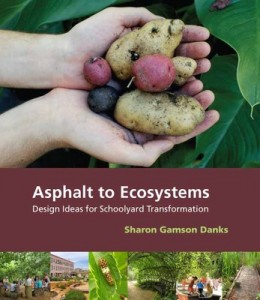
Asphalt to Ecosystems is an illuminating guidebook for designing and building creative, ecologically diverse schoolyards and integrating nature into learning and play activities across K-12 curricula. With a wealth of practical advice and over 500 color photographs, Sharon Gamson Danks offers a fully illustrated, easy-to-understand guide for transforming the traditional school ground’s slab of asphalt into edible gardens, wildlife habitats, and other sustainable uses. (more…)
by editor | Feb 15, 2011 | K-12 Classroom Resources
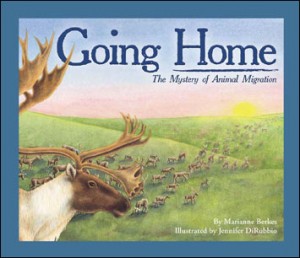
The Mystery of Animal Migration
By Mariane Berkes
Published by Dawn Publications
Reviewed by Emily Baker-LaRouf
What pushes an animal to travel thousands of miles to places it has never seen or to reproduce in the same spot as its ancestors did? The mysteries of the animal world are many and scientists still don’t hold all the answers. Exploring these topics with children can be exciting and a little daunting. I recently had the pleasure of reading Going Home to my kids and the timing couldn’t have been better. With fall changing toward winter here in Minnesota we have watched the bird activity increase as the flocks head southward toward warmer climes. This book provided a great jumping off point to migration in general. (more…)

by editor | Feb 14, 2011 | K-12 Classroom Resources
 Reviewed by Elizabeth Rinaldo
Study after study recommends integrating children into nature at a very young age. Little ones view with innocent and open eyes – they are curious and inquisitive and don’t yet know that it isn’t proper to get their hands dirty. Facilitating outdoor opportunities for children at a very young age can lead to a lifelong connection with nature.
Yet there are few pre-school or early elementary programs that offer any outdoor opportunities for children – beyond the daily excursion on the playground. Part of the problem is a lack of knowledge about such outdoor activities, lack of funding, or a lack of resources. (more…)
by editor | Dec 15, 2010 | At-risk Youth, K-12 Classroom Resources, Place-based Education, Service learning
Exploring Place-based Education Programs in the Pacific Northwest
by Becs Boyd
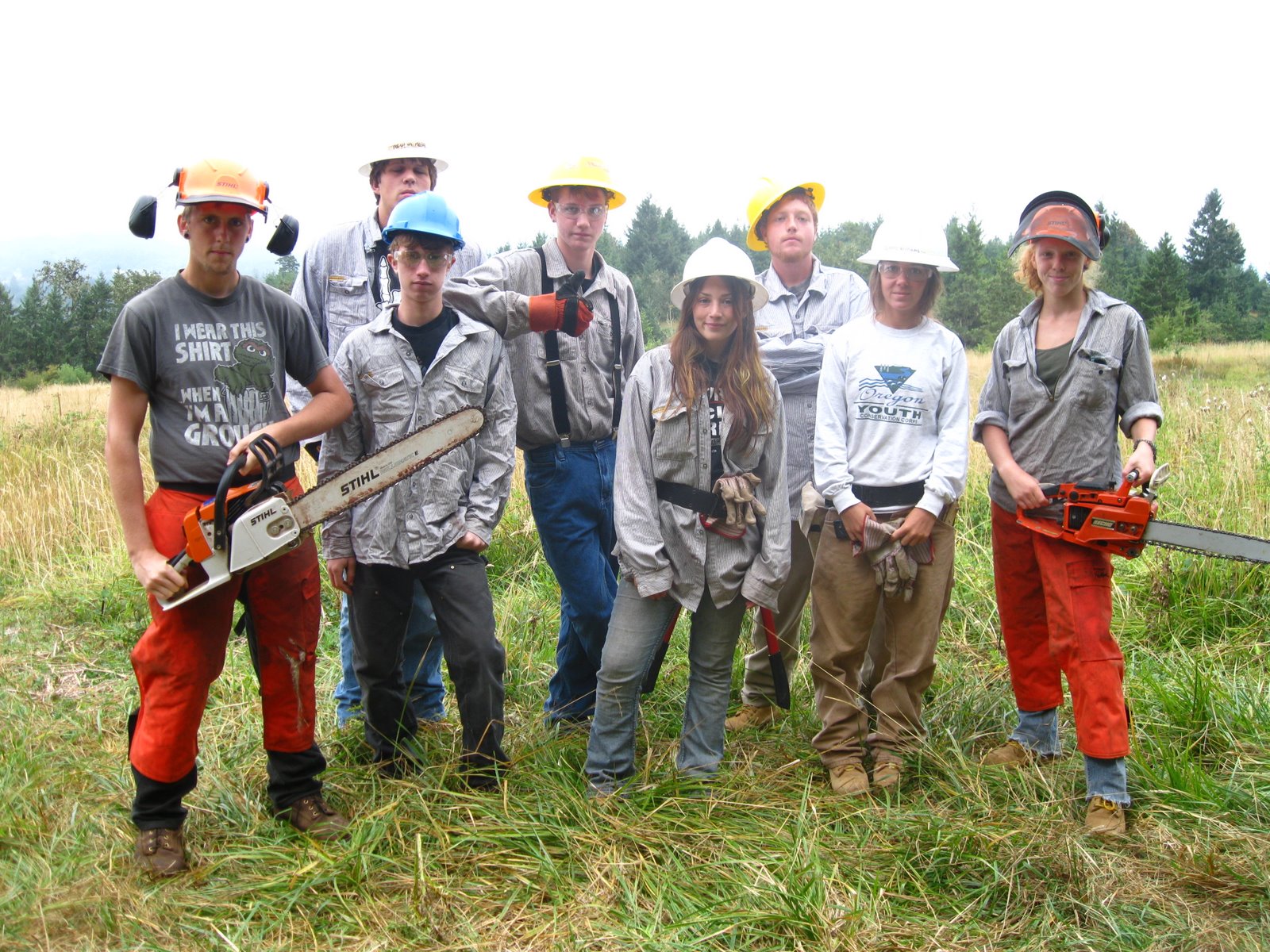
A visit to Kennedy High School in Cottage Grove, Oregon on 18 November, turns out to be one of the most uplifting days I have spent in a school, perhaps ever.
Formally known as AL Kennedy Alternative High School, the school was founded in 1998 by a forestry teacher who wanted to help students aged 15 to 18 who were struggling in mainstream education. By 2008, when current principal Tom Horn took over, the school was sinking under an attendance rate sometimes as low as 23%, serious drug problems and alarming drop out rates. Now, little more than two years on, Tom’s vision, and the perceptive and caring approach to the students which shines through the principal and his team of committed and talented staff, have completely transformed the culture of the school. Attendance rates are around 90% and the drop out rate has fallen dramatically, while test results show an upward trend. The school serves a maximum of 75 students, but there are 190 further students waiting for a place.
(more…)
by editor | Nov 30, 2010 | K-12 Classroom Resources, Marine/Aquatic Education, Place-based Education

Exploring Place-based Education Programs in the Pacific Northwest
by Becs Boyd
On the southwest coast of Oregon a small town called Charleston is tucked against a busy dockside lined with fishing and tourist boats. The Oregon Institute of Marine Biology has its base here, in a campus of attractive traditional buildings covered in sun-bleached wooden shakes. I’m here to see OIMB’s amazing track record for bringing the local marine environment to life for local children.
For the past six years a National Science Foundation grant has meant that nine OIMB graduate students a year have been teaching marine biology two days a week in twelve local schools to Grades K-6 (ages 6 to 12), reaching around 3500 students. The result? – a generation of schools and teachers with an excellent knowledge of the sea life at their doorstep, what it looks like, how it works, and the issues and challenges it faces. On the way they learn to think like scientists and are familiar with microscopes, hypotheses, moon phases and zoea. The curriculum framework is cleverly arranged by habitat, with Grade 1 studying rocky shores, Grade 2 sandy shores, Grade 3 estuaries, Grade 4 kelp forests, Grade 5 the open ocean and Grade 6 drawing all they have learned together with the study of islands. (more…)

by editor | Nov 22, 2010 | K-12 Classroom Resources
 What do you think?
As a former environmental educator, I think it is very important that we as educators separate advocacy from education. At the Environmental Education Association of WA’s first conferences in the early 1990s we discussed the distinction a lot. Working at North Cascades Institute and now at another nonprofit, we always have to make the distinction between education and advocacy for the content our EE programs.
EE programs that we all work with have an environmental impact and environmental initiatives are often controversial because people hold very different opinions based on different values. Those values come from different life experiences in family, community, cultural groups, training and education, political power, history of property ownership, etc.
Controversy is inherent in a free democratic society and the discussion of controversial issues is essential to decision making in a free society. More than a discussion of controversial issues is needed.
Citizens need to understand the environmental issues and problems facing their community and of the options available in addressing them. THIS IS Education.
Advocacy is an important activity, and advocacy programs must provide individuals with opportunities to identify, investigate, and participate in the resolution of environmental issues and problems on their land and in their community. But in dealing with these issues through true environmental education, the atmosphere should be as neutral and objective as possible. Environmental educators must be familiar with all sides of issues, bringing all sides into educational programs, and must stand firm for each advocate’s right to be heard and express opinions based firmly on objective information.
This is an interesting topic and I would welcome a continuing dialogue among the EE community—on the distinction between EE and Advocacy! Thanks for everyone’s thoughts on this!
Wendy Scherrer, Executive Director
Nooksack Salmon Enhancement Association (NSEA)
Bellingham, WA


