by editor | Oct 21, 2011 | Forest Education, K-12 Classroom Resources
by Derek Jones
We erect dams assuming they are eternal, as if they’ll never topple over or be dismantled or fill with sediment or lose their financial rationale. Yet all dams will die. . . They’ll be reminders of an ancient time when humans believed they could vanquish nature, and found themselves vanquished instead.
— Jacques Leslie, from “Deep Water, the Epic Struggle over Dams, Displaced People, and the Environment”
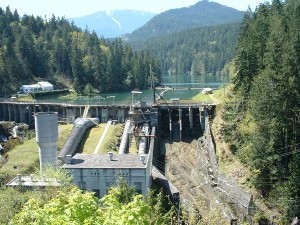
WHAT WOULD YOU SAY if I asked if you knew that the nation’s second largest ecological restoration project was happening right now only a 2 ½ hour drive from Seattle? Would you be able to name the project? If given a map of the Puget Sound Region, would you be able to point out where the Elwha River is? How many of your students could do the same? The removal of two dams on the Elwha River provides students with a fascinating case study that contains elements of a wide swath of topics covered in, and out of, the classroom; engineering, social studies, ecology, mathematics, history, and geology among others. It is up to educators to make sure that such an enormous and complex project with such far-reaching implications does not go by without being appropriately utilized as a teaching tool. (more…)
by editor | Oct 4, 2011 | K-12 Classroom Resources
Reviewed by Christina Bekhazi, Mallory Flesher, Caitlin Gonsalves, Janaina Kitzke and Laura Mathis as part of Dr. Pauline Sameshima’s T&L 536 class at Washington State University.
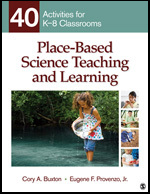
Place-Based Science Teaching and Learning: 40 Activities for K-8 Classrooms is an incredible book that teachers should have to help teach place-based science for K-8 students. This book includes 40 different science activities that can be used for all these age groups. Within this book, the authors also provide the reader with many different assessment strategies to help grade students’ work. I would highly recommend this book to many incoming and experienced teachers who need to understand the importance of place-based learning and how to implement it into their curriculum. (more…)

by editor | Aug 9, 2011 | K-12 Classroom Resources
by Greg Traymar
Sharing Nature North America

If you want to get through to an 8-year old, find an inspired 16-year old.
That’s what I’ve found in an extraordinary experience I had during the 2009-10 school year in which I trained a group of 16 high school students in Sharing Nature® games. These students, in turn, taught close to 300 elementary and middle school students in California, Washington, Oregon and Hawaii. The results were astounding, as exemplified one day when the elementary teacher told us that her class was one of the most challenging groups of students in the school. (more…)

by editor | Jun 13, 2011 | K-12 Classroom Resources
 by Glenn Hovemann, Editor
Dawn Publications
Let’s say you are in a library or bookstore and you want to find a book that will inspire a child to connect with nature in some way. Should you head for the fiction or non-fiction section? This may seem like an obvious, straightforward choice (paper or plastic? credit or debit?) so you head for non-fiction because—well, because you want something about nature.
But on the way to the non-fiction section you pause, remembering the attention span issue and how some plugged-in young ones seem prefer to be bedazzled, and how that last book of facts and photographs just didn’t quite catch on. So you turn toward the fiction shelves. But then you pause again. Wait! I really want to inspire a love of nature—an ethic of caring for the Earth, you say to yourself, not wanting to repeat some of the unenlightening fiction that you’ve read aloud recently.
What to do?
(more…)
by editor | Apr 25, 2011 | K-12 Classroom Resources
by Chet Bowers, Professor Emeritus, Portland State University and Courtesy Professor of Environmental Studies, University of Oregon, United States
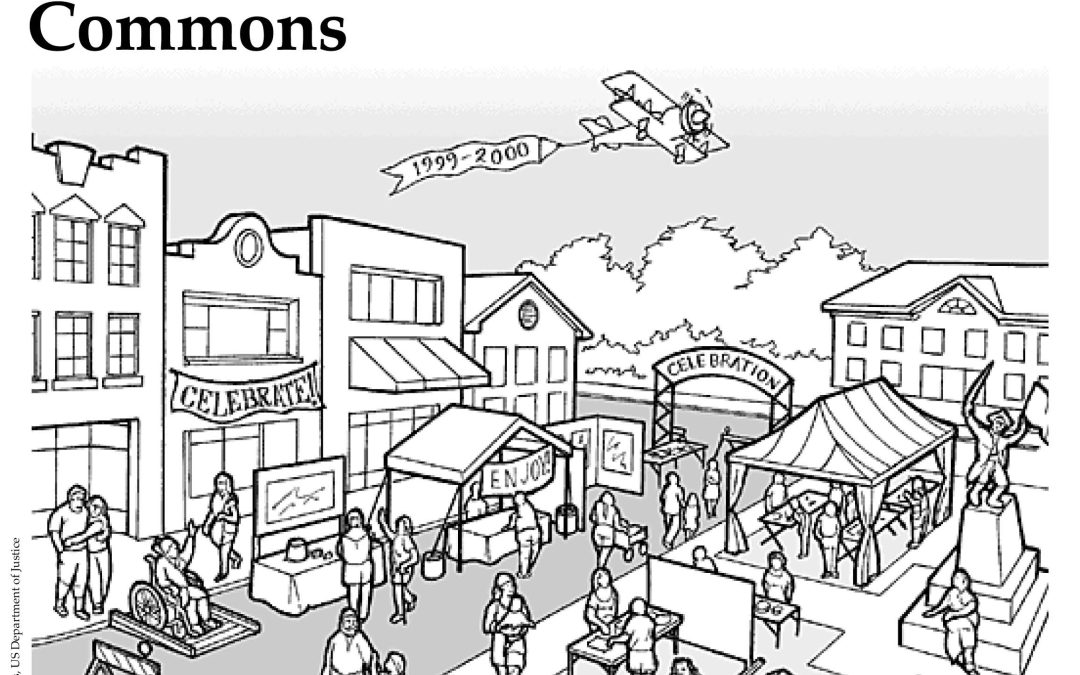
This article discusses how the cultural commons that exist in every community, both rural and urban, carry forward the intergenerational knowledge and skills that enable people to live more mutually supportive lives that are less dependent upon consumerism and that have a smaller ecological footprint.
Also discussed is why public schools and universities have relegated the intergenerational and largely non-monetized knowledge and skills to low status, as well as the different ways in which the traditions of community self-sufficiency are being transformed into new markets that lead to greater dependency upon a money economy. The cultural commons began with the first humans, and will become increasingly important as the industrial/consumer culture continues to collapse.
(The image by James Penstone is licensed under a Creative Commons Attribution-NonCommercial-ShareAlike 2.0 UK: England & Wales License.
(more…)
by editor | Apr 20, 2011 | K-12 Classroom Resources
 Author: Douglas Brinkley Publisher: HarperCollins
Book Review by Orlay Johnson
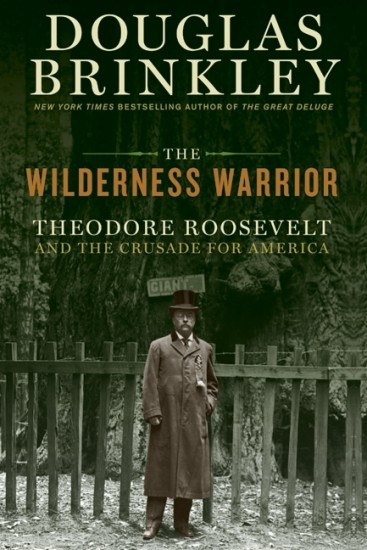
Whether you have only thought of Teddy Roosevelt as a stuck-up war-mongering aristocrat or as the first modern and progressive US President, I think you will like this book. It is well researched, detailed, and a fun read. The book focuses on Teddy’s (Theodore, to his friends) preservationist side, addressing the questions of how, why, and when he went from a rich city kid, with little formal schooling, to perhaps most effective conservationist in US history. For at least 100 years, he protected more of America’s natural real estate than all other presidents combined. True the book does ignore most of his the war mongering, but in other ways does not hesitate to show his weaknesses and class blindness. However, above all else, it brings us a wealth of new information and insights, not only about TR, but also about America and our history of resource exploitation at the cost of human and environmental devastation. I think it is must for anyone serious about making America greener, not to mention it is a fun read. (more…)


