by editor | Oct 13, 2014 | Place-based Education, Service learning
To view this article in .pdf format, click here: MyMcKenzie
An environmental education professional development program using
place-based service-learning
by Kathryn Lynch
University of Oregon Environmental Leadership Program

 here does your drinking water come from? It is a simple question, and given that humans can survive only a few days without water, a critical one. Yet, too many people cannot answer this most basic question. In Eugene, this lack of connection is often compounded by the transient nature of a large sector of the population (university students) who are often just passing through on their way to careers elsewhere.
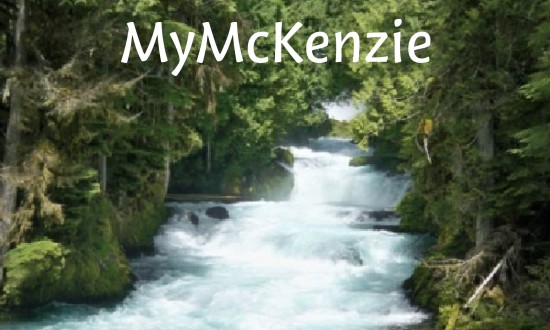
To respond to this serious disconnect with nature, the Environmental Leadership Program (ELP) launched a set of new EE projects in 2012 focused on helping students develop a connection to the sole source of their drinking water, the McKenzie River. This stunning 90-mile long river provides many gifts: clean drinking water, fish and wildlife habitat, recreation, hydropower, and inspiration. The watershed offers fascinating and complex geology and geomorphology, multi-faceted and controversial land use issues, and a strong sense of community and history tied to place. Many organizations are doing work in the watershed, which provides opportunities for students to directly engage in conservation issues. In sum, the watershed provides a great laboratory for interdisciplinary, place-based education and service learning.
 The two main goals of the new EE effort were to: 1) create a year-long program for UO students interested in EE careers (that would provide them with the knowledge, skills and confidence to develop and implement place-based, experiential programs) and 2) develop age-appropriate, engaging MyMcKenzie curricula for local youth, grades 1-8, that promotes the stewardship of the McKenzie River.
To prepare the undergraduates for their service projects, we offered a new fall course called Understanding Place: the McKenzie Watershed. The goal was to provide the necessary foundation for them to become effective place-based educators. During the 10-week course, we examined the geological, ecological, historical, social, and political influences that shape the McKenzie watershed. Six field trips took us from the headwaters to the confluence, where we explored lava flows, springs, hiking trails, dams, hatcheries, restoration projects, historical sites and more. Guest speakers provided diverse perspectives on Kalapuya culture, salmon restoration, water quality and management, and sustainable agriculture, among other topics. We wanted students to hear directly from the farmers, anglers, residents, scientists, policymakers and regulatory agencies that shape the watershed’s past, present, and future. Through diverse hands-on, student-led activities, the class gained a spatial and temporal understanding of the McKenzie, and contemplated the meaning of “place,” what contributes to a sense of place, and how it influences people’s worldviews and choices.
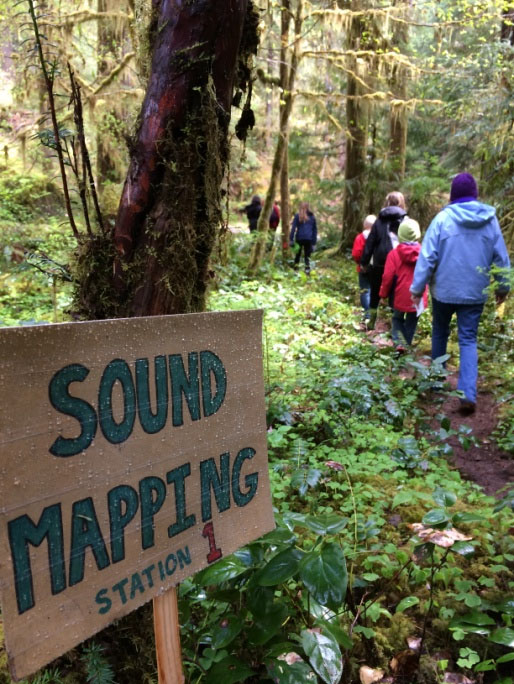
In the subsequent winter course, Environmental Education in Theory & Practice, UO students learned how to transform their new knowledge of the McKenzie River into engaging place-based educational programs. Participants gained a working knowledge of best practices in EE through readings, guest lectures, field trips, and most importantly, their service-learning project in which they developed educational materials for their community partners. The “Critters and Currents” team worked in partnership with Adams Elementary School to develop two classroom lessons and one field trip for each grade level. The “Canopy Connections” team developed and facilitated field trips for middle-schoolers that included a canopy climb, building watershed models, and mapping, among other activities. All the activities used the McKenzie River as the integrating context, and placed particular emphasis on systems thinking, and how the health of the river directly affects us, as the river provides our drinking water.
While the specifics of the curricula were left up to the teams to determine, all teams were required to: 1) incorporate an interdisciplinary approach, 2) include multicultural perspectives, 3) use experiential, inquiry-based methods, 4) promote civic engagement, and 5) articulate assessment strategies. Their materials were pilot-tested at the end of winter term, and then the teams worked with their community partners to implement their EE programs throughout spring term. Each UO student completed approximately 120 hours of service, which entailed facilitating field trips, classroom visits and developing supplemental educational materials (e.g. websites, presentations). What follows next are descriptions of the two 2013-2014 projects, written by the team members themselves.
 Case Study 1:
Critters and Currents
By Leilani Aldana, Leah Greenspan, Courtney Jarvis, Claire Mallen, Anna Morgan, Trevor Norman, Makenzie Shepherd, Tony Spiroski, Britney VanCitters, Cheyenne Whisenhunt, Alicia Kirsten (graduate project manager).
 iking along the McKenzie River trail is unlike anything else in its breathtaking beauty and awe. The trees tower above, the firs paint the horizon green, and the moss blankets the forest floor. Squirrels dart back and forth, winged insects buzz through the misty air, and regal ospreys circle above the river, spying on possible prey below. All these organisms work together in the carefully orchestrated equilibrium that is a Pacific Northwest forest. And although the forest can be serene, delicate, and quiet, it also tells a bold and enduring story to those who are willing to listen and fortunate enough to hear.
The forest’s tale is told by the many plants, fungi, animals, and humans that call it home. At one point, the entire McKenzie watershed told this story; the indigenous Kalapuya and Molalla people lived closely with their varied and unique plant and animal neighbors, constructing a narrative out of the reciprocity that encouraged a long-lasting relationship. Eventually the plot of this story was thrust in another direction, as the influx of newcomers would alter the face of this territory through extensive land management techniques and exploitation of natural resources. Today, the story of the McKenzie River watershed illustrates the growing disconnection between forests and our society brought by global urbanization. But the story is not yet over, and we have the unique opportunity to transform it.
The prominence of technology and urbanization in the 21st century has established an obvious distinction between the urban and natural worlds. Younger generations, increasingly disengaged and separated from their local natural environments, exhibit symptoms of what is colloquially called “nature-deficit disorder” (Louv 2008). Marked by rising levels of ADD/ADHD, obesity, depression, and muted creativity, nature-deficit disorder will accelerate if not immediately and holistically addressed.
Nature has the ability to inspire us, teach us, and transform our lives. By giving children the chance to explore the natural world, we allow them to experience the story nature has to tell. Utilizing place-based lessons and hands-on activities, environmental education helps students gain an ecological awareness and an understanding of natural processes. Infusing curricula with environmental themes and concepts has proven to foster stewardship and improve support for conservation (Jacobson 2006).Communities need to work collaboratively to ensure that children are provided with the awareness, knowledge, attitudes, and skills necessary to tackle future environmental problems. As environmental educators, we have enthusiastically decided to face this task; we are working to encourage deep and meaningful connections between students and nature, with the goal of nurturing responsible and active citizens.
The 2014 Critters and Currents team worked to help students connect to and build kinship with the McKenzie watershed.Our team of ten undergraduate students and project manager collaborated for six months with Adams Elementary School to bring children to visit the Delta Old-Growth Forest, the H.J. Andrews Experimental Forest, and Green Island which is managed by the McKenzie River Trust. We created curricula that promotes environmental awareness, inspires respect and compassion for the natural world, and encourages positive environmental action now and in the future.
Building connections and gaining understanding is crucial to implementing environmental education. David Sobel, whose work focuses on place-based education, states, “If we want children to flourish, to feel truly empowered, let us allow them to love the earth before we ask them to save it.” (Sobel 1996:39). By encouraging children to experience and explore the McKenzie River, students will become empathetic and compassionate toward their local ecosystems.
Throughout the spring, students at Adams Elementary School in Eugene, Oregon were able to participate directly in the narrative of the McKenzie River watershed. By constructing and decorating fabric bird wings that they can wear, our students were able to become the birds that live in the McKenzie River watershed; by developing proper habitats for real life decomposers such as pill bugs, sow bugs, and earthworms, our students were directly responsible for the lives of those who prolong McKenzie River ecosystems; by intimately learning about a particular McKenzie River critter through storytelling and haiku writing, our students became empowered to protect and defend that critter and its home. Providing our students with activities that nourish empathy for the McKenzie River watershed and its inhabitants inspires a sense of love and awe that lasts, like the narrative itself, a lifetime.
 As adults, we often overlook the joys of simply being in the natural world. A childlike sense of wonder allows us to tap into long-forgotten natural connections that help foster a symbiotic relationship with nature once again, one that not only takes our breath away but also fills us with life. We stand in awe of the towering pines and vibrant mosses that carpet the old-growth forest floor; we are struck with silence as the wings of the great osprey beat the air above us and the tiny patterns of a water skimmer are drawn across a serene pond. These subtle, yet profound, experiences allow us to narrate our own story about the environment that surrounds us and how we as a community will care for it.
Let us persist with our place-based environmental education movement, where classrooms shift from hard desks and chalkboards to engaging the senses and producing first-hand experiences; where students can form intimate relationships with the story told by an old-growth forest or the wetlands of a floodplain forest, rather than reading about it in a textbook. Let us begin the shift to the great outdoors, where we can learn from the greatest storyteller of all: nature itself.
Case Study 2:
Canopy Connections
By Justin Arios, Brandon Aye, Jen Beard, Cassie Hahn, Megan Hanson, Tanner Laiche, Hannah Mitchel, Christine Potter, Meghan Quinn, Christy Stumbo, Jenny Crayne (graduate project manager).
 he 90-foot tall Douglas-fir swayed gently in the wind. Multiple ropes hung from the top, waiting to be climbed. The students buzzed with excitement and nervousness as Rob and Jason from the Pacific Tree Climbing Institute prepared them to climb. On their own effort, most students ascended to the top of the tree, swaying with the tree and seeing the forest with a bird’s-eye view.
 Canopy Connections 2014 was developed and facilitated by 10 undergraduate students and included a 50-minute pre-trip classroom lesson and an all-day field trip to HJ Andrews Experimental Forest. Through our field trip, we sought to immerse students in nature, foster a connection to place, and teach students about the processes and biology of an old growth forest. Connecting to nature at an early age combats Richard Louv’s theory of “nature-deficit disorder” and instills a culture of respect and awe for the natural world and hopefully, the long-term protection of natural places.
We built our field trip around the theme of “Students as Scientists,” integrating both science and the humanities. In addition to ascending into the canopy of a Douglas-fir, participating students collected scientific data, sketched native plant species, creatively expressed their observations through journaling, and built a debris shelter. Each lesson incorporated activities of various disciplines and catered to different learning styles. This rationale is supported by Howard Gardner’s multiple intelligences theory which argues that students learn and process information many different ways. We used this reasoning to construct activities that engaged students’ learning habits via kinesthetic, linguistic, visual, inter- and intrapersonal, naturalist, and logical learning methods.
Our first interaction with the students was during the pre-trip lesson. We built upon their knowledge of geography to construct a map of Oregon, highlighting cities, mountain ranges, and rivers connected with the McKenzie River. At Fern Ridge Middle School, the students were eager to add other features to the map as well, including the Long Tom, the small river flowing behind their school. Once complete, half the class was given a term relevant to the field trip such as “geomorphic” and “species richness” while the other half was given definitions. The students mingled in the class, helping each other to match the terms with the definitions.
On the morning of their field trip, the students arrived at HJ Andrews, armed with the knowledge gained from the pre-trip lesson. As they filed off the bus, we were there to greet and guide them to the staging area. After an introduction to HJ Andrews, the community partners, and the field trip agenda, each group journeyed into the forest to the first of their four stations.
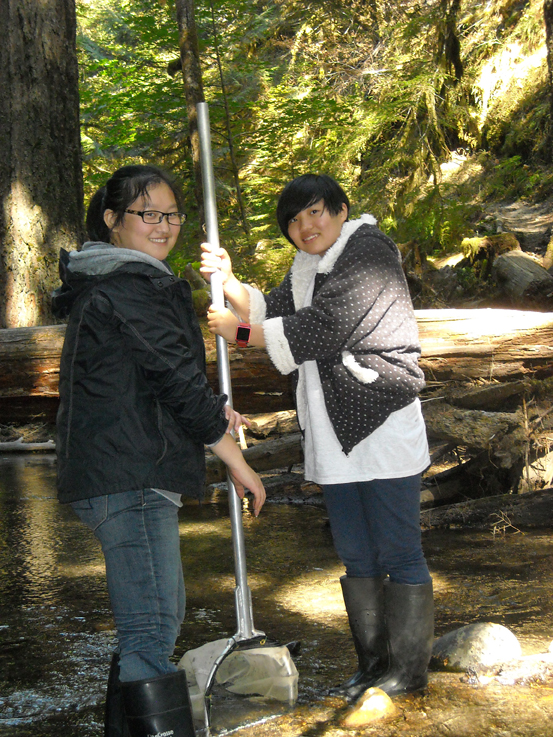
 Nestled at the end of the Discovery Trail was the River Reflections station. Here students learned about the complex interactions and disturbances that occur in a riparian zone through scientific observation and personal reflection. This station reflected the essence of the ongoing work at HJ Andrews by focusing on the Long Term Ecological Research and Long Term Ecological Reflections programs, highlighting the value of using both scientific and artistic lenses to understand the natural world. As scientists, the students compared the temperature, humidity, canopy cover, and species composition between two plots, one adjacent to the river and another 10-15 meters from the river. From our position on the creek bed, students saw a gravel bar in the middle of the river that provided a perfect example of the species found in newly disturbed areas. The students then journaled quietly by the river. To our surprise, students were so engaged in the journaling activity, they did not want to leave the station! Every student filled his or her own page in journals dedicated to collecting Canopy Connection’s Ecological Reflections.
At another station, students discovered the diversity found in old-growth forests, both in terms of composition and structure. They did this by identifying plants as tall as a western redcedar and as small as stairstep moss. Each student sketched and learned about a different plant and reported back to their group. After getting a close up view of forest biodiversity, the students embarked on a riddle quest to discover what makes an old-growth forest different from other forests. Every hidden riddle led them to a location on the trail identifying snags, woody debris, old trees, and canopy layers, which are the 4 main features of an old-growth forest. The students gathered in a circle to discuss how to mitigate threats to biodiversity through conservation measures.
 At the “Stewardship in Action” station, the students reflected on the importance of taking care of nature by learning about and applying the Leave No Trace principles. Each student described their favorite place in the outdoors and how they felt there. This led to a discussion about the Leave No Trace principles. Students creatively expressed the principles through a short rap, poem or skit. The highlight of this station was applying the Leave No Trace principles by constructing and deconstructing a survival shelter using only debris found in the forest. The students were excited to get their hands on the branches and debris to build a shelter and crawl in for a picture!
The most profound experience was the tree climbe at the “To Affinity with Nature and Beyond” station. Each student had the opportunity to climb into the canopy of a 90-foot tall Douglas-fir tree using a system of ropes. Ascending the tree was a unique experience because students had to overcome any fears they might have had to get to the top of the tree. While climbing, students observed the change in temperature in the canopy layers and were surprised to discover that (on sunny days) it was 10 degrees F warmer at the top. While this station incorporates scientific observation, what most students will remember for the rest of their lives is the sheer wonder of viewing the old-growth forest from the canopy.
Between each station, the students found a compass bearingwritten on a slip of paper and hanging on a tree. This bearing led them to a riddle hidden 20-30 feet down the trail. The riddle related to the previous station the students had left not long before. This activity was a fun way to keep students engaged during the transition time between stations, while helping them reflect on what they learned at each station. The students learned how to read and use a compass, a valuable skill, while we were able to quickly assess if we met our learning objectives.
All in all, the Canopy Connections team spent over 1,800 hours to create and facilitate field trips for 6 middle schools and 230 students. While each field trip held the same content, every student left with his or her own distinct experience.
 One student from Roosevelt Middle School said, “I learned a lot about old growth forests that I did not know before, and I think I am more likely to participate in activities taking place there.”
Throughout this program, our team and our students gained a great deal of knowledge, while fostering a connection to place and respect of old-growth forests. We have inspired our students to be curious, and want to learn more, about old-growth forests and the natural world. Ultimately, we hope these students will be more environmentally aware and will continue to care about the forest and natural environments as much as we do. As much as we hope to have touched their lives, the overall experience of working with these students has motivated us to continue pursuing careers in environmental education and work to nurture a healthier environment in the future.
Acknowledgements
We would like to thank the Luvaas Family Foundation of the Oregon Community Foundation and Steve Ellis for their generous contributions that made these projects possible. Special thanks also to our community partners: the children, teachers and staff at Adams Elementary School, the McKenzie River Trust, Kathy Keable and Mark Schulze from HJ Andrews Experimental Forest, who hosted the field trip, and Rob Miron and Jason Seppa from the Pacific Tree Climbing Institute (PTCI), who facilitated the tree climb.
Works Cited
Jacobson, Susan Kay, Mallory D. McDuff, and Martha C. Monroe. Conservation Education and Outreach Techniques. Oxford: Oxford UP, 2006. Print
Louv, Richard. Last Child in the Woods: Saving Our Children from Nature-deficit Disorder. Chapel Hill, NC: Algonquin of Chapel Hill, 2008. Print
Sobel, David. Beyond Ecophobia: Reclaiming the Heart in Nature Education. Great Barrington, MA: Orion Society, 1996. Print
 Kathryn Lynch is Co-Director of the Environmental Leadership Program. Katie is an environmental anthropologist who has a strong commitment to participatory, collaborative and interdisciplinary approaches in both her research and teaching. She has worked in Peru, Ecuador, Indonesia and the United States examining issues of community-based natural resource management. This has included examining the role of medicinal plants in Amazonian conservation efforts and the potential for engaged environmental education to promote conservation. Before joining UO she was a researcher at the Institute for Culture and Ecology, where her research focused on the relationships between forest policy and management, conservation of biodiversity, and nontimber forest products. She has also facilitated various courses and workshops that examine the nexus between environmental and cultural issues.
by editor | Aug 25, 2014 | Schoolyard Classroom
Teaching Science:
 Share Your Standards to Integrate Your Teaching
by Jim Martin
CLEARING Associate Editor
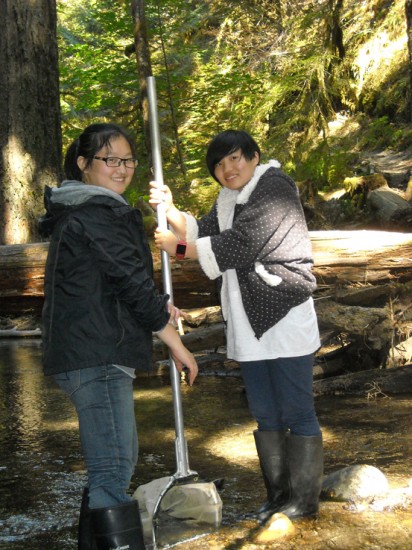
Let’s say you wish to incorporate an activity in the neighborhood of your school into a unit you are planning in science, and have been thinking about asking the math teacher if she would be interested in working with you. Then you learn from a friend that plants on the bank of a stream, when they are in leaf, pull water from the ground to use for photosynthesis. In fact, she tells you, they pull so much water up that the level of the stream drops visibly. This observable change in the height of the stream seems to you to be a door to math, writing, science, and perhaps even art. So, you begin thinking.
There is a creek which runs past the southeast corner of the school grounds, and you decide to use it as the site where your students will make their observations. You check it out, and find a spot where they can set a meter stick on a flat bottom rock to take their measurements. The creek is no more than twenty inches deep at its highest level on the bank, so you don’t have to be overly concerned about student safety while they take their measurements, and you decide to plan for doing the work.
Students will work in groups of four, which, for this class, means seven groups. If the creek traveled farther through the school grounds, you could have each group set up its own measuring site. Since that’s not the case, you decide to have the groups make quick depth measurements so that you can walk to the creek, take measurements within 15 minutes, and return to the classroom. As they wait their turn, each group estimates the percent leaf cover, based on what they think 100% leaf coverage would look like. You could have had the groups observe different aspects of the creek, but decided that would involve too much planning and confusion. This is your first effort outside the classroom, and you just don’t want to make it more complicated than it already is. A wise decision.
Now, you have to work out how the observations they will make tie to more than one curricular area. This is the tricky bit. You decide to have each group hang a data sheet on the classroom walls, depicting the data they have taken in ways they feel best illustrate their observations and interpretations. To enable them to do this, you and a math teacher help them learn to make data tables, how to organize these tables to make best sense of the data, learn to graph the data and how to make decisions about what to place on the x- and y-axes. As the work progresses, you and the math teacher have students review and assess their tabulation and graphing practices. Here’s a question for you: Are any of the above activities covered in the math standards?
As students move through this work, you coordinate with their language arts teacher to build in writing and reading activities which are tied to standards that teacher is working on. For instance, you want your students to describe what the project is about, how they are making their observations, what they think these will show them, and how this whole system works from the time rain falls from the clouds until it is either incorporated into carbohydrates, or enters the creek. How many disciplines’ standards describe this kind of work?
Thinking about this, you decide to ask their art teacher if there are ways they can use her curricula to communicate student work in this project. She replies that she’ll think about it, and may be able to work it into what they will do later in the year. Encouraged by this, and the willingness of the math and language arts teachers to work with you, you decide to start exploring standards to see how they play out in the work as you’ve visualized and planned it.
What follows are three broad phases of this project, and up to three standards each addresses in each discipline. I chose 6th grade because it is at the middle of the K-12 experience. Note that the standards named in each area were chosen from a myriad of possible standards. Some may involve more than one part of the project, but are mentioned only once. Here they are:
• Choosing the location for the project, discussion and decision to estimate leafout and measuring depth of the stream, the processes it will involve, and who will carry them out. Students perform a preliminary assessment of the site via sketches which will inform an annotated collage/painting produced in the final stages of the project. Together, they involve aspects of these standards:
Art – Make connections between visual arts and other disciplines. Create a work of art, selecting and applying artistic elements and technical skills to achieve desired effect.
Language Arts – Apply more than one strategy for generating ideas and planning writing. Generate ideas prior to organizing them and adjust prewriting strategies accordingly (e.g., brainstorm a list, select relevant ideas/details to include in piece of writing). Delegate parts of writing process to team members (e.g., during prewriting, one team member gathers Internet information while another uses the library periodicals).
Mathematics – Use variables to represent two quantities in a real-world problem that change in relationship to one another. Model with mathematics. Describe the nature of the attribute under investigation, including how it was measured and its units of measurement.
Science – Explain how the boundaries of a system can be drawn to fit the purpose of the study. Generate a question that can be answered through scientific investigation. (This may involve refining or refocusing a broad and ill-defined question.) Describe the water cycle and give local examples of where parts of the water cycle can be seen.
• Students make their observations and carry out the plan for their investigation. This involves these standards:
Art – Choose and evaluate a range of subject matter, symbols and ideas. Recognize and describe how technical, organizational and aesthetic elements contribute to the ideas, emotions and overall impact communicated by works of art. Describe how elements of art are used to create balance, unity, emphasis, illusion of space and rhythm-movement.
Language Arts – Maintain a journal or an electronic log to collect and explore ideas; record observations, dialogue, and/or description for later use as a basis for informational or literary writing. Understand and apply new vocabulary. Use multiple resources regularly to identify needed changes (e.g., writing guide, adult, peer, criteria and/or checklist, thesaurus).
Mathematics – Graph ordered pairs of rational numbers and determine the coordinates of a point in the coordinate plane. Represent a problem situation, describe the process used to solve the problem, and verify the reasonableness of the solution. Find a percent of a quantity as a rate per 100 (e.g., 30% of a quantity means 30/100 times the quantity).
Science – Plan and conduct a scientific investigation (e.g., field study, systematic observation, controlled experiment, model, or simulation) that is appropriate for the question being asked. Work collaboratively with other students to carry out the investigations. Predict what may happen to an ecosystem if nonliving factors change (e.g., the amount of light, range of temperatures, or availability of water or habitat), or if one or more populations are removed from or added to the ecosystem.
• Students are conducting the analysis and synthesis of their data, and constructing, critiquing, and presenting their reports. This work involves these standards:
Art – Respond to works of art, giving reasons for preferences.
Language Arts – Use a variety of prewriting strategies (e.g., story mapping, listing, webbing, jotting, outlining, free writing, brainstorming). Produce multiple drafts. Publish in a format that is appropriate for specific audiences and purposes.
Mathematics – Construct viable arguments and critique the reasoning of others. Analyze the relationship between the dependent and independent variables using graphs and tables. Determine whether or not a relationship is proportional and explain your reasoning.
Science –Summarize the results from a scientific investigation and use the results to respond to the question or hypothesis being tested. Organize and display relevant data, construct an evidence-based explanation of the results of an investigation and communicate the conclusions. Recognize and interpret patterns – as well as variations from previously learned or observed patterns – in data, diagrams, symbols, and words.
To me, the project, outside and inside the classroom, appears to act as a vortex, drawing several disciplines into it; integrating them in the process. The effect of this activity in the students’ brains must be related to their involvement and investment in the work, and empowerment as persons that teachers and others report when they describe student work in the world about. In most cases, this outcome is also associated with success in passing the annual tests students take to measure their accomplishment of state and national standards.
It takes courage for a teacher in today’s schools to attempt something like this. What we need are teachers and environmental educators who have done this kind of work to mentor those who haven’t, but would like to. A good place to start that would be at annual state science teacher conferences, and at state and regional environmental educator conferences. I know from my own personal experience teaching and working with teachers that a little help goes a long way. If you’re interested in the idea, leave a comment. Or, better yet, write an article and post it here. Or (where did I find this thought?) be a conference presenter.
 This is a regular feature by CLEARING “master teacher” Jim Martin that explores how environmental educators can help classroom teachers get away from the pressure to teach to the standardized tests,and how teachers can gain the confidence to go into the world outside of their classrooms for a substantial piece of their curricula. See the other installments here, or search Categories for “Jim Martin.”

by editor | Jul 24, 2014 | Environmental Literacy, Learning Theory
Cultivating Ecological Teachers and Learners Using Project Learning Tree
by Jaclyn Stallard
from The Branch, Project Learning Tree’s E-newsletter Summer 2014
“Ecological teaching and learning is not just a matter of pedagogy, but also philosophy. Ecological teaching and learning represents a new life-affirming mindset that all teachers—and, to a larger extent, all citizens and all Earth’s human inhabitants—must adopt for a sustainable future. This philosophy embraces interconnectedness and systems thinking, challenging the Western notion of separateness. This type of teaching and learning develops and fosters an individual and collective ecological consciousness as humans move through life and relate to themselves, others, and the world around them.”
Read the full article here

by editor | Jul 21, 2014 | K-12 Classroom Resources
Climate Change Education
SWEet!: Using Cascade Snowpack to Teach Climate Change
by Padraic Quinn, Rachel Carson Environmental Middle School
Padraic_Quinn@beaverton.k12.or.us
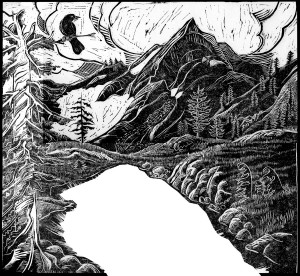
Illustration by Bill Reiswig
Three years ago I was given the opportunity to learn with the scientific leaders of climate change research as part of a teacher-research partnership through NASA, Oregon State University and the Oregon Natural Resources Education Program (ONREP). I heard scientists talk about how forests act as carbon sinks or carbon sources, how LANDSAT data are showing us changes to our landscape, how ocean currents are affecting the availability of copepods eaten by salmon, and how the growth rings in the ear bone of a fish can be studied and correlated with the growth rings of trees on the nearby coast. All of these researchers were making discoveries that played a role in our knowledge of climate change. In addition, teachers were assigned to a scientist each year to conduct research over a two-week period. This allowed both the teachers and researchers to discuss their work and determine ways that it could be transferred from climate researcher work to middle school student work. This sharing of information included access to the scientists and their work, even when I returned to my classroom.
Transferring Professional Development to the Classroom
A significant portion of my classroom science curriculum is spent on independent research projects where students work through the inquiry process to answer a question to a problem on a science topic of their choice. Prior to starting our projects this year I assessed students on their graphing and analysis skills by teaching lessons on climate change in the Northwest, primarily using the Natural Resources Conservation Service (NRCS) SNOTEL system. This automated system, under the technical guidance of the National Water and Climate Center (NWCC) provides snowpack and climate data in the Western U.S. and Alaska. SNOTEL provides real-time data that is critical for understanding future water supplies and allows my students exposure to natural resource issues that will directly affect them and their families. Based on my experiences working with snow pack research, I designed a multiday lesson on climate change that used SNOTEL data to form the basis of the students’ inquiry.
Climate Change and NW Snowpack Lessons
Day 1
Each student was asked to build a concept map for climate change showing connections among different components. Examples were given for a concept we had just finished studying (photosynthesis) so they were clear on how to see and depict interactions. The concept maps varied drastically, partially due to the fact that my classes include a mix of 6 – 8 graders but also because of the wide range of knowledge about climate change knowledge among my students. The discussion after the students completed their concept map and pretest was valuable, with many students wanting to share, ask questions and verbalize their current understanding of climate change.
Day 2
Students were excited when they sat down, and I was in the back of the room with a very loud snow-cone machine. After they got over the initial disappointment of not getting a refreshing snow-cone, each table group was asked to agree on the volume of “snow” that was in the beaker I had filled and placed on their table. Students recorded their information along with a definition of SWE or Snow Water Equivalent. Our basic definition was the amount of water in the snow. Students also made a prediction of the SWE for the “snow” that was on their table. At the end of class, after melting, students determined the percent water content in their snow.
To show a real life example on a large scale of global climate change and melting I had students watch the TED Talk, “James Balog: Time-lapse proof of extreme ice loss”. Balog shows photographs from the Extreme Ice Survey that he began in 2005 and shared in his TED Talk from 2009. Students were asked to write down new information, “WOW” information and questions they had from the talk. Connections were made since some students had been to Alaska, while others had been in the Cascades Mountains; but the majority of the students did not realize that glaciers were present in the mountains located just 65 miles from where they were sitting in Beaverton, Oregon.
Days 3 & 4
To help connect students to their surroundings I had them pick an Oregon SNOTEL site out of a hat. The sites didn’t make sense to them yet but the names are intriguing with the likes of Jump Off Joe, Blazed Alder, Bear Grass and Mud Ridge. Students went online to gather general information about their SNOTEL site such as county, latitude-longitude, and elevation. The students also collected SWE, snow depth, YTD precipitation, and Max., Min. and Average Temperature (see attached student activity sheet). To get a view of the historical context of how SWE has changed over time students collected mean SWE for March in every year that SNOTEL data have been collected. In most cases this was approximately 1978. Students found wide variations in SWE from year to year but soon were asking about specific years from other sites and realized how data were similar from site to site. Many discussions revolved around why such large fluctuations exist, trends over time, temperature’s impact on SWE and elevation impact on SWE. These discussions were difficult for even some of the more accomplished 8th graders, but interest did not diminish due to complexity. Students graphed data, wrote a short analysis and compared data with another student whose site elevation differed (+/-2000’) from their own site.
Adopt-a-SNOTEL site: Long Term Snowpack & Water Availability Activities
As a follow-up to this activity students have been monitoring their SNOTEL sites since November daily for SWE, snow depth, YTD Precipitation and Observed Temperature. (See attached student monitoring sheet.) This work has continued to keep students interested and active in local mountain snowfall and their own SNOTEL site. Each month I am asking students to conduct activities and answer questions on their SNOTEL data. This includes graphing one or more of the parameters, discussing monthly trends in the data, comparing site data with another student and finding sciences article related to snowpack, glaciers and climate change. Students will conduct this activity throughout the winter and spring months as a way to continue their learning on climate change, make a connection to their sense of place and better understand how their water supply will be affected in the short and long term.
The range of benefits to me and my students provided by the Researcher-Teacher Partnerships project have been immeasurable. I have been given open access to an elite scientific community, the collaboration among educators has been inspiring, and my current and future students will continue to learn as researchers.
References
Natural Resources Conservation Service. (2013) SNOTELand Snow Survey & Water Supply Forecasting Brochure. National Weather and Climate Center, Portland, Oregon
http://www.wcc.nrcs.usda.gov/snow/about.html
Natural Resources Conservation Service SNOTEL Data, http://www.wcc.nrcs.usda.gov/snow/
TED Conferences, LLC. (2009) James Balog: Time-lapse proof of extreme ice loss http://www.ted.com/talks/james_balog_time_lapse_proof_of_extreme_ice_loss.html
Science expertise was provided by the following Oregon State University Faculty: Dr. Anne Nolin – Professor and Travis Roth-Doctoral Student in the College of Earth, Ocean, and Atmospheric Sciences
Acknowledgements
These lessons were created using information learned in the Oregon Natural Resources Education Program’s Researcher Teacher Partnerships: Making global climate change relevant in the classroom project. This project was supported by a NASA Innovations in Climate Education award (NNXI0AT82A).
Student Activity Sheet Attached
SNOTEL Activity for Oregon.docx
SNOTEL MONITORING SHEET.docx
SNOTEL SWE for Oregon name: _______________________
SITE MONITORING
Use this to record data for your SNOTEL site for the next month. In the table below you will find the information you will need to record for your site. This should be collected at least once per week for each day that week.
1. Go to Google Search and type Oregon SNOTEL
2. Click on first site shown which will be a map of Oregon
3. Use the drop down menu Select a SNOTEL Site to find your site by name. Or if you know where your site is located you can click on the correct red dot on the map.
Site Name: ____________________________________ Site Number: ___________________________
County: _______________________________________ Elevation: _______________________________
Latitude: _____________________________________ Longitude: _______________________________
5. Click on Last 7 Days under the Daily column for Snow Water Equivalent. Record the following.
| Date |
Snow Water
Equivalent
(in) |
Snow
Depth
(in) |
Year-to-Date
Precipitation
(in) |
Observed
Temp
(degF) |

by editor | Jun 13, 2014 | Schoolyard Classroom
Starting a Community-based Natural Resource Education Program

Strategies for Authentic Community Engagement
Authors Patrick Willis Oregon State University Extension 4-H Portland, Oregon
Susan Cross Environmental Educator Tucson, Arizona
 lmost every school has a natural area very nearby. It could be that marshy place behind the school, the little stream or “ditch”, the unmowed field, or the patch of woods beside the parking lot. These natural areas are often overlooked as learning sites, or if they are recognized, they are not acted upon because we do not know exactly how to start using them. The intent of this article is to provide educators with a platform to begin natural resource programming at sites near their school. Philosophical as well as pragmatic information is shared to provide both intrinsic and conceptual connections for educators to engage youth in authentic community involvement in the natural resources. This information is intended to offer support, ideas, encouragement and new ways to think about what we do as educators. It is meant to inspire you and move you to action.
It is our hope that through programs that link schools with natural resource areas, citizen awareness and community involvement will increase. The vision is for schools to become vital resources for their communities and that students, through real world projects, become active participants in their society.
 Why connecting students with natural resource areas have educational benefits.
A strong connection to the larger world community starts with an intimate local understanding. Children can apply knowledge of systems and concepts learned in a personal experiential world to global problems. Once they grasp the value and function of the forest, wetland, grassland or watershed in their school backyard, it is a short step to awareness about other watersheds or wetlands that they see in their own community, or to a concern about global environmental issues they hear about in the media. A personal stake in the lives of their wood ducks, red-tailed hawks or metamorphosing moths becomes an intrinsic understanding of the richness present in all ecosystems. A program such as this taps the innate desire of children to care for their world and allows them to do just that: to help, to clean up, to make better homes for wildlife, to gather information to guide decision making. It empowers them at the local level and gives us all a much needed assurance that active informed citizens can and DO make a difference.
Students involved in active hands on programs also feel better about the way they are learning. The students report that they have more fun and feel like they are learning things that they didn’t know before. Teachers say that their students really retain more of what they learn and can apply the learning in other situations.
In these times of being overwhelmed by environmental problems on every front, it is easy for people to lose their sense of hope and to feel defeated in the face of such looming concerns. This can be especially hard on young people, who have been inundated since early childhood with the magnitude of our planet’s problems. Working with young people in settings where they can impact an area in a positive way is a powerful tool to help them realize the healing potential they have as caring human animals.
Getting Started
Many educators find the idea of starting a program such as this to be intimidating…And it can be!! Teachers already have heavy workloads. It often feels as though there isn’t enough time in the day to prepare for classes, grade the day’s papers and still get to eat lunch! The extra work required to implement an on-going, in the field/community program can indeed loom large in the picture and cause many people to give up before they even begin.
 Sites and Site Selection
The initial step is to find a site around which to center your program. The site is an integral part of the program because it becomes the focal point for community involvement. Because of time limitations in our schools, the closer the site is to the school door the better. The site doesn’t need to be huge or elaborate. It can be the little ditch on the school grounds, it could be the marsh on private land across the street, it could be the little patch of forest left in an urban development, it could even be something that you restore or develop on your own school grounds. The ability to visit the site frequently outweighs any lack of “wildness.” In the reality of today’s shrinking school budgets, transportation money is drying up. A site within walking distance solves this problem, and makes all logistics easier.
After you determine what site or sites you may be able to use for your program you will need to find out as much as possible about the site. In an ideal situation, this entire process can be done by your students. You will want to find out who owns the property. Who is in charge of managing it? Can you use the site as a study center? Are there special things about the site? Is it a protected area? How will you minimize the impact of your student’s presence at the site? Get maps of the local area. Talk to homeowners associations and neighborhood businesses. Can you do enhancement work there? How could the site be improved for wildlife or educational uses? What kind of information would it be useful to have about the site? Who might best use that information? What is the history of the site? Are there any cultural values?
When you find out who is involved with your site you may be surprised to learn that those people need your student staff to collect information as much as you need them for their expertise. Some sites may be in private ownership and you may have to seek permission to use the land as a study site. This process in itself can be quite a learning experience for your students. Many schools are lucky enough to have natural areas on their own grounds, but you may still need permits to make changes. Each place has its own unique combination of political circumstances just as each place has its own unique natural character. Let the problems you encounter become learning challenges. Help your students learn about how the world outside the classroom operates. The problems you face will lead to the development of valuable life-long learning skills.
Willingness to Change Attitudes and Structures
Often the success of innovative programs depends on our ability to think in new ways. Change is never easy and is especially hard to create in institutional settings. It is difficult to envision new roles for ourselves and new shapes for our old models. With the momentum for educational change coming from the state level, the atmosphere for programs of this type is good, and you could be on the leading edge of this change. The watchword of the hour is flexibility.
 Changing Teacher Roles
In this kind of program the teachers may have to recreate the way they interact not only with their students but also with their peers and administrators. You may find yourself much more of a coordinator and learning manager than a deliverer of set curriculum. You may find that the most important function you can serve is finding access for your students to partnership opportunities with other adult instructors. You may spend your time locating project ideas, equipment and funds rather than directly teaching lessons. You may need to spend time on the phone coordinating an event or writing proposals to fund your program’s newsletter. It is not the role you are probably most familiar with and it can seem like a leap into the unknown. It can also lead to personal growth and a great deal of fulfillment as your program blossoms.
Changing Educational Models
Everyone involved in education agrees that our current model doesn’t seem to be working. Students are not entering the adult world prepared to meet the challenges of a rapidly changing and complex world. Demand for people who can work cooperatively, be self motivated learners and understand complex systems is growing in every field of endeavor. Schools somehow need to provide their students with opportunities to learn the skills of citizen action, exposing them to processes and systems both natural and social. Students need to have real world experiences with real world consequences. Programs such as this can offer those opportunities. Schools could be in the business of finding community needs that aren’t being met. Schools could become a resource for the community instead of being viewed as a drain on resources. The school, through a program, could provide opportunities for students to interact with their community and society using meaningful projects that need to be accomplished. A great deal of excitement and motivation builds around an idea when students are producing work for a real world audience with a real world purpose. Think of the schools as a pool of highly educated leaders with a large motivated work force that just needs to be focused and applied to the needs of the community!
The Time Issue
Time, or the feeling of never having enough time, is a stumbling block in the initiation of Community-based programs. How much time should be allocated for activities related to the project? How will the teachers involved find time to organize materials, field work and special events? Is one day each month enough field contact? Perhaps one day each week may be needed. How will this program fit in with music, social studies or math? Is a 45 minute period enough time to get out into the field, do a study, and then get back? All these time questions are quite valid and need to be explored. But our attitudes, those hidden assumptions behind our time feelings also need to be explored. How did our school day come to be fragmented into 40-45 minute blocks? Does it have to be that way? Can our scheduling be more flexible without a loss of quality?
Using a thematic or project based approach to interweave your Community-based program into several subject areas can increase the amount of time spent in the field or community. Math can serve to interpret collected field data. Art could be the designing of logos or signs for the site. Music could involve songs written about the area and performed at a school wide celebration. Pursuing permission to have use of a site, or to make changes at a site, could serve as lessons in political science. Keeping journals or producing an informative newsletter is a natural for writing and language.
You Don’t Need to be an Expert
A general fear many educators experience is that they will be asked about something they don’t know. When beginning a program that involves a natural resource area there will be tons of things you don’t know, and that will be part of the excitement. As teachers we have the feeling that we should always be able to answer every question like an expert; but we may want to consider that the “teacher-as-learner” may be a more powerful model than the “teacher-as-dispenser-of-all-knowledge”. Being able (and willing) to say, “I don’t know, but let’s see if we can find out,” is a virtue in an educator, not a sin. Think of the program as an opportunity for you and your students to learn about an ecosystem together. Curiosity, enthusiasm and access to good reference materials are far more important than teachers having all the specific information on a particular environment locked away in their brain.
Program Planning for Administration Support
Having the support of your administrator may allow you to arrange for time to do planning for and coordination of your program. With good administrative support and communication, substitute time may be possible for planning, attending development classes or for special field programming for your students. It is almost impossible for teachers to teach a regular load and to just add on another program. Realistically the teacher who takes on a project of this sort will need time and support from their school. Your formal proposal may give your administrator a powerful tool for acquiring a commitment from your school board or district for that extra time you will need.
Project Plan Outline
Another important part of beginning a program is the time spent early on in the planning phase. If you take the time to examine your hopes and limitations, to determine what your goals are and to commit those to paper, you will have come a very long way toward establishing something concrete to build the program on.
The proposal form (Figure 1) will help you create a document you can use to approach school administrators, fellow staff members, and potential partners. It will help you clarify your group’s goals and priorities. Your proposal form, or “white paper” describes the vision and who should participate, the benefits of participation, and the benefits to the community. In addition, the project plan often contains language very useful in future grant proposals. Whether your project is simple or complex, you and your group will benefit from taking the time to ask yourselves the questions contained in the form.

Community-based Program Strategies
You have a program proposal, you have administration support, there is building enthusiasm for the project…what do you do next? The following are tested and well established examples about how to generate and sustain interest in the program as it develops.
Create an Identity
Your students and others involved in the project will have much more ownership if the site you have chosen has a name or an identity. It is probably more powerful to have the students highly involved in the process of creating an image for the site rather than having an image imposed on them. You will want to guide them in coming up with an attractive logo that can be used on your future newsletters, correspondences, signs and t-shirts. You may want to consider letting people know what your purpose is in the construction of the name. Are you a resource center, a study center, a technology center, or something else? Is there some special plant, animal or geographic feature at your site that would make a good symbol or icon?
 Increase Community Contact
Support for your program will grow if people know about what you are doing. Cultivate a relationship with your local media. Let them know when your students will be out in the field, when you are putting up a sign to identify your site or have special activities planned. Your students can write and publish a website or a simple, informative newsletter about their involvement and successes. Invite partners and potential donors or other influential people in your community to observe what your students are doing. People often like to jump on the bandwagon of an interesting project and partnerships can develop from public knowledge of the program.
Create a Student Leadership Component in Planning
You can plan yourself silly, but if the project doesn’t have student ownership and support your plans will soon sink with apathy or resistance. Students need to feel like it is their program. They need to be active citizens in the process right from the beginning. Having student representation at the planning level will lend legitimacy to tasks proposed for students to accomplish. It can be a powerful growth experience for the students involved.
Spend Some Time on Aesthetics
If you think back to your own interest in the natural world it is usually linked very closely with a sense of place. Allow your students time in their special environment to observe the natural world in a holistic way. Love of the natural world doesn’t come from performing pH tests. It comes from watching spiders build their webs or resting in the sun in tall grasses and listening to a killdeer sing. Set up intentional aesthetic activities for your students early on in the program. You’ll end up with strong advocates for the site. Emotional responses to the environment are not irrational responses; and emotional ties to place are often the best motivations to action!
Approaching Resource People
Depending on your circumstances you may want to use resource people as special advisors or you may want to form partnerships with one or more of them that includes actually working on projects that they are involved with. Resource people as guest speakers in the classroom probably has limited value. If you can arrange for your students and staff members to work directly with resource people it can lead to much larger rewards for everyone. Because most resource people have many duties in their job descriptions, they are busy people. If you can approach them with detailed specific needs and directions about how they might help you with their expertise, their time will be used much more effectively.
Funding Ideas
Money always seems to be a limiting factor in program development, but don’t let a lack of funds discourage you. Many activities can be done without much money. Exploring and getting to know the site, doing plant and animal inventories, making maps, observations of seasonal changes or planning an awareness celebration for the school or community can all be accomplished with a minimum of funds.
Keeping the community and the media aware of your plans and goals can lead to opportunities for donations from businesses such as volunteers, money, equipment or supplies. Parent/Teacher organizations can be a source of funding as well as a source of volunteer helpers. Motivated students can also be excellent fund raisers using all those time proven school fund raising techniques. You and your students may also be able to come up with a product associated with your site such as t-shirts with a logo, wildlife art or photography from the site, or some other product or service. Cities or counties may be able to donate time or materials. Agencies sometimes have funding for plantings or restoration work. Cities and agencies may be able to provide tools and advice from staff people.
There is always the potential for grant writing as a source for funds. This approach to raising money is often available but comes with the fears of how to get started, who to ask, what to say and, of course, finding the time to write the grant. Another factor to consider is the fear of getting the grant. Most granting organizations require you to do what you promised in the grant! This is where your program plan becomes a valuable resource. A good plan is the first step in approaching a funding source. As for who to ask for funding, the list of possibilities can be overwhelming. Start with a few inquiries with local agencies and ask others who have written grants. Most people are very supportive and helpful. If you stay with a reasonable plan, your program will blossom with the assistance of a grant and not degrade into unfulfilled dreams.
 Field Techniques
Many teachers feel uncomfortable taking their students outdoors. It is a much less structured setting and chaos can quickly ensue. A bad field experience can leave a leader longing for those wonderful rows of desks back in the building. Field study does require some special skills and planning, but the harvest you and your students reap is rich!
There are some risks being in the natural world, from twisted ankles to bee stings; but the possible rewards far outweigh the risks. Safety is an important concern in the field. Make sure you have a first aid kit with you and know what to do in an emergency. You may want to check on your school’s insurance policies for field settings. Many risk factors can be greatly reduced by explaining clearly to your students what your expectations are for behaviors in the field.
Setting the same kind of clear behavior expectations for the field as you have in your regular classroom is essential. Let students know that you have boundaries that they must respect, being sure to be clear about what areas are off limits and why. Have set work areas for each group. It is often easier to explain tasks and rules inside the normal classroom setting before you set off into the outdoors to do your field work.
Spending a bit of time on field ethics is a valuable thing. Students don’t automatically know that they need to be quiet, to not disturb plants and animals unnecessarily, or that horseplay is not acceptable. Most of the time when we allow students to be in the out of the classroom is for unstructured play. It takes some training to get the message across that outdoors doesn’t always mean recess.
Group size is another important factor in the success of field work. Small groups function much better than large groups. Have a job for everyone. Having tasks that keep the students focused brings the potential for misbehavior down. If you are the only leader, use a “hub” approach. Have a central location from which you disperse and gather your student work groups. It is also important to realize that not all students need to do everything. Often it is better to have students become the “experts” at a certain job or subject area and to share their findings and knowledge with the others.
Minimize Your Impact/Earth Ethics and Etiquette
One of your most important roles in the program is as a role model for student behavior. Your actions speak much louder than your words and children will treat the environment much the same way that you do. This can be an enormous opportunity to teach outdoor ethics without ever saying a word. Your decisions about collecting, the way you treat plants and animals in the environment, and what your expectations are for your student’s interaction with the site are all powerful messages about how to treat the planet. Children should be engaged in decisions about when, why and how to collect samples. Is it appropriate? Is it necessary? What valuable thing will we learn from the experience? Examine ways in which your visits impact the natural world. Are there ways that we can reduce those impacts and still learn the things we want to? How long lasting are our disturbances? Bringing these kinds of questions into the consciousness of your students will help them to form and examine their own beliefs on these issues.
Conclusion
Change will only come to our systems through the efforts of individuals. Though change is difficult and frightening, it is also empowering and growth producing. It is up to you to try things out, to experiment with ideas and to not be afraid of failure or of success. BE ALERT! This approach to student/citizen involvement can become a self-perpetuating system…a machine that may be difficult to stop once engaged!! Don’t be surprised when you become the center of excited interest emanating from your students, their parents, your colleagues and administrators! We owe it to our students and community to try!
Pat Willis is a distinguished environmental educator currently with Oregon State University Extension 4-H.
Susan Cross is a former EEAO member and Oregonian now living in Arizona.


 here does your drinking water come from? It is a simple question, and given that humans can survive only a few days without water, a critical one. Yet, too many people cannot answer this most basic question. In Eugene, this lack of connection is often compounded by the transient nature of a large sector of the population (university students) who are often just passing through on their way to careers elsewhere.
 The two main goals of the new EE effort were to: 1) create a year-long program for UO students interested in EE careers (that would provide them with the knowledge, skills and confidence to develop and implement place-based, experiential programs) and 2) develop age-appropriate, engaging MyMcKenzie curricula for local youth, grades 1-8, that promotes the stewardship of the McKenzie River.
 As adults, we often overlook the joys of simply being in the natural world. A childlike sense of wonder allows us to tap into long-forgotten natural connections that help foster a symbiotic relationship with nature once again, one that not only takes our breath away but also fills us with life. We stand in awe of the towering pines and vibrant mosses that carpet the old-growth forest floor; we are struck with silence as the wings of the great osprey beat the air above us and the tiny patterns of a water skimmer are drawn across a serene pond. These subtle, yet profound, experiences allow us to narrate our own story about the environment that surrounds us and how we as a community will care for it.
 he 90-foot tall Douglas-fir swayed gently in the wind. Multiple ropes hung from the top, waiting to be climbed. The students buzzed with excitement and nervousness as Rob and Jason from the Pacific Tree Climbing Institute prepared them to climb. On their own effort, most students ascended to the top of the tree, swaying with the tree and seeing the forest with a bird’s-eye view.
 Canopy Connections 2014 was developed and facilitated by 10 undergraduate students and included a 50-minute pre-trip classroom lesson and an all-day field trip to HJ Andrews Experimental Forest. Through our field trip, we sought to immerse students in nature, foster a connection to place, and teach students about the processes and biology of an old growth forest. Connecting to nature at an early age combats Richard Louv’s theory of “nature-deficit disorder” and instills a culture of respect and awe for the natural world and hopefully, the long-term protection of natural places.
 Nestled at the end of the Discovery Trail was the River Reflections station. Here students learned about the complex interactions and disturbances that occur in a riparian zone through scientific observation and personal reflection. This station reflected the essence of the ongoing work at HJ Andrews by focusing on the Long Term Ecological Research and Long Term Ecological Reflections programs, highlighting the value of using both scientific and artistic lenses to understand the natural world. As scientists, the students compared the temperature, humidity, canopy cover, and species composition between two plots, one adjacent to the river and another 10-15 meters from the river. From our position on the creek bed, students saw a gravel bar in the middle of the river that provided a perfect example of the species found in newly disturbed areas. The students then journaled quietly by the river. To our surprise, students were so engaged in the journaling activity, they did not want to leave the station! Every student filled his or her own page in journals dedicated to collecting Canopy Connection’s Ecological Reflections.
 At the “Stewardship in Action” station, the students reflected on the importance of taking care of nature by learning about and applying the Leave No Trace principles. Each student described their favorite place in the outdoors and how they felt there. This led to a discussion about the Leave No Trace principles. Students creatively expressed the principles through a short rap, poem or skit. The highlight of this station was applying the Leave No Trace principles by constructing and deconstructing a survival shelter using only debris found in the forest. The students were excited to get their hands on the branches and debris to build a shelter and crawl in for a picture!
 One student from Roosevelt Middle School said, “I learned a lot about old growth forests that I did not know before, and I think I am more likely to participate in activities taking place there.”
 Kathryn Lynch is Co-Director of the Environmental Leadership Program. Katie is an environmental anthropologist who has a strong commitment to participatory, collaborative and interdisciplinary approaches in both her research and teaching. She has worked in Peru, Ecuador, Indonesia and the United States examining issues of community-based natural resource management. This has included examining the role of medicinal plants in Amazonian conservation efforts and the potential for engaged environmental education to promote conservation. Before joining UO she was a researcher at the Institute for Culture and Ecology, where her research focused on the relationships between forest policy and management, conservation of biodiversity, and nontimber forest products. She has also facilitated various courses and workshops that examine the nexus between environmental and cultural issues.


