by Bobbie Snead
Straub Environmental Learning Center
he male osprey swoops down to join his mate on the enormous stick nest in Minto Brown Park. Sixty yards away, the third graders from a local elementary school gasp and clap in delight. I’ve taught them about ospreys in their classroom and now they’re getting to see the real thing. They are more excited than if they’d been on an African safari. This moment is my passion. (more…)
“Lessons for Teaching in the Environment and Community” is a regular series that explores how teachers can gain the confidence to go into the world outside of their classrooms for a substantial piece of their curricula.
Part 21: Where Brains Learn
Some cognitive particulars about learning in the real world
by Jim Martin, CLEARING guest writer
he crack, a river, flows from the upper left corner of the wall, spreads into branching riverlets as it nears the window. That sentence was written in metaphor. The next sentence has no metaphor, but carries the same information: There was a crack in the wall which branched as it neared the window. Which will you remember? Which brings recallable pictures to your mind? This is like engaging in science inquiry in the real world. Compared to reading about the results of science inquiry in the real world. Each gives a visual clue, but which will come most easily to mind?
This is like science made vs. science in the making. The place of Assimilation is learning for understanding. When you engage your students in the real world, it acts like a metaphor, clarifies concepts and rectifies them with experience.
When you use the conceptual structures which underlie learning, they act as metaphors to clarify what you and your students are doing and learning. These structures are like the mirrors in a kaleidoscope which always generate the underlying structure of the image you see, and the pieces, ordered by that structure, are what you respond to. Can I add a little more to this?
We’ve been examining the conceptual structures that underlie learning, and how concrete experience in the real world encourages our brains to engage those structures. They reside in the architecture and processes of the brain. A picture of how they work to build understanding began to clarify itself to me during my teaching years. The brain is the organ of learning, and its structure and function does facilitate learning, especially when the delivery of the learnings recognizes how the brain works. Just as knowing the structure of color facilitates painting with water colors. When you dip the brush and apply it to paper, you know and anticipate what will happen. The underlying structure determines, to a large extent, what emerges.
Many of us carry an image of the human mind as an entity disembodied from our brain, an ethereal thing that goes where we go, and does our thinking for us. And no wonder. We can’t see the brain work, even in our classrooms. It doesn’t move the way muscles do, and it makes no sound. The best we can do is to know what the work of the parts of the brain are, and look for evidence of what they do in the things our students do and think.
Take Assimilation. The concept of Assimilation has varied descriptions, depending on who’s doing the describing. They generally carry this piece: What the learner personally experiences in the world about is incorporated into the world within our mind or brain. Its strength lies in the interaction between our brain and objects in the world outside ourselves. These are concrete interactions, and they work perfectly with the way our brain is organized to learn. Our brain learned to learn in the real world, where engaging concrete objects led to the kinds of abstractions that emerged as spear throwers and paintings on rocks, sticks, and cave walls. That is what makes metaphor such a powerful writing and rhetorical vehicle. It clarifies a subject with visual, tactile, olfactory, aural, and taste details that engage our senses, and make complexities open to understanding. A brain which developed in a concrete world is able to soar. Marvelous!
I often mention concrete vs. abstract referents. You can do the following as an experiment if you teach the same thing to two classes. When we are presented with new material in an abstract form, like a paragraph of information, we can put it into long term memory by using the information several times. Think of the end-of-section questions, where students answer questions by reviewing what they have read about particulars. Like Procedural Memory, which helps us carry out actions, it may stay with us, but different but related pieces won’t be stored as one concept. When we actually engage concrete referents, a thermometer in a stream, we engage Declarative or Distributed Memory, episodes and facts that can be brought to mind consciously, where new learnings are incorporated into concepts already residing in the brain. Let’s look at some of the parts of the brain involved in these processes.
When a student holds a thermometer in her hand and immerses it into the cold waters of a glacier-fed stream, her eyes send visual information about this to the visual processing areas in the Occipital Lobe of her brain, at the very back of her head. The Parietal Lobe, between the Occipital Lobe and the middle of her head, processes the feeling and temperature of the water on her hand. It also keeps track of where her person ends and the rest of the world begins, then gathers the visual, tactile, and coolness information, and passes it to other parts of the brain which carry memories of all these things.
You can get a sense for how this functions when you sit down to enjoy your favorite beverage, say a latte. (Now, you have to tell yourself that you’re here to learn. That sets things up in your brain.) As your fingers move toward the cup’s handle, you become very aware of the shape of the handle just outside your skin, and the round shape of the cup. You may have brief perceptions of other cups, perhaps a favorite that is still in the dishwasher. You can see the foamy latte part of the beverage near the top of the cup, and anticipate its flavor. Certainly you’ll be aware of its texture, fine bubbles, color, pieces that your tongue loves to discover. And the coffee itself. You’ll know what kind it is, where it was grown, color, anticipated taste, texture, and the bouquet it always leaves in your mouth after you’ve sipped it. You may even be aware of the brands of the latte and coffee, and other facts of these ingredients of the beverage. You may have brief recollections of other places you’ve had this particular blend, who was there, and what you were doing.
These things happen very quickly, but they are perceptions perceived. Each piece of information came from specific parts of your brain, and these were processed together in your prefrontal cortex, at the front of you head, as what is currently called Working Memory. The prefrontal cortex is also the place where you engage critical thinking. Nice.
So, by doing something when you’ve told yourself that you’re doing it to learn, you suddenly have all of the things you’ll need to help you learn brought together in the part of the brain that can do the learning. Why shouldn’t we use the structure and function of the brain to enhance the delivery of our curricula? Let’s take this idea back to the young woman immersing her thermometer into the waters of a stream.
As she picks up the thermometer, positions it in her hand so she can see its graduations, she becomes very aware of its shape, its use, her expectations for what it will tell her, the particular reason she is picking it up, the memories she already has about streams, and thermometers, and, because she’s here to learn about salmon, some thoughts about how salmon like the temperature of their water.
She is on the first hour of a one week unit on watersheds, so doesn’t know a great deal about water temperature, salmon, and watersheds. None the less, what memories she does have of these things come together with all the rest in working memory, ready to learn.
So, she measures the temperature of the water, and it’s twelve degrees celcius. Her working memory doesn’t know where to fit this in, what I call a Need to Know. So she looks for the reference book that is part of the contents of the box she helped carry down to the streambank. Finding it, she looks for information about salmon and temperature, and finds they prefer waters with a range of temperatures between 4.4 and 14.0C. Then her prefrontal cortex, the site of critical thinking, begins to use the information she has gleaned and memories stored, to engage the prefrontal cortex’s functions of perseverance, self-monitoring and supervision, problem solving, orchestration of thoughts and actions in accordance with internal goals, compare and contrast, working toward a defined goal, expectation based on actions, extract and reconstruct sequences of meaning from ongoing experience.
That’s a long list, a partial one, of the functions of this site of human learning that current US curricula generally overlooks. Contrast this with the teacher telling students about salmon and water temperature, the student reading in the text about it then answering questions in the back of the chapter about these things. Compare and contrast (using your prefrontal cortex!) this with the rich texture of meaning in the young woman with the thermometer.
Next time we’ll look some more at this underlying structure of learning.
This is the twentyfirst installment of “Teaching in the Environment,” a regular feature by CLEARING “master teacher” Jim Martin that explores how environmental educators can help classroom teachers get away from the pressure to teach to the standardized tests, and how teachers can gain the confidence to go into the world outside of their classrooms for a substantial piece of their curricula. See the other installments here, or search Categories for “Jim Martin.”
“Lessons for Teaching in the Environment and Community” is a regular series that explores how teachers can gain the confidence to go into the world outside of their classrooms for a substantial piece of their curricula.
Part 20: Beginning at the Beginning
.
by Jim Martin, CLEARING guest writer
n the last blog, we looked at planning an inquiry unit from the perspective of a student display, isolating the parts of the display and tracing them backwards. Now, let’s start at the beginning, and look at the inquiry unit as a scope and sequence. Until you’re comfortable taking your students out into the real world, it’s easy to forget some of the details in this kind of work until you’re on site, or waiting by the school for a bus you haven’t ordered. It happens!
It’s difficult, in the blog’s format, to construct a scope and sequence using a long timeline, so we’ll do it as a narrative. You might practice laying the parts out on a timeline, at least mentally, as the visual feedback often suggests things to do that you won’t notice as you read a narrative.
Our reed distribution inquiry began with the Casual Observation. At least, as written. However, just getting to the site means you’ve ordered a bus and substitute, have talked with your students about safety, given specific directions about clothing and lunches, sent permission slips home for parents to sign and return, looked for equipment students might need, prepared student logs so they can record their experiences, done a preliminary site visit yourself, and prepared the substitute’s lessons.
On a time line, these would line up on the left under a heading, “Casual Observation.” They would be on the left side of this column. On the right of that column, you would list the things students will do. For instance, they will need to know something about the site they will visit, and, in general, what they will be doing there. You’ll need to organize reference materials the class will need when they return, and decide which references you will carry to the site. All before you board the bus. So your timeline would begin at least a month before you’re on that bus, headed toward your site.
The actual observation won’t take up much space on the timeline. You ought to give your students a tour of the site. Then have them follow prompts you give them, or just follow their own noses. At first, this will depend on your comfort level. Eventually, it will depend on your recognition of the potential embedded in a student’s ownership of the work and learnings.
Where we go from here depends upon your schedule. If you’re here for the day, then your students can move through all the pieces of the unit. If you are planning for two briefer field trips, then the timeline will look different, but most of the components should be the same. Because this is a linear unit, with each piece completed before moving to the next, the parts of the scope and sequence will be similar, but the days won’t.
When students have completed their casual observation, you might have them share what they noticed. As students work, some may go to the references for information, others may not have thought of this, or are waiting. As you move around the site, some may ask for advice. Be careful not to tell them what they can find out themselves. A sentence that almost always works for me is, “Good question; how can you find out?” The number and kinds of questions students raise are mostly a function of their locus of control. Okay, let’s move to the Develop an Inquiry Question phase.
Before starting this phase, you should have samples of good and not so good inquiry questions for students to critique. Do you have them do this before, or after they have written two or three tentative questions? Again, this depends on your comfort level and teaching style. Because Assimilation is one of the main conceptual structures that underlie the organization and delivery of my curriculum, I like to have students write first, so they have concrete referents to use when we discuss the characteristics of good inquiry questions.
The process is simple, but takes time. Basically, students write and critique inquiry questions using the examples you provide until they have one or two they are comfortable with. Then, they assess these questions and develop a final inquiry question. You might introduce the concept of operational definitions if appropriate, and naming protocols, which are sort of operational definitions. (Use naming protocols for plants or animals whose names they are unsure of. Mine was, “Give it a name and use it until you have good reason to change it.” This seemed to work; relieves anxiety and reduces confusion.)
If you’re doing two field trips, you’ll want to check permission slips, equipment, bus, and sub. So, under Develop an Inquiry Question, you would just have something like Develop an Inquiry Question on the right, and Prepare Sample Questions and Assessment Criteria on the left, and if you’re doing two trips, check permission slips, etc., on the left. (You might have noticed that all of the items we’ve been adding fall into two groups, logistics and pedagogy. This could be a way to further clarify your scope and sequence.)
After students have developed their inquiry question, they need to Design an Investigation. This is always pretty straightforward; their question tells them what to do to answer it. The other items in this column might be safety reminders, prep the analytical math they’ll need to process their collected data, practice using tables to organize observations, and practice on any equipment they plan to take into the field. They are important, not so much to the design of their investigation as to the next item, Collect Data. However, this is the time, before they leave the school, to do this. Of course, you can move it to Collect Data. I like the idea of prepping these things as students are designing their investigations because they have an opportunity to integrate these concepts into their planning at a time when it makes sense to them.
The Collect Data column is short, unless you include the logistical pieces in it, like take the bus, arrive at site, go to stations, collect data, pull the work together, return to bus. Students ought to iterate safety rules before you release them into the site. After that, students do the work and return to school. By this time, they ought to be the well-oiled machine.
Back at school, they Analyze and Interpret their data. Now that they have concrete referents about data, this is a good time to review what they learned about tables and analytical math. Since student groups will move through this phase at different paces, show them what you want to include (but not be limited to) in their reports and displays, if they are making them. As questions arise, this is where you do targeted mini-lectures. Most classes will welcome a demonstration of the analysis of a hypothetical set of data, both the mathematical and graphical analyses and interpretations. If you’re weak in this area, and lots of us are, this can be a good learning experience for you.
After students have analyzed and interpreted their data, they prepare to Communicate it, the last heading in the scope and sequence. They should at least make a presentation to the class, complete with a poster. You’ve already briefed them on what to include in their display, and this is a good time to reiterate it. After all reporting is done, you ought to consider having the class summarize the meaning of all of the findings. You’ll find, over the years, that you’ll learn as much about teaching as they learn about environments.
This description of attempting to use a scope and sequence has generated a great deal of detail. More detail than you’d want on a simple timeline. You can take lumps of these details, give each lump a name that makes sense to you, and just name the lump. It will help build a better scope and sequence. Somewhere below these briefer descriptors you can jot down the details. (I’ve used spreadsheets to do this, since you can go as far to the right, and down, as you want.)
It may be time, while we’re engaging underlying structures, to examine their significance. Next time, we’ll do this, and discuss some of the reasons structure is significant.
This is the twentieth installment of “Teaching in the Environment,” a new, regular feature by CLEARING “master teacher” Jim Martin that explores how environmental educators can help classroom teachers get away from the pressure to teach to the standardized tests, and how teachers can gain the confidence to go into the world outside of their classrooms for a substantial piece of their curricula. See the other installments here, or search Categories for “Jim Martin.”
Sustainability and Schools: Educating for Interconnection, Adaptability, and Resilience
by Greg Smith
In my home state of Oregon it’s impossible to pick up the daily paper and not encounter some article that deals with concerns about environmental or social sustainability. With climate change, dramatically increasing energy costs, economic instability, and growing worries about the availability and cost of food, journalists and the public are at last paying attention to issues that for decades were pushed to the margins of the nation’s collective consciousness.
This shift in public awareness has yet to have much impact on American schools where a preoccupation with testing remains the central concern of the day. This should not surprise us. Education tends to follow social trends rather than initiate them. Given the rapidity with which changes are occurring in the environment and the economy, however, schools may need to take a more active role in preparing young people to address challenges posed by a warmer and oil-strapped world. All of our futures could well depend on their capacity to respond to these new conditions with intelligence and a spirit of generosity and compassion.
Fortunately, some educators are now adopting teaching approaches that promise to help young people grapple with the dilemmas of civic involvement and problem solving. Few teachers explicitly address climate change, rising fuel prices, or food shortages head-on; what they do instead is create learning experiences that engage students in community issues while preparing them to become actors more than consumers or victims. I believe that these educators are laying the foundations of an education for sustainability and equity.
What I find reassuring is the frequency with which I encounter these educational innovators. In the first few months of 2008, I heard stories about three schools where students are being drawn into experiences that demonstrate young people’s capacity to problem solve and act. They represent the possible and demonstrate what thoughtful educators can accomplish despite funding dilemmas or the constraints of No Child Left Behind.
The first is from the Oregon City School for Service Learning, at the end of the Oregon Trail just south of Portland.[1] Students had been complaining about the awful taste of the drinking water at the school. Interested in creating service learning opportunities that didn’t require transportation dollars, teachers encouraged them to do something about it. The Oregon City students contacted the South Fork Water Board and asked for their help in conducting a variety of water tests. To their surprise, they discovered that the water contained high levels of copper—safe but unpleasant to drink. They assumed that the source of the copper was old plumbing in the building.
Students then investigated possible solutions, including retrofitting the building with new pipes. Conversations with district officials convinced them that this latter option was prohibitively expensive, so they suggested that one of the drinking fountains be dedicated to include a water purification unit. Students researched costs for installing and replenishing a Brita filtration system and presented their project to the School Board, requesting its support. The Board and superintendent agreed with this solution, and the students no longer had to drink copper-laced water. Reflecting on this experience, one student noted, “I had always been told that one person could ‘make a difference’ but never really understood what this meant. Now I do, and I know that if I have a problem, and if I apply serious research to it and collect my facts along the way, that I will be taken seriously, and I can make a difference!”
I heard the second story from a middle school principal in Winnetka, Illinois while attending a conference north of Chicago.[2] He had brought a group of eighth-grade students to the North Dakota Study Group’s annual meeting to make a presentation about a project they had been involved with the year before. In their social studies class, they learned that in 1965 Martin Luther King, Jr. had delivered a speech about ending housing discrimination to approximately 10,000 people on the Winnetka Village Green. After conducting a search, however, they could find no written documents about the speech in any libraries or on-line sources.
Working with their teacher, Cecilia Gigiolio, they developed a proposal to construct a historical marker at one corner of the Village Green to commemorate the speech. They met with other civic groups to seek their support before presenting their ideas to the Winnetka Village Council. After the council accepted their proposal, an unobtrusive monument was designed, funds were raised, and the monument installed. Now future generations in Winnetka will be reminded about King’s speech every time they pass that corner of the Village Green. Their teacher observed that this was one of the most powerful learning experiences she had ever orchestrated.
The third story is again from Oregon, this time in Cottage Grove in the southern Willamette Valley. Earlier that year, I had a chance to spend an afternoon at the Kennedy School, a program that works with students who are credit deficient and in danger of dropping out. Under the leadership of a young principal, Tom Horn, the school has gone through a transformation over the past couple of years, partly as a result of Horn’s efforts to reach out to families of his students, and partly because of the way teachers at the school are linking student learning to the needs of the community. Students work in crews of 15 along with a teacher and are involved in a range of different projects.
In the spring of 2008, the school embarked on the development of a number of comprehensive garden sites around Cottage Grove, including the three trailer parks where many students live. The locally-owned Territorial Seeds Company provided seeds, and students planted about 1,000 a week as starts in the school’s greenhouse. These were then transplanted into garden sites as the weather warmed. Another project involves working with the City of Cottage Grove to initiate wetlands mitigation efforts on industrial sites. Students use native plants they propagate themselves, and the school receives compensation for their efforts. This money is then used to pay for school trips to places like Utah where students engage in biological field studies. The school’s work is resulting in regular press coverage and extensive public support as well as real engagement and excitement on the part of the school’s students.
I take a number of things from these stories that will weave throughout the remainder of this article. The first is that the learning experiences they describe reflect issues that are important to students or important to their communities. Second, in each of the stories, students were given the chance to develop competencies clearly transferable to the work of adults: research skills, communication skills, gardening skills, environmental restoration skills. The answer to the question, “Why are we learning this?” was directly in front of students’ eyes. Third, these experiences gave students the opportunity to learn how to work collaboratively as members of a team for important shared goals. This kind of collective endeavor is what often inspires people to continue to seek out similar opportunities for community involvement when they become adults. Finally, these projects proved to the involved students that they could make a difference, that they had voice and power, and that their lives mattered.
What is sustainability?
So, what does all of this have to do with the creation of more sustainable communities? Doesn’t sustainability mostly have to do with recycling and using less energy and fewer resources? Of buying locally and organically? Of building green schools and driving hybrids? Of installing solar panels or purchasing green power? Yes, sustainability has to do with all of these things, and all of these responses will need to come into play if we hope to reduce humanity’s ecological footprint and forestall some of the consequences associated with climate change, water and food shortages, or wars over diminishing resources like oil and natural gas.
But people seeking to grapple with these challenges are now arguing that more will need to be done than adopt different production methods and technologies. We will also need to change the way that we interact with one another and the planet as well as—to borrow Einstein’s phrase–the way we think. What I’d like to move on to next is a brief discussion about sustainability and then an exploration of an approach to curriculum development that focuses on giving students access to the kinds of experiences described above, learning experiences that I’ll argue may underlie changes in attitudes, beliefs, and dispositions related to what may be necessary to forge more sustainable societies.
The term sustainability began to be used with reference to the environment and society in the 1980s. The most commonly cited definition is from a United Nations report published in 1987 entitled Our Common Future. The authors of this report said that a sustainable society is one that “meets the needs of the present without compromising the ability of future generations to meet their own needs.”[3] The initial concept of sustainability is very similar to the concept of sustainable yield from the field of forestry. If a forest is managed sustainably, its long-term productivity over generations is never threatened by current cutting practices or levels. If a society were to become sustainable, the same idea would be applied to all resources.
More recently, the notion of sustainability has been extended beyond resource use, itself, to the impact of industrial and agricultural production on people and the land. In the late-1990s, British writer John Elkington introduced the concept of the triple bottom line, which asserts that when businesses assess their own activities they need to look not only at the financial bottom line but also at their impact on the environment and the human communities in which they operate.[4] This attention to economy, environment, and equity—the triple bottom line–has come to dominate most contemporary discussions about sustainability. The primary advantage of this formulation is that it links the economy to the environment rather than setting these domains in opposition to one another. Over the past decade, many major corporations and a number of European states have bought into this perspective, something that Toyota’s recent advertising campaign about its green practices demonstrates.[5]
In the Pacific Northwest, a program developed by a Swedish oncologist, Karl-Henrik Robert, has been especially influential in business and public discussions about sustainability.[6] Called the Natural Step, it provides a more specific way to think about the impact of economic activities on the environment and human communities. Working with a broad range of Swedish scientists, Robert articulated four system conditions necessary to achieve a sustainable society. These are:
(1) No accumulation of toxic or potentially toxic materials from the earth’s crust
(2) No accumulation of toxic or potentially toxic human-made materials
(3) No destruction of habitat in ways that threaten species diversity or natural services
(4) Equitable distribution of resources to all human beings[7]
The Natural Step has found a North American home in Oregon where scores of corporations, architectural and engineering firms, and public agencies have adopted elements of Robert’s agenda. These include nationally known firms such as Nike, Norm Thompson, Hewlett Packard as well as locally-focused Portland General Electric and TriMet (public transportation). Although few of these organizations have truly embraced all of the system conditions, especially the fourth about equity, many are in other ways attempting to reduce the use of resources as well as pollution associated with their activities. Their efforts are one of the main reasons that Oregon is on the global sustainability map.
Most mainstream discussions about sustainability focus on the economy and the kinds of technological and production changes mentioned earlier. Other activists, however, share Einstein’s perspective about needing to change our way of thinking, especially our allegiance to an economy predicated on endless material growth and rising standards of living. These are the people who argue that not only must we produce things in a more environmentally conscious way and distribute them equitably, we also need to consume less and organize our communities to assure that despite having less, the basic needs of a greater proportion of the world’s population are better met than they are today.[8]
These spokespeople argue that the planet simply does not contain enough trees or oil or fish or water to allow everyone to achieve the same standard of living as people in the United States, Europe, Japan, or the upper classes in China, India, and other parts of the developed world; residents of industrialized and industrializing nations will need to reduce the amount they consume and find other sources of meaning and security while being willing to share equitably the remaining resources that do exist. Attempting to grapple with this dilemma may seem virtually impossible, but the advocates of this position suggest that if the basic needs of all are not met, human beings risk the creation of a fortress society in which a decreasing number of groups enjoy economic privileges which must be defended against a growing majority of impoverished and disenfranchised people—a situation that in many respects uncomfortably resembles our current circumstances.[9]
So what are humanity’s options? This is where my initial stories come in. My suspicion is that because contemporary conditions lie so far outside the ways of thinking that have created modern institutions and the expectations associated with them, humanity is going to need to invent or reclaim ways of being with one another and the Earth predicated on a recognition of planetary limits, our fundamental dependence on natural systems and other people, and a willingness to participate in the shaping of more sustainable cultures. This transition seems unlikely to happen in Washington, D.C. or Tokyo or Brussels or Beijing. People who have risen to positions of political and economic power in these global cities have done so because of their allegiance to systems that are now proving themselves to be unworkable. These leaders also are showing less and less willingness to invest in the needs of common citizens. The fact that people in New Orleans lived for years in formaldehyde-off-gassing FEMA trailers is a grim indicator of this possibility. I suspect that if real change is going to happen it will be enacted by growing numbers of people acting locally like the students in Oregon City and Winnetka and Cottage Grove.
Climate change activist Ross Gelbspan—a former editor of the Boston Globe—says much the same thing. Writing in the web-based environmental journal, Grist, he argues in an article entitled “Beyond the Point of No Return” that humanity’s response to climate change will necessarily have to be largely local—this is where human adaptations happen, and that if we wish to avoid descent into a world in which the wealthy are protected and supported by the Blackwaters and Haliburtons of the world, we must, to quote Gelbspan, “reorganize our social structures to reflect our most humane collective aspirations.”[10] This, I think, is the task that educators concerned about sustainability must take on: to surface those “most humane collective aspirations” and prepare students to reinvigorate our community and democratic processes while enacting the innovations required by changing planetary and social conditions.
What kind of people will be needed to move society in the direction of sustainability?
OK. How might this be done? This is where I’d like to turn to the subtitle of this article: “Educating for Interconnection, Adaptability, and Resilience.” What do I mean? First, the experience of interconnection seems to lie at the heart of ethical and caring behavior. When people grasp the degree to which their own physical and psychic welfare is dependent on the welfare of others or the health of natural systems, they become much more likely to behave responsibly towards them and to take steps to protect them from harm. Humanity’s higher aspirations tend to reflect this sense of interconnection and the desire to preserve and extend it. The root of the word, religion, for example, means to bind together. Absent that sense of being bound together, anything can go.
This is one of the reasons that nature writer Robert Michael Pyle worries about what he calls the “extinction of experience,” the fact that many children growing up today have such limited contact with the natural world.[11] Without that contact, Pyle fears that they will demonstrate little interest in preserving it. The same could be said of children’s diminished contact with their communities. What will lead them to care for those communities if most of their lives are spent in isolation from them—as they play video games, watch TV, or are safely sequestered in the aural cocoons of their i-Pods? One thing educators can do to acquaint students with those higher collective aspirations is to make sure that students are given a chance to know their own communities and places well.
Second, human adaptability has been the characteristic that has allowed our species to populate the planet and survive as well as we have without the kinds of physical protections that permit other animals to successfully navigate the world. The ability to adapt, however, depends on our ability to perceive what is happening around us accurately and to respond appropriately. This is where awareness and intelligence come into play as well as the willingness to task risks and try new things. People in the future will need to be able to observe, problem solve, and act in order to adapt to the challenges posed by climate change, resource exhaustion, an unstable economy, and the forms of social instability likely to accompany such events. To prepare young people today for these challenges, they can be given opportunities to participate in efforts to address issues in their own schools and communities in an attempt to make them better places for everyone.
Finally, the difficulties students are likely to encounter in coming decades are almost certain to be daunting. Dealing with them will require resilience, persistence, and determination. Resilience is tied into the ability to keep coming back despite challenges, failure, or even the threat of failure. Studies of resilience in children often point to their relationship to at least one person who has faith in their capacity to succeed and do well; that faith then contributes to their own self-efficacy.[12] A classic psychological exploration of resilience, Victor Frankl’s Man’s Search for Meaning, argues that Nazi concentration camp survivors tended to be people who saw their personal experiences as linked to the experiences of others and a broader sense of meaning.[13] They were people whose own individual stories were folded into the stories of their communities and of life, itself. Engaging young people in learning activities that connect them to others and that give them an opportunity to address challenges to their community could potentially foster in them such resilience as well as a deep understanding of the satisfaction and sense of personal well-being that come with purposeful action in the company of others.
What contribution could educators make to the development of interconnection, adaptability, and resilience?
I can almost hear readers thinking, “Nice words, but what does this look like?” Fortunately, I’ve spent a share of the past decade or so visiting schools and collecting stories that demonstrate how this kind of education might happen. Although not all of the schools where this work is occurring would necessarily say they are directly confronting issues of sustainability or cultural change, they are in different ways cultivating interconnection, adaptability, and resilience. They are doing this by incorporating curriculum and instruction characterized by a focus on local and regional issues, oftentimes coupling this with opportunities for students to engage in projects that have value for the broader school or community. Called place- or community-based education, this approach is aimed at developing in children a sense of relatedness to their own regions, familiarity with important local knowledge and issues, the capacity to act collectively with fellow students and outside-of-school partners to address community concerns, and a commitment to participatory citizenship and stewardship. An additional benefit in our era of accountability and standards is the way these experiences are often associated with higher levels of academic engagement and achievement.[14]
In talking about place- or community-based education, I do not mean to suggest that all of a students’ school experience should focus on local knowledge or issues, but enough to draw them into a sense of community membership and connection to the natural world. I am furthermore not suggesting that these kinds of educational experiences on their own will be a panacea for the challenges humanity will face in coming decades. I believe, however, that adults who recognize their connectedness to others and the world, have learned how to adapt to changing conditions, and who possess the resilience needed to turn difficulties into opportunities will have a better chance of creating a sustainable society than people who have not developed these attributes or skills.
Nurturing interconnection. Now it’s time for more stories. Boston’s Young Achievers Science and Mathematics Pilot School models how connectedness can be cultivated in an urban setting. In addition to focusing on math and science, the Young Achievers School also places social justice and environmental issues front and center in its curriculum development efforts. During the 2007-2008 academic year, second graders invested much of their energy in an investigation of important community issues. Students explored the experience of people living in Boston’s Chinatown, air quality issues and asthma rates, the role of public art murals and community health, and space needs at their own school. In the spring, they shared their findings on WBUR’s weekly Saturday night radio show, Con Salsa, a public presentation that required high quality written work and speaking skills. This experience provided both an incentive to develop literacy abilities as well as a self-esteem boost for all participants.[15]
I saw similar efforts to connect students to their places in Montgomery, Alabama, during a 2005 convocation of the Program for Academic and Cultural Excellence in Rural Schools (PACERS).[16] PACERS is a project that has been addressing educational and community development issues in rural Alabama since the 1990s. Central to its efforts have been strategies to engage students in their communities in meaningful ways. An especially powerful initiative involved giving students the skills and resources needed to become community journalists. Throughout Alabama as well as other rural regions of the United States, small town papers have become a thing of the past. Newspapers published in larger population centers rarely carry news of anything other than crimes or scores from athletic contests in outlying villages and towns. It is difficult for citizens to get information about local issues that require their attention. High school students in 21 communities took on the task of informing their families and neighbors about these issues and in the process developed both the skills of budding journalists and a sense of belonging to communities where their energy and attention and voices were listened to by adults. One former student at the convocation—now a graphic designer for the daily paper in Montgomery—observed that when he was in high school three things were central to his world: God, family, and PACERS.
At the Wells Community School in Harrisville, New Hampshire, a second grade teacher has adopted an even simpler approach to connect her students to their place. After moving to a new classroom, she noticed a stand of Eastern white pine two dozen yards away. She decided to focus on nature observations throughout the year and thanks to a small grant bought kid-friendly field guides, binoculars, and a digital camera to help out with the project. Students became eager participants, carefully keeping track of birds or other animals that passed by over the course of the year. Following up on students’ suggestions, they built a brush pile and put out feeders to attract wildlife. They then shared their findings with students in Italy and Brazil who were keeping similar records of animals and plants they encountered in their schoolyards through the web-based service provided by www.epals.com.
In each of these examples, educators provided opportunities for students to immerse themselves in the human and other-than-human life of their communities and places. By doing so, they created a space where students can develop the relationships that undergird both citizenship and stewardship. Research conducted by the Place-based Education Evaluation Collaborative over the past six years points to the positive impact that learning experiences grounded in community issues and the natural world can have on students’ civic involvement, environmental awareness, and achievement.[17]
Cultivating adaptability. Cultivating adaptability can be more challenging. Nurturing a sense of interconnection is generally non-threatening. Problem-solving, innovation, and action can potentially lead to conflict and must be handled with thoughtfulness and tact. Demands related to their discovery of high levels of copper in their school’s water supply in Oregon City, for example, could have alienated district officials if students hadn’t learned how to negotiate and been willing to consider multiple solutions to the problem they had identified. Dealing with challenging issues both now and in the future requires such abilities.
A program called Promoting Resolutions with Integrity for a Sustainable Molokai (PRISM) is giving upper elementary and middle school students in Hawaii a chance to learn how to do this.[18] Created in the mid-1990s by two fifth- and sixth-grade teachers at the Kualapuu School, PRISM uses a process developed at the University of Southern Illinois called Investigating and Evaluating Environmental Issues and Actions.[19] The process requires students to identify all of the important groups concerned about a particular issue, uncovering their beliefs and values, and articulating their proposed solutions. After gaining this knowledge and investigating the dimensions of an issue, students then begin to develop their own suggestions and the actions that follow from these.
At the beginning of the school year, teachers work with students to choose a topic that will be the focus of their inquiry for the next several months. Students have studied and developed proposals about solid waste disposal at the school and on the island, the impact on native habitats of an expansion of the airport runway and ecotourism developments, the restoration of traditional Hawaiian fishponds, and emergency preparedness. Students interview resource professionals, read technical documents and plans, and then create presentations for a two-day meeting generally held in the spring. Parents and community members are invited to attend these.
Students’ work has come to influence adult involvement in these topics, leading family members who might not have seen themselves as activists to begin contributing their energy to the issues students have investigated. Students also develop action plans. They initiated a recycling program at the school that subsequently grew into an island-wide recycling program. They wrote a bottle bill that was introduced but defeated in the Hawaii State Assembly. They have engaged in the restoration of traditional fishponds and regularly write columns about their research in the island newspaper.
Students in other schools have taken on economic as well as environmental concerns, an issue that will be especially important when communities grapple with what it means to transition to a post-fossil fuel economy. Howard, South Dakota, is located in the southeastern quadrant of the state. Like many Midwestern communities, it has experienced a steady drop in population and job opportunities for decades. In the mid-1990s, Randy Parry, a business teacher at the local high school, joined up with faculty at a local state college to write a grant to the Annenberg Rural Challenge aimed at creating more economic opportunities while doing so in ways that preserved the integrity of natural systems. Awarded the grant, Perry proceeded to involve his students in their community’s economic life.[20]
One of their first projects involved surveying county residents about where they spent their money—in local businesses or in the nearest big towns of Mitchell or Sioux Falls. They found that half of their respondents did most of their buying out of the county, depriving businesses of the multiplier effect that occurs when money is re-circulated locally. They also asked survey respondents about what kinds of changes would lead them to spend more of their earnings in Howard’s businesses. They learned that placing an ATM machine close to the stores would make a difference. After tallying the data, students let county residents know that if they spent only 10% more of their disposable income close to home, seven million additional dollars would be added to the regional economy and more sales tax revenue would be available for local government. People listened, and over the next year, taxable sales in Miner County increased by $15.6 million–and then gradually stabilized at this level.
Through students’ collection of data and their development of plans and proposals, they are helping their community adapt to changing circumstances in ways that are allowing it to survive. Similarly, on Molokai, students involved in the PRISM project are gaining the tools needed to make thoughtful decisions about how their island home can respond to development pressure from outside forces in ways that preserve the beauty and integrity of local ecosystems.
Developing resilience. In many respects, resilience could simply be one of the outcomes of educational experiences that connect children to others and their place and that give them the opportunity to use their lives and energies in activities that win them the respect and appreciation of their families and neighbors. A final example, however, demonstrates how an exploration of local history in Montana affirmed for students their ability to deal with difficulties and contribute to the improvement of their communities.
In the mid-1990s Jeff Gruber, a Libby High School social studies teacher invited his students to participate in a community study aimed at surfacing information that might help them to figure out how to make good decisions about its future. Libby at the time was experiencing even more challenging forms of economic disruption than Howard. As in many places, conflicts and fears ran so deep that civic leaders avoided calling a public meeting to explore these issues.
Gruber and his students did what others could not. They began a conversation about who Libby residents are, why they stay in Libby, what cultural resources they possess, and how they could make life better.[21] Students then embarked on an investigation that continued for a number of years. One of their first projects involved collecting thousands of photographs from Libby and assembling them as an extended photo essay about the town’s future. Other projects took students to the local plywood plant where they interviewed millworkers about their jobs and learned first hand about the steps that transform trees into wood products. They wrote a pamphlet about what they learned, which to their and the millworkers’ surprise became an historical document, itself, when the mill was closed by Stimson Lumber in 2003.
Now deeply committed to their place, students were not prepared to take this event sitting down. With their teacher, they prepared a presentation summarizing what they had learned about their community and took it to the headquarters of the Stimson and Plum Creek Lumber Companies in Portland. As writer Michael Umphrey observes:
“. . . the kids did not imagine villains—their game was understanding. In that spirit, they wanted the corporate officers to understand the sometimes devastating impact their actions had on the local community. They were beginning to understand that one reason for learning was to find their voice.”[22] Students also developed a deeper understanding about the factors that had contributed to Libby’s continued survival. As they reported in their presentation, “We looked to Libby’s past for answers to our current troubles. But we didn’t find answers. What we found was that life had always been difficult, but that our grandparents and great-grandparents had always found a way to help each other and get along. And so will we.”[23]
In Libby and other Montana communities, young people have begun to realize that their success and well-being are intimately tied to the success and well-being of others, a story that is not regularly conveyed by the mainstream media. From this story they are gaining a sense of resilience essential to the creation of more sustainable societies. This story of mutual support and collective identity is exactly what Libby and other small towns like it will need if their current residents are to weather the storms of economic globalization and a declining natural resource base.
Stepping up to the plate and making it happen
In conclusion, I’d like to share one more story about the work of a high school teacher that has become a model for community regeneration worldwide. It again points to the possible and serves as an exemplar of what educators concerned about the welfare of their communities and the planet can accomplish. In the 1950s, Ari Ariyaratne taught in a high school in Colombo, Sri Lanka where he worked primarily with children of the upper class. He realized that many of his students would become business or political leaders of the country, but that few of them had any personal knowledge about how most of their fellow citizens lived. He started a community service program that involved taking students out to rural villages where they would ask people to brainstorm projects whose completion would make everyone’s lives better. Not uncommonly, villagers would go to a file drawer and pull out requests that had been submitted to government officials but never addressed.[24]
Ariyaratne and his students would ask the villagers what resources they needed to complete projects—things like building cisterns or constructing a simple school or community center—and how many people would be required to do the job. The students would then help them organize the event. These school-based efforts eventually became an organization called Sarvodaya Shramadana that has operated in over 15,000 villages in Sri Lanka and has touched the lives of 11 million people.[25] A rough translation of sarvodaya shramadana is lifting everyone through the gift of labor.
What is especially significant about this program is its emphasis on uncovering community assets and cultivating participants’ faith in their own capacity to take positive action. A central tenet of the program is that everyday people have the capacity to govern themselves and respond appropriately to the conditions of their lives when given the support and encouragement to do so. After the tsunami in 2004, for example, people who had participated in Sarvodaya were not uncommonly those who created make-shift emergency kitchens or organized efforts to contribute clothing and other household items to people who had lost everything.[26] It is this kind of leadership that the coming decades with all of their projected economic and environmental uncertainty will demand of all communities.
As educators, I would suggest that the world now requires us to find ways to prepare our students for the roles they will need to play as citizens and stewards responsible for imagining and then creating new social and economics structures as well as technologies that truly represent humanity’s highest aspirations. This is the way people will be able to grow cultures that are sustainable both ecologically and socially, cultures that will be worthy of our children for many generations to come.
Gregory Smith is Associate Professor in the Graduate School of Education at Lewis and Clark College in Portland.
References
1] I heard this story from Susan Abravanel, the education director of SOLV, an Oregon non-profit heavily involved in environmental restoration and service learning projects.
2] Dan Schwartz is a regular at the North Dakota Study Group meetings. I heard this story from him in February, 2008 and later spoke with Cecilia Gigiolio, the teacher who saw this project through.
8] See Wendell Berry’s article entitled “Faustian Economics: Hell Hath No Limits” in the May, 2008 Harpers Magazine (pp. 35-42) for a cogent and passionate presentation of this position as well as Bill McKibben’s Deep Economy: The Wealth of Communities and the Durable Future, New York: Holt, 2008.
9] Allen Hammond, Which World? Scenarios for the 21st Century, Washington, DC: Island Press, 1998.
10] Ross Gelbspan, “Beyond the Point of No Return,” Gristmill, December 11, 2007, paragraph 47, retrieved on June 4, 2008 from http://gristmill.grist.org/story/2007/12/10/165845/92.
11] Robert Michael Pyle, The Thunder Tree: Lessons from an Urban Wildland, New York: Lyons Press, 1993.
12] Reginald Clark, Family Life and School Achievement: Why Poor Black Children Succeed or Fail, Chicago: University of Chicago Press, 1983.
13] Viktor Frankl, Man’s Search for Meaning, New York: Washington Square Press.
14] See David Sobel’s Place-Based Education: Connecting Classrooms to Communities, Great Barrington, Mass.: Orion Press, 2004, and Gregory Smith’s “Place-Based Education: Learning to Be Where We Are,” Kappan, April 2003, for more complete descriptions of this approach and its possibilities.
15] Robert Hoppin, personal communication (e-mail), June 5, 2008. Hoppin is a place-based education coordinator at the Young Achievers School.
16] John Shelton’s book, Consequential Learning, Montgomery: NewSouth Press, 2005, provides a description of many PACERS projects and the spirit that undergirds these
17] See http://www.peecworks.org/index , retrieved on July 3, 2008, for a full listing of research reports written by this organization.
18] Marie Cheak, Trudi Volk, and Harold Hungerford, Molokai: An Investment in Children, the Community, and the Environment, Champaign, Ill.: Stipes Publishing, 2002.
19] John Ramsey, Harold Hungerford, and Trudi Volk, “A Technique for Analyzing Environmental Issues,” in Harold Hungerford, William Blumm, Trudi Volk, and John Ramsey (editors), Essential Readings in Environmental Education Champaign, Ill.: Stipes Pubishing), pp. 190-195.
20] Rural School and Community Trust President Rachel Tompkins provides a history of this project in “Overlooked Opportunity: Students, Educators, and Education Advocates Contributing to Community and Economic Development,” a chapter in David Gruenewald and Gregory Smith’s (editors), Place-Based Education in the Global Age: Local Diversity (New York: Taylor & Francis, 2008), pp. 173-196.
21] This story is drawn from Michael Umphrey’s volume, The Power of Community-Centered Education: Teaching as a Craft of Place, Rowman and Littlefield, 2007.
22] Umphrey, p. 6.
23] Umphrey, p. 8.
24] Joanna Macy, Dharma and Development: Religion as Resource in the Sarvodaya Self-Help Movement, West Hartford, Conn: Kumarian Press, 1983.
26] Sharif Abdullah, personal communication. Abdullah is an American social activist and writer who has acted as a consultant to the Sarvodaya organization for more than a decade.
The following paper was presented as the keynote address at the 2005 conference of the Association of Nature Center Administrators (ANCA) at the Chippewa Nature Center in Midland, Michigan, August 2005. Mike is a former PAEE president, newsletter editor and Outstanding Environmental Educator (1991), and directs the Lower Merion Conservancy.
Global surface temperatures are rising, glaciers worldwide are melting, the ocean is warming, rainforests are burning, species are vanishing at the highest rates since the end of the Mesozoic, coral reefs are bleaching and dying, old growth forests are disappearing, deserts are spreading, the world’s population is rising, the future of the Arctic National Wildlife Refuge hangs by a thread, the new energy bill left no lobbyist behind, yet much of the attention of the western world is preoccupied by a question critical to the fate of humankind:
Just what is Brad Pitt’s relationship to Angelina Jolie?
For the next hour or so, we’ll nibble at the edge of that question to see its importance to our work, but what we’ll really do is talk through the state of environmental education, looking at emerging trends and practice using our crystal balls to make predictions for the road ahead. We’re going to place our fingers on the pulse of popular culture and take a reading as to where we all stand.
ALERT: You need to be a CLEARING subscriber to read the rest of this article. (enter password then hit return button on your keyboard for best results)
[password]
It feels to me like environmental education is at a crossroads—that we are on the threshold of either a new era or oblivion, and I’m not sure which. But then it feels like environmental education has always been at a crossroads, has never really grabbed onto its place in the American educational firmament. In fact, I believe my first NAEE conference (and then it was called NAEE) was in something like 1980—a conference that then featured a rising young political star named Bill Clinton as a keynote—was actually themed, Environmental Education at the Crossroads. We were there then; we have been there ever since.
For we are barnacles, tenacious shelled creatures glued to the rocks at the edges of the ocean, neither fully of the ocean nor of the land, kicking our legs furiously when the tide roars in hoping to capture meager nuggets of resources drifting by. It is honest work, it is necessary work, yet it is exhausting work. While I love the edge of the ocean, I really long to fully participate in the mainstream of culture—I want to swim with the dolphins.
Environmental education’s history has been told and retold in many shapes and forms over the years by people better qualified to recount that history. But let’s greatly simplify that history for a moment. Its roots stretch back into the nature study movement of Victorian times (a movement paralleled by the birth of the Sierra Club and Roosevelt’s startling environmental presidency), then into mid-century’s conservation education, with outdoor education weaving in and out of the story. But the beast we now call environmental education really began as a response to a wave of environmental concerns that captured public and media attention in a magical decade extending from the mid-Sixties through the mid-Seventies.
My own organization began in 1974 when a high school science teacher wanted to restore native trout to our highly suburbanized streams. My own career began as a response to Earth Day in 1970; reading about DDT and Rachel Carson and egg-shell thinning and the Santa Barbara oil spill and the Cuyahoga River catching fire twice and phosphates in detergents and lead in gasoline grabbed my imagination and never let go. The phrase “environmental education” entered the lexicon at that time, and interpretive naturalists morphed, often uneasily, into environmental educators, with many nature centers undergoing name changes at about the same time. This was the first wave of environmental education, halcyon days us gray-haired barnacles look back on with misty eyes, and it did not last long enough.
The second wave erupted circa 1988 when medical waste began washing up on shorelines, hot summers shattered temperature records, severe drought gripped huge sections of the country, Yellowstone burned, and NASA scientist Jim Hansen told a Senate committee chaired by then-Senator Al Gore that the earth was warming from the burning of excessive amounts of fossil fuels. In 1988, instead of its usual Person of the Year, TIME magazine named Earth the Planet of the Year, one of its more interesting picks for the year’s biggest newsmaker. The biggest selling environmental book of all time—50 Simple Things—is published at this same time, as are dozens of spin-offs and knock-offs. Al Gore pens “Earth in the Balance” and is soon elected vice president. These were also heady days: Gore wrote that the environment should be the central organizing principle for western civilization, and was soon only a heartbeat and a couple of hanging chads away from the presidency.
My life and career eerily continues to parallel these waves, as in 1989 I was asked to host a weekly radio show on Philadelphia’s public radio station on environmental issues and interviewed people like Gore and Hansen, even Paul Ehrlich and Barry Commoner, my idols from the first wave. I also helped organize Philadelphia’s 1990 Earth Day festival, where 120,000 people descended on the city’s park for a strange hybrid of teach-in and mediocre rock concert. But my future wife was one of the volunteers for that Earth Day, so I personally owe my career to the first Earth Day and my family to the 20th anniversary edition.
All good things must come to an end, so this wave crested only a couple of years later. My radio show was cancelled in 1994 after a 5-year run, replaced by a call-in show on money, of all things, and the Internet bubble and Monica Lewinsky were much more interesting than any environmental issue of the moment. After the wave crested, for example, there was little hope for the passage of the Kyoto accord on global warming, which failed miserably in the now Gore-less Senate.
Careful listeners might have already picked up that I’m not telling the history of environmental education at all; rather, I am describing the history of the environmental movement itself. But EE has always piggybacked on the environmental movement, and the histories are very closely connected. Funding for EE appeared during and immediately after these waves, and that funding dried up as the waves peaked. This is an overly simplistic analysis for sure, but works, I believe in broad brush strokes—in the modern era, we have seen two waves of both environmentalism and environmental education.
Now, some 40 years after the first wave began, we have crossed a generational divide. Bill Stapp, the gentlemanly Michigan professor who drafted the definition of environmental education that has been referenced on page 1 of perhaps thousands of EE theses ever since, has passed away, as has Gaylord Nelson, the former Wisconsin Senator credited with starting 1970’s Earth Day as a national teach-in. The torch is being passed to the next generation– us barnacles– whether we like it or not, and the question for us to consider is how the terrain ahead of us looks.
Let’s cycle back to the opening: I do believe that global surface temperatures are rising, glaciers are melting, the ocean is warming, rainforests are burning, species are vanishing at the highest rates since the end of the Mesozoic, coral reefs are bleaching and dying, old growth forests are disappearing, and so on. But I also believe that environmentalists like Ehrlich have been frighteningly, maddeningly wrong in their doomsday scenarios for life on Earth.
Ehrlich’s population bomb, for example, never went off the way he predicted. This has left the environmental movement, which has cried wolf perhaps one time too often, vulnerable to dismissal by critics currently in cultural ascendancy, critics like Rush Limbaugh and Robert Novak. I’ve come to believe that the earth is simultaneously fragile and resilient, and in our zealous sincerity we have over-emphasized the fragility while, as our president might say, “misunderestimated” its resilience.
Nonetheless, the four horsemen of the coming global apocalypse are bearing down upon us, and I feel like the entire environmental landscape will be radically transformed in the coming decade or so. Global warming, species extinction, water scarcity and that long overdue but inexorably ticking population time bomb will at some point soon converge— and all hell will break lose. I believe that Al Gore will be right—at some point, the environment will become the central organizing principle for civilization, and April 22’s Earth Day will become the first international nonreligious holiday.
Like 1970 needed endangered eagles and the Cuyahoga River catching fire, like 1990 needed Yellowstone’s fire and beached dolphins washing up with used needles, there will at some point be a large, mediagenic event that will trigger the third wave: the calving of a huge iceberg off Antarctica, perhaps, or the poaching death of the last mountain gorilla or black rhino or orangutan, or a new Exxon Valdez, or a massive Amazonian wildfire pointing its plume at both global warning and species loss. Crystal balls are notoriously cantankerous objects to fine tune and I could easily be off by a year or two, but I’m looking at the early 2010s for the resurgence, for the third wave. Remember, the wave we are discussing is the public response to huge environmental issues—so people are poised for an outpouring of support when the telegenic moment hits. Of course, it might be too late to actually do much about global warming in 2012, but we are talking about positioning ourselves for when the wave of public opinion and interest in action crests.
Consider the tsunami earlier this year. When January’s tidal wave hit South Asia, there was a corresponding tsunami of saturating press coverage, the media descending on these beaten countries to cover the story live. Our media-driven culture thrives on crisis, needing crisis to glue us to the electronic town square inside that little box. In fact, media routinely manufactures crisis to lure us into the tube. But remember what also happened with the tsunami: as with 9/11, billions of dollars poured into relief organizations, giving them the resources they needed to make sure the health crisis that might have been was not. There was no outbreak of malaria or typhoid, as widely predicted, because the resources were there to address human health needs.
For America is a counter-puncher. We have a very hard time taking the precautions needed to prevent chronic, long-term issues like global warming from occurring, and the media has a devil of a time covering a story like global warming that takes decades to unfold and has no one compelling image. But when we are struck by a large disaster, we respond in an extraordinary way. Now, for example, that gas prices push towards $3 a gallon, we are finally discussing energy policy in an energetic way– we are counterpunchers.
We did that the first wave, inventing environmental education, establishing numerous nonprofits to deliver that education, and passing a raft of environmental legislation. The second wave of environmental concern created an outpouring of books, magazines like E and Garbage, TV specials, the Earth Summit, and a renewed Earth Day. This will happen again: the third wave will be a tsunami of popular outpouring for environmental issues and concerns. My guess is this tsunami will be larger than the first two waves, as the issues are larger, and the tsunami will be global. Here in the states, the environment at some point will become a key issue in a presidential election, something it has failed to do thus far—it has always been the economy, stupid. But someday soon it will be the ecology: 2016 looks good, and tips that election to the first woman president, who, incidentally, will not be surnamed Clinton. There will be a resurgent interest in not just environmentalism, but environmental education.
And when that third wave hits, where will you and your center be? Will you bob along and let is pass you by, will you drown in the undertow as it crashes over you, or will you surf the coming green wave to a whole new place? That’s the question you should be asking yourself, your staff, your board, your volunteers, your membership. How can you and your center surf the wave to take environmental education to a whole new plateau in public consciousness—ironically, of course, after nature has taken that first, hardest punch? Another way of looking at this is, can this old barnacle ever swim with dolphins—or am I doomed to perish in the surf? A more interesting question:
preemptively, how can your environmental education work lay the foundation for the green wave to come even sooner than it might, as people will be looking for it?
So here’s only the beginning of a shopping list of actions we need to take to take to surf the coming green wave, subtitled, the Seven Habits of Highly Effective Surfers, or perhaps, how to swim with dolphins:
One, become culturally fluent
Two, tell better stories
Three, know one big thing
Four, offer authentic experiences
Five, deepen your programming
Six, use the media
Seven, embrace technology
There are certainly other actions to take, too, and I’ve spent the last month arguing with myself over whether or not this really is the list. Remember, I am test-driving this conversation with you. With that as a caveat, let’s dive in.
1. Become culturally fluent
People who do environmental work tend to have anti-cultural biases. After all, popular culture is a relentless juggernaut dedicated specifically and solely to the marketing of product. Since the juggernaut is anti-environmental, we reject it, or try to. But EE exists within the culture, as culture is the air we breathe and water we drink. We cannot surgically remove environmental education from education or from culture.
During the first wave of environmentalism, several environmentalists became embedded in mainstream culture. Paul Ehrlich made innumerable appearances on Johnny Carson— he was fluent, passionate, urbane, interesting, had a distinct point of view, and as he lived in California, it was easy for him to get to Carson’s Burbank studios. Rachel Carson cracked the culture barrier, but her legacy was cut short as she died of cancer, of all things, soon after Silent Spring was published.
The closest thing we have to an Ehrlich these days is Bill McKibben, who’s most important book was his first, The End of Nature. But while you’ll see McKibben’s byline in magazines like Audubon or Atlantic, you’ll not see him on TV talk shows. He’s a writer, and doesn’t seem interested in becoming spokesperson for the environment. Fine. But that’s the role you need to play. You are the local spokesperson for the environment—you speak for the trees for the trees have no tongues, and I’m telling you folks, at the top of my lungs, that when the wave hits, local media will be desperately seeking angles—see, there’s a cultural reference—and you want them to easily find you, and you have to have a compelling message you can state in direct, digestible elements.
We have to be able to use the shared language of culture to talk to the mainstream. If we are unable or unwilling to embrace—and even exploit—the culture in which we live, the wave will pass you by.
2. Tell better stories
People are storytellers—we like the complex world broken down into digestible storylines. Currently, there are two competing environmental stories in the global psyche jockeying for attention, and since there are only a small handful of storylines to lean on, both are ancient, even biblical, and both are familiar.
The first is the go forth and multiply story, the have-dominion-over-the-earth story. The second, the worldview most of this room likely adheres to, is the one of perfect creation, the first sin, and the fall from grace. The natural world is an Eden that humankind is screwing up, and our job in protecting the environment is to restore paradise. Or as the song goes, “we’ve got to get ourselves back to the garden.” This is a powerful story that enjoys a strong toehold in public imagination. A significant group of people have always wanted to do the right thing, and so we have nationwide curbside recycling, dolphin-safe cat food, ecotourism, hybrid cars, and on and on. But Woodstock nation grew up into adults buying gas-swilling SUVs and building some of the largest homes in the history of humankind. So guess which storyline ultimately won?
Environmental educators have never fully taken advantage of the power of storytelling. Take global warming. Without expressing an opinion about global warming, we can say that historically the earth’s atmosphere contained 300 ppm of carbon dioxide, that through the use of fossil fuels we are now approaching 400 ppm. Many computer models indicate the following effects from a rising of the amount of atmospheric carbon: rising oceans, loss of farmland—and so it goes. Take the issue, and turn it into a story. Interpret it. The culture needs someone to hold its hand and walk it through large, complex issues—until now, it has always been environmentalists like the Sierra Club to which the culture has turned, but it naturally should be the job of educators, not activists. We not only need better stories, we need bigger stories.
Speaking of stories, I mentioned Brad Pitt at the top of the talk. The culture also hates talking about serious issues for too long—it’s too exhausting. So we need an Angelina Jolie story to distract us from the Iraqi War, and we need to know Brad Pitt’s good looks can’t save his marriage, making our own seem stronger by comparison. We can’t end the cult of celebrity, but we can, I think, exploit the cult of celebrity by weaving pop cultural references into the work that we do, adding humor and softening the difficulty of the larger environmental story.
3. Know one big thing
There is an Aesop’s fable about a very sly fox who runs into a very dull hedgehog and winds up with a face full of quills—the fox knows many things, sums the fable, but the hedgehog knows one big thing. I think often of that story and of the importance of knowing one big thing.
Go back to the idea of becoming better storytellers. To tell the story of global warming, for example, you have to first know the story of global warming, and know it so well that you can tell it from multiple angles and offer the highlights reel of most important information. Why, for example, did global temperatures drop between 1940 and 1970, not increase as you’d expect during an era of no pollution controls? Critics of global warming wield that question as a bludgeon to crush global warming models, but you can simply present it as a wonderful question that needs further understanding. Another question: do clouds reflect sunlight and lessen global warming, or do clouds, comprised of water vapor, which is another greenhouse gas, exacerbate the warming trend? Even experts aren’t sure—and that enlivens the story. But to tell the story, we need to know some information.
All environmental educators I’ve met over the years are graduates of degree programs, and many possess advanced degrees. Yet as the decades progress, I’ve never been sure what environmental educators know. 20, 30 years ago, they could take you for a walk through the forest and recite an encyclopedia’s worth of knowledge—names, lifespans, economic uses, folk histories. When conservation education morphed into environmental education, we became confused as a field as to what information was now important, and hired very young people with little hands-on experience to lead our programming. So many of our programs teach that the environment is good, is important, and we all should do some subset of things to protect, preserve, even save the earth. Certainly environmental education agrees that students should understand large-scale processes— cycles, say, and energy flow—but beyond that, we seem to lose interest. We even seem anti-intellectual sometimes. We want people to love the earth, but is that enough? What do we want them to know about the earth? What is your one big thing?
In short, the knowledge we possess as a field has diminished greatly. We need to beef up our knowledge base, and one possible way is for a region’s environmental educators to specialize in issues. This educator here understands the global water crisis, while that one there studies species loss. When the press needs a comment on one issue, they know who to call—and each refers the press to the other.
We all can’t know all of this. But we can all master one big thing.
And environmental educators need to be inviting professional scientists to their conferences to get the latest info on the science aspects of these issues to enrich our storytelling.
4. Offer authentic experiences
“Think of our life in nature,” wrote a passionate Thoreau in his posthumously published The Maine Woods, “daily to be shown matter, to come in contact with it—rocks, trees, wind on our cheeks! The solid earth! The actual world! The common sense! Contact! Contact! Who are we? Where are we?” More than a century later, we still need to answer that question, now even more so.
Environmental education offers an increasingly rare commodity: real connection to the real world, the world of dirt and trees and bugs and birds and clouds and flowers, things many parents understand their children desperately miss. Sell that connection. I understand you’ve been talking a lot about the extinction of experience, and I’ve just finished Richard Louv’s intriguing new book, Last Child in the Woods, wherein he coins the phrase “nature deficit disorder” to explain what he sees as the impact of the extinction of experience on children’s psychological, emotional and physical health. It’s an important read, but most interesting for me was his disinterest in using the phrase “environmental education,” substituting instead the phrase “environment-based education” or even “experiential education.” Nonetheless, he’s onto something.
My family just finished a three-week vacation on Deer Isle off the coast of Maine just west of Acadia. We whalewatched out of Bar Harbor, kayaked a cove, ventured aboard a lobster boat to participate in a marine education program, threw lobsters back into the ocean, watched barnacles feed, and I personally took a pelagic birding cruise to see two life birds, puffins and razorbills. We paid a lot for these experiences, and we were never alone on any of them. People want contact with nature.
This is not news. The difference is that I think we need to increase the sophistication with which we both choose and market our authentic experiences. The nature walk is not enough. If I lead a group to see, say, the annual red knot migration on the Delaware Bay, I need to know something about that migration, introduce the program’s participants with researchers, let the participants perhaps participate in some piece of the research, deepen the complexity of the experience. That’s the authenticity we need. And can sell. And they will buy.
5.Deepen your programming
Directly related to offering authentic experiences is deepening our programming. As I just mentioned, we’ve leaned too heavily on standard tricks like the nature walk and the nature craft. Looking at the calendars of a variety of nature centers, there is a similarity to them that is almost startlingly bland, almost cookie cutter in approach.
We need to break the old tired mold. Try new things. Look at what zoos, science museums, art museums, and other cultural institutions offer—and adapt generously. Invite a chamber music ensemble to play a nature-inspired piece of classical music outside at the peak of fall colors while local celebrities read selections from Thoreau and Emerson. Discuss lobster ecology over a fundraising lobster dinner, noting the adaptations of the various body parts while actually devouring them. Have Philadelphia Eagles co-lead a trip to visit bald eagle nesting sites. On Earth Day get a thousand kids to stand together and recite the Declaration of Interdependence. This fall, my organization is teaming up with the nonprofit Living Beyond Breast Cancer to offer Hiking Beyond Breast Cancer, a vigorous outdoor walk cross-promoted by both organizations that hopes to attract new people while advocating outdoor exercise as an antidote and balm to cancer.
Here’s a controversial idea: team up with a church or synagogue to offer a nature walk discussing Noah—measure the ark as you walk, discuss biodiversity.
We have to work harder to find programming that captures the imagination of the community and attracts larger, different segments of the community, creating a buzz around your center and what you are up to. You are the place people want to go to because everything you do is so interesting—relevant, up-to-date, hip even, impossible to miss in the incredibly cluttered landscape of nonprofit educational opportunities. When the wave hits, people will come to you automatically.
6. Understand and use the media
One day circa 1991 I received a phone call by the host of a Philadelphia TV talk show—I was talking to a local TV celebrity. I was very excited, and thought I had finally arrived. Turns out he was doing a show on global warming, and wanted a guest with a strong environmental viewpoint, someone to say unequivocally the world was heating, we were all going to die soon, the other side is fiddling while Rome burns. Biting my tongue, I told him that wasn’t what I would say—I’d say here’s what we know so far, here’s what we haven’t figured out yet, here’s even some interesting anomalies that we just don’t understand. I built up to my big point—this is arguably the largest experiment in world history. Needless to say, I didn’t make the cut. The media wants two viewpoints, Strong A and Strong B, and the two have to be directly contradictory—As Dan Akroyd’s character would yell, “Jane, you ignorant slut.” That’s why TV talk shows has been left to the activists, to the Paul Ehrlichs and Barry Commoners, because this is just not how education operates.
Still, this is a media-centric cultured obsessed with image, and environmental educators are routinely left out of this culture, except for the occasional Earth Day story or maybe the occasional photo-op of kids collecting in ponds or holding a snake. One of my educators was assigned the responsibility of being our public relations person as well, and I only realized this year I’d been doing it all wrong.
She learned from me that that responsibility entailed simply writing weekly press releases about what was new—not establishing regular, routine, ongoing contact with local press officials to court them and cultivate their interest in possibly bigger stories.
We don’t work the press the way we should. Maybe we occasionally hire consultants to do our public relations with us, and maybe that experience isn’t successful. But when the wave hits, the media will be looking for stories and local angles. And you want them to find you—you the center, and you the director.
The media covers people far more than it covers issues, so we discuss the war in Iraq when we have a Cindy Sheehan camped out on the president’s doorstep. You want the media to know who you are, to know that you have strong opinions about things, and to seek you out when the wave hits and they want the local story. There are up sides and down sides to becoming the story yourself—after all, your center, its mission and the land you preserve is the larger story. But often the person is the gateway to the larger story, the access point, the portal.
Your center is the antidote to global warming and species loss; you are the yin to the dark story’s yang. Positive media coverage can only result in stronger program response, larger membership, more volunteers, perhaps even stronger foundation support.
7. The hardest one of all to promote– Embrace technology
The average American child spends something like 30 hours per week staring at a screen of some kind, screens usually loaded with commercial content. Given that we are now putting TV screens into the back seats of SUVs, it seems that number is only going to go up. Technology is a powerful force, its own tidal wave that has already altered the cultural landscape—we have become a global village as technology flattens the world and enables China and India to become the new economic powerhouses.
Environmental educators share a neo-Luddite bent, interested in getting kids away from computers and into nature, away from the virtual world and into the real one, out of the web and into the web of life. Fine.
But the public is technologically sophisticated, possesses very high visual literacy, expects technology everywhere, and not only knows how to use technology to understand the world, but wants to use technology for that purpose. We need to practice a very delicate balancing act, wielding technology as a tool to educate, illuminate, and perhaps entice. It also makes us relevant. The era of the lift flap and the touch table is not over— these tools are timeless—but certainly need to be heavily, radically supplemented. The buzz board simply cannot be the nature center’s most advanced technology. Failure to use technology renders us quaint and obsolete while overuse of technology renders us shallow. The middle ground is hard to find, and astonishingly expensive, but increasingly necessary because of what it can do.
The technological near-future includes voice-activated systems approaching Star Trek, where an entire house might be controlled by a central box that is the TV, the computer, the telephone, the rolodex, the recipe box. Appliances will respond to voice activated requests– the house will start the coffee at 7 a.m. In Bill Gates’s house, flat screens even show changing artwork. This will all be trickling down to the middle class soon. This technology is seductive, but is increasingly the norm in what the public expects, especially as larger museums and cultural institutions develop the capacity to weave this technology into their exhibitry. The technology wave has already come, and we need to stand with our feet firmly planted in the real world while embracing cutting-edge technology as we can.
That’s the seven action items. Let’s make sure these are the right ones, for too much is riding on the outcome.
In 1970, the stated goal of the newly emergent field of environmental education was to create an enlightened citizenry who understood the environmental implications of their actions. Almost 40 years later, while there have been notable successes, while we have won a few battles, we have essentially lost the war: our citizenry is as ecologically illiterate as ever, maybe even more so, given the decline in our relationship to land and the bewildering complexity of environmental issues. In EE circles, we often talk about access to schools and students, forgetting that perhaps the larger, more important, more difficult issue is access to culture: how can we get environmental concerns into mainstream pop culture.
I do believe that global environmental issues are coalescing and will soon break, and I do believe the wave is coming. Waves crest and disappear—last January’s tsunami we’ve referenced throughout the talk already seems a lifetime ago. The media’s oversaturated coverage of breaking news tires stories out way too soon.
What we really need is a sustained period of interest in the environment—a plateau—a permanent paradigm shift. I also believe that when the wave hits, this time it will last, because the issues are not going to go away, the science is only going to tell us harder realities, we will finally get a White House able to say the word greenhouse with a straight face, and there will be a resurgent interest in action.
To circle back to the beginning, two questions remain: will you be ready? And will the cultural counter punch be enough—or is it too late already?
H. G. Wells, better known for classics like War of the Worlds and the Time Machine, wrote several nonfiction books, including, The Outline of History in 1920. “Human history,” he wrote in a widely quoted remark, “becomes more and more a race between education and catastrophe…” But we rarely quote the next sentence that follows: “Yet, clumsily or smoothly, the world, it seems, progresses and will progress.”
The world progresses, perhaps clumsily, and I want environmental education to be an integral part of that world and that progress. When the environment becomes the central organizing principle for civilization, I want to be there, and I want us in this room to be there, standing shoulder to shoulder and ready to offer the world the kinds of opportunities it not only deserves, but will be craving.
So let’s transform from barnacles into dolphins, and start getting ready to surf that very large and very scary wave bearing down on us even as we speak. Thank you.


 by Bobbie Snead
 he male osprey swoops down to join his mate on the enormous stick nest in Minto Brown Park. Sixty yards away, the third graders from a local elementary school gasp and clap in delight. I’ve taught them about ospreys in their classroom and now they’re getting to see the real thing. They are more excited than if they’d been on an African safari. This moment is my passion. (more…)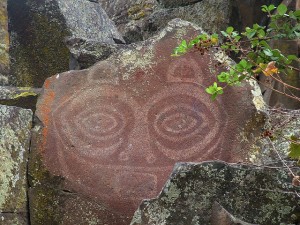
 by Jim Martin, CLEARING guest writer
 he crack, a river, flows from the upper left corner of the wall, spreads into branching riverlets as it nears the window. That sentence was written in metaphor. The next sentence has no metaphor, but carries the same information: There was a crack in the wall which branched as it neared the window. Which will you remember? Which brings recallable pictures to your mind? This is like engaging in science inquiry in the real world. Compared to reading about the results of science inquiry in the real world. Each gives a visual clue, but which will come most easily to mind?
 This is the twentyfirst installment of “Teaching in the Environment,” a regular feature by CLEARING “master teacher” Jim Martin that explores how environmental educators can help classroom teachers get away from the pressure to teach to the standardized tests, and how teachers can gain the confidence to go into the world outside of their classrooms for a substantial piece of their curricula. See the other installments
 by Jim Martin, CLEARING guest writer
 n the last blog, we looked at planning an inquiry unit from the perspective of a student display, isolating the parts of the display and tracing them backwards. Now, let’s start at the beginning, and look at the inquiry unit as a scope and sequence. Until you’re comfortable taking your students out into the real world, it’s easy to forget some of the details in this kind of work until you’re on site, or waiting by the school for a bus you haven’t ordered. It happens!
 This is the twentieth installment of “Teaching in the Environment,” a new, regular feature by CLEARING “master teacher” Jim Martin that explores how environmental educators can help classroom teachers get away from the pressure to teach to the standardized tests, and how teachers can gain the confidence to go into the world outside of their classrooms for a substantial piece of their curricula. See the other installments


 By Mike Weilbacher