
by editor | Sep 8, 2025 | Marine/Aquatic Education, Questioning strategies
Empowering Their Voices: Students Sound Off on the Puget Sound
by Nancy Skerritt and Kristin Edlund
What makes work truly meaningful? Creating curriculum that harnesses and nurtures the student’s voice is challenging work. We believe that engaging students in real world problems that affect their lives is central to engagement. Grade Nine students in Maple Valley, Washington participate in a unit of study entitled “Sounding Off on the Puget Sound.” The unit provides rich opportunities for our students to learn critical and creative thinking skills, Habits of Mind, and to practice real world problem solving.
The work in the unit is authentic, rigorous, and project based. Students participate in an online digital learning community. All six hundred experience a trip on a Washington State ferry, and they create projects of their own choosing where they “Sound Off” to a self-selected audience. The unit culminates in a call to action where the students research a community service organization for their own involvement, learning what it means to practice civic responsibility.
 At the heart of this unit is a shift in voice: Whose voice is heard? In the past, the teacher’s voice has dominated the conversation. Our new model values the student’s voice – not in random or isolated ways, but by carefully orchestrating curricular opportunities. We achieve our curriculum goals by structuring experiences that allow students to find their own voice and build the skills to make their voices heard. How do we accomplish this? We focus on the processes of learning and connect students to their own local community.
One year ago, we made a decision to abandon outdated content in our Grade Nine social studies course and to invite our students to explore the critical issues challenging the health of our Puget Sound. Our unit is designed to teach students how to investigate any issue by considering baseline data, examining this data over time, and making inferences from the data about how our environment is changing.
Students consider the ways in which marine life populations are affected by water quality, the impact on local seafood industries, and projections for how our lifestyle will change if the Sound is allowed to degenerate through pollution and other human interactions. The message is clear: Students can have impact by making their voices heard, taking simple actions like cleaning up after pets, and by getting involved in local com-munity organizations that are designed to improve the quality of our environment for our students today and into the future.
Strategies for Investigating an Issue
Within the structure of the unit, students gather information, interpret this information and then take action. Students investigate stakeholder groups to understand competing wants and needs. They use thinking skills like Point of View and Analysis to explore how human actions and interactions affect the health of the Sound. Drawing on case studies from other  parts of the country, they learn about the complexity of environmental issues by exploring a parallel issue in the Florida Everglades. The students study the wants and needs of the various stakeholders and search for a solution that takes into account the competing interests.
Students build on this background knowledge to research our local stakeholders: the timber industry, the commercial fishing industry, tourism, recreation, Native American interests, and wildlife. The students are acquiring the thinking skills and Habits of Mind to investigate issues and to draw their own conclusions. A key goal with this unit is to foster critical and creative thinkers who have skills that transfer to any issue, problem, or concern. We believe that these thinking skills lead to empowerment and honor individual points of view.
Problem Solving
The students then use a problem solving model to form their own opinions and ultimately to create an action plan where they can become personally involved in cleaning up the Sound. The model begins by summarizing the situation and crafting a question to focus thinking: “Evidence shows that the Puget Sound is polluted. There are various stakeholders who have vested interests in the future of the Sound. Considering the com-peting interests of preserving our environment, supporting our economic growth, and honoring our culture and traditions, how can the health of the Sound be preserved for a sustainable future? “
After analyzing the interests of the multiple stakeholders, the students develop their own point of view with evidence. Students have applied the thinking skills of Problem Solving, Point of View and Analysis. They have learned and practiced habits of mind such as thinking flexibly and applying past knowledge to new situations. Rather than passively studying a local issue, the students are actively engaged in developing their own point of view so that they can be part of the solution to a complex problem directly affecting the quality of their lives. The learning is relevant and rigorous. Students are respected as young adults with good ideas for improving our world.
Technology for Collaboration
Technology can be a powerful motivator for students when it provides a social context for their learning. In addition to utilizing a variety of technology tools for research and production, students in the Sounding Off unit collaborate creatively in an online learning community.
Web-based tools allow this virtual space to mirror elements of students’ social networks while scaffolding their collaborative skills: students learn to respond professionally and respectfully to one another’s ideas, and to incorporate others’ ideas into their own work responsibly.
Student posts begin as structured responses to prompts and evolve into more spontaneous expressions as the unit progresses. The online venue also provides a record of the class’ learning over time; the history of students’ posts allows the class to reflect on their evolving understanding of complex issues. Students’ individual voices gradually form a chorus in which their distinct tones can still be heard.
For instance, at the beginning of the Sounding Off unit, pairs of students choose one word to express their impression of Puget Sound. They post their word on the class site. As students explore the economic, cultural, and environmental issues facing Puget Sound, they are periodically asked to post additional one-word or one-phrase summaries of their understanding. Students comment and elaborate on each other’s posts, and the growing list of words and phrases generated, along with the support for those summaries, represents an increasingly sophisticated interaction with those issues.
The students are asked midway through the unit to use a web-based video generating tool to create a short video that incorporates images, words and music to express how their perceptions of Puget Sound issues have changed. With technology tools, students apply principles they have learned about how artists use those elements to provoke an emotional response in the public. The videos, in addition to synthesizing the class’ learning up to that point, serve as another opportunity to scaffold student skills, in preparation for the culminating Sounding Off Project.
The online learning community also provides the opportunity to expand the classroom beyond its walls. As students learn about Puget Sound stakeholders, those stakeholders and other experts can join the virtual community and contribute to the students’ learning. Students are empowered by interacting with adults as equal participants in exploring the real issues that affect their lives.
Certainly, technology provides powerful tools for generating creative products. However, in this unit, technology’s true power is found in its ability to foster community – to break down walls between individuals both within the classroom and beyond it. The structure of the online learning community provides a safe place for students to try out their voice, while the widening circle of that community allows them to amplify it.
Field Experiences
While the online learning community provides an engaging virtual experience for students, we find that there is no substitute for engaging students in the real world outside the classroom – for getting up close and personal with the issues. In Sounding Off, this means getting the students down to the waterfront and out on the Sound itself. In an era where field experiences are often the first casualties of budget cuts, we remain committed to these opportunities for all students.
We are equally committed to ensuring that the field experience is one of the most meaningful learning experiences the students will have throughout their educational career. This requires careful planning and orchestration of activities that are integral to the learning goals of the unit.
 During the Puget Sound field experience, students engage in activities at two sites: the Seattle Aquarium and on board a Washington State Ferry. At the aquarium, students explore the marine habitat and the wildlife that calls the Sound home. They use their field journals to make observations, compare and contrast, generate questions, and pose problems.
On board the ferry, students hear from stakeholders representing different interests related to the health of Puget Sound. The stakeholder’s interest might be economic, environmental, or cultural/historical. Students have the opportunity to interact with stakeholders who might represent state fisheries, non-profit habitat restoration organizations, Native American tribes, large shellfish corporations, or others.
To prepare for the field experience, students research the stakeholders and their points of view in advance, generating questions in their field journals. On the ferry, students use their field journals to organize information around key thinking skills. Both at the aquarium and on the water, students use their field journals and cameras to capture evidence regarding the economic, environmental, and cultural/historical aspects of Puget Sound.
While our community sits right in the Puget Sound’s watershed, this field experience represents the first time many of our students have ever actually been out on the water. The powerful impact of this opportunity is evident in students’ reflective letters to stakeholders and in the way the field experience continues to influence student thinking well after it has ended. Interacting personally with the Sound’s stakeholders while out on the Sound itself is an experience that can’t be replicated in the school building.
Sounding Off! Project
The Sounding Off! Project provides a framework for students to make their voices heard. Using the structure for projects provided by Ted McCain in his book Teaching for Tomorrow, students work as a member of a team. They design projects for the purpose of raising awareness about the health of the Puget Sound. The projects educate and call their audiences to action. Students choose their message and their target audience. Then they select a medium that will best communicate their message. They manage their team and project in the online learning community.
The projects vary widely based on the audience, medium and message. For example, one project team might create a picture book for kindergartners showing strategies for home water conservation while another team might create a video podcast to highlight the importance of habitat conservation to share with our legislators. Students are encouraged to use their individual talents to make a statement. They present their project to their chosen audience, “sounding off” on the state of the Puget Sound and sharing how people’s actions can make a difference.
Choice is at the heart of this project, and students exercise their creativity and their passions as they communicate with an authentic audience about the state of the Sound. Projects have included a website for learning about the danger of bulkheads, paintings that depict the past, present and future of the Sound, movies to promote stewardship, poetry, and children’s games.
Community Service
The unit culminates with the students investigating community service organizations, exploring answers to these questions: What is community service? Why is it important? How is service a component of citizenship? Students research community organizations that are involved in cleaning up the Puget Sound. They study the mission of the different organizations, and using a decision making model, they select an organization in which to become involved. Students contact the organization of their choice, learn about the organization’s service projects, and then commit to involvement in one of these projects. Students reflect on their participation by considering how they are making a difference in promoting the sustainability of the Puget Sound . They are doing real work that has value beyond the classroom and can take pride in making contributions to their community.
Engagement leads to empowerment. We want to graduate students who know that they can make a difference and have the tools to act. Learning must be relevant and real. Our students discover how they can take action to have impact. This life lesson will last long beyond the accumulation of content. Students learn problem solving, decision making, persistence, and interdependence. They practice civic involvement through a call to action. Our democracy relies on involved citizens, and our students learn that they have empowered voices through their study of the Puget Sound. They develop the awareness that what we do today does indeed make a difference for the future.
How do we know that these kinds of learning opportunities are more meaningful for our students than traditional approaches?
We’re listening to their voices.
For more information about the Sounding Off on the Puget Sound unit, please contact Nancy Skerritt in the Tahoma School District at nskerrit@tahomasd.us
References:
Costa, A. and Kallick, B. (2009) Learning and Leading with Habits of Mind. Alexandria: ASCD
McCain, T. (2005) Teaching For Tomorrow: Teaching Content and Problem Solving Skills. Thousand Oaks: Corwin Press
Nancy Skerritt, the Director of the Teaching and Learning Department, has been with the Tahoma District for 9 years. She previously worked in the Snoqualmie and Auburn School Districts. One of her most interesting assignments has been the development of the Elementary Core Curriculum in the Tahoma district. She has expertise in thinking skills instruction and she works with the Washington State Commission on Student Learning to assist with the design and implementation of the Washington State assessment system.
Kristin Edlund is a curriculum specialist in the Tahoma School District in Washington State and author of the middle school Habits of Mind curriculum. She has written social studies units that integrate the Habits of Mind and thinking skills, and she supports teachers in implementing this curriculum in the classroom. Edlund teaches classes in integrated curriculum, thinking skills, and Habits of Mind throughout western Washington and has presented at numerous state and national conferences. She worked as a teacher-librarian for 12 years before entering administration. She can be reached at the Tahoma School District office at kedlund@tahomasd.us.
by editor | Sep 7, 2025 | Adventure Learning, Environmental Literacy, Experiential Learning
Discovering Careers in Natural Resources through Outdoor Adventures
by Emily J. Anderson
Oregon State University
Career education and opportunities to explore diverse options in higher education are often limited for many high school students. New college students cite personal interests and work-relevant experiences as the primary factors influencing their degree and career choice (Lent et al., 2002) and perceive a significant lack of career guidance in the secondary school system (Hurley & Thorp, 2002). Traditional and non-formal educators should find new and creative ways to introduce youth to a variety of career options so they can make better informed decisions about their future. Oregon 4-H Explorers provides an example of introducing teens to natural resource career fields through outdoor adventure programming.
In recent decades, American teenagers have shown decreased interest in natural resource professions despite their strong interest in environmental issues (Strandbu & Krange, 2003). Declining enrollments in these degree programs impacts the outlook of natural resource industries. This poses a significant problem with economic success in communities of the Pacific Northwest that are strongly linked to natural resources. Furthermore, a personal connection to nature is a strong indicator of positive environmental ethics and desire to participate in conservation activities as an adult (Guiney & Oberhauser, 2010). For these reasons, one of our educational priorities should be finding ways for youth to value and connect with the resources, potentially leading to the decision to pursue a career in the field.
A young person’s choice to pursue a career in natural resources often stems from exposure to nature at an early age and an attraction to working outdoors (Sharik & Frisk, 2010). Additionally, youth who have a make the acquaintance of a professional in the field are more likely to choose a similar career path (Searle & Bryant, 2009). One study found that the declining selection of natural resource careers is caused by a lack of understanding of what exactly these jobs involve and absence of exposure to the field (Hager, Straka, & Irwin, 2007).
Perhaps the best way to attract youth to natural resource careers is through time spent in the outdoors, developing that all-important connection to nature while interacting directly with those who work in the field. Oregon 4-H Explorers was designed to do just that: introduce teens to careers while participating in an outdoor adventure program with industry professionals.
The benefits of learning in outdoor environments are abundant. Through intentionally designed outdoor experiences, youth advance their knowledge and understanding, attitudes and feelings, values and beliefs, activities or behaviors, and personal and social development (Dillon, et.al. 2005). More specifically, positive youth development programs with wilderness adventure elements can play a key role in addressing the needs of underserved youth (Norton & Watt, 2013). With this understanding, outdoor adventure opportunities are an easy choice for educators introducing youth to careers in natural resources while remaining rooted in positive youth development theory.
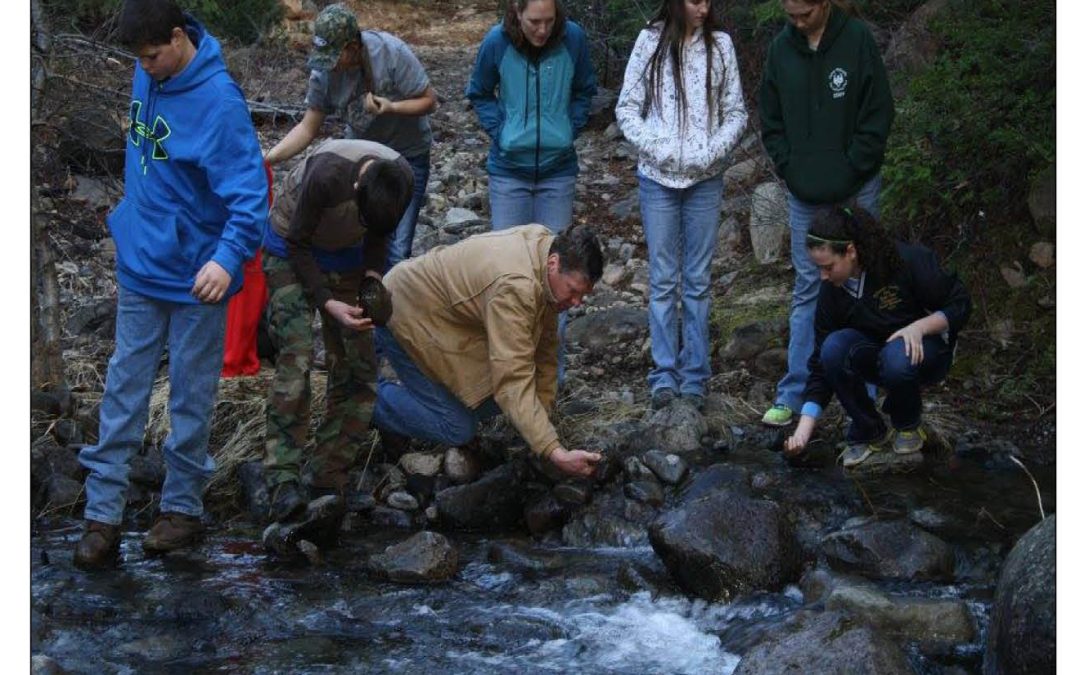
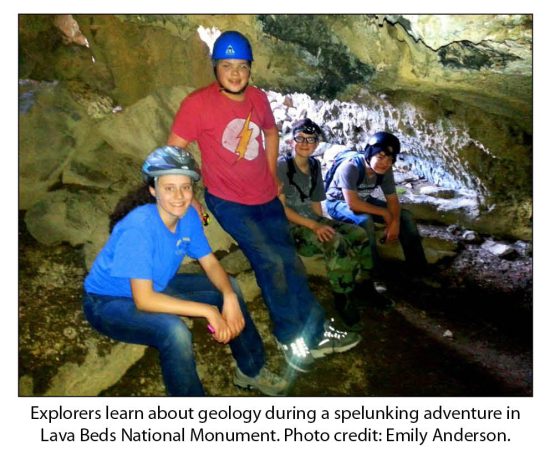
Oregon 4-H Explorers is a place-based, experiential education program for 12-18 year old youth. The program spans five months with full day excursions scheduled every-other Saturday and resource material to review in between. Marketing efforts highlight the outdoor adventure and recreation opportunities. However, in addition to technical skill building and nature-discovery, youth are exposed to a new natural resource profession during each excursion. Local professionals participate in each excursion while informally presenting about opportunities to work in their field, which compliments the outdoor activity. For example, a fish biologist joined the Explorers’ rafting trip and talked to the participants about the time he gets to spend on the river for field work. Similarly, a forester led participants on a Pacific Crest Trail hike, a geologist joined the caving expedition, and a climatologist took them snowshoeing at Crater Lake National Park. Inviting these guest professionals on the excursions provides a comfortable, informal way for youth to learn about natural resource topics and a “day in the life” of a professional in the respective field.
Participant evaluation results determined that program goals were achieved. Participants reported a stronger desire to study natural resources in college and pursue a career in a natural resource field. Conjointly, participants have a stronger connection with the natural environment, feel safer and more comfortable outdoors, enjoy outdoor recreation more, care more about the health of the environment and have a better understanding of how ecosystems function.
 While exploring the great outdoors and natural resource career fields, Oregon 4-H Explorers simultaneously developed valuable soft skills that will provide lifelong benefits in whatever career path they ultimately choose to pursue. Participants reported a stronger sense of independence, increased confidence, and a more positive self-image. Furthermore, upon completion of the program all participants said they were passionate about the topics presented and many believed they would not have had the opportunity to learn about these topics if not for the program.
All of the youth who completed the inaugural season of Oregon 4-H Explorers wanted to participate the following year. A leadership track was developed to offer the returning participants an elevated experience where they could explore careers more deeply and strengthen their leadership skills. These experienced youth earned the title “Guide” when they committed to the second season of the program. They were tasked with deciding which recreation activities and natural resource fields would be explored in the second season. They were then given the responsibility of leading “tailgate sessions,” or safety talks, and physically guiding the group through adventure activities. They each received 4-H Junior Leader Training, CPR and First Aid certification, Leave No Trace training, and were offered job shadowing opportunities with one of the guest professionals.
The keys to success for Oregon 4-H Explorers that should be considered when designing similar adventure- or nature- based programs are, (1) informal learning and self-discovery, (2) diligent risk management protocols, and (3) strong relationships between youth and adults. Oregon 4-H Explorers follows a true “learn-by-doing,” experiential approach. Activities were intentionally designed to be hands-on and learning was often self-paced. Rather than scheduled lessons or prescribed curriculum, youth learned about natural resource careers through informal question and answer and one-on-one conversation. Risk management and safety are also significant factors in creating an environment where youth are comfortable. In addition to important safety protocols and requirements mandated by the organization, Oregon 4-H Explorers utilized “tailgate sessions” at the beginning of each excursion to discuss safety concerns and precautions for the particular day’s activities. Finally, youth developed strong relationships with the adult chaperones who supervised each excursion. This allowed a deeper sense of safety and comfort while experiencing new, and often risky, activities. The amount of time spent with the guest professionals, typically 6-8 hours, also offered the unique opportunity to develop a comfort level that is difficult to create in an alternative classroom presentation. Youth were able to ask questions about their career throughout the day as the level of comfort increased.
Careers in natural resource fields are alluring options for youth who have a personal connection to nature or would enjoy working outdoors. Unfortunately, many youth do not consider these fields because they are not exposed to them or offered opportunities to spend unstructured time in nature. Non-formal educators are in a prime position to design programs that compensate for these missed opportunities and help youth discover the benefits and rewards of natural resource careers. A tremendous opportunity exists in collaboration between schools and non-formal environmental education organizations.
Non-formal education providers can be excellent resources for school administrators and teachers. Organizations like 4-H Youth Development have the expertise and flexibility to offer out-of-school educational opportunities. Experiential and place-based education outside the classroom is an outstanding way to supplement the traditional classroom experience. Programs like Oregon 4-H Explorers can be developed in collaboration with a class or school to compliment the classroom experience or can be stand-alone educational experiences in out-of-school settings.
Offering opportunities for youth to develop personal connections with nature may be the first step in their eventual selection of a career in natural resources. Oregon 4-H Explorers demonstrates that during or after that connection has been made, creating environments for youth to spend unstructured time with professionals in these fields can have a significant impact on their ability to visualize themselves in those professional roles. Facilitating these opportunities in a way that is fun and engaging for participants has a strong and long lasting impact.
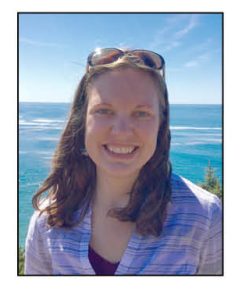 Emily Anderson works for Oregon State University as a 4-H Youth Development Program Coordinator in Lane County, Oregon.
References
Dillon, J., Morris, M., O’Donnell, L., Reid, A., Rickinson, M., & Scott, W. (2005). Engaging and learning with the outdoors – the final report of the outdoor classroom in a rural context action research project. Berkshire: National Foundation for Education Research.
Guiney, M.S. & Oberhauser, K.S. (2010). Conservation volunteers’ connection to nature. Ecopsychology, 1(4), 187-197.
Hager, S., Straka, T., & Irwin, H. (2007). What do teenagers think of environmental issues and natural resources management careers?. Journal of Forestry, 105(2), 95-98.
Hurley, D. & Thorp, J. (2002). Decisions without direction: career guidance and decision-making among American youth. Research report prepared for the Career Institute for Education and Workforce Development. Washington, DC: National Association of Manufacturers.
Lent, R.W., Brown, S.D., Talleyrand, R., McPartland, E.B., Davis, T., Chopra, S.B., Alexander, M.S., Suthakaran, V., & Chai, C. (2001). Career choice barriers, supports, and coping strategies: college students’ experiences. Journal of Vocational Behavior, (60(1), 61-72.
Norton, L.N., & Watt, T.T. (2014). Exploring the impact of a wilderness-based positive youth development program for urban youth. Journal of Experiential Education, 34(4), 335-350.
Searle, S. & Bryant, C. (2009). Why students choose to study for a forestry degree and implications for the forestry profession. Australian Forestry, 72(2), 71-79.
Sharik, T.L. & Frisk, S.L. (2010). Student perspectives on enrolling in undergraduate forestry degree programs in the United States. Natural Sciences Education, 40(1), 160-166.
Strandbu, A. & Krange, O. (2003). Youth and the environmental movement – symbolic inclusions and exclusions. The Sociological Review, 51(2), 177-198.

by editor | Sep 4, 2025 | Conservation & Sustainability, Environmental Literacy, Equity and Inclusion, Gardening, Farming, Food, & Permaculture, Indigenous Peoples & Traditional Ecological Knowledge, Place-based Education, STEM, Sustainability, Tribes & Traditional Ecological Knowledge
A Teaching Toolkit Connecting Students with Plants, Places, and Cultural Traditions
By Kim Gaffi, Mariana Harvey (Yakama) and Elise Krohn
 Educating younger generations on the gifts of the land has always been a cornerstone of Indigenous teachings to strengthen mind, body, and spirit. As Skokomish Elder Bruce Miller said, “The Forest was once our Walmart.” The Pacific Northwest is teeming with wild edible berries, greens, roots, and seeds that are nutritionally superior to store-bought foods. Wild plants also provide medicine and materials for traditional technologies. Many common and accessible “weeds” are useful and can be found in our own backyards.
 Tend, Gather and Grow (Tend) is a K-12 place-based curriculum dedicated to educating people about plants, local landscapes, and the rich cultural traditions that surround them. Tend focuses on native and naturalized plants of the Pacific Northwest region and includes Northwest Native knowledge, stories, and plant traditions. The curriculum toolkit consists of a teacher guide, six modules, videos, Coast Salish stories, plant identification cards, posters, games, recipes, and a garden guide. The 60+ lessons align with Science, Technology, Engineering, Art, Mathematics (STEAM) education principles and Next Generation Science Standards. Here’s a glimpse at the main curriculum modules:
- Plant Guide – This module covers 20 northwest plants and includes 38 hands-on lessons. Teachers can choose lessons based on what plants are available, in season, and most relevant to students. Each plant overview contains information on identification, seasonality, where the plant grows, human uses, and ecological relationships. A K-12 lesson called Dandelion: The Useful Weed introduces students to the lifecycle of dandelion, how it improves soil quality, and how it benefits insects, grazing herbivores, and people. Two lessons for 6th to 12th graders dive deeper into making food and medicine from dandelions. Plants that are at risk for overharvest have not been included in the curriculum unless there is a specific emphasis on restoration
- Cultural Ecosystems Field Guide – This module is about reframing the settler/dominant narrative about Northwest Coast Native People. Typically, Native Communities in the Northwest have been characterized as hunter-gatherers. This is not an accurate representation, and erases the deep-time relationships and land cultivation practices of Native People. This module includes an overview lesson on cultural ecosystems and a field guide to camas prairies, saltwater beaches, food forests, wetlands, and urban landscapes. Students learn about reciprocity and explore how they might both receive the gifts of the land and give back to the land.
- The Herbal Apothecary – This module includes techniques for harvesting, processing, and preparing medicinal plants. Topics include herbal teas, infused vinegars, honeys, poultices, infused oils and salves, herbal baths, and aromatherapy.
Plant Technologies – This module investigates how plant qualities have been used for millennia to create human technologies. Students explore ways to gather, process, and make useful items including cordage, baskets, mats, tools, and dyes from plant materials. Lessons are rooted in STEAM concepts.
- Tree Communities – This module introduces common Northwest trees and how they are valued for food, medicine, and traditional technologies. Themes include tree identification, ecological relationships, and life skills that we can learn from trees including generosity, building community, willingness, adaptability, and resilience.
- Wild Food Traditions – This module engages students with native and wild foods from a Coast Salish perspective. Seasonal lessons include spring wild greens, summer berries, healthy snacks in fall, and traditional beverages in winter. Native American stories, cultivation practices, ethical harvest techniques, and recipes are woven throughout lessons.
 Our Tend, Gather and Grow development team (photo left) includes twelve people sharing a common passion for connecting people with plants, the land, and cultural traditions. Several of our team members have worked together in tribal health and natural resources programs and half are Indigenous. Over the years we have heard consistent requests for educational resources designed for youth. The Tend curriculum is our effort to meet that need. Collectively, we have knowledge and skills in teaching, environmental education, Northwest Native culture and storytelling, ethnobotany, herbal medicine, traditional technologies, art, media, social justice, and youth advocacy. Our team met monthly for several years to study plants in the seasons and co-design lessons and activities. Co-developing the curriculum has been an opportunity for our team to be in community with each other, share our love of plants, deepen our knowledge, and support each other along the way. We also worked with Native Elders, cultural specialists, and other regional experts in developing lessons—especially regarding storytelling and plant technologies. The curriculum includes quotes and instructions from these individuals.
Tensions
 There are inherent tensions in non-native people using this curriculum, including concerns of cultural appropriation and misuse of plants and cultural landscapes. The curriculum exists, as we all do, within a painful and persistent history of colonialism, white supremacy, and systematic oppression. Historic and ongoing colonial settler practices negatively impact Native People and their traditional lands. Plant communities have changed drastically and many important cultural foods and ecosystems are diminished and difficult to access. Cultural appropriation and a misuse of knowledge among settler communities has undermined tribal sovereignty in several ways, including researchers claiming copyright authority over Indigenous knowledge and the overharvest of plant communities. For instance, as the health benefits of mountain huckleberry are more broadly learned, huckleberry stands cultivated by Native Peoples for thousands of years have been damaged and overharvested by non-native foragers and commercial harvesters.
To address these tensions, the Tend team has collaborated with tribal Elders and cultural knowledge keepers to ensure that information in the curriculum is appropriate to share broadly. Some plants and plant knowledge have been purposefully left out. All stories and plant teachings are included with permission from the storyteller or plant knowledge keeper. We have also created a video called Honoring Plants, Places, and Cultural Traditions that features Indigenous educators offering tools and advice to teachers wanting to use the curriculum. The Tend, Gather and Grow Teacher Guide and trainings support educators in adopting the curriculum responsibly. The toolkit also encourages educators and young people to be advocates and allies for Northwest Native peoples, tribal sovereignty, and cultural ecosystems. Lastly, we are encouraging schools to integrate featured plants from the curriculum in schoolyards and have created an Ecosystem Garden Guide that includes plant lists and basic garden installation directions.
Ways People are Using the Curriculum
T end is adaptable to multiple learning environments, cultures, languages, participant ages, and abilities. We encourage educators and students to explore and add specificity around local language, culture, stories, and places as appropriate. We believe that cultural diversity is part of our richness as people. Educators can create opportunities for immigrant students to share their knowledge and traditions as well, and plant uses from around the world are included in the curriculum to encourage this.
The Tend curriculum is being implemented in a variety of settings including tribal schools, non-tribal schools, health and wellness programs, behavioral health programs, youth camps, and informal educational settings. Educators are also using Tend in various ways that meet their learning goals, fit their environment, and follow their students’ interests. Some schools focus on a plant each month (Wild Rose in September, Cattail in October, Doug Fir in November, etc). Some teachers are integrating Tend lessons into other courses like agriculture, nutrition, biology, ecology, social studies and the Since Time Immemorial Tribal Sovereignty curriculum. Teachers can also choose lessons and modules to accompany existing nearby landscapes like camas prairies or saltwater beaches and/or gardens or to accompany the creation of an ethnobotanical garden. Tend can also be the centerpiece of a full year-long course and we’ve designed a 180-hour Career Technical Education framework called Tend, Gather and Grow – Ethnobotany & Natural Resources Management to support this.
Tend Tribal Educator Cohorts
 The Tend team has facilitated year-long tribal community educator cohorts where 16–20 educators from Washington tribes gather monthly for full-day workshops. Our first two internships focused on serving Western Washington tribes and this year we are honored to work with tribes from the Plateau region.
The Plateau internship includes seventeen tribal food gatherers, teachers, community educators, birth justice advocates, Indigenous language teachers, Elders, and youth who represent Yakama Nation, Colville Confederated Tribes, Kalispel, Nez Perce, Spokane, and Coeur d’Alene Tribe. This internship is led by GRuB’s Wild Foods and Medicines Tribal Relations Lead, Mariana Harvey (Yakama) and Traditional Plants Educator and Tend development team member, Elizabeth Campbell (Spokane/Kalispel).
This internship meets regularly over the year to integrate the Tend curriculum into various communities, schools, and programs. Participants also build teaching and group facilitation skills, learn about how to identify, harvest, and prepare many local plants, attune to the seasons, deepen a connection to the land, practice storytelling skills, and more.
Often the most enriching outcome for these tribal internships is the community and relationship building among the participants. Our participants are leaders within the tribal food sovereignty movement and it is a lot of work to carry. We hear that our gatherings feel like a ‘retreat’ where people can learn together, share ideas, and deepen bonds to each other and the earth. Gatherings take place in each participating tribal community, allowing us all to gain a deeper understanding of each other’s tribal history, culture, and of course foods and medicines! While we were in Spokane, a common highlight among participants was hearing a traditional story about the tamarack tree. When we were in Yakima, many remarked that it had been a very long time since they had eaten many of the roots that were served that day, and others were eating them for the first time. There is joy that radiates from our participants after our gatherings and the beauty is they bring that joy and spark of knowledge back home to their communities. ❀
Learning about and from plants has been a wonderful foundation to connect with my students and colleagues, since it’s something everyone can relate to on some level. I have been especially moved hearing stories that have been shared by experts in the field, native teachers/elders, as well as unique family stories that have emerged from my students, colleagues, and friends.
–Charlie Sittingbull, North Thurstaon High School Science Teacher
Photos by Elise Krohn

 At the heart of this unit is a shift in voice: Whose voice is heard? In the past, the teacher’s voice has dominated the conversation. Our new model values the student’s voice – not in random or isolated ways, but by carefully orchestrating curricular opportunities. We achieve our curriculum goals by structuring experiences that allow students to find their own voice and build the skills to make their voices heard. How do we accomplish this? We focus on the processes of learning and connect students to their own local community.
 parts of the country, they learn about the complexity of environmental issues by exploring a parallel issue in the Florida Everglades. The students study the wants and needs of the various stakeholders and search for a solution that takes into account the competing interests.
 During the Puget Sound field experience, students engage in activities at two sites: the Seattle Aquarium and on board a Washington State Ferry. At the aquarium, students explore the marine habitat and the wildlife that calls the Sound home. They use their field journals to make observations, compare and contrast, generate questions, and pose problems.


