by editor | Apr 2, 2010 | Place-based Education
 Homewaters Project, an educational nonprofit in Seattle, successfully uses Geographic Information System (GIS) technology as one of its methods of connecting students to their natural and social communities.
By Todd Burley, Homewaters Project
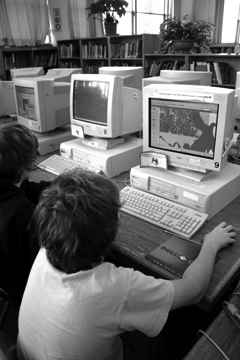
As place-based educators, we often shudder at the notion that technology can connect people to the world around them. The very idea of sitting in front of a computer to learn about your home place seems incongruous. But Homewaters Project, an educational nonprofit in Seattle, successfully uses Geographic Information System (GIS) technology as one of its methods of connecting students to their natural and social communities.
In the foreword to David Sobel’s book Place-Based Education, Laurie Lane-Zucker defines place-based education as “the pedagogy of community, the reintegration of the individual into her homeground, and the restoration of the essential links between a person and her place.” Elementary school students must begin this process by simply developing awareness and knowledge of their local environment and community. For middle and high school students, however, appropriate education engages them in their community as active citizens.
Technology can actually be used to connect these older students to certain social and environmental issues in their community that are beyond direct experience in both time and scope. Consider:
• Population density in relation to stream health,
• Income levels in relation to pollution spots, or
• Shoreline changes over the past century.
How can a teacher bring these locally relevant large social and environmental issues to light?

Water and Community
In three Seattle middle schools, eighth grade students use technology to visualize these complex neighborhoods and watershed issues in their own home place. Coordinated and created by Homewaters Project, the Water and Community GIS Program brings together real world data from local governments, volunteers from local colleges, and the GIS software ArcView to help prepare students to become active citizens.
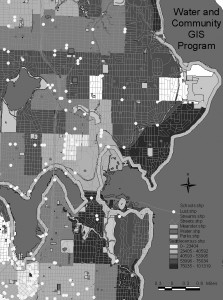
Designed to last about a month, Water and Community engages students in the ecological and social issues of their home place while teaching them the GIS skills that professional planners use to help understand and solve such issues. Using their home watershed as the organizing framework, the students investigate water quality issues using different data layers, including:
-one that shows where nearby streams are,
-one that pinpoints leaking underground storage tanks, and
-one that displays the population density by census tract.
These line, point, and area layers can be placed over each other (like transparencies) to visualize their relationships, and together provide a basis for students to investigate questions about hydrology and water quality in their community.
Students also use GIS data to find out specific information about features such as creek names, businesses that require pollution permits, or predominant types of land cover in their neighborhood. Rather than learning about issues in far away states or countries, these students study the deeper story behind places they see everyday. Over the course of five classroom sessions, they learn information about their neighborhood that few residents ever discover. Prepared by this experience, Water and Community participants become more informed and, hopefully, more engaged future citizens.
 Making Learning Relevant
One problem with technology in education is that it can lack relevance for students. Yet the Water and Community GIS Program offers an example of how to connect students to their place using technology. When the concept of place-based education guides the application of technology, truly remarkable learning can result.
As always, a key question must be, “What is the goal?” If technology enhances the student learning experience and helps achieve that goal, technology can be a wonderful tool. For Homewaters Project, and other place-based education organizations, the goal is to connect people to their home place and engage them in their community.
As students reach middle and high school age, GIS application using local data can bring alive and clarify complex issues every community must confront — and make the issues immediate for young people as they prepare to become citizens. While every community is unique, and obviously not every educational goal can be served with technology, Homewaters Project shows that strategically applied technology can enhance place-based education.
[/password]
Todd Burley is the Outreach Coordinator for the Homewaters Project in Seattle. Homewaters can be reached at 9600 College Way North, Seattle WA 98103; (206) 526-0187 or at www.homewatersproject. org
by editor | Mar 15, 2010 | Gardening, Farming, Food, & Permaculture, Higher Education & Career Development, Outstanding Programs in EE, Schoolyard Classroom
by Veronica Gaylie
University of British Columbia
Introduction
There are no larger fields than these, no worthier games than may here be played.grow wild according to thy nature…let the thunder rumble…take shelter under the cloud…Enjoy the land, but own it not. (Henry David Thoreau, From Walden)
How does eco-centred teacher education promote ecological ideals while transforming the teacher training process? How can a campus garden engage student teachers in environmental philosophy while promoting new metaphors for eco-centred practice?
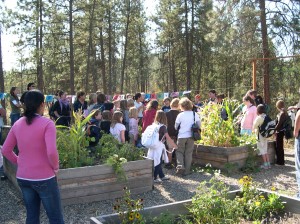
One response to these inquiries was to build a campus “Learning Garden,” a model school garden and learning site for student teachers. Through research, physical labour and collaborative learning, the garden grew as a narrative where students learned to become teachers with heart, and earth, in mind. The Learning Garden also exposed new teachers to a concept of the land as both a physical space and an experiential learning process, concepts involving responsible land management, risk taking and community commitment.
 A community learning model, with garden work at the core, promoted local and global knowledge of drought, food systems and farming practices; the model inspired students to want to acquire such knowledge and experience in the first place. The garden shifted learner awareness from personal achievement to the environment itself: from student stewardship of the garden to the impact of that stewardship beyond the garden and into the world. The garden challenged assumptions of ‘teacher success’ and also some of the ideals of environmental education. It was especially the challenges that helped realign ideals and exposed students to the unpredictable processes of both teaching and the natural world.
The critical challenges of teaching teachers in the garden can be described through two metaphors: garden as (physical) environment and garden as community. The garden as environment, a literal outdoor space, involved awareness of local climate conditions and the necessity for drought tolerant plants and native species. An awareness of the garden as environment also promoted concepts of ecological and social justice, with, for example, the decision to donate produce from the garden to the local food bank. In the garden as community, student teachers learned the importance of respecting and interacting with their location; the learning garden was (and continues to be) strongly influenced by local Okanagan Tradition, which challenged a focus on individual achievement common to most academic programming. In this way, the garden, both as physical space and as a conceptual model, also challenged the roots of teacher training.
 School Gardens in the Context of Environmental Education
David Orr (2004) calls for the integration of environmental education across the curriculum, and a Science curriculum linked to history, environmental ethics, citizenship, Globalization and first hand awareness of how scientific knowledge affects the world outside the classroom. Such a curriculum supports the belief that “…knowledge carries with it the responsibility to see that it is well used in the world.” (13)
Other environmental writings (Bowers 2006, Shiva 2005) discuss the reclamation of public space as a way of developing socially engaged, knowledgeable communities. Shiva discusses ‘living democracies’ that promote biodiversity, local action, and ‘reinventing citizens’ and provide a solution to monoculture and socio-economic injustice. (84)
Researchers also outline the need for practical and critical understandings in school gardens and the need to examine concepts such as direct food, globalization and anthropocentric learning models. Such a need can be realized through teacher education that supports critical, eco-centred concepts with first hand experience of land and food. The garden provides a place where students can consider, up close, the threats to local food sources through global agri-business, the commoditization of a basic life source (land and seeds), and various forms of embedded knowledge that contribute to ecological damage. As gardens grow in North American schools, teacher education must prepare future teachers in critical, eco-centred methods and philosophy while exposing them to tangible, contextual awareness of the learning process itself.
Garden as Environment
Work in the garden began with an Environmental Education class made up of student teachers and practicing teachers. While we weeded, we considered some conceptual approaches to guide the garden: sustainability (passing on the garden to future learners); interdisciplinary learning (connected learning); hands-on learning (learning by doing); xeriscape as alternative to green lawns (responding to local water issues); organic (a contextual awareness of our surroundings as ecological systems); aboriginal traditions (community minded teaching and learning); rotating stewardship (respect for future groups in the garden). The means of developing the garden’s principles were also meant to create a tradition of discussion that would be passed on to future groups, who could discuss, change, solve or adapt the founding principles. The basic plan was for a food/drought tolerant/flower mix that would create a blend of “beauty” and “use” while showing how native, non-native and invasive species responded to drought. If the flowers and vegetables withered due to a water shortage, and the xeriscape plants lived, students would have a visual example of the effects of drought. The plan was not to create a showcase of local plant life but to support a learning process where mistakes could bring understanding. This would be a valuable, difficult lesson for new teachers.
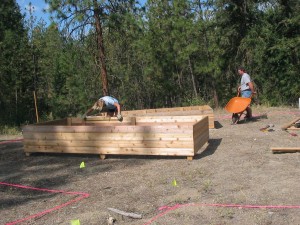
The idea of a “Learning Garden” took hold and local businesses eagerly made donations. The first donation was from a local lumber yard which donated one thousand dollars of red cedar for raised garden beds, with promises of supplying more at wholesale prices. Other local businesses in the small community recognized that their own children, and family members, would benefit from school gardens.
With so much imported produce in local grocery stores, most of it hauled by truck North on one highway, the students considered the value of maintaining local farms as a means of challenging global food trade. What were the land ethics, the issues of eco-justice involved in building large scale, permanent condo developments on fertile agricultural? What was the connection between a local garden and globalized food ethics? How could students involve themselves in this knowledge by learning and working in school gardens?
The students engaged in conversations around the larger context of their local work, providing a practical context for their readings in Globalization from previous course work and personal interest. While students thought of innovative ways to bring this knowledge to their own classrooms, the method of linking local and global concepts through hands-on learning would challenge teacher education focused on performance standards, organizational abilities and classroom management. By learning in the garden, and in considering the role of the garden in the local and global agricultural community, students began challenging their own teacher training.
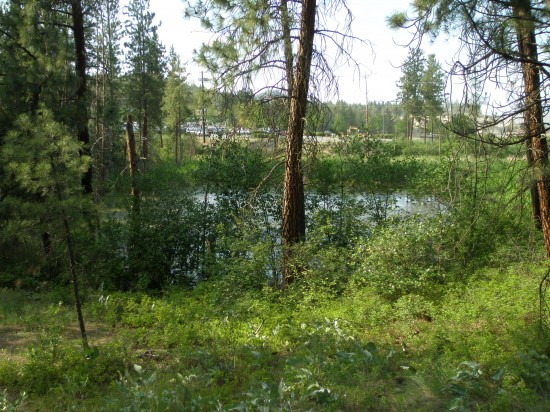 The Pond
The garden is located next to a pond filled with a variety of migratory ducks, red-winged blackbirds and other wildlife. One early idea was to use the pond to water the garden, using a pump.
What was the environmental impact of draining the pond? How did we interfere with goals for long term, sustainable land and water use by removing water from the pond? Why was our first impulse in moving toward sustainable land management to destroy it? What previous learning had lead us to seek short term gains, while destroying other life forms? Leaving the pond alone seemed like an obvious, ecoliterate choice; however the process of coming to this decision was our first instance where a practical need lead directly to questions of environmental ethics. The shift from seeking solutions to asking questions about ecological justice began with contextual awareness, occurring organically within community, within the decision making process itself. Students learned that eco-centred decisions require a constant, conscious effort to weigh the ecological impact of human actions within an ethical framework of ecological justice.
A second example of contextualized decision making occurred when the students developed their garden design plans. The designs were placed on a screen in the classroom, and included a mix of hand-drawn symbols, squares, circles, combined with computer generated garden designs. One design clearly stood out: it was irregularly shaped, with the exterior parameter of the garden bulging into and oddly shaped arc. This design was in the actual, irregular shape of the land itself, with areas drawn for garden beds which lead out from a (natural, tree-shaded) classroom area to the composter and soil areas. The plan was organic, irregular, and fit the imperfectly shaped land perfectly. The students were beginning to work with the land by listening to the land itself.
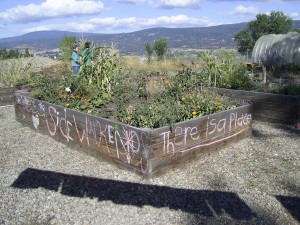 Garden as Community
A community model of teaching and learning grows from school gardens. Instead of prizing ‘ownership’ of land or ideas, the learning garden was focused on an ideal of shared local knowledge. The new cohort of students typically wanted a quick, practical route to becoming teachers. Most of the students had recently completed four year undergraduate degrees in single teaching specialties; they were conditioned by an academic system of independent achievement and individualized recognition. Students emerged from academic undergraduate conditioning and most wanted to know instead of learn in a learning garden. When I told the students they would be developing curricula, methods and lesson plans around native plants, global education, local food and other eco-centred issues, a handful seemed interested. One student told me: “I hate nature.” During the second garden cohort, ideals for an eco-centred, community model of teacher education seemed at odds with a college system biased towards grades and individual stamina and success. In Spring, a dedicated group of the middle school cohort, post-practicum, continued building the infrastructure of the garden by building up the soil and designing the beds. We learned of a plan to drain the pond to make way for the new business/engineering building. Our very presence seemed to challenge the land development that suddenly surrounded us on campus. When I told the students, they wondered how a campus that prides itself on ‘sustainability’ could consider removing a pond. The argument for removing the pond was that the pond was man-made, and therefore not ‘natural.’
The water issue found us taking personal responsibility for decisions which would have a lasting impact. Our first lesson in making positive, conscious decisions for the garden, taught us the importance of listening to all members before making decisions. The land taught us to stay still. And listen.
The students and I were suddenly aware of the power structures that surrounded us. One student offered to live in a raft on the pond in order to save it from destruction. At this time, we learned the challenges of building eco-centred community within previous, existing models of learning. We experienced the growing pains of eco-centred teacher education; their academic, undergraduate education had not nurtured a collaborative learning model and, through eco-centred teacher education, the students and I learned, with some difficulty, how to build community from scratch.
What is the role of a teacher educator in guiding student teachers toward community based, eco-centred learning? Planning the garden, then planning and replanting the garden during the second teacher education cohort, brought forward the importance of process. Nurturing plants from seedlings, observing their growth, at the same time students and teachers learn from the garden, is a powerful way to help future teachers learn how to learn. Initial reluctance largely gave way when students worked together to apply their knowledge. I observed how problems resolve with the literal manifestation of abstract plans and knowledge. If, for example, a student wants to plant a rose, instead of native, drought-tolerant plants, a prolonged, decontextualized discussion could ensue in a classroom environment. In the garden, however, it is obvious that a rose in our local climate requires a lot of water and care. Is the student willing to provide that? Is a rose practical in a desert landscape? What are the cultural assumptions that lead the students to believe a rose is ‘beautiful’ if it uses one hundred percent more water than a local plant, such as an Oregon grape? For students new to a garden, learning does not lie in certainty, but in mistakes, and in defying preconditioned notions of learning.
 During the first year, threats to the garden community (physical, ethical, external, internal) all somehow related to concepts of individual ownership. In a western model of education, it seems that just as people care about land, they also want to control it. The experience of the garden as a co-operative, shared model of learning made us aware of land models based on ownership and profit. Building the garden made visible the larger learning community, and prompted new understandings of the role of teacher education within that model. Is the role of a teacher educator simply to teach students how to exert control over all other natural species, including their students? As Wendell Berry (2002) states, a community “…must change in response to its own changing needs and local circumstance, not in response to motives, powers, or fashions coming from elsewhere.” (163) When learning supports peace, community, and environmental awareness, new values emerge that help learners make ecologically just decisions that challenge ingrained learning patterns. In this way, a garden challenges teacher education at its very roots.
“Hope Trumping Despair”
The story of the learning garden is about the impact of local, small scale actions on larger systems. One school garden, with sometimes just a single teacher’s involvement, can produce far reaching effects.
Garden-based teacher education puts the ideals of environmental education into practice. Conceptualizing new forms of eco-centred teacher education also helps remove the myth of control and knowledge “ownership” for new teachers. It would be impossible for one person to build and maintain a school garden, and it would be purposeless, since land cultivation is always rooted in a process of shared knowledge. A school garden is always, simultaneously, environment and community.
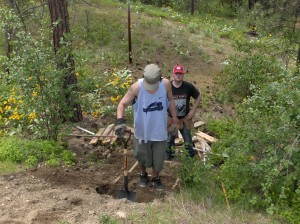 As David Orr and others have stated, while it is vital to inform students of the scientific facts about environment, it is even more important to change the ways of living and thinking that have contributed to environmental destruction. Working in the garden teaches teachers to approach the land in the same way they might approach their students, taking a holistic, process-oriented approach. Such a community depends on individuals succeeding within and for the survival of the community; in working the land, students see how their efforts helped the land produce at a level that is sustainable, in context, with minimal impact on surroundings. In a garden, students are not silenced into discipline or disciplined into silence; the reasons for both talk and silence are apparent. Community becomes both the process and goal of learning. As taught in aboriginal Tradition, a garden teaches young people to also learn ‘how our actions are always tied to others, and how some actions disappoint and hurt.’ (Armstrong et al. 2000)
Beginning with visions and ideals about the land and learning, the students teachers and I grew alongside the garden: unpredictably, in the context of organic life. A garden reveals how the process of learning, rooted in the context of one’s surroundings, becomes the lesson itself. To learn in a garden with students is to be in a constant state of environmental and community activism. As veteran social activist Grace Lee Boggs states, a community garden is a sign of “hope trumping social despair” at the grass roots level where we ‘regain our humanity in practical ways.’
Veronica Gaylie, Assistant Professor in the Faculty of Education at the University of British Columbia Okanagan, has worked as a high school English teacher and is now a teacher educator in interdisciplinary, ecology-based learning. She is the founder of the learning garden at UBC Okanagan.
by editor | Mar 15, 2010 | Higher Education & Career Development
by Carol Brodie
There are over 4,000 institutions of post-secondary and higher education in the United States, with over 14 million students. In 1999, 2.3 million degrees were handed out. These technical schools, colleges, universities, and professional schools prepare the majority of the professionals who will work, teach, and live in our towns and cities. The graduates of these institutions will affect future generations by their example and their teachings. Their alma maters, therefore, play an important role in how society defines its priorities and goals, and accomplishes its objectives.
Johnson and Beloff (1998) state that education is the best way to prepare future citizens to respond to an environmental agenda, and that higher education is the best place to provide that instruction. Cortese (2003) states that in order to solve some of the current and pending environmental problems, humans need to understand their impact on the earth, and their connections to the natural world. He states that the change in thinking needed is “a sustained, long-term effort to transform education at all levels” and that “higher education institutions bear a profound, moral responsibility to increase the awareness, knowledge, skills, and values needed to create a just and sustainable future.”
According to Orr (1994), one of the goals of higher education should be to prepare its graduates to be responsible citizens, including the knowledge about their place in the natural world, and the sustainable practices needed to protect that world. However, teaching these values is not necessarily, by itself, enough — higher education should “practice what it preaches“ and make sustainability a fundamental part of its curriculum, operations and investments.
Universities function as a microcosm of society; therefore, the manner in which they carry out their day-to-day activities can be a demonstration of the ways in which we can achieve environmentally responsible living. By looking closely its own practices, the university can set an example in sustainability, and engage students in understanding the ecological footprints institutions and individuals leave (Abate et al., 1995).
A movement was begun towards these ends in 1990. In order to attempt to define and promote the concept of environmental sustainability in higher education, the Talloires (pronounced Tal-Whar) Declaration was created. The president of Tufts University convened twenty-two university leaders and nine international environmental experts in France to voice their concerns about the environmental condition of the world and to create a document that spelled out actions that colleges and universities should take to create a sustainable future. This gathering defined the importance of higher education in the following way:
“Universities educate most of the people who develop and manage society’s institutions. For this reason, universities bear profound responsibilities to increase the awareness, knowledge, technologies, and tools to create an environmentally sustainable future.” (Report, 1990).
The Talloires Declaration is a plan with ten “action items,” and is intentionally broad, covering the major areas of university activity: teaching, research, operations, outreach and service. The Declaration is designed to be interpreted and shaped for each individual institution. (Report, 1990).
Increasingly, universities are bringing sustainability into their curriculum, and incorporating its principles into their operations (Barlett and Chase, 2004; Cortese, 2002). Making this change has helped them to realize economic savings and esteem amongst their peers through the greening of their campuses. As an example of savings on a larger scale, in California the state’s Sustainable Building Task Force commissioned a report to assess the costs and financial benefits of constructing sustainable buildings in the state. The report shows that it costs, on average, nearly two percent more to construct a green building than one using conventional methods. However, the energy savings realized equal more than ten times the initial investment during the life of a building, conservatively assumed to be twenty years (California Integrated Waste Management Board, 2003).
How can universities promote sustainability? There are so many ways. Since they are such microcosms of society, they can model green principles in every aspect of their operations. For example, consider their physical plants. These operations manage the physical environment in which students live and learn, and employees work. They have enormous capabilities to save money and resources through green practices. Native plants in the landscaping save water. Chipping and spreading green materials saves money on mulches, saves water, and reduces removal fees. If they follow the Green Building Council’s standards for LEED certification in new and retrofitted/renovated buildings, they will discover energy savings – for example, night cooling systems and occupancy sensors reduce our dependence on fossil fuels and save universities money at the same time.
An exemplary model of sustainability in buildings can be seen at Lewis and Clark College in Portland Oregon. Their new residence halls have been rated LEED Silver, and their new social sciences academic building (Howard Hall) is expected to be rated LEED Gold. The new 50,000-square-foot building is expected to consume 40 percent less energy than a typical building of the same size, with raised-floor displacement ventilation and night cooling systems. Its elevator operates with 40 percent less electricity than standard elevators and does not use hydraulic fluid. Its storm-water filtration, storage, and reuse system has already received praise from the Oregon Chapter of the American Society of Landscape Architects. Touring the building in October of 2004, I at first found its exposed steel, unpainted concrete blocks, and polished concrete to be somewhat stark; however, they have softened the effect with student art and other projects. Howard Hall has a smaller ecological footprint than the structures it replaced, but it brings a net gain of 25 offices and 14 classrooms to the campus. Additionally, the contractors recycled more than 95 percent of the construction debris and used low-toxicity adhesives, carpet and composite wood products throughout the building.
Additionally, Lewis and Clark has a natural gas co-generation unit for electricity and for heating the school’s swimming pool.
Transportation is becoming a hot topic at universities. Visit just about any campus today, and you will find electric carts being used by their dining services, physical plant, housing, student life – you name it. Electric carts are just the beginning, though – universities are coming up with some very innovative – and fun! – sustainable solutions.
Let us consider the example found at the University of Oregon (UO). UO has one of the highest concentrations of bicycle per capita in the State of Oregon, possibly the country. This high level of bicycle use benefits the campus, the city of Eugene, and the state by reducing the usage of fossil fuels, and reducing the need for parking on the UO campus. University campuses are facing a huge problem because of limited parking areas and increased numbers of cars. Being in Eugene is beneficial for the campus, too, as that city has built one of the most sophisticated and highly developed bike route systems in the country.
Bicycle “taxis” are another innovative – and fun! – step that UO has taken. The Tandem Taxi Service began operating at UO during the spring term of 1997, and was first service of its kind on any college campus. They use 2 and 3 seat bicycles to provide free evening transportation for the University Community. And in the spirit of teaching sustainable practices to our young, Tandem Taxi introduced a new program of giving children from UO’s child care program experience in riding a bicycle.
California State University at Chico has developed an extensive transportation program designed to reduce the University’s contribution of air pollutants to the valley portion of Northern California. The University has selected three transportation alternatives on which to focus, including the increased use of bicycles. To encourage bicycle use, the campus has over 5,000 bicycle parking spots and has cooperated with the City of Chico to establish a major cross-town bicycle path that terminates at the University campus.
Food service is another area in which universities are leading the way. For example, at the University of Portland, their food service provider, Bon Appetit, strives for sustainability by buying from local organic farms and co-ops. Their “Farm to Fork” Program involves the purchase of produce and dairy (organic when available) from small local farms, meat purchases of grass-fed animals raised without the use of hormones or antibiotics, and sustainable seafood purchase principles. They also feature recycling and energy-saving efforts such as using biodegradable disposables.
At Portland State University the Food for Thought Café is a student-run café that embodies sustainability principles. It began in the spring of 2000 with a group of students interested in promoting sustainability in their campus food systems. They have a community business mentor, and partner with the Western Culinary Institute which assists them with menu development and the placement of interns. Most of the food in the café is local and grown sustainably. Disposable materials are eliminated as much as possible, and recycling and composting are within easy reach.
Even our office practices can make a difference. Margins on our letters and reports, for example, can save on paper and printer cartridges. At the University of Pennsylvania a policy was set that mandated reducing margins on most university documents. This simple and painless step saved the university over $120,000 per year (Pearce and Uhl, 2003).
University curricula are an obvious area in which universities can teach and model environmental sustainability. Environmental studies/sciences programs and majors can be found at many universities across the country, such as Sonoma State University, The Evergreen State College, and even small private schools such as the University of the Pacific. Environmental sustainability is also found incorporated into other university programs such as law (Hammer, 1999) and business schools (Pesonsen, 2003).
Very few teacher preparation programs include environmental education — the numbers of such programs has dropped significantly since the 1970s heyday. This is one of the primary reasons why basic environmental education is rarely taught in K-12. Gabriel (1996) claims that one of the reasons basic environmental education is rarely taught in K-12 is that teacher preparation programs rarely include environmental content. Gabriel identifies barriers to incorporating environmental education in higher education, and they include such factors as the disciplinary structure of higher education, and the fact that state teacher requirements do not include environmental education. Strategies offered for influencing higher education institutions to include environmental education in their teacher prep curricula include such ideas as implementing faculty development programs in the area, establishing partnerships with local schools, developing campus environmental stewardship programs, and taking the leadership step of signing the Talloires Declaration.
So, where do we go from here? Let us start with encouraging higher education institutions to sign the Talloires Declaration. Then, let’s ask them to walk their talk. They should implement faculty development programs in the environmental sciences and establish partnerships with local schools to teach our young about their own place and their planet. Universities can implement sustainability principles in their operations, housing, purchasing, and community and campus environmental stewardship programs. All these steps are important, and overall represent a collective intention for a sustainable future.
Carol Brodie is a doctoral student at the University of the Pacific, exploring case studies of universities at varying levels of organizational environmental sustainability.

by editor | Mar 12, 2010 | Climate Change & Energy, Equity and Inclusion
by Chet A. Bowers
 hat is ironic, even tragic for future generations, is that the various approaches to educational reform being advocated by politicians, parents, and professional educators in the United State do not take account of the rapid changes occurring in the Earth’s ecosystems. Equally tragic is that these approaches to reform, like an unchecked virus, are spreading to other regions of the world.
These reforms do not take account of the scientific consensus that global warming is occurring and that is it being caused by human activity. Nor have the decline of key fisheries such as those of the Grand Banks and the North Sea, and the impact of the over 80,000 synthetic chemicals introduced into the environment on the viability of natural systems ranging from marine ecosystems to human health, influenced the different agendas for educational reform. Indeed, one of the central points to be made is that the reform proposals, as varied as they are, are based on a common set of cultural assumptions that were formed before there was an awareness of ecological limits.
ALERT: You need to subscribe to CLEARING to read the rest of this article.
(enter password and hit return button on your keyboard for best results)
[password]
This indifference toward considering the educational implications of the ecological crisis will lead to a further expansion in economic activity and technological dependence that, in turn, will continue the pattern of undermining the sustaining capacity of natural systems. That globalization is also being understood in terms of expanding markets in ways that will introduce more of the world’s population to the North American lifestyle of consumerism makes the prospects of future generations even more problematic.
Proposals for educational reform being adopted in the United States and elsewhere can be grouped into three categories: (1) the so-called conservative agenda of promoting school accountability, a voucher system, and charter schools; (2) the across the political spectrum support for making computers the central feature of the educational process; and (3) the continuing efforts of professors of education who carry on the Dewey/Freire tradition of thinking of the classroom as preparing students to develop the critical capacity to construct their own knowledge and values.
 The suggestion that these approaches to educational reform are based on a common set of ecologically problematic cultural assumptions may appear as naïve and thus ill founded. However, closer consideration of the conceptual basis of these approaches to educational reform brings the problems into proper perspective. The drive to hold teachers accountable for student achievement, as well as the efforts of parents to exert more control over the education of their children (home schooling, vouchers, charter schools) are largely driven by a concern with ensuring that students are better prepared to enter a rapidly changing work environment—and thus to enjoy the benefits of a consumer dependent lifestyle.
The massive financial effort to make computers the primary medium of learning is based on the assumption that cyberspace will be the venue for most of tomorrow’s relationships, communication, and economic activity. The advocates of computer mediated learning justify marginalizing the role of public school teachers and university professors on the grounds that access to data better enables students to construct their own knowledge. Furthermore, as computers are being viewed as free of the misinformation and ideological bias of public school teachers and university professors, they are widely supported by advocates of the so-called “conservative” list of educational reforms.
Before explaining the nature of the deep cultural assumptions that underlie these three often overlapping approaches to educational reform it needs to be pointed out that the liberal and radical approaches to educational reform, where the emancipation of the student from the influence of intergenerational traditions is the main goal, are also complicit in contributing to a lifestyle that is ecologically unsustainable. That is, emancipatory approaches to education undermine different cultural approaches to passing on intergenerational knowledge, including patterns of moral reciprocity, essential to less consumer driven lives.
Contrary to conventional thinking, emancipatory approaches to education do not represent an alternative to traditional approaches to education that further technological development and economic growth. What is seldom recognized is that the goal of educational emancipation is based on the same cultural assumptions that were the basis of the Industrial Revolution. These shared assumptions include the following: that change is constant, linear in nature, and the expression of progress; that the autonomous individual is the basic social unit and that attaining even greater autonomy is a constant goal; that anthropocentrism is the most efficacious way of relating to Nature. The connection between the ideal of the emancipated, self-directing individual and the form of subjectivity required by the Industrial Revolution can be seen in the way the individual who has been liberated from intergenerationally acquired knowledge, skills, and patterns of mutual aid is more dependent upon consumerism to meet daily needs.
These same cultural assumptions underlie what is mistakenly called the “conservative” educational reform agenda. With the exception of some approaches to home schooling and charter schools, the conservative reforms are also based on thinking of change as the expression of progress, the individual as self-directing and a competitor in the market place, and an anthropocentric way of relating to Nature—and that these assumptions should be adopted by other cultures as the basis of their future development. The more ideologically driven approaches to educational reform are also based on the assumption that the “invisible hand” that supposedly governs market activities will also ensure that the best will emerge from the competition between approaches to educational reform. While the label of conservatism goes unquestioned by the general public, the underlying assumptions upon which their educational proposals are based gave conceptual direction and moral legitimacy to the Industrial Revolution and were more fully articulated by Classical Liberal thinkers—neither of which contributed to conserving self-reliant communities, different cultural ways of knowing, and biodiversity.
Before explaining why the ecological crisis now requires that we adopt educational reforms that are genuinely conserving in nature, the ideological orientation inherent in computer mediated learning needs to be made explicit. Contrary to popular thinking, and to how they are represented in the media and by the computer industry, computers are not a culturally neutral technology. The culturally specific way of knowing reinforced by computers can be more clearly recognized by comparing the forms of knowledge and relationships that can be digitized with those that cannot be abstracted and encoded without being fundamentally changed. The digitized forms of knowledge and relationships reinforced by computers include the following: (1) explicit and context-free forms of knowledge that can be represented as objective data and information; (2) a conduit view of language that supports the myth of objectivity and individually-centered rational thought; (3) the experience of being an autonomous individual who makes decision and value judgments; (4) a subjective perspective on what aspects, if any, of tradition and the future are relevant; ( 5) a taken-for-granted attitude toward the commodification of thought and communication; and (6) an anthropocentric perspective on human/Nature relationships
The following forms of knowledge, relationships, and experiences cannot be digitized and represented on the screen without being fundamentally misrepresented: (1) the tacit, contextual and analog patterns of daily experience—which vary widely among cultural groups; (2) the layered metaphorical nature of language—which includes the root metaphors that provide the meta-schemata that frames the process of analogical thinking and are encoded in the iconic metaphors used in daily discourse; (3) the culturally specific nature of intelligence and patterns of metacommunication that are the basis of moral reciprocity; (4) the differences in how members of different cultures experience the past and future as integral aspects of the present; (5) the face-to-face intergenerational knowledge that includes identity forming narratives, rituals, ceremonies, and mentoring relationships; (6) the embodied forms of knowing that connect thought and self-identity to the local landscape.
The culturally specific way of knowing and communicating reinforced by computers has largely gone unnoticed by academics and members of the dominant culture, partly because of the widely held assumption that computers are a tool and partly because the cultural patterns reinforced by computers are identical to the conceptual patterns learned in public schools and universities. Indeed, a strong case can be made that computers reinforce the patterns of thinking and communicating that were the basis of the Industrial Revolution—and that the globalizing of computer mediated thinking now reinforces what has become the digital phase of the Industrial Revolution. Computers are used in many important ways, including their usefulness in eco-management projects. But they are nevertheless a colonizing technology that undermine cultural traditions not centered on individualism, consumerism and a material view of progress, and dependency upon technologies created by the increasingly close alliance between universities and international corporations.
Instead of educational reforms based on the environmentally destructive assumptions that that have guided the process of modernization over the last 300 or so years, we (and the world) need to adopt approaches to education that are genuinely conserving in orientation. This will require basing educational reform on the following assumptions: (1) that humans are not separate and thus not in control of nature, but are integral and thus dependent upon Nature’s self-renewing capacities; (2) that cultural/linguistic diversity is essential to maintaining biological diversity; (3) that intergenerational knowledge that strengthens the ability to live less consumer dependent lives must be given a more central place in the curricula of public schools and universities; (4) that curriculum reforms should contribute to democratizing decisions about the development and use of technology, and the priorities in scientific research. Eco-justice is the phrase that best takes these assumptions into account, as it represents a fundamental shift in how to understand the connections between education and the renewing of communities in ways that lead to a smaller adverse impact on ecosystems.
The aspects of eco-justice that can be addressed most directly by reforming our educational institutions include the problem of environmental racism, the disparity of wealth and political power between North and South caused, in large part, by the hyper-consumerism required by the economies of the North; the need to renew the intergenerational knowledge still retained by different cultural groups that represent alternatives to consumer and technology dependent lifestyles; and right of future generations to live in environments that have not been degraded. Addressing these eco-justice issues will require educational reforms that enable students to understand how language carries forward earlier ways of thinking that did not take account of how cultural ecologies are dependent upon natural ecologies. Curricular reforms also need to enable students to understand the ecological implications of print-based intergenerational knowledge that creates new forms of economic and technological dependencies, and the forms of face-to-face intergenerational knowledge that contributes to greater self-sufficiency and mutual aid within families and communities.
Specifically, this means helping students become more fully aware of the many aspects of daily life that have become commodified, and that contribute to the cycle of turning Nature into products that, after a short use, are returned to the environment in the form of toxic waste and every expanding landfills. In addition to surveying how dependent the average person has become on monetized relationships and activities, it is important for students to learn about the non-monetized aspects of community life. These will vary widely, depending upon cultural group. This requires learning about the forms of intergenerational knowledge, skills, and activities that are passed on in face-to-face relationships. Who are the elders of the community? And how are they different from older people still committed to the materialistic promise of success and happiness that has contributed to trashing the environment? Who are the mentors that can introduce the students to the arts, gardening, healing, and craft knowledge—and can model how to live more self-sufficient lives? What ceremonies, forms of entertainment, and nature-centered activities are still carried on within different cultural groups? Who are the storytellers who can help students obtain a more long-term understanding of the bioregion that sustains them. Stories of human hubris that have led to degrading the environment, as well as accounts of how others have lived by an environmental ethic, will help students understand how they are connected both to the folly and wisdom of previous generations, and to the land.
Learning about the face-to-face traditions still carried on within the different cultural groups that make up the student’s neighborhood, as well as how to participate in activities that strengthen the bonds of community, is essentially a conserving activity. It contributes to the renewal of intergenerational knowledge, the nurturing of student talent, and the broadening of the student’s awareness of alternatives to being dependent upon shopping malls and the media. By reducing the dependence upon a consumer, technology dependent lifestyle, it changes the cycle that leads to dumping toxic waste in the backyards of the most vulnerable groups. It also reduces the need to exploit the environments of non-western cultures. And in slowing the transformation of the environment into products that fill the shelves of shopping malls, it helps to ensure that future generations will find an environment that has not been devastated by the greed and folly of previous generations.
Eco-justice oriented educational reforms will contribute to reducing economic growth, which is now being forced upon us by global warming and other changes in natural systems. But this should not be viewed as lowering people’s quality of life. Indeed, as more emphasis is put on participatory relationships and activities that expand personal talents and mutual interests, the quality of life will be expanded. As a writer from the Third World put it, we need to understand wealth in a new way. That is, wealth should be understood in terms of the quality of relationships and community-centered lives and not in terms of economic gains that degrade personal lives and the diversity of the environment.
While the educational reforms suggested here go against the grain of current thinking, they are based on the realities of the present—and not on the myths that co-evolved with the Industrial Revolution. The educational reform agendas of the so-called conservatives, the techno-optimists, and the emancipatory educators continue to be based on a set of myths that represent progress as a human project that is independent of what happens to the environment. To reiterate a key point, the emphasis on the individual as a worker and consumer, as a participant in cyberspace, and as engaged in the unending quest of self-realization and emancipation, will not be easy to change—or even for many people to recognize as contributing to the ecological crisis. We are now faced with a scale of environmental change that has led to the demise of previous cultures that failed to change their belief system and technological practices. We now need to engage in a serious discussion of the educational implications of global warming, which should focus on the basis of our belief system and not just on technological fixes. And we need to learn from other cultures, particularly those that have not taken the western path of economic development, about how it is possible to live without economic activities becoming the dominant aspect of our lives.
[/password]
Chet A. Bowers is Adjunct Professor of Environmental Studies at the University of Oregon. Professor Bowers’ most recent books include The Culture of Denial (1997); Let Them Eat Data (2000); and Educating for Eco-Justice and Community (2001); and Detras de la Apariencia: Hacia la Descolonizacion de la Educacion (2002).
by editor | Mar 11, 2010 | Schoolyard Classroom
by Sandy Frost and Ben Swecker
For many people, a trip to Alaska is the dream of a lifetime. Yet cost and logistics keep many people away. In 2002, a group of dedicated educators joined forces to make such a visit— if only a ‘virtual’ visit—a reality for thousands of children across the Western Hemisphere. Blending good, old-fashioned interpretation and education know-how with technology, the Winging Northward—A Shorebird’s Journey distance-learning project brought the amazing resources of the Copper River Delta, Alaska to a diverse audience. This innovative and ambitious project developed over three years. The following article chronicles the miles traveled, and those yet to come, for this effort.
The Copper River Delta
Each spring, a wildlife spectacle on the scale of the great game migrations of Africa takes place throughout coastal Alaska. Along intertidal mudflats, millions of shorebirds rest and refuel on their long journey to their breeding grounds in western and northern Alaska. These migratory birds rely on critical wetland habitats throughout their journey. Many people are passionate about shorebird conservation and education. No one who has had the opportunity to witness this spectacle can fail to understand the critical need to conserve migratory birds and the habitats that they rely on. Shorebirds, in their spectacular and dramatic migration, can provide a “hook” for educating people about the plight of Neotropical migratory birds and wetlands.
It is difficult to overestimate the importance of the Copper River Delta to North America’s migratory birds. This productive coastal wetland supports a rich and varied array of fish, wildlife, and human uses. Brown bears stalk the tidal marshes where trumpeter swans nest, coho salmon spawn in groundwater-fed streams, and mountain goats scale the rugged peaks.
Much of this incomparable wetland ecosystem is public land, managed by the Chugach National Forest. Recognizing the significance of the Copper River Delta to the fish and wildlife resources of Alaska, in 1980, the Alaska National Interest Lands Conservation Act (ANILCA) stipulated the delta be managed chiefly for the “conservation of fish and wildlife and their habitats.” Throughout the National Forest System, there is only one other area with a similar congressional mandate.
The Partners
Over the last decade, the Cordova Ranger District successfully developed an innovative education and interpretive program focused on the fish and wildlife resources of the Copper River Delta. However, the relatively small number of people reached with their education effort continued to be a concern. In an effort to widen the education ‘net’ and leverage their limited resources, the district gathered a powerful coalition of partners who shared their passion and goals. The Western Hemisphere Shorebird Reserve Network stepped up to the plate as the lead nongovernmental partner, while the US Fish & Wildlife Service (National Conservation Training Center) provided critical guidance and support. Finally, the linchpin of the effort was the exceptional work of the Prince William Network—an educational institution affiliated with the Prince William County Schools in Manassas, Virginia.
 Although these partners brought great energy and vision to the table, they did not bring large pots of money. Instead, the early efforts of the project were focused on securing funding through a number of sources. A project of this scope requires a significant investment. The partners were successful in securing over $100,000 in competitive grants from the National Fish & Wildlife Foundation, the Alaska Coastal Fund, Ducks Unlimited, Wild Outdoor World Magazine, the US Forest Service—Conservation Education grants, and US Forest Service-International Programs. These funds were matched with generous in-kind contributions of labor, materials, and services.
Through the generous support of program partners and sponsors, the entire program was available at no charge to students and teachers.
The Project
“Winging Northward—A Shorebird’s Journey” is a comprehensive education project focused around a live, satellite-broadcast “field trip” from the Copper River Delta on May 8, 2002—the peak of shorebird migration. Although the highlight of the project was the broadcast, an entire web of supporting materials was spun around the televised event. The partners launched a dynamic website in November 2001, supported a live webcast, produced supplemental education materials, and developed an evaluation program.
In an age when it is challenging for teachers to arrange natural resource field trips, especially in urban areas, an electronic field trip reaches kids where they are—in the classroom. The ‘virtual’ field trip used satellite and internet technology to beam the shorebird excitement into classrooms in Alaska, Canada, the U.S., Puerto Rico, and Mexico.
Teachers, parents, and students used online monthly activities and entered a poster contest to prepare for the field trip. The website offered a teacher resources center and exciting classroom activities that supported the monthly theme and were correlated to national education standards. Maya, the western sandpiper, was the program and website host and led children through her world as she journeyed from her wintering grounds in Mexico, north, to her breeding grounds in western Alaska.
Just as shorebirds know no boundaries, so did the project reach across the Western Hemisphere. Partners in Mexico provided critical links to the Spanish-speaking world and resource information about the shorebird’s wintering grounds. The website was bilingual and the broadcast was simultaneously translated in Spanish. The English broadcast was also close- captioned.
Interactive elements pulled the students into the wetland world of the Copper River Delta in the grand finale broadcast. Students learned about shorebird adaptations, wetland habitats, and migration across international boundaries. They met biologists and local Cordovans, watched as Alaskan students explored the mudflats and observed the swirling shorebird flocks, and interacted through e-mail, fax, and phone to relay questions and game answers. From the Virginia studio, classrooms won prizes—such as a 4-foot fleece shorebird—during the mystery game.
The project also featured a live webcast during the broadcast. This webcast reached many additional children and was available, on-demand, for six weeks after the live program. The combination of satellite and internet technology assured the broadcast was accessible to the largest possible audience.
Marketing for the project included a full-page advertisement and feature story in SatLink Magazine (the leading publication for distance-learning programs), a full-color brochure sent to schools across the country, numerous notices posted on educational and resource list serves, presentations to professional organizations, and rigorous working of established networks.
Following Up
Looking back at a project, and analyzing its strengths and weaknesses, is an important step that’s often skipped in education and interpretive projects. Realizing the value of a rigorous
evaluation for future distance learning projects, the partners have developed a comprehensive plan to take a critical look at the effort and share that information with others.
This evaluation includes informal feedback from teachers and students, and a pre- and post- assessment test that will quantify the educational effectiveness of the project. These results are being synthesized, but preliminary results show an excellent educational response. Test results suggest that students showed a 20% increase in knowledge about shorebirds after they watched the program.
The partners are also committed to producing follow-up projects that will leverage the educational value and life of Winging Northward. These projects will be available by December 2003, on a CD and will include a project report, complete curriculum, complete website, an edited version of the broadcast, and supplemental information.
We estimate that well over 300,000 children took part in the live broadcast. Over 850 sites in the U.S., Canada, Mexico and Puerto Rico registered for the program. During the broadcast, 1266 emails flooded the network.
Conclusion
Technology makes all the world our backyard. By forming coalitions, rigorously focusing on educational objectives, and celebrating what makes our piece of the world special, the partners effectively reached children across the Western Hemisphere.
Winging Northward brought shorebirds and wetlands to kids who may never have the chance to experience hundreds of thousands of migratory birds teeming on mudflats and swirling in the air. They didn’t come back from the electronic field trip muddy, but they learned that everyone, whether urban or suburban, plays a role in conservation. When the broadcast was over and the shorebirds moved on, students carried with them a little piece of a national treasure—the Chugach National Forest. Our vision is that they will channel that energy into nurturing a local habitat.
For More Information
“Winging Northward—A Shorebird’s Journey” http://shorebirds.pwnet.org/ Chugach National Forest http://www.fs.fed.us/r10/chugach/cordova Copper River Delta Shorebird Festival http://www.ptialaska.net/~midtown/ Sister Schools Shorebird Project http://sssp.fws.gov/
Western Hemisphere Shorebird Reserve Network
http://www.manomet.org/WHSRN/index.html

 Making Learning Relevant


