
by editor | Sep 26, 2013 | K-12 Classroom Resources
Students at Mt. Vernon High school inspecting their school’s rooftop beehive
by Katie Boehlein
 ric Engman is a physics teacher at Mt. Vernon High School, where he has also taken on the role of “campus beekeeper.” The process of starting a school beehive began some years ago, when Eric began installing a rotational series of mostly physics-related displays in his hallway. This was a project that was first started to “inspire curiosity” for his students, and when the science department discussed adding a biology display, adding a beehive was suggested. Over the next year, Eric took the lead on getting approval for a hive from his principal, the school board, and the district (all positive responses); making the project public with parents in the community; learning about beekeeping himself through the local bee club; purchasing enough beekeeping equipment for himself and five students; and constructing a list of students interested in doing hands-on learning with bees.
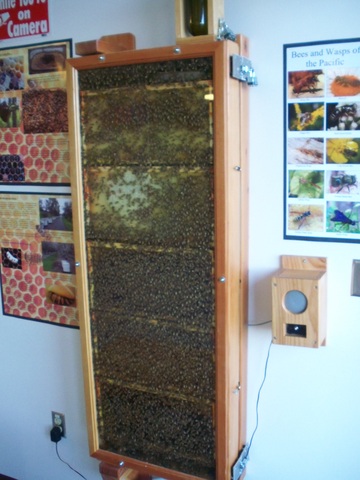
Eric Engman has installed an observational beehive in the science hallway of Mt. Vernon High School.
Today, all students at Mt. Vernon High School have the opportunity to be exposed to the natural world just by walking down their science hallway. The school’s observational beehive, which holds ten frames, is displayed vertically in the wall. Students can spend their lunch hour watching the bees’ activity from a bench near the hive, as well as listening to the colony’s buzz through a microphone installed inside the hive. Eric has also displayed seven or eight educational posters on the same wall which teach students about the biology of bees and inform them of the latest goings-on in the hive. Next to the observational hive is a wall of windows, where students and faculty can look out on the school’s second rooftop hive, located fifteen feet away. Students also have opportunities to work hands-on with the hive. Eric takes five students out to the rooftop balcony once per week, pulling from a pool of 50-60 currently interested students who have received written permission from their parents to be involved in the project. The students put on full jump suits and follow Eric out to the balcony to assist him in doing weekly hive inspections.

A set of locked doors at Mt. Vernon High School leads out from the science wing to the rooftop “MVHS Honeybee Project.”
The impact that these beehives have had on the Mt. Vernon High School community has been extremely positive. As a result of the observational hive, students have a place to convene and learn at the same time. “It’s a neat place,” Eric says. “They can see everything that’s going on without any contact with the bees at all.” Students regularly spend class breaks in front of the hive, checking in on its latest action and holding competitions on who can spot the queen first. Eric says that the beehives on their campus have inspired curiosity in all members of the school community, not just science students. Students, teachers, and parents regularly send him current articles about bees and stop him in the hallway to discuss the impacts of Colony Collapse Disorder. Not only has Eric become a practicing beekeeper, but four other staff members and one student have since taken beekeeping courses and started their own hives at home. The biggest question Eric hears on his bee-enlightened campus is, “Why are bees dying?” The concern and interest about these tiny creatures has been electric at Mt. Vernon; Eric has truly created an inspiring place of curiosity and active learning.
Katie Boehnlein is a writer/intern for CLEARING magazine and teaching assistant at Catlin Gabel School in Portland, Oregon. She enjoys writing about the endless expressions of place-based education, inspired by so many creative teachers. Katie blogs about her own ecological and urban adventures at “In the Midst,” which can be found at kboehnlein.wordpress.com.
Additional bee teaching resources:
http://www.oakland.edu/upload/docs/MiTSHAPE/Curricula/Swartz/Swartzbeeunit.pdf
http://westvistaurbanfarmschool.blogspot.com/2009/02/kids-can-keep-bees-too.html

by editor | Sep 20, 2013 | K-12 Classroom Resources
by Katie Boehnlein
.
 n recent years, there has been an audible buzz, on both the community level and in the media, about the future of pollinators. In 2009, CLEARING asked you “Why Care About Pollinators?” and the issue is still hot today. The future of the honeybee is especially worrisome, due to their direct impact on America’s commercial food system (not to mention the sweet honey that they make). Over the last ten years, beekeepers across the country have been using the term “Colony Collapse Disorder” because of a noticeable decline in their healthy hives. Recent studies on pesticides in agriculture, as well as reports of significantly reduced pollinator habitat and increased pests, have left beekeepers and bee lovers alike horrified.
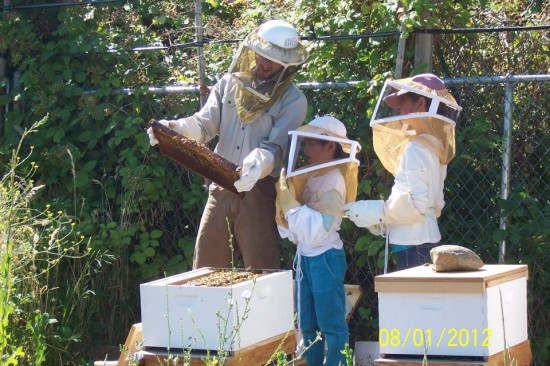 The Pacific Northwest has been especially featured in these news reports, as mass bumblebee deaths in the Portland, OR suburbs of Wilsonville and Hillsboro received national exposure. Both of these instances were due to ill-timed application of pesticides to ornamental trees growing in commercial parking lots. Dewey Caron is a retired entomologist but actively keeps bees and teaches at Oregon State University’s horticultural department. In his recent Hillsboro Tribune article, “Who will speak for dead bees?”, Caron speaks about these tragic events near his home. He especially speaks to the need for citizens to “educate ourselves about pollination’s role in our lives and what consequences pesticides might play in normal functioning ecosystems.” The health of pollinators, honeybees among them, is clearly at great risk. And as Caron says, it is also clear that education must step into its role of not only enlightening our country’s decision makers and agricultural stakeholders about the necessity of pollination but our next generation as well.
 Honeybee Heroes
Luckily, educators in the Western region have rallied around issues facing pollinators. From
Washington to Oregon to Montana, teachers and administrators have recognized the importance of connecting their students to pollination through their studies of insects and food systems. Some have even gone a step further, installing beehives on their campuses and exposing students to an incredible ecosystem buzzing with tens of thousands of honeybees. CLEARING has sought out these “Honeybee Heroes,” educators who are exposing students of all ages to the wonders of honeybees. Stay tuned for our five-part series, where you will learn and be inspired by the stories of Eric, Ryan, Sarah, Carter, and Brian, all speaking to the impact they have seen in using beehives, or apiaries, as hands-on educational sites and their experiences in establishing successful educational models in schools.

Mt Vernon, Washington
First you will hear from Eric Engman, a high school physics teacher in Mt. Vernon, WA who has made it possible for students to really “see” the inner workings of a beehive.
.
.
.
.
.
.

Southern Oregon University
Our second installment will be about Ryan King, a recent graduate of Southern Oregon University, where he has established a successful apiary project at the university and beyond.
.
.
.
.
.
.

Ashland
Third is Sarah Red-Laird, also known as “Bee Girl,” an Ashland, OR native who has returned to her hometown to foster a “sweet” relationship between people and honeybees.
.
.
.
.
.
.

Portland
Next is Carter Latendresse, a sixth grade English teacher at Catlin Gabel School in Portland, OR who kickstarted a successful apiary project on his campus in harmony with the school’s garden and orchard. Coming October 21.
.
.
.
.
.
Finally, Brian Lacy is a beekeeper in Portland, OR and founder of LiveHoneyBees.com, an educator who has proven himself as an invaluable mentor for Portland-area beekeepers young and old. Coming October 28.
.
# # #
Katie Boehnlein is a writer/intern for CLEARING magazine. She is currently student teaching at the Catlin Gabel School in Portland, Oregon, and she writes a nature blog at http://kboehnlein.wordpress.com/.
Pollinator Education Resources
by Katie Boehnlein
Are you buzzing to get your hands on a hive tool? These resources below will get you started on connecting your students to the wonders of pollinators. If you’re looking to start a beehive on campus, start by contacting your local bee club to see when they offer beginning beekeeping classes.
Educators at a pollinator education workshop in Kalispell, MT put on by the Montana Pollinator Education Project.
Montana Pollinator Education Project (MPEP)
Visit the Montana Department of Agriculture (http://agr.mt.gov/agr/Programs/AgClassroom/LessonPlans/SchoolProjects/K-8montanapollinator/ ) website for full lesson plans, posters, seed packets, and parent outreach materials about pollinators for educators to use free of charge! For educators in Montana, the MPEP puts on workshops on how to integrate pollinator education into their existing science, language arts, and arts curriculums. The response to this project has been overwhelmingly positive, as the MPEP have been sending kits to teachers all across America; they have even had requests from overseas! All lesson plans are aligned with the Common Core standards, so teachers can easily fit the writing assignments into their existing curriculum.
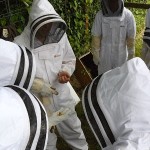
USFWS Biologist Jeff Chan shows a honeycomb to students at GruB in Olympia, WA. Photo credit: Teal Waterstrat (USFWS)
U.S. Fish and Wildlife Pollinator Education Program
The U.S. Fish and Wildlife Service offers extensive educational information about pollinators on their website, from activity guides to PowerPoint presentations to a guide for creating schoolyard habitats. (http://www.fws.gov/pollinators/ ) The Fish and Wildlife Service in Washington State has also fostered a rich relationship with an alternative high school farming nonprofit called Garden Raised Urban Bounty (GRuB) in Olympia, WA. Fish and Wildlife biologist, Jeff Chan, has given classes and placed hives at their farmhouse, which has culminated in twenty of the students tending one of the hives themselves. The farm school will be integrating beekeeping into their school’s curriculum in the years ahead. Read more about this partnership on the blog for Fish and Wildlife Service members in Washington State. (http://wordfromwild.blogspot.com/2013/06/how-sweet-it-is-fws-teaches-students.html )
The Pollinator Partnership
The Pollinator Partnership is a nonprofit organization that aims at protecting the health of managed and native pollinating animals living in North America. They offer a comprehensive pollinator education program for grades 3-6 called “Nature’s Partners,” along with many other resources available for free on their website! (http://pollinator.org/beesmart_teachers.htm )
The Xerces Society
The Xerces Society is a nonprofit organization that protects wildlife through the conservation of invertebrates and their habitat. For over forty years, the Society has been at the forefront of invertebrate protection worldwide, harnessing the knowledge of scientists and the enthusiasm of citizens to implement conservation programs. They feature some great resources for educators on their website, spanning information about school gardens to native bees to pollinator identification sheets (http://www.xerces.org/educational-resources/ ). The Xerces Society also provides information on citizen monitoring, a wonderful, real-world science activity to do with students. One idea would be to follow the “Great Sunflower Project” curriculum, which involves planting sunflowers and observing pollinators that visit them. (http://www.greatsunflower.org/)
Immense Possibilities
Last year, Southern Oregon Public Television aired an inspiring 30-minute video called “Bees: nurturing the tiny connectors of sustainability,” featuring our “Honeybee Heroes” Sarah (BeeGirl) and Ryan King. (http://www.immensepossibilities.org/ipr-podcasts/bee-keeping ) “How can we help the bees survive?” they ask. It’s up to us to answer.
College Beekeeper
This website, managed by Michael Smith of Cornell University, is aimed at college students who want to start a student beekeeping program. An incredible resource with step-by-step advice, College Beekeeper could be adapted for an elementary or middle school context as well. It also calls for action: “With pollinators declining, and beekeepers aging, it’s essential to get younger people involved in beekeeping.” (https://sites.google.com/site/collegebeekeeper/)
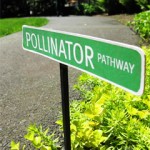
Photo credit: Studio Matthews
Seattle’s Pollinator Pathway
For Seattle-area teachers, the Pollinator Pathway project aims at creating continuous habitat where pollinators can thrive. The current pathway “draws a line of plant life” for one mile along Columbia Street in Seattle and is an inspiring artistic and scientific model for creating pollinator habitat within a city. This would be a neat idea for teachers looking to connect their pollinator education to art and mapping studies! For more information, visit the Pollinator Pathway website. (http://www.pollinatorpathway.com/ )

by editor | Sep 20, 2013 | K-12 Classroom Resources
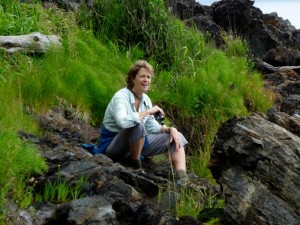 What is your current job title?
I am self-employed as an environmental education and research consultant – my company is Staniforth & Associates, so I guess I am the principal!
How did you get into this field?
I worked as a field biologist for years, researching large mammals, particularly whales off the east coast, the Gulf of Mexico, and Galapagos. The work was fascinating, and much of it involved working with local people and resource conflict issues with the whales (e.g. humpbacks getting caught in fishing gear, dolphins and seals perceived to be eating “all the fish”). I felt somewhat frustrated that our findings were not getting out to the public at all – the main audience for being more aware of, interested in and acting for these animals and their habitat. Public awareness and education seemed to me to be the most important tool for raising awareness and deepening connections to the natural world, to foster conservation efforts, so I went back to school to complete an MSc in Environmental Education.
What are you working on right now?
I have been doing quite a bit of evaluation work of late, both with education programs for non-profits as well as larger scale programs – and recently finished a province-wide evaluation of BC’s idle reduction programs, for municipalities, governments, corporate fleets, schools and communities.
What did the evaluation of the idle reduction program show?
Very interesting results: we surveyed many stakeholders and analyzed a wide range of idle reduction programs, including municipalities, corporations, NGO’s, provincial and federal initiatives, school programs and fleet projects. Generally programs have been successful, particularly ones involving fleets of vehicles, were significant reduction gains were recorded. Ones targeting urban audiences were also effective. Idle reduction initiatives were seen to be “gateway” programs: an easy first step or starting point to beginning more substantive sustainable transportation efforts. Programs showing the most success had a combined approach: involving policies such as bylaws (the “stick” approach”), combined with community-based awareness, education, incentives and technology components.
What is your favorite part of your job?
The great and somewhat unpredictable variety of consulting work – and the wonderful educators, scientists and students I get to meet and be inspired by/learn from!
Has there been an incident during your work that stands out as particularly memorable or that reaffirmed your belief in what you are doing?
Hmmm – that’s a good question – working with young people in nature is always rewarding – you get those precious “ah ha” moments when you get to witness their wonder, excitement, delight , in a discovery. This happens of course with adults as well. I guess also there have been some reaffirming times when long hours of conservation and awareness work have shown good results in a policy change or areas protected – not enough of these alas, but they are significant and need celebrating!
If you could change anything about your work, what would it be?
I would love to see the critical stewardship, conservation and public engagement work out there that so many of us do as volunteers with non-profits prioritized by governments and corporations, and funded accordingly. More and more critical stewardship, research and restoration work is being off-loaded onto community volunteer groups, due to funding cuts – a serious situation.
Where do you find inspiration for the work you do?
From the environment itself: my passion for the natural world – and from working with young people – children have such an innate connection to nature, and their curiosity, playfulness, compassion and openness is inspiring and rejuvenating.
What is your favorite resource or tool for teaching about the environment?
That is a hard question! I have so many – but probably just being outside – getting people of all ages outdoors and awakening their senses, re-connecting us all to the natural world.
Where do you go when you want to recharge your batteries?
I take my dog for a walk by the ocean – just being by the sea, breathing in the salt air and hearing the waves breaking is incredibly therapeutic.
What is your favorite place to visit in the Pacific Northwest?
Another very hard question…! I love the glaciated peaks of Strathcona Park on Vancouver Island and of course, the vastness of Long Beach National Park … and so many other places!
What is your favorite nature/environment book?
Hmmmmm ……..I love anything by Loren Eiseley, Rachel Carson’s A Sense of Wonder, all Mary Oliver’s poems, …. lots more!
Who do you consider your environmental hero?
I have a few, but Rachel Carson is probably my main hero and inspiration – both for her excellent research as a scientist, her determination to put forward her research against huge obstacles, and her wonderful writing and love of nature.
Thanks for your time. Do you have any final thoughts about your work in environmental education, or words of advice to those following in your footsteps?
Just do it, if education calls to you. For many people involved in conservation and stewardship work, the stress and grief and powerlessness of experiencing special places, ecosystems, endangered habitats, species – being lost or degraded is devastating, and often leads to burnout and despair. Working in education and public awareness I believe is the only real tool we have that will effect long term changes for the planet – it is what keeps me and many educators going, and brings many benefits. (Income…?? not so much !)
by editor | Sep 3, 2013 | K-12 Classroom Resources
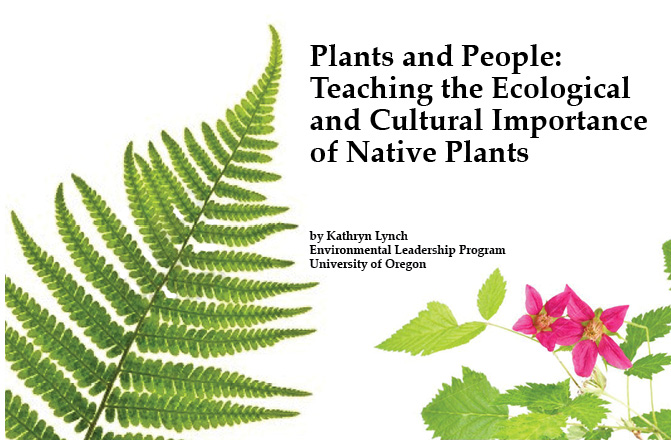
Plants and People
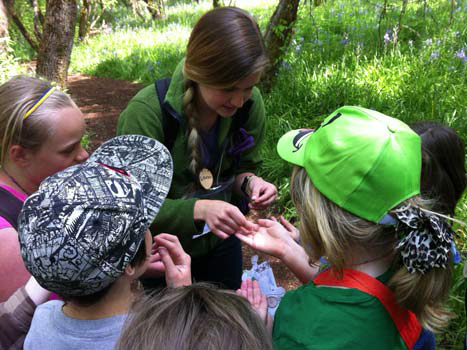
Three service learning teams from the University of Oregon Environmental Leadership Program tackle teaching children about the ecological and cultural importance of native plants.
.
.
by Kathryn Lynch
Environmental Leadership Program
University of Oregon
Read the article here:PlantsandPeople
by editor | Aug 28, 2013 | K-12 Classroom Resources
Ralph Harrison is the 2013 winner of the EPA’s Presidential Award for Innovation in Environmental Education. We caught up to him as he was heading for Alaska and managed to get some insight into his personal perspectives and motivations as a teacher of environmental science.
What is your current job title?
I’m the Science Department head at the Science and Math Institute in Tacoma Public Schools.
How did you get into this field?
I hold Bachelor’s degree in Science Education Central Washington University and Masters in Biology from Washington State University. I’ve been an active member of the Washington State Science Teachers Association Board for ten plus years. I advocate for high quality science teaching, experiential learning, and inquiry-based learning.
And how did your current position come about?
I worked as a founding teacher of Tacoma School of the Arts (SOTA), and focused my time to develop a quality science and math program in an arts-focused highschool. I believe strongly in the importance of high quality science instruction for all students 9-12th grades and integration with the arts. From work with my colleagues at SOTA, we hatched the idea for SAMI, another community partnership school at Point Defiance Park, where the 702-acre park setting became the classroom. I worked with a team as one of the founding teachers of Science and Math Institute high school.
The natural beauty of the park inspired an environmental science focus for the school. From there, I developed a full outdoor education science program that included phenology of plants and animals.
What is your motivation for this work?
I’m passionate about making a difference in science and environmental education for students and creating schools where students and teachers capitalize on community assets. Students find their passion through relevant learning; their success is the focal point.
What are you working on right now?
I’m working to develop partnerships with local and national organizations. One I’m particularly excited about is with the USA National Phenology Network. SAMI students in outdoor education classes will be integrating their phenology gathering fieldwork into the national database. I’m also working to integrate our school’s robotics program into field gathering instruments. The students and I are building a hexacopter to act as a data gathering platform to research 150-foot tall Douglas Fir tree snags in the park.
What is your favorite part of your job?
Being able to be outside with students researching and actively learning in the park’s forests.
If you could change anything about your work, what would it be?
I’m passionate about students participating in relevant, active, learning, research and science. As technology and the advancement of science continues at a lightning pace, I want the students to have access to the most current instruments and protocols so that they’re learning is relevant and timely. I struggle to provide these materials with limited resources. That’s why I consistently seek partnerships.
How do you feel about the Next Generation Science Standards?
I’m all in on standards based teaching as well as Professional Learning Communities (PLC’s). PLC’s bring the old and new together, and form common strategies, voice, and collegiality. The SOTA and SAMI staff work hand-in-hand to bring the NGSS and the Washington State Standards in a common voice to the students. I cite a 30% jump of test scores in the Washington Biology End of Course exam this past year as evidence that standards based teaching as well as PLC’s have a dramatic impact.
Where do you find inspiration for the work you do?
I have the great privilege of living near Point Defiance Park on Salmon Beach (Google earth it and you’ll see what I mean), an old community built on pilings 100 years ago right below the park I work at. I want to share with the students the natural resources that I’ve come to know love.
What is your favorite resource or tool for teaching about the environment?
My collection of various field guides from all over the Pacific Northwest, like my favorite, Pojar& MacKinnon’s Plants of the Pacific Northwest Coast.
Where do you go to recharge your batteries?
I’m an avid fly-fishermen and enjoy travelling throughout the Northwest enjoying the environments I visit as I fish.
What is your favorite Nature / Environment book?
Trees, Truffles and Beasts by; Chris Maser, Andrew Claridge, and James Trappe.
Who do you consider your environmental hero?
My colleague and friend Ken Luthy, who I’ve worked with for twenty three years, teaching together and starting schools. I’m inspired by his passion for the environment, his time spent as a National Park Ranger during the summer months, and his dedication to teaching high school and learning.
What words of encouragement would you give a new science teacher just entering the classroom?
It takes years to truly get the hang of teaching science. Work with your colleagues to make science instruction the highest quality and relevant to your students and community. Seek out what your communities assets are and use them. Bring your class outside of the walls that define your school, especially with regards to Environmental Education.


