by editor | Oct 25, 2015 | Forest Education
Environmental Leadership: Making Connections
Two service-learning programs within the Environmental Leadership Program at the University of Oregon aim to deepen students’ knowledge of their bioregion through day-long, hands-on field trips.
By Kathryn A. Lynch, Environmental Leadership Program, University of Oregon
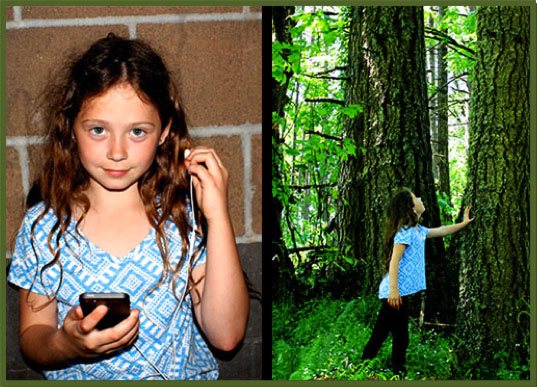
 hildren and young adults are often more tuned into the screens in front of them than the landscape surrounding them; when asked which direction is north their inclination is to check their smartphones. In response, the Environmental Leadership Program at the University of Oregon is developing environmental education projects seeking to reconnect children to nature.
The Environmental Leadership Program (ELP) is an interdisciplinary service-learning program housed in the University of Oregon’s Environmental Studies Program. Our mission is to provide undergraduates with an integrative capstone experience, our graduate students with project management experience, while engaging with the community to address real needs.
Since 2001, ELP has developed and implemented 81 projects addressing a wide array of topics. Currently, our projects fall within four primary tracks: environmental education, conservation science, sustainable practices, and community engagement.
The two main goals of our environmental education teams are to: 1) provide UO students the knowledge, skills and confidence to develop and implement place-based, experiential programs; and 2) develop age-appropriate, engaging curricula for local youth, grades K-8, that promotes the stewardship of our natural world.
During winter and spring of 2015, our two environmental education teams focused on the theme of “connections.” The new Restoring Connections team worked in partnership with Mt. Pisgah Arboretum and Adams Elementary to develop and implement a place-based curriculum which included an interactive classroom lesson and a field trip to Mt. Pisgah. The team provided over 200 K-2 students an opportunity to develop a deeper understanding of where they live and the importance of conservation and stewardship. The Canopy Connections team worked in partnership with the HJA Experimental Forest and the Pacific Tree Climbing Institute to develop and facilitate an interactive pre-trip lesson and field trip for over 200 middle-schoolers. Students studied forest succession, learned how to use a compass, wrote poetry in field notebooks, and climbed 90 feet into the canopy.
To prepare for their service projects,the undergraduates first enrolled in Environmental Education in Theory & Practice. In this class, they gained a working knowledge of best practices in EE through readings, guest lectures, field trips, and most importantly, their service-learning project in which they developed educational materials for their community partners. While the specifics of the curricula were left up to the teams to determine, all teams were required to: 1) incorporate an interdisciplinary approach, 2) include multicultural perspectives, 3) use experiential, inquiry-based methods, 4) promote civic engagement, and 5) articulate assessment strategies. Their materials were pilot-tested at the end of winter term, and the teams then worked with their community partners to implement their EE programs throughout spring term. Each UO student completed approximately 120 hours of service, which entailed facilitating classroom visits, field trips, and developing supplemental educational materials (e.g. websites, presentations). What follows are descriptions of these projects, written by the team members themselves.
 Case Study 1 –
Restoring Connections: Unplugging and Reconnecting
By Ashley Adelman, Roslyn Braun, Lucas Holladay, Kiki Kruse, Kerry Sheehan, Zoie Wesenberg, and Alicia Kristen (Project Manager).
 s a group of students made their way into the Douglas-fir forest from the oak savanna, a facilitator hushed the group with a “quiet coyote” hand signal. Immediately, everyone hunkered down, peering through the brush as the group tried to get a glimpse of the discovery. A student squealed in delight. The deer was still, its gaze locked onto ours. Having taught our students about the importance of deer ears for hearing predators, they noticed how the deer kept her ears pricked forward, waiting for our next move. The group slowly moved up the hill trying to get a better view. Experiences like this have the ability to enhance the senses like no video game or television show can. Learning about environmental issues at a young age can be overwhelming, but connecting to local nature, students can become more aware of and in tune with the natural world.
In spring 2015, the Environmental Leadership Program launched the Restoring Connections project at Adams Elementary School. Our team of six undergraduates, with the guidance of our graduate project manager, was responsible for the design, creation and implementation of this environmental education curriculum, focusing on Mt. Pisgah Arboretum’s natural ecosystems.
In this pilot year, we focused on kindergarten, first-, and second-grade students. Our goal was to address what Richard Louv calls ‘nature-deficit disorder’ through the creation and implementation of a place-based and experiential educational program. According to Louv, the cultural shift in which many youth now prefer to stay inside interfacing with screens, rather than going outside to play and explore, has resulted in devastating effects on their personal well-being – physically, mentally, and emotionally – in addition to having disastrous repercussions for the environment. How we set about addressing nature-deficit disorder was informed by Howard Gardner’s theory of multiple intelligences and David Sobel’s work, which outlines a framework for age-appropriate content. Working from this theoretical foundation, we knew we wanted to allow students to explore nature first-hand to help them develop a connection to where they lived, and nurture empathy for the plants and animals that share our bioregion. In addition, the structure of our program was influenced by the Tbilisi Declaration (1977), which states that environmental education should foster awareness, provide knowledge, develop skills, and shape attitudes in students so they can effectively participate in environmental decision making and stewardship. This idea of restoring children’s connection to nature, while they participated in restoring the land, was a central idea of the program.
The structure of our Restoring Connections program consisted of a 45-minute classroom visit on Tuesday, followed by an all-day field trip on Thursday. The classroom lessons focused on introducing key concepts, preparing the children for a successful field trip, and most importantly, instilling a sense of excitement and awe for the ‘magical forest’ they would be visiting. The field trip focused on awakening their senses, building connections and empathy, and finally, on giving students an opportunity to be involved in restoration activities.
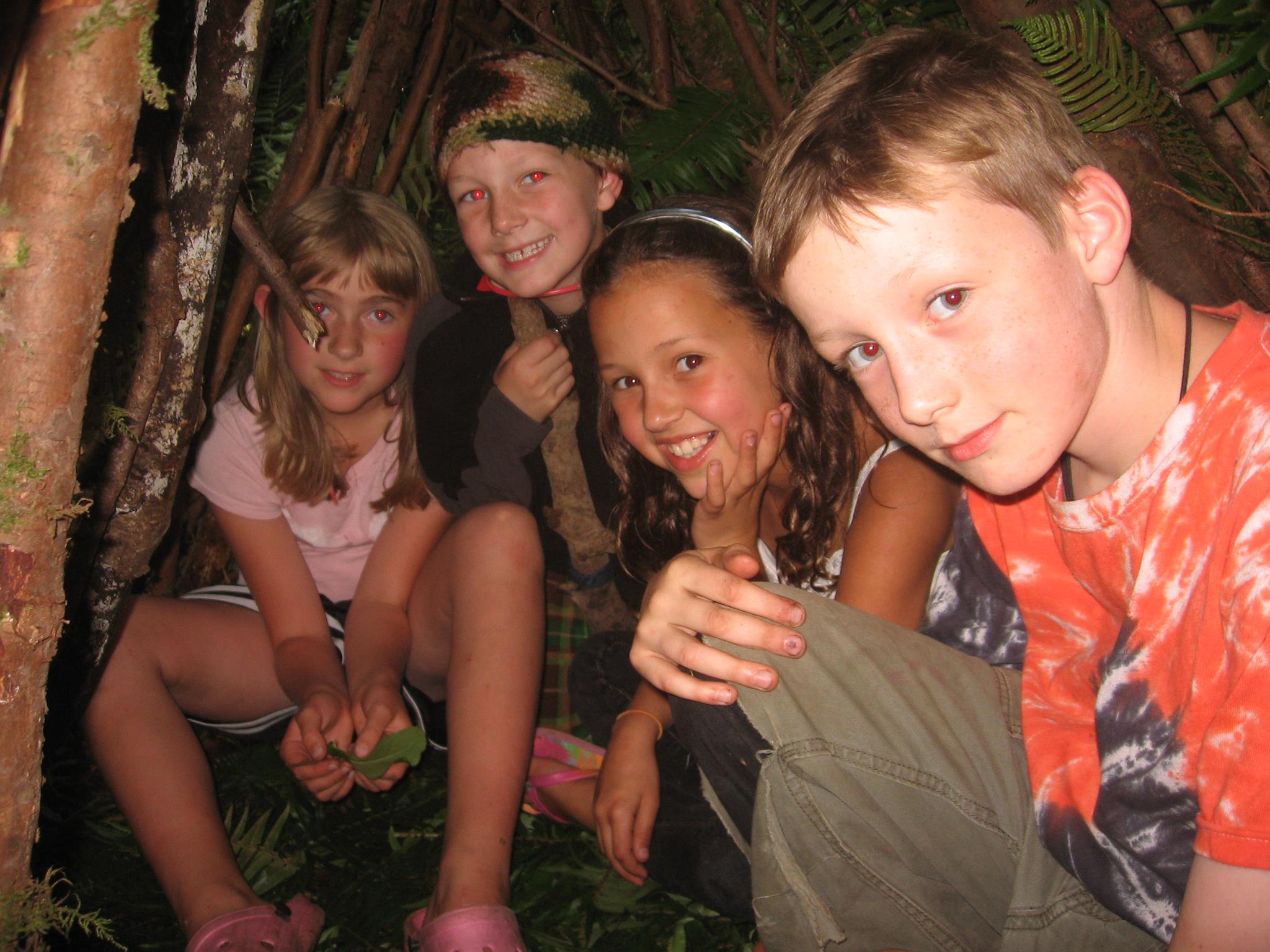
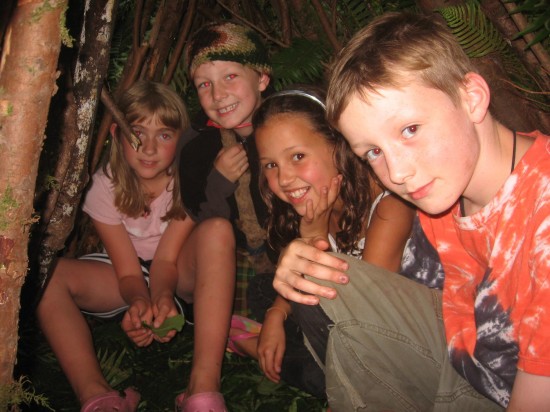
During the field trip the kinders built elf and fairy homes out of natural materials in the wildflower garden, engaged their visual senses by finding a rainbow of colors, and engaged their auditory senses by using their ‘deer ears’ as they journeyed along the riverbank.
First-grade students explored the oak savanna, discovering how pollinators and native plants interact in this habitat. Students examined an Oregon white oak up close and played games that honed their observation and plant identification skills. The restoration work focused on creating habitat for native wildflowers by pulling invasive shining geranium, and planting native plants. Through this restoration work, students learned about native and non-native species and the importance of stewardship.
Second-grade students explored the Douglas-fir forest, studying concepts of camouflage and adaptation through role play and the study of animal behavior. Their restoration work was centered around building “habitat hotels” for decomposers found in the Douglas-fir forest.
The restoration work connects classroom learning to real-life experiences. By learning the differences between native and non-native plants, our first-grade students discovered the need to care for native species in Oregon. Gaining knowledge about the role of decomposers in the Douglas-fir forest allowed the second-grade students to understand ecosystem functions. These activities provided an example of the impact that they can have on the environment.
Throughout our ten weeks of teaching, over 200 students had the opportunity to visit and explore Mt. Pisgah. As part of our professional development, we were asked to evaluate what worked and what needed to be changed after each interaction, and then make those changes for the following week. Jenny Laxton, the education program coordinator at Mt. Pisgah, provided us with invaluable feedback to help us improve our program to best serve the needs of the Arboretum and Adams students and staff.
The opportunity to complete service work allowed the elementary students and our ELP team the opportunity to take the knowledge and skills we have gained in the classroom and use them in community action. We gained problem-solving and team management skills along with greater knowledge of best practices within environmental education. We were also encouraged to engage in critical self-reflection to improve our final outcomes.
The long term vision for this project is that starting next year, the Restoring Connectionsteam will work with a single cohort of children, from kinder through fifth-grade.This cohort of children will visit Mt. Pisgah Arboretum each season (fall, winter, spring) giving them multiple opportunities to visit, connect, and participate in restoration work. Each grade level will focus on exploring a different habitat located within the Arboretum, with activities geared toward hands on learning. By giving children an opportunity to be outside, learning in nature, we hope this project will deepen their sense of appreciation for the beauty of the natural world and reach those who may not thrive in a classroom setting. By returning each year, the children will gain an understanding of local natural history that cannot be gained through a single visit alone. By involving them in restoration efforts over time, the children will be able to witness the difference their actions have made on the landscape. Overall, Restoring Connections seeks to cultivate a lasting connection to the land, one that is based on reciprocity and respect.
To learn more about our project, please visit:https://blogs.uoregon.edu/restoring
 Case Study 2 –
Canopy Connections: Nurturing Naturalists
By Samantha Bates, Laura Buckmaster, Nicole Hendrix, Forrest Hirsh, Micaela Hyams, Elie Lewis, Amelia Remington, Nick Sloss, Tim Chen (Project Manager).
 ix middle-school students sit silently on a trail in an old-growth forest: one observes a newt run over her feet; another notices how moss and lichen create miniature forests; another writes poetry about the nearby sounds of Lookout Creek. Down the trail, students identify giant Douglas-firs, noting the distinct grooved bark in contrast to the smoother bark of the equally impressive western hemlocks. Using newly-honed plant identification skills, students compare two plots to form hypotheses about what stage of ecological succession they are observing. Further along, students put their compass skills to the test, going on a compass scavenger hunt of sorts, receiving a bearing and seeing if they can find the correct specific tree off the trail. Later, they will sit in a circle surrounded by enormous Douglas-fir, ancient Pacific yew, stringy western redcedar, and drooping western hemlock and draw a map of the forest with the creek as their backdrop. Meanwhile, their friends climb 90 feet into the canopy, finding treasures few ever ascend high enough to discover: dangling Lobaria lichen clinging to branches heavy with the plentiful “roses” of small, papery hemlock cones; licorice ferns growing out of decades-old moss carpets that blanket trees that students now observe from above.
Canopy Connections is in its seventh year. This year our team of eight undergraduates (and one graduate project manager), sought to distinguish ourselves by designing our curriculum around the theme “nurturing naturalists.” Drawing from Gardner’s multiple intelligences, our curriculum caters to multiple ways of knowing and different learning styles. All of our lessons focus on building sensory awareness.
The structure of our Canopy Connections program consisted of a 45-minute classroom pre-field trip visit, followed by an all-day field trip at H.J. Andrews Experimental Forest near Blue River, Oregon. The classroom lessons focused on introducing key concepts and preparing the middle-schoolers for a successful field trip. For the all-day field trip, each class was divided into four groups and rotated through four different stations.
Station 1: Climbing to the Canopy. At this station, students ascend 90 feet into the canopy of an old-growth Douglas-fir tree. Experienced tree climbers from the Pacific Tree Climbing Institute (PTCI) facilitate this activity. Students support one another in their learning about microclimates as they are connected to the ropes one by one and make their way up. While this activity is challenging for some children, the rush of adrenaline often provides them with a hyper sensitivity to their surroundings they might not have appreciated before. Many students leave this activity with a deeper respect for the sheer magnitude and magnificence of a 400-year old Douglas-fir tree.
Station 2: Nature’s Navigators. On the ground, students learned basic map reading and compass skills. Students worked in pairs, and with the help of facilitators, embarked on a compass expedition. Using their compass and species identification cards, they were tasked with locating and identifying four species of trees found in old-growth forests. They later observed the four tree species up close and collaborated to correctly identify them. Students used their new skills and knowledge to create a map of their immediate surroundings.
Station 3: The Life and Layers. At this station, students explored forest succession and disturbance. We introduced the four characteristics of an old-growth forest using the acronym OWLS–old, woody debris, layers, and snags. They then learned to identify several species seen on the forest floor. To paint a picture of how a forest becomes old-growth, we had students read a passage from Ancient Forests of the Pacific Northwest to each other and then look for these signs as they hiked. Through descriptions of nurse logs and pathogenic fungi, they gained an appreciation for the intricate relationships of the forest and began to consider the significance of observation for scientists and writers alike.
We encouraged students to touch the plants, compare, and describe them to each other in order to create detailed records in their field notebooks. Splitting into two groups, they examined plots located in stands of different aged forests, with the goal of using their new knowledge, observation, and recording skills to determine whether they were looking at the 40-year stand or an old-growth stand.
Station 4: Stop, Sit, Scribble. At this station, students practiced their writing skills, imitating the work done by the writers of the Long Term Ecological Reflections (LTER) project, which is designed to collect stories, poems, and essays for 200 years from 2003 to 2203. After listening to The Web, a poem written at HJA by Alison Hawthorne Deming, students followed the guiding principles of the LTER project and spread out on the forest floor to begin writing a stanza for a collaborative poem. They focused on incorporating sensory observation skills and using descriptive adjectives as do the writings collected for the LTER project.
 Although concepts of creative writing and poetry are taught in the lesson, students gain much more than an appreciation for adjectives. They learn collaboration and listening skills, while simultaneously absorbing clues from the natural world: the rush of the river, the smell of coolness in the air, the hundreds of plant species surrounding them. Sensory observation and creative writing connects with the theme of “nurturing naturalists” by bridging the gap between humanities and science.
Throughout Canopy Connection’s eight-week program, over 200 hundred students from four different middle schools participated in field trips. During nine days in the field, we totaled 54 hours of teaching with an 8:1 student-teacher ratio and led nine in-class pre-trip lessons. In addition, we worked in partnership with 23 high-school students from a local AP Environmental Literature class. These students helped us in the field, and we shared insights into going to college as well as being effective environmental stewards. Our team compiled our final curriculum and a final report, and developed a website to display our project. We presented our findings at the Undergraduate Research Symposium, a SMILE workshop at HJA, and an ELP final presentation. Our ultimate mission is positive environmental change stemming from an environmentally-literate younger generation. Many teachers and students have already reached out to express how much our field trip meant to them. To learn more about our project, please visit:
http://elp2015-canopyconnections.weebly.com/
Literature Cited
Deming, Alison Hawthorne. 2007. The Web. Orion Magazine, March/April. http://www.orionmagazine.org/index.php/articles/poem/248/
Gardner, Howard. 2011. Frames of Mind: The Theory of Multiple Intelligences. New York: Basic Books.
Louv, Richard. 2006. Last Child in the Woods. Saving our Children from Nature-Deficit Disorder. NC: Algonquin Books of Chapel Hill.
Norse, Elliott A. 1990. Ancient Forests of the Pacific Northwest. The Wilderness Society. Island Press: Washington D.C.
Sobel, David. 1996. Beyond Ecophobia: Reclaiming the Heart in Nature Education. Nature Literacy Series. Great Barrington, MA: The Orion Society.
Tbilisi Declaration. 1977. Summary of goals and guiding principles. http://www.gdrc.org/uem/ee/tbilisi.html

by editor | Sep 27, 2015 | Forest Education, Outdoor education and Outdoor School
Forest Schools and the Benefits of Unstructured Outdoor Play
 By Deanna Fahey
Miami University, Oxford, Ohio
 t is snowing outside and you’re getting your child ready to go to kindergarten. While other children may be wishing for a snow day so they can play in the snow, yours is excited to go to school! Why is your child unique? Your child attends a forest school. Forest schools and nurseries are popping up around the globe and gaining momentum. Though these schools have routines that are wide ranging, they all have a common core: allowing children to experience the freedom of playing outdoors as part of their learning.
ROAD TO DISCOVERY
As a graduate student, parent and nature lover, I questioned why some adults choose to make decisions based on ecological consequences while others do not. After all, in today’s day and age, we all are aware of the consequences of our modern lives on the environment. On walks with our daughter, my husband and I spent numerous conversational hours chipping away at adult psyches trying to figure out an answer to this apparent quandary. There has to be some keystone event, I argued, in a person’s life that generates a concern for their environment as adults. During my questioning, I came across an answer. Through interviews, researchers have come to find that a direct, positive experience in nature before the age of 11 promotes a long-term connection to nature. However, given the state of today’s society, our children spend less and less time outside. What does that mean for our environmental future? It was during this time of questioning I was introduced to Erin Kenny, co-founder and lead teacher of Cedarsong Nature School. My husband had been watching Nightline when he called me in. There Kenny and parents were discussing the joys of sending their children to a forest school. I had to know more!
 FOREST SCHOOLS
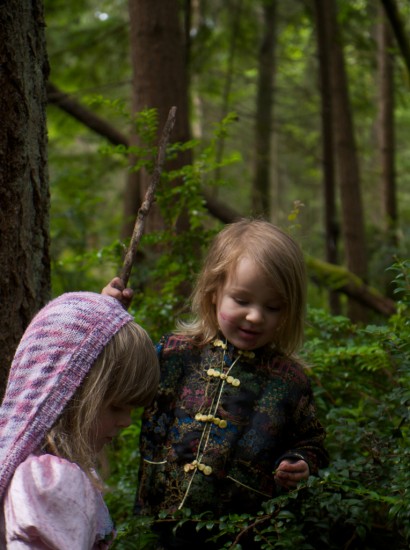
Friedrich Froebel opened the first kindergarten in Germany in 1837. The core of his curriculum integrated nature and play to provide children ages three to six a place to grow. Over time Froebel’s curriculum has morphed to become more academic in character and concern for children’s growth has been replaced by concern for preparation for elementary school. However, parents around the globe are uniting and fighting to bring nature back to their children. The result of this movement by parents is the reintroduction of forest schools.
Forest schools may fluctuate in their everyday routine but the core value of spending a majority of time engrossed in outdoor play remains the same. According to the American Academy of Pediatrics (Ginsburg, 2006), play is essential to the well-being of children. The varied terrain of nature stimulates imagination, encourages creativity, and builds motor skills. Undirected play allows children to learn to share, work in groups and negotiate. Children involved in play face and conquer fears while self-esteem is boosted as obstacles are worked out and overcome. Play is so important to the overall health and well-being of children it has been recognized by the United Nations High Commission for Human Rights as a right of every child (UNICEF).
In order for children to develop a love of nature, appropriate opportunities for interaction need to be provided. Too often in today’s society children know more about exotic flora and fauna from faraway places but have no idea of the beauty that lies right outside their own door. If children grow to adulthood with no love for, or worse yet a fear of, nature how can we expect them to become environmentally empathetic adults. According to White and Stoecklin (2008) children need to experience nature on a regular basis in order to develop pro-environmental values.
 CEDARSONG NATURE SCHOOL
It was a clear morning as we drove through the forest on Vashon Island in Seattle. We were on the hunt for the elusive forest school. The sun glimmered off the dew hanging on the leaves, blinding us at times to the road ahead. Further and further we drove until at last we reached the end of the road. Where to from here though? Ah, just follow the sounds of the laughing children. We had reached Cedarsong Nature School. I was about to begin my journey into a school with no walls and where children lead the class instead of the teachers; a world virtually impossible for me to imagine but that I was eager to explore!
When I caught up with the children at Cedarsong, they were in the process of making some very delicious mud pies! The girls were covered head to foot in mud and they could not have been happier. They were standing in a circle chatting together over their work and discussing things only known to them. As I stood aside and watched, Erin Kenny, co-founder of Cedarsong, described to me how the children are the leaders of the day; their interests and observations dictate what will be learned. As a teacher myself, I questioned the logistics of this system. How does anything get covered when children decide what to learn? She told me how a random comment about tripping over a tree root can lead to a discussion on erosion and weather or the purpose of the roots of a tree to photosynthesis. The possibilities are endless! Changing seasons bring continual opportunities to track and record growth, and discuss hibernation and even death. New observations can lead to predictions, fallen trees and fungus can stimulate conversation on decomposition which can lead to discussions about habitats and niches. Teachers, it turns out, can just stand back and observe; it is from their observations that teacher’s take their cues of where to lead.
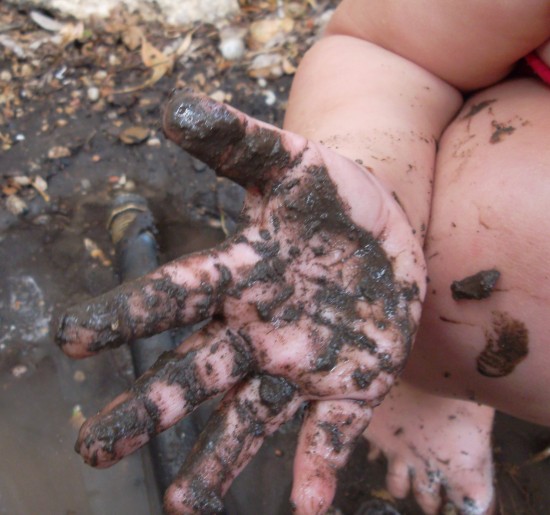 A boy had decided to explore a bit more of the area; Kenny and I followed leaving the girls in safe sight of the teachers. As we followed the child further into the forest my “inner child” was awakened and I wanted nothing more than to climb the nearest tree or jump into one of the many puddles. My senses were stimulated by the sounds of the birds and insects calling out their warnings of strangers nearby and I desperately wanted to search out the sources of those warnings calls! However, I was there to observe the children and not to indulge my own inner child so I turned my attention back to the child we were shadowing.
Further along the path the child had found a tree to climb. Though Kenny moved a bit closer, she did not flinch or move to stop the boy. I inquired about fear of accidents given the freedom the children seem to be allotted. According to Kenny not many children do get hurt— they learn and respect their own limitations. On the rare occasion one does get hurt, there are emergency protocols that all teachers are familiar with. Teachers are certified and stay current in first aid and CPR. Kenny’s experiences with accidents are similar to those from forest schools in Europe.
Marga Keller is the founder of WaKiTa, a forest daycare located in Zurich, Switzerland. Keller stated, “Experience shows that in forest institutions fewer accidents happen than in mainstream schools.” She clarifies, explaining that because the teachers consciously learn how to handle risks with the children and help them strengthen their own skills, the children can assess risk situations better. The children also do not feel the need to rebel against overly restrictive rules or prove their courage because the school actually puts this as part of the program: the teachers offer the children age-appropriate challenges.
 Back with the main group, Kenny asked if anyone would like to lead a hike to show me the rest of the forest. All the children decided to go and we set off together. As we wandered through the forest, the children impressed me with their knowledge of the local plants and fungi. I was taken to forts and shelters camouflaged in the trees, the likes of which my own children would have gone crazy for! As we strolled on, the children dispersed to different areas of the trail and Kenny and I had another opportunity to discuss the school and the children’s role. “Children challenge themselves all the time in the outdoor setting,” Kenny told me. “They display great personal pride in their achievements.”
Each day is unique and brings new sources of inquiry and excitement! Children learn to work together and cooperate through imaginative play. According to Burdette and Whitaker (2005), when children play outdoors there is more opportunity for problem solving and creative thinking. The varied terrain and multiple stimuli which nature provides deliver the perfect environment for imagination.
As my time came to an end at Cedarsong, I felt encouraged with all that I had seen. The possibilities for incorporation of nature into the American education system seemed endless and the benefits for our future generations infinite!
Bringing Back Outdoor Play
Forest schools may seem ideal for the issues I was grappling with, but not all of our schools and children have access to nature in their backyard. Urban schools are at a distinct disadvantage for this type of schooling; however, there are schools working on solutions which could be sustainable for all urban schools. For example, Muscota New School, located in New York City, utilizes Inwood Hill Park and Bear Mountain State Park, making the most of the nearby outdoor areas available to them.
According to the California Department of Education (2011), environment-based education employs natural ecosystems as a context for learning. The “environment” may be a river, a forest, a city park, or a garden carved out of an asphalt playground.
It seems any environment can be employed as an area for incorporating outdoor play, opening doors for practical outdoor play solutions.
You cannot turn on the news today without hearing about school funding issues; yet funding concerns can be overcome through partnerships, grants and community volunteer days. Taft Elementary School in Redwood City, California, partnered with Hidden Villa, a non-profit outdoor education organization to create their school garden program. CitySprouts, based in Cambridge, Massachusetts, partners with public schools to develop school gardens. Citysprouts also works to educate teachers on the integration of existing curriculum with their gardens. The Lorrie Otto Seeds for Education Grant Program provides grants for large scale projects such as the “design, establishment and maintenance of a native-plant community such as prairie, woodland, wetland, etc. in an educational setting such as an outdoor classroom.”
Modifications select schools are making to outdoor immersion are providing sustainable and worthwhile results. Our children are gaining access to the outdoors, attaching to nature and initiating positive change in their well-being.
WHERE DO WE GO FROM HERE?
Even though forest schools may not be the catch-all answer I was looking for, they can be a viable solution to our children’s lack of outdoor play and keystone moments. For those schools without a sizable amount of accessible land, compromises can be made. Vegetable gardens are being employed to reinforce geometry sills, nutrition, life science and basic math. An extension can include cultural differences in gardening techniques and vegetable preferences as well as recipes, which of course can be utilized for basic math. Trees found on school grounds can be used to teach geometry, prediction, microhabitat, and chemistry. An ecosystem extension can be incorporated by linking with international schools to compare tree data; growth rates, circumference, etc. (sites such as Jane Goodalls – http://www.rootsandshoots.org/ are perfect for this type of linking). Logs and larger branches on the ground can be used for agility, microhabitat, decomposition, nutrient recycling, chemistry, prediction and even physics. Why are branches of similar size but different trees weigh different? Water sources – even puddles after a rain – can be used for chemistry, prediction, water analysis and physics. Have you ever wondered about the force of a foot splashing in the water and the correlation to height of the splash? Cultural stories and knowledge can be shared while observing and studying local plants. I for one have always wondered about the ability of plants to break rocks as the seeds grow. Sounds like a perfect inquiry-led question for a physics class. Ant hills can be an endless source of amusement and knowledge for younger children learning about habitat. Decomposing leaves on your school grounds can become the perfect place to discuss microhabitat, nutrient recycling and niche. Of course the simplest solution would be to get rid of the cement playground and replace it with a natural playground, one complete with grass, fallen and living trees and butterfly and vegetable gardens.
In our world today adults are making choices that are counter-intuitive to what is best for our environment. Without contact with their natural world our modern children will grow up to be less inclined to save the earth than some of us seem to be today. As adults we need to come together and give our children the access to nature they deserve. With the constraints of today a feasible solution to this problem is to bring back outdoor play to our school children!
Reference:
Burdette, H. & Whitaker, R. (2005. Jan.). Resurrecting Free Play in Young Children: Looking Beyond Fitness and Fatness to Attention, Affiliation, and Affect. Arch Pediatr Adolesc Med. Vol. 159. Retrieved from www.archpediatrics.com at University of California – Berkeley
California Department of Education. (2011). School Garden Program Overview ; An overview of the school garden program including its impact on children’s health, nutrition, and academic achievement. Retrieved from http://www.cde.ca.gov/ls/nu/he/gardenoverview.asp
Citysprouts. http://www.citysprouts.org/
Ginsburg, K. (2006. May). Testimony of Kenneth Ginsburg, MS, MS Ed, FAAP on Behalf of the American Academy of Pediatricians. Natural Resources Subcommittee on National Parks, Forests and Public Lands and Subcommittee on Fisheries, Wildlife and Oceans. “No Child Left Inside: Reconnectiong Kids with the Outdoors”.
Keller, M. WaKiTa Outdoor Daycare
Kenny, E. Cedarsong Nature School
Moving Outdoors in Nature Act. Retrieved from http://www.govtrack.us/congress/billtext.xpd?bill=h111-6426
Muscota New School. http://www.muscota.org/
Rymer, B. (2009. December). Taft Elementary School’s Garden Program; A Case Study. Retrieved from http://www.redwoodcity.org/manager/initiatives/gardens/helpful/Taft%20Case%20Study%20Draft.pdf
The Lorrie Otto Seeds for Education Grant Program. http://www.for-wild.org/seedmony.html
White, R. & Stoecklin, V. (2008). Nurturing Children’s Biophilia: Developmentally Appropriate Environmental Education for Young Children. White Hutchinson Leisure & Learning Group
UNICEF. http://www.unicef.org/rightsite/files/uncrcchilldfriendlylanguage.pdf

by editor | May 26, 2015 | Outdoor education and Outdoor School
 Tips for bringing students into the field: Strategies for success
By Joshua Klaus
Director of Academic Programs, Ecology Project International (EPI)
 aking students into the field can provide an endless array of occasions to learn new skills, see theoretical concepts enacted, make connections, and learn about the world around us. Given the endless places that offer valuable learning opportunities, it must just be a matter of heading out the door for students to have impactful educational experience, right?
Though it would be nice if it were that easy, there are a few key strategies that will allow any educator (novice or veteran) to make the most of their time – before, during, and after their field experience.
Educators will have a higher likelihood of success if they keep the following things in mind:
• Go outside! The natural world offers limitless educational opportunities. Given the amount of time students spend in front of computers, screens, and isolated from weather, plants, and animals, exposure to the natural world is a fantastic way to engage students’ bodies and minds.
• Real-world projects: Involving students in applied research, service-learning, and conservation or community-related projects will give them a sense of connection to something larger than themselves.
• Find good partners: Working with established land managers, non-profit organizations, or government agencies can help provide additional resources, information, expertise, and motivation.
• Incentivize good work: Offer students school credit, lab hours, or community service credits if they meet or exceed your expectations while in the field.
• Have fun! Focusing on specific learning outcomes is a good idea, but balancing learning with fun, exploration, and freedom will increase the likelihood that students will have a positive, meaningful experience.
Preparation:
As the old adage instructs, failing to adequately plan and prepare often means planning for failure. Preparing students for a field experience is of paramount importance and should include setting clear expectations about goals and behavior, in addition to providing students with the tools, background, vocabulary, and knowledge necessary for success and high-quality outcomes. Advance preparation might include proper gear and equipment, safety protocols, practicing field methodology in advance, and providing a theme or integrating context for learning. At the very least, prior to heading into the field students should be given a structured opportunity to determine what they already know about a particular place or activity in addition to the chance to articulate what questions they have and what they’d like to learn. This could be as simple as asking students to draw a picture, make a list, or tell a partner what they know about a concept. Additionally, individuals could make a K-W-L chart, and the entire group could share the information in the ‘W’ column.
Adequate advanced preparation will help students stay comfortable, safe, and well-fed! By engaging students in managing risks they might encounter in the field – whether hiking on a trail or crossing a busy street – they’ll have a better understanding of the potential dangers they’ll encounter as well as the rationale for making appropriate decisions that will help keep them safe. When students understand why they should do something (instead of just being told they should) they’ll cultivate a deeper sense of ownership and personal responsibility.
Collaboration/ maximizing resources
Many organizations, government agencies, and companies are more than willing to host a group of visiting students. Call the local fisherman to take a tour of his boat, approach the university about a tour of the wet lab, or ask a conservation group to give an on-site presentation to your class about their restoration projects. Experts often love to talk about what they do and are happy to share their knowledge with students. When teaching in Oakland, CA one teacher took his physics class to a boat yard a couple blocks away and a crusty sailor taught them about mechanical advantage and pulley systems used for dry docking and offloading cargo. When the Pixar Studio in nearby Emeryville was under construction, his students crawled around the open foundation with a bunch of engineers who were delighted to tell them all about how they designed the building to withstand a 9.0 earthquake. Think creatively about what you consider a ‘field’ experience, and likely you’ll discover a long list of wonderful opportunities right within your community.
The wheel already exists
Talk to your local conservation group, nature center, government agency, or tourist outfitter about what you would like to do and ask if they can help. Many of these groups have some kind of educational mandate associated with their work, and if you can help them achieve their goals by involving your students in their work, they will likely be accommodating.
Go for it!
For beginning teachers, it’s a great idea to keep things simple until you establish a track record of success with your students and within your community. Start with small, accessible field experiences before making too large a commitment. That being said, despite the importance of preparation (as described above), don’t over-think your first field experiences. Once you’ve covered your bases and the basics, it really can be as simple as heading out the door. The world awaits, so don’t worry – once you get there, your students will thank you.

by editor | Mar 25, 2015 | Conservation & Sustainability, Environmental Literacy
Creating the Need to Pay Attention
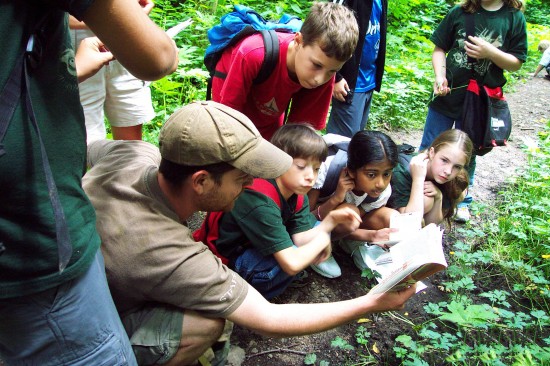
Field trips and adventures in the woods are tremendously important experiences for children, especially those students that don’t often get to spend time in a natural setting. Some of the most important, lasting results of good Environmental Education are the heartfelt connections that young people make with nature. They value the natural world because they have experienced first hand the beauty and magic of living ecological systems. To really feel this in a personal way, the kids have to go outside and experience it.
by Chris Laliberte
he excitement of exploring outside with friends and classmates can turn a well behaved class into a pretty raucous crowd, and in all the commotion, it’s very easy for students to pay more attention to each other than to the woods around them. And while they might huddle up at each interpretive spot for a brief lesson or activity, what teacher or educator could possibly be there with each student for the whole walk, helping them learn from each moment as they explore the landscape with all their senses? The trick to making the entire outing an intense learning experience is to find ways to ensure that the students are invested in paying close attention the whole time.
“Tree Tag” is the classic example of creating a need to pay attention. Kids love to play tag, and they NEED a base, some place to avoid the tagger. So when base is whatever kind of tree the teacher calls out, the kids suddenly have a very real need to be able to identify trees correctly, so they can get to base. I love to watch what happens when kids disagree about correctly identifying trees, and they have to prove to each other what kind of tree it is. Tree Tag, however, illustrates a deeper point around creating need. A game of tag is a boisterous, wild, hectic thing. But remarkably, within this game is a fantastic heightening of awareness. The danger, the risk of being tagged, or the need to tag someone, is visceral. It creates physical and chemical responses in the body that affect awareness and the learning process. Adrenalated states provide a powerful opportunity for learning. Notice that this suggests an interesting point: in Tree Tag, the key dynamic for learning is the creation of a certain amount of anxiety, or a state of discomfort. This creates a very strong need to pay attention, and then the game focuses the heightened awareness onto something very detailed and specific — in this case, the differences in bark, leaf, branching pattern and color of different trees. By paying careful attention, the student can resolve the anxiety and get to someplace “safe.”
 It’s a testament to the power of the adrenalated state that, more often than not, kids will leave base and venture back out into the fray on their own for another dose. Of course, some students will be reluctant to leave base, so the teacher can keep the game active by announcing that base is now a different kind of tree, and it starts again: more adrenaline, more awareness, more attention to details of different kinds of trees, more good learning about nature.
So how can this dynamic be harnessed so that it is present throughout the whole field trip? Here’s one method that has proved enormously powerful at Wilderness Awareness School. It’s called “Bird Language.”
The basic principle behind Bird Language is that birds love to gossip. They are constantly announcing to each other and the world around them just how they are feeling about their lives at that moment. It’s almost like a town crier who likes the job so much that s/he uses any excuse to make another public announcement. “The forest is calm and happy!” “The forest is still calm and happy!” But what birds love to talk about most of all is danger and peril. Anything that might possibly be a threat is immediately announced and pointed out. Jim Corbett, a famous tracker from India, once mentioned how puzzled he was that anyone could ever get eaten by a tiger. The birds and monkeys are so loud and aggressive in announcing the presence of any tiger, and even following along above it in the treetops, screaming out their warnings, that it seemed inconceivable to him that anyone could be taken unaware by a tiger in the jungle. By coming to understand Bird Language, students can learn to recognize all the movement and activity going on in the forest around them. They’ll know when raptors or other predators are moving through, or when animals like deer or raccoons are sneaking away.
Using Bird Language with your students starts with creating the need to pay attention to what the birds are saying. For some younger students, the possibility of seeing fairies or unicorns works wonders at getting them to listen for the announcements of the birds. This is especially good if students are already uncomfortable with being outside in the woods and need a little assurance. Our favorite strategy at Wilderness Awareness School is to set up the day so that students are hiking or exploring in small groups, and might at any time be ambushed by another group sneaking up on them. If you don’t have the ability to set up the ambush dynamic, or if the group is older and more callous to the woods, the classic anxiety here in the Pacific Northwest is the threat of the cougar. Wilderness Awareness School is very careful in using this particular set-up for bird language. We let students know that cougars are sneaky but cowardly hunters, who like to attack unseen and avoid a fight or struggle. To really help students feel the anxiety in a visceral way (like the threat of being tagged), you can describe the nerve endings in the canine teeth of the cougar that help it to feel just where to bite on your neck to cleanly sever the spinal column like scissors through a banana . Now, we are careful to point out that cougars don’t normally attack people. But they sometimes can’t help themselves when a really loud, obviously unaware, small, tasty looking person hurries by without paying any attention to the woods at all. But if you notice a cougar, and make yourself look tough, maybe yell at it, then the cougar won’t bother you. They’re really pretty timid once they’ve been found out.
Regardless of what strategy you use to create a need to pay attention, listening to Bird Language can provide the focus for your students’ heightened awareness, and will allow them to resolve their tension and anxiety appropriately. For if they are listening carefully to Bird Language, no cougar or group of kids will be able to sneak up on them without alarming the birds and giving itself away. Really accurate interpretation is a fine art, and requires a lot of practice sitting outside and investigating bird alarms, but mastery is not required for Bird Language to be a remarkably effective learning tool. Here are the basic details your students will need to know to be able to get started successfully:
 Bird Language: A Quick Summary
Pay closest attention to the small ground-feeding birds: Robins, Sparrows, Juncos, Wrens, Towhees, etc. They are the best sentries.
Learn to distinguish the Five Voices of the Birds. The first four Baseline Voices indicate that the forest is relatively comfortable, and therefore “in baseline.” The last voice, the alarm, indicates a threat, usually a predator, often a human.
1. The Song: Birds singing their characteristic celebration, they are often loud but the feeling is very comfortable.
2. Companion Calling: Birds in pairs or groups call back and forth to each other regularly, either with their voice or with body movements, just to let each other know that they are alright. Usually this is soft, quiet language. It can occasionally sound scolding if one bird gets out of sight from another and fails to respond quickly enough.
3. Juvenile Begging: Young hatchlings can make quite a racket demanding to be fed. This repetitive whining may sound obnoxious, but don’t mistake it for distress.
4. Territorial Aggression: Generally made by males, this is loud, aggressive language that can sound like alarms, but you’ll notice that it doesn’t bother other birds (females, or birds of other species).
5. The Alarm is dramatically different from the four baseline voices. While the baseline voices sound like someone happily whistling, the alarm sounds like someone yelling for help. Different species sound different, but they all sound terribly upset, worried and nervous, and you’ll find yourself feeling that way too, when you open yourself up to really listening receptively to birds.
Watch the body language of alarming birds:
1. Where does it go when it alarms?
Does it fly up higher into the branches, or down low to the ground? Ground-feeding birds are typically brown, so they like to be down low where they are camouflaged and hidden. The only reason they fly UP is if there’s a threat on the ground. They will fly just high enough to avoid the danger, so how high up they fly is a good indicator of how high the danger can reach. If they go down, it’s because they’ll be safer down low in the thick brush, so it’s either a raptor or a threat that can’t get into the bushes (like a human).
2. Does the bird fly up and then look back to where it came from as it alarms?
If so, it was scared out of its place by something close by on the ground. Does it fly up and look forward, or out and around? If so, it was probably startled by a sound or another bird’s alarm and it is looking for the danger. It usually looks towards the source of the alarm (remember, these birds often look sideways).
3. Does it just fly madly away alarming as it goes? If so, it has been “plowed” out of the area, quite likely by a human.
Those are the very basics of Bird Language; however, the most important aspect of all is the “Secret Lesson” that you don’t even talk about. By attending to bird alarms, students soon realize that they themselves are disturbing the “baseline” of the forest. One of the old sayings from Kenya that young kids heard constantly was “Never disturb a singing bird.” Once they notice that they are scaring all the birds away, they begin to work at not alarming birds, and the transformation that this causes is remarkable. Once oblivious, boisterous and unconnected kids turn into quiet, observant, and respectful participants in the ecological community. Listening to birds now becomes a fabulous tool to encourage heightened awareness and a phenomenal source for amazing close encounters with animals that they want to see, like elk, deer, foxes, and raccoons, because now the birds aren’t warning these animals of the approaching students five minutes before they arrive.
In Wilderness Awareness School’s experience, Bird Language works best initially as the focal point for new students who have been “set up” to pay attention by the cultivation of a state of discomfort, and quite literally gives students the awareness they need to be safe, aware and feel comfortable in the woods. Remember, it will take some time to establish this as a routine for your students. They’ll need plenty of reminders early on. The most effective one is simply “Ssshhh! What was that? Did you hear that alarm?” Above all, have fun with it! You’ll be amazed at the transformation Bird Language can work in your students if you just stick with it.
Chris Laliberte is the Program Director for Wilderness Awareness School, a national not-for-profit environmental education organization based in Duvall, WA which is “dedicated to caring for the earth and our children by fostering appreciation and understanding of nature, community and self,” on the web at http://www.WildernessAwareness.org
Resources for Bird Language Study
Audio:
The Language of the Birds and Advanced Bird Language: Reading the Concentric Rings of Nature, beginning and advanced audio series by Jon Young. Available at http://www.WildernessAwareness.org
Backyard Bird Walk and Marshland Bird Walk, and other recordings by Lang Elliott. Available at http://www.naturesound.com
Books:
Kamana One: Exploring Natural Mysteries, by Jon Young, part one of Wilderness Awareness School’s four-level independent study Kamana Naturalist Training Program. Includes bird language, tracking, wilderness living skills, traditional herbalism, and naturalist mentoring. Available at http://www.WildernessAwareness.org
Jungle Lore, by Jim Corbett. A powerful narrative from the Indian jungle which includes Bird Language lore.
Bird Tracks and Sign: A Guide to North American Species, a unique new resource for studying birds by Mark Elbroch , Eleanor Marks, and Diane C. Boreto.
A Guide to Bird Behavior, Vols. I,II, and III, by Donald and Lillian Stokes.
Peterson Field Guides: Western Birds, by Roger Tory Peterson.
Other:
A Birds World, permanent exhibit on Bird Language at the Boston Museum of Science. http://www.mos.org
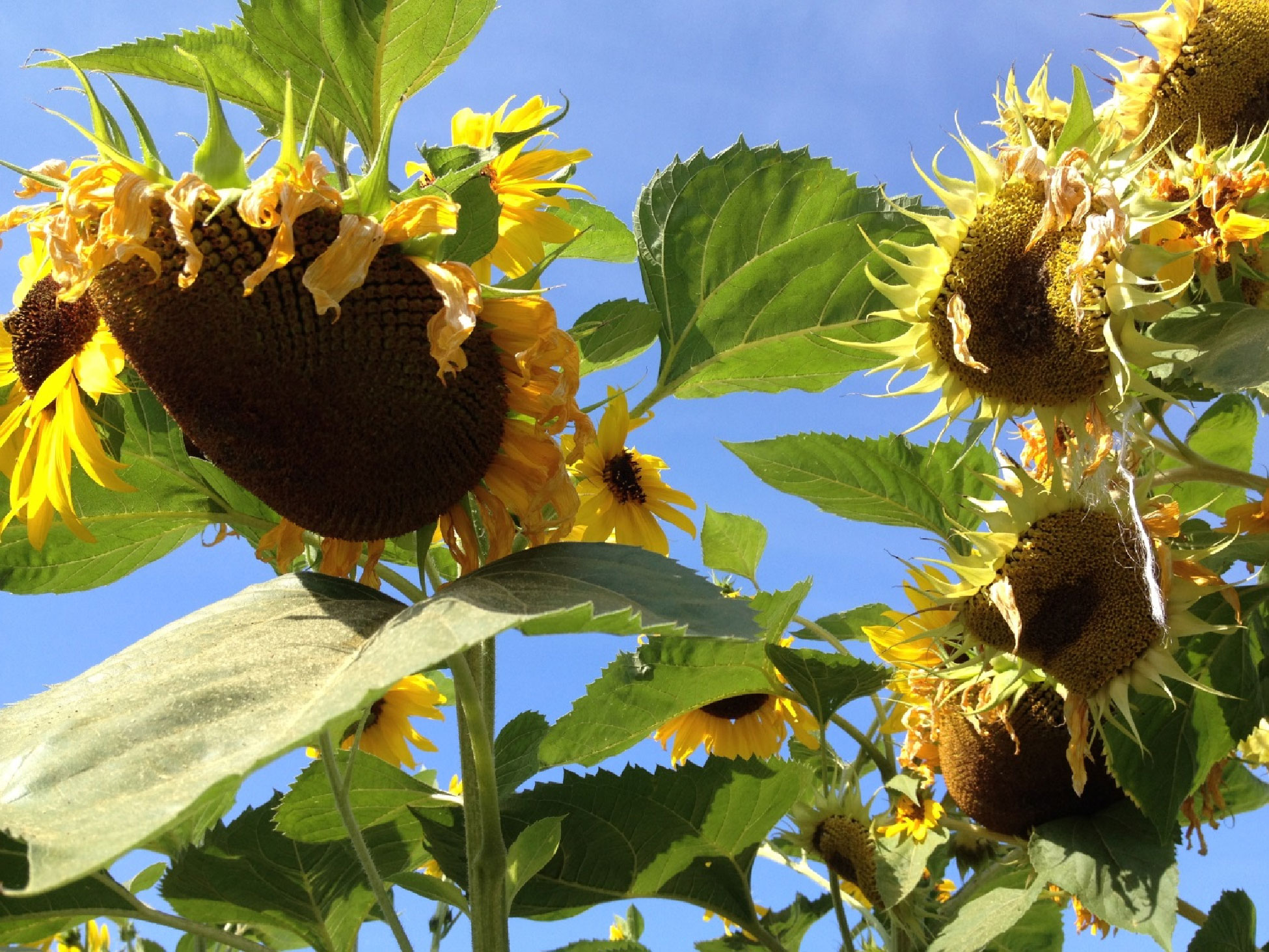
by editor | Oct 21, 2014 | Gardening, Farming, Food, & Permaculture, STEM
Integrating STEM and Sustainability Education through Learning Gardens:
A Place-Based Approach to the Next Generation Science Standards
by Sybil S. Kelley and Dilafruz R. Williams; Portland State University
 ur ecological and social problems are deeply interconnected. Climate change, habitat destruction, loss of biodiversity, food insecurity, air and water pollution, along with innumerable other environmental problems, are increasingly related to issues of equity and social justice. Addressing these problems requires a citizenry that is both scientifically and ecologically literate, ensuring that all people are empowered with the understandings, dispositions, and skills to address the challenges of this modern world.
CLEARING readers are likely familiar with another crisis of our times, the idea of “Nature Deficit Disorder” that Richard Louv (2005) so poignantly described in his landmark book, Last Child in the Woods: Saving our Children from Nature Deficit Disorder. Louv and numerous other leaders of the No Child Left Inside initiative have done a remarkable job pointing out the parallel phenomena of increasing numbers of children with ADHD and loss of time spent in nature, particularly unstructured time to explore, engage in imaginative play, and utilize all the senses. Nonetheless, time that children spend in school has become more rigid, siloed by discipline (e.g. 90+ minute literacy blocks), and disconnected from students’ daily lives and lived experiences.
As a society, we place unrealistic demands on educators. Classroom teachers are continually expected to do more with less—less money, less support, less time—with increasing mandates and pressures of accountability, whether from No Child Left Behind or Race to the Top. Informal educators provide a remarkable array of learning experiences, yet many teachers do not have the time or capacity to make use of these opportunities, particularly since in most cases, field trips have to be rigorously defended and justified in context of the school-day curriculum. However, since the early 1990s, the school garden movement has been working to mitigate traditional schooling taking place within the four walls of the classroom by bringing students outdoors on school grounds right where the schools are housed.
The adoption of the Next Generation Science Standards (NGSS) by 26 states has the potential to transform teaching and learning in and out of schools. The focus of the NGSS is on 12 “big ideas” in science (the Disciplinary Core and Component Ideas, NRC, 2012), bringing these together into process oriented learning goals (learning performances) that bridge scientific content with the practices of science and engineering, and crosscutting concepts that span all the disciplines of science (e.g. patterns, cause and effect, and systems and system models). The NGSS raises the bar for science in schools, and will require that much more attention be paid to science starting in elementary school. To help in this process, the NGSS are integrated by design. First, science education has been integrated into STEM education (Science, Technology, Engineering, and Math), elevating the practices and content of engineering design to the level of scientific inquiry. Further, the NGSS provide connections and links to the Common Core State Standards (CCSS), making them much more useful for developing integrated, project-based units of instruction. We believe that school gardens provide a rich milieu to put the NGSS into practice, making science relevant to the lives of students as they engage with their own place in meaningful ways across disciplines.
STEM and Sustainability Education: Sense of Place
As an individually and socially constructed phenomenon, relationship to place is complex and so is the creation and development of meaning, attachment, and identity based on this relationship. To know one’s place is prerequisite to knowing one’s self. According to several scholars, sense of place is recognized as a key component of sustainability and sustainability education. Wendell Berry (1990) tells us that if we do not know where we are, we cannot know who we are. David Orr (1992) explains that people with a sense of place become “inhabitants” who dwell deeply, steeped in connections. Similarly, David Sobel (2004) asserts that people tend to protect what they love and know; therefore the actual places where we live, work, and play, become an explicit part of sustainability initiatives.
Sustainability education takes a holistic, systemic view of the world, is place-based, experiential, and transformative. Effective, high-quality STEM teaching, which should include learning experiences that are relevant and meaningful to students’ lives, are active and interactive, and make use of observation and evidence to develop meaning and understanding (knowledge claims). STEM and sustainability education are complementary and should be brought together in mainstream education.
Not only do we need to weave STEM and sustainability education together, we need to elevate both more prominently in schools. Recent studies have illuminated statistically significant reductions in science instructional time in elementary classrooms (Blank, 2013). These findings are quite troubling considering the need for scientifically and ecologically literate graduates. If we wait until middle and high school to emphasize science, we have already lost a tremendous number of students, most typically students who are already marginalized in mainstream educational (and other) systems. Making use of learning gardens can provide a solution. Teaching and learning in gardens is a way to increase student engagement in learning, and also to support different learning styles, integrate various disciplines, and revitalize schools and neighborhoods.
Using “living soil” as a metaphor for re-envisioning education, Williams and Brown (2012) state,
Gardens present an appropriate life-enriching ecological practice that guides curriculum, teaching, and learning. In an era characterized by educational malaise and apathy and amidst a repetitive discourse of racing to the top, gardens offer an alternative and regenerative model for bringing schools to life that differs significantly from mechanistic techno-scientific reform efforts oriented toward economic globalization. (p. 22)
In other words, school gardens and the living soil within them can provide a place-based context for teachers and students to learn together, alongside other community members, including the non-human members, developing a sense of interconnectedness and understanding of our place in ecological systems.
Williams and Brown (2012) outline seven pedagogical principles that are foundational to garden-based education, and that shift learning from a dry, disconnected model to one that is active and alive. Learning gardens cultivate a sense of place, awaken the senses, and foster wonder and curiosity; further, through practical experience, learners observe rhythm and scale, develop understandings of interconnectedness, and value biocultural diversity. Much of schooling focuses on visual and auditory learning modalities. Learning gardens on the other hand provide multisensory, kinesthetic learning experiences for children (and adults). They provide accessible places to build connections to nature—allowing learners to see, feel, hear, smell, and taste the wonders of nature. In our own teaching and working with teachers in low-income schools in particular, we have found the desperate need for this connection among adults and children alike.
As districts, schools, and individual classroom teachers work to implement the NGSS, innumerable, place-based opportunities exist to address national, state, and local goals within the context of learning gardens. Nonetheless, it will require leadership at many levels to reach the vision of the NGSS and the school garden movement. Principals need to see the value of garden-based education and embrace this type of teaching and learning by supporting and protecting their teachers. As professionals and leaders working directly with students, teachers will need support in developing relevant, place-based lessons that address the NGSS. Teachers must be integral players, bringing their expertise and experiences to the process.
In our summer professional development course entitled, Integrating STEM and Sustainability Education through Learning Gardens, classroom teachers, garden-based educators, and graduate students in the Leadership for Sustainability program work together to implement a place-based curriculum with elementary students in a summer garden program through SUN Schools (Schools Uniting Neighborhoods). In the afternoons, this diverse group of educators has the opportunity to grapple with the content and design of the NGSS, and to work collaboratively to develop integrated, standards-based instructional units that are contextualized in school learning gardens. For the NGSS to become a reality, teachers will need more professional learning experiences that empower them to put their expertise and knowledge of their students (their place) into the design and implementation of well-planned instructional units. NGSS and the Framework for K-12 Science Education (NRC, 2012) from which they were developed provide the structure and scaffolding for building curriculum, but efforts led by teachers and partners from higher education and the local community will provide the flesh and details for implementation.
In the following paragraphs, we will highlight some examples of what the NGSS in learning gardens can look like in practice. The first scenario provides an example of an engaging encounter that could open the door to numerous explorations, while the second is an actual lesson we have used in the summer garden program. Both highlight the rich learning opportunities that emerge and are literally just outside the classroom door.

Figure 1: An unexpected discovery of a Goldenrod Crab Spider feasting on an unsuspecting honey bee yielded immediate fascination and interest among students and teachers alike.
In science, teachers are often encouraged to use the “5E” instructional model (Bybee et al, 2006) that includes “Engage, Explore, Explain, Extend, and Evaluate.” In the garden, all five E’s can be woven together, but “engage” and “explore” are particularly ripe. Last summer, a group of teacher candidates and youth ranging in age from four to twelve years old were thoroughly engaged and excited by this predator-prey discovery. For teachers, such wonders provide an anchor for numerous learning experiences.
For example, a Kindergarten teacher could help her students investigate the needs of different plants and animals in the garden. By gathering age-appropriate data (perhaps a simple table with a name and/or drawing of the organism and what the students observe each organism eating), students can develop an explanation of how different animals eat different (and in some cases the same) things. This would directly address the Kindergarten NGSS related to structures and processes in organisms, specifically the component concept about matter and energy flow in organisms (from NGSS (2013), K-LS1-1. Use observations to describe patterns of what plants and animals (including humans) need to survive). First grade teachers and students could build on foundations laid in kindergarten by focusing on the structure and function of plants and animals, and how an organism’s structures help it survive and grow (1-LS1-1. Use materials to design a solution to a human problem by mimicking how plants and/or animals use their external parts to help them survive, grow, and meet their needs).
As another possible direction, this initial discovery could serve as the platform for introducing the 3rd grade standards related to heredity and biological evolution. By combining hands-on data collection in the garden with internet research, or perhaps inviting a local scientist/arachnologist to visit the class, students could compare the variations among this particular species of spider (e.g. some have red strips, others do not), as well as traits of other spider species. Using their data, they could construct an argument about why some species are more likely to survive in particular habitats over others (3-LS3-2. Use evidence to support the explanation that traits can be influenced by the environment; 3-LS4-2. Use evidence to construct an explanation for how the variations in characteristics among individuals of the same species may provide advantages in surviving, finding mates, and reproducing (NGSS, 2013)).

Figure 2: Students collaborate to gather data about the number and diversity of species they can observe and record in their habitat sampling area.
In each of these possible scenarios, there are also numerous interdisciplinary connections to reading and math expectations in the Common Core State Standards (CCCS) and to real world issues. For example, as third graders learned about the relationships between species and their specific habitats, they could also read a variety of texts describing the flora and fauna, as well as abiotic components, of different ecosystems. They could read and discuss the role of pollinators in ecosystems, and how pollinators are so crucial to our own food sources, particularly those in a specific location—i.e. for this place. As a culminating product, students could create a short video or poster that argues why sustainable agriculture practices are vital to food security and the planet as a whole.
The second example is one that we have experienced first-hand in the summer garden program connected with the Integrating STEM and Sustainability Education through Learning Gardens course—Is Soil Alive?—the driving question behind two days of soil explorations. The first day was spent collecting samples to test for soil composition. As students waited for the layers of sand, silt, and clay from various locations around the school yard to settle in their jars, they explored decomposers in the compost and worm bins, and those found in the garden. As a culminating activity (that could also serve as an assessment), students were given a worksheet that asked them to draw what they had observed above and below ground in the garden. The overarching question, “Is soil alive? Explain your thinking” guided students.
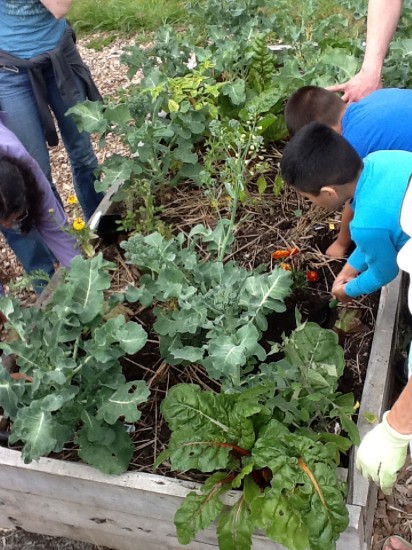
Figure 3: Students and teachers search for critters (aka, decomposers) in the raised garden beds at their school.
This cluster of lessons provides several clear connections to the NGSS, particularly related to “Interdependent Relationships in Ecosystems,” “Cycles of Matter and Energy Transfer in Ecosystems,” and “Biogeology” of Earth’s systems. But equally important, an open-ended question such as “Is the Soil Alive?” helps students and teachers grapple with the nature of science. In this particular example of viewing soil as an ecosystem, students were provided with a concrete example of some relatively abstract, complex ideas. It let them think and learn about systems, interconnections, cycles, and flows, laying a strong foundation for further exploration and learning in upper grades. Students had the opportunity to engage in logical reasoning and discourse, using empirical observations to support their claims. Some of the more complicated explanations of why the mineral portions of soil are non-living while the system as a whole can be considered alive, at the most basic level, were understandable to the elementary-age students. If teachers had given “the right answer” as is traditionally related to properties of living and non-living elements of soil, they would have discouraged students from thinking, imagining, inferring, and looking for evidence. Furthermore, a response that declared soil as not being alive because it is made up of sand, silt, and clay could have denied students a deeper exploration into the microbial ecology of soil and compost.

Figure 4: While observing and recording the decomposers found in the compost bin, a student observed this black soldier fly emerge from its pupa. It is hard to imagine doing a better job of explaining life cycles than an experience such as this can provide
Recommendations/call to action:
School and community learning gardens provide rich, easily-accessible contexts for integrating STEM and sustainability education. Learning experiences that are multisensory, place-based, and interconnected come to life in the garden, making teaching and learning relevant and meaningful to students and teachers alike. The recent adoption of the Next Generation Science Standards, which emphasize application of knowledge, higher-order thinking skills, and demonstration of proficiency through performance, present the educational community with a unique opportunity to make better use of such spaces for teaching and learning. To help move our community closer to this vision, we offer a few suggestions to help in this process:
- Think big, start small—meaningful change takes time. It is important to spend time envisioning and planning in the early stages so that your garden-based aspirations can be turned into reality.
- Whether you are new to outdoor, garden-based education or an experienced practitioner, it is important to set shared expectations and norms with your students. Too many children have not spent a lot of time outside in nature. Furthermore, when they have been outside during school hours, it is often recess, not learning time. It is important to be clear that even though students are outside the classroom, it is still time for learning.
- Related to number two, get outside regularly. As students become more familiar with the garden routines, they will be more comfortable and “on-task.” Consider learning outdoors to be equally essential as learning with technology. Nature time is as important as screen time.
- Share your successes (and challenges)—with colleagues, your principal, parents, and your students.
- Connect with other educators and resources. For instance, the following websites can provide even more links to others interested in learning gardens: Oregon School Garden Summit (http://www.ode.state.or.us/search/page/?id=4202), OSU Extension’s gardening program (http://extension.oregonstate.edu/gardening/), Learning Gardens Laboratory (http://www.pdx.edu/elp/learning-gardens-laboratory) and many other local, regional, and statewide organizations.
- Most of all, have fun! Learning should be a fulfilling lifelong endeavor. That will only happen if it is fun, engaging, and meaningful. Learning gardens are the perfect mileau!
Photo Inspiration:

Figure 5: Learning gardens also provide numerous opportunities for arts integration.
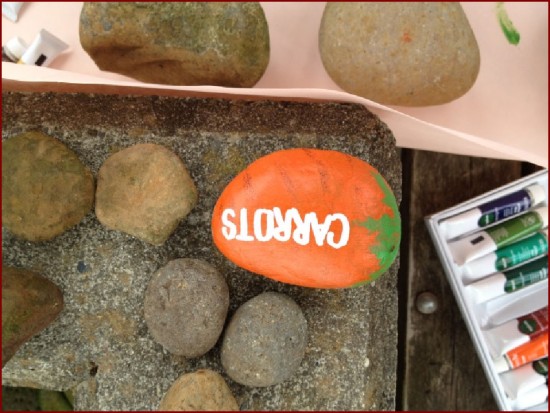
Figure 6: Arts integration and bilingual language development—gardens can provide a cultural entry point for many students from diverse backgrounds.

Figure 7: Collecting daily measurements of temperature and weather conditions helps students develop understandings of hard-to-grasp, abstract concepts. Additionally, they can observe change over time, make predictions, and record and analyze data.

Figure 8: A one-on-one exploration of roots and soil.

Figure 9: Early literacy skills can be developed and enhanced through journaling and data collection. Even the youngest learners can feel successful.
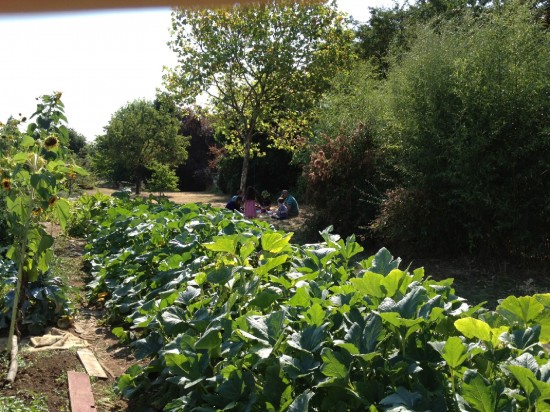
Figure 10: Teacher candidates discuss and reflect on the day’s activities with a small group of students.
References:
Berry, W. (1990). What are People For? Berkeley, CA: Counterpoint.
Blank, R. K. (2013). Science instructional time is declining in elementary schools: What are the implications for student achievement and closing the gap?. Science Education, 97(6), 830-847. DOI:10.1002/sce.21078.
Bybee, R., Taylor, J. A., Gardner, A., Van Scotter, P., Carlson, J., Westbrook, A., Landes, N. (2006). The BSCS 5E instructional model: Origins and effectiveness. Colorado Springs, CO: BSCS.
Louv, R. (2005). Last child in the woods: Saving our children from nature-deficit disorder. North Carolina: Algonquin Book of Chapel Hill.
National Research Council [NRC]. (2012). A framework for K–12 science education: Practices, crosscutting concepts, and core ideas. Washington, DC: National Academies Press.
NGSS Lead States. (2013). Next generation science standards: For states, by states. Washington, DC: The National Academies Press.
Orr, D. W. (1992). Ecological literacy: Education and the transition to a postmodern world. Albany: State University of New York Press.
Sobel, D. (2004). Place-based education: Connecting classrooms & communities. Great Barrington, MA: The Orion Society.
Williams, D. R. & Brown, J. D. (2012). Learning gardens and sustainability education: Bringing life to schools and schools to life. New York, NY: Routledge.
About the authors:
 Sybil S. Kelley, PhD,is Assistant Professor of Science Education and Sustainable Systems at Portland State University in the Leadership for Sustainability Education program. In addition, she teaches the Elementary Science Methods courses in the Graduate Teacher Education Program. Sybil has spent nearly 15 years working in formal and informal educational contexts. Her programming and research focuses on connecting K-12 students and educators in underserved schools and neighborhoods to authentic, project-based learning experiences that contribute to community problem solving. Taking a collaborative approach, Sybil supports teachers and community-based educators in aligning out-of-school learning experiences with state and local academic requirements. Her research focuses on investigating the impacts of these experiences on student engagement, thinking, and learning; and teacher self-efficacy, pedagogical content knowledge, and instructional practices. Prior to her work in education, Sybil worked as an environmental scientist and aquatic toxicologist. Correspondence can be sent to sybilkel@pdx.edu.
 Dilafruz R. Williams is Professor, Leadership for Sustainability Education program, in the Department of Educational Leadership and Policy at Portland State University in Portland, Oregon. She is co-author of Learning Gardens and Sustainability Education: Bringing Life to Schools and Schools to Life (Routledge, 2012), and has published extensively on garden-based learning, service-learning, urban education, and ecological issues. She was elected to the Portland Public Schools Board, 2003-2011. She is co-founder of Learning Gardens Laboratory and Sunnyside Environmental School in Portland. Additional information about her can be obtained at www.dilafruzwilliams.com

 Case Study 2 –
 Although concepts of creative writing and poetry are taught in the lesson, students gain much more than an appreciation for adjectives. They learn collaboration and listening skills, while simultaneously absorbing clues from the natural world: the rush of the river, the smell of coolness in the air, the hundreds of plant species surrounding them. Sensory observation and creative writing connects with the theme of “nurturing naturalists” by bridging the gap between humanities and science.