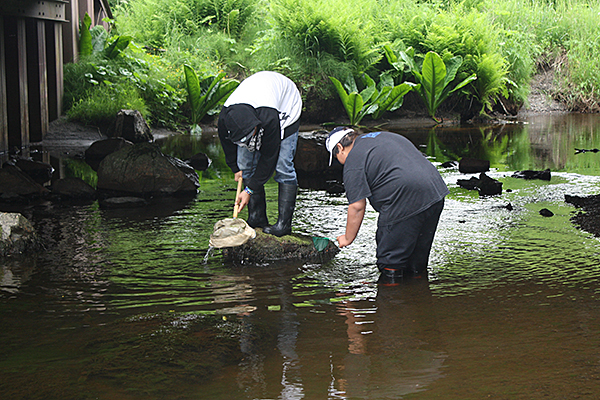
by editor | Jan 20, 2016 | Conservation & Sustainability, Environmental Literacy, Outstanding Programs in EE
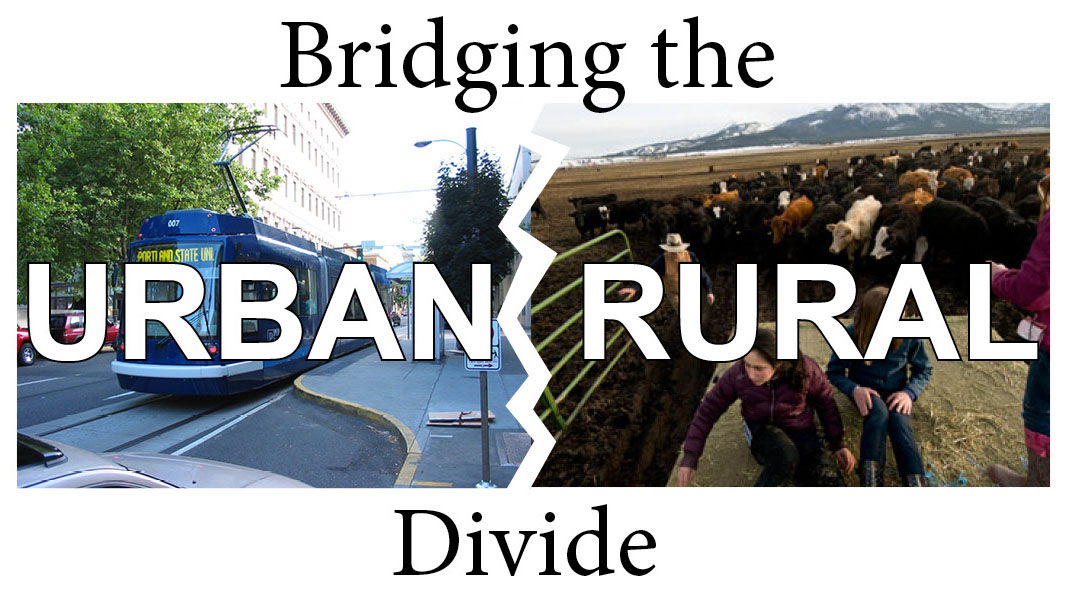
By being on the land and walking in the shoes of their host families, students begin to understand more deeply how and why Oregonians manage the land the way they do.
By Maureen Hosty
With contributions from Gary Delaney, Deb Schreiber, John Williams, Jed Smith and Shana Withee

 regon is a state of great socioeconomic and geographic diversity. While this diversity brings strength, it also challenges Oregonians to meet the needs of all communities. This divide is mostly deeply felt around natural resource management issues. Oregon cities are now so culturally isolated from the country that clashes between urban and rural Oregon occur frequently when it comes to grazing, logging, wilderness and wildlife. That was the world Portland urban youth walked into when they took a stand in defense of wolves in 2005 at a public Fish and Wildlife hearing. Ranchers howled in protest. Yet, just as it seemed Oregon’s urban-rural divide had grown into an unbridgeable chasm this conflict ended when 4-H stepped in. 4-H staff from urban and rural Oregon along with a handful of ranchers from rural Grant County did the unexpected. They invited kids from urban Portland middle school to live and work along side them and see a rancher or farmers side of life.
Today the 4-H Urban-Rural Exchange involves youth as a catalyst for change for a sustainable Oregon future by providing a venue for rural and urban youth and families to share their stories, their lifestyles, their beliefs and their practices for managing the land for the next generation. Through this program, urban youth and their adult chaperons travel to rural Eastern Oregon to live and work alongside 4-H ranch and farm host families for 6 days. Likewise, rural youth travel to Portland with adult chaperons to live and work alongside their 4-H urban host family.
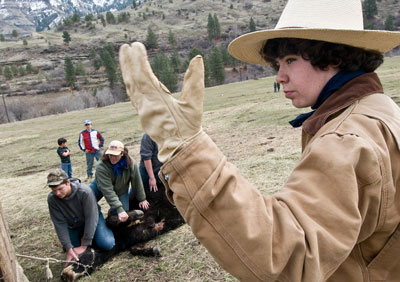 The program provides youth who are too often exposed to viewpoints on one side of an issue, a first hand experience on the land. It is this experience of being on the land and walking in the shoes of their host family that youth can begin to understand more deeply how and why Oregonians manage the land the way they do.
Through the process of developing this program 4-H Faculty quickly learned that a key to helping youth understand the the natural resource issues as well as the sustainability and resiliency of their host community, youth first need some knowledge about the dynamics of the influential social, environmental, and economic systems that underlie them. Thus, while the program began as a response to the issue of the reintroduction of wolves in Oregon, in the end the program is designed to help youth understand the broader social, cultural and economic issues within rural and urban Oregon and the interdependence between both sides of the state.
During their stay with their host family youth participate in daily chores in caring for the land with their host family. More importantly though, youth are involved in all aspects of community life of their host family. The attend school for a day, participate in community events, shop at the local store, attend a local sports game, meet local neighbors and sometimes attend church to name a few of the activities.
Program Design
Participant Selection Process
Approximately 40-50 youth are selected to participate in this exchange each year. Youth selected to participate in this program must submit a 4-H program application and get approval from their school administrator and principal. Teachers and 4-H staff screen youth applications. Youth are selected for their commitment and openness to learn and their potential for serving as an ambassador for their community. Participating youth must also commit to giving a presentation back home about what they learned during their 6-day exchange. Once they are selected youth are paired with another student of the same gender and then matched with a host family. All youth are expected to write a letter of introduction to their host family.
Likewise, 8-10 adult chaperons are also selected to participate in this program. All adult chaperons must complete the OSU Extension 4-H Leader screening process and undergo a criminal background clearance. Chaperons are recruited and selected from teachers, parents and community partners.
Host families for this program are recruited from current 4-H and OSU Extension families. All adults in the host family must complete a background information application and participate in a host family site visit by the 4-H Extension faculty. Host families are selected for their ability to provide a meaningful experience for their visiting youth or adult chaperons.
Pre-Education
Prior to loading in the vans and heading across the mountains to their host family, all youth and adult participants in the program must first complete a series of 4-H educational programs designed to prepare them for their experience. A 30-minute introductory program is provided at the beginning for the school year to introduce all potential students to the program and explain the application process. A series of 2-3 follow up educational sessions are held over the next several months. These educational sessions focus on the social, cultural and environmental issues of their host communities; cross-cultural communication and understanding; and sustainable urban and rural agriculture.
A mandatory one-hour orientation is held for all participating chaperons, youth and their parents. Participating chaperons also participate in additional training related to the roles and responsibilities of being a chaperon.
During the Exchange
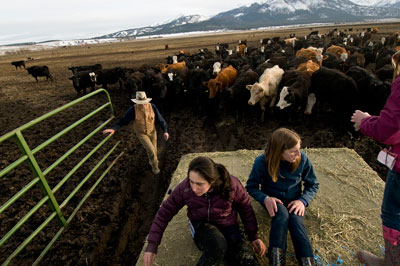 Four six-day exchanges from urban to rural Oregon take place the same week in April. Urban 4H youth travel to multiple communities in Harney County, Grant County, Wallowa County and Klamath County. A few weeks later, youth from rural Oregon travel to urban Portland for a 5-day exchange.
Traveling to their host community takes several hours and generally includes brief stops at historical and/or natural landmarks within the state. A lunch stop is held at a local 4-H Extension office along the route.
Once youth and their chaperons arrive at their host county 4-H office, the program begins with a potluck dinner with all the host families and visiting youth and chaperons. The potluck is designed to give youth and chaperons the opportunity to meet their host families, participate in icebreaker activities, and learn about the guidelines and expectations for the week.
During their stay with their rural host family Portland youth work alongside ranchers and farmers from rural eastern Oregon to learn the joys and challenges that comes with real rural life. Some activities include: caring and feeding livestock, vaccinating animals, branding cattle, chopping wood, and cleaning barns. Urban youth learn that ranching and farming is a 24-hour around the clock profession and caring for their livestock involves even checking on their livestock at 2 am. Urban youth also attend a school for the day in their rural community host school. In some cases urban youth who are use to attending school with 500+ students in three grades are surprised to find some rural schools with less than 100 students in 12 grades.
 Likewise, rural middle school youth visit Portland to learn about the joys and challenges of urban life. Rural youth live and work alongside urban families and explore issues relevant to Portland such as transportation, greenspaces preservation, urban agriculture and water management. Rural youth learn how to use public transportation, visit a farmers market and/or community gardens, tour a waste treatment plant , or visit a recycling center. They also attend school for a day. Unlike back home in their community, rural youth visiting urban Portland walk to school or ride their bike. In some cases rural youth learn that urban students get to school by public transportation.
On the sixth and final day of the exchange, visiting youth and chaperons and their host families return to the local 4-H Extension office to participate in a debriefing activity and to say final goodbyes.
Post Program
Once youth return from their experience living with a host family across the urban-rural divide, the program does not stop. Participating youth are divided into teams of 3-4 youth. Each team is expected to prepare and deliver a 15-20 minute presentation to the rest of their school about what they learned during the exchange.
More important, however, many youth continue their education beyond the 4-H program. Over 1/3 of the youth who have particpated in this program reported that they went back to visit their host family in the summer and took their own family with them. Several families in one Portland community also began a beef cooperative with their 4-H host ranch family.
 Program Impacts
Outcome evaluations indicated significant changes in attitude, knowledge and understanding of socioeconomic and environmental issues from both sides of the divide. A four year evaluation found changes in knowledge and attitudes among both urban and rural participants. 119 urban participants and 43 rural host family members participated in the study.
Urban participants reported significant changes in attitudes in:
1) Knowing about the lifestyles, beliefs and ways of living of rural Oregonians; 2) Understanding the beliefs and practices for managing the land by rural Oregonians; 3) Understanding how the actions of urban Oregonians impact rural Oregon natural resource management; 4) Their awareness of rural Oregon stereotypes; 5) Knowing the commonalities urban and rural Oregonians have in managing their land; 6) Their belief that ranchers have a respect and understanding of how to best manage their land.
Rural participants reported significant changes as well in:
1) Knowing about the lifestyles, beliefs and ways of urban youth; 2) Their belief that most urban Oregonians are open to hearing all sides of natural resource issues; 3) Their awareness of urban Oregon stereotypes; 4) Their belief that urban Oregonians have a respect and understanding of how to best manage urban natural resources.
 Today, over 600 youth and family members have participated in this program since it began in 2006. Many of these 600 Oregonians will likely spend the rest of their lives living and working in their same respective part of the state. They might never step foot on the other side of divide. But from this day forward, they will have a different idea about the kind of people they share the state with and how they are managing their natural resources. And when that time comes when another issue around the managementt of our natural resources divides this state, these 4H youth, 4-H leaders and 4-H host families will have someone they know and trust that they can reach out to and get their input and insights on the issue.
To learn more about this program, the program sponsors and partners, or how to become involved, please contact us:
Maureen Hosty, 4-H Youth Development, Metro 4-H
Phone: 971-361-9628
E-mail: Maureen.hosty@oregonstate.edu
Website: www.4hwildlifestewards.org
Follow-up
Since the program began in 2006, there have been a total of 34 Exchanges between urban and rural Oregon. Three hundred and eight urban youth youth and 74 urban adult chaperons have traveled across Oregon to live and work alongside 130 rural families (a total of 434 Rural Oregonians). The program has since expanded from 4 counties to 8 counties: Multnomah, Grant, Klamath, Wallawa, Harney, Wheeler, Gilliam and Morrow. 4-H Faculty and staff are busy preparing for the 2016 Exchanges which will take place March 31-April 5th. Participants in the exchange will be recruited from 4-H Youth and Adults from 4-H Clubs and 4-H Partner Schools. For more information about this program please contact: Maureen Hosty OSU Extension Faculty Portland Metro Area 4-H 3880 SE 8th Ave #170 Portland, OR 97202 PH 971-361-9628 | cell 503-360-6060 | fax -971-361-9628 maureen.hosty@oregonstate.edu
All Photos: Lynn Ketchum
by editor | Dec 15, 2015 | Place-based Education
Engaging Students With/in Place through Community Mapping
By Susan Jagger
University of Toronto
This article was reprinted from Pathways – The Ontario Journal of Outdoor Education, Volume 26, Issue 3
 ommunity mapping brings together local people as they celebrate local geography, ecosystems, and stories of place through created representations of their communities (Lydon, 2003; Perkins, 2007). Mapmaking itself is a way of making sense of the world and of our place within it, and community mapping can help us to come to know our local environments. The process of mapmaking is key in community mapping; indeed, much of the value in community mapping is not so much in the product but rather in the collaborative sharing and discovering of place that leads to the map’s creation (Parker, 2006). I wondered about the pedagogical possibilities for community mapping in the K–12 curriculum and began a study that examined how participation in such a project could influence grade four students’ environmental knowledge, attitudes and actions (see Jagger, 2009 and Jagger, 2014 for a discussion of the research).
I worked collaboratively with Ms C.1, a grade four teacher, to plan and teach a three-month long, cross-curricular community mapping project of Sandy Beach Provincial Park. We focused on four themes in our project: local history, natural history, First Nations history, and personal connections to the park. Our mapwork drew from multiple field trips to the park, a visit to the local cemetery, and class visits from the museum manager and school First Nations liaison person. The following is an overview of some of our project’s mapping activities.
Introducing Mapmaking and Sandy Beach
We began our project with a small group brainstorming web of the question, “What can maps tell us?” To extend thinking, we shared a range of maps—from traditional topographic maps to handmade written and photographic representations of place—and asked students to then revisit their webs to make additions. The students were drawn to familiar political and road maps; some students did not identify the alternative maps as maps at all. One student, Charles, confided in me that maps were not made by people and that “you can’t make maps.”
Following this initial look at maps, we had our first visit to Sandy Beach. This visit was intended as an opportunity for students to familiarize themselves with the park and, given that it was the beginning of September, a chance for the class to build a sense of community. Students used digital cameras to take photographs and several parent volunteers accompanied us, allowing for small group, free-choice park explorations.
Back at school, students made their first maps of places very familiar to them—their bedrooms and the school playground. Bedroom maps were done by students at home and in a form of their choice. Most students created bird’s eye view maps of their rooms; some made their drawings to scale and in perspective. In small groups, students created a section map of the school playground (the playground was divided into nine sections to be mapped in a three-by-three grid; when completed the maps were put together to create a complete playground map). To guide their mapwork, students were asked to explore the sounds, textures, colours, shapes and sizes in the playground, and they spent time outside listening, touching and seeing the complexity of the playground space. The completed maps took on a variety of forms (e.g., side view, bird’s eye view) and included a range of techniques (e.g., grass pieces glued onto map, crayon rubbings to show texture).
Connecting with Local and First Nations Histories
Ms C. and I wanted to actively bring the community—its people and places—into our mapping project. To do this, we complemented our experiences at Sandy Beach with visits from both the local museum manager (Mr. B.) and the school district First Nations liaison person (Ms E.), and with a class field trip to the local cemetery.
Mr. B. arrived from the museum with (quite literally) a treasure chest full of artifacts from Sandy Beach to share with the students. Some pieces were the very tools used by the Barry family—the family who used to live and farm on the land that would become the park. The students quickly made connections between what they discovered at the park and the stories told by Mr. B. Guided by careful observations, the students made pastel sketches of chosen artefacts.
As it was important to us to recognize the traditional uses of the land in our mapping work, we invited the school district’s First Nations liaison person, Ms E., to be part of our project. Ms E. visited the class twice, and during her visits she taught the students about the traditional uses of Western Red Cedar in both practice and ceremony. In her workshops, Ms E. showed examples of woven cedar baskets and jewellery, and taught students to weave cedar mats of their own. Her underlying message to the students about cedar, and all natural elements used by First Nations people, was of respect and the importance of giving back to the land when we take from it.
The local cemetery was a short walk from the school and afforded us with a further trip back into local history. Here, the stories of the Barry family came to life as many of the family members were buried there. The students searched the cemetery for all of the members of the Barry family and used crayons and paper to make tombstone rubbings.
Exploring the Natural History of Sandy Beach
We took our second trip to the park about one month into the project. This visit was an exploration of the natural history of the park including the diversity of life and the park’s ecosystems. To guide their experiences, we asked students to keep three words in mind: unusual, interesting and change. Again, students used digital cameras to capture their explorations and parent volunteers accompanied small groups in three activities: a low tide beach walk, a scavenger hunt, and a sound and colour walk.
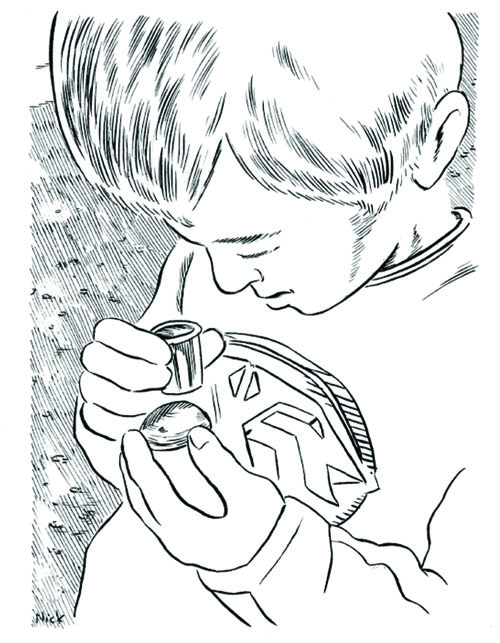
Ms C. led the students on the low tide beach walk. We planned our visit to coincide with low tide so the students could compare and contrast the high and low tidal zones and the transition between zones. Ms C.’s experience as a park naturalist at Sandy Beach guided the students’ explorations as she helped students to identify species, ecosystems and interactions. Students also used small magnifying glasses to examine details and intricacies of the features of the beach. Below, Quinn uses a magnifying glass to examine tiny molluscs attached to a rock (see Figure 1).
I created a map for a parent-led scavenger hunt that guided groups along a planned route through several different ecosystems—meadow, marsh, forest and beach. Students were asked to be mindful of their changing surroundings and reminded of the trip’s guiding words. Student observations were documented in their photographs and field notes. These photographs were put together in a class album of the visit, and back at school the groups came together again to write descriptive captions of the pictures from their walks.
To increase students’ awareness of the living things around them, I led groups on a sound and colour walk during which participants were asked to slow down and stop to listen and look. We listened quietly to the sounds surrounding us: the chirping of crickets, the laughing of ravens, the crashing of waves, the crunching of gravel. Before the start of the project, I collected paint chip cards from the local home improvement store and on our walk, we matched the cards to colours noticed along our walk. We renamed those colour samples to reflect the shades and hues of Sandy Beach (e.g., Douglas Fir Cone Brown, Rosebud Red, Arbutus Peeling Bark). The renamed paint chips were included in the class album of trips to Sandy Beach and in a mosaic frame for our emergent bulletin board map. The photographs, stories and observations from our visits to Sandy Beach were used to create an emergent bulletin board map (Sobel, 1998). I started the map with a very basic outline of the park—the shoreline, access road, parking areas and campground—and over several days, small groups of students added to the map. Some students drew in trails we walked along.
Others contributed written descriptions of features of the park they remembered. Still others added photographs that shared what we had experienced at the park. As we created the map, students looked through the album of photographs taken on our visits, shared their experiences with me, and added captions to the pictures.
Celebrating Personal Connections to Place
It was very clear to Ms C. and me that the students had developed deep personal connections to Sandy Beach. Students eagerly shared with us stories of special times at the park—recollections of weddings, first visits to the beach, earlier field trips and explorations with family and friends. It was important to us to really honour these affective understandings of place and so we focused our last visit to Sandy Beach on students’ cherished places there. As with other visits, students were in small groups, but on this visit students led the exploration of the park. The groups visited students’ cherished places and were told by the students what made that place so special to them. Many of these places were related to play—the driftwood pile that made a great fort, the tree that was like a swing, the tidal pools that were fun to explore. Students’ special places also
included spaces for quiet reflection and enjoying the beauty of the park—“the Dinosaur tree in the very quiet woods,” the beach with its beautiful shells, the amphitheatre “because I feel free there.” Students mapped their cherished places by creating clay sculptures and writing short descriptions of those places.
Mapping It All Together
Students shared their cherished places, along with their knowledge of the park’s natural, First Nations, and local histories in their If you came to Sandy Beach, I would show you… class book. We used Sheryl McFarlane’s Jessie’s Islandas a model for this mapwork, a book in which McFarlane shares the story of Jessie who writes a letter to her cousin describing all of the wonders he would see if he visited her home. With Jessie’s Islandas a guide, the students wrote letters to family members and friends who had never been to Sandy Beach. Letters included descriptions of plants, animals and ecosystems that could be seen at the park. Students recalled the stories of the Barry family’s first years on the farm and wrote about how First Nations peoples traditionally lived on the land. The letters also shared students’ own memories of cherished places and experiences at Sandy Beach. Over the course of the project, teachers and parents shared with me special memories that they had of Sandy Beach so we invited the school community to write letters as well.
Our class book beautifully brought together all of the experiences of the mapping project and allowed students (and some teachers and parents) to reflect on the experience of being and learning in place. Other books that celebrate place and could be used in mapping projects include Harrington and Stevenson’s (2005) Islands in the Salish Sea, Kronick’s (2013) How Victoria Has Changed, and Moak’s (1984) A Big City Alphabet.
Community Mapping as a Pedagogical Tool
Community mapping can be a wonderful way to infuse place-based environmental education across the curriculum. Our project was truly cross-curricular as we drew science, social studies, language arts, fine arts and citizenship together in our studies. This type of project can be easily adapted to the exploration of any local environment; the possibilities are endless. Mapping a local natural space helped the students to realize and respect the biological wealth and diversity that lived quite literally in their own backyards. Stephen Jay Gould wrote, “we cannot win this battle to save species and environments without forging an emotional bond between ourselves and nature as well—for we will not fight to save what we do not love” (as cited in Orr 2004, p. 43). Community mapping projects can help foster this critical bonding in students.
Acknowledgement
This project was partially funded by the Natural Science and Engineering Research Council, Canada’s Pacific CRYSTAL (Centres for Research into Youth, Science Teaching and Learning) for Scientific and Technological Literacy.
Notes
1 To protect the identity of participants, the names of all people and places have been changed.
References
Harrington, S., & Stevenson, J. (Eds.). (2005). Islands in the Salish sea. Surrey, BC: Touchwood Editions.
Jagger, S. (2009).The influence of participation in a community mapping project on students’ environmental worldviews. Retrieved from http://dspace.library.uvic.ca:8080/bitstream/handle/1828/2816/Final%20Final%20Draft.pdf?sequence=1
Jagger, S. (2014). “This is more like home:” Knowing nature through community mapping. Canadian Journal of Environmental Education, 18.
Kronick, I. (2013). How Victoria has changedRaleigh, NC: Lulu Publications.
Lydon, M. (2003). Community mapping: The recovery (and discovery) of our common ground. Geomatica, 57(2), 131–143.
McFarlane, S. (1992). Jessie’s island. Victoria, BC: Orca Book Publishers.
Moak, A. (1984). A big city alphabet. Toronto, ON: Tundra Books.
Orr, D. (2004). Earth in mind
(10th anniversary ed.). Washington, DC: Island Press.
Parker, B. (2006). Constructing community through maps? Power and praxis in community mapping. The Professional Geographer, 58(4), 470–484.
Perkins, C. (2007). Community mapping. The Cartographic Journal, 44(2), 127–137.
Sobel, D. (1998). Mapmaking with children: Sense of place education for the elementary years. Portsmouth, NH: Heinemann.
Correspondence concerning this article should be addressed to Susan Jagger, Department of Curriculum, Teaching, and Learning, OISE/University of Toronto; s.jagger@mail.utoronto.ca.

by editor | Feb 23, 2015 | Environmental Literacy, Indigenous Peoples & Traditional Ecological Knowledge, Marine/Aquatic Education, Place-based Education, STEM
It Takes a Community to Raise a Scientist:
A Case for Community-Inspired Research and Science Education in an Alaskan Native Community
By Nievita Bueno Watts and Wendy F. Smythe
The quote, “lt takes a village to raise a child,” is attributed to African tradition and carries over to Alaskan Native communities as well (Hall, 2000). Without the support of their community and outside resources, Alaska Native children have a difficult time entering the world of science. Yet increasing the awareness of science, as a tool to help a tribal community monitor and maintain the health of their environment, introduces conflicts and misconceptions in context of traditional cultural practices. Rural communities depend upon traditional food harvested from the environment such as fish, wild game, roots, and berries. In many Native Alaskan villages the health of the environment equals the health of the people (Garza, 2001) . Integrating science with culture in pre-college education is a challenge that requires sensitivity and persistence.
 The Center for Coastal Margin Observation and Prediction (CMOP) is a multi-institutional, National Science Foundation (NSF) Science and Technology Center that takes an interdisciplinary approach to studying the region where the Columbia River empties into the Pacific Ocean. Two of CMOP’s focus areas are biogeochemical changes affecting the health of the coastal margin ecosystem, and socio-economic changes that might affect the lives of people who harvest and consume fish and shellfish.
The Columbia River waters touch the lives and livelihoods of many people, among them a large number of Pacific Northwest lndian tribes. These people depend on the natural and economic resources provided by the Columbia River. Native peoples from California through Alaska also depend on resources from their local rivers, and, currently, many tribes are developing-a workforce trained with scientific skills to manage their own natural resources in a way that is consistent with their traditional way of life. The relationship between Traditional Knowledge (TK) and practices, which are informed by centuries of observation, experimentation and carefully preserved oral records, and Western Science, which is deeply rooted in the philosophies and institutions of Europe, is often an uneasy one.
National progress is being made to open pathways for individuals from Native communities to Western Science higher education programs and back to the communities, where tribal members are empowered to evaluate and monitor the health of their environment. CMOP is part of this national movement. CMOP science is developing tools and techniques to observe and predict changes in the river to ocean system. CMOP education, an essential element of CMOB supports American lndian/Alaska Native students in pursuing academic and career pathways focusing on coastal margin sciences (Creen et al., 2013). One of CMOP’s initiatives is the CMOP- School Collaboratories (CSC) program.
CMOP-SCHOOL COLLABORATORIES
The CMOP-school Collaboratories (CSC) program is based on the idea that Science, Technology, Engineering, and Mathematics (STEM) pathway development requires an intensive and sustained effort to build relationships among science educators, students, school personnel, and the tribal community. The over-arching goal is to broaden participation in STEM disciplines. CMOP educators developed the CSC model that includes integration strategies for a community, development of appropriate lessons and field experiences and student action projects that connect local and traditional knowledge with science. Educational experiences are place- based, multi-disciplinary and culturally relevant. The objective is to open students’ minds to the reality of the need for scientists with many different world views and skill sets working together to address our planet’s pressing problems in a holistic manner. CMOP seeks to encourage these students to be part of that solution using both Traditional Knowledge and STEM disciplines.
The program encourages STEM education and promotes college preparatory awareness. This CSC program has three unique characteristics: it introduces coastal margin science as a relevant and viable field of employment; it integrates STEM learning with Traditional Knowledge; and, it invites family and community members to share science experiences. The example presented in this article describes a four-year program implemented in a small village in Southeast Alaska, 200 miles from the capital city of Juneau.
Figure 1: Students, scientists, a cultural expert. and a teacher with scientific equipment used to collect data from the river.
ALASKA NATIVE VILLAGE CASE STUDY
 Wendy Smythe, a CMOP doctoral candidate and principal investigator for an NSF Enhancing Diversity in the Geosciences (OEDC) award, is an Alaska Native Haida. As she advanced in her own education, she wanted to share what she had learned with the youth of her tribal community, striving to do so with the blessing of the tribal Elders, and in a way that respected the Traditional Knowledge of the Elders. Dr Bueno Watts is a mentor and expert on broadening participation. She acts in an advisory capacity on this project.
The village school consists of l5 staff members and 50 K-l2 students, with the school experiencing high administration turnover rates. ln the first two years of the program we recruited non-native graduate students to participate in the CSC program. This effort provided them experience working in Native communities. ln the last two years we recruited Native American undergraduate interns to teach lessons, assist with field activities and provide students with the opportunity to become familiar with Native scientists [Figure 1]. lnterns formed part of the science team.
STEPS TO GAIN ENTREE TO A VILLAGE
The community must support the concept to integrate science education with traditional practices. Even for this Alaska Native (Smythe), the process of building consensus from the tribe and gaining approval from the Elders and school district for the program was a lengthy one. The first step required letters of support from school district and tribal leaders. The difference in geographical locations proved difficult until Smythe was able to secure an advocate in the tribe who spoke for her at tribal meetings. Face-to-face communications were more successful than distance communications. Persistence proved to be the key to achieving success at getting the consensus of community leaders and school officials’ support. This was the top lesson of l0 learned from this project (Table l).
Traveling to the school to set up the program is no small feat and requires extensive coordination of transportation and supplies. A typical trip requires a day-long plane ride, overnight stay in a nearby town to prepare and gather supplies, a three-hour ferry ride, acquisition of a rental truck and a one-hour drive. Accommodations must be made to board with community members.
The development of appropriate lessons for the curriculum engaged discussions with tribal Elders and community Ieaders on an individual basis. Elders agreed to provide videoed interviews and were given honoraria as a thank you for their participation. Smythe asked the Elders what scientists could do to help the community, what stories can be used, where students and educators could work in the community to avoid intruding on sacred sites, and what information should not be made public. Once Elders agreed to provide interviews and share stories, other community members began to speak about their lives and concerns. This included influence of boarding schools, Iife as it was in the past, and changes they would like to see within the community. This was a significant breakthrough.
Table l . Lessons Learned: ten things to consider when developing a science program with Native communities
1. Persistence is key.
2. Face to-face communication is vital and Lakes time.
3. A community advocate with influence and respect in the community is critical.
4. Consult with the Elders first. They have their finger on the pulse of the community and are the center “of the communication network. Nothing happens without their approval. Find out what it is okay to talk about and where your boundaries are and abide by them. lnclude funds for honorariums in your proposal. Elders’ time and knowledge is valuable and they should be compensated as experts.
5. Partner with individuals or groups, such as the Department of Natural Resources.
6. Find a relevant topic. Be flexible with your curriculum choice. It must reflect the needs and interests of the community and the abilities of the teacher you are working with.
7 . Be prepared, bring supplies with you. Ship items in advance if going to a remote location
8. Have the ability to provide individual instruction for students who need it to prepare projects and practice giving presentations.
9. lnvolve the community. Hold events in a community center to encourage everyone to attend.
10. View your involvement as a long-term investment in a committed community relationship.
 ln addition to the Elders, support was needed from a natural resources representative who functioned as a liaison between our group and the community members. This person’s role is found in most villages and could be the head of the Department of Natural Resources or a similar tribal agency that oversees fish, wildlife, and natural resources. This person provides a critical link between the natural environment and the community. The next step is to go in the field with the natural resources representative, science teachers, EIders, and interested students to identify a meaningful focus for the community. lnitially we focused the project with a scientist’s view of teaching microbiology and geology of mineral deposition in a river ecosystem. However, the team found community interest low and no enthusiasm for this project.
Upon our return to the village, the team and CMOP educators found the focus, almost by accident. We were intrigued by “boil water” notices posted both at the home in which we were staying and on the drinking fountains at the school: The students were all talking about water, as were the Elders. It was clear that the community cared about their water quality. The resulting community-inspired research educational plan was based on using aquatic invertebrate bioindicators as predictors of water quality (Adams, Vaughan & Hoffman Black, 2003). This student project combined science with community needs (Bueno Watts, 2011).
CURRICULUM LESSONS
The first classroom lessons addressed water cycle and watershed concepts (Wolftree, 2OO4), which were followed by a field lesson on aquatic invertebrates. Students sampled different locations in an effort to determine biodiversity and quantity of macroinvertebrates. While students were sitting at the river’s edge, the site was described in the students’ Alaska Native tongue by a cultural expert, and then an English translation was provided. This introduced the combination of culture and language into the science lesson.
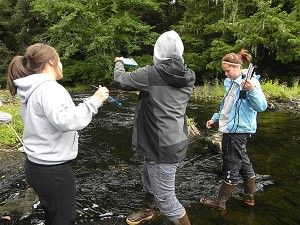 Figure 2: Students use data loggers to collect data on temperature, pH, and location.
The village water supply comes from a river that runs through the heart of the community. Thus, this river was our primary field site from which students collected water for chemical sampling and aquatic invertebrates using D-loop nets. Physical and chemical parameters of the river were collected using Vernier LabQuest hand-held data loggers. Students recorded data on turbidity, flow rate, temperature, pH, and pinpointed locations using CPS coordinates (Figure 2].
 Aquatic invertebrate samples were sorted, classified, counted, recorded, and examined through stereoscopes back in the classroom. Water chemistry was determined by kits that measured concentrations of alkalinity, dissolved oxygen, iron, nitrate/nitrite, dissolved carbon dioxide, and phosphate.
Microbiology assessments were conducted in an effort to detect fecal coliform (using m_FC Agar plates). Students tested water from an estuary, river, drinking fountain, and toilet. Results from estuarine waters showed a high number of fecal coliform, indicating that a more thorough investigation was warranted While fecal coliform are non-disease causing microorganisms, they originate in the intestinal tract, the same place as disease causing bacteria, and so their presence is a bioindicator of the presence of human or animal wastes (Figure 3).
 Students learned that the “dirty water” they observed in the river was actually the result of a natural process of acidic muskeg fluids dissolving iron minerals in the bedrock, no health danger. The real health threat was in the estuarine shellfish waters. Students shared all of their results with their families, after which community members began to approach the CMOP science team with questions about the quality of their drinking water. The community was relieved to find that the combined results of aquatic invertebrate counts and water chemistry indicated that the water flowing through their town was healthy. However they were concerned about the potential contamination as indicated by fecal coliform counts in the local estuary where shellfish were traditionally harvested.
ln the second year, a curriculum on oceanography developed by another STC, the Center for Microbial Oceanography: Research and Education (C-MORE) was introduced (Bruno, Wiener, Kimura & Kimura, 2011). Oceanography lessons focused on water density as a function of salinity and temperature, ocean currents, phytoplankton, and ocean acidification, all areas of research at CMOP. Additional lessons used local shipworms, a burrowing mollusk known to the community, as a marine bioindicator (CMOP Education, 2013). Students continued to conduct bioassessments of local rivers and coastal marine waters.
 Figure 3: Students sort and count aquatic invertebrates as a bioindicator of river health.
Students used teleconferencing technology to participate in scanning electron microscope (SEM) session with a scientist in Oregon who had their samples of aquatic invertebrates. Students showcased their experiments during parent day. Five students (l0%) had parents and/or siblings who attended the event.
SHARING KNOWLEDGE
As a reward for participation in the science program, two students were chosen to attend the American lndian Science and Engineering Society (AISES) 2009 conference in Oregon. Travel expenses were shared between the school, CSC program, and the tribe. ln the following three years an additional ten students attended the AISES conference and presented seven science research posters in New Mexico. Minnesota and Alaska. ln 2012, one student won 3rd place for her shipworm poster presentation (Figure 5). These conference presentations enabled some students to take their first trip out of Alaska.
ln May 20ll the first Science Symposium for grades K-12 allowed students to share their science projects with parents, Elders, and tribal community members. Both students and teachers were prepared on how to do a science fair project. Work with students had to be accomplished on a one-on-one basis, and members of the team were paired with students to assist with completing projects and polishing presentations. Students were not accustomed to speaking publicly, so this practice was a critical step.
The event was held at the local community center, which encouraged Elders and other community members to attend.
Elders requested a public education opportunity to teach the community about watersheds and the effects of logging. Our team incorporated this request into the science symposium. Students led this project by constructing a 5D model of the watershed for display. People could simulate rainfall, see how land use affects runoff and make runoff to river estuary connections. Scientists conducted hands-on demonstrations related to shipworms, local geology, ocean acidification and deepsea research. Language and culture booths were also included. During the symposium, a video of one of the interviews we had conducted with an Elder was shown as a memorial to his passing. The symposium was considered a huge success and was attended by 35 students and 50 community members.
 COMMUNITY RESPONSE
The CSC program garnered results that could not have been predicted at the outset. For example, the tribe requested our input when deciding which students should attend a tribal leadership conference and summer camp. Three student interns participated in a collaborative project with the tribe to conduct bio-assessment studies of local rivers and a key sockeye breeding lake. lnterns operated a remotely operated underwater vehicle (ROV) for data collection, resulting in video documentation of the salmon habitat. ln addition to the bio-assessment, the interns conducted interviews with Elders about the rivers in the monitoring project. The results of this study were used to stop logging around sockeye spawning habitat and to ban the harvest of shellfish from contaminated parts of the estuary. Now the tribe is monitoring rivers on its own. ln the near future CMOP plans to install a sensor that can be monitored remotely, and to train people to read and interpret the data.
CONCLUSION
Community-inspired research often produces a ripple effect of unforeseen results. ln this case, inclusion of Elders in the design and implementation of the project produced large scale buy-in from community members at all age levels. Consequently, in a village where traditionally students did not think about education beyond high school, we have had two students attend college, two students attend trade school, five students receive scholarships, and eight Native interns conducting science or science education in the community. And, given the low numbers of Alaska Natives pursuing careers in science, we find those numbers to be remarkable.
REFERENCES
Adams, J., Vaughan, M., & Hoffman Black, S. (200i). Stream Bugs as Biomonitors: A Guide to Pacific Northwest Macroinvertebrate Monitoring and Identification. The Xerces Society. Available from: http://www.xerces.org/identification-guides/#
Bruno, B. C., Wiener, C., Kimura, A., & Kimura, R. (2011). Ocean FEST: Families exploring science together. Journal of Geoscience Education, 59, 132.1.
Bueno Watts, N. (20,1 1). Broadening the participation of Native Americans in Earth Science. (Doctoral dissertation).
Retrieved from Pro-Quest. UMI Number: 3466860. URL http ://repository.asu.edu/items / 9 438
Center for Coastal Margin Observation & Prediction. QO13). Shipworm lesson URL http://www.stccmop”org/ education/k1 2/geoscience/shipworms
Carza, D. (200.l). Alaska Natives assessing the health of their environment. lnt J Circumpolar Health. 6O@):a79-g6.
Creen, V., Bueno Watts, N., Wegner, K., Thompson, M., Johnson, A., Peterson, T., & Baptista, A. (201i). Coastal Margin Science and Education in the Era of Collaboratories. Current: The Journal of Marine Education. 28(3).
Hall, M. (2000). Facilitating a Natural Way: The Native American Approach to Education. Creating o Community of Learners: Using the Teacher os Facilitator Model. National Dropout Prevention Center. URL http://www. n iylp.org/articles/Facilitating-a-Natural-Way.pdf
Wolftree, lnc. (200a). Ecology Field Cuide: A Cuide to Wolftree’s Watershed Science Education Program, 5th Edition. Beavercreek, OR: Wolftree, lnc. URL http://www. beoutside.org/PUBLICATIONS/EFCEnglish.pdf
ADDITIONAL RESOURCES
The educational resources of CMOP are available on their website : U R L http ://www. stccm o p. o rg / education / kl 2
ACKNOWLEDGMENTS
CMOP is funded by NSF through cooperative agreement OCE- 0424602. Smythe was also supported by NSF grant CEO-I034611. We would like to thank Dr. Margo Haygood, Carolyn Sheehan, and Meghan Betcher for their assistance and guidance with the shipworm project. We would like to thank the Elders and HCA for their guidance, advice and encouragement throughout this program
Nievita Bueno Watts, Pn.D. is a geologist, science educator, and Director of Academic programs at the NSF Science and Technology Center for Coastal Margin Observation & Prediction (CMOP). She conducts research on broadening the participation of underrepresented minorities in the sciences and serves on the Board of Directors of the Geoscience Alliance, a national organization dedicated to building pathways for Native American participation in the Earth Sciences.
Wendy F. Smythe is an Alaska Native from the Haida tribe and a Ph.D. candidate at the NSF Science and Technology Center for Coastal Margin Observation & Prediction. She runs a geoscience education program within her tribal community in Southeast Alaska focused on the incorporation of Traditional Knowledge into STEM disciplines.

by editor | Jul 17, 2014 | STEM
2014 E3 Green Apple Award Winners
Using Links as Labs: First Green Connects Kids, Classrooms and Golf Courses

Glenwood Golf Course Superintendent Steve Kealy helps students measure water flow of a stream running through the course as part of the First Green Environmental Education Program.
 As the United States seeks to meet the rising need for graduates with STEM (Science, Technology, Engineering and Math) degrees, First Green is filling the gap with its innovative program of using golf courses as learning labs. First Green coordinates outdoor STEM “learning labs” at golf courses that allow students to perform hands-on experiments and tests, all within the focus of their schools’ environmental science and/or environmental horticulture curricula. In these outdoor “labs” students test water quality, collect soil samples, identify plants, do math activities and work with local issues such as stream-bed or owl-nest restoration.

Superintendent Steve Kealy helps student find macroinvertebrates in leaf litter from the golf course.
Many of the field trips involve community organizations. In Bellevue, Wash., the city’s Stream Team often has a learning station at Glendale Country Club’s field trips and engages students in identifying macro-invertebrates (bugs) from the Glendale pond. In addition, a Puget Sound area group, Nature Vision, provides a salmon life cycle lab.
 A 501(c)(3) tax-exempt foundation, First Green was founded in 1997 and is based in Bellevue, Wash. Over 15,000 students have been on First Green field trips. Each field trip reaches an estimated 230 people with environmental and golf messages (due to students sharing with friends and families and teachers sharing with colleagues. First Green has replicated the program across Washington and into other states – Oregon, California, New Jersey, New York, Utah, Colorado, and just launched a program in Western Canada in May 2014.
Support
First Green receives ongoing support from the Washington State Golf Association, Pacific Northwest Golf Association, golf clubs and individual donors.
In addition, First Green was awarded STEM (Science, Technology, Engineering and Mathematics) grants of $155,750 and $100,000 by the United States Golf Association (USGA) for 2014 and 2013. The grants are funded by the USGA’s partnership with Chevron, designed to encourage students in science, technology, engineering and math disciplines (STEM) through the world of golf.
Awards
 First Green was awarded a 2014 E3 Washington Green Apple Award for Business Excellence. Steve Kealy, Golf Course Superintendent and First Green Board member, accepted the award at a ceremony on June 26, 2014.
For More Information
For more information about First Green, visit www.thefirstgreen.org or call 425/746-0809. The media contacts are Cathy Relyea, email cathyrelyea@thefirstgreen.org or call 425/373-9915; and Jeff Shelley, email jeffs@cybergolf.com or call 206/522-6981.

by editor | Jun 13, 2014 | Schoolyard Classroom
Starting a Community-based Natural Resource Education Program

Strategies for Authentic Community Engagement
Authors Patrick Willis Oregon State University Extension 4-H Portland, Oregon
Susan Cross Environmental Educator Tucson, Arizona
 lmost every school has a natural area very nearby. It could be that marshy place behind the school, the little stream or “ditch”, the unmowed field, or the patch of woods beside the parking lot. These natural areas are often overlooked as learning sites, or if they are recognized, they are not acted upon because we do not know exactly how to start using them. The intent of this article is to provide educators with a platform to begin natural resource programming at sites near their school. Philosophical as well as pragmatic information is shared to provide both intrinsic and conceptual connections for educators to engage youth in authentic community involvement in the natural resources. This information is intended to offer support, ideas, encouragement and new ways to think about what we do as educators. It is meant to inspire you and move you to action.
It is our hope that through programs that link schools with natural resource areas, citizen awareness and community involvement will increase. The vision is for schools to become vital resources for their communities and that students, through real world projects, become active participants in their society.
 Why connecting students with natural resource areas have educational benefits.
A strong connection to the larger world community starts with an intimate local understanding. Children can apply knowledge of systems and concepts learned in a personal experiential world to global problems. Once they grasp the value and function of the forest, wetland, grassland or watershed in their school backyard, it is a short step to awareness about other watersheds or wetlands that they see in their own community, or to a concern about global environmental issues they hear about in the media. A personal stake in the lives of their wood ducks, red-tailed hawks or metamorphosing moths becomes an intrinsic understanding of the richness present in all ecosystems. A program such as this taps the innate desire of children to care for their world and allows them to do just that: to help, to clean up, to make better homes for wildlife, to gather information to guide decision making. It empowers them at the local level and gives us all a much needed assurance that active informed citizens can and DO make a difference.
Students involved in active hands on programs also feel better about the way they are learning. The students report that they have more fun and feel like they are learning things that they didn’t know before. Teachers say that their students really retain more of what they learn and can apply the learning in other situations.
In these times of being overwhelmed by environmental problems on every front, it is easy for people to lose their sense of hope and to feel defeated in the face of such looming concerns. This can be especially hard on young people, who have been inundated since early childhood with the magnitude of our planet’s problems. Working with young people in settings where they can impact an area in a positive way is a powerful tool to help them realize the healing potential they have as caring human animals.
Getting Started
Many educators find the idea of starting a program such as this to be intimidating…And it can be!! Teachers already have heavy workloads. It often feels as though there isn’t enough time in the day to prepare for classes, grade the day’s papers and still get to eat lunch! The extra work required to implement an on-going, in the field/community program can indeed loom large in the picture and cause many people to give up before they even begin.
 Sites and Site Selection
The initial step is to find a site around which to center your program. The site is an integral part of the program because it becomes the focal point for community involvement. Because of time limitations in our schools, the closer the site is to the school door the better. The site doesn’t need to be huge or elaborate. It can be the little ditch on the school grounds, it could be the marsh on private land across the street, it could be the little patch of forest left in an urban development, it could even be something that you restore or develop on your own school grounds. The ability to visit the site frequently outweighs any lack of “wildness.” In the reality of today’s shrinking school budgets, transportation money is drying up. A site within walking distance solves this problem, and makes all logistics easier.
After you determine what site or sites you may be able to use for your program you will need to find out as much as possible about the site. In an ideal situation, this entire process can be done by your students. You will want to find out who owns the property. Who is in charge of managing it? Can you use the site as a study center? Are there special things about the site? Is it a protected area? How will you minimize the impact of your student’s presence at the site? Get maps of the local area. Talk to homeowners associations and neighborhood businesses. Can you do enhancement work there? How could the site be improved for wildlife or educational uses? What kind of information would it be useful to have about the site? Who might best use that information? What is the history of the site? Are there any cultural values?
When you find out who is involved with your site you may be surprised to learn that those people need your student staff to collect information as much as you need them for their expertise. Some sites may be in private ownership and you may have to seek permission to use the land as a study site. This process in itself can be quite a learning experience for your students. Many schools are lucky enough to have natural areas on their own grounds, but you may still need permits to make changes. Each place has its own unique combination of political circumstances just as each place has its own unique natural character. Let the problems you encounter become learning challenges. Help your students learn about how the world outside the classroom operates. The problems you face will lead to the development of valuable life-long learning skills.
Willingness to Change Attitudes and Structures
Often the success of innovative programs depends on our ability to think in new ways. Change is never easy and is especially hard to create in institutional settings. It is difficult to envision new roles for ourselves and new shapes for our old models. With the momentum for educational change coming from the state level, the atmosphere for programs of this type is good, and you could be on the leading edge of this change. The watchword of the hour is flexibility.
 Changing Teacher Roles
In this kind of program the teachers may have to recreate the way they interact not only with their students but also with their peers and administrators. You may find yourself much more of a coordinator and learning manager than a deliverer of set curriculum. You may find that the most important function you can serve is finding access for your students to partnership opportunities with other adult instructors. You may spend your time locating project ideas, equipment and funds rather than directly teaching lessons. You may need to spend time on the phone coordinating an event or writing proposals to fund your program’s newsletter. It is not the role you are probably most familiar with and it can seem like a leap into the unknown. It can also lead to personal growth and a great deal of fulfillment as your program blossoms.
Changing Educational Models
Everyone involved in education agrees that our current model doesn’t seem to be working. Students are not entering the adult world prepared to meet the challenges of a rapidly changing and complex world. Demand for people who can work cooperatively, be self motivated learners and understand complex systems is growing in every field of endeavor. Schools somehow need to provide their students with opportunities to learn the skills of citizen action, exposing them to processes and systems both natural and social. Students need to have real world experiences with real world consequences. Programs such as this can offer those opportunities. Schools could be in the business of finding community needs that aren’t being met. Schools could become a resource for the community instead of being viewed as a drain on resources. The school, through a program, could provide opportunities for students to interact with their community and society using meaningful projects that need to be accomplished. A great deal of excitement and motivation builds around an idea when students are producing work for a real world audience with a real world purpose. Think of the schools as a pool of highly educated leaders with a large motivated work force that just needs to be focused and applied to the needs of the community!
The Time Issue
Time, or the feeling of never having enough time, is a stumbling block in the initiation of Community-based programs. How much time should be allocated for activities related to the project? How will the teachers involved find time to organize materials, field work and special events? Is one day each month enough field contact? Perhaps one day each week may be needed. How will this program fit in with music, social studies or math? Is a 45 minute period enough time to get out into the field, do a study, and then get back? All these time questions are quite valid and need to be explored. But our attitudes, those hidden assumptions behind our time feelings also need to be explored. How did our school day come to be fragmented into 40-45 minute blocks? Does it have to be that way? Can our scheduling be more flexible without a loss of quality?
Using a thematic or project based approach to interweave your Community-based program into several subject areas can increase the amount of time spent in the field or community. Math can serve to interpret collected field data. Art could be the designing of logos or signs for the site. Music could involve songs written about the area and performed at a school wide celebration. Pursuing permission to have use of a site, or to make changes at a site, could serve as lessons in political science. Keeping journals or producing an informative newsletter is a natural for writing and language.
You Don’t Need to be an Expert
A general fear many educators experience is that they will be asked about something they don’t know. When beginning a program that involves a natural resource area there will be tons of things you don’t know, and that will be part of the excitement. As teachers we have the feeling that we should always be able to answer every question like an expert; but we may want to consider that the “teacher-as-learner” may be a more powerful model than the “teacher-as-dispenser-of-all-knowledge”. Being able (and willing) to say, “I don’t know, but let’s see if we can find out,” is a virtue in an educator, not a sin. Think of the program as an opportunity for you and your students to learn about an ecosystem together. Curiosity, enthusiasm and access to good reference materials are far more important than teachers having all the specific information on a particular environment locked away in their brain.
Program Planning for Administration Support
Having the support of your administrator may allow you to arrange for time to do planning for and coordination of your program. With good administrative support and communication, substitute time may be possible for planning, attending development classes or for special field programming for your students. It is almost impossible for teachers to teach a regular load and to just add on another program. Realistically the teacher who takes on a project of this sort will need time and support from their school. Your formal proposal may give your administrator a powerful tool for acquiring a commitment from your school board or district for that extra time you will need.
Project Plan Outline
Another important part of beginning a program is the time spent early on in the planning phase. If you take the time to examine your hopes and limitations, to determine what your goals are and to commit those to paper, you will have come a very long way toward establishing something concrete to build the program on.
The proposal form (Figure 1) will help you create a document you can use to approach school administrators, fellow staff members, and potential partners. It will help you clarify your group’s goals and priorities. Your proposal form, or “white paper” describes the vision and who should participate, the benefits of participation, and the benefits to the community. In addition, the project plan often contains language very useful in future grant proposals. Whether your project is simple or complex, you and your group will benefit from taking the time to ask yourselves the questions contained in the form.

Community-based Program Strategies
You have a program proposal, you have administration support, there is building enthusiasm for the project…what do you do next? The following are tested and well established examples about how to generate and sustain interest in the program as it develops.
Create an Identity
Your students and others involved in the project will have much more ownership if the site you have chosen has a name or an identity. It is probably more powerful to have the students highly involved in the process of creating an image for the site rather than having an image imposed on them. You will want to guide them in coming up with an attractive logo that can be used on your future newsletters, correspondences, signs and t-shirts. You may want to consider letting people know what your purpose is in the construction of the name. Are you a resource center, a study center, a technology center, or something else? Is there some special plant, animal or geographic feature at your site that would make a good symbol or icon?
 Increase Community Contact
Support for your program will grow if people know about what you are doing. Cultivate a relationship with your local media. Let them know when your students will be out in the field, when you are putting up a sign to identify your site or have special activities planned. Your students can write and publish a website or a simple, informative newsletter about their involvement and successes. Invite partners and potential donors or other influential people in your community to observe what your students are doing. People often like to jump on the bandwagon of an interesting project and partnerships can develop from public knowledge of the program.
Create a Student Leadership Component in Planning
You can plan yourself silly, but if the project doesn’t have student ownership and support your plans will soon sink with apathy or resistance. Students need to feel like it is their program. They need to be active citizens in the process right from the beginning. Having student representation at the planning level will lend legitimacy to tasks proposed for students to accomplish. It can be a powerful growth experience for the students involved.
Spend Some Time on Aesthetics
If you think back to your own interest in the natural world it is usually linked very closely with a sense of place. Allow your students time in their special environment to observe the natural world in a holistic way. Love of the natural world doesn’t come from performing pH tests. It comes from watching spiders build their webs or resting in the sun in tall grasses and listening to a killdeer sing. Set up intentional aesthetic activities for your students early on in the program. You’ll end up with strong advocates for the site. Emotional responses to the environment are not irrational responses; and emotional ties to place are often the best motivations to action!
Approaching Resource People
Depending on your circumstances you may want to use resource people as special advisors or you may want to form partnerships with one or more of them that includes actually working on projects that they are involved with. Resource people as guest speakers in the classroom probably has limited value. If you can arrange for your students and staff members to work directly with resource people it can lead to much larger rewards for everyone. Because most resource people have many duties in their job descriptions, they are busy people. If you can approach them with detailed specific needs and directions about how they might help you with their expertise, their time will be used much more effectively.
Funding Ideas
Money always seems to be a limiting factor in program development, but don’t let a lack of funds discourage you. Many activities can be done without much money. Exploring and getting to know the site, doing plant and animal inventories, making maps, observations of seasonal changes or planning an awareness celebration for the school or community can all be accomplished with a minimum of funds.
Keeping the community and the media aware of your plans and goals can lead to opportunities for donations from businesses such as volunteers, money, equipment or supplies. Parent/Teacher organizations can be a source of funding as well as a source of volunteer helpers. Motivated students can also be excellent fund raisers using all those time proven school fund raising techniques. You and your students may also be able to come up with a product associated with your site such as t-shirts with a logo, wildlife art or photography from the site, or some other product or service. Cities or counties may be able to donate time or materials. Agencies sometimes have funding for plantings or restoration work. Cities and agencies may be able to provide tools and advice from staff people.
There is always the potential for grant writing as a source for funds. This approach to raising money is often available but comes with the fears of how to get started, who to ask, what to say and, of course, finding the time to write the grant. Another factor to consider is the fear of getting the grant. Most granting organizations require you to do what you promised in the grant! This is where your program plan becomes a valuable resource. A good plan is the first step in approaching a funding source. As for who to ask for funding, the list of possibilities can be overwhelming. Start with a few inquiries with local agencies and ask others who have written grants. Most people are very supportive and helpful. If you stay with a reasonable plan, your program will blossom with the assistance of a grant and not degrade into unfulfilled dreams.
 Field Techniques
Many teachers feel uncomfortable taking their students outdoors. It is a much less structured setting and chaos can quickly ensue. A bad field experience can leave a leader longing for those wonderful rows of desks back in the building. Field study does require some special skills and planning, but the harvest you and your students reap is rich!
There are some risks being in the natural world, from twisted ankles to bee stings; but the possible rewards far outweigh the risks. Safety is an important concern in the field. Make sure you have a first aid kit with you and know what to do in an emergency. You may want to check on your school’s insurance policies for field settings. Many risk factors can be greatly reduced by explaining clearly to your students what your expectations are for behaviors in the field.
Setting the same kind of clear behavior expectations for the field as you have in your regular classroom is essential. Let students know that you have boundaries that they must respect, being sure to be clear about what areas are off limits and why. Have set work areas for each group. It is often easier to explain tasks and rules inside the normal classroom setting before you set off into the outdoors to do your field work.
Spending a bit of time on field ethics is a valuable thing. Students don’t automatically know that they need to be quiet, to not disturb plants and animals unnecessarily, or that horseplay is not acceptable. Most of the time when we allow students to be in the out of the classroom is for unstructured play. It takes some training to get the message across that outdoors doesn’t always mean recess.
Group size is another important factor in the success of field work. Small groups function much better than large groups. Have a job for everyone. Having tasks that keep the students focused brings the potential for misbehavior down. If you are the only leader, use a “hub” approach. Have a central location from which you disperse and gather your student work groups. It is also important to realize that not all students need to do everything. Often it is better to have students become the “experts” at a certain job or subject area and to share their findings and knowledge with the others.
Minimize Your Impact/Earth Ethics and Etiquette
One of your most important roles in the program is as a role model for student behavior. Your actions speak much louder than your words and children will treat the environment much the same way that you do. This can be an enormous opportunity to teach outdoor ethics without ever saying a word. Your decisions about collecting, the way you treat plants and animals in the environment, and what your expectations are for your student’s interaction with the site are all powerful messages about how to treat the planet. Children should be engaged in decisions about when, why and how to collect samples. Is it appropriate? Is it necessary? What valuable thing will we learn from the experience? Examine ways in which your visits impact the natural world. Are there ways that we can reduce those impacts and still learn the things we want to? How long lasting are our disturbances? Bringing these kinds of questions into the consciousness of your students will help them to form and examine their own beliefs on these issues.
Conclusion
Change will only come to our systems through the efforts of individuals. Though change is difficult and frightening, it is also empowering and growth producing. It is up to you to try things out, to experiment with ideas and to not be afraid of failure or of success. BE ALERT! This approach to student/citizen involvement can become a self-perpetuating system…a machine that may be difficult to stop once engaged!! Don’t be surprised when you become the center of excited interest emanating from your students, their parents, your colleagues and administrators! We owe it to our students and community to try!
Pat Willis is a distinguished environmental educator currently with Oregon State University Extension 4-H.
Susan Cross is a former EEAO member and Oregonian now living in Arizona.