Why Garden in School? (Part 4)

Why Garden in School? (Part 4)

GardenCan School Gardening Help Save Civilization?

(An Essay in Four Parts)

by Carter D. Latendresse
The Catlin Gabel School

Abstract
This paper is an argument for gardening in schools, focusing on two months of integrated English-history sixth grade curriculum that explores the relationships between a number of current environmental problems—notably hunger, water scarcity, topsoil loss, and global warming—and the land-use practices that led to the downfall of ancient Mesopotamia. This paper suggests that world leaders today are repeating some of the same mistakes that caused desertification to topple the Sumerian empire. It then explains how our sixth grade class explores solutions to the existing emergencies by studying Mesopotamia, ancient myth, gardening, and contemporary dystopian fiction. Finally, this paper posits a new cosmology that might help to remake western civilization, saving it from the threat of present-day ecological crises.

See previous posts:
Part I: Four Enduring Understandings
Part II: Nine Reasons for a Garden
Part III: Mesopotamia and the Garden


Part IV: The Future in the Garden

This last essay section, focusing on cosmology, or how we view ourselves in the cosmos, is necessarily more speculative than the preceding three sections, which focused on science and history. I am leaning here now toward pedagogy, poetry, art, gardening, and religion, as this time in history, with its interwoven issues of hunger, global warming, desertification, and biodiversity loss, all cry out for new, less destructive operating instructions for our time on planet Earth. In order to save our species on this planet this century, our cosmology needs to shift in four crucial ways.

The first paradigm shift has to do with how we view human history. We need to begin to view human history as a history of land and water use. The story of any empire and civilization is the story of how it treats its dirt, water, and air. When empires collapse, as Jared Diamond shows in his book by the same name, and as Ponting illustrates in Green History of the World, it is because the people cut down their trees, overgraze their livestock, overplant monocrops, intensify irrigation, overfish their waters, allow erosion to strip the topsoil, and invite salinization. “There have been from ten to thirty civilizations,” E.F. Schumacher (1973) writes, “that have followed this road to ruin” (p. 109). Diamond might put this number higher, but the fact remains that modern environmental historians—historians that read history as the story of human interaction with the land, water, and air—all find that Mesopotamia is the first and most obvious case study for road to ruin, which is another reason why we teach it. Switching our study of history to a greener lens will foreground the environment that supports or slays us.

The second cosmological shift that needs to occur is to move from a human vs. nature cosmology to human as nature cosmology. The way we explain it to our students is that we need to move from the ancient mythologies of Mesopotamia to something akin to the futuristic story of the blue people presented in James Cameron’s movie Avatar (2009). The stories we tell our young are the lenses with which they see, which therefore determine their focus and what they can see. Think of Finding Nemo (2003), Happy Feet (2006), Wall-E (2008), Ferngully (1992), Free Willy (1993), Princess Mononoke (1997), and The Lorax (2012). These movies and more like them are attempting to reset for children the notion that we are not just in nature, but that without nature we will perish, since nature is in us.

On the other hand, J. Donald Hughes and others have commented that the Old Babylonian epic of creation, Enuma Elish (Dalley, 1998), the oral creation story told contemporaneously with Gilgamesh, provides backstory for Gilgamesh and the later narratives of Genesis and Deucalion. These early Mesopotamian tales establish the people vs. nature conflict. J. Donald Hughes writes that “the motif of human struggle against hostile nature is prominent in the mythologies of Mesopotamia, where the first cities arose. . . . In Enuma Elish the world is shown to be the result of a battle between Tiamat, the female monster of chaotic nature, and Marduk, the male champion of the new order of the gods” (2001, p. 34). Marduk slays Tiamat, and, with violent imagery, is said to split her body in two, to create the sky above and the sea on earth below. He then banishes the wild creatures, identifying them as food and enemies of humans. Next he builds Esharra, a city of straight roads and glittering palaces, in the sky, home of the gods. The stories that the Mesopotamians told themselves are instructive for us today, as we have inherited the narrative legacy, perhaps most notably from Genesis and the later Greek myths, all of which borrowed from the earlier stories of Gilgamesh and Enuma Elish; more importantly, however, we have inherited a false and harmful cosmology that boasts of one patriarchal male hero after another triumphing over nature, which is an enemy, and, not coincidentally, symbolically figured as female.

We need to move away from a relationship with Earth that advocates patriarchal control of nature—which is seen, dichotomously, on the one hand, as either chaotic and savage, or, on the other, as mechanistic and impersonal—for extraction of resources benefitting humans alone. Regardless of emphasis, both present a false human vs. nature model.

The false paradigm of savage nature to be dominated, Elaine Pagels argues in Adam, Eve, and the Serpent (1988), is enshrined for many by the millennia of aforementioned stories in the Middle East, culminating, perhaps, with Genesis 1: 28-29, where God tells Adam: “Be fruitful and multiply, and fill the earth and subdue it; and have dominion over the fish of the sea and over the birds of the air and over every living thing that moves upon the earth. . . . I have given you every plant yielding seed that is upon the face of all the earth; and every tree with seed in its fruit; you shall have them for food” (Holy Bible, p. 1). This hierarchical paradigm of humans reigning over and above mysterious, tumultuous nature held sway until the Copernican revolution dislodged it in the 1500s and early 1600s, when Copernicus, Kepler, and Galileo proved that the earth moved around the sun and not vice versa. The heliocentric solar system decentered earth from primacy in the cosmos and therefore also called into question the notion from Genesis that humanity was ever given this planet by a god 3000 years earlier, when Genesis was written. If the earth wasn’t fixed in the center of the cosmos and the heavens set for eternity, as centuries of priests and other teachers had taught, then a new narrative was needed, which modern science provided.

I here point out to my students that although the European conception of nature may have shifted historically after the Copernican revolution from nature-as-enigmatic-beast-that-needs-shepherding-by-humans to nature-as-clock, the conception of humans as standing apart from and above nature persisted across that divide nonetheless. Still, it is also important to note, I also tell my students, that the Copernican revolution by in large ushered out the kinship that humans had also experienced for centuries between themselves and the rest of creation. Whereas prior to the 1600s people could align themselves imaginatively with other flora and fauna under the banner of creatures created by a divine Creator, after the 1600s, that trope was seriously called into question by irrefutable scientific discoveries such as the heliocentric heavens that flatly contradicted over a thousand years of inherited cosmology. The church’s authority as intellectually authoritative was challenged, especially after Pope Paul V ordered Galileo in 1616 not to support the most compelling scientific discovery of his day, the heliocentric truth. If the pope as leader of the church could not accept math and science, many felt for the first time, then perhaps it was best to leave his teachings behind.

The truth won out, of course, despite the papal muzzle. That victory was also seen by many as Pyrrhic, though, for the cosmos became, in effect, desecrated, mathematical, and mechanistic, held together mysteriously by forces such as Kepler’s laws of planetary motion and Newton’s laws of motion, none of which were mentioned in scripture. The common cosmology, Merchant (1989) notes, “thus reordered the world in terms of a new metaphor, the machine. The cosmos was operated from the outside by God” (209). Science and industry joined ranks during the 1700s in an effort to not only understand the predictable regularity of this earthly machine but to create its own machines to mine from the earth the metals, minerals, textiles, timber, and food that humans needed. The divine receded back behind the clouds, and the scientists, merchants, and inventors became the new interpreters of material reality.

Still, it wasn’t as though science had all the answers, either. Poverty and disease predominated during the build up to the Renaissance. People couldn’t eat mathematical theorems or astronomical theories, and they labored through their relatively short lives with their families, finding, as people do, what happiness, hope, and sense of belonging they could. A vacuum, in any case, had been created during the critical centuries of the 1500s and 1600s, and into it rushed our modern worldview, which unfortunately perpetuated the human vs. nature false contrast.

Theodore Roszak (1969, p. 205-238), Richard Tarnas (1991, p. 395-310; 2006, p. 26-36), and Morris Berman (1984, p. 13-35) all chronicle the development of the second false human vs. nature narrative provided by science—viewing nature and the cosmos as mechanistic and impersonal—by tracing what Roszak calls the myth of objective consciousness, what Tarnas names the modern mind, and what Berman terms modern scientific consciousness. All three are writing about our current cosmology, which has been empirical and scientific for four hundred years, since Bacon and Descartes wrote in the 1600s.

Tarnas borrows Max Weber’s phrase to say that the modern mind sees the cosmos as “disenchanted” (2006, p. 20), or empty of cosmic meaning, because humans assume that there exists a foundational divide between an internal subjective self and an external objective world. Nature, whether one conceives of it as threatening or mechanical, is simply “out there,” the place we go camping, and it is propelled by either chance or savage necessity. Things happen in nature for outrageous reasons, for no reasons at all, or because they had to happen that way. Nature lacks intelligence and interiority in this paradigm; it is also blind and deaf to human perception, desire, and hope because it is unfeeling, unresponsive. It cannot be said to harbor meaning at all, actually; meaning is something human beings attach to nature—indeed, to all of life. This disenchantment leads to an inevitable conclusion for humans that we are alone in an impersonal, purposeless cosmos scrubbed free of the sacred. “The soul of the world has been extinguished,” Tarnas writes. “Ancient trees and forests can then be seen as nothing but potential lumber; mountains nothing but mineral deposits; seashores and deserts are oil reserves; lakes and rivers, engineering tools. Animals are perceived as harvestable commodities, indigenous tribes as obstructing relics” (2006, p. 32).

Roszak (1969) contends that even though we should, “we don’t trust to the way of the world. We have learned. . . from the objective mode of consciousness . . . to think of the earth as a pit of snares and sorrows. Nature is that which must be taken unsentimentally in hand and made livable by feverish effort, ideally by replacing more and more of it with man-made substitutes” (249-250). People in modern times have become progressively more detached from the sources of their food, clothes, water, and shelter. We have also, as a byproduct of urban modernity and settling in cities, lost the sense of magic and wonder that came effortlessly to indigenous peoples living in close proximity to the land. Modern urbanites no longer bless the source of our survival; we teach our children, in fact, to avoid pastures, rivers, and forests and to think of them as dirty and uncultured, and, in an odd sort of illogic, as both unsafe and boring.

Berman also argues that the ecological problems that human have induced in the last 400 years have their roots in the Scientific Revolution of the sixteenth and seventeenth centuries, when the view of nature that had been commonplace for 99% of human history slowly shifted, over the course of one hundred years, to one that removed humans from nature and turned nature, conceptually, into either a wrist watch or a set of resources to extract. “The view of nature which predominated in the West down to the eve of the Scientific Revolution was that of an enchanted world. Rocks, trees, rivers, and clouds were all seen as wondrous, alive, and human beings felt at home in this environment. The cosmos, in short, was a place of belonging.” The story of modern humanity for the last several hundred years is “one of progressive disenchantment. From the sixteenth century on, mind has been progressively expunged from the phenomenal world. . . . That mode can best be described as disenchanted, nonparticipation, for it insists on a rigid distinction between observer and observed. Scientific consciousness is alienated consciousness: there is no ecstatic merger with nature, but rather total separation from it” (1984, p. 2-3). Once people were removed from their ancestral homes, they felt no compunction to protect those homes, and the drilling, mining, and deforestation began on an industrial, international scale.

Writing not about philosophers or scientists, but about children today, Richard Louv (2008) likewise argues that children are alienated from the centers of their own being, in a syndrome he names “nature deficit disorder” (p. 10). Children fifty years ago used to spend much more time outside playing, hiking, riding bikes, climbing tress, playing ball games, skating, swimming, chasing each other. They felt more at home in nature—not as comfortable as children prior to the Scientific Revolution, perhaps, but more comfortable than children today. Because children spend more of their time today sedentary, inside, staring at electronically humming screens, Louv shows that attention disorders, anxiety, obesity, and depression have all risen to all-time highs.

The way out of this soulless, deadened boredom is to not only go outside into nature but to realize that we are nature, inextricably entwined with the whole. Roszak points out that “scientific consciousness depreciates our capacity for wonder by progressively estranging us from the magic of the environment” (1969, p. 252). To take back our inborn wonder, he suggests looking to poets and other visionaries such as Blake, Tolstoy, or Dante (p. 237) who utilize what he calls “magical vision” to see “the beauty of the deeply sensed, sacramental presence” in nature (252-253). The presence that is seen by the adoring eyes of the visionary awes the visionary, as she sees power and grace not only above, below, and around humanity, but permeating the insides of people as well.

This cosmological shift allows one to see that we are manifestations of the natural through which nature expresses itself. We are embodied creatures with the capacities to taste and delight in plucking the summer’s first ripe raspberries, listen in wonder to Bach’s Mass in B Minor (1985), or witness with growing anticipation and then awed gratitude the birth of a child. Nature has given us the senses to invite and embrace the sensual world. There can be no shame in being animal or embodied in this new worldview. Vandana Shiva (2008), in her inimitable way, reminds us that, in any case, there is no post-food society (p. 38); in other words, we cannot, nor can any other animal, transcend our animal-body’s requirements for food, water, and breath, much as we might want to do so. When we look at what we must have in order to survive, we realize we are nature. That we have taught children otherwise since Shakespeare’s time is a great injustice.

I present this new world view, of humans as nature, to my students in many texts, including the poetry of Mary Oliver (2004; 2005), Walt Whitman (2011), and William Wordsworth (1982), who, in his “Lines Composed a Few Miles Above Tintern Abbey,” presented a vision of this re-enchanted world:

“. . . For I have learned
To look on nature, not as in the hour
Of thoughtless youth; but hearing oftentimes
The still, sad music of humanity
. . . And I have felt
A presence that disturbs me with the joy
Of elevated thoughts; a sense sublime
Of something far more deeply interfused,
Whose dwelling is the light of setting suns,
And the round ocean and the living air,
And the blue sky, and in the mind of man” (p. 92).

Humans are nature and nature is human for Wordsworth, and we too need to accept this second cosmological shift in order to cease the plundering of the planet.
This human-as-nature pronouncement is not some naïve noble savage daydream, but science, actually. Our sixth graders study for a time the eukaryotes, or cells with nuclei, and their myriad organelles—mitochondria, Golgi apparatus, and the like. They note that these eukaryotes have assembled themselves over billions of years into an unfathomable array of life expressions on this planet—foxglove, foxes, pollywogs, and humans—all seemingly distinct, yet all, science shows us, incredibly similar at a cellular level. We’ve heard Jane Goodall (2010 a; 2010 b) telling us about the similarity between primates and humans for decades, but most of us simply enjoy the new Disney movie Chimpanzee (Fothergill, 2012) without cosmological shift. Until we recognize the other flora and fauna of the world as siblings, the possibility of planetary ransacking will continue. The science of the 21st century will help us, though, for “to distinguish between human cells and those of newts, seals, or coyotes, one has to descend to the molecular level of the cell to find the odd dissimilarity” (Hawken, 2007, p. 171). This essential, foundational fact alters the hierarchical relationship established by the Enuma Elish and Genesis (exemplars of humans vs. nature paradigm #1), or by Francis Bacon’s Essays (1986) and William Harvey’s On Motion and Blood in Animals (1993) (exemplars of humans vs. nature paradigm #2). Humans are not separate from some external nature out there; rather, “we are nature, a realization that stopped Emerson dead in his tracks in Paris, and may it stop us in ours. We live in community, not alone, and any sense of separateness that we harbor is illusion. Humans are animals, albeit extraordinary ones, and have not special immunity conferred upon them” (Hawken, 2007, p. 171), ancient religious narratives notwithstanding.

The third cosmological shift is a move to rescue from the past our rootedness to Earth, the health of our own bodies, and our interconnection to one another. Berman says, in a memorable turn of phrase, that we have to “go backward in order to go forward . . . to recover our future” (p. 282). The shift, Tarnas says, is through an embrace of what he calls the “primal world view” (2006, p. 16-17), which has survived from Gobekli Tepe to present day in indigenous cultures, intelligent biodiverse farming communities, animism, paganism, art, pantheism, poetry, and mystical branches of the major faith traditions. The primal mind sees nature as being infused with the divine, as the sacred immanent in this creation rather than distantly hovering above it. The words of poets, saints, and visionaries are presented frequently toward the end of this unit in order to orient the students to this third cosmological shift; the work of the Romantic poets, the Transcendentalists, Rumi (Barks, 1997), and, perhaps the paradigmatic primal poet, Mary Oliver, all are featured. We focus, in particular, on three of Oliver’s poems, giving them all close readings: “Peonies” (2004, p. 21-22), “Mindful” (2005, p. 90-91), and “Such Singing in the Wild Branches” (2005, p. 104-105). All three poems urge the readers to search for eternity in this hour right now and to look for the infinite in the grains of sand before us.

In this way, we try to rediscover that spirits and messages are seen all throughout creation, in the flow of the holy Ganges river, to the sacred Mt. Saint Helens’ volcanic eruption, in the epic travels of humpback whales and great soaring speeds of the peregrine falcon, to the desperate attacks of polar bears whose homes and food are being lost to polar ice cap melt. “The primal world is ensouled,” Tarnas explains (2006, p. 16). Not only does the world, as viewed with the primal mindset, send us messages (think New Orleans flooding), it also permeates our unconscious world as expressed in our dreams, poetry, painting, music, and prayers.
We experience this Great Spirit flowing through all things on a daily basis, I tell my students; we just have to be quiet and listen to the whisper within. There is a river of words, I tell them as we sit down to write poetry, flowing always through our minds, originating at the start of the creation of the universe, fed by tributaries of ancestral memories from cultures around the world. I share with my students the William Carlos Williams (1963) lines from Paterson:
“The past above, the future below
and the present pouring down: the roar,
the roar of the present, a speech—
is, of necessity, my sole concern.
. . . I cannot stay here
to spend my life looking into the past:
the future’s no answer. I must
find my meaning and lay it, white,
beside the sliding water: myself
comb out the language—or succumb” (p. 144-145).

Our job as poets and unique expressions of the cosmos, as Williams says, is to decipher and articulate how the universe wants to express Itself through us. This is obviously tricky terrain to navigate with eleven and twelve year-olds, as it plunges pretty quickly into the tangled thickets of mystical religious concepts, Jungian depth psychology, neo-Kantian philosophy, Romantic poetry, guided visualization exercises, and meditation activities—not your easily articulated average daily sixth grade curriculum. It simply feels a little too groovy for about half of them. We therefore try to ground the concepts of interconnection and primal mind in the garden and in images of nature.

To warm them up, my history teacher partner shows them the stunningly beautiful online TED talk on Gratitude by time-lapse photographer Louis Schwartzberg (2011). His beautiful images of flowers, butterflies, old growth forests and the rest are accompanied by voice-over sage insights that illuminate our connection to the world and to each other. It is clear to Schwarzberg that we all—young and old humans, butterflies, sunsets, flowers—live, move, and have our being in the same anima mundi. The soul of the world, he shows, is in us, around us, and binding us together.

One of my jobs as a teacher is to enliven that connection with nature within and without the child so that we ache to preserve it and therefore our chance at survival. I try to show that balanced relationships pervade, indeed define, naturally occurring ecosystems and gardens that are intelligently designed with permaculture principles. We try to dispel centuries of fear of dirt and insect. No topsoil, no life, we tell students, and No honeybees, very boring food. We teach that “not only are bugs, birds, mammals, and microbes essential partners in every kind of garden, but with clever design, they can work with us to minimize our labor and maximize the beauty, health, and productivity of our landscapes” (Hemenway, 2009, p. 9). We teach them about life cycles, collecting seeds, planting and transplanting from the greenhouse, companion planting, pollination, mulching, rain gardens, bioswales, native plant diversity, harvesting, cooking, eating, flower bouquet arrangement, good table manners, composting back into the garden, and the symbiotic relationships that pervade the cosmos. I am trying to reveal that “primal experience takes place, as it were, within a world soul, an anima mundi, a living matrix of embodied meaning” (Tarnas, 2006, p. 17). Reconnecting to the first civilization in ancient Iraq, with their reading, writing, gardening, food preparation, and eating, our students embody the oldest desires of civilized humans striving for community. The world soul speaks to us out of the past, from the primal, as we harvest, thresh, winnow, and grind wheat in our garden, then enjoy the baked pita from our cob oven during our Mesopotamian Feast Day. On days like this outside, “human beings perceive themselves as directly—emotionally, mystically, consequentially—participating in and communicating with the life of the natural world and cosmos” (Tarnas, 2006, p. 17).

Roszak, Tarnas, and Berman are all careful, though, to point out that we cannot, given our postmodern urbanity and the advanced ecological destruction of our planet, totally embrace the primal of the distant past. It is too late for that. “Here, then, is the crux of the modern dilemma,” Berman writes. “We cannot go back to alchemy or animism. . . ; but the alternative is the grim, scientistic (sic), totally controlled world of nuclear reactors, microprocessors, and genetic engineering. . . . Some type of holistic, or participating, consciousness and a corresponding sociopolitical formation have to emerge if we are to survive as a species” (p. 10). Roszak agrees that native, indigenous cultures may serve as models for us moderns, but we cannot copy them and hope to arrive at functional, sustainable worldviews dredged from museums or holy books. Instead, we need to cultivate—with one eye on social justice and one eye on environmental conservation—a new capacity to communion with the sacramental presence of the cosmos, which is just as present today as It was on any day of existence (264-268).

As a sixth grade teacher, I believe that the way forward that allows space for participating consciousness to co-evolve with new sociopolitical formations is already occurring, as Hawken points out in Blessed Unrest—and indeed, this dynamism has been a subtext to humanity’s evolution all along; we have never been without it, actually. Still, to expand that dynamism to a worldwide stage requires the fourth and final cosmological shift.

The last cosmological shift is a move to embrace all peoples, the world over, as part of the same human family in what Jeremy Rifkin calls a global “empathic civilization” or what Berman calls a “planetary culture” (p. 277). At first blush, after accepting our kinship with whales and fungi in the second and third cosmological shifts, this would seem an easier row to hoe. Still, I ask my students, do we really have that much in common with Neolithic people or people on the other side of the planet today?
Answering this question in the affirmative, I first show my students that our brains are connected to the brains of every other person on the planet. We are softwired for empathy, to feel instinctually what others feel. I show my students a NOVA (2005) video on mirror neurons, extrapolating that our inbred ability to involuntarily, unconsciously know and respond to the feelings of others is nature connecting to Itself through us. When I see joy or misery on the face of another, I instinctually feel the same way myself. Nature has programmed us this way so that our species might survive communally. Testing this notion, I then ask my students, Isn’t evolution about competition rather than cooperation?

I then share some of Martin Nowak’s (2012) research, which shows that “cooperation has been a driving force in the evolution of life on earth from the beginning” (p. 38). Nowak, as director of the Program for Evolutionary Dynamics at Harvard, utilizes mathematics and game theory to better understand the unconscious driving forces of evolutionary biology. He has found that the traditional pseudo-Darwinian understanding of human evolution—that nature is in constant bloody struggle with only the strongest surviving and propagating—is simply incorrect. Instead, he identifies and details five mechanisms that allow cooperative communities to flourish and survive over time. Perhaps the most surprising of his discoveries is that humans decide to help strangers based upon that stranger’s reputation as someone who has helped another person. We scratch the backs of those who have scratched those of others. Driving this unconscious human impulse, Nowak speculates, is the feeling that if we help a stranger in a time of need, others will see and will help us when we fall into need ourselves. Certainly we see this type of group bonding in other groups of mammals, but what makes humans the most helpful species to each other is our language, which allows us to extend our stories of empathy and compassion and thus our social networks around the world. We do, in fact, relate to Neolithic people and to our contemporaries in Bhutan, for example. This ability to see ourselves in others and reach out to help them is not only vital to the survival of individual cultures, civilizations, and empires; our storytelling and providing goodwill to strangers is also “central to our adaptability as a species. As the human population and the climate changes, we will need to harness that adaptability and figure out ways to work together to save the planet and its inhabitants” (38-39).

This fourth shift is not simply mental, therefore, but one enacted with a change in daily material living conditions. We speculate with our students that in order to survive the interwoven ecological challenges of this century, human beings may have to create a matrix of semi-autonomous nearly self-sufficient communities of around 500 people each that are socially, economically, and environmentally just—that, indeed, as Hawken reminds us, these three nodes of justice all fail if one fails. What will these communities look like?

Berman’s future “planetary culture” would have extended family living together, the young, middle aged, and elderly in the same houses, on the same land, emphasizing community rather than individuality and competition (p. 277). An irony here, of course, is that, recognizing the empty promises of globalization to achieve global justice, Berman advocates the local and autonomous as a global solution, echoing the bumper sticker Live Simply So That Other May Simply Live. Jan Martin Bang (2005) has written and taken photographs of twenty such “ecovillages” in his book by the same title. Such deliberately small-scale living arrangements, Bang reveals, have always existed, since Mesopotamia, and they are making a comeback, given how fossil fuel dependent globalization has imperiled life on Earth. A growing number of people are hungry to live self-sufficient lives in groups on organically farmed land, where the community shares chores, property, birth, death, childcare, birthdays, and bounty.

Thom Hartmann (2004) calls these communities “intentional communities,” and he argues that the most successful communities are the ones “with a shared vision that is put into action” (p. 316). He is not talking about the failed religious experiments of millennialism, the back-to-the-land communes of most people in the 1960s, or the armed, politically extreme militias movements. Hartmann clarifies that the “primary key to successful, long-term community is that the group of people are interdependent for their survival or livelihood” (319). The communities with the most successfully employed fourth cosmological shift are the ones that meet “vital social and spiritual needs as well as providing for the life-support needs (food, shelter, and sometimes employment) of their members” (320). Sometimes the community works together, sometimes lives together, and sometimes lives and works apart; however, in all cases, the community works to provide goods, services, emotional support, and friendship to each other.

On a larger, societal level, Berman would have an embrace of diversity, whether this applies to biodiversity and protection of endangered species, or to marginalized cultures and dying human languages. The larger societal cosmology would “be preoccupied with fitting into nature rather than attempting to master it” (Berman, 1984, p. 278). The goals would include clean air, water, and soil. Politically, we would decentralize and move to smaller institutions of regional, autonomous, and local control. Community hospitals, food cooperatives, neighborhood associations, community centers, strong neighborhood schools, and community gardens and farms would proliferate. The paradigm shift in cosmology would be marked by intense study of and adherence to the manifold principles advocated by feminism, ecology, cultural diversity, and spiritual renewal.

Rifkin’s model for a future global civilization starts somewhere in Berman’s neighborhood, then quickly expands to promote the adoption of what he calls “biosphere consciousness” (p. 475) via Internet connections. People used to empathize with their family members and nomadic tribes before the founding of Mesopotamia. With the founding of cities, however, in Sumeria, and the specialization of labor, followed by the influx of new ideas brought in by trade, people’s empathy expanded to include others in their own cities, as they began to think of themselves of citizens of Uruk, for example. The pains and pleasures of their fellow citizens became the province of each individual in the first cities, as she could easily imagine herself in the place of another in like social caste. Later, after the invention of Gutenberg’s printing press in 1440, which catapulted European literacy and allowed people to take in the news from other worlds that started being spread by the great seafaring colonizing countries of Spain, Portugal, the Netherlands, and England, people’s empathy were enlarged once again to include the stories of peoples in foreign lands. Later, during the Industrial Revolution and the advent of nation-states following the convulsions of revolutions against monarchies, Europeans began thinking of themselves as Spaniards, Poles, and the like.

Today, Rifkin says, we stand at the gate of global consciousness, made possible by social networking technologies such as Twitter, You Tube, Facebook, and Wikipedia. Videos such as Kony 2012 (Vandivort, 2012), for example, can go viral, and, as in the case of that particular film made in March of 2012, over 100 million people can be drawn to a social justice cause in less than a month. Rifkin embraces the promise of these electronic technologies as a means to help us learn about our fellow humans on earth and thereby deepen our empathy and connection to people whom at first glance might appear unlike ourselves. Nowak’s research, remember, supports Rifkin’s contentions, as human communities evolve biologically most successfully when they have information about other communities, their group’s reputation is shared in a social network, and they are able to assist other communities in need in a public, open forum with other communities observing (38-39).

We are coming full circle here, back to our first enduring understanding which stated that people at bottom have always had, in all times and places, similar desires: the desire for food, water, and safe lodging for their children. Rifkin adds to this the fact that our technological connectivity today enables a new, global ecological conviction, biosphere consciousness. This new cosmological paradigm, which is “the only context encompassing enough to unite the human race” (p. 593) gathers together people of all nations, ironically, under the banner of fighting for survival due to the complex threats posed by global warming, hunger, water scarcity, and the other predicaments detailed in sections one and two of this essay.

Rifkin wonders, though, along with the sixth grade teachers at Catlin Gabel—given the fact that climate change seems to be progressing just as quickly as technological innovations that allow the worldwide spread of this biosphere consciousness—if the technology will raise consciousness quickly enough to avoid the most heinous of global warming’s possible impacts.

Initial returns bring Rifkin qualified hope. He traces the explosion of biosphere consciousness to 1979, the year James Lovelock’s book Gaia was published. Earth, Lovelock proposed, was a self-regulating, evolving living organism that enables countless symbiotic relationships between species and geochemical processes to proceed within networks of interconnected ecosystems. When the organism’s biochemical balance and ecosystem stability is threatened by an activity, such as uncontrolled burning of fossil fuels by humans, the very lives of the species within the interconnected ecosystems within the larger organism are threatened. This new view of our planet provided one of the most significant cosmological shifts since the Scientific Revolution. Readers were brought to understand that nature did not reside in objects, but in relationships, that concerned scientists should not remain distantly objective, but should involve themselves to participate within nature toward its conservation. Lovelock’s vision of science, says Rifkin, “takes us from a colonial vision of nature as an enemy to pillage and enslave, to a new vision of nature as a community to nurture” (p. 600).

Rifkin identifies not only the Internet as an agent of positive change to spread the word about the community of nature; he also points to the American classroom as a place where the most synergistic alliances are being forged between biosphere awareness and empathic development. “Children are becoming aware that everything they do—the very way they live—affects the lives of every other human being, our fellow creatures, and the biosphere we cohabit” (Rifkin, 2009, p. 601). In the 6th grade, to this end, we ask the students to do energy, food, and water audits of their lives for one week, then we discuss solutions for not only reducing waste and carbon footprints, but we also explore solutions, as a group, for making sure other people on the planet and our fellow creatures get the food and water and habitat security that they need as well. We also take weeks reading nonfiction excerpts related to gardening and walking through the nine reasons why we garden using the problem-solution pattern explained in section two of this essay. Students finish the unit feeling that their daily choices, especially around food and water, really do change the world, both within their own bodies and in their communities.

The final cosmological shift wends its way here, then, to this final convergence: my sixth grade colleagues and I teach garden in school so that our students can create a new narrative to pass along to their great grandchildren about a day long in the past when school became a place for the following: to identify empathically with all living people, in order to ensure that the basic needs of all, regardless of age, sex, ethnic background, or geographical location, are being met; to affirm the deep interdependence between the land, water, climate, and living creatures of this world in order to halt further ecological devastation; to create carbon-neutral communities that are environmentally, socially, and economically just around the world; and, finally, to work collaboratively in a biodynamic, organic, zero-waste garden without topsoil or water loss to produce healthy, abundant food so that we might save ourselves and this world that we so love.

References

Adler, M. (2006). Drawing down the moon: Witches, druids, goddess-worshippers, and other pagans in America. New York, NY: Penguin.
Appenzeller, T. (2004 June). The end of cheap oil. National Geographic, 80-109.
Ashworth, S. (2002). Seed to seed: Seed saving and growing techniques for vegetable gardeners (2nd ed.). Decorah, IA: Seed Savers Exchange.
Bach, J.S. (1985). [Conducted by John Eliot Gardiner]. Mass in B Minor [CD]. Hamburg, Germany: Polydor International.
Bacigalupi, Paolo. (2011). Ship Breaker. New York, NY: Little, Brown Books for Young Readers.
Bacon, F. (1986). The essays. P. Pitcher (Ed.). New York, NY: Penguin Classics.
Baker, S. & Rosenberg, D. (Eds.). (1992). Mythology and you: Classical mythology and its relevance in today’s world. Lincolnwood, Ill.: National Textbook Co.
Bang, J. M. (2005). Ecovillages: A practical guide to sustainable communities. Gabriola Island, British Columbia: New Society Publishers.
Barks, C. (Translator). (1997). The essential rumi. Edison, NJ: Castle Books.
Barlett, D. & Steele, D. (May 2008). Monsanto’s harvest of fear. Vanity Fair, 156-170.
Barlow, M. “Not a Drop to Drink.” KBOO Community Radio, Portland, OR. 90.7 FM. 10 April 2012. Lecture.
BBC News. (2012, February 29). Japan earthquake. Retrieved from http://www.bbc.co.uk/news/world-asia-pacific-12711226.
Bellah, R. (2011). Religion in human evolution: From the Paleolithic to the axial age. Cambridge, MA: Belknap Press of Harvard University Press.
Bender, L., Burns, S. & David, L. (Producers), & Guggenheim, D. (Director). (2006). An inconvenient truth [Motion picture]. United States: Paramount Classics.
Benenson, B. (Producer and Director). (2009). Dirt! The movie. [Motion picture]. United States.
Berman, Morris. (1984). The reenchantment of the world. New York, NY: Bantam.
Berry, W. (2009). Bringing it to the table: On farming and food. Berkeley, CA: Counterpoint LLC.
Berry, W. (1996). The unsettling of America: Culture & agriculture. San Francisco, CA: Sierra Club Books.
Berry, W. (2010). What are people for?: Essays. Berkeley, CA: Counterpoint LLC.
Biodynamic Farming and Gardening Association. (2012). Retrieved from http://www.biodynamics.com/.
Boak, N. (Producer), & Spain, T. (Director). (2007). Fat: What no one is telling you. [Motion picture]. United States: Twin Cities Public Television.
Bourne, J. (2009 June). The end of plenty. National Geographic, 26-59.
Bronson, R. (2006). Thicker than oil: America’s uneasy partnership with Saudi Arabia. New York, NY: Oxford University Press.
Butler, C. & Garcia, D. K. (Producers), & Koons Garcia, D. (Director). (2004). The future of food. [Motion picture]. United States: Lily Films.
Caldwell, E. (2009, April 6). Obesity rates differ among racial/ethnic groups in kids as young as age 4. The Ohio State University Research. Retrieved from
http://researchnews.osu.edu/archive/kidobesprev.htm.
Cameron, J. (Producer & Director). (2009). Avatar. [Motion picture]. United States: 20th Century Fox.
Castillo, G. & Wiewel, W. (Co-Chairs). (2011). Greater portland pulse: Child poverty. Retrieved from http://portlandpulse.org/child_poverty.
Center for Ecoliteracy. (2008). Big ideas: Linking food, culture, health, and the environment. Berkeley, CA: Center for Ecoliteracy.
Chauncey, G., Duberman, M., & Vicinus, M. (Eds.). (1989). Hidden from history: Reclaiming the gay and lesbian past. New York: NY: Dutton Adult.
Collins, S. (2010). Hunger Games. New York, NY: Scholastic.
Dalley, S. (Translator). (1998). Myths from mesopotamia: Creation, the flood, gilgamesh, and others. New York, NY: Oxford University Press.
D’Aluisio, F. & Menzel, P. (2008). What the world eats. Berkeley, CA: Tricycle Press.
Deffeyes, K. (2005). Beyond oil: The view from Hubbert’s peak. New York, NY: Hill and Wang.
Dewey, J. (1897, January). My pedagogic creed. School Journal, 54. 77-80.
Diamond, J. (2005). Collapse: How societies choose to fail or succeed. New York, NY: Penguin.
Diamond, J. (1999). Guns, germs, and steel: The fates of human societies. New York, NY: Norton.
Donner, L.S. (Producer), & Wincer, S. (Director). (1993). Free willy. [Motion picture]. United States: Warner Brothers.
Dorfman, A. & Kluger, J. (2002, August 26). Saving the earth: The challenges we face. Time, 160, (9), 9-10.
Dunne, N. (2010, November 8). 10 “must read” energy books. The Christian Science Monitor. Retrieved from http://www.csmonitor.com/Books/chapter-and-verse/2010/1108/10-must-read-energy-books.
DuPrau, J. (2008). City of Ember. New York, NY: Yearling.
Eisler, R. (1988). The chalice and the blade: Our history, our future. New York: NY: HarperOne.
Elbel, F. & Stallings, B. (2009). World Population Balance: Frequently Asked Questions. Retrieved from http://www.worldpopulationbalance.org/faq.
Faiman, P. (Producer), & Kroyer, B. (Director). (1992). Ferngully: The last rainforest. [Motion picture]. Australia & United States: 20th Century Fox.
Farmer, N. (2004). The House of the Scorpion. New York, NY: Atheneum Books for Young Readers.
Feeding America. (2012). Child hunger facts. Retrieved from http://feedingamerica.org/hunger-in-america/hunger-facts/child-hunger-facts.aspx.
Flannery, T. (2005). We are the weather makers: The history of climate change. Somerville, MA: Candlewick Press.
Fothergill, A. (Producer & Director). (2012). Chimpanzee [Motion picture]. United States: Blacklight Films.
Fraser, A. (1984). Weaker vessel: Woman’s lot in seventeenth-century England. New York, NY: Knopf.
Frey, W. (2004). History alive! The ancient world. Sacramento, CA: Teachers Curriculum Institute.
Fukuoka, M. (2009). The one-straw revolution. New York, NY: New York Review Books.
Gilding, P. (2012, February 28). The earth is full. TED Talks, Long Beach, California. Video podcast retrieved from http://www.ted.com/talks/paul_gilding_the_earth_is_full.html.
Goodall, J. (2010a). In the shadow of man. Boston, MA: Mariner Books.
Goodall, J. (2010b). Through a window: My thirty years with the chimpanzees of gombe. Boston, MA: Mariner Books.
Growing Gardens. (2012). Retrieved from http://www.growing-gardens.org/index.php.
Hartmann, T. (2004). The last hours of ancient sunlight: The fate of the world and what we can do before it’s too late. New York, NY: Three Rivers Press.
Harvey, W. (1986). On the motion of the heart and blood in animals. (R. Willis, Trans.). Amherst, NY: Prometheus Books.
Hawken, Paul. (2007). Blessed unrest: How the largest social movement in history is restoring grace, justice, and beauty to the world. New York, NY: Penguin.
Hemenway, T. (2009). Gaia’s garden: A guide to home-scale permaculture (2nd ed.). White River Junction, VT: Chelsea Green.
Henson, R. (2006). Rough guide to climate change. London: Rough Guides.
The holy bible: New revised standard version. (1989). Grand Rapids, MI: Zondervan Publishing.
Houghton J.T., Ding, Y., Griggs, D.J., Noguer, M, van der Linden, P.J., Dai, X., Maskell, K., & Johnson, C.A. (2001). Intergovernmental panel on climate change third assessment report: Climate change 2001: The scientific basis. Retrieved from http://www.grida.no/publications/other/ipcc_tar/.
Hubbert, M.K. (1969). Energy resources. In National Research Council, Committee on Resources and Man, Resources and man (pp. 157-242). San Francisco, CA: W.H. Freeman and Company.
Hughes, J.D. (2001). An environmental history of the world: Humankind’s changing role in the community of life. London: Routledge.
Inman, M. (2010, November 9). Has the world already passed “peak oil”? National Geographic Daily News. Retrieved from http://news.nationalgeographic.com/news/energy/2010/11/101109-peak-oil-iea-world-energy-outlook/.
James, W. (1997). The varieties of religious experience: A study in human nature. New York, NY: Touchstone.
Jeavons, J. (2006). How to Grow More Vegetables: (And fruits, nuts, berries, grains, and other crops) than you every thought possible on less land than you can imagine (7th ed.). Berkeley, CA: Ten Speed Press.
Johnson, C. (2006). Nemesis: The last days of the American republic. New York, NY: Metropolitan Books.
Johnson, W. (2008). Gardening at the dragon’s gate: At work in the wild and cultivated world. New York, NY: Bantam.
Jordan, W. (1977). White over black: American attitudes toward the negro, 1550-1812. New York, NY: Norton.
Kenner, R. & Pearlstein, E. (Producers), & Kenner, R. (Director). (2008). Food, Inc. [Motion picture]. United States: Magnolia Pictures.
Kim, J. (Interviewer), Betz, J. (Interviewee), & Siegel, T (Interviewee). (29 June 2011). Interview—Queen of the Sun: What Are the Bees Telling Us? [Video Interview]. Retrieved from You Tube Web site: http://www.youtube.com/watch?v=qyOCUqhVkRY.
Kingsolver, B. (2008). Animal, vegetable, miracle: A year of food life. New York, NY: Harper Perennial.
Kingsolver, B. (2010 April). Fresh water. National Geographic, 36-59.
Klare, M. (2010 August). Energy extremism. The Progressive, 30-31.
Kunstler, J. (2005). The long emergency: Surviving the end of oil, climate change, and other converging catastrophes of the twenty-first century. New York, NY: Grove Press.
Lappé, A. & Lappé, F.M. (2002). Hope’s edge. New York, NY: Tarcher.
Levy, J., Mueller, J., Cochran, B.J., Hand, N., & Two Bulls, K. (2012). Hunger in America. Retrieved from http://www.consciousalliance.org/education/education-national-hunger/.
Louv, R. (2008). Last child in the woods: Saving our children from nature-deficit disorder. Chapel Hill, NC: Algonquin Books.
Lovelock, J. (2000). Gaia: A new look at life on earth. New York, NY: Oxford University Press.
Lowry, L. The giver. (1993). New York, NY: Bantam.
Malthus, T. (1999). An essay on the principle of population. New York, NY: Oxford University Press.
Mangels, R. (1999). Protein in the vegan diet. Retrieved from http://www.vrg.org/nutrition/protein.htm.
Mann, C. (2011 June). The birth of religion. National Geographic, 34-59.
Mann, C. (2008 September). Our good earth. National Geographic, 80-107.
McCaughrean, G. (2003). Gilgamesh the hero. Grand Rapids, MI: Eerdmans Books for Young Readers.
McNaughton, S., Lee, J., Vessles, J., Bates, M., Hale, R., Hoekstra, A., & Chapagain, A. (2010 April). Hidden water. [Poster]. National geographic magazine, April 2010.
McTighe, J., & Wiggins, G. (2005). Understanding by design (2nd ed.). New York, NY: Prentice Hall.
Meledandri, C. (Producer), & Renaud, C. (Director). (2012). The lorax. [Motion picture]. United States: Universal Pictures.
Merchant, C. (1989). The death of nature: Women, ecology, and the scientific revolution. San Francisco, CA: Harper & Row.
Miller, B. (Producer), & Miller, G. (Director). (2006). Happy feet. [Motion picture]. Australia & United States: Kennedy Miller Productions.
Morris, J. (Producer), & Stanton, A. (Director). (2008). Wall-E. [Motion picture]. United States: Pixar.
National Geographic magazine. (April 2010). Special Issue: Water—Our Thirsty World.
National Geographic Society. (2012). Eye in the Sky: Overpopulation: Managing Resources. Retrieved from http://www.nationalgeographic.com/eye/overpopulation/science.html.
National Oceanic and Atmospheric Administration. (2011, November 17). Retrieved from http://oceanservice.noaa.gov/facts/population.html.
NOVA scienceNOW. (2005, January 25). Mirror neurons. Retrieved from http://www.pbs.org/wgbh/nova/body/mirror-neurons.html.
Nowak, M. (2012 July). Why we help. Scientific American, 34-39.
Oliver, M. (2004). New and selected poems, volume one. Boston, MA: Beacon Press.
Oliver, M. (2005). New and selected poems, volume two. Boston, MA: Beacon Press.
Otto, R. (1958). The idea of the holy: An inquiry into the non-rational factor in the idea of the divine and its relation to the rational. New York, NY: Oxford University Press.
Pachauri, R.K. and Reisinger, A. (Eds.). (2007). Intergovernmental panel on climate change fourth assessment report: Climate change 2007: Synthesis Report. Retrieved from http://www.ipcc.ch/publications_and_data/ar4/syr/en/spms2.html.
Pagels, E. (1988). Adam, eve, and the serpent. New York, NY: Vintage Books.
PBS Newshour. (2011, December 9). Weather’s Dozen: 2011 Breaks U.S. Billion-Dollar Disaster Record. Retrieved from http://www.pbs.org/newshour/multimedia/dozenweatherdisaster/index.html.
Pearce, F. (2006). When the rivers run dry: Water—The defining crisis of the twenty-first century. Boston, MA: Beacon Press.
Pelley, S. (Writer). (2009 November 15). Iraq’s marshlands: resurrecting Eden. [Television broadcast]. Jenny Dubin (Producer). CBS News: 60 Minutes.
Phillips, K. (2006). American theocracy: The peril and politics of radical religion, oil, and borrowed money in the 21st century. New York, NY: Viking.
Pollan, M. (2002). The botany of desire: A plant’s-eye view of the world. New York, NY: Random House.
Pollan, M. (2009). The omnivore’s dilemma: Young reader’s edition: The secrets behind what you eat. New York, NY: Dial Books for Young Readers.
Ponting, C. (1991). A green history of the world: The environment and the collapse of great civilizations. New York, NY: Penguin.
Reed, D. & Stein, S. (2009). The botany of desire lesson plan: Sweetness: The taste of apples. Retrieved from http://www.pbs.org/thebotanyofdesire/lesson-plan-sweetness.php.
Rifkin, J. (2009). The empathic civilization: The race to global consciousness in a world in crisis. New York, NY: Tarcher.
Rischard, J.R. (2002). High noon: 20 global problems, 20 years to solve them. New York, NY: Basic Books.
Roszak, T. (1969). The making of a counter culture: Reflections on the technocratic society and its youthful opposition. Garden City, NY: Anchor Books.
Schlosser, E. & Wilson, C. (2007). Chew on this: Everything you don’t want to know about fast food. New York, NY: Houghton Mifflin.
Schumacher, E.F. (1973). Small is beautiful: Economics as if people mattered. New York, NY: HarperPerennial.
Schwartzberg, L. (2011, June 11). Gratitude. TED TALKS, San Francisco, California. Video podcast retrieved from http://www.youtube.com/watch?v=gXDMoiEkyuQ.
Shakespeare, W. (2003). Hamlet (The new folger library shakespeare). New York, NY: Simon and Schuster.
Shiva, V. (2005). Earth democracy: Justice, sustainability, and peace. Cambridge, MA: South End Press.
Shiva, V. (2008). Soil not oil: Environmental justice in an age of climate crisis. Cambridge, MA: South End Press.
Siegel, T. (Producer), & Betz, J. (Director). (2010). Queen of the sun: What are the bees telling us? [Motion picture]. United States: Collective Eye.
Sierra Club Green Home. (2012). Water Conservation Overview. Retrieved from http://www.sierraclubgreenhome.com/go-green/landscaping-and-outdoors/water-conservation-advice/.
Slow Food USA. (2010). Retrieved from http://www.slowfoodusa.org/index.php/about_us/.
Solomon, S. (2006). Growing vegetables west of the cascades: The complete guide to organic gardening (6th ed.). Seattle, WA: Sasquatch Books.
Stone, G. (Ed.). (2011). Forks over knives: The plant-based way to health. New York, NY: The Experiment.
Suddath, C. (2011, June 30). Census update: What the world will look like in 2050. Time U.S. Retrieved from http://www.time.com/time/nation/article/0,8599,2080404,00.html.
Suzuki, T. (Producer), & Miyazaki, H. (Director). (1997). Princess Mononoke. [Motion picture]. Japan: Studio Ghibli.
Tarnas, R. (2006). Cosmos and psyche: Intimations of a new world view. New York, NY: Plume.
Tarnas, R. (1991). The passion of the western mind: Understanding the ideas that have shaped our world view. New York, NY: Ballantine Books.
Tarnas, R. “Understanding Our Moment in History: An Archetypal Perspective.” First United Methodist Church, Portland, OR. 21 April 2012. Lecture.
Terra Madre. (2010). Retrieved from http://www.terramadre.info/pagine/incontri/welcome.lasso?id=c2744b880a15e27f8cmvs2de0085&tp=3&n=en.
Underhill, E. (1974). Mysticism: A study in the nature and development of man’s spiritual consciousness. New York, NY: Meridian.
Vandivort, K. (Producer), & Russell, J. (Director). (2012, March 5). Kony 2012. [Motion picture]. United States: Invisible Children, Inc. Retrieved from http://www.youtube.com/watch?v=Y4MnpzG5Sqc.
Walters, G. (Producer), & Stanton, A. (Director). (2003). Finding nemo. [Motion picture]. United States: Pixar.
Whitman, W. (2011). Leaves of grass. Hollywood, FL: Simon and Brown.
Williams, W.C. (1963). Paterson. New York, NY: New Directions Books.
Wood, M. (Writer) & Spry-Leverton, P. (Director). (1991 August 13). Legacy: The origins of civilization, season one, episode one: Iraq: The cradle of civilization. [Television series] Eaton, L. (Producer). UK.
Wordsworth, W. (1982). The poetical works of wordsworth. P. Sheats (Ed.). Boston, MA: Houghton Mifflin.
Zinn, H. (2006). A people’s history of the United States: 1492 to present. New York, NY: Harper Perennial Modern Classics.
Jim Martin: Do We Learn As Our Students Learn?

Jim Martin: Do We Learn As Our Students Learn?

Do We Learn As Our Students Learn?

EE Research Image 2

by Jim Martin
CLEARING Associate Editor

We propose that an essential feature of learning is that it creates the zone of proximal development; that is, learning awakens a variety of internal developmental processes that are able to operate only when the child is interacting with people in his environment and in cooperation with his peers. Once these processes are internalized, they become part of the child’s independent developmental achievement.
– Lev Vygotsky

Vygotsky continued, “. . . (f)rom this point of view, learning is not development; however, properly organized learning results in mental development and sets in motion a variety of developmental processes that would be impossible apart from learning. Thus, learning is a necessary and universal aspect of the process of developing culturally organized, specifically human, psychological functions.”

I-bluet is the words, “properly organized learning,” that are key here; at least to me. When we initiate new learning by asking a question of objects in the world, we set in motion a set of processes which heighten our awareness of the world outside our bodies (parietal lobes), set up working memory to deal with what we find out (prefrontal cortex), tie relevant memories to the objects outside and working memory inside (associative cortex), and heighten our awareness, interest, and excitement about the new learning (limbic system). We are ready to absorb new learnings; others’ thoughts influence ours, and we incorporate learnings we may have been ready for, but hadn’t achieved; and, altogether, move to a higher and broader developmental level. When we use care and insight in planning the delivery of our curricula, we directly influence our students’ development in a positive way.

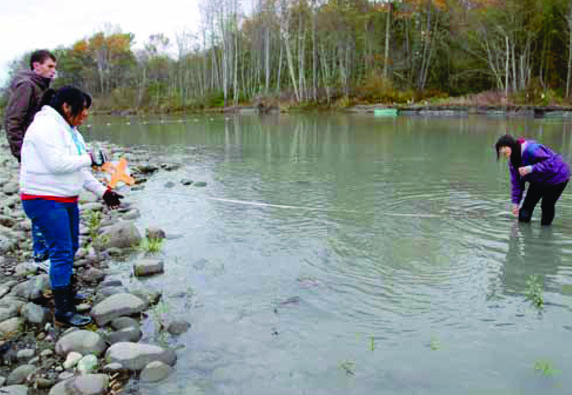
Fine words, but how do we go about it? Let’s start with something familiar, students working in groups. The work they will do is organized around vegetation mapping along a new path the city’s Bureau of Environmental Services (BES) is developing to connect two relatively natural areas within your school’s boundaries. The school has been notified about the project, and has been offered a BES liaison if teachers are interested in using the project to engage students in their community. (Interesting how such a sensible project is alienated from most people’s concept of school.)

You decide to contact BES and meet with its liaison. Let’s see how this might pan out. Hopefully, in a developmental way. The class will set up vegetation mapping as the thing they’ll do. You tell the liaison the class will all go out and map the site together. The liaison suggests BES does it with crews in particular areas. You’re not quite ready for this, so agree to start with the whole class working together, then build in groups as you become familiar with the work. The idea of groups does ring a bell, and you decide that, when you do organize the class this way, you will call them, “crews.” While you’re not working in groups yet, you have taken that first step – visualizing what it might be. That’s developmental.

The BES liaison asks you how much experience you have in mapping, and you reply, a little nervous, “None.” She seems pleased with that, and says that a good way to start is to lay out a simple grid, and use that to organize your mapping. Talking about doing this, you both decide to organize the grid with one axis parallel to the path. Then, you’ll label units on that axis with letters, and the other axis, stretching away from the path, with numbers. You and the liaison pause to talk about what the students will be doing within the grid. Then, at your request and her hint, you decide that, over the next two years, the class will move from the physical grid laid out with stakes and twine, to one designed with compasses and tape measures. The project covers two years, and you can continue working there after that, if you wish.

Now you feel comfortable enough to let your class in on the plan. You’ve also, with the liaison’s help, moved through Vygotsky’s zone of proximal development. You brought with you all of your previous knowledge and intuitions about learning, lined them up at the threshold for fully engaging this new way of teaching, then talking with and being quietly coached by the BES liaison, crossed the threshold (Vygotsky’s zone), and entered a world broadened by your new understandings, vision, potential, and capacity. You could have made this journey on your own, but it would take longer, and might have become discouraging. Instead, you entered this new place as if it had always been there. The catalyst was the liaison mentioning “crews,” and your previous experiences and understandings about the relationship between groups, the structure of work, and the dynamic which exists between the two. This new, incipient capacity is now part of who you are; one of the ways in which our professional lives evolve.

(The process was facilitated in part by your brain, its parietal lobes, prefrontal cortex, associative cortex, and limbic system. We talk about the structure which underlies teaching and learning – inductive:deductive, hierarchy of cognitive function, science concepts, science processes, etc. These are important to know, understand, and use. I say that it is also important to understand the brain’s role in these processes. The brain is the organ of learning; the brain working together in partnership with the rest of the body. All have evolved as a wonderful, autonomous learning machine. Don’t shy away from it.)

On to the project. When they hit the ground, and you observe them in action, groups seem more real and realistic to use. In the end, you decide on groups, or “crews;” next year, working with compass and tape measure. And you also begin to recognize the work’s potential for the mathematics embedded in it. You hadn’t considered mathematics until you saw the grid going up, students making measurements, and problems they had locating various trees and shrubs. When they finished laying out the grid, you began working with the embedded mathematics by having them calculate the surface area defined by one cell in the grid, then extrapolate from that to the project’s total surface area.

Next, you ask the groups to describe the plants in each cell of the matrix, and to map their location within the cell. As they work, they learn to identify plants, check their biologies, and recommend further plantings. You’re on your way. In future, your eyes will be on planting, with mapping the first step. Eventually, you might cross the threshold to restoration.

The following summer, when your mind is fully functioning again, you return to your transition from classroom teacher to classroom teacher who uses the world outside the school for context and curricula, and begin to see how it was like the transformation described by Lev Vygotsky that you’d read about years ago. You were ready for the new learning, had all of the pieces together in your mind, but needed a small catalyst to bring them together in a developmental whole. This, and the way students became more involved and invested in their learnings as they began to develop into effective work groups. Could they have also been entering, and moving through, Vygotsky’s zone of proximal development? Would they have experienced it if they had remained in the classroom? How do you find out?

Ultimately, you realize that you needed to recognize that zone first, and understand its potential. Understanding that, you think you can exploit its potential in any environment. And, you think you might explore this next year. How might this play out in a developmental way? How might you use this with your class? Your crews? Think about how you felt as you moved through the zone, and visualize how this might be felt by your students. These insights are as important to effective teaching as knowing and understanding content. It is that person moving through the zone that we are teaching. Not a name or classroom seat, but an actively developing, becoming, person. We play a huge role in those lives.

jimphoto3This is a regular feature by CLEARING “master teacher” Jim Martin that explores how environmental educators can help classroom teachers get away from the pressure to teach to the standardized tests,and how teachers can gain the confidence to go into the world outside of their classrooms for a substantial piece of their curricula. See the other installments here, or search Categories for “Jim Martin.”

Incorporating Traditional Ecological Knowledge into Geoscience Education

Incorporating Traditional Ecological Knowledge into Geoscience Education


It Takes a Community to Raise a Scientist:

A Case for Community-Inspired Research and Science Education in an Alaskan Native Community

By Nievita Bueno Watts and Wendy F. Smythe

The quote, “lt takes a village to raise a child,” is attributed to African tradition and carries over to Alaskan Native communities as well (Hall, 2000). Without the support of their community and outside resources, Alaska Native children have a difficult time entering the world of science. Yet increasing the awareness of science, as a tool to help a tribal community monitor and maintain the health of their environment, introduces conflicts and misconceptions in context of traditional cultural practices. Rural communities depend upon traditional food harvested from the environment such as fish, wild game, roots, and berries. In many Native Alaskan villages the health of the environment equals the health of the people (Garza, 2001) . Integrating science with culture in pre-college education is a challenge that requires sensitivity and persistence.

cmopThe Center for Coastal Margin Observation and Prediction (CMOP) is a multi-institutional, National Science Foundation (NSF) Science and Technology Center that takes an interdisciplinary approach to studying the region where the Columbia River empties into the Pacific Ocean. Two of CMOP’s focus areas are biogeochemical changes affecting the health of the coastal margin ecosystem, and socio-economic changes that might affect the lives of people who harvest and consume fish and shellfish.

The Columbia River waters touch the lives and livelihoods of many people, among them a large number of Pacific Northwest lndian tribes. These people depend on the natural and economic resources provided by the Columbia River. Native peoples from California through Alaska also depend on resources from their local rivers, and, currently, many tribes are developing-a workforce trained with scientific skills to manage their own natural resources in a way that is consistent with their traditional way of life. The relationship between Traditional Knowledge (TK) and practices, which are informed by centuries of observation, experimentation and carefully preserved oral records, and Western Science, which is deeply rooted in the philosophies and institutions of Europe, is often an uneasy one.

National progress is being made to open pathways for individuals from Native communities to Western Science higher education programs and back to the communities, where tribal members are empowered to evaluate and monitor the health of their environment. CMOP is part of this national movement. CMOP science is developing tools and techniques to observe and predict changes in the river to ocean system. CMOP education, an essential element of CMOB supports American lndian/Alaska Native students in pursuing academic and career pathways focusing on coastal margin sciences (Creen et al., 2013). One of CMOP’s initiatives is the CMOP- School Collaboratories (CSC) program.

CMOP-SCHOOL COLLABORATORIES

The CMOP-school Collaboratories (CSC) program is based on the idea that Science, Technology, Engineering, and Mathematics (STEM) pathway development requires an intensive and sustained effort to build relationships among science educators, students, school personnel, and the tribal community. The over-arching goal is to broaden participation in STEM disciplines. CMOP educators developed the CSC model that includes integration strategies for a community, development of appropriate lessons and field experiences and student action projects that connect local and traditional knowledge with science. Educational experiences are place- based, multi-disciplinary and culturally relevant. The objective is to open students’ minds to the reality of the need for scientists with many different world views and skill sets working together to address our planet’s pressing problems in a holistic manner. CMOP seeks to encourage these students to be part of that solution using both Traditional Knowledge and STEM disciplines.

The program encourages STEM education and promotes college preparatory awareness. This CSC program has three unique characteristics: it introduces coastal margin science as a relevant and viable field of employment; it integrates STEM learning with Traditional Knowledge; and, it invites family and community members to share science experiences. The example presented in this article describes a four-year program implemented in a small village in Southeast Alaska, 200 miles from the capital city of Juneau.

Figure 1: Students, scientists, a cultural expert. and a teacher with scientific equipment used to collect data from the river.

ALASKA NATIVE VILLAGE CASE STUDY

hydaburg sign1Wendy Smythe, a CMOP doctoral candidate and principal investigator for an NSF Enhancing Diversity in the Geosciences (OEDC) award, is an Alaska Native Haida. As she advanced in her own education, she wanted to share what she had learned with the youth of her tribal community, striving to do so with the blessing of the tribal Elders, and in a way that respected the Traditional Knowledge of the Elders. Dr Bueno Watts is a mentor and expert on broadening participation. She acts in an advisory capacity on this project.

The village school consists of l5 staff members and 50 K-l2 students, with the school experiencing high administration turnover rates. ln the first two years of the program we recruited non-native graduate students to participate in the CSC program. This effort provided them experience working in Native communities. ln the last two years we recruited Native American undergraduate interns to teach lessons, assist with field activities and provide students with the opportunity to become familiar with Native scientists [Figure 1]. lnterns formed part of the science team.


STEPS TO GAIN ENTREE TO A VILLAGE

The community must support the concept to integrate science education with traditional practices. Even for this Alaska Native (Smythe), the process of building consensus from the tribe and gaining approval from the Elders and school district for the program was a lengthy one. The first step required letters of support from school district and tribal leaders. The difference in geographical locations proved difficult until Smythe was able to secure an advocate in the tribe who spoke for her at tribal meetings. Face-to-face communications were more successful than distance communications. Persistence proved to be the key to achieving success at getting the consensus of community leaders and school officials’ support. This was the top lesson of l0 learned from this project (Table l).

Traveling to the school to set up the program is no small feat and requires extensive coordination of transportation and supplies. A typical trip requires a day-long plane ride, overnight stay in a nearby town to prepare and gather supplies, a three-hour ferry ride, acquisition of a rental truck and a one-hour drive. Accommodations must be made to board with community members.

The development of appropriate lessons for the curriculum engaged discussions with tribal Elders and community Ieaders on an individual basis. Elders agreed to provide videoed interviews and were given honoraria as a thank you for their participation. Smythe asked the Elders what scientists could do to help the community, what stories can be used, where students and educators could work in the community to avoid intruding on sacred sites, and what information should not be made public. Once Elders agreed to provide interviews and share stories, other community members began to speak about their lives and concerns. This included influence of boarding schools, Iife as it was in the past, and changes they would like to see within the community. This was a significant breakthrough.

Table l . Lessons Learned: ten things to consider when developing a science program with Native communities

1. Persistence is key.

2. Face to-face communication is vital and Lakes time.

3. A community advocate with influence and respect in the community is critical.

4. Consult with the Elders first. They have their finger on the pulse of the community and are the center “of the communication network. Nothing happens without their approval. Find out what it is okay to talk about and where your boundaries are and abide by them. lnclude funds for honorariums in your proposal. Elders’ time and knowledge is valuable and they should be compensated as experts.

5. Partner with individuals or groups, such as the Department of Natural Resources.

6. Find a relevant topic. Be flexible with your curriculum choice. It must reflect the needs and interests of the community and the abilities of the teacher you are working with.

7 . Be prepared, bring supplies with you. Ship items in advance if going to a remote location

8. Have the ability to provide individual instruction for students who need it to prepare projects and practice giving presentations.

9. lnvolve the community. Hold events in a community center to encourage everyone to attend.

10. View your involvement as a long-term investment in a committed community relationship.

fieldnotesNBln addition to the Elders, support was needed from a natural resources representative who functioned as a liaison between our group and the community members. This person’s role is found in most villages and could be the head of the Department of Natural Resources or a similar tribal agency that oversees fish, wildlife, and natural resources. This person provides a critical link between the natural environment and the community. The next step is to go in the field with the natural resources representative, science teachers, EIders, and interested students to identify a meaningful focus for the community. lnitially we focused the project with a scientist’s view of teaching microbiology and geology of mineral deposition in a river ecosystem. However, the team found community interest low and no enthusiasm for this project.

Upon our return to the village, the team and CMOP educators found the focus, almost by accident. We were intrigued by “boil water” notices posted both at the home in which we were staying and on the drinking fountains at the school: The students were all talking about water, as were the Elders. It was clear that the community cared about their water quality. The resulting community-inspired research educational plan was based on using aquatic invertebrate bioindicators as predictors of water quality (Adams, Vaughan & Hoffman Black, 2003). This student project combined science with community needs (Bueno Watts, 2011).


CURRICULUM LESSONS

The first classroom lessons addressed water cycle and watershed concepts (Wolftree, 2OO4), which were followed by a field lesson on aquatic invertebrates. Students sampled different locations in an effort to determine biodiversity and quantity of macroinvertebrates. While students were sitting at the river’s edge, the site was described in the students’ Alaska Native tongue by a cultural expert, and then an English translation was provided. This introduced the combination of culture and language into the science lesson.

students-dataloggerFigure 2: Students use data loggers to collect data on temperature, pH, and location.

The village water supply comes from a river that runs through the heart of the community. Thus, this river was our primary field site from which students collected water for chemical sampling and aquatic invertebrates using D-loop nets. Physical and chemical parameters of the river were collected using Vernier LabQuest hand-held data loggers. Students recorded data on turbidity, flow rate, temperature, pH, and pinpointed locations using CPS coordinates (Figure 2].

labquestAquatic invertebrate samples were sorted, classified, counted, recorded, and examined through stereoscopes back in the classroom. Water chemistry was determined by kits that measured concentrations of alkalinity, dissolved oxygen, iron, nitrate/nitrite, dissolved carbon dioxide, and phosphate.
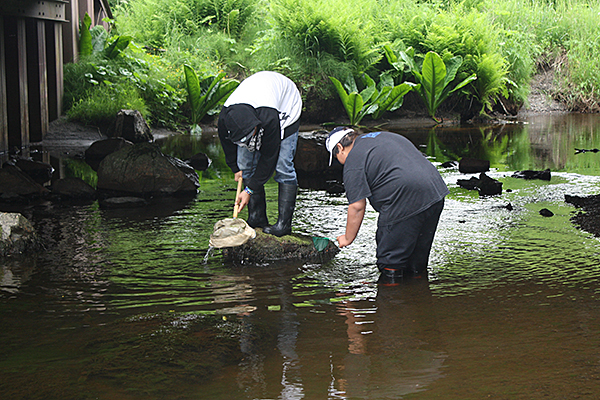
Microbiology assessments were conducted in an effort to detect fecal coliform (using m_FC Agar plates). Students tested water from an estuary, river, drinking fountain, and toilet. Results from estuarine waters showed a high number of fecal coliform, indicating that a more thorough investigation was warranted While fecal coliform are non-disease causing microorganisms, they originate in the intestinal tract, the same place as disease causing bacteria, and so their presence is a bioindicator of the presence of human or animal wastes (Figure 3).

net-collectionStudents learned that the “dirty water” they observed in the river was actually the result of a natural process of acidic muskeg fluids dissolving iron minerals in the bedrock, no health danger. The real health threat was in the estuarine shellfish waters. Students shared all of their results with their families, after which community members began to approach the CMOP science team with questions about the quality of their drinking water. The community was relieved to find that the combined results of aquatic invertebrate counts and water chemistry indicated that the water flowing through their town was healthy. However they were concerned about the potential contamination as indicated by fecal coliform counts in the local estuary where shellfish were traditionally harvested.

ln the second year, a curriculum on oceanography developed by another STC, the Center for Microbial Oceanography: Research and Education (C-MORE) was introduced (Bruno, Wiener, Kimura & Kimura, 2011). Oceanography lessons focused on water density as a function of salinity and temperature, ocean currents, phytoplankton, and ocean acidification, all areas of research at CMOP. Additional lessons used local shipworms, a burrowing mollusk known to the community, as a marine bioindicator (CMOP Education, 2013). Students continued to conduct bioassessments of local rivers and coastal marine waters.

Hydaburg1Figure 3: Students sort and count aquatic invertebrates as a bioindicator of river health.

Students used teleconferencing technology to participate in scanning electron microscope (SEM) session with a scientist in Oregon who had their samples of aquatic invertebrates. Students showcased their experiments during parent day. Five students (l0%) had parents and/or siblings who attended the event.

SHARING KNOWLEDGE

As a reward for participation in the science program, two students were chosen to attend the American lndian Science and Engineering Society (AISES) 2009 conference in Oregon. Travel expenses were shared between the school, CSC program, and the tribe. ln the following three years an additional ten students attended the AISES conference and presented seven science research posters in New Mexico. Minnesota and Alaska. ln 2012, one student won 3rd place for her shipworm poster presentation (Figure 5). These conference presentations enabled some students to take their first trip out of Alaska.

ln May 20ll the first Science Symposium for grades K-12 allowed students to share their science projects with parents, Elders, and tribal community members. Both students and teachers were prepared on how to do a science fair project. Work with students had to be accomplished on a one-on-one basis, and members of the team were paired with students to assist with completing projects and polishing presentations. Students were not accustomed to speaking publicly, so this practice was a critical step.

The event was held at the local community center, which encouraged Elders and other community members to attend.

Elders requested a public education opportunity to teach the community about watersheds and the effects of logging. Our team incorporated this request into the science symposium. Students led this project by constructing a 5D model of the watershed for display. People could simulate rainfall, see how land use affects runoff and make runoff to river estuary connections. Scientists conducted hands-on demonstrations related to shipworms, local geology, ocean acidification and deepsea research. Language and culture booths were also included. During the symposium, a video of one of the interviews we had conducted with an Elder was shown as a memorial to his passing. The symposium was considered a huge success and was attended by 35 students and 50 community members.


Hydaburg4COMMUNITY RESPONSE

The CSC program garnered results that could not have been predicted at the outset. For example, the tribe requested our input when deciding which students should attend a tribal leadership conference and summer camp. Three student interns participated in a collaborative project with the tribe to conduct bio-assessment studies of local rivers and a key sockeye breeding lake. lnterns operated a remotely operated underwater vehicle (ROV) for data collection, resulting in video documentation of the salmon habitat. ln addition to the bio-assessment, the interns conducted interviews with Elders about the rivers in the monitoring project. The results of this study were used to stop logging around sockeye spawning habitat and to ban the harvest of shellfish from contaminated parts of the estuary. Now the tribe is monitoring rivers on its own. ln the near future CMOP plans to install a sensor that can be monitored remotely, and to train people to read and interpret the data.

CONCLUSION

Community-inspired research often produces a ripple effect of unforeseen results. ln this case, inclusion of Elders in the design and implementation of the project produced large scale buy-in from community members at all age levels. Consequently, in a village where traditionally students did not think about education beyond high school, we have had two students attend college, two students attend trade school, five students receive scholarships, and eight Native interns conducting science or science education in the community. And, given the low numbers of Alaska Natives pursuing careers in science, we find those numbers to be remarkable.

REFERENCES

Adams, J., Vaughan, M., & Hoffman Black, S. (200i). Stream Bugs as Biomonitors: A Guide to Pacific Northwest Macroinvertebrate Monitoring and Identification. The Xerces Society. Available from: http://www.xerces.org/identification-guides/#

Bruno, B. C., Wiener, C., Kimura, A., & Kimura, R. (2011). Ocean FEST: Families exploring science together. Journal of Geoscience Education, 59, 132.1.

Bueno Watts, N. (20,1 1). Broadening the participation of Native Americans in Earth Science. (Doctoral dissertation).

Retrieved from Pro-Quest. UMI Number: 3466860. URL http ://repository.asu.edu/items / 9 438

Center for Coastal Margin Observation & Prediction. QO13). Shipworm lesson URL http://www.stccmop”org/ education/k1 2/geoscience/shipworms

Carza, D. (200.l). Alaska Natives assessing the health of their environment. lnt J Circumpolar Health. 6O@):a79-g6.

Creen, V., Bueno Watts, N., Wegner, K., Thompson, M., Johnson, A., Peterson, T., & Baptista, A. (201i). Coastal Margin Science and Education in the Era of Collaboratories. Current: The Journal of Marine Education. 28(3).

Hall, M. (2000). Facilitating a Natural Way: The Native American Approach to Education. Creating o Community of Learners: Using the Teacher os Facilitator Model. National Dropout Prevention Center. URL http://www. n iylp.org/articles/Facilitating-a-Natural-Way.pdf

Wolftree, lnc. (200a). Ecology Field Cuide: A Cuide to Wolftree’s Watershed Science Education Program, 5th Edition. Beavercreek, OR: Wolftree, lnc. URL http://www. beoutside.org/PUBLICATIONS/EFCEnglish.pdf


ADDITIONAL RESOURCES

The educational resources of CMOP are available on their website : U R L http ://www. stccm o p. o rg / education / kl 2


ACKNOWLEDGMENTS

CMOP is funded by NSF through cooperative agreement OCE- 0424602. Smythe was also supported by NSF grant CEO-I034611. We would like to thank Dr. Margo Haygood, Carolyn Sheehan, and Meghan Betcher for their assistance and guidance with the shipworm project. We would like to thank the Elders and HCA for their guidance, advice and encouragement throughout this program

Nievita Bueno Watts, Pn.D. is a geologist, science educator, and Director of Academic programs at the NSF Science and Technology Center for Coastal Margin Observation & Prediction (CMOP). She conducts research on broadening the participation of underrepresented minorities in the sciences and serves on the Board of Directors of the Geoscience Alliance, a national organization dedicated to building pathways for Native American participation in the Earth Sciences.

Wendy F. Smythe is an Alaska Native from the Haida tribe and a Ph.D. candidate at the NSF Science and Technology Center for Coastal Margin Observation & Prediction. She runs a geoscience education program within her tribal community in Southeast Alaska focused on the incorporation of Traditional Knowledge into STEM disciplines.

Greening the Language Arts

Greening the Language Arts

AtoZillus

Considering Sustainability Outside of the Science Classroom

by Lauren G. McClanahan
Western Washington University

Humanity is exalted not because we are so far above other living creatures, but because knowing them well elevates the very concept of life.
—E.O. Wilson

Given the titles most often studied in secondary literature classes, one could infer that critical topics such as race, gender, class and culture reigned supreme in the 20th and 21st centuries. From the classics to current young adult fiction, students are transported to worlds where characters are acting in and around specific settings, but the settings are not necessarily the star attraction. The settings provide context, but only as backdrops for the main characters on stage. According to Glotfelty (1996), upon reading the current canon, “you would never suspect that the earth’s life support systems were under stress. Indeed, you might never know that there was an earth at all” (p. xvi). In secondary literature classrooms, where students study how ethics impact their moral and spiritual lives, “we have fairly well ignored our impact on the natural world or our relationships with it” (Bruce, 2011, p. 13).

The concept of relationships is key. Closely examine any middle or high school curriculum, and you will readily find many topics being formally studied: chemistry, algebra, civics, literature and the like. However, what you won’t readily find is any meaningful connection between them, as often they are treated as separate entities, existing in a vacuum, not simultaneously acting or being acted upon. As educators, we would do well to heed Barry Commoner’s first law of ecology, which states, “Everything is connected to everything else.” The disciplines under study in our schools should not, according to Cheryll Glotfelty, “float above the material world in aesthetic ether,” but rather they must interact, playing a part in an “immensely complex global system, in which energy, matter and ideas interact” (1996, p. xix, emphasis in original).

Ignoring our impact on the natural world occurs at our own peril. Scan any headline and you are sure to find news of storms of increasing severity, toxic oil spills, and the ravages of mining, drought, flooding and famine. Secondary English teachers must come to terms with the fact that we are beginning (re: have already begun) to reach our environmental limits on this planet, “a time when the consequences of human actions are damaging the planet’s basic life support systems” (Glotfelty, 1996, p. xx).

According to Ecological literacy expert David W. Orr, “Sustainability is about the terms and conditions of human survival, and yet we still educate at all levels as if no such crisis existed” (1992, p. 83). Orr goes on to state, “all education is environmental education” both by inclusion and exclusion (1992, p. 90). By what we teach or don’t teach, we model to our students that they are “a part or apart from” the natural world (Orr, 1992, p. 12). What this implicitly tells our English Language Arts students, which they are receiving in most cases through exclusion, is that “our ecological relationship with our habitat is either a matter of little importance or something only relevant to ‘science geeks’” (Bruce, 2011, p. 13). According to Glotfelty, “as environmental problems compound, work as usual [in the English classroom] seems unconscionably frivolous. If we’re not part of the solution, we’re part of the problem” (1996, p. xxi).

But aren’t issues of the natural world, the earth and its systems, best left to the domains of science? Why must we feel compelled to study the natural world in the English Language Arts classroom? In this paper, I will attempt to offer a rationale for the inclusion of the environment into the ELA classroom, and offer a plea to the profession that the natural world (and, by extension, the constructed world) is definitely under our purview, and that as teachers of English and composition, we are morally obligated to cast the earth as a main character, for only out of action can environmental justice take root and grow.

What English Teachers Do
As English Language Arts teachers, we may feel that the issues of resource depletion and increasing toxicity are beyond our prescribed scope and sequence. Yet, I would suggest that it is well within our capacity to cross over into territory once claimed exclusively by the sciences—indeed, it is our moral obligation as teachers. According to Glotfelty (2006), we must consider “nature not just as the stage upon which the human story is acted out, but as an actor in the drama” (p. xxi and we humans as “ecologically imbedded rather than immune” (Bruce, 2011, p. 14). Because English Language Arts teachers specialize in questions of “vision, values, ethical understanding, meaning, point of view, tradition, imagination, culture, language and literacy” (Bruce, 2011, p. 14), we can easily cross the arbitrary and human-constructed boundary into the sciences. Questions of vision, values, ethics and culture are, according to Buell (2005), “at least as fundamental as scientific research, technological know-how, and legislative regulation” (p. 5).

Moreover, the English Language Arts perspective “softens” the sciences where discussions of environmental degradation normally occur. One popular point of entry is Aldo Leopold’s (1966) concept of a “land ethic,” in which he states, “A thing is right when it tends to preserve the integrity, stability and beauty of the biotic community [soils, water, plants and animals]. It is wrong when it tends otherwise” (p. 262). His statement is ecocentric (nature-centered) as opposed to anthropocentric (human-centered), and here is where the English Language Arts can find entrée into the sciences. By studying literature and composition in ways that notice both human and non-human species, we promote empathy for all, including soil, water, and air, upon which all life depends (Bruce, 2011). By tackling issues of environmental degradation (or, conversely, celebration), English Language Arts can focus on how humans are affected by human action and on how the whole of biota (including, but not favoring, humans) is affected.

Another natural cross-over point of English Language Arts into the sciences is through the discipline of ecology. According to Dobrin & Weisser (2002), ecology can be defined as “a science that evolved specifically to study the relationships between organisms and their surrounding environment” (p. 9). They define the relatively new field of ecocomposition as a study of relationships: “Relationships between individual writers and their surrounding environments, relationships between writers and texts, relationships between texts and culture, between ideology and discourse, between language and the world” (p. 9). Here, Dobrin and Weisser are explicit in their use of the term “environment,” in that it is more encompassing than merely “nature.” “We mean all environments: classroom environments, political environments, electronic environments, ideological environments, historical environments, economic environments, natural environments” (Dobrin & Weisser, 2002, p. 9). As English Language Arts teachers, we deal daily in the study of discourse (speaking, writing and thinking), and that means studying the relationship between discourse and any site where discourse exists, be it natural, constructed, or imaginary.

Ecocomposition, Ecoliteracy and the “Greening” of English
The curricular responsibilities of English Language Arts teachers can be broken down into two main categories: reading and writing. They can be further dissected into reading different authors and genres, and writing for different audiences and purposes. Critical theories such as race, gender, class and culture have dominated the post-modern English Language Arts curriculum. Two new curricular approaches suggest that place be added as a new critical category. The first is “ecocriticism,” defined as “the study of the relationship between literature and the physical environment” (Glotfelty, 1996, p. xviii). Glotfelty (1996) explains that “Just as feminist criticism examines language and literature from a gender-conscious perspective, and Marxist criticism brings an awareness of modes of production and economic class to its reading of texts, ecocriticism takes an earth-centered approach to literary studies” (p. xviii). Questions such as “How is nature represented in this sonnet?” and “What role does the physical setting play in the plot of this novel” inform the focus of ecocriticism. Whereas ecocriticism is concerned primarily with the interpretation (i.e. reading) of text, a second theory, ecocomposition, is concerned primarily with the production (i.e. writing) of text (Dobrin & Weisser, 2002), understood to include not only the printed word, but also visual and natural texts (or contexts). In this sense, the concept of language (discourse) is broadened, so that “language does not exist outside of nature,” and that language (discourse) is “the most powerful, indeed perhaps the only tool for social and political change” (Dobrin & Weisser, 2002, p. 26). Indeed, following this line of thinking, writing = power.

But how could we best frame a curriculum based upon these two new critical theories of reading (ecocriticism) and writing (ecocomposition)? The broader concept of ecological literacy might be useful for helping to locate nature in the English Language Arts. Orr (1992) suggests that, “Literacy is the ability to read. Numeracy is the ability to count. Ecological literacy…is the ability to ask, ‘what then’” (p. 85)? “What then?” would, according to Orr, be an appropriate question to ask “before the last rainforests disappear, before the growth economy consumes itself into oblivion, and before we have warmed our planet intolerably” (p. 85). One could just as easily ask, “Why should I care?” Or, “How does this affect me?” The English Language Arts skills of close observation and making connections must be brought into practice if we are to adopt an ecological literacy framework. To help us construct that framework, a framework that asks us to step outside of our minds and out into nature, Orr (1992) suggests six principles, or frames of mind, that we would do well to introduce to our students

“[A]ll education is environmental education” (p. 90).
“[E]nvironmental issues are complex and cannot be understood through a single discipline or department” (p. 90).
“[F]or inhabitants, education occurs in part as a dialogue with a place and has the characteristics of good conversation” (p. 90).
“[T]he way education occurs is as important as its content” (p. 91).
“[E]xperience in the natural world is both an essential part of understanding the environment, and conducive to good thinking” (p. 91).
“[E]ducation relevant to the challenge of building a sustainable society will enhance the learner’s competence with natural systems” (p. 92).
Although all of Orr’s Principles are useful guides towards an ecological English Language Arts curriculum, the first two are most directly and easily applied through a place-based pedagogical approach.

The Power of Place: Place-Based Writing
A place-based education incorporates the concept of “place” or “environment” as an integrating context across multiple disciplines (Sobel, 2004). Place-based education can be characterized by “interdisciplinary learning, team-teaching, hands-on experiences that center on problem-solving projects, learner-centered education that adapts to students’ individual skills and abilities, and the exploration of the local community and natural surroundings” (Bruce, 2011, p. 21). We can use our local places, environmental issues (and all issues are environmental), and peoples’ natural love of nature, or “biophilia” (Wilson, 1984) “…to improve English education, literacy, and citizenship” (Lundahl, 2011, p. 44). Keeping in mind Orr’s (1992) first two principles of ecological literacy, we can see how a place-based pedagogy is a natural fit for the English Language Arts.

Orr’s (1992) first principle of ecological literacy, that “All education is environmental education” (p. 90) may at first seem hyperbolic, but is indeed accurate. When combined with the pedagogy of place-based education, this principle takes flight. According to Sobel (2004), place-based education:

…is the process of using the local community and environment as a starting point to teach concepts in language arts…and other subjects across the curriculum. Emphasizing hands-on, real-world learning experiences, this approach to education increases academic achievement, helps students develop stronger ties to their community, enhances students’ appreciation for the natural world, and creates a heightened commitment to serving as active, contributing citizens. (p. 7)

Sobel’s (1992) emphasis on the cross-curricular nature of place-based education highlights Orr’s (1992) second principle of ecological literacy, which states that, “environmental issues are complex and cannot be understood through a single discipline or department” (p. 90). By using local places as sites for linking the arts and the sciences, students make connections, and when students make connections to a place, that place becomes more personal. Place-based writing projects encourage students to more fully commit to a topic, which can allow for a more authentic writing experience. Indeed, “meaningful writing both grows out of and reflects back on a connection with place” (Jacobs, 2011, p. 51). By providing our students with unique, authentic experiences in their own communities, we can begin to harness the elusive quality of “voice,” along with providing authentic reasons and audiences for writing.

Heeding Student Voice
Taking a place-based, eco-literacy approach to the language arts can be a weighty, sometimes depressing task. The new term “solastalgia” describes the “sense of loss people feel when they see changes to local environments as harmful” (Bluestone, 2011, World Changing, p. 449). Reading the headlines today, students must be concerned with a wide array of environmental issues, some which affect them directly (increasing gasoline prices, local flooding) and some of which affect them indirectly (the melting of the polar ice caps). In order to avoid this feeling of eco-nihilism, Owens (2001) suggests that:

Educators have a responsibility to help students resist the cynicism and hyperbordom of contemporary consumer culture…[we must] give them opportunities to testify about what is wrong and what is good about those worlds…[and] provide them with a vocabulary with which they might critique their environments and develop an awareness of what exactly it is…that can make a person miserable, bored, angry, tired, scared, depressed. (p. 69)

This concept of testimony fits nicely into the more personal structure of place-based writing. As Freire (2000) states, the purpose of education is for students to “develop their power to perceive critically the way they exist in the world with which and in which they find themselves” (p. 83, emphasis in original). To bring about lasting change, both reflection and action are needed; the word and the world are inseparable. Personal experience can often be considered the best evidence when building a rhetorical argument. According to Matalene (2000):

Most students quickly learn that the easiest, safest, least risky method is to keep private and public separate. This seems to me seriously wrong…we should be encouraging many voices, not turning them all into one. Surely, teaching students that they have the right and the responsibility to add their own unique voices to the American conversation is why we teach writing anyway. Surely, we want to strengthen their individual, private voices so that one day they may speak, not just listen, and act, not just watch. (pp. 188-9)

Matalene articulates the fundamental rationale for encouraging students to write from their experience, “It honors their voice, encourages their efforts, and, ultimately, follows Freire’s idea of praxis from reflection to action, to make better citizens” (Jacobs, 2011, p. 51). Certainly, the uniqueness of experience + place = voice. Additionally, when framed within a place-based, ecocompositional curriculum, students are afforded more authentic reasons to read, write, think and take action.

Response to any crisis is often technological, and with the goal of solving the immediate problem. But what if the response to how climate change is affecting the lives of middle and high school students was more reflective in nature, and focused on writing and thinking specifically about place? The following section examines a specific assignment that asked students to look closely at their unique communities and tell their own stories, through words and photos, of how climate change has impacted their lives. This assignment is an invitation to think about something that these students earnestly need to think about, something that is troubling to them, and to, “use English class and writing as a vehicle for discovery” (Ruggieri, 2000, p. 53).

First Person Singular Project: The Marriage of Ecocomposition and Place-Based Education
In my experience as a middle school Language Arts teacher, and now a teacher educator, I often come to the conclusion that my students learn best from, a) studying topics that are of interest to them, and, b) from one another. Thus, I created the First Person Singular project, where I ask middle and high school students to use text (both written and visual, through the use of photographs) to tell a story, in this case, the story of how climate change is having a direct affect on their lived experience. It is my contention that teens (and often, adults) will listen more closely if a story of such immense consequence as the degradation of our planet is told through the eyes of peers.

To begin, I ask students to photograph evidence of climate change that they may see in their own neighborhoods. In Kwigillingok, Alaska, this means photographing the damaging effects of the melting permafrost beneath their homes. In Tsetserleg, Mongolia, this meant photographing evidence of unusually harsh winters. In Burlington, Vermont, this meant photographing local flood damage due to unusually heavy rains. By locating problems in specific places, the project takes on an immediacy and an authenticity that can only be achieved through a place-based pedagogy.

After students have collected their photographic evidence, they are asked to write about what they photographed, and why they think it is a good example of how climate change is affecting their lives. In nearly every instance, the physical manifestation of a changing climate is deeply personal. In Alaska, for example, students wrote about how their homes were sinking due to the melting of the permafrost beneath their feet. Their photos and their accompanying writing illustrated homes that had to be propped up by concrete cinder blocks to remain somewhat level. One student’s essay explained how his community has already had to move once due to shoreline erosion, and he did not want to have to move again. “We can’t leave,” he eloquently stated, “but we can’t stay, either.” In Vermont, climate change looks quite different. Two months before I worked with these students, a hurricane swept up the East Coast, leaving Burlington soggy amidst floodwaters not normally seen so far inland. Several students chose to write about how the destruction of the city’s bike path impacted them. Since bicycles are their primary mode of transportation, they felt cut off from the world when the floodwaters tore apart the path. These stories are perfect examples of how the ecological relationships between humans and their surrounding environments are dependent and symbiotic. Through discourse (in this case, writing) these students were able to shape their experiences, using the power of the word in naming the world around them, and their experiences in it.

After photographs have been taken and words have been written, I ask students to read their writing aloud, into a digital recorder, so that their voice (quite literally) can be heard. I believe this to be the most powerful aspect of the entire First Person Singular project—the platform it provides to literally hear students’ voices. When combined with the photographs, the audience begins to gain a sense of who these students are, as individuals, and why what matters to them should matter to us as well.

All elements of The First Person Singular project (photos, writing, and audio) are then entered into a video production program (in this case, iMovie) to be made into a digital story. For the purposes of the First Person Singular project, digital storytelling can be defined as a multimodal activity combining written, oral, visual and gestural symbols into digital representations, such as videos, short films, feature-length films, or photo montages. Thus, digital storytelling is an ever-evolving method of artistic and academic expression, often told in the first-person narrative form (hence the name of the project). Content is most often drawn from personal experiences that are deemed important by the students involved in their creation. Through this project, students are reminded that the source of their power lies in their own story, in the earth, and the relationship between the two. Hence, students must learn to tap into and trust the truth of their own lived experiences. An example of “First Person Singular: Alaska” can be seen here:

Once students have engaged in a project that has affected them personally, they might feel the urge to take on an issue of local importance—the pollution of their local watershed, the air quality in their particular neighborhood, or the safety of their local food supply. Any number of social-justice themed projects cold be similarly told, using the combination of text and photographs, to illustrate how everything is connected to everything else, and to create a civic competence that tends to be lacking in our schools.[FL1] One recent example is the publication of “Dream fields: A peek into the world of migrant youth.” In this book, migrant youth from Washington state share their stories, through words and photos, of the conditions they find working in the damp fields of Washington’s commercial tulip industry.

Toward an Environmental Justice
As teachers, regardless of grade level or discipline, we must constantly ask ourselves, “Why?” Why do we do what we do, and what results do we hope to see because of it? The answer, I believe, lies within our belief that it is our moral and ethical obligation to do so, to model for the citizens of tomorrow how to think creatively, holistically and put their learning into practice. We want our students to eventually outgrow their need for us, to trust their own experiences as valid, and continually learn from them. Personally, I would add that I do what I do because of my own biophilia, or love of life—all life—in its myriad forms. I want my young daughter to have the same ecological opportunities that I have had—to come face-to-face with massive glaciers, to share a meal with a nomadic Mongolian family, to see the Milky Way on a clear, cool night, to experience autumn in New England, to hear an orca breathing. And I don’t just stop at my own daughter—I want every child, regardless of place—to have the opportunity to experience environments and cultures that are different from their own, before those environments and cultures disappear.

So, where do the English Language Arts fit in? Why the emphasis on “greening” the humanities? According to Jensen, “Far too many of us have forgotten, or never knew, that words can be used as weapons in service of our communities. Far too many of us have forgotten, or never knew, that words should be used as weapons in service of our communities” (2012). Some say that literature should be apolitical, and that the English classroom (or any classroom, for that matter) is not the place for politics. Well, thank goodness Rachel Carson wasn’t apolitical. Thank goodness Mark Twain wasn’t apolitical. Jensen (2012) states it well:

I would not be who I am and I would not write what I write without having learned from some of my elders who refused to believe that writers should or can be apolitical or neutral or objective. The truth is most important, they said. It is more important than money. It is more important than fame. It is more important than your career. It’s more important than your preconceptions. Follow the truth—follow the words and ideas—wherever they lead. Words matter, they said. Art matters. Literature matters. Words and art and literature can change lives, and can change history. Make sure that your words and your art and your literature move people individually and collectively in the direction of justice and sustainability. They said literature that supports capitalism is immoral. A literature that supports patriarchy is immoral. A literature that does not resist oppression is immoral. But you can help to create a literature of morality and resistance, as each new generation must create this literature, with the help of all those generations who came before, holding their hands for support, just as those who come after will need to hold yours.

Lauren G. McClanahan holds a Ph.D. in English Education and is currently Professor of Secondary Education at Woodring College of Education, Western Washington University in Bellingham, WA. As a former middle school teacher, her interests include how student voice can be used to inform audiences about how climate change is affecting those in ecologically sensitive areas. Her series of “First Person Singular” video projects include students in Alaska, Vermont, and Mongolia.

Place-based Education

Place-based Education

USFWS Spring Creek NFH

15 Ways to Know You’re Connected to a Place

What Does “Connecting to a Place” Really Mean?

By Cliff Knapp

Environmental and place-based educators frequently refer to a goal they set for their students — connecting or reconnecting them to a place. What does this really mean? How will I know when my students are connected to that place? What kinds of behaviors should I look for to determine if my students have reached that goal? The following observable outcomes will serve to indicate that my students have connected or reconnected to a particular place:

1. When they can orient themselves in that place according to the four cardinal directions and the elevations above sea level.

2. When they can tell a short story about the history of that place.

3. When they can identify and call some of the human and non-human residents of that place by name and know something about their life histories.

4. When they know which plants and animals found there are native to that place and which ones humans have introduced.

5. When they know which animals stay there all year round and which migrate in and out of that place.

6. When they can name some of the natural resources in that place that are useful to humans.

7. When they frequently return to that place because they want to spend more time there.

8. When they feel inspired to write poems, essays or stories about the benefits they receive by being in that place.

9. When they know the origins of some of the human-made objects found in that place.

10. When they can comfortably spend time in that place using healthy and safe practices.

11. When they know what kinds of rocks and soil are found in that place.

12. When they know where a drop of rain would travel over the land surface as it joins a body of water.

13. When they can describe some of the weather and climate patterns that affect that place.

14. When they know some of the problems and issues faced by the people who occupy that place.

15. When they can describe some of the movements and changes of the sun, moon, stars and planets throughout the year.


Cliff Knapp has been involved with COEO since the 1980s running graduate courses though Northern Illinois University. He is a long-serving member of the Association for Experiential Education and author of many books and articles on a wide array of outdoor education topics centering on community and nature themes. This article originally appeared in Pathways: The Ontario Journal of Outdoor Education, Fall 2010, 23(1).