by editor | Oct 15, 2013 | K-12 Classroom Resources
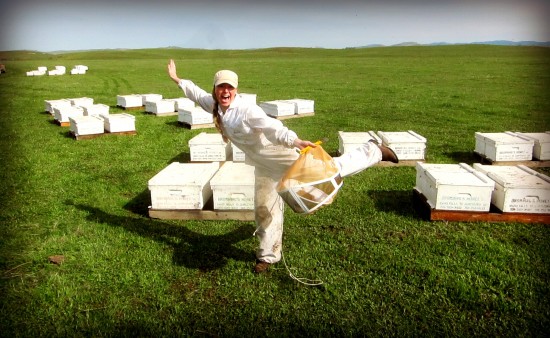
Sarah Red-Laird lives and breathes honeybees.
by Katie Boehnlein
 arah Red-Laird, or “Bee Girl” is an Ashland, OR native who says that she has been fascinated with honeybees since her early childhood. On the playground in elementary school, she would pick up bees and pet them to impress other kids. Her aunt’s partner, a beekeeper, was also a major influence on Sarah, giving her honeycomb to taste during harvest season.
“There’s nothing like eating fresh honeycomb as a toddler to sell you on bees for life!” Sarah recalls.
Many years later, the Davidson Honors Program at University of Montana gave Sarah the opportunity to fully investigate her childhood fascination. Allowed to write on any topic of her choice for her senior thesis, she chose beekeeping and Colony Collapse Disorder. Over the course of this project, she learned beekeeping skills in the field and researched in the university’s lab. She caught on quickly and after she had finished the project, she was able to present her findings at the National Conference on Undergraduate Research to a standing room only audience and was promptly offered a research position with University of Montana.

Sarah showing some of her young students a frame filled with bees. Their curiosity and wonder is evident!
When Sarah landed back in Ashland on what she thought would be a short hiatus, her skills as a beekeeper were immediately sought after. She was asked to help community members set up hives and speak in classrooms as well as to the larger community. Hence, “Bee Girl” was born. Today, Sarah’s work with apiary-based education spans not only many cities and counties in Oregon, but world-wide as well. Her nonprofit, which she also calls “Bee Girl,” (http://www.beegirl.org/) still works locally, presenting at individual classrooms and to the broader public, and she has honed an presentation engaging all five senses. She engrosses her audience in the “world of the honeybee” by bringing honey to taste, honeycomb to feel, and in the height of bee season, a live observation hive to see and hear. She also brings costumes along for kids to dress up as bees- antennae, crowns, tutus, wings, stingers, and all. Sarah has traveled to through Oregon and to the East Coast twice with her presentation, will be in Louisiana and Kentucky in 2014, and even hopes to travel to Kenya soon to speak there. Sarah’s reputation spans to far reaches, as she heads up the Kids and Bees Program for the American Beekeeping Federation (http://www.abfnet.org/displaycommon.cfm?an=1&subarticlenbr=16) and hopes to hold a position as US Ambassador for the International Bee Research Association.
Oregon is lucky to have Sarah as their local “Bee Girl” and she has proven herself as quite the mentor in Ashland. Ryan King, another one of our “Honeybee Heroes,” sought out Sarah when he began the Ashland Apiary project as part of his graduate studies. When he realized that he had a “walking beecyclopedia” in town, they began their fantastic partnership of engaging the Ashland community, especially students, in the art of beekeeping. For more information about the beginnings of the Ashland Apiary Project, you can read Ryan’s “Honeybee Heroes” profile (https://clearingmagazine.org/archives/8599). Since Ryan has recently graduated from Southern Oregon University, Sarah now acts as co-director of the SOU Beekeeping Club, “teaching students not only how to keep bees but how to become advocates for bees and sustainable farming.” She leads meetings once per week on campus and coordinates field learning and working field trips to local bee-related sites. In the future, Sarah hopes to teach beekeeping courses in the spring and fall through the SOU Sustainability Center (http://www.sou.edu/sustainable/center-for-sustainability/index.html).
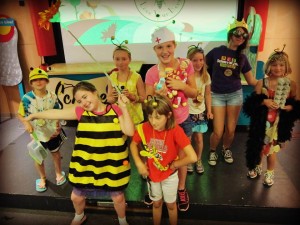
Some of Sarah’s students all dressed up and rockin out as bees as part of the Buzz About Bees summer camp at ScienceWorks Hands-On Museum in Ashland.
It is evident that Sarah Red-Laird lives and breathes the world of the honeybee. Her passion for educating students of all ages about such an inspiring species is evident and tangible. A student in one of her beekeeping classes puts it this way: “Thank you so much for leading us to care for our bees. You are a wonderful teacher, and your love for the bees shines through everything you do.” As is the case with many educators who love honeybees, one of Sarah’s main goals in her work is to dispel fear surrounding bees. She sees her youngest students as the key to reversing this social fear. “That is why I do what I do,” she says, “to inspire a sense of fascination, wonder, and love at a young age, that I hope turns to understanding or even advocacy as these kids grow into our leaders of tomorrow.” She also sees the need for our society to educate a generation of citizens that understand the complexity of our modern food system and question its flaws. When asked why pollinator education is so important, she answered, “If you can capture the heart and imagination of a child, and release the sweetness and light of the honeybee in them- they will never forget it. By saving the bee, they will save our world.” Bee-autiful. Thank you, Sarah, for being an inspiring leader in the field of pollinator education!
You can learn more about Sarah and her passion for beekeeping in this installment of “Immense Possibilities,” featuring Sarah (http://www.immensepossibilities.org/ipr-podcasts/bee-keeping/).
Katie Boehnlein is a writer/intern for CLEARING magazine and teaching assistant at Catlin Gabel School in Portland, Oregon. She enjoys writing about the endless expressions of place-based education, inspired by so many creative teachers. Katie blogs about her own ecological and urban adventures at “In the Midst,” which can be found at kboehnlein.wordpress.com.
by editor | Oct 9, 2013 | K-12 Classroom Resources
by Michael D. Barton
CLEARING Associate Editor
Dawn Publications (Facebook/Twitter/blog) has three new children’s nature books out for ages 3-8, and I am delighted to not only have copies for my children, but to share with you how awesome they are. This publisher does wonderfully how books about nature for kids should be done: entertaining, beautiful, and engaging. They are not dry, simple lists of facts that would lose the attention of any kid (or adult).
Over in a River

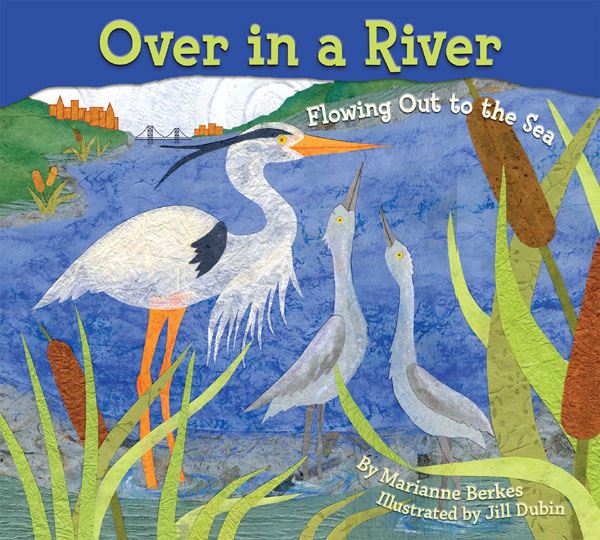
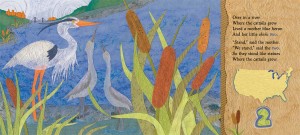
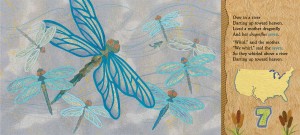
Continuing with their “Over in the…” series (I shared about Over in the Forest previously), Over in a River: Flowing Out to the Sea by Marianne Berkes with lively cut paper illustrations by Jill Dubin, serves as an introduction to rivers in North America and the animals that call them home. Ten rivers are covered, each page showing the river’s place on our continent. Following the classic rhythm “Over in the Meadow,” kids will paddle with manatees in Florida, splash with salmon in the Pacific Northwest, and gnaw with beavers in the Southwest. They will learn what to call the young of the ten animals throughout the book, and as the paddle, splash, and gnaw above indicates, something that each animal does to survive. And as expected with books from Dawn Publications, there is more detailed information about the animals and rivers at the end for parents and educators to use for learning opportunities.
Sample Pages (Double-click to see full-sized):
———————————————————————————-
Jo MacDonald Hiked in the Woods
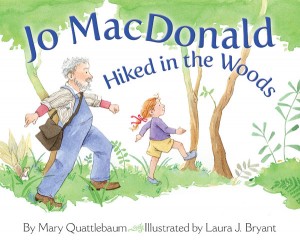
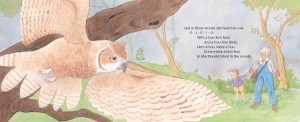
Perhaps you want to get out of the water and on drier land. Mary Quattlebaum offers her third in the Jo MacDonald series: Jo Macdonald Hiked in the Woods. Jo goes along with her grandfather for a walk in the woods on his farm, and discovers a world of sound. Woodpeckers rat-tat, turkeys gobble-gobble, butterflies flutter-flutter, and owls hoo-hoo. Along with five other creatures, they all make their sounds here and there. Combining song and listening with Laura J. Bryant’s warm paintings of Jo and grandpa taking delight in discovering what’s in their woods makes for an enjoyable read.
Sample Pages (Double-click to see full-sized):

———————————————————————————-
Noisy Frog Sing-Along
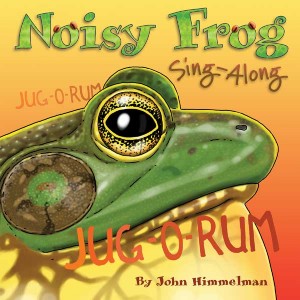
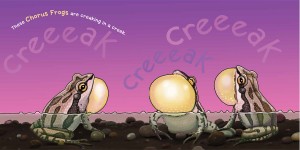
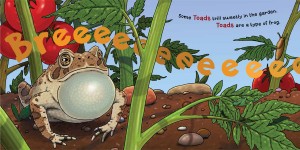
John Himmelman has followed up on his Noisy Bug Sing-Along (shared here) with Noisy Frog Sing-Along. Himmelman introduces us to eleven different species of frog and toad and the sounds they make. The text is minimal, but the enlarged font size of the spelled-out sounds calls for the readers to make some noise. Take a break from being a mammal and practice being a noisy amphibian! The last few pages give more detail about each species, explains metamorphosis, and offers tips for how to see frogs (or salamanders). Additionally, a link is provided for a page on the Dawn Publications website where you can listen to audio files of the actual sounds shared in the book.
Sample Pages (Double-click to see full-sized):
.
.
.
.
.
.
.
.
.
.
.
.
.
This review by Michael D. Barton appeared originally at Explore Portland Nature – http://exploreportlandnature.wordpress.com/


by editor | Oct 7, 2013 | K-12 Classroom Resources

Students at Southern Oregon University installing a beehive at their on-campus garden.
An Alternative to Traditional Education
Honeybee Heroes: Ryan King at Southern Oregon University
by Katie Boehnlein
outhern Oregon University in Ashland, OR is a “sweet” place to be. Ryan King, a recent graduate of Southern Oregon’s Master’s of Science in Environmental Education program, has just finished his thesis on apiary-based education, or the practice of utilizing beehives in educational settings. Ryan is a pioneer in the promotion and pedagogy of this field, having been a beekeeper in various schools for the past four years after his undergraduate studies at Oberlin College.
Ryan first got “stung” while he was working at Al Kennedy Alternative High School in Cottage Grove, OR, a school that CLEARING featured in 2010 for its focus on place-based, experiential education. (https://clearingmagazine.org/archives/2368) Ryan’s principal at Kennedy asked him to spearhead a beekeeping project, since he had majored in science during his undergraduate studies and was interested in working with his students outdoors. After just a few months of working with students at the beehive, Ryan began to see the impact that the practice of beekeeping could have on a school community. He saw class attendance rates and student buy-in rise at the school, impacts that he attributed to the opportunity for at-risk students to invest time in hands-on projects. Ryan saw beekeeping as a way to connect students to the science they were learning in the classroom while at the same time giving them valuable skills they could use in the future. He sees his students as future scientists and farmers of America, and what a better way to connect students to current events than by giving them valuable skills to contribute to world problems?

Ryan King instructs young students about honeybees during a summer class for elementary-aged children at Southern Oregon University.
Consequently, Ryan focused his graduate studies on apiary-based education. Over the two years he spent in Ashland, he established a hands-on, multi-age, multi-pronged beekeeping program called the Ashland Apiary Project. In his recent article “Beekeeping as Experiential: The Ashland Apiary Project,” Ryan lays out the educational and environmental goals that emerge from apiary-based education and the outcomes that he has seen manifest from Ashland’s project specifically. (http://www.jsedimensions.org/wordpress/content/beekeeping-as-experiential-the-ashland-apiary-project_2013_05/)
The project starts with training college-aged students from Southern Oregon University, centrally located at the three-hive apiary in the school’s campus garden. These students are mentored in beekeeping skills by local beekeeper Sarah Red-Laird, who runs an educational nonprofit organization in the area called BeeGirl. (http://www.beegirl.org/) Students then take their new skills into the community, teaching high school students through the SOU Beekeeping Club and advocating for pollinator gardens and other sustainable projects at city council meetings. From there, the project reaches elementary school students through summer science camps and educational workshops. This year, Ryan sets out to establish an on-campus apiary in his new teaching position at Ruch Elementary School, a rural K-8 public school in the Applegate Valley. The apiary will serve as a satellite research site to Southern Oregon University as well as award opportunities for students to host symposia at Ruch and collaborate with local beekeepers and farmers in the community. Through these many outcomes, Ryan shows us the many benefits that can come from a school apiary project.
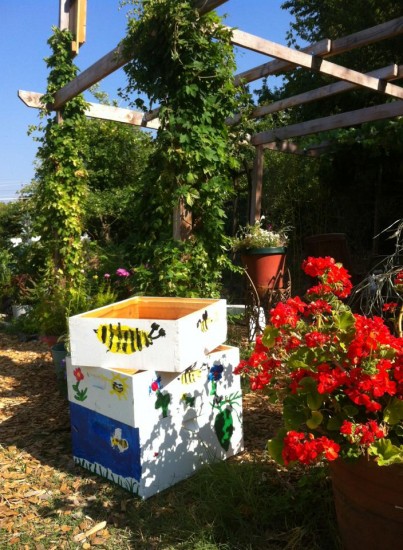
The Ashland Apiary Project thrives in Southern Oregon University’s campus garden.
Ryan sees apiary-based education as a complement to the already-existing pedagogical philosophy of place-based education. The “stuffy indoor curriculum” that he observes in schools today is not what kids need. “Kids are bored, kids are penned into curriculum, and they get spit out very unmotivated about where they’ve come from,” he says.
His solution, beekeeping, gives students a local, community perspective to their education and valuable skills for their future. Ryan reminds us that learning from bees, by nature, is localizing, as bees depend on the four miles surrounding their hive for food. Therefore, hands-on projects on campus, like a school beehive, can flatten the school’s walls while at the same time connect students to their local community. Ryan’s colleague, Sarah Red-Laird (BeeGirl) has taken on the lead responsibilities for the Ashland Apiary Project, whose future plans include an expansion to a sustainability and farm center that Southern Oregon University is developing. Here, Sarah would teach college-level classes on beekeeping and develop a full-course program at the university. Stay tuned next, as we visit with her next week!
Katie Boehnlein is a writer/intern for CLEARING magazine and teaching assistant at Catlin Gabel School in Portland, Oregon. She enjoys writing about the endless expressions of place-based education, inspired by so many creative teachers. Katie blogs about her own ecological and urban adventures at “In the Midst,” which can be found at kboehnlein.wordpress.com.


by editor | Oct 2, 2013 | Environmental Literacy, Outdoor education and Outdoor School
Fueling the Fire: North Cascade Institute’s Path for Youth

by Mollie Behn
 t is no secret that today’s youth are increasingly disconnected from nature. As a result, youth are less aware of issues and threats facing the environment and how to address them. We need to develop active and motivated citizens who are capable of implementing solutions to the challenges. These abilities derive from understanding the threats, consequences, and solutions to environmental problems, as well as feeling empowered to make necessary changes. The young people of today offer us a glimpse into a promising future, especially if we prepare them for the challenges and triumphs they will experience. Sadly, youth’s disconnect from the natural world can leave them feeling less inclined to be actively engaged citizens and stewards. North Cascades Institute is confronting this situation through the Path for Youth initiative, a suite of programs and a shared vision with public lands agencies and community partners to engage elementary to graduate level students through education, conservation and stewardship…
Read the entire story at https://clearingmagazine.org/NCIPathforYouth.pdf or at
https://clearingmagazine.org/NCI-FuelingTheFire.html (pictures have captions)

by editor | Sep 27, 2013 | Learning Theory
by Jim Martin
CLEARING Associate Editor
 e left the teacher we have been following as she was planning a project she and her class will do on a creek at the edge of the school property. What she is doing, as well as her plans, appear to approach what the National Board for Professional Teaching Standards proposes as five important characteristics of competent teaching. The last time we saw her, she was getting ready to plan the first steps in what could become a long-term project. (By the way, her name is Meredith.) Let’s see what the main pieces of the project are, and get some idea of how they look to her so far. The first step is to provide her students with background information which will help in the Acquisition Phase of this new learning. She plans to do it by using some standard curriculum delivered more or less as usually taught, but with students working with it in groups which may or may not become the work groups who do the particular jobs at the creek. This way, they might be more likely to transfer those learnings to the field. Topics they will study are food webs, water quality, and the riparian.
Her initial plan is to use published and on-line resources to provide background on riparian areas, then move to riparian food webs, and after that to how to measure water quality, and what the measurements mean in terms of the riparian and its food webs. Her hope is that, by learning something more dynamic than an array of facts, her students will approach the creek with more nuanced expectations than if they’d simply learned some nomenclature that applies to creeks.
Next, her student groups will visit the creek site. Her plan is to prepare work groups to assess the site to decide their stations. To this end, she supplies them with tape measures and rough sketch maps of the creek and its banks. Their job is to locate the best stations for doing their work, and measure the station’s dimensions. Then, in their work groups, they will decide how to go about making their observations. The Meredith knows that these plans will probably be modified by experience. Then, each work group will posit questions they think may help them know their part of the creek. This is most difficult for the macroinvertebrate group, because they won’t be collecting on this first trip. However, they will be asked to assess the makeup of the bottom of the creek, where the macroinvertebrates live. This completes the second part of her plan.
Designing inquiry questions takes quality time, so they will do that in the classroom. After they have posited good inquiry questions, they’ll use them to design their investigations. Meredith’s plan is to start this process while the class is making their visit to the creek site. She’ll prep this by asking them to keep track of things they notice while they’re doing their work on their particular station. As part of this prep, she suggests that they will use these things they notice to write inquiry questions to investigate. When the class returns to the classroom, they will do a quick debrief and go on to other things. (Meredith has been incubating an interesting thought that, by carrying out investigations, the class might develop a useful knowledge base about the creek and its banks. She is even contemplating using that base to drive a language arts unit and part of a math unit.)
The next class day, students will meet in their work groups to begin writing a report of their observations and decisions about locating their work stations, and a list of the questions about things they had noticed which are most interesting to them. Afterwards, each group will report its findings and questions. Then, Meredith will review the broad areas that each work group will investigate. She will ask each group to review relevant thematic information she has collected for them, and use it, along with their on-site observations, to design a plan for doing their work. As part of this work, students will be introduced to the equipment they will use, and will practice using it. After they have done this, they will meet with Meredith to review the work, receive suggestions, organize jobs within the group, and develop a fine-tuned work plan to follow when they are on the site. This is when she’ll suggest that students in each group pair up to work on their own inquiry projects. Then, she will start a discussion of inquiry questions, have students practice their own, then have students, in their pairs, write and assess an inquiry question of their own.
 This is a regular feature by CLEARING “master teacher” Jim Martin that explores how environmental educators can help classroom teachers get away from the pressure to teach to the standardized tests,and how teachers can gain the confidence to go into the world outside of their classrooms for a substantial piece of their curricula. See the other installments here, or search Categories for “Jim Martin.”