
Explore the archives
K-12 Oregon Forestry Literacy Program supports teaching about forests
Teachers and school administrators now can access Oregon Forest Resources Institute’s The Oregon Forest Literacy Program, a K-12 Conceptual Guide to Teaching and Learning about Oregon Forests. The new program provides a framework for educating Oregon’s K-12 students...

Youth, Education and Climate Change
By Jana Dean From a talk given at the United Nations. was invited to speak here because I spend a lot of time with some of the funniest, most hopeful and energetic people on the planet: thirteen and fourteen year olds. While my official charge is to teach math and...
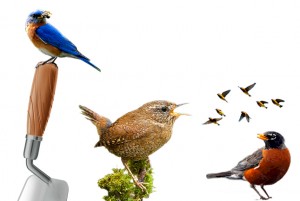
5 EE Resources You Should Know About
1. YardMap YardMap is a free, interactive, citizen science mapping project about habitat creation and low-impact land use from the Cornell Lab of Ornithology, designed to cultivate a richer understanding of bird habitat for both professional scientists and people...

Gardens Grow Minds: The School as Green Educator
By Mary Quattlebaum “We have a garden! With flowers and butterflies!” The third graders beam as they describe their wildlife garden during my author visit to St. John the Baptist (SJB) School in Maryland. I thought about their enthusiasm and the dedicated teachers...
Rivers and Streams Activities: Grades K-2
Go back to main page Butterfly Math (K-2 Science) While teaching a unit on the butterfly lifecycle, have the students create original artwork showing floral scenes. Laminate and use these small butterfly gardens as fun work mats. Unifix cubes or small counters can be...
Rivers and Streams Activities: Grades 3-5
Go back to main page How Do Other Animals Deal with Garbage? (3-5 Science) Students will discover how ants and other animals deal with waste materials they themselves have created. Split the students into groups that will each build an ant house, which will contain...
Rivers and Streams Activities: Grades 6-8
Go back to main page What Does Acid Rain Do to Aquatic Animals? (6-8 Science) Students will be able to discover the effects acid rain can have on aquatic wildlife. Set up two 10 gallon aquariums, each one with a variety of aquatic organisms (snails, caddisfly larva,...
River and Streams Activities: Grades 9-12
Go back to main page Mapping a Watershed (9-12 Science) Locate a local stream or river on a map, making sure that your map includes the entire watershed. Select a spot on the map as far downstream as possible for your starting point. Next, locate the upstream ends of...
EE Research: Playing in the woods
Researchers conducted phone interviews with 2000 adults in the US urban areas about their childhood nature experiences and current environmental attitudes and behavior. Interview questions, for example, addressed “wild” nature experience in childhood (hiking, camping...
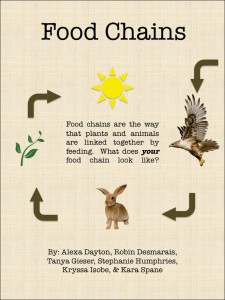
Resources for the Classroom — Food Chains
Check out the creative and insightful work of students in Pauline Sameshima's T&L 390 class at Washington State University. (Click on the image to see their individual reviews of K-12 teaching resources).
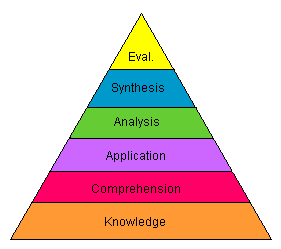
Lessons for teaching in the environment and community — 18
"Lessons for Teaching in the Environment and Community" is a regular series that explores how teachers can gain the confidence to go into the world outside of their classrooms for a substantial piece of their curricula. Part 18: Starting at the Top Stand the hierarchy...

Review: Ubiquitous: Celebrating Nature’s Survivors
Reviewed by Seth Webb hile perusing my local library’s children’s section, I found a wonderful collection of playful poems, insightful science and glorious artwork. In Ubiquitous: Celebrating Nature’s Survivors, written by Joyce Sidman and illustrated by Beckie...
EE Research: Children’s interactions with plants
Lohr and Pearson-Mims have conducted a nationwide phone survey of 2004 adults in cities about their childhood experiences related to nature, and current action and attitudes towards trees. Researchers concluded that, “Growing up next to natural elements such as flower...
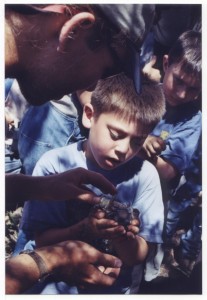
Lessons for teaching in the environment and community – 17
"Lessons for Teaching in the Environment and Community" is a regular series that explores how teachers can gain the confidence to go into the world outside of their classrooms for a substantial piece of their curricula. Part 17: Discovery of Students as Persons...

Lessons for teaching in the environment and community – 16
"Lessons for Teaching in the Environment and Community" is a regular series that explores how teachers can gain the confidence to go into the world outside of their classrooms for a substantial piece of their curricula. Part 16: Effective Work Groups When you know...
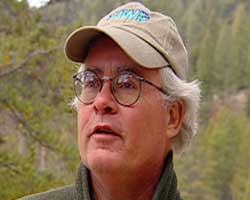
Gertschen Interview: Jon Marvel
Interview by Chris Gertschen Jon Marvel is the founder and executive director of the Western Watersheds Project. Mission The mission of Western Watersheds Project is to protect and restore western watersheds and wildlife through education, public policy initiatives...

Partnering for Ocean Literacy
Along the Oregon coast, community partners are teaming up with the school district to encourage use of the ocean as a context for learning . by Rachel Bayor, School Liaison Partnership Coordinator hy do kids need to know about the ocean? It may take a moment to...

Resources for the Classroom— Biomes
Check out the creative and insightful work of students in Pauline Sameshima's T&L 390 class at Washington State University. (Click on the image to see their individual reviews of K-12 teaching resources).

A Classroom Without Walls
A Classroom Without Walls Deepening Children's Connection with Nature by Seth Webb Free Horizon Montessori School e each have an incredible gift: the ability to engage children with the world - indeed, the universe - that surrounds them and, of which, they are...

Hands-on Hanford: Linking Lessons
by Erika Holmes, Community Outreach and Environmenal Education, Washington State Department of Ecology recently attended a forum bringing together state and federal agencies, non-profits, involved citizens, educators, and retired workers with a common goal: getting...
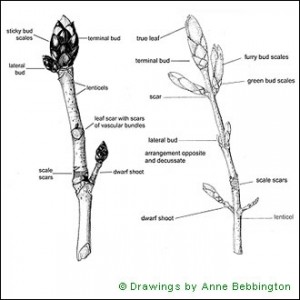
Lessons for teaching in the environment and community – 12
"Lessons for Teaching in the Environment and Community" is a regular series that explores how teachers can gain the confidence to go into the world outside of their classrooms for a substantial piece of their curricula. Part 12: Flirting with Danger What happens when...
Lessons for teaching in the environment and community – 11
"Lessons for Teaching in the Environment and Community" is a regular series that explores how teachers can gain the confidence to go into the world outside of their classrooms for a substantial piece of their curricula. Part 11: Assimilation Continued by Jim Martin,...

Abernethy’s ground-breaking Farm-to-School program
n a quiet, residential, inner southeast Portland, Oregon street, a little elementary school is breaking new ground for the farm-to-school and school garden movement. At Abernethy Elementary, students enjoy freshly cooked breakfasts and lunches prepared on site by a...

Lessons for teaching in the environment and community – 10
"Lessons for Teaching in the Environment and Community" is a regular series that explores how teachers can gain the confidence to go into the world outside of their classrooms for a substantial piece of their curricula. Part 10: Assimilation When the world outside...

Lessons for teaching in the environment and community-9
"Lessons for Teaching in the Environment and Community" is a regular series that explores how teachers can gain the confidence to go into the world outside of their classrooms for a substantial piece of their curricula. Part 9: Digging Through the Brambles by...

Lessons for teaching in the environment and community – 8
"Lessons for Teaching in the Environment and Community" is a regular series that explores how teachers can gain the confidence to go into the world outside of their classrooms for a substantial piece of their curricula. Part 8: Where is Curriculum? by Jim...
Solar energy in the classroom
Understanding Electricity Through Photovoltaics from green levine on Vimeo. More Than a Metaphor Solar energy in the classroom by Jessica Levine Eckstein Middle School Seattle, Washington As a student of David Orr at Oberlin College I helped design the Adam Joseph...

Gertschen Interview: Rick Johnson, Idaho Conservation League
Rick Johnson has served as executive director of the Idaho Conservation League for 16 years. ICL is Idaho’s leading voice for conservation. Interview by Chris Gertschen CG: Is there one particular event or series of events that led you to a profession in...

Lessons for teaching in the environment and community – 7
"Lessons for Teaching in the Environment and Community" is a regular series that explores how teachers can gain the confidence to go into the world outside of their classrooms for a substantial piece of their curricula. Part 7: From Hand to Mind Concrete experiences...
Without Leaving the Classroom
by Harmony Roll, Taiga Teacher ou don't need to be an environmental educator, you don't have to stray from traditional norms, or be on the cutting edge to incorporate place-based education into your daily practice as a teacher. The goal is to create connections,...

Donate to support CLEARING!
.

Lessons for teaching in the environment and community – 6
"Lessons for Teaching in the Environment and Community" is a regular series that explores how teachers can gain the confidence to go into the world outside of their classrooms for a substantial piece of their curricula. Part 6: The Easy Part by Jim Martin, CLEARING...
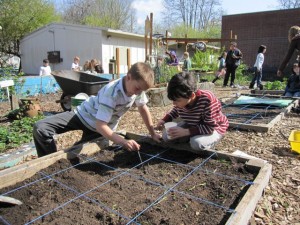
Environmental Literacy in Action: Abernethy Elementary’s Farm-to-School and School Garden Program
On a quiet, residential, inner southeast Portland, Oregon street, a little elementary school is breaking new ground for the farm-to-school and school garden movement. At Abernethy Elementary, students enjoy freshly cooked breakfasts and lunches prepared on site by a...
Lessons for teaching in the environment and community – 5
"Lessons for Teaching in the Environment and Community" is a regular series that explores how teachers can gain the confidence to go into the world outside of their classrooms for a substantial piece of their curricula. Part 5: Questions are Compasses by Jim Martin,...

NatureMapping Takes Kids — and Technology — Outside and into Active Learning
NatureMapping Takes Kids — and Technology — Outside and into Active Learning A data-collection program brings real science to school -- and startles the professionals. By Diane Petersen an's work as a scientist began with a contradiction: "The scientists said...
Reviews

Lessons for teaching in the environment and community-4
"Lessons for Teaching in the Environment and Community" is a regular series that explores how teachers can gain the confidence to go into the world outside of their classrooms for a substantial piece of their curricula. Part 4: Inquiry An Introduction to the World of...
Kettle Falls: Engaging in Real Work
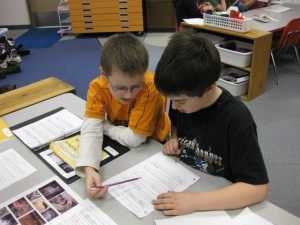
by Val McKern Kettle Falls Elementary School believes that by engaging kids in authentic work, attitudes can change toward both work and community. As a second grader, Todd started the year with little interest in school, had a difficult time focusing on discussions...

CREST Farm to School
by Bob Carlson CREST is an environmental education center operated by the West Linn-Wilsonville School District which is located just south of Portland, Oregon. One of the key CREST programs is the CREST Farm . The farm is located on surplus district property....

Buy the book – get a bonus – and help CLEARING!
This offer is for a limited time only because I have just 10 copies of David Sobel's book Place-based Education: Connecting Classrooms and Communities available. But here's the deal: buy a print copy of The Best of CLEARING, and I will add a copy of Sobel's book ($12...

Gertschen Interview: Charles Saylan talks about the failure of environmental education
Interview by Chris Gertschen Charles Saylan is co-founder and executive director of the California-based Ocean Conservation Society. He co-authored with Daniel Blumstein, a biology professor at the University of California-Los Angeles, “The Failure of Environmental...
Changing the world…
..."[Jim] Watson gave up long ago trying to change the world of environmental education through Big Initiatives – the work of government, school boards and such. While he serves on the board of directors for the Chattanooga Arboretum & Nature Center and North...

Curriculum: “Connecting Students to the World”, Lessons for Literacy, Science, and Social Studies
"Connecting Students to the World" (CSW) is an interdisciplinary teacher lesson plan guide for grades K-3 that engages young students in global issues and sustainability, providing them with the building blocks necessary to become future global citizens and change...
To all residential environmental educators: You are invited!
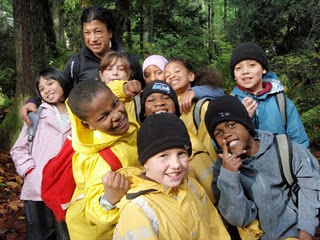
Straight Talk, Sound Ideas IslandWood is convening a conference for residential environmental educators in the Pacific Northwest! Meet new colleagues, make new connections and friends, get fresh ideas - get inspired! You can look forward to workshops, explorations and...
The Failure of Environmental Education: And What We Can Do to Fix It
by Charles Saylan and Daniel Blumstein (excerpt from the book) nvironmental education has failed to bring about the changes in attitude and behavior necessary to stave off the detrimental effects of climate change, biodiversity loss, and environmental degradation that...
Dam Removal as a Teaching Tool
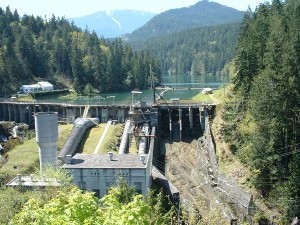
by Derek Jones We erect dams assuming they are eternal, as if they’ll never topple over or be dismantled or fill with sediment or lose their financial rationale. Yet all dams will die. . . They’ll be reminders of an ancient time when humans believed they could...

Gertschen Interview: Wendy Francis – Working to Make a Difference
Interview by Chris Gertschen Wendy Francis, Program Director, has been involved with Y2Y (Yellowstone to Yukon) since its inception. She chaired the board from 2003-2005 and was interim Executive Director in 2002-2003. Educated in law and biology, Wendy previously...
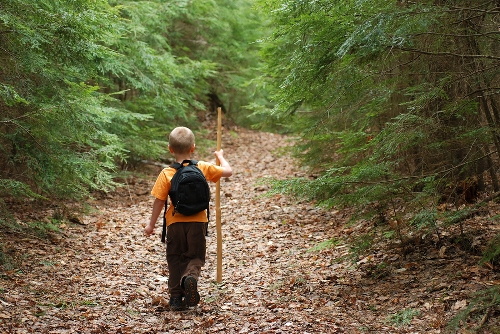
Going Off Trail – New Paths in Programming to Connect Children With Nature
Courtesy of recmanagement.com By Kelli Anderson Five years ago, with the addition of new management at Tamarak Nature Center in Maplewood, Minn., programming for children and their families began to take the road less traveled. It began, in effect, to go off trail....

Learning about waterways and First Nation ways
by Sarah E. Smith from A Newsletter of the Salish Coastal Gathering An innovative education program is introducing Squamish First Nation kids and their non-Native classmates to the richness of plant and animal life along the waterways of their lush corner of Coast...
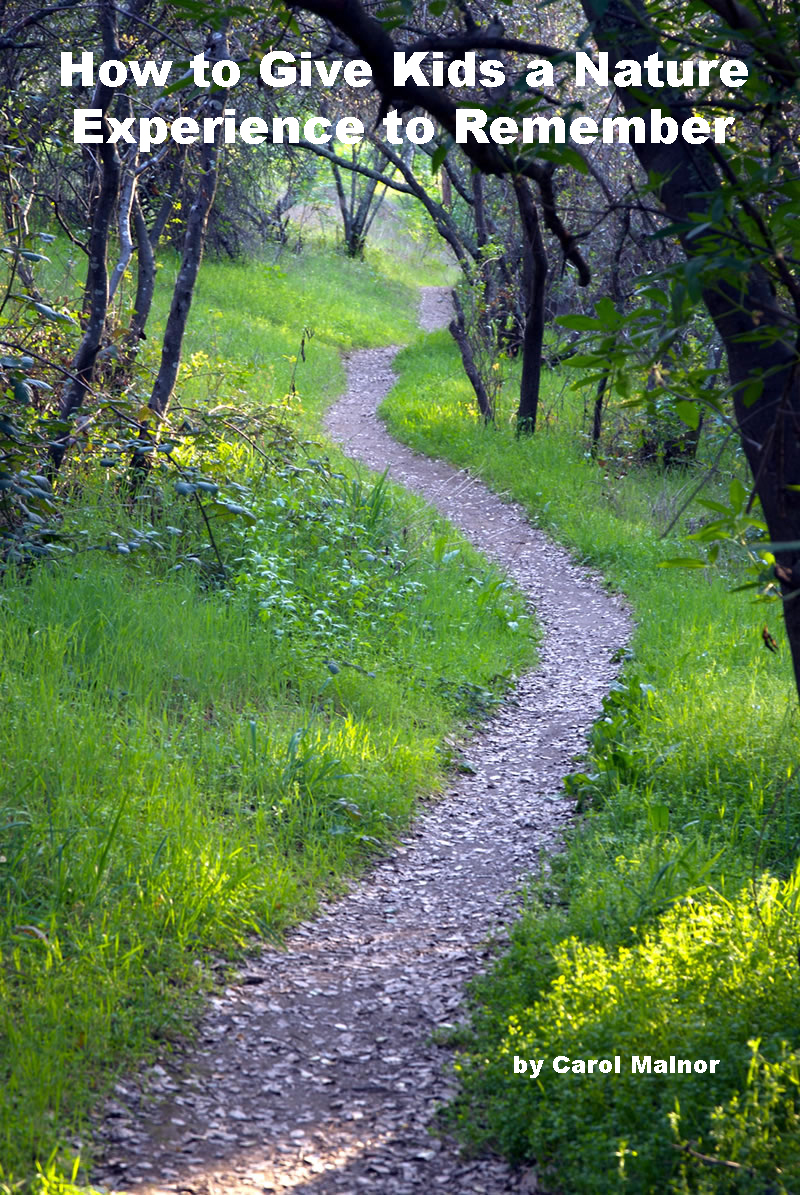
How to Give Kids a Nature Experience to Remember
ne of my favorite nature quotations comes from the Japanese conservationist Tanaka Shozu who said, “The question of rivers is not a question of rivers, but of the human heart.” I wanted to touch the hearts of my middle school students with the beauty of nature as well...
Browse by Theme or Topic
Gardening, Farming & Permaculture
Stay Up to Date with the Latest Ideas and Resources
Join Our Newsletter
Stay up to date on environmental education in the Pacific Northwest. We’ll deliver ideas you can use to your inbox once a month.