
Explore the archives
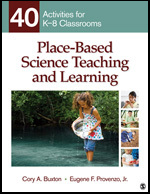
Review: Place-Based Science Teaching and Learning: 40 Activities
Reviewed by Christina Bekhazi, Mallory Flesher, Caitlin Gonsalves, Janaina Kitzke and Laura Mathis as part of Dr. Pauline Sameshima's T&L 536 class at Washington State University. Place-Based Science Teaching and Learning: 40 Activities for K-8 Classrooms is an...

Gertschen Interview: Jason Wilmot on conservation and building community
Interview by Chris Gertschen Jason Wilmot is executive director of the Northern Rockies Conservation Cooperative. Jason was raised in Montana and South Dakota. He obtained a bachelor’s degree in Geography from the University of Montana and a Master of Environmental...

Deepening Science Education, Increasing Ecological Literacy
Woodland Park Zoo's "Ready, Set, Discover" gets kids outside By Katie Remine, School and Community Engagement Supervisor Woodland Park Zoo “With an opportunity to wonder, explore, and to question, students can discover fresh reasons to excel at other subjects and...
Ear to the Ground – Mike Town: Passionate about environmental education
CLEARING interview by Jackie Wilson Mike Town earned two bachelor’s degrees and a master’s degree from Huxley College of the Environment, Western Washington University and the University of Washington. From 1985 to 2010, Mike taught numerous science courses at Redmond...
Gertschen Interview: Talking about conservation and education with Lance Craighead
Interview by Chris Gertschen Lance Craighead is the Executive Director of the Craighead Institute, an applied science and research organization that builds conservation solutions for people and wildlife in changing landscapes. Its mission is to maintain healthy...
Chris Gertschen talks with conservationists
by Chris Gertschen For the past three decades, I have been an activist, a volunteer, a student and a teacher of conservation. My activist years gave me an advocacy perspective but I quickly saw a great need to expand my own natural science education – to give some...

Kids Training Kids for Nature Leadership
by Greg Traymar Sharing Nature North America If you want to get through to an 8-year old, find an inspired 16-year old. That’s what I’ve found in an extraordinary experience I had during the 2009-10 school year in which I trained a group of 16 high school students in...
Tips for bringing students into the field: Strategies for success
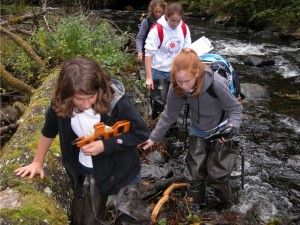
By Joshua Klaus, Director of Academic Programs, Ecology Project International (EPI) Taking students into the field can provide an endless array of occasions to learn new skills, see theoretical concepts enacted, make connections, and learn about the world around us. ...

A Greater Impact—What Teaching has Taught Me
by David Strich North Cascades Institute Mountain School has ended for me, but this recent spring session changed my life as an educator. I have become more convinced that I am pursuing the right career and that my teaching techniques have had meaningful impacts in my...

The Importance of Deep Experiences in Nature
By Joseph Cornell Profound moments with nature foster a true and vital understanding of our place in the world. I remember an experience I had as a five-year-old boy that awakened in me a life-long fascination for marshes, birds, and for a life lived wild and free. I...

The “Creative Non-Fiction” Conundrum (and Opportunity)
by Glenn Hovemann, Editor Dawn Publications Let’s say you are in a library or bookstore and you want to find a book that will inspire a child to connect with nature in some way. Should you head for the fiction or non-fiction section? This may seem like an obvious,...
The Social Studies of Spirituality
The Social Studies of Spirituality By Kasey Christian IslandWood (photo from silouanthompson.net) Where are the boundaries between Social Studies, Science, and Spiritual beliefs? Where do these distinct practices intersect? How does a teacher model equal respect for...
The Art of Mentoring: Rekindling Appreciation of Nature
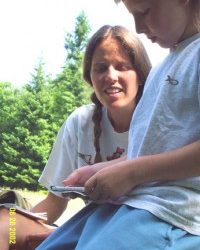
For the questioning mind, learning never concludes because it is an endless journey with an infinite number of destinations... by Chris Helander Head Instructor Coyote's Path Wilderness School (reprinted from The Best of CLEARING) There are many people who say our...
Paying Attention: Being a Naturalist and Searching for Patterns
By Saul Weisberg Executive Director North Cascades Institute (reprinted from The Best of CLEARING) I love knowing the names of things. It makes them familiar, like old friends. I also love to look at patterns in nature. Veins on the back of a vine maple leaf. The...
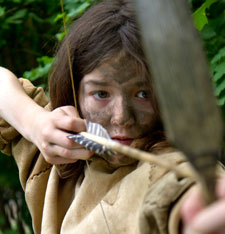
Outdoor Education is Boring
by Tony Deis TrackersPDX Remember when Outdoor Education was chopping wood, ghost stories, building log cabins, lighting fires and fishing? Nowadays it's playing nature games, parroting sanitized and co-opted indigenous lore, taking water quality samples and sitting...

Logic Models – A Tool for Evaluation
by Chuck Lennox Principal (Consultant) Cascade Interpretive Consulting LLC Program evaluation is a valuable process to determine the efficacy of programming being offered to the public by an organization or agency. Sometimes the process can feel intimidating. How do I...
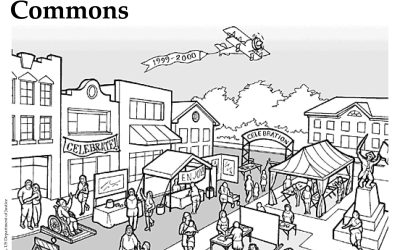
Educating for a Revitalization of the Cultural Commons
by Chet Bowers, Professor Emeritus, Portland State University and Courtesy Professor of Environmental Studies, University of Oregon, United States This article discusses how the cultural commons that exist in every community, both rural and urban, carry forward the...
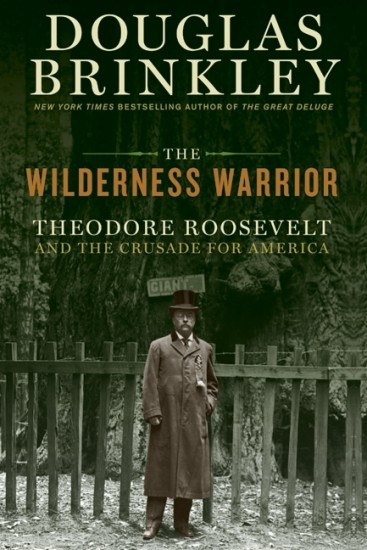
The Wilderness Warrior — Theodore Roosevelt and the Crusade for America
Author: Douglas Brinkley Publisher: HarperCollins Book Review by Orlay Johnson Whether you have only thought of Teddy Roosevelt as a stuck-up war-mongering aristocrat or as the first modern and progressive US President, I think you will like this book. It is well...

Sustainability and Relationships: Learning from the STAR School
by Gregory A. Smith Lewis & Clark College, Portland, Oregon As news stories about global climate change, the peaking of oil production, or the threat of major water shortages appear more frequently in the mainstream press, it is not surprising that concerns about...
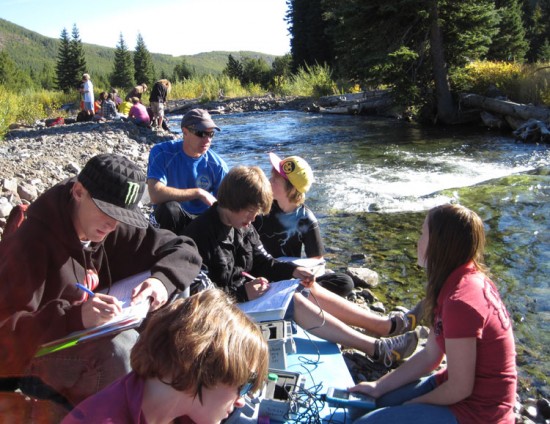
From Screens to Streams: Using Technology as a “Bridge” to the Outdoors
Rather than viewing technology as an enemy of environmental literacy, technology-based learning can help cultivate an environmental sensibility by serving as a "bridge" to the outdoors. By Ryan Johnson When I was ten years old, I was absolutely obsessed with the...
Moving Backwards Into the Twenty-first Century
by Charles Rubin Duquesne University I want to start with a central problem that I see facing environmental education efforts, that can be seen from two fact sheets provided by the EPA environmental education website. The two fact sheets are "Environmental Education...

Developing Questioning Strategies: Learning to become a science teacher
“All anyone really needs is a coal bin and a friend.” By Jim Martin A storm of children, shouts, swirling bodies, and dust swept me out of the yard. Up the street, neighborhood kids whirled around some coal bins between two wartime shipyard houses. I can see and hear...

Reassessing the value of place-based learning: an online discussion
The following is part of an on-line discussion between Greg Smith, Associate Professor at Lewis and Clark College in Portland, and David Greenwood, Associate Professor at Lakehead University in Thunder Bay, Ontario Canada. Dear David, I’ve been puzzling over an issue...
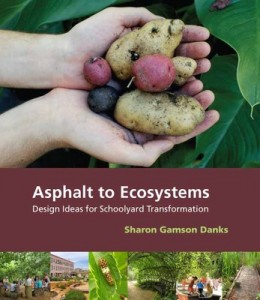
Asphalt to Ecosystems: Design Ideas for Schoolyard Transformation
For grades K-12 Asphalt to Ecosystems is an illuminating guidebook for designing and building creative, ecologically diverse schoolyards and integrating nature into learning and play activities across K-12 curricula. With a wealth of practical advice and over 500...
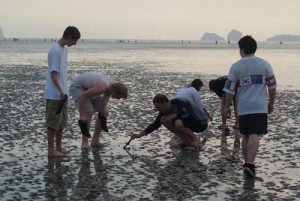
High School Students Earn University of Washington Credit in Oceanography
by Richard Strickland, University of Washington School of Oceanography and Timothy Stetter, University of Washington Professional and Continuing Education This fall, as flocks of new freshmen swarm to college campuses, many of them are bringing along college credits...
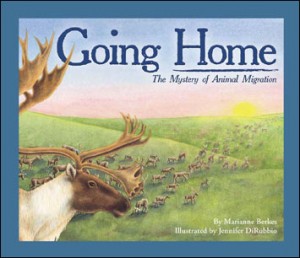
Going Home (Book Review)
The Mystery of Animal Migration By Mariane Berkes Published by Dawn Publications Reviewed by Emily Baker-LaRouf What pushes an animal to travel thousands of miles to places it has never seen or to reproduce in the same spot as its ancestors did? The mysteries of the...

Small Wonders: Nature Education for Young Children (Book Review)
Reviewed by Elizabeth Rinaldo Study after study recommends integrating children into nature at a very young age. Little ones view with innocent and open eyes – they are curious and inquisitive and don’t yet know that it isn’t proper to get their hands dirty....
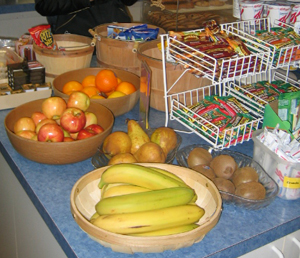
Catlin Gabel School—a Focus on Food
By Eric Shawn The interdisciplinary study of food has emerged as a theme in sustainability education at Catlin Gabel School, an independent, co-educational school with 725 students in preschool through 12th grade in Portland, Oregon. The focus on food—a necessity for...
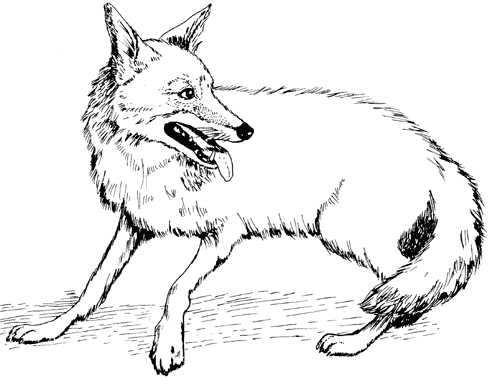
Coyotes’ Teachings: How to Cultivate Awareness and Natural Connections
by Lindsay Letitia Huettman I am out in the foggy, wet Pacific Northwest winter with my 10-12 year-old homeschoolers' program, heading to an amazing place we call Elk Meadows. As we cross the meadow, we stop for a word of thanksgiving about the day and send the kids...

Place-based Education: What makes Sunnyside special?
by Becs Boyd On 16 November I made a return visit to Sunnyside Environmental School in Portland, Oregon, the K-8 (kindergarten to age 14) which I first visited back in May. This time my conversations with the principal, Sarah Taylor, and with teachers and pupils,...

“Meet a Tree” is Boring
Do you know meet a tree? The exercise where you blindfold one kid and their buddy leads them to a tree. Then, after the blindfolded is removed, the child goes and finds their tree. Yawn.

The Heart of Sustainability: Big Ideas from the Field of EE
Big Ideas from the field of Environmental Education and their Relationship to Sustainability Education — or — What’s love got to do with it? . . By Donald J. Burgess and Tracy Johannessen Introduction common raven suddenly begins to call from Cornwall Park. I rush to...
Kennedy High School: Turning stragglers into leaders
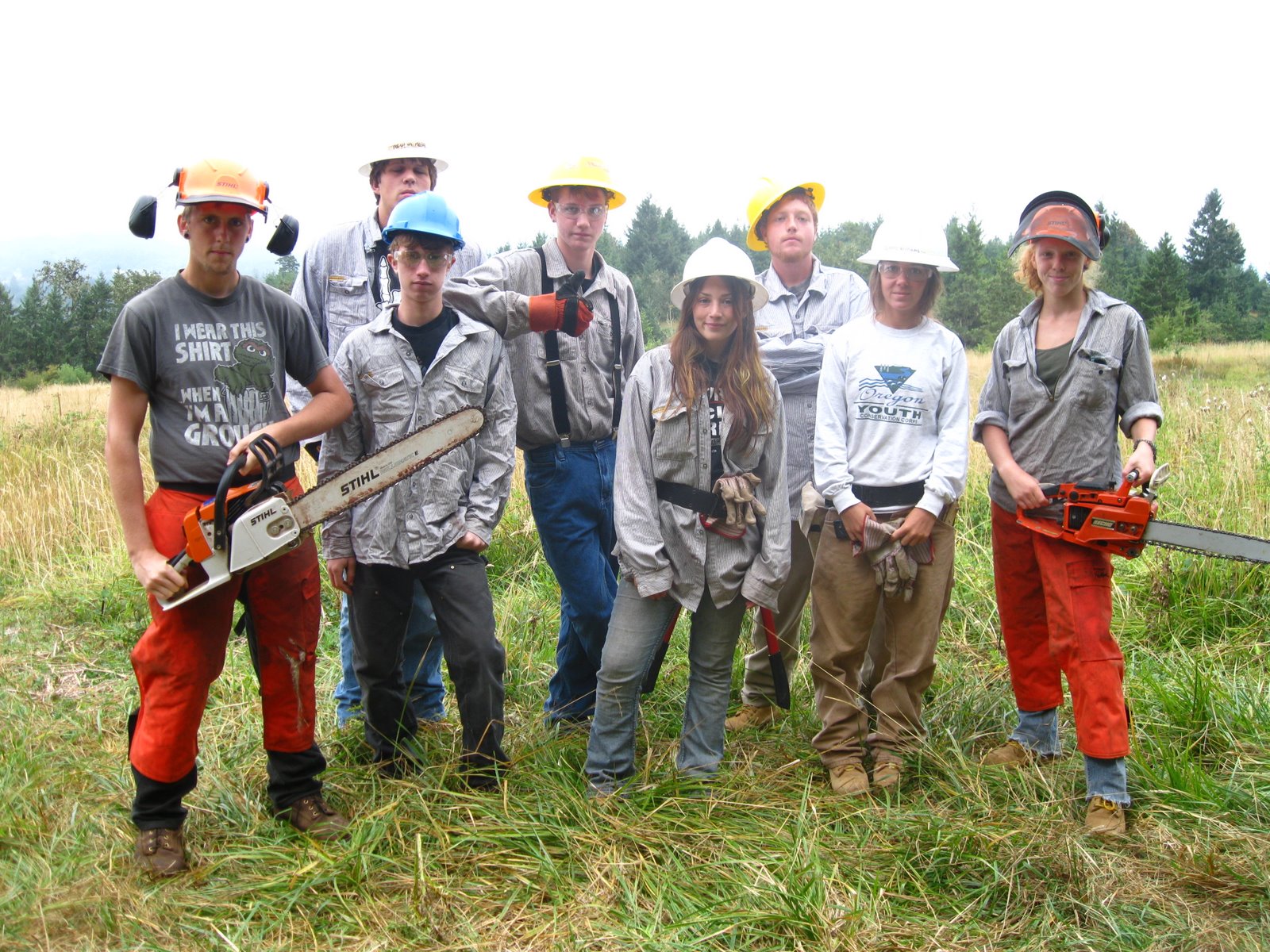
Exploring Place-based Education Programs in the Pacific Northwest by Becs Boyd A visit to Kennedy High School in Cottage Grove, Oregon on 18 November, turns out to be one of the most uplifting days I have spent in a school, perhaps ever. Formally known as AL...

Cool School Challenge – Students Take Action!
The Cool School Challenge engages schools from all across the country in strategies to reduce CO2 emissions by Katie Fleming, Rhonda Hunter & Kimberly Cline Extreme weather events, rising sea levels, melting glaciers – oh my! While climate change is an...
Tillamook and ‘citizen science’
Exploring Place-based Education Programs in the Pacific Northwest by Becs Boyd On 8th May I meet Ed Armstrong, grant writer for Tillamook School District, outside Tillamook High School in north-west Oregon. I'm here to find out about the amazing work Ed and others...

Living with the Ocean
Exploring Place-based Education Programs in the Pacific Northwest by Becs Boyd On the southwest coast of Oregon a small town called Charleston is tucked against a busy dockside lined with fishing and tourist boats. The Oregon Institute of Marine Biology has its base...
The Forever Forest (Book Review)
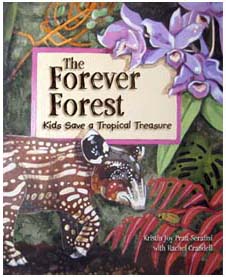
Kids Save a Tropical Treasure By Kristin Joy Pratt-Serafini with Rachel Crandell Published by Dawn Publications Reviewed by Emily Baker LeRoux As a home schooling mother of two, I have to admit I like books. I mean REALLY like books. They seem to multiply in our...

Interactive: Education vs. Advocacy
What do you think? As a former environmental educator, I think it is very important that we as educators separate advocacy from education. At the Environmental Education Association of WA’s first conferences in the early 1990s we discussed the distinction a lot. ...

Review: Shadow of the Salmon
Preparing students with 21st century skills Reviewed by Ella Inglebret and CHiXapkaid (D. Michael Pavel) The salmon serves as an indicator species reflecting the overall health of the natural environment in the Pacific Northwest. For Native American tribal members,...
The Nature and Purpose of Education
by Maurice Holt In her celebrated The Classic Italian Cookbook, Marcella Hazan wrote: “What people do with food is an act that reveals how they construe the world.” At the time — 30 years ago — it was a sentiment that needed a word of explanation; the...

The Case for the Earth
We need new strategies to preserve the habitability of the planet. by David Orr TRADING STORIES one day about smart animals, I heard from an old farmer who described a wily fox that appeared at the edge of a clearing in which his dog was tethered to a pole in the...
Preparing Teachers to Teach About Sustainability
Recently Gregory Smith, Professor in the Lewis and Clark College Graduate School of Education and Counseling, received a $19,380 grant from the Gray Family Fund of the Oregon Community Foundation to train teachers in the West Linn (OR) School District on environmental...
Critiquing place-based education
Part two of an on-going discussion The following is part 2 of an on-going discussion on place-based education topics between Gregory Smith of Lewis and Clark College and David Greenwood of Lakehead University in Thunder Bay, Ontario (formerly of Washington State...
Top Ten List for Developing Environmental Literacy
from Callister, Jamogochian, Lemos, Weddle, & Yoder (2010) - Community-based Education: Model Programs. Northwest Center for Sustainable Resources. http://www.ncsr.org/materials/index.html This top-ten list of advice from Jon Yoder may be of assistance for...

Teaching the 3 R’s Through the 3 C’s: Connecting The Curriculum And Community
Teaching the 3 R's Through the 3 C's: Connecting the Curriculum and Community By Clifford E. Knapp The exploration of the educational potential of communities through direct experiences is not a new idea. In 1912 naturalist, John Burroughs, wrote: “. . . The way of...
Place-Based Education: What Rural Schools Need to Stimulate Real Learning
By Robert Yager There has never been a time when it is so clear that typical instruction wedded to textbooks and teacher lesson plans and characterized by discipline-bound classes throughout the school day must be changed. These conditions do not improve learning --...
A place-based education discussion
The following is part 1 of an on-going discussion on place-based education topics between Gregory Smith of Lewis and Clark College and David Greenwood of Lakehead University in Thunder Bay, Ontario (formerly of Washington State University). You are invited to...

10 Reasons To Try Distance Delivered Environmental Education
by Sandi Sturm I recently attended a social event organized for adjunct faculty members of our university. Sitting across from me was a woman from the Environmental Studies program who openly denounced the use of technology. Begging to differ, I approached her...

Climate Change, Youth and Hope: Debunking the Paradox
by Megan McGinty North Cascades Institute Last year we began a service-learning summer program for high school students focusing on climate change. The Climate Challenge program consisted of a summer residency in the North Cascades followed by a service project in...
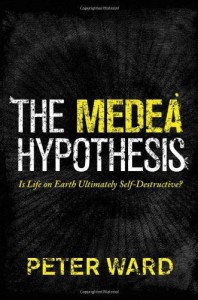
Review: The Medea Hypothesis: Is Life on Earth Ultimately Self-Destructive?
Authors: Peter Ward Publisher: Princeton Press Reviewed by Orlay Johnson This book might be more appropriately titled, “Mothers who Murder their Children.” It explores how Mother Earth periodically cleans house of the majority its biota. Sadly, the reference to Medea...
Browse by Theme or Topic
Gardening, Farming & Permaculture
Stay Up to Date with the Latest Ideas and Resources
Join Our Newsletter
Stay up to date on environmental education in the Pacific Northwest. We’ll deliver ideas you can use to your inbox once a month.